
The Big Island is where Kamehameha the Great was born, in the Kohala district at its northern tip, and where he consolidated power before uniting the Hawaiian islands under one rule. He raised Puʻukoholā Heiau in Kohala during that rise, and Moʻokini Heiau near Hāwī dates to roughly the 5th century.
If you’re adding a few days of history and culture to a trip, the museums are on the Hilo side and the older Hawaiian sites line the Kona and Kohala coast, clustered most densely in the north around Kapaʻau. Start from whichever side you’re staying on, then cross the island for the two or three you most want to see.
Table of contents
- Museums
- Historic Places and Palaces
- Cultural Experiences
- Archaeological Sites
- National + State Parks
- Map with all places mentioned in our guide
The stories behind many of these sites, from Pele to the shark child of Pānau, are retold in our guide to the Hawaiian myths and legends of the Big Island.
Museums
Most museums on the Big Island connect culture and environment, covering marine science, astronomy, and volcanology.
ʻImiloa Astronomy Center
On the University of Hawaiʻi Hilo campus, ʻImiloa (the name means “seek far”) uses exhibits and planetarium shows to connect Hawaiian culture with the sky above. The displays show how ancient Hawaiians navigated by the stars, the same night sky you can still see from the summit of Mauna Kea.
Recommended visit: Time your visit with a planetarium show. You can check the schedule here. Otherwise, about an hour is enough to walk the museum.
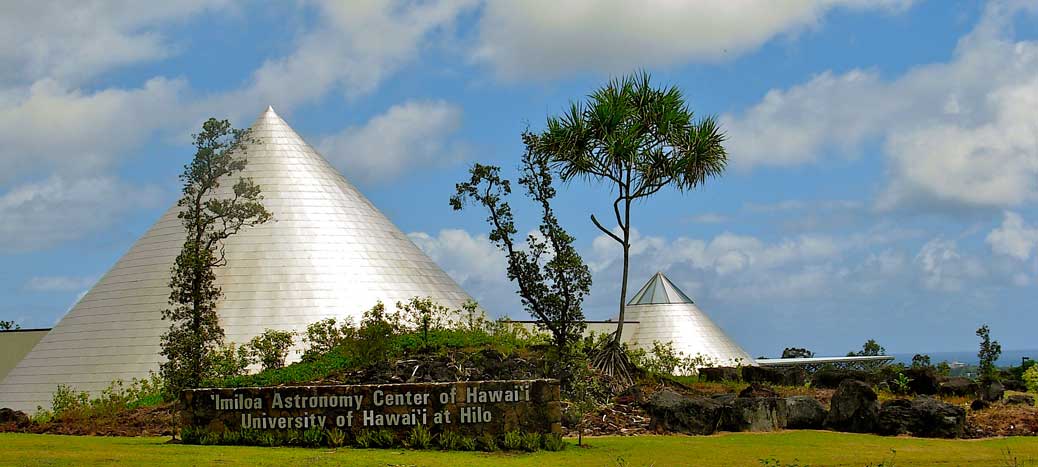
The ʻImiloa Astronomy Center of Hawaiʻi in Hilo. Photo credits: Brewbooks on Flickr under a CC BY-SA 2.0 license
Mokupāpapa Discovery Center
The Mokupāpapa Discovery Center in Hilo covers the natural science, culture, and history of the islands and their marine environments. A 3,500-gallon saltwater aquarium and life-size models of local sea creatures show what lives on Hawaiian coral reefs.
Recommended visit: If you’re planning to go diving or snorkeling on your trip, visit Mokupāpapa on one of your first days to learn more about what you will see underwater.
Pacific Tsunami Museum
The Hawaiian islands are vulnerable to tsunamis, and downtown Hilo has been badly damaged by them more than once. The Pacific Tsunami Museum covers that history with survivor accounts, photographs, and exhibits on how the warning system works today.
Recommended visit: The Pacific Tsunami Museum is small and takes about an hour. On a Wednesday or Saturday, add a stop at the Hilo Farmers Market around the corner.
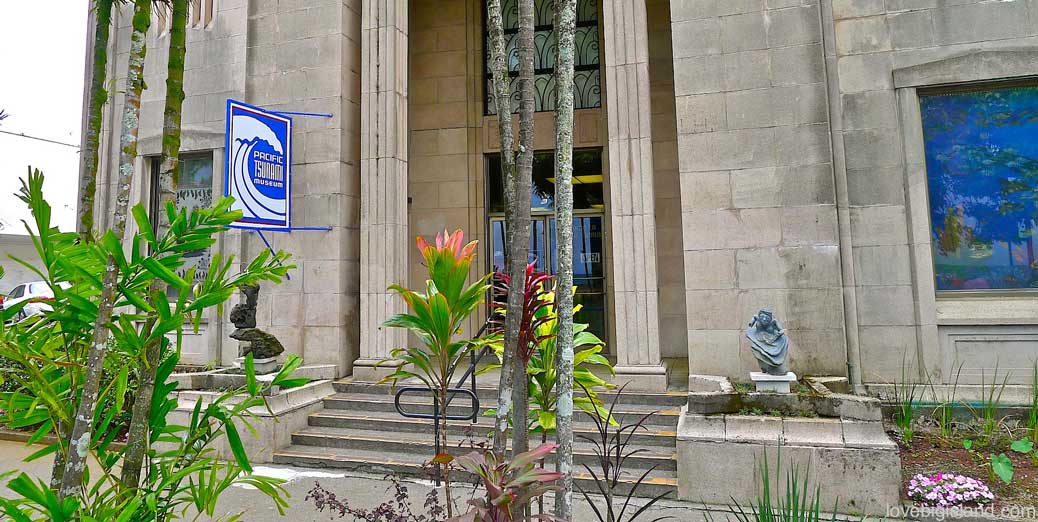
The Pacific Tsunami Museum in Hilo
More Big Island Museums
The Big Island’s other museums include Hilo’s Lyman Museum, which pairs a natural-history collection with a historic mission house. Our full list of Big Island museums covers the smaller and specialty collections around the island.
Historic Places and Palaces
Many Big Island sites are tied to Hawaiʻi’s history and the rise of the monarchy under King Kamehameha:
Captain Cook Monument
Captain James Cook (Britain) was the first westerner to land on Hawaiʻi’s shores. He spent time anchored along the Kona coast in Kealakekua Bay, an area with deep coastal water that let Cook bring his big ships close to shore. After some up-and-down relations with the Hawaiians, Cook was killed at Kealakekua Bay in a skirmish. Today a monument stands in his honor along the shoreline, and Kealakekua Bay is a protected marine sanctuary with some of the clearest snorkeling on the island.
Recommended visit: You reach Captain Cook’s monument only on foot, via the Kaʻawaloa Trail, or by water. Many snorkel tours visit Kealakekua Bay and explain some of the history along the way. If you go on foot, bring snorkel gear, sunscreen, and plenty of water.
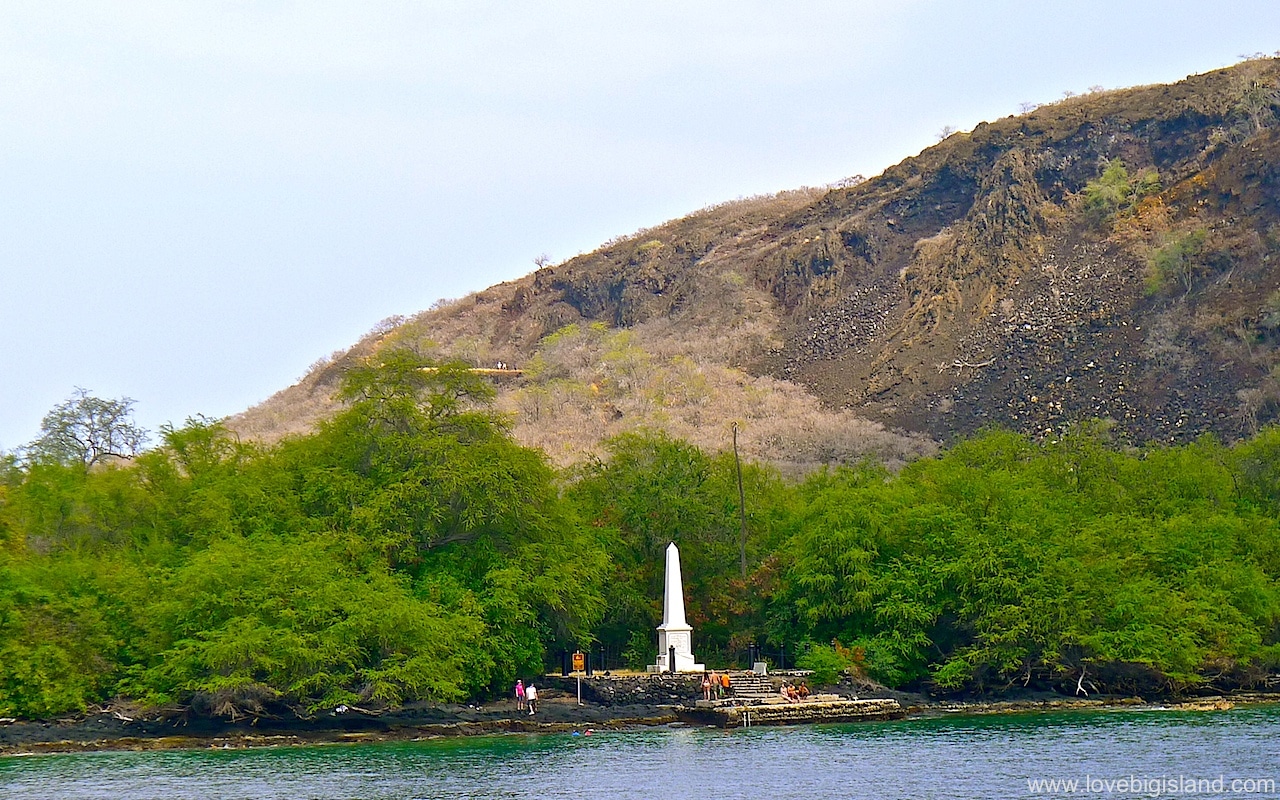
The best snorkeling in Kealakekua Bay is around the Captain Cook monument, but getting there is difficult. The easiest option is to go on a snorkeling tour.
Huliheʻe Palace
The Huliheʻe Palace on the Kailua-Kona waterfront was a retreat for Hawaiian royalty and their high chiefs. Restored in the 1920s, the six-room estate holds koa-wood furniture, quilts, portraits, and other relics of the monarchy.
Recommended visit: Docent-led tours run Wednesday through Saturday. You can reserve a spot online.
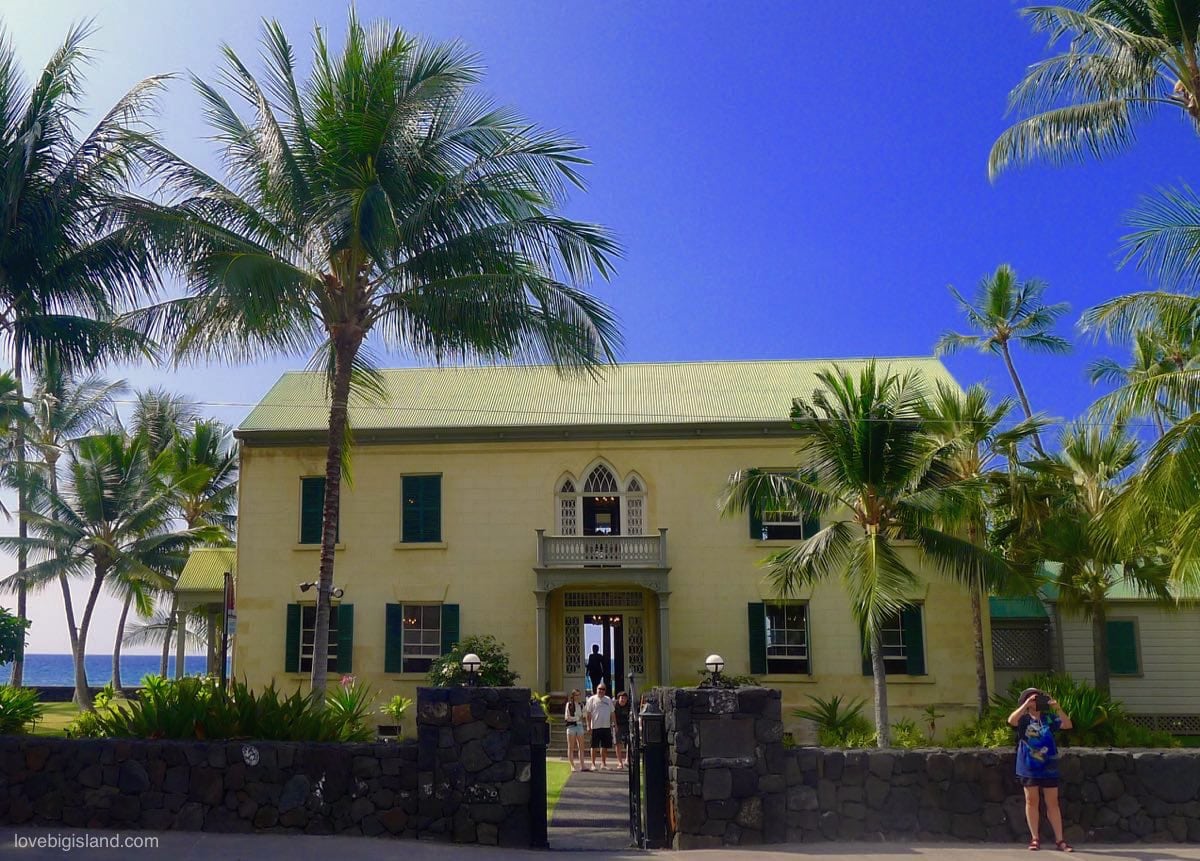
The Huliheʻe Palace in Kailua-Kona, a former royal vacation home now run as a museum of monarchy-era furniture and artifacts.
Naha Stone
Kamehameha rose to king on his reputation as a great warrior. According to Hawaiian prophecy, whoever had the strength to turn over the Naha Stone, which weighs about three tons, would one day rule the Hawaiian islands, a feat Kamehameha reportedly accomplished at about the age of 14.
Recommended visit: The Naha Stone is on display in front of the Hilo Public Library.
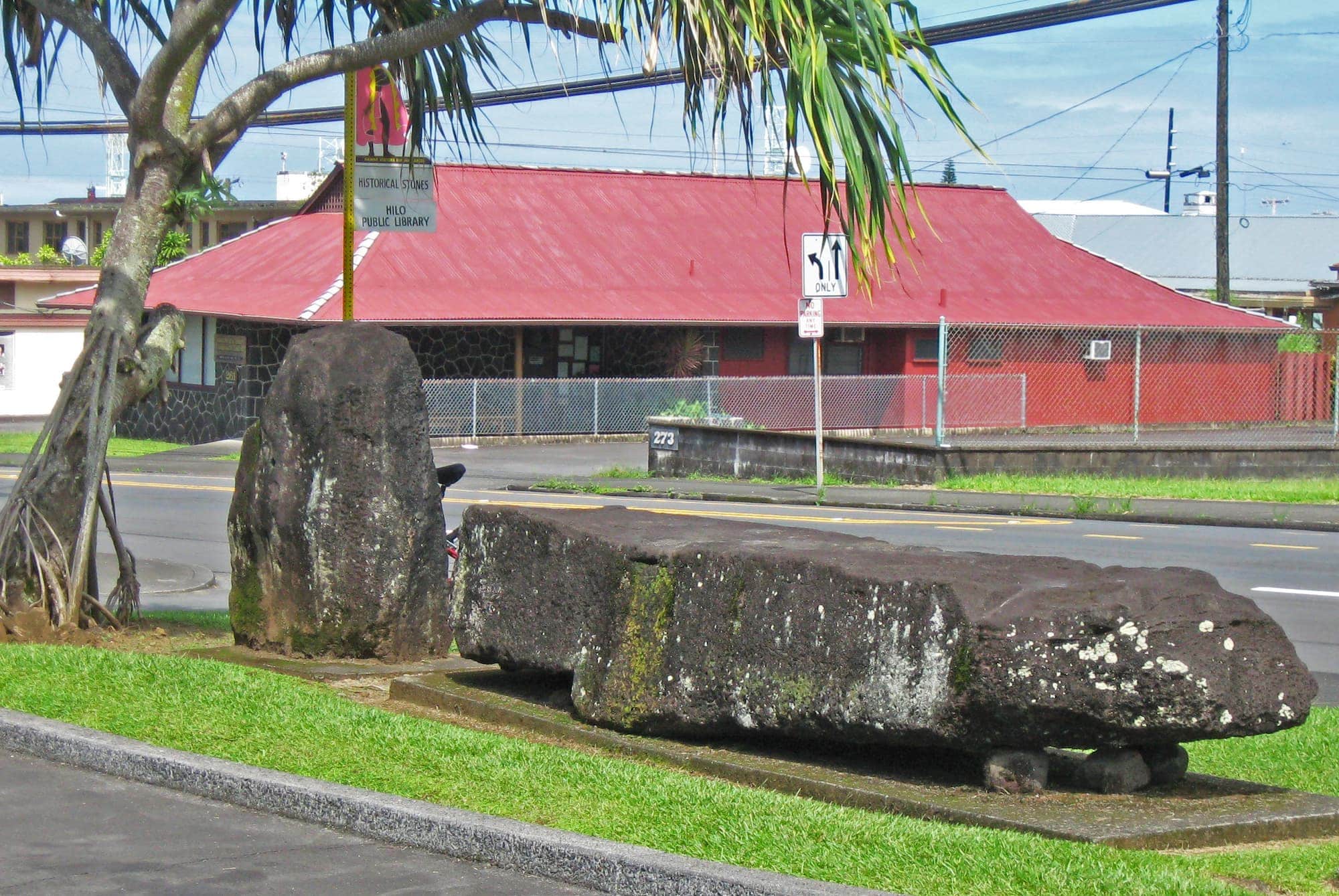
The “Pohaku Naha”, or Naha Stone, is on display at the Hilo Public Library. By W Nowicki – Own work, CC BY-SA 3.0
Kamehameha Rock
In another display of strength, Kamehameha reportedly carried a large stone from the ocean uphill during the construction of a heiau (temple). Out of respect for the “mana,” or spiritual power, tied to the rock, it still sits by the roadside today. It is easy to miss, with no signage or fanfare. We ask that you avoid touching it to help preserve it.
Recommended visit: Follow the road about two miles east of Kapaʻau toward Pololū Valley and keep an eye out on the right-hand side. Check it out on your way to the Pololū Valley overlook/hike.
Kamehameha Statue
Kohala was Kamehameha’s birthplace, and the statue here was rescued from the sea floor after its transport ship sank near the Falkland Islands.
Recommended visit: In Kapaʻau, you can see the Kamehameha Statue on your way to Pololū Valley and nearby downtown Hāwī.
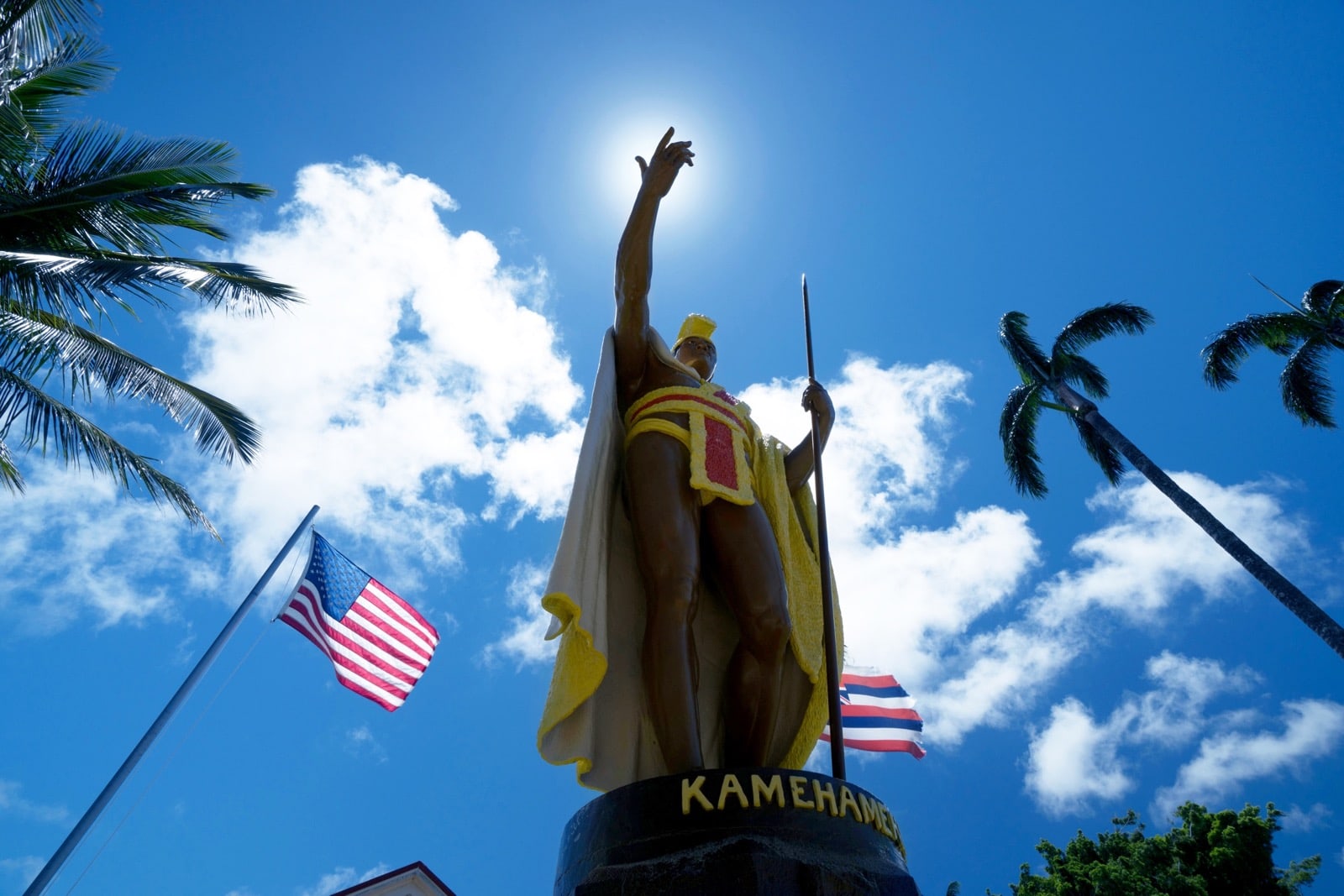
The Kamehameha statue in front of the North Kohala Civic Center (Kapaau, HI). Credit: Hawaii Tourism Authority (HTA) / Blake Bronstad
Cultural Experiences
For a hands-on sense of the past, try one of these Big Island cultural experiences:
Hike the King’s Trail
The Ala Kahakai National Historic Trail, casually known as the King’s Trail, was a major land route in ancient Hawaiʻi that linked many of the land-division communities, or ahupuaʻa, on foot. Its restoration began in 2000, and today the trail forms a 175-mile corridor, running from Upolu Point in the north, down the west coast, around South Point, and through Hawaiʻi Volcanoes National Park to the former site of the Wahaʻula Heiau.
Recommended visit: Read about the trail’s restoration and its mission here before visiting. There are many places to get on the King’s Trail. One good option is the section near ʻAnaehoʻomalu Bay and the Waikōloa Petroglyph Reserve, for its easy access and parking and a post-hike dip at the beach.
Puakō Petroglyph Archaeological Preserve
Petroglyphs turn up across the islands, but Puakō holds one of the largest fields. It covers 223 acres and contains more than 3,000 lava-rock carvings. Ancient Hawaiians made them for storytelling, recording events, and sometimes just for fun.
Recommended visit: The carvings include humans, turtles, and canoes for kids to pick out along the walk. It’s a short trip from the nearby Mauna Lani resort.
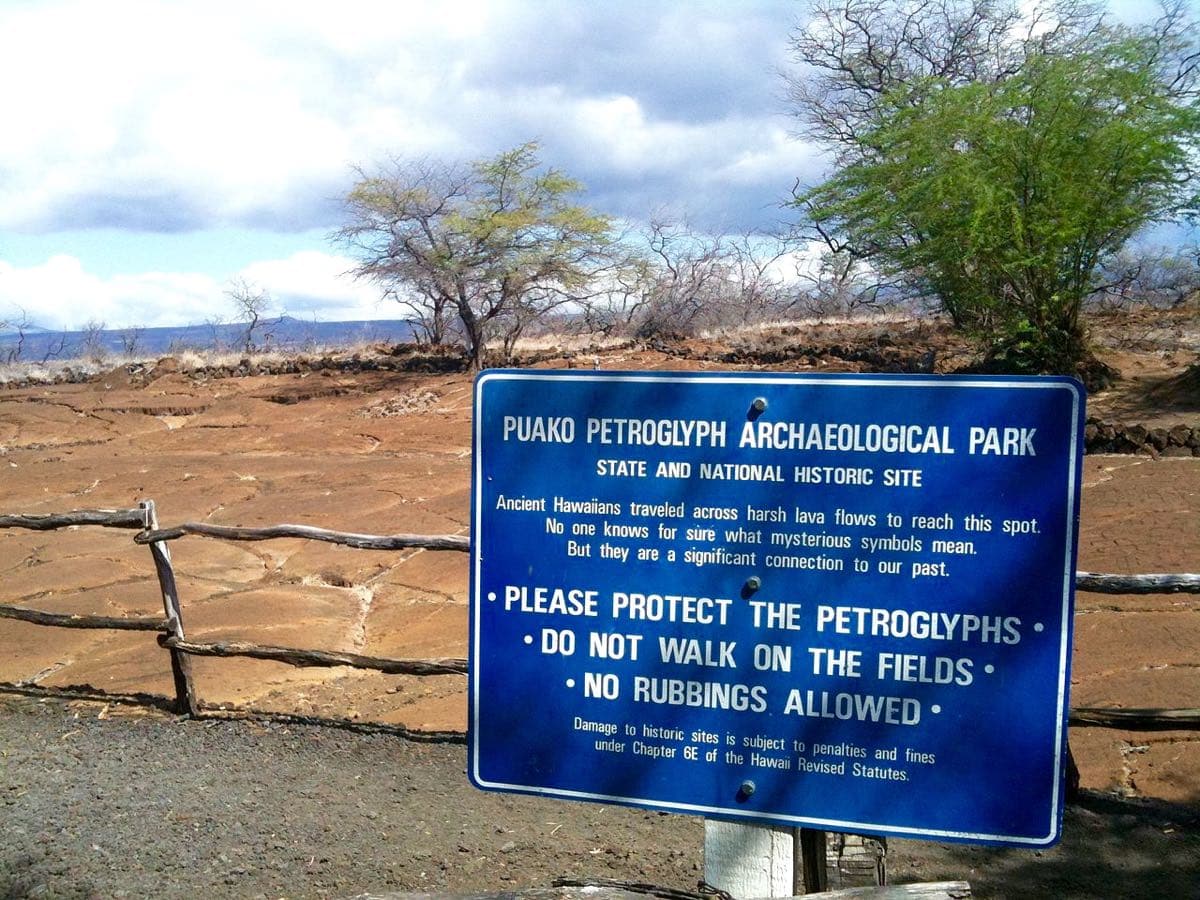
Sign at the Puakō Petroglyphs Archaeological park. Image by Christopher Carfi – puako petroglyphs, CC BY 2.0, Link
Archaeological Sites
The Big Island has more archaeological sites and heiau than you could visit in a single trip:
- Ahuʻena Heiau and Kamakahonu National Historic Landmark
- Moʻokini Heiau
- Puʻuhonua o Hōnaunau
- Puʻukoholā Heiau National Historic Site
Ahuʻena Heiau and Kamakahonu National Historic Landmark
Kamakahonu National Historic Landmark, in downtown Kailua-Kona, is where Kamehameha lived out the final years of his life after uniting the islands, and where the missionaries first came ashore in the 1820s.
Recommended visit: Today, the Island Breeze Luʻaū takes place on this historic site. There is not much to interact with, but you can walk the waterfront property in front of the King Kamehameha Hotel and see reconstructions of the original structures.
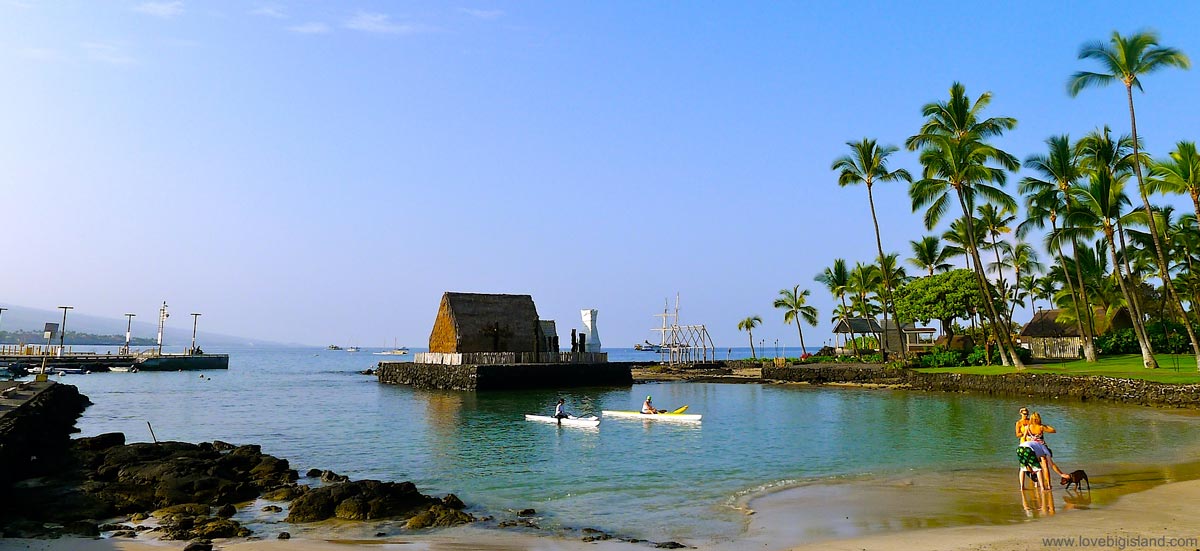
The Ahuʻena Heiau in Kailua-Kona on the Big Island.
Moʻokini Heiau
For one of the oldest heiau you can visit on the Big Island, head to Moʻokini near the town of Hāwī in the Kohala district. Tradition dates its original construction to the 5th century, with a reconstruction around the 13th or 14th century.
Recommended visit: As always with heiau, read up on the history before visiting to understand what took place there. You can work a visit into any trip up to Kohala, perhaps alongside the Kamehameha statue and rock or the Pololū overlook. A dirt road leads to the heiau, so so you want high clearance and four-wheel drive.
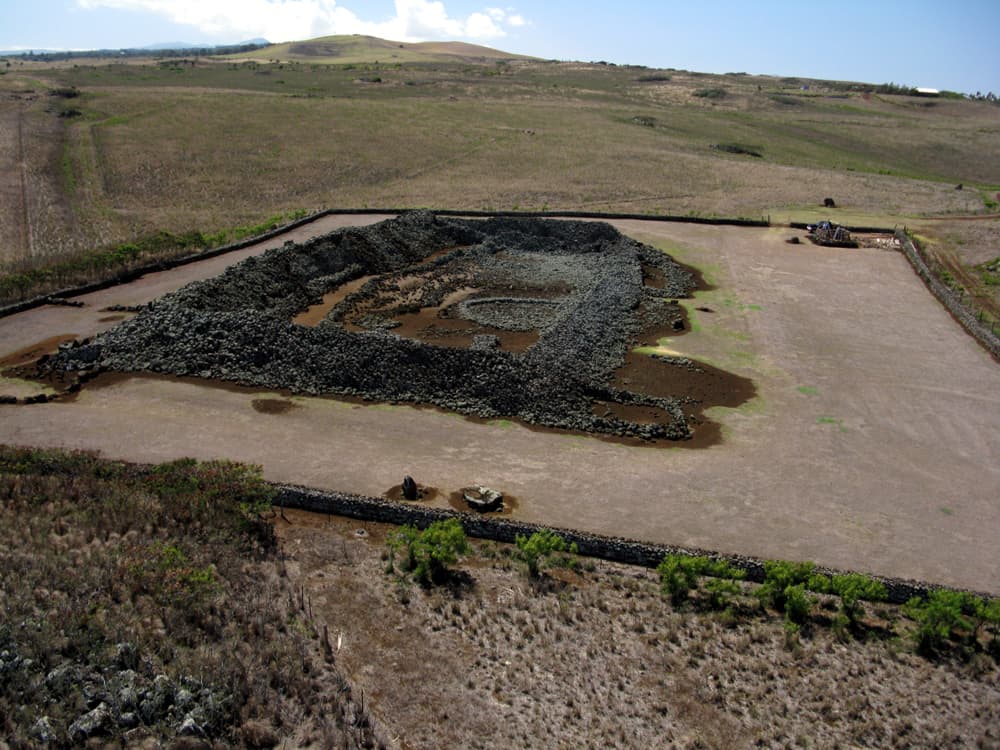
The Moʻokini Heiau seen from the air. Image credit: Tom Benedict, source.
Puʻuhonua o Hōnaunau
Puʻuhonua o Hōnaunau means “place of refuge,” or in simpler terms a rehabilitation center for ancient lawbreakers. Staffed and run by priests, those who had broken a “kapu,” or ancient law, could reach an established refuge like Puʻuhonua o Hōnaunau to do penance. It was also a place of safety for women and children during times of war.
Recommended visit: Time your visit with one of the ranger talks in the amphitheater. The talk gives you the historical context.
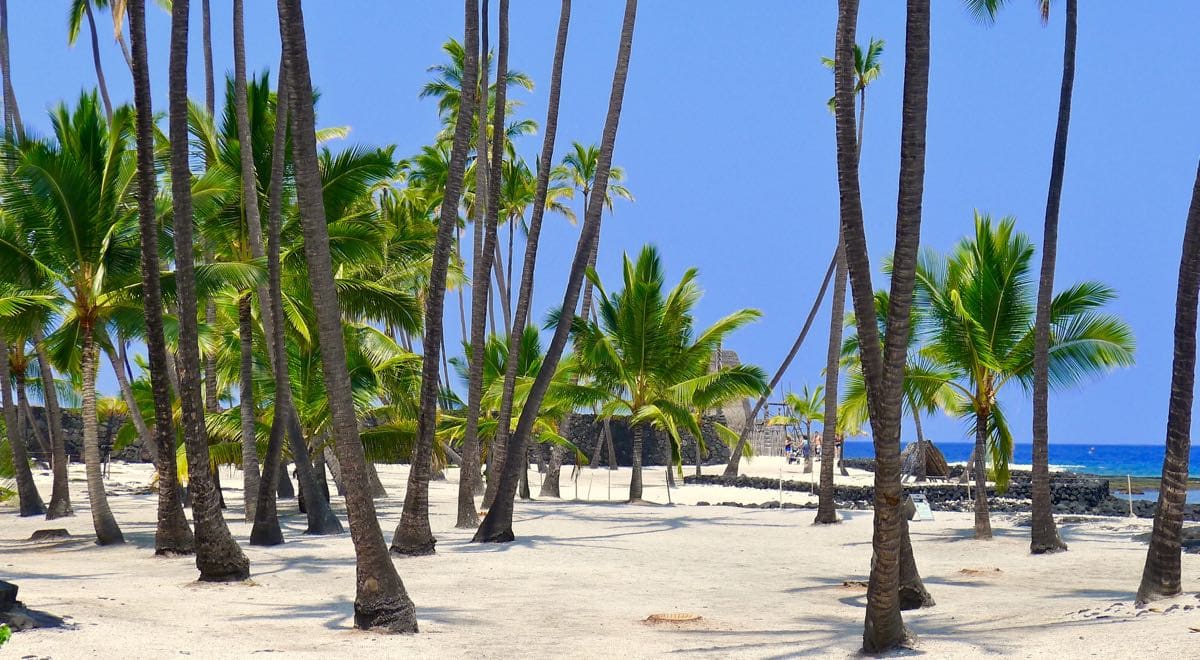
Puʻuhonua o Hōnaunau National Park on the Big Island of Hawaiʻi is a good place to take in Hawaiian history. Next door, 300 feet from the park entrance, is one of the best snorkeling spots on the island.
Puʻukoholā Heiau
Kamehameha built Puʻukoholā Heiau during his rise to power. At this multi-purpose complex, ceremonies of war and worship took place as he brought the other islands under his rule.
Recommended visit: Read up on Puʻukoholā before visiting. Guided tours are also available. Hike around the complex before or after meeting with rangers, and wear closed-toe shoes and bring plenty of water.
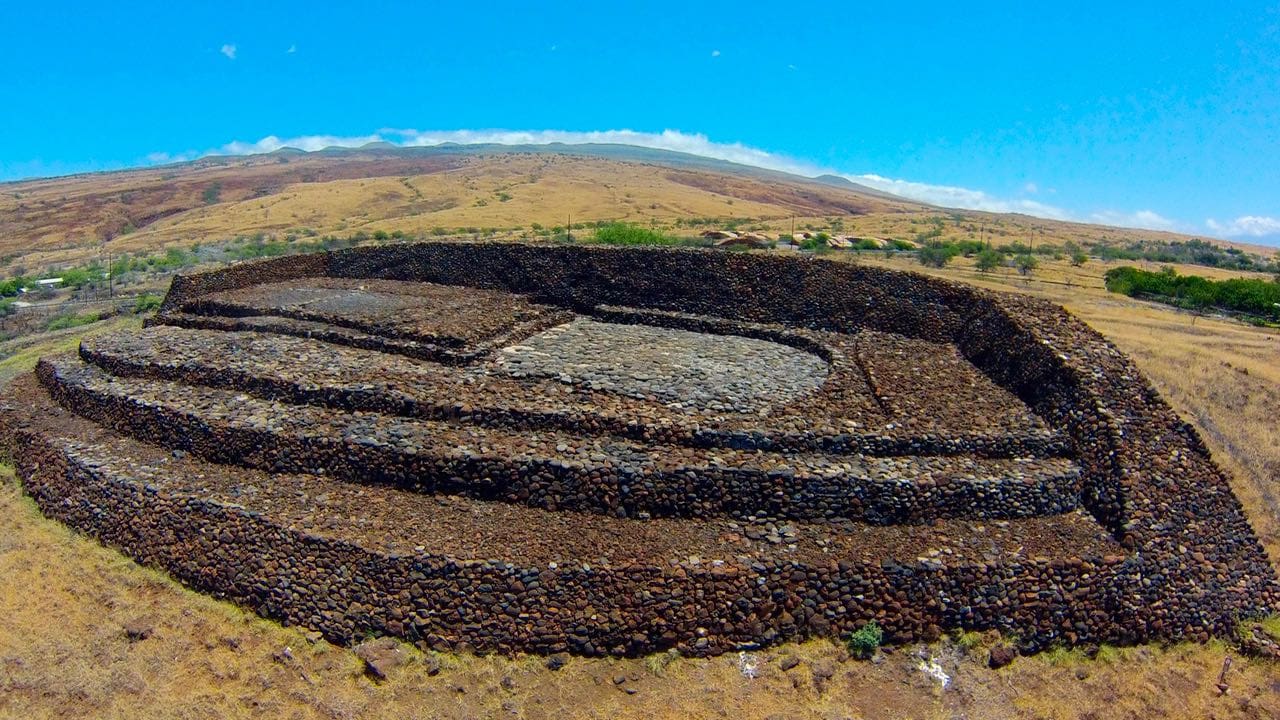
The Puʻukoholā Heiau National Historic Site. Image credit: NPS
14 State + 4 National Parks
The Big Island has fourteen state parks. Some are underwater marine preserves (Kealakekua Bay), others white-sand beaches (Hāpuna Beach) or tall waterfalls (ʻAkaka Falls). Many are also historic or cultural sites (Lapakahi, also good for shore whale watching in winter) or unusual geology (Lava Trees).
Our guide to all Big Island State and National Parks maps all of the island’s national and state parks.
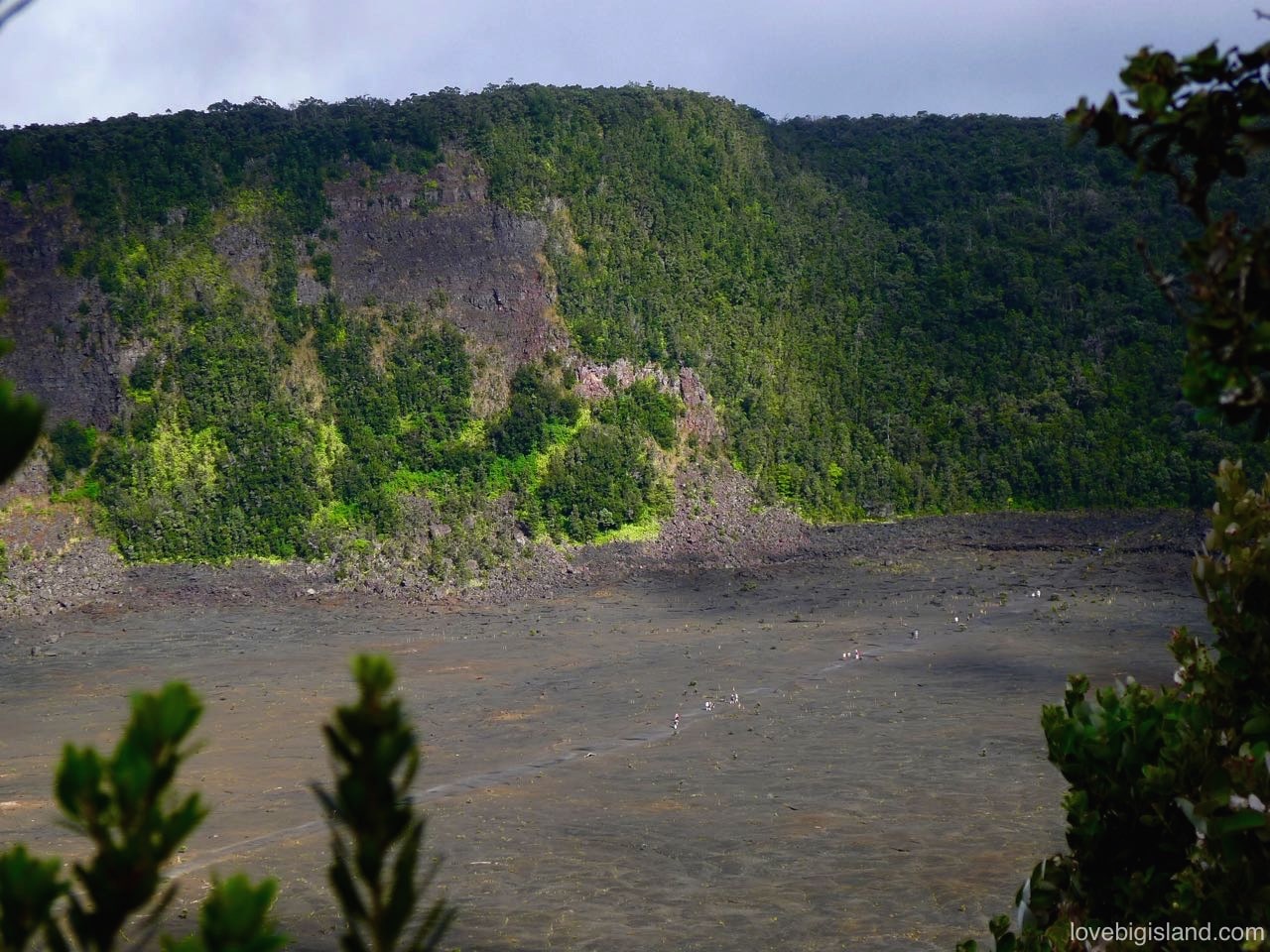
Hikers cross the floor of Kīlauea Iki crater in Hawaiʻi Volcanoes National Park. The Kīlauea Iki hike is a 3.3-mile loop rated moderate.
Map
The map below will help you find all historic and cultural places mentioned on this page:
If you want to add this map to your Google Maps account for easy access, click the ‘star’ icon next to the map name. You can then view it on your cell phone or computer by heading to your Google Maps account, click the menu and add it to ‘Your Places’.
Cultural and historical experiences on the other Hawaiian islands
For the history and culture of the other Hawaiian islands, see our companion guides: