Measured from its base on the ocean floor, Maunakea stands taller than Mount Everest. This page collects: 48 entries of Big Island trivia in alphabetical order. It opens with what aloha means and closes with why wiki is a Hawaiian word.
Plenty of the entries carry numbers you can repeat at dinner: a 54-foot tsunami hit Hilo in 1946, and lava in an open channel has been clocked at 30 miles per hour. Read a few before you fly, or use them to quiz your passengers on the drive to the volcano. The newest entry covers Mauna Loa, the largest active volcano on Earth, which erupted in 2022 for the first time since 1984.
Are you shark bait or Kamaʻāina?
Test your Hawaiʻi knowledge before or after reading this page.
- Aloha!
- Aloha shirts
- Aloha state
- Antipodes
- Air Strikes on Hawaiʻi
- Beaches
- Captain Cook
- Earthquakes on Hawaiʻi
- Endangered birds
- Endemic species on Hawaiʻi
- Green sand beach
- Hāpuʻu (Hawaiian tree fern)
- Hawaiʻi island flower
- Hawaiʻi nicknames
- Hawaiʻi state bird
- Hawaiian alphabet
- Humuhumunukunukuāpuaʻa
- Ironman triathlon
- Kahili ginger
- Kailua
- Kamaʻehuakanaloa: the youngest island of Hawaiʻi
- Kīlauea
- Lake Waiau
- Lava flow speed record
- Loco moco
- lauwiliwilinukunukuʻoiʻoi
- Longest river
- Ma Uka and Ma Kai
- Mahukona Volcano
- Mauna Loa
- Meteors in Hawaiian Culture
- Not so big Big Island
- Pāhoehoe and ʻaʻā
- Pidgin: the unofficial language of Hawaiʻi
- Pele’s hair
- Pineapples
- Recent lava damage
- Sandwich Islands
- Spam
- Telescopes on Hawaiʻi
- The 1946 Tsunami
- The widest state
- 24 Tsunamis since 1812
- Two ladies kitchen
- Ukulele
- Waipiʻo cliffs
- Wiki
- World records for Hawaiʻi
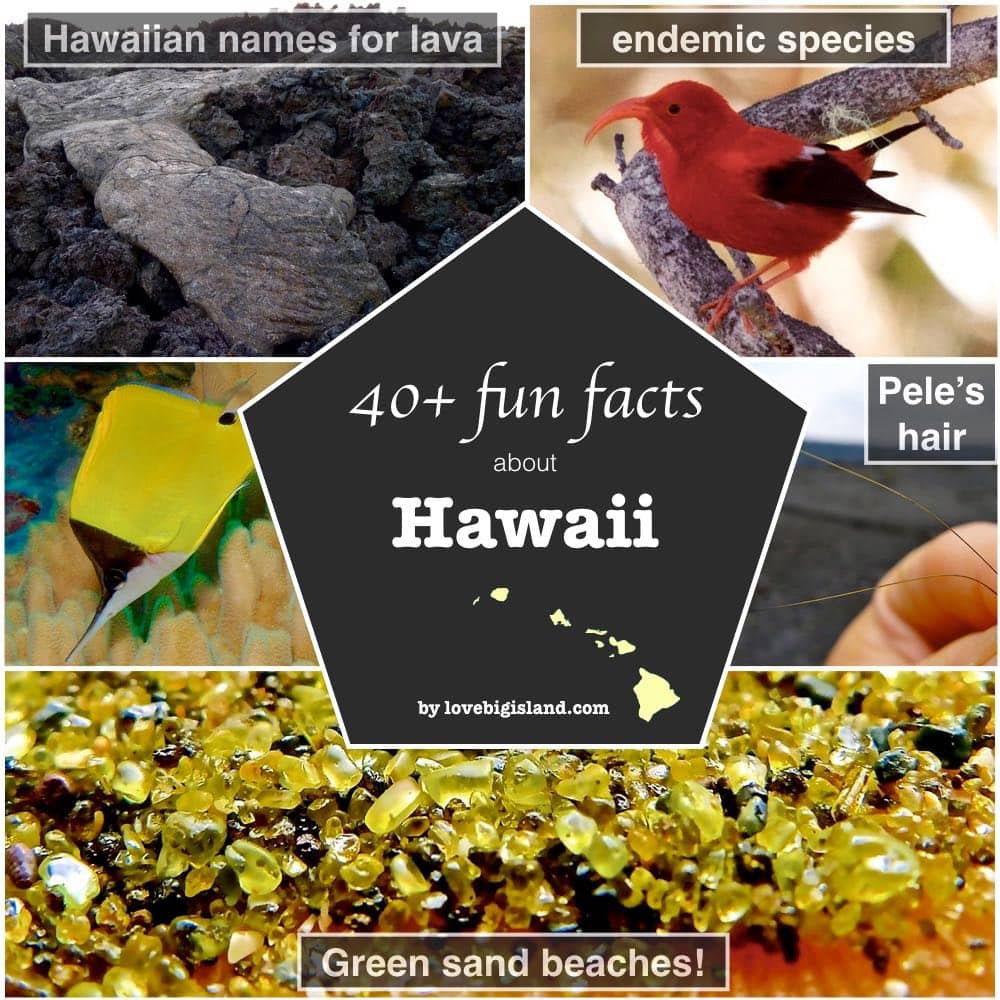
48 facts and trivia about the Hawaiian islands
Some of these earned a full article of their own:
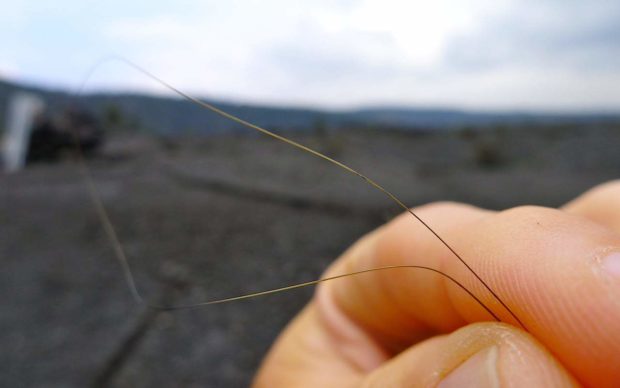
You can find Pele's hair (thin strands of volcanic glass drawn out from molten lava) all around the Hawaii Volcanoes National Park.
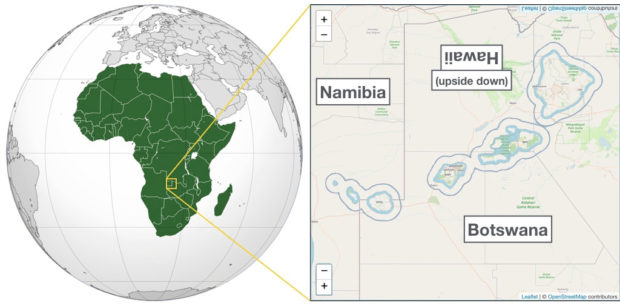
Dig a hole through the earth starting in Hawaii, and you come out on the other side of the planet in Botswana and Namibia (Africa).
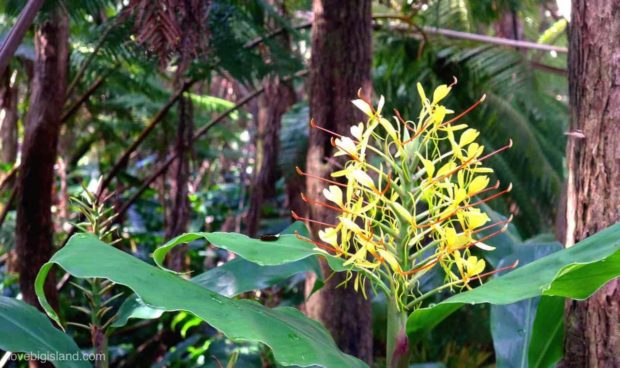
Kahili ginger is a beautiful but invasive plant originating from eastern India, and can be found in forests on all Hawaiian islands.
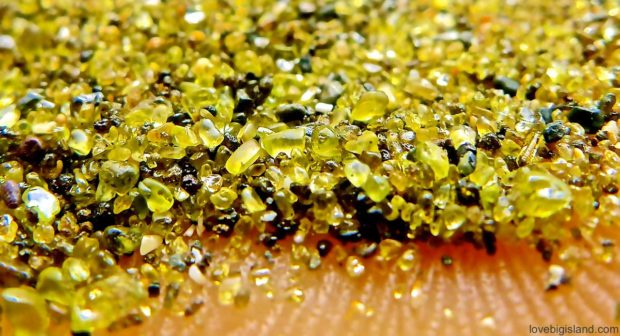
Green Sand Beach (Papakōlea): the geology and the myths
Roughly 90% of the sand at Green Sand Beach is crystal, mostly olivine. Papakōlea means plover flats, and the 'only four in the world' claim has no source.
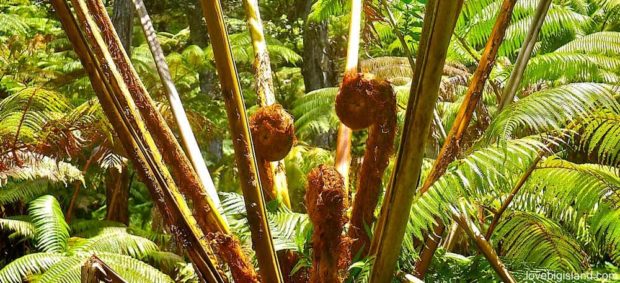
Hāpuʻu or Hawaiian tree fern [trivia]
Facts, trivia and pictures for the Hāpuʻu (Hawaiian tree fern). Medicinal use and how to eat Hāpuʻu, as well as a Hawaiian proverb that features this plant.
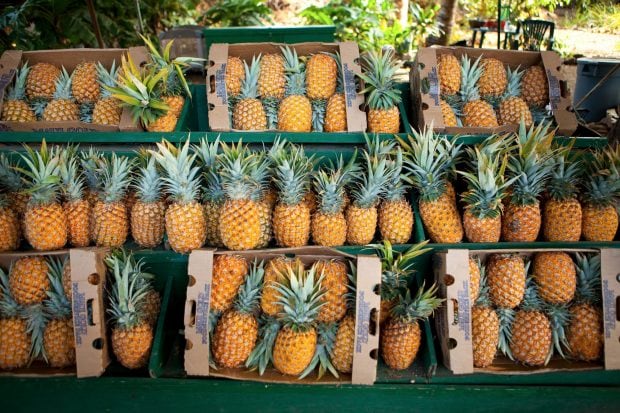
Pineapples in Hawaiʻi: 🍍history, 🍍facts, and 🍍trivia
Pineapples aren't native to Hawaiʻi. They came from South America, and the islands once grew 80% of the world's canned pineapple. Is Hawaiian pizza Hawaiian?.
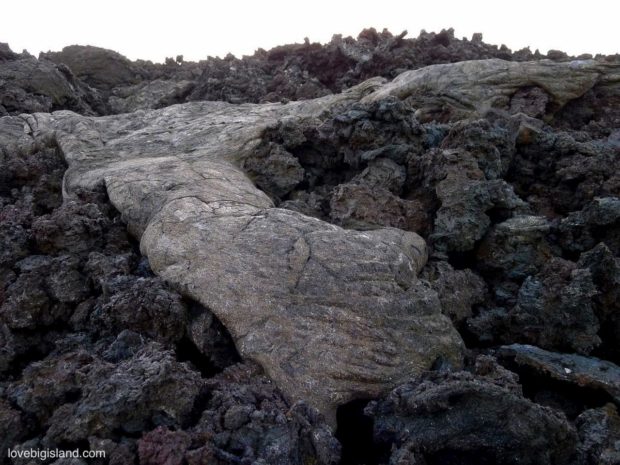
Pāhoehoe and A'a are two different kinds of lava rock. You can find both on the Big Island of Hawaii. Differences, similarities and the Hawaiian translation.
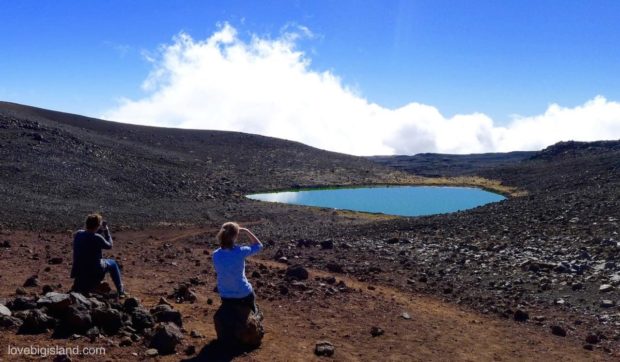
Lake Waiau on MaunaKea: the only alpine lake in Hawaiʻi, at 13,020 feet
Lake Waiau shrank to 114 square meters in September 2013, then refilled. The only alpine lake in Hawaiʻi, at 13,020 ft just below the Mauna Kea summit.
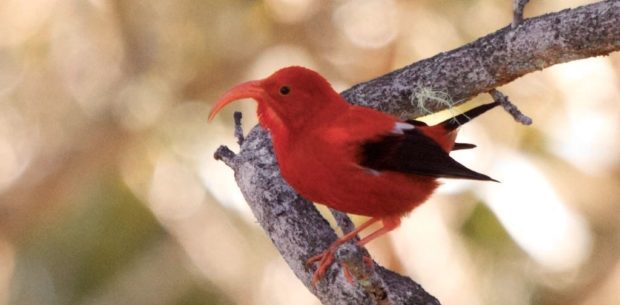
Endemic and Native Species in Hawaii
90% of Hawaii's native species are endemic if you only count the ones that live on land. Count every native species and the figure drops to just under half.
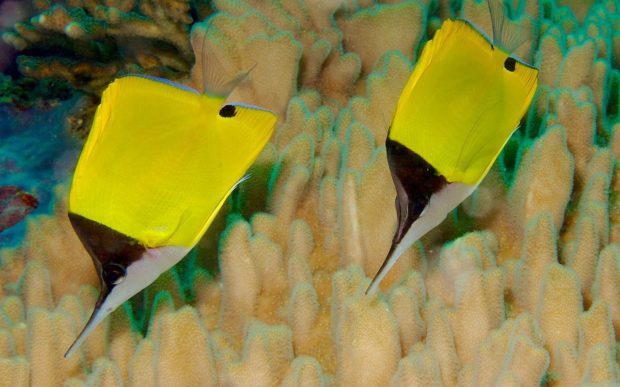
The Lauwiliwilinukunukuʻoiʻoi (longnose or foreceps butterflyfish) is the fish with the longest Hawaiian name.The fish are monogamous and easy to find.
Big Island Fact Sheet
The 48 entries below run in alphabetical order, from aloha to wiki.
Aloha!
Aloha means many things, including: love, affection, compassion, mercy, sympathy, pity, kindness, sentiment, grace, charity, greeting, salutation, regards, sweetheart, lover, loved one, to love, and to be fond of. It is commonly used as a greeting or a way to say goodbye.
Aloha Shirts
The aloha shirt dates to the 1930s and grew out of the interaction of Hawaiʻi’s many immigrant communities. Ellery Chun trademarked the name “Aloha Shirt” in 1936, and is often credited with inventing the design in 1931.
Aloha State
Hawaiʻi is the 50th state of the USA. By a legislative act, Hawaiʻi became officially known as the “Aloha State” in 1959.
Antipodes
Your antipode is the point exactly on the other side of the planet. For all of Hawaiʻi except northern Kauaʻi, that point lands in Botswana in southern Africa (see the pictures to convince yourself). For the northern part of Kauaʻi, it lands in Namibia.
Air Strikes on Hawaiʻi
The air force bombed a lava flow that threatened Hilo in 1935 but failed to stop it. Read more Hawaiian facts and trivia about the volcanoes in A Short History of the Big Island in 5 Volcanoes.
Always close to a beach
While on the Big Island you will never be farther than 28.5 miles away from a beach. 30% of the surface of the Big Island is within 5 miles of a beach (source).
Captain Cook
The British explorer Captain James Cook died on the Big Island, in a struggle with the native population at Kealakekua Bay (also nicknamed Captain Cook) in 1779.
Nowadays, Kealakekua Bay is one of the island’s best snorkeling and diving spots.
Earthquakes on Hawaiʻi
Hawaiʻi is not the state with the most earthquakes, but it is the state with the highest earthquake density. The Big Island is by far the most seismically active of the Hawaiian islands. Read more in “Hawaii, the Earthquake state?”
Endangered Birds
More birds have become extinct in Hawaiʻi than in any other part of the world. A total of 26 species died out, and 27 more are endangered by habitat loss, forest destruction, rats, mongooses, and of course humankind.
Endemic species on Hawaiʻi
Endemic to Hawaiʻi means you can’t find it anywhere else in the world. 90% of all native species on Hawaiʻi are endemic if you only count the native species that live on land. 50% of all native species on Hawaiʻi are endemic, and 40% of all species are endemic.
Read more of such facts (99.5% of tree snails are endemic) in our guide to native and endemic species on Hawaiʻi.
Green Sand Beach
Green sand beach is one of the two green sand beaches in the United States, and one of only a handful worldwide. It gets its color (and name) from olivine crystals that wash out of a 49,000-year-old cinder cone next to the beach.
Other names for this beach are Papakōlea and Mahana beach. Find out why on our dedicated Green sand beach trivia page.
Hāpuʻu or Hawaiian tree fern
The hāpuʻu or Hawaiian tree fern (Cibotium menziesii) is what gives many places on Hawaiʻi that “Jurassic Park” feel. It also has medicinal use and features in a Hawaiian proverb about famine and death.
Find out more at our dedicated “Hāpuʻu trivia” page.
Hawaiʻi Island Flower
Island flowers and colors are used to represent each island. The island flower of the Big Island is the pua lehua, the red blossom of the ʻōhiʻa lehua tree, which is also the state’s endemic tree. The ʻōhiʻa lehua has its own Hawaiian legend.
Nicknames for the Big Island
The Island of Hawaiʻi is the official name for the Big Island, but it gets more confusing. All of the following names refer to the same island:
- “The island of Hawaiʻi”
- “The Big Island”
- “The Orchid Island”
- “Hawaiʻi’s Island of Adventure”
Hawaiʻi State Bird
The Hawaiian goose or nēnē (Branta sandvicensis) is endemic to the Hawaiian Islands and is the official state bird of Hawaiʻi. By the mid-1940s only about 50 birds remained; reintroduced populations now live on Hawaiʻi, Maui, Kauaʻi, Molokaʻi, and most recently Oʻahu (NPS). The Hawaiian name nēnē comes from its soft call.
Hawaiian Alphabet
Together with English, Hawaiian is an official language of the state. Two parts of written Hawaiian are easy to miss: the ʻokina (which represents a glottal stop, a consonant) and the kahakō (a macron used to indicate long vowels).
The Hawaiian pīʻāpā (alphabet) consists of 13 letters:
- 5 normal vowels: A (ʻā), E (ʻē), I (ʻī), O (ʻō), U (ʻū),
- 8 consonants: H (hē), K (kē), L (lā), M (mū), N (nū), P (pī), W (wē), ʻ (ʻokina)
Despite this limited amount of letters, Hawaiian has some proper tongue-twisters, such as the state fish called “humuhumunukunukuāpuaʻa” or the lauwiliwilinukunukuʻoiʻoi.
Good to know: The ʻokina and the kahakō distinguish many words, and without this orthography, word definitions change. For example: ono (a fish) is different from ʻono (tasty), and kau (to place) is different from kāu (your).
Humuhumunukunukuāpuaʻa
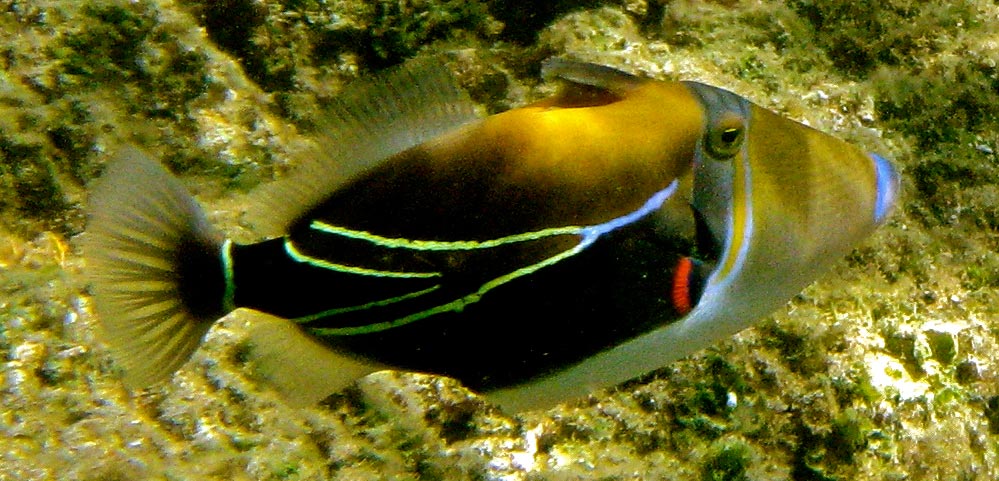
The humuhumunukunukuāpuaʻa (reef triggerfish), the state fish of Hawaiʻi
The state fish of Hawaiʻi is the humuhumunukunukuāpuaʻa. Translated from Hawaiian it means “triggerfish with a pig-like short snout”. Its name is pronounced as “who-moo-who-moo-noo-koo-noo-koo-ah-pooah-ah”.
The humuhumunukunukuāpuaʻa has not, as often claimed, the longest fish name in Hawaiian. That distinction belongs to lauwiliwilinukunukuʻoiʻoi (“long-snouted fish shaped like a wiliwili leaf”).
Ironman Triathlon
The Ironman World Championship moved from Oʻahu to the Big Island in 1981. The course runs along the island’s west side, between Kailua-Kona and the Hawi turnaround in the north.
Kahili Ginger
Kahili ginger is a showy invasive species originating from eastern India. ‘Kahili’ is a Hawaiian word for a feather standard or a long pole decorated at one end with a cluster of feather plumes, which is a symbol of royalty and was used as a ceremonial emblem in Hawaiʻi.
[more information and pictures of Kahili Ginger]
This plant is probably one of the first to catch your eye if you are visiting Volcano Village or the Hawaiʻi Volcanoes National Park, but it grows in forests on all the Hawaiian islands.
Kailua
Kailua means “two seas” or “two currents”. It is a contraction of the words kai (meaning “sea” or “sea water”) and ʻelua (meaning “two”). There are two cities on the Hawaiian islands called ‘Kailua’. The biggest Kailua is on the windward side of Oʻahu, while the smaller lies on the leeward side of the Big Island. Because in the Hawaiian language, ‘leeward’ means ‘kona’, so people call the Big Island’s Kailua ‘Kailua-Kona‘.
Kamaʻehuakanaloa
The Big Island is the youngest island of Hawaiʻi. A new island, Kamaʻehuakanaloa (formerly known as Lōʻihi), is already forming 15 miles southeast of its coast as the Big Island moves away from the hot spot responsible for the Hawaiian Islands. Its summit has already risen two miles off the seafloor, with one mile to go before it breaks the surface. In another 30 or 40 thousand years, Kamaʻehuakanaloa will be born as the youngest of the Hawaiian Islands.
Kīlauea
The Kīlauea volcano is one of the most active volcanoes in the world. The Hawaiian name “Kīlauea” means “spewing” or “much spreading,” probably in reference to the lava flows it was already erupting in ancient Hawaiian times.
Lake Waiau
Just below the summit of Maunakea, inside a cinder cone, is Lake Waiau. This is the only glacial lake in the mid-Pacific, and, at 13,020 feet above sea level, it is also one of the higher lakes in the world. Its volume dropped sharply, then recovered: by November 2013 it held less than 1% of its pre-2010 volume [source 1], and by mid-2015 it had refilled almost back to historic levels [source 2].
You can find more in-depth information on, and pictures of, lake Waiau, at our dedicated Lake Waiau Trivia page.
Lava flow speed records
The fastest lava flows recorded on Hawaiʻi came from Mauna Loa’s 1950 eruption: one ʻaʻā flow covered the 24 km (15 miles) from its vent to the ocean in under 3 hours, and observers clocked lava in the open channels at 10 to 30 miles per hour [source].
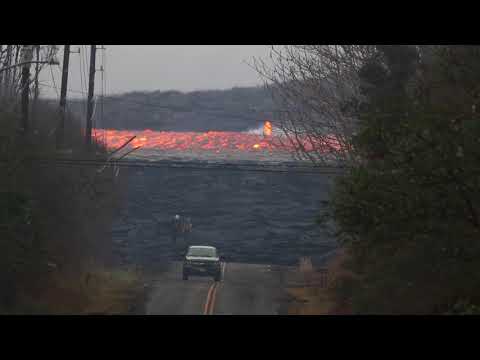
Once a flow is established, the fastest lava runs inside tubes and open channels like the ones in the following video, filmed during the destructive Kīlauea 2018 lower East Rift Zone eruption by local photographer Ken Boyer:
Lauwiliwilinukunukuʻoiʻoi
The fish with the honor of having the longest Hawaiian name is the lauwiliwilinukunukuʻoiʻoi. Freely translated this name means “long-snouted fish shaped like a wiliwili leaf”. This fish indeed has a HUGE snout, and it is monogamous.
You can find out more about this fish and tongue twister extraordinaire in our extended lauwiliwilinukunukuʻoiʻoi trivia article.
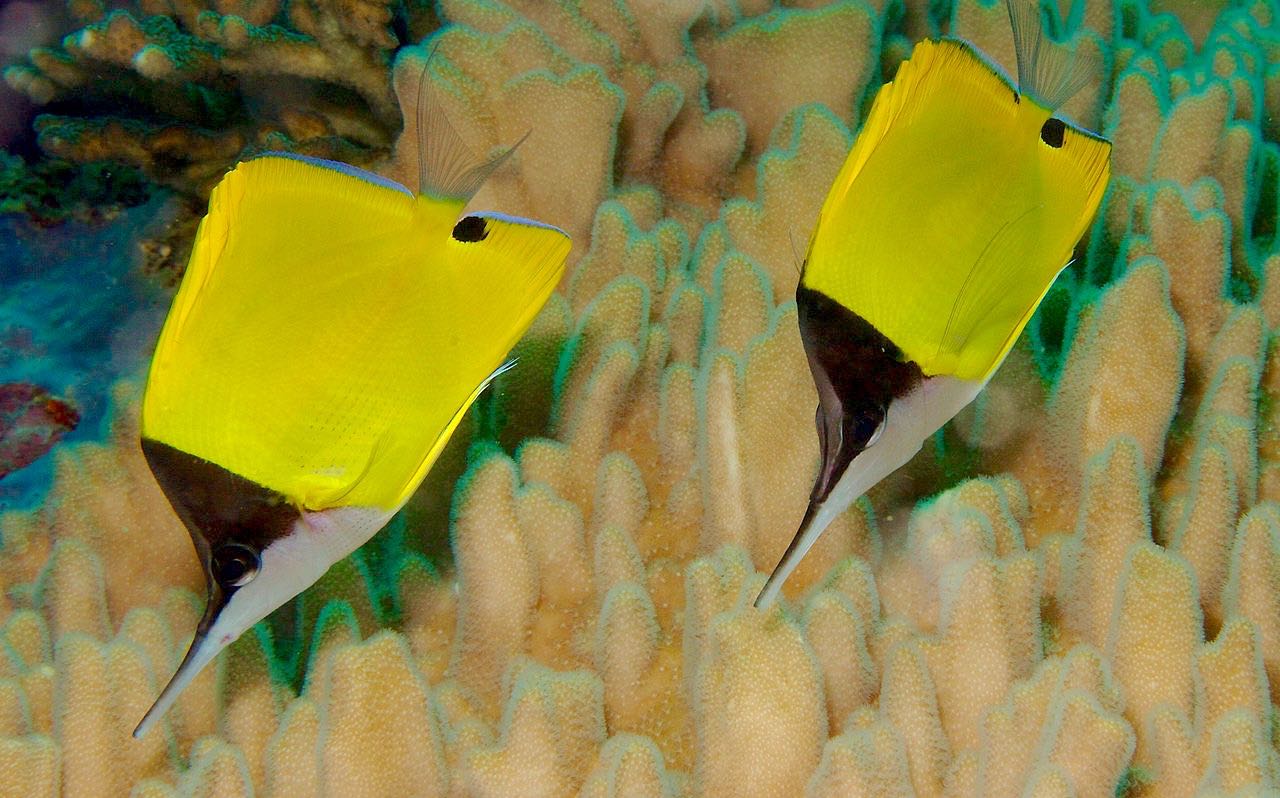
Forcipiger flavissimus, the yellow longnose butterflyfish. Source: Wikimedia commons by user Nhobgood. Published under a CC BY-SA 3.0 license
Loco Moco
The Loco Moco is a dish native to Hawaiʻi. It consists of white rice topped with a hamburger patty, a fried egg, and brown gravy, but there are many variations. Variations include chili, bacon, ham, Spam, kalua pork, Portuguese sausage, teriyaki beef, mahi-mahi, shrimp, and oysters.
Longest river in Hawaiʻi (Kaukonahua Stream on Oʻahu)
The longest river in the state of Hawaiʻi is the Kaukonahua Stream on Oʻahu, which is 33 miles long. The second longest river is the Wailuku River on the Big Island. This river starts high up Maunakea and takes 32 miles to reach the ocean.
The Wailuku river does have the largest water discharge of all rivers in the state, with an average of 180 million gallons / day. The discharge keeps Rainbow Falls (on the Wailuku river) running year-round. (source)
The largest navigable river (Wailua river on Kauaʻi)
If you are looking for the largest river that you can explore yourself (e.g. by kayak, SUP or outrigger canoe) you need to head to the Wailua river on Kauaʻi. Flowing from the 5,148-foot Mount Waiʻaleʻale past waterfalls and jungle to the island’s east shore, it runs 20 miles, 3.5 miles longer than the Hanalei river.
Ma Uka and Ma Kai
In Hawaiʻi, there are two uniquely local words that describe a direction:
- Ma Uka (mow-kah) means on the mountain side in the context of directions.
- Ma Kai (mah-kigh) means on the ocean side in the context of directions.
These words are used constantly in Hawaiʻi, usually without further explanation, so it pays to know them before you need directions.
Meteors in Hawaiian Culture
There are several words for a meteor or comet in the Hawaiian Language: Koll, Akualele, Hokulele and Hoku Welowelo. Leiepio means “To fly, as a meteor through the sky”. Read more about meteors in Hawaiian culture.
Mahukona Volcano
The Mahukona volcano is the oldest and northernmost volcano of the Big Island of Hawaiʻi. Its existence was predicted in 1890, but it took scientists until 1987, almost 100 years, to confirm it. You can read more about the Mahukona volcano (and the 5 other volcanoes that are, have been or will be part of the Big Island) on our Big Island Blog.
Mauna Loa
Mauna Loa is the largest active volcano on our planet (USGS). It covers half of the Big Island and by itself amounts to about 85 percent of the area of all the other Hawaiian islands combined. After 38 quiet years it erupted again on November 27, 2022, from Mokuʻaweoweo, its summit caldera; the lava stopped flowing about 12 days later.
How “Big” is the Big Island?
The Big Island might be “big” compared to the other Hawaiian islands, but, in reality, it is quite small. From the southern tip to the northern tip it measures a mere 93 miles, while the distance between the extreme points on the east side and the west side is 76 miles (source). The surface of the Big Island is 4,029 square miles (10,433 km2).
Pāhoehoe and ʻaʻā
There are two different kinds of hardened lava you can encounter on the Big Island: pāhoehoe (pronounced “pah hoy hoy”) and ʻaʻā (pronounced “ah ah”). The surface of ʻaʻā lava is sharp and rough, while pāhoehoe surfaces are smoother.
Pictures, a video, and more information in our in-depth pāhoehoe and ʻaʻā article.
Pele’s Hair
Pele’s hair is not real hair from the Hawaiian goddess of fire Pele. Instead, it is the internationally recognized name for little strands of lava glass that are created during ongoing eruptions. Read more about Pele’s hairs (including picture).
Pidgin
Pidgin (or Hawaiʻi Creole) originated as a form of communication between English-speaking residents and non-English-speaking immigrants in Hawaiʻi. Almost all locals weave pidgin in their everyday (English) conversations, so try keeping your ears open. If you want to look up a couple of phrases, here is a good place to start.
Pineapples in Hawaiʻi
Pineapples have long been a symbol of Hawaiʻi, but they do not originate here. Pineapples are native to South America and made their way to Hawaiʻi via a detour to Europe sometime between the 16th and 18th century. Read more about the history of pineapples in Hawaiʻi, and about how Hawaiian a “pizza Hawaii” really is, in our pineapple fact sheet.
Recent Lava Damage
Between 1983 and 1991, lava flows repeatedly invaded communities on Kīlauea’s coastal south flank, burying eight miles of highway and destroying 181 houses and a visitor center in Hawaiʻi Volcanoes National Park.
The 2018 lower East Rift Zone eruption was more destructive still: lava covered over 700 structures and 30 miles of road in lower Puna, and added 875 acres of new land to the island’s eastern tip (USGS).
Sandwich Islands
When Captain Cook first landed on the Hawaiian islands in 1778, he named them the Sandwich Islands, after his patron, the 4th Earl of Sandwich.
Spam
Spam (the food, not the unsolicited emails) is very popular in Hawaiʻi. More spam is consumed here than in any other state of the USA. One popular local snack is “Spam Musubi”.
Because it is so popular here, you can find “exotic” spam versions in supermarkets on Hawaiʻi, such as Honey Spam, Spam with Bacon, and Hot and Spicy Spam. Spam even goes by the nickname “Hawaiian steak” here.
Not us though. We prefer the local, pasture-raised steaks from cows on the Big Island.
Telescopes (and stargazing) on Hawaiʻi
Mauna Kea on the Big Island houses some of the world’s biggest telescopes and more scientific observatories in one place than anywhere else on Earth.
Read how you can visit the telescopes on the summit yourself in our DIY stargazing guide for Mauna Kea.
Tsunamis in Hawaiʻi
The state of Hawaiʻi is vulnerable to tsunamis. Since 1812, 24 tsunamis with a run-up of more than 2 meters (6.6 feet) have been recorded.
Of these, the 1946 tsunami was by far the most devastating. In total, these tsunamis caused 291 casualties, the most recent in 1975 (source).
Today there are elaborate early warning systems in place to protect against tsunamis.
The 1946 Hilo Tsunami
In 1946, a 54-foot (16.4 meters) tsunami swept over the east side of the Big Island. This tsunami caused 159 deaths and $26 million in property damage ($347 million in 2017 dollars).
If you are in Hilo, you can still see the consequences because the houses closest to the bay have never been rebuilt.
The Widest State
Measured from east to west, the state of Hawaiʻi stretches almost 1,500 miles. That figure is behind Hawaiʻi’s “widest state” trivia claim, though it depends on whether Alaska’s Aleutian Islands, which cross the 180th meridian, are counted.
Two Ladies Kitchen
The large Japanese population of Hawaiʻi has a strong influence on the local food. Mochi, little Japanese rice cakes, are a popular snack in Hawaiʻi. For one of the best versions on the island, go to Two Ladies Kitchen in Hilo and ask for the strawberry mochi.
Ukulele
The ukulele was made famous by Hawaiian music (think Israel Kamakawiwoʻole), but it is not a native Hawaiian instrument: it is Portuguese. The ukulele came to Hawaiʻi in the 19th century as a Hawaiian interpretation of the “cavaquinho” or “braguinha” and the “rajão”, small guitar-like instruments brought over by Portuguese immigrants.
Waipiʻo Cliffs
The sea cliffs on the north side of the Big Island (at Waipiʻo Valley and Pololu, for example) were most likely sculpted by a gigantic landslide some 200,000 years ago, when part of the island slid into the sea. These valleys also hold two of our five favorite short hikes on Hawaiʻi.
Wiki
“Wiki” (as in Wikipedia) is a Hawaiian word and means “Quick”.
More World Records for Hawaiʻi
Mauna Kea on the Big Island is the tallest sea mountain in the world: measured from the ocean bottom it stands 4,000 feet taller than Mt. Everest. More record-breaking trivia on the Big Island.