
No road runs into the Nāpali Coast. Its 17 miles of eroded cliffs rise close to 4,000 feet straight out of the ocean on Kauaʻi’s northwest side, past the point where any highway ends. You reach it three ways: by boat, by helicopter, or on foot along the 11-mile Kalalau Trail.
A boat gets you closest to the sea caves and snorkeling. From a helicopter you see the whole ridgeline in under an hour, while the Kalalau Trail is the only way to set foot on the coast itself. Hāʻena State Park now caps daily entry, so hikers need to reserve parking or the shuttle before they go.
Table of contents
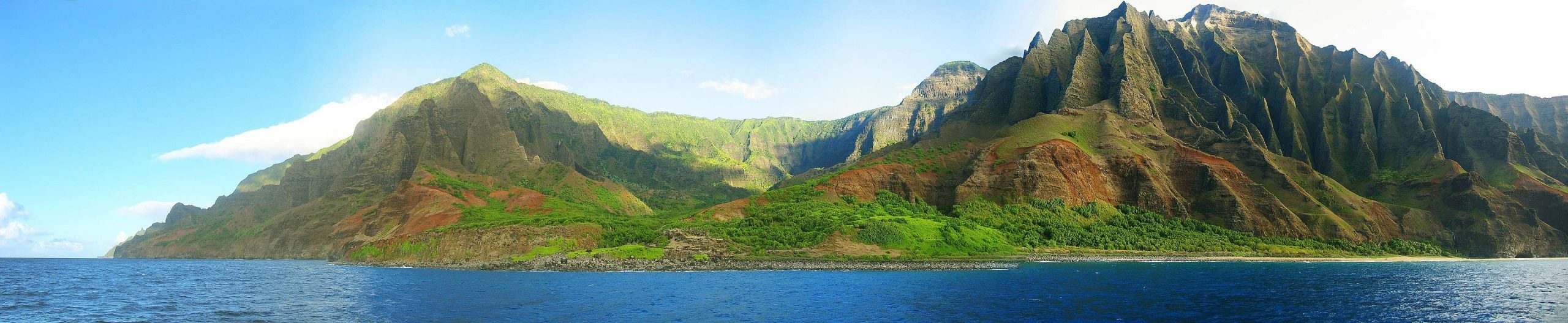
Panorama of the Nāpali Coast, by Remember (Public Domain, source). Click on the photo for a (far) larger version.
How wind and rain carved the Nāpali Coast
Kauaʻi is the oldest of the main Hawaiian islands, 4 to 5 million years old, and the Nāpali Coast is what that much wind and rain have carved out of its volcanic flank. The peaks rise straight from the ocean to about 4,000 feet, jagged and deeply eroded.
That erosion is extreme here because the range behind the coast, around Mt. Waiʻaleʻale, is one of the wettest places on earth. Most of the rain and storms coming out of the northeast hit the north shore of Kauaʻi, and over millions of years the water has carved the coast into deep valleys and knife-edge ridges, with sea caves cut in at the waterline.
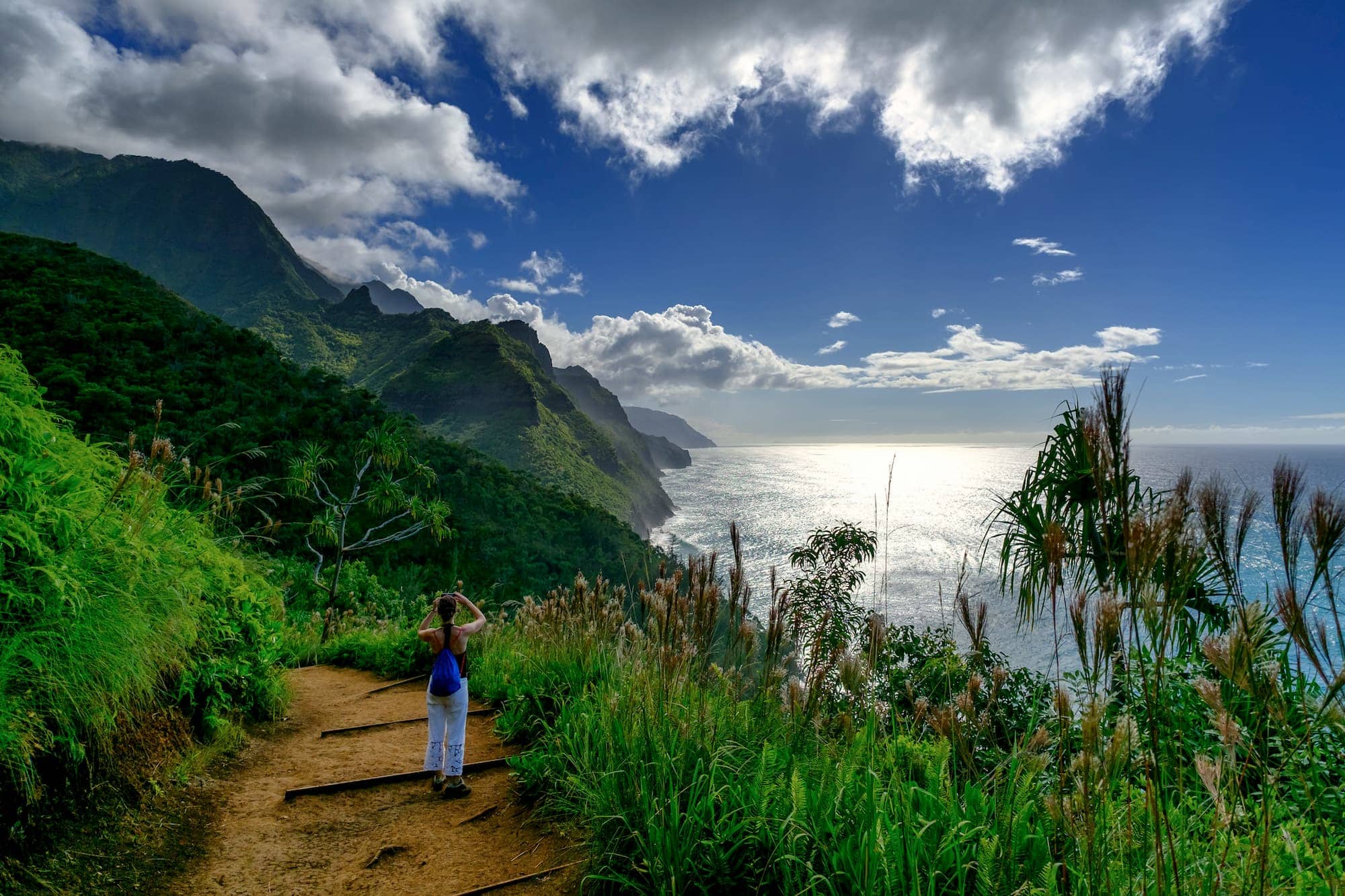
Hiking the Kalalau trail is a good way to see the Nāpali coast up close. Image credit: David Lee, source.
Ways to see the Nāpali Coast: by boat, by air, or on foot
There are three main ways to experience the Nāpali Coast:
How to visit by boat
Boat tours leave from Port Allen in the south and Hanalei Bay in the north, and range from catamaran cruises with snorkeling to faster zodiac raft trips that go into the sea caves. We would choose an operator with strong cultural and environmental practices, like Holo Holo Charters:
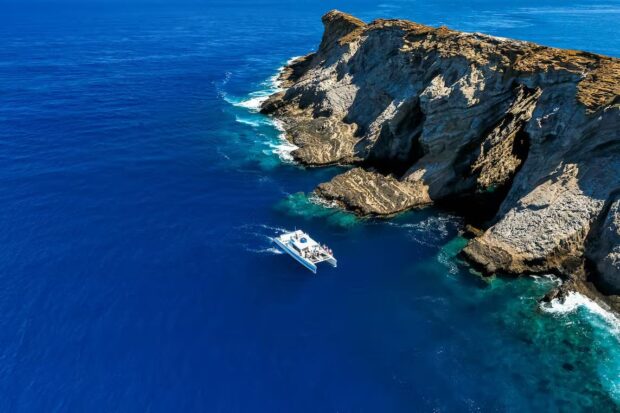
Niʻihau + Nāpali Coast 7 hour long Super Tour
EXCELLENT value 7-hour Napali Coast tour to Niihau with snorkeling, breakfast, lunch, and drinks included.
from:
$315
What is a suggested tour?Our suggested tours are hand-picked tours that receive consistent good reviews, give back to the community, and work hard to minimize their impact on the environment. Read more about these tours on our website.If you prefer to explore under your own power, rent a kayak or book a kayak tour with an experienced operator like Nāpali Kayak, whose full-day paddle runs about $320 per person. Kayak tours take place between April and October when the ocean is calmer.
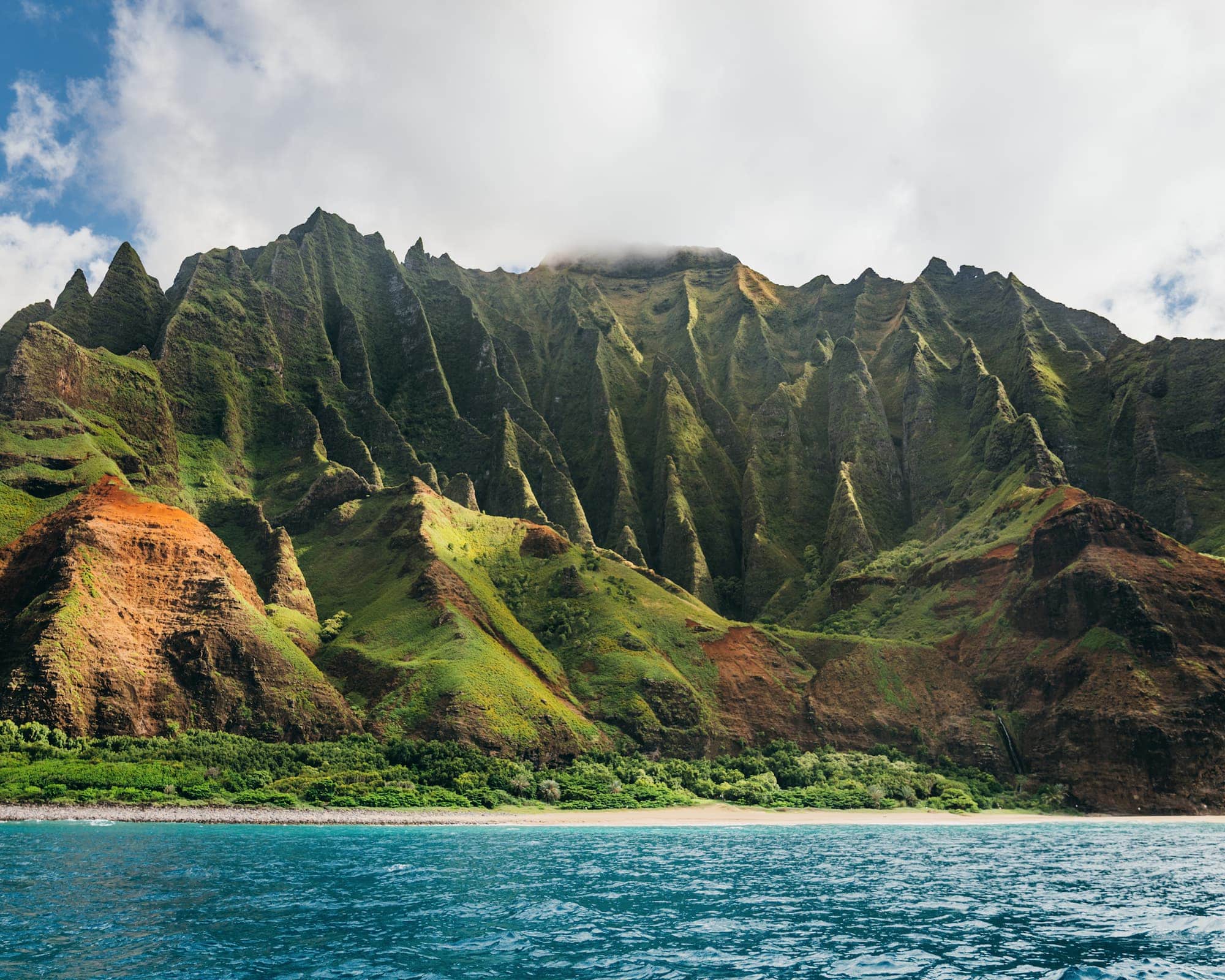
The Nāpali coast seen from the water. Credit: Hawaii Tourism Authority (HTA) / Vincent Lim
Why go by boat? By boat you cover far more of the coastline than on foot, and you can pair it with snorkeling. Summer is best for it. Some tours still run in winter, but rough water is more likely to cancel or delay a trip.
How to visit by air
Helicopter tours fly the Nāpali Coast daily and usually add a pass over Waimea Canyon or other inland scenery. Flights leave from Līhuʻe, Princeville, and Port Allen. They’re not cheap: expect roughly $370 to $500 per person for a 40 to 55 minute flight. Shop for deals, but use a reputable operator with a strong safety record, such as Blue Hawaiian or Mauna Loa Helicopters.
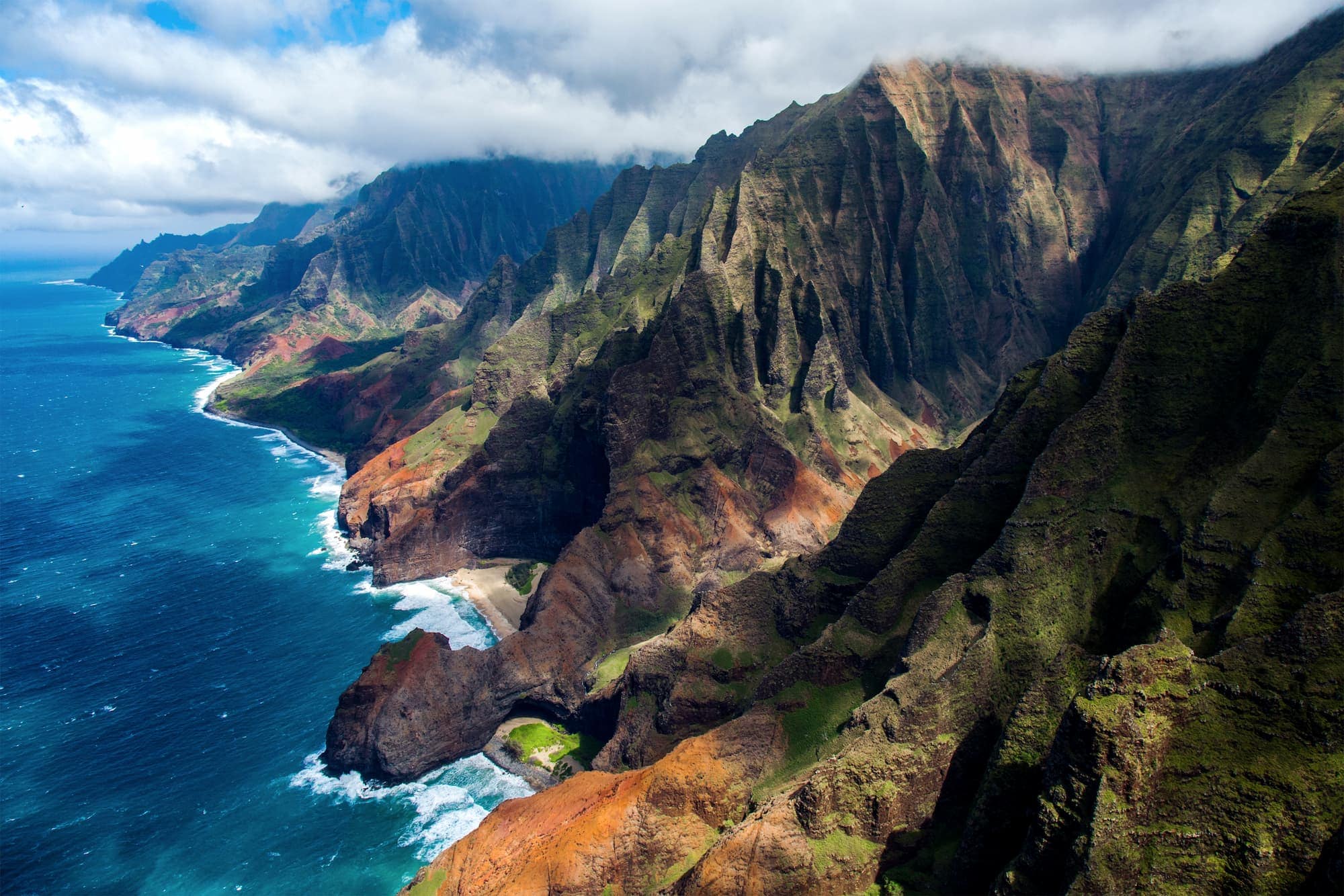
The Nāpali coast cliffs as seen from a helicopter. Credit: Hawaii Tourism Authority (HTA) / Ben Ono
Why see it from the air? From the air you see the full run of ridges and valleys, from one end of the coast to the other.
How to visit on foot
The Kalalau Trail starts at Keʻe Beach and runs 11 miles along the coast to Kalalau Beach, where you can backcountry camp with a permit. The state releases the permits 90 days ahead, and they’re hard to get. The trail climbs and drops across the sea cliffs the whole way and ends at the beach at Kalalau Valley, under the ridges.
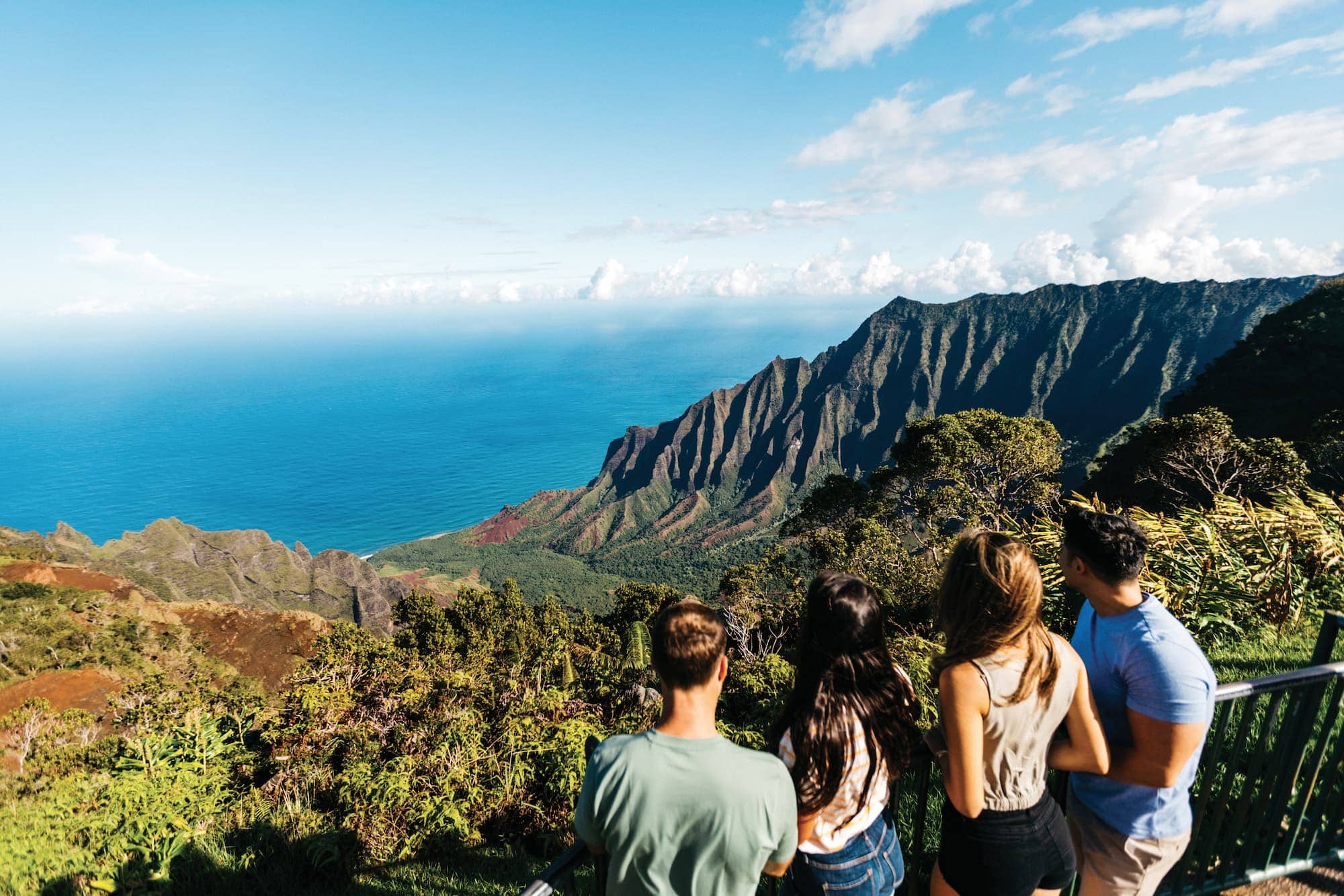
The Kalalau overlook. Credit: Hawaii Tourism Authority (HTA) / Ben Ono
Two miles in, the trail reaches Hanakāpīʻai Beach and Falls, the usual turnaround for a day hike and a way to see part of the Nāpali Coast plus a waterfall without an overnight permit. You still need a Hāʻena State Park entry reservation to start: book parking or the park-and-ride shuttle ahead at gohaena.com. That stretch climbs and drops repeatedly and gets slippery, but most reasonably fit hikers can manage it.
Bring plenty of water and snacks, and pack sun protection for the exposed stretches. It is extremely dangerous to swim at Hanakāpīʻai Beach, so please stay out of the water. Keep back from cliff edges and hike with a partner.

Why visit on foot? Hiking is the only way to stand on the coast itself instead of viewing it from the water or the air. The trail is hard work, and you walk through valleys and onto beaches that the boats and helicopters only pass.
Nāpali Coast access: park boundaries, roads, and north-shore reservations
Nāpali Coast State Park runs from Polihale State Park in the southwest to Keʻe Beach on the north shore. Boat tours launch from two harbors, Port Allen and Hanalei Bay, but the Keʻe Beach trailhead is the only place you can walk into the park.
There has never been a road into the Nāpali Coast, so it has stayed undeveloped.
To cut traffic and protect north-shore neighborhoods, Kauaʻi limits driving and parking on the north shore. Most beach parks there now require an advance reservation for both parking and entry. A park-and-ride shuttle runs from Waipā to the end of the road at Keʻe Beach, and using it is the easiest way to avoid the parking scramble.
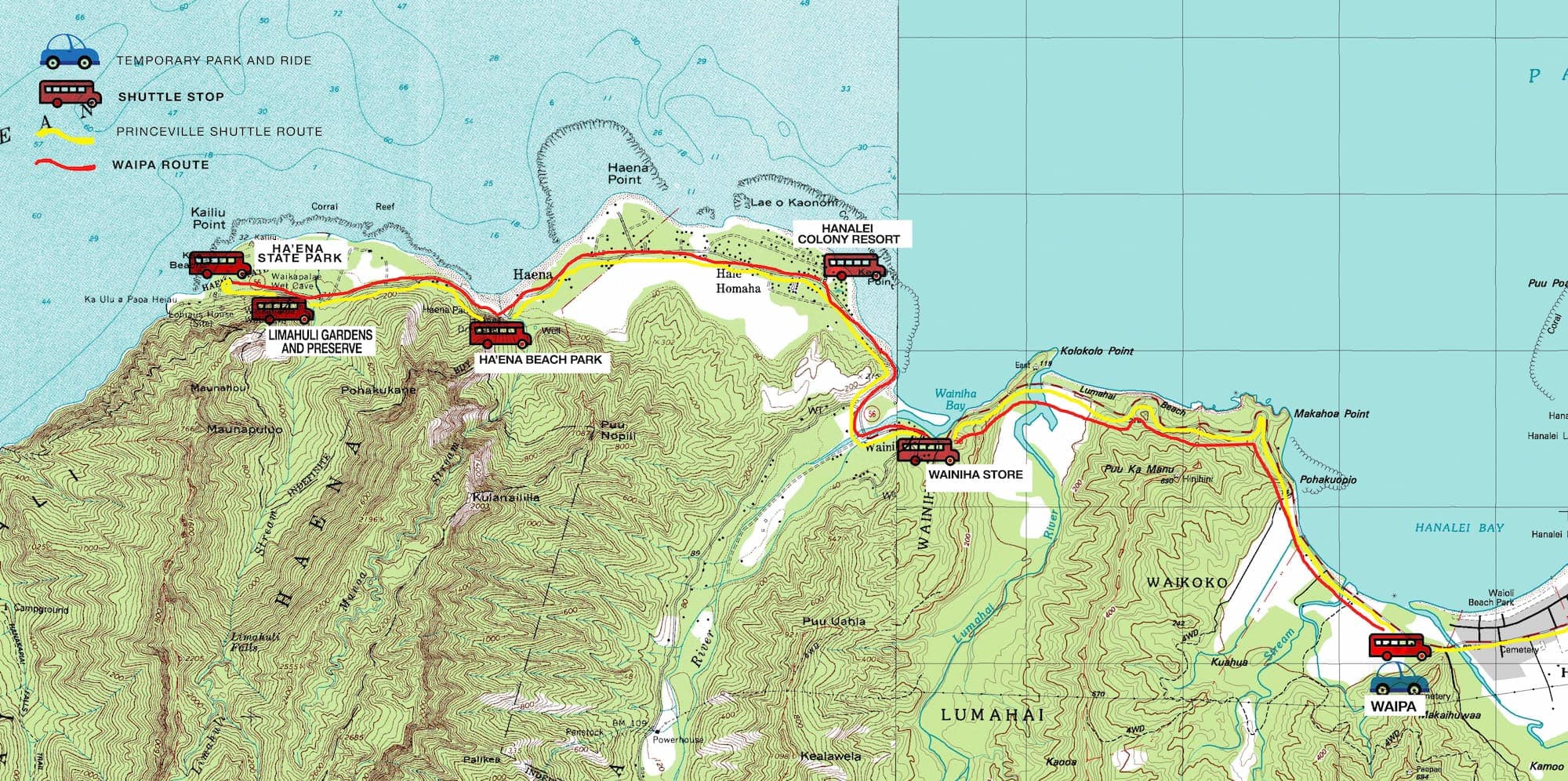
North Shore Shuttle Route map. Image: GoHaena website.
Tips for Visiting the Nāpali Coast
- It is best to visit the Nāpali Coast in the summer months, when the ocean is calmer and the weather more stable. Visiting in the winter is possible, but air and boat tours are more likely to be canceled, and hiking will be less pleasant. If a wet, rough spell cancels your plans, our Kauaʻi rainy day activities guide has indoor options.
- See the Nāpali Coast more than one way if you can: a boat gets you close to the sea caves, and from the air you see the full run of ridges and valleys.
- Though you can’t enter the Nāpali Coast on foot from its southwest end at Polihale, you can still see where the coastline begins from the beach at Polihale.
- Boat tours leave from both ends of the coast, Port Allen in the south and Hanalei Bay in the north, so book from whichever is closer to where you’re staying.
- If you’re up at Waimea Canyon and Kōkeʻe State Park in southwest Kauaʻi, stop at the Kalalau Lookout. From there you look straight down into Kalalau Valley, with its wide rainforest floor and the steep ridges walling it in.