
These 14 outings include a Hawaiian village site in Poʻipū, a helicopter flight over the Jurassic Park waterfall, and a mile of eucalyptus trees planted in 1911. Each takes about two hours or less. Most slot into a Kauaʻi itinerary you’ve already booked, with little or no planning.
We keep this list for a free afternoon or the drive between two towns. Most stops need no booking and work on the spur of the moment. Two need advance reservations: the helicopter flight to Manawaiopuna Falls and the boat trip out to Niʻihau.
Table of contents
- Stop by the Kāneiʻolouma Heiau in Poʻipū
- Walk the Coastal Māhāʻulepū Heritage Trail
- Crawl into the Makauwahi Cave
- Kayak the Hanalei River
- Taste Locally-Made Kōloa Rum
- Fly to Manawaiopuna Falls (Jurassic Park Falls)
- Take a Boat trip to Lehua Crater and Niʻihau
- Try poi, lau lau, and local plate lunches at Hanalei Taro & Juice.
- Experience kalua pork and poke from Pono Market.
- Stop by Fort Elizabeth/Captain Cook Landing Site
- See the Hanapepe Swinging Bridge and Art Walk
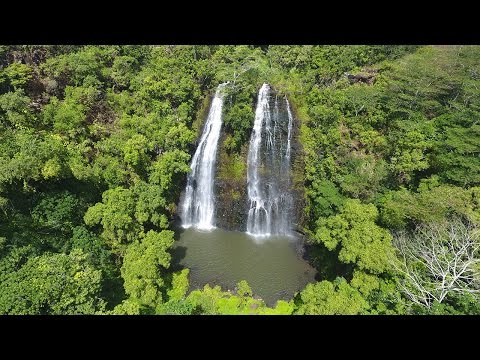
- Drive Kuamoʻo Road and see ʻŌpaekaʻa Falls
- Explore Kīlauea Town
- Stop and see the tree tunnel in Poʻipū.
We can personally vouch for every item on this list because we often do them ourselves when we have some time on our hands :). This perhaps also explains how some of them have made it into our 7-day itinerary for Kauaʻi.
Stop by the Kāneiʻolouma Heiau in Poʻipū
Right in the heart of Poʻipū, the Kāneiʻolouma Heiau is a relatively new cultural site. As recently as 2008, the 13-acre complex was covered from public view by overgrown vegetation and invasive species(cut). Thanks to volunteer work, the complex has been unearthed to reveal the remains of a large Hawaiian village.
Currently, there are no tours of the complex (yet!), but you can stop by to take a look. Interpretive signs explain some of the history behind this once-thriving village, complete with housing, religious sites, farm areas, and rock walls. A quick stop is a good idea to gain perspective on how Hawaiians once managed and lived on the land in Poʻipū.
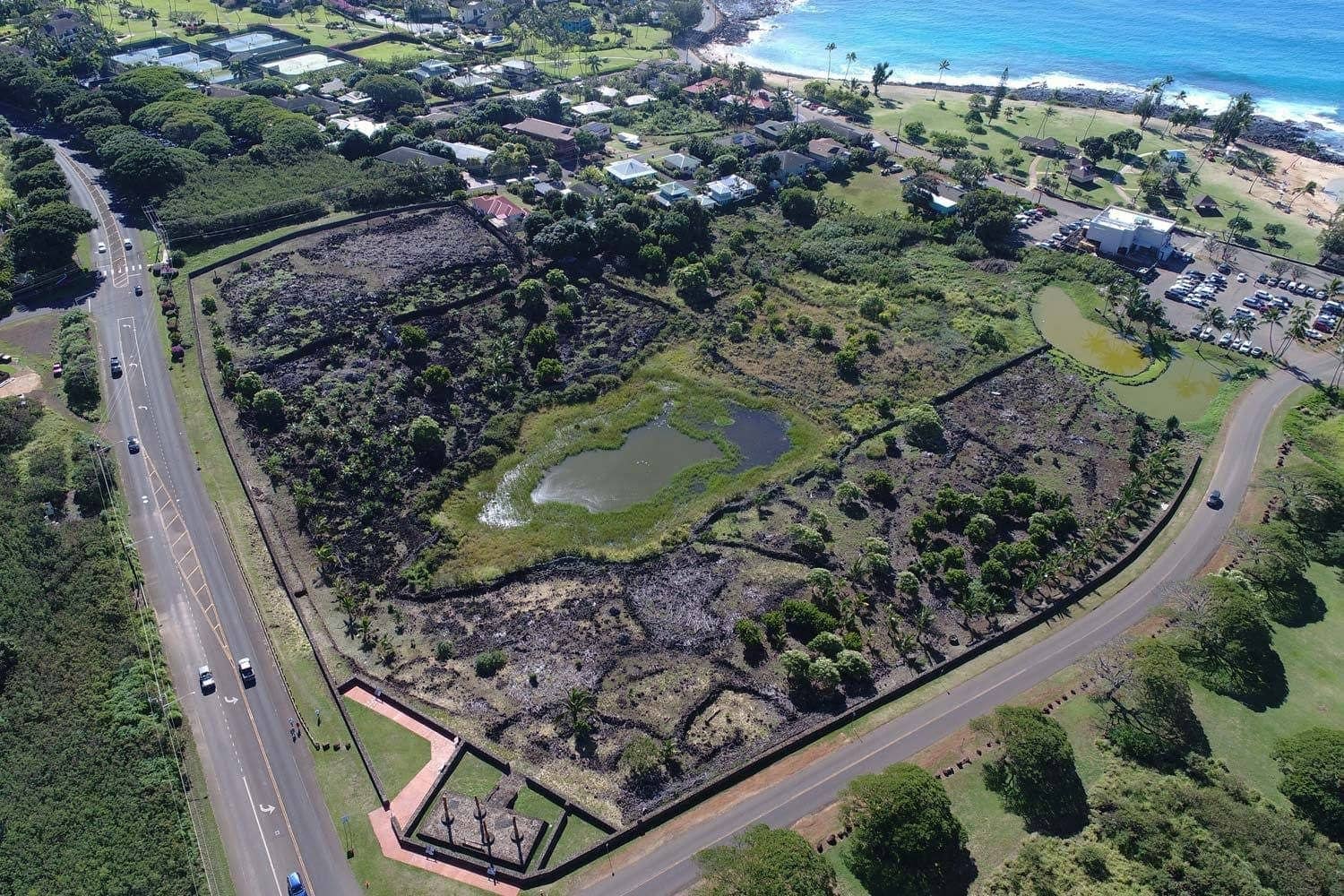
Aerial view from 2019 of the Kāneiʻolouma Heiau showing the ongoing progress of the restoration efforts. Credit: the Kāhua O Kāneiolouma website.
Walk the Coastal Māhāʻulepū Heritage Trail
If you’re looking for a good morning or late afternoon hike that’s easily accessible from Poʻipū, we recommend checking out the Māhāʻulepū Heritage Trail. It runs about 4 miles along the coast, passing by beaches, scenic view points, historical sites, and lava/geological points of interest.
The trail starts at Shipwreck Beach, leaving the developed resort area and opening up into a natural coastline. The views of the ocean are fantastic, with plenty of places to stop and sit on the cliffs along the way. Shade is limited, so bring plenty of water and avoid the heat of the day.

Crawl into the Makauwahi Cave
The Makauwahi Cave sits on the outskirts of Poʻipū, and the reserve is closed until further notice. It drew up to 80,000 visitors a year. The largest limestone cave in Hawaiʻi, it was once a birth site for royalty. Visitors used to crawl inside on their hands and knees and learn about how the cave was used in ancient times, along with the fossils and burial sites found in and around it.
Dr. David Burney and Lida Pigott Burney, who founded the reserve in 2004 and worked the site for 33 years, have handed the property back to the landowner, Grove Farm Company. The reserve stays closed to visitors, and no reopening date has been set. For current information, call 808-245-3678.
See the following short video by the HTA to learn more about the Makauwahi Cave and the ongoing restoration efforts:

Kayak the Hanalei River
Most kayaking in Hawaiʻi takes place on the ocean, but on Kauaʻi you can kayak the rivers. The Wailua River is the largest navigable river in Hawaiʻi, and many enjoy paddling on its waters. But you can also kayak the Hanalei River up north near Hanalei.
You can put in on the Hanalei River inland and float downstream towards the ocean, passing under the Hanalei Bridge, into the Hanalei National Wildlife Refuge, and end up in Hanalei Bay for a peaceful, easy, scenic paddle. You can rent a kayak or jump on a guided tour via Kayak Hanalei.
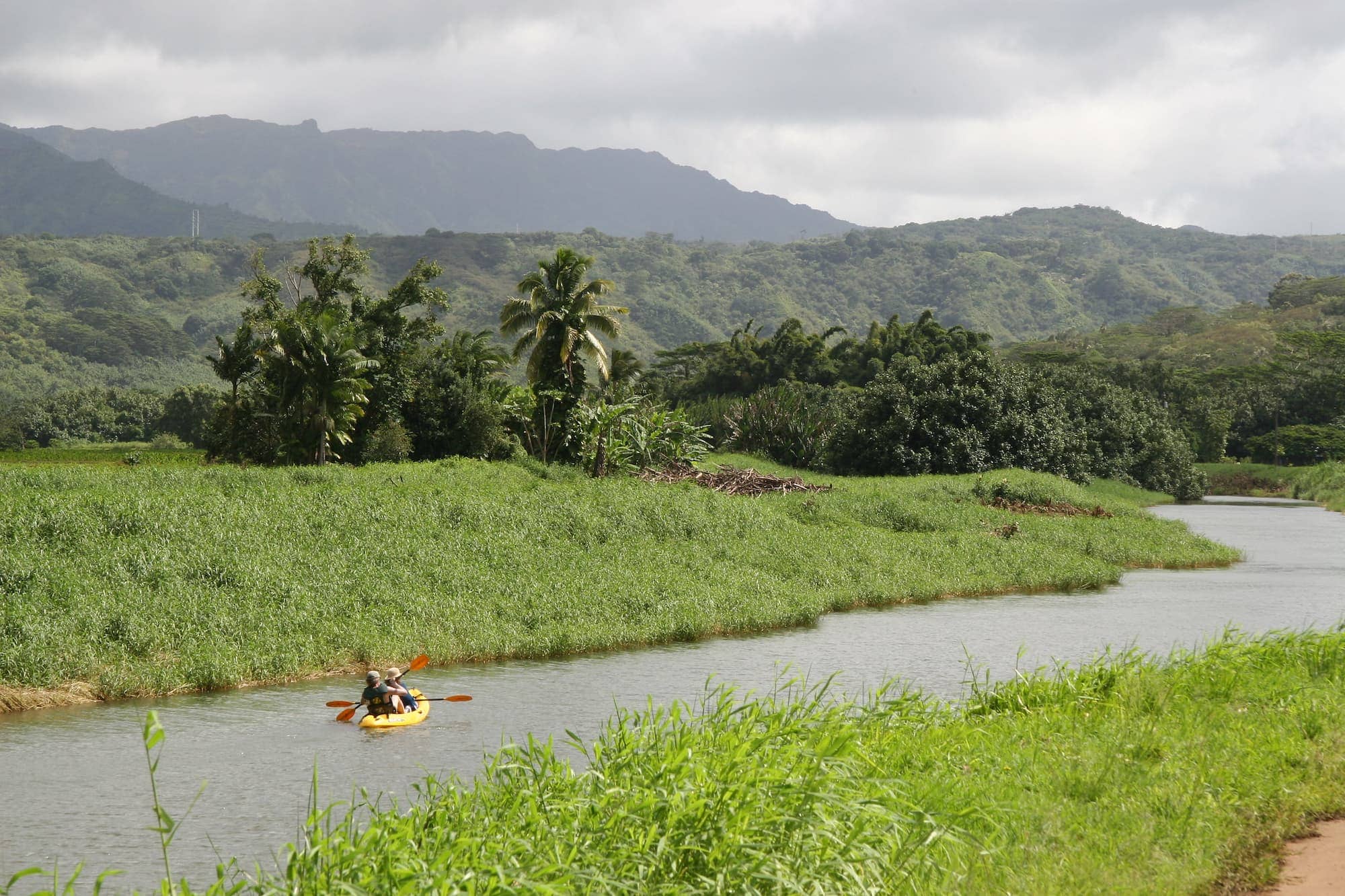
A couple kayaking the Hanalei River. Image credit: Jeff Muceus on Flickr.
Good to know: Kayaking the Hanalei river is one of our favorite 7 water activities for Kauaʻi.
Taste Locally-Made Kōloa Rum
Hawaiʻi has a long history of sugar cane production, which dates back to the mid-1800s. Today, large-scale commercial sugar cane production is no more, but it is still grown and processed in the islands for another reason: rum.
Kōloa Rum pours its tastings at the Kilohana Plantation in Līhuʻe. Tastings are complimentary and run hourly, but they now take online bookings only, so reserve a slot ahead rather than counting on a walk-in. The tasting room is open 11 a.m. to 4 p.m., Monday through Saturday. (cut) Make a stop on your way into or out of Līhuʻe.
Fly to Manawaiopuna Falls (Jurassic Park Falls)
Filmmakers have used Kauaʻi’s jungles as a backdrop for dozens of movies. One of the most famous movies of the 1990s, Jurassic Park, has a memorable scene on Kauaʻi, when a helicopter lands at the base of Manawaiopuna Falls.
The waterfall sits on private land and is reachable only by helicopter tour (see also our Kauaʻi Helicopter Tour overview). The chopper won’t land on the pad from the movie (it was built for filming and taken down afterward), but it sets down next to the falls, so you can take in the view from the base.
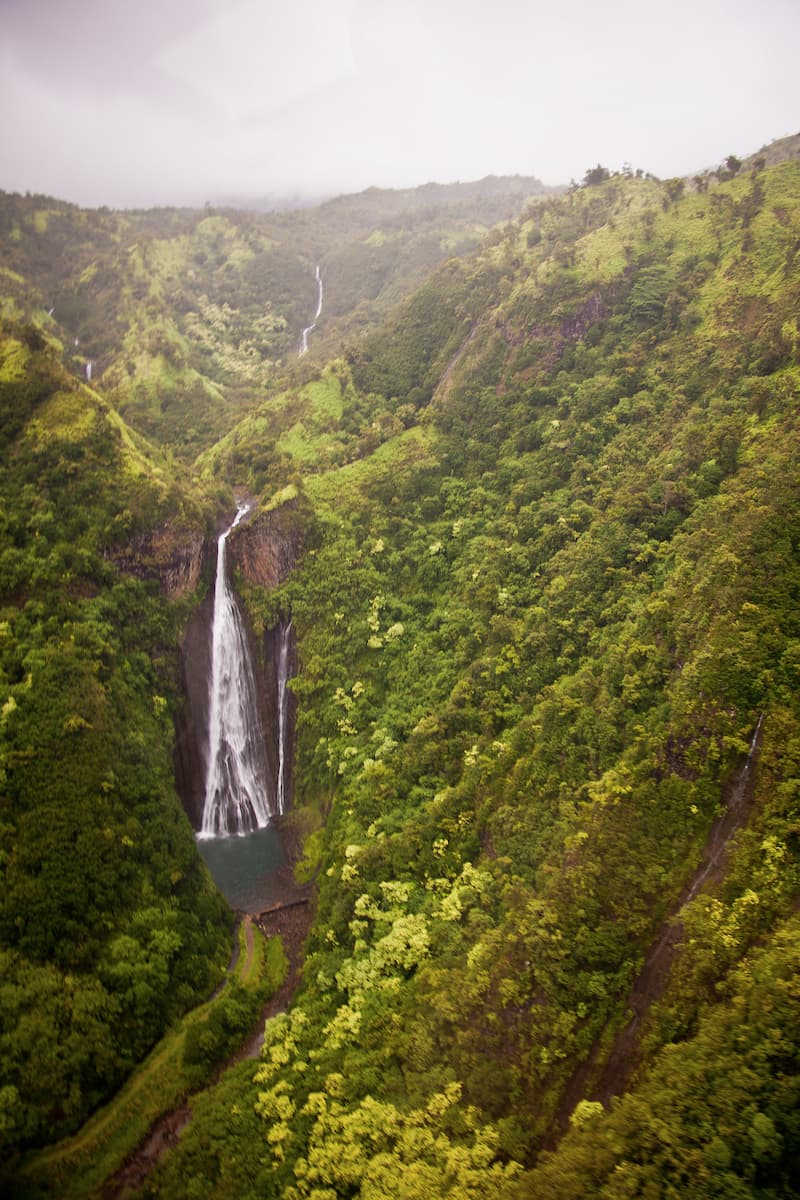
The Manawaiopuna Falls (do you recognize them from the “Jurassic Park” movie?). Image credit: Opacity on Flickr.
Boat trip to Lehua Crater and Niʻihau
Kauaʻi has good snorkeling boat tours, especially along the Nāpali Coast. But on Kauaʻi you can also visit Lehua Crater, an extinct tuff cone of the Niʻihau volcano.
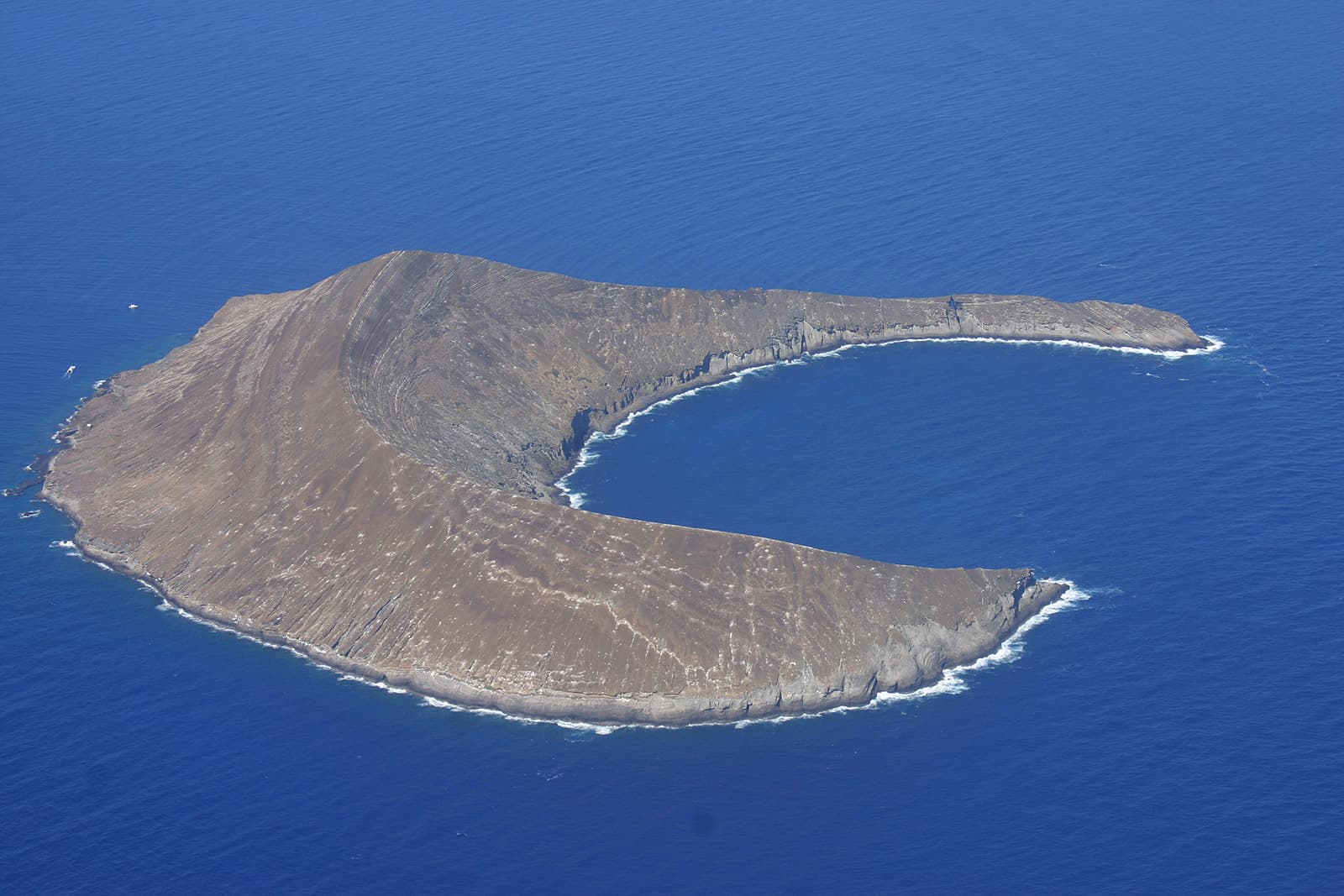
Snorkelers and divers come for the clear water off Lehua Crater, an extinct tuff cone of the Niʻihau volcano. Image by Polihale, CC BY-SA 3.0.
Lehua has clear water and a healthy reef. A protected seabird sanctuary, it has good snorkeling and scuba diving, plus views of Niʻihau, which is otherwise off limits to visits. Try the following tour by Holoholo Charters:
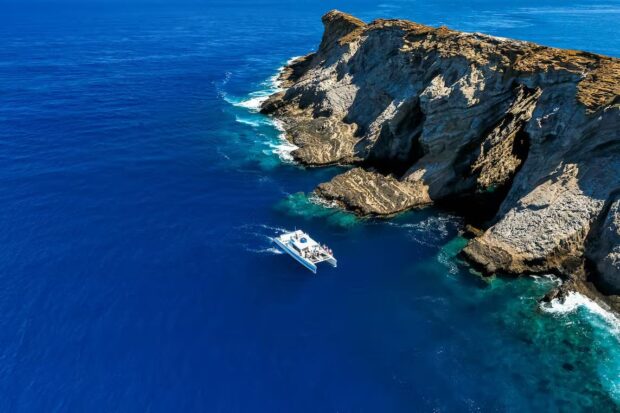
Niʻihau + Nāpali Coast 7 hour long Super Tour
EXCELLENT value 7-hour Napali Coast tour to Niihau with snorkeling, breakfast, lunch, and drinks included.
from:
$315
What is a suggested tour?Our suggested tours are hand-picked tours that receive consistent good reviews, give back to the community, and work hard to minimize their impact on the environment. Read more about these tours on our website.Try poi, lau lau, and local plate lunches at Hanalei Taro & Juice
If you’re hanging out in Hanalei, you’ll see the area has a lot of agricultural and taro fields. Hanalei Taro is a sixth-generation family farm that supplies food to the community and also runs a food truck called Hanalei Taro & Juice. It parks on Kūhiō Highway right in Hanalei.
We can’t recommend this food truck more. Featuring local agricultural products, it serves local dishes like lau lau, kalua pork, fish tacos, poi, and fruit/taro smoothies. Look for it when you visit Hanalei.
Experience kalua pork and poke from Pono Market
Kapaʻa has new food trucks and gastropubs. Try them all over the course of your visit, but save room for a longstanding local favorite, the Pono Market.
Whether you’re craving a plate lunch or poke, Pono Market specializes in Hawaiian food in a no-frills, market-style establishment. (cut)
Stop by Fort Elizabeth/the Captain Cook Landing Site
Did you know that Kauaʻi was the first island that Captain Cook visited when he “discovered” Hawaiʻi? You can check out a statue dedicated to him in Waimea and visit his first landing site.
Nearby, just across the Waimea River, is Fort Elizabeth, built by the Russians in 1817. Russians in Hawaiʻi? You bet. Read up on the story of their political attempts in Hawaiʻi and make a quick stop at Fort Elizabeth on your way to or from Waimea Canyon.
Hanapepe Swinging Bridge and Art Walk
Hanapepe is a small, artistic community on Kauaʻi’s south shore. Before modern-day development occurred, residents used a swinging bridge to cross the river. Today, that bridge is still standing and a fun, interesting stop for families.
Walking on the suspension bridge is something both children and adults will enjoy as it rocks and swings as you cross, with a view of the river and some perspective on how these small towns once operated back in the day. Consider stopping by during the Friday Art Night, roughly 5 p.m. to 8 p.m. Please respect local residents who live near the bridge.
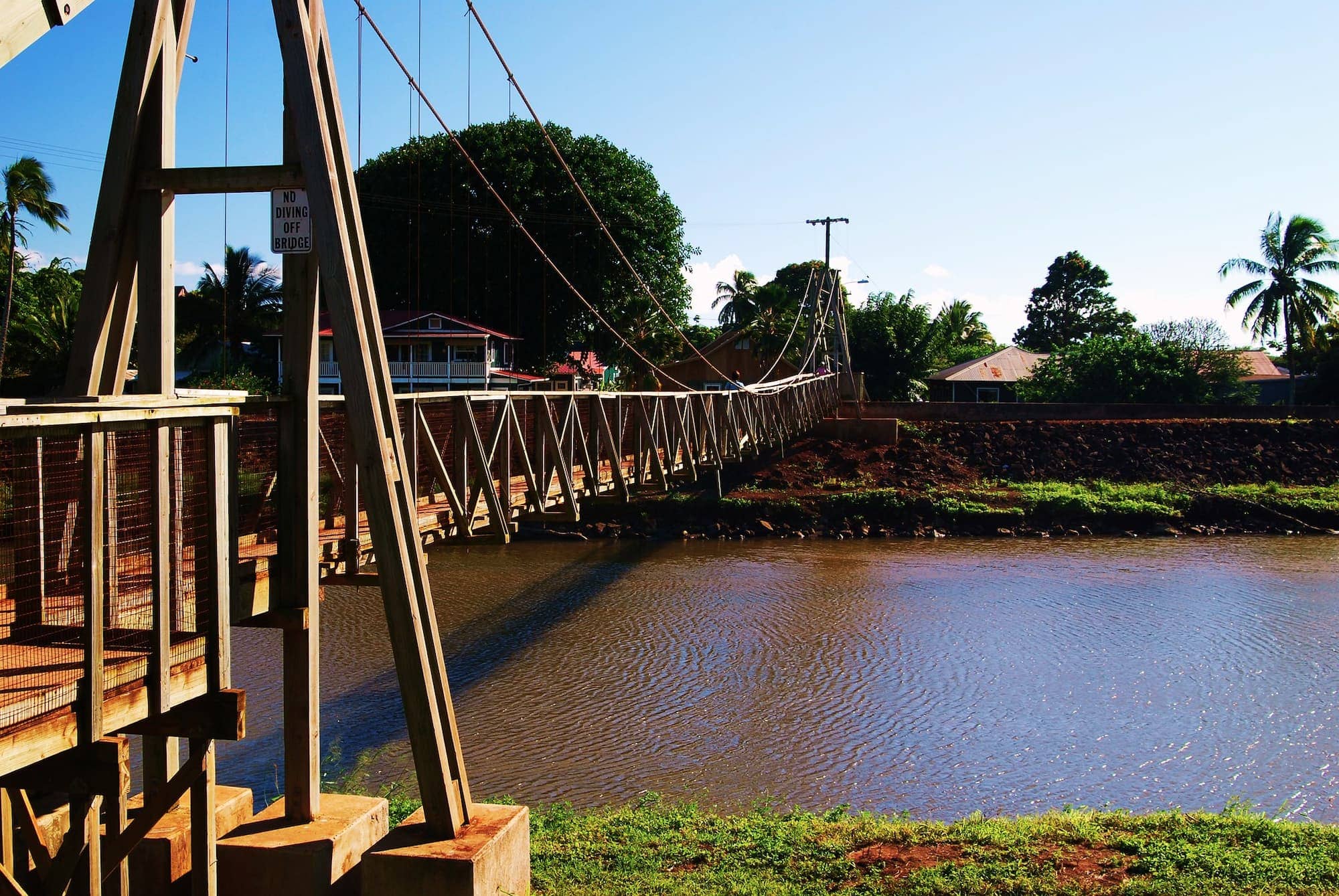
The Hanapepe Swinging bridge is a historic suspension bridge that was built in 1911. Image credit: Zanzabar Photography on Flickr.
Kuamoʻo Road and ʻŌpaekaʻa Falls
When driving around Kauaʻi on the main road, you’ll pass by Wailua River State Park and the mouth of the river just south of Kapaʻa. Here, you can enjoy the scenery where the river meets the ocean, or jump on a kayak tour of the river.
Don’t be afraid to explore a little further, though. Turn left onto Kuamoʻo Road and drive up toward the state park. You’ll immediately start gaining elevation, with wide views of the ocean and the green valley from pullouts like Poliahu Park. Before long, you’ll reach a pullout for ʻŌpaekaʻa Falls, which cascades down the rocky, green mountainside. It’s a short drive.
Explore Kīlauea Town
Most people who visit Kīlauea are focused on the lighthouse and bird sanctuary there, coming and going without exploring otherwise. But don’t overlook the town of Kīlauea itself. It has an interesting past, and its downtown is in transition.
The town was once one of the largest guava plantations in the world, selling its product as jams, preserves, and other household treats. Today, Kīlauea’s downtown has shops and restaurants, including Palate Wine Bar, Sushi Girl, Kīlauea Fish Market, and a couple coffee shops. Stop by to see this plantation town in transition.
Stop and see the tree tunnel in Poʻipū.
It’s a short stretch of road, so we always recommend making a point to stop and take in the beauty of the tree tunnel outside of Poʻipū. Even if you’re not staying in that area, it’s worth a short detour to check it out, as it makes for great photos and even a background for a family photo.
The first mile of Highway 520 has 500 (!!!) Eucalyptus trees that are more than 100 years old, planted in 1911. It’s a great stretch of road to have the windows down and appreciate Hawaiʻi’s beauty. Feel free to stop and take photos, but please use caution with traffic and make sure you park in a safe place.
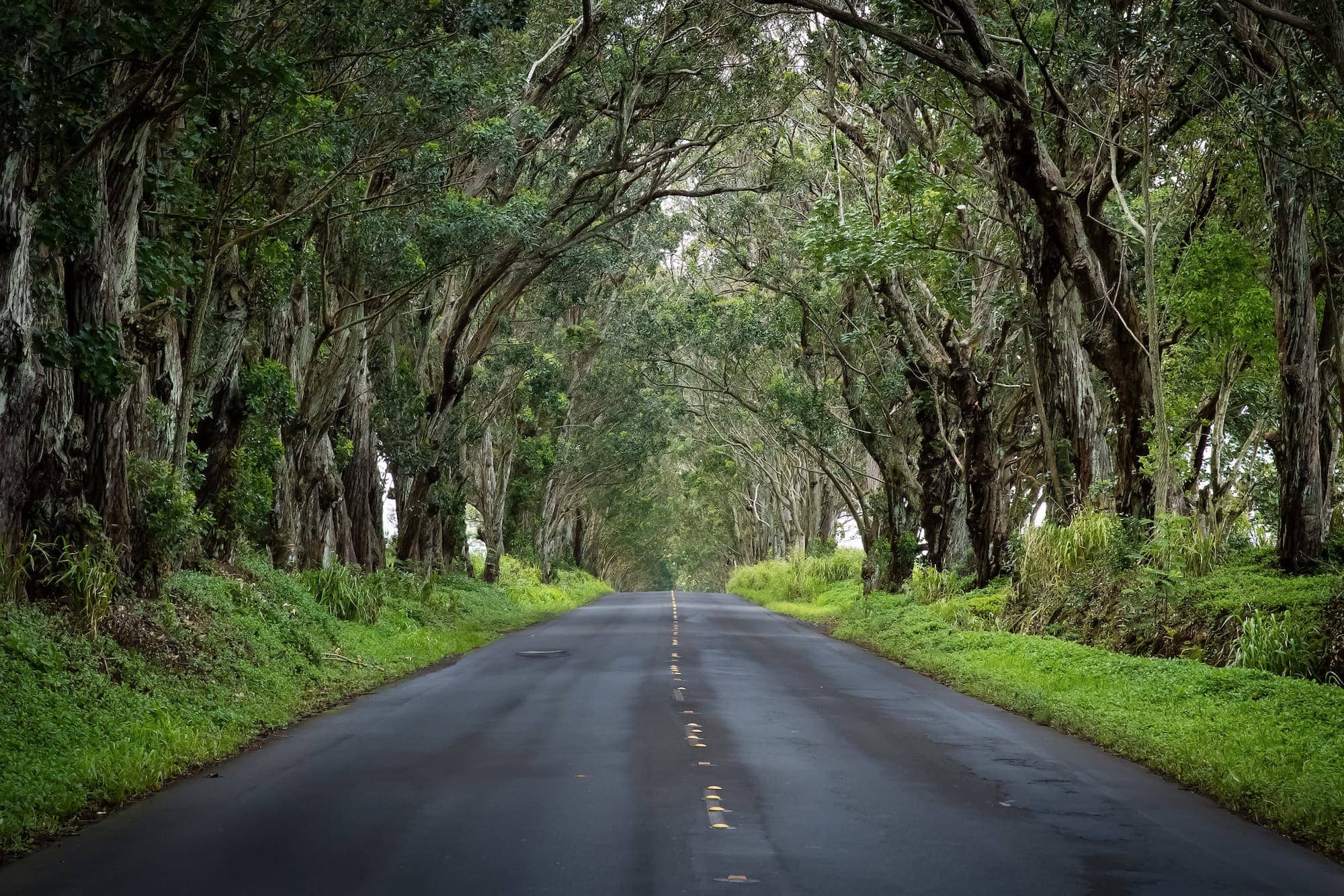
The Poʻipū Tree Tunnel is a canopy of eucalyptus trees that line Maliuhi Road. Image credit: Shaadi Faris on Flickr.