A crescent shaped salt and pepper sand beach fringed with swaying palm trees, Anaehoʻomalu Bay (pronounced as “ā’-nāe-ho’o-mā’lu”, and often simply referred to as A Bay) is one of the most scenic and relaxing spots on the Kohala Coast to spend a beach day.
This is a family friendly beach with a wide range of ocean activities, and the sunset here is one we come back for.
Table of contents
- Things to do at Anaehoʻomalu Bay
- Practicalities (when to go, directions, food & drinks)
- Nearby attractions
Things To Do at A Bay
Anaehoʻomalu Bay covers swimming, sunbathing, snorkeling, paddle boarding, and boating in one bay. (Watch for sea turtles, which are common in this bay.) Coastal hiking on the King’s Trail runs for miles from A Bay. Ancient fishponds and petroglyphs sit nearby, both from before Western contact.
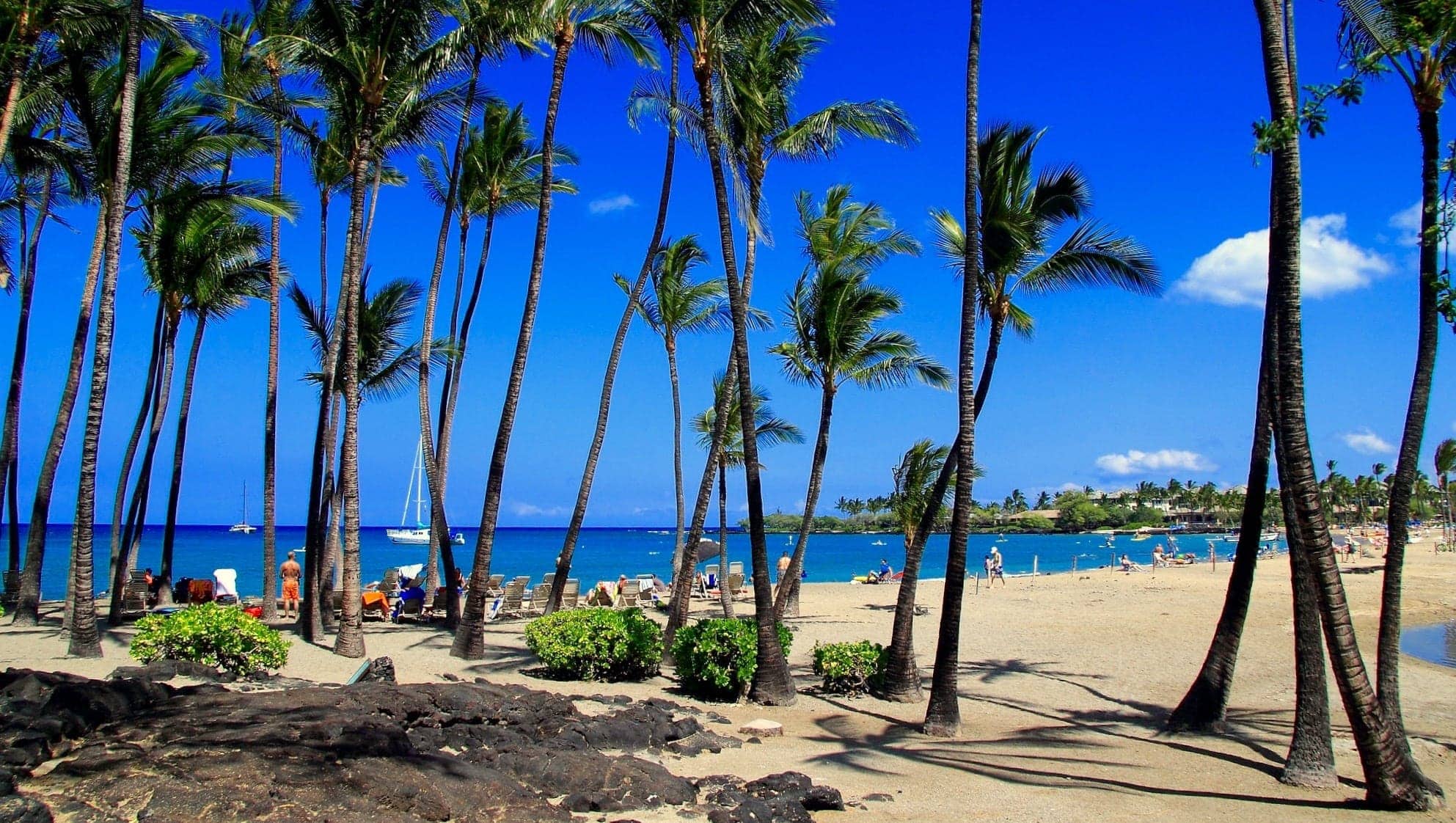
Anaehoʻomalu Bay seen from the beach. Photo credit: jmenard48 on Flickr, under CC 2.0 license.
Swimming
A Bay is an excellent beach for swimming, especially for children. The beach is fronted by a large, calm and protected bay with a sandy water entrance, that gradually deepens and offers a shallow area for kids to splash play in.
Easy access and close-by amenities make this a family beach.
Snorkeling
This beach is not the best one to go snorkeling because the water is often murky which makes the underwater visibility poor. The right (North) side of the bay has in general clearer conditions, so do head out there if you decide to try snorkeling. Make sure though to swim out a good distance (>500 feet) for the better fish and coral sightings.
The A Bay Beach Hut offers snorkel gear rentals if you forgot to bring your own. Make sure to be aware of the water around you because you share the bay with kayakers, paddle boards, and swimmers.
What can you spot snorkeling at A Bay?
Some of the reef fish include Hawaiʻi’s State Fish, the humuhumunukunukuāpuaʻa (trigger fish), yellow tang, needle fish, puffer fish, blue parrot fish, and yellow trumpet. Sea turtles are also often seen in the bay.
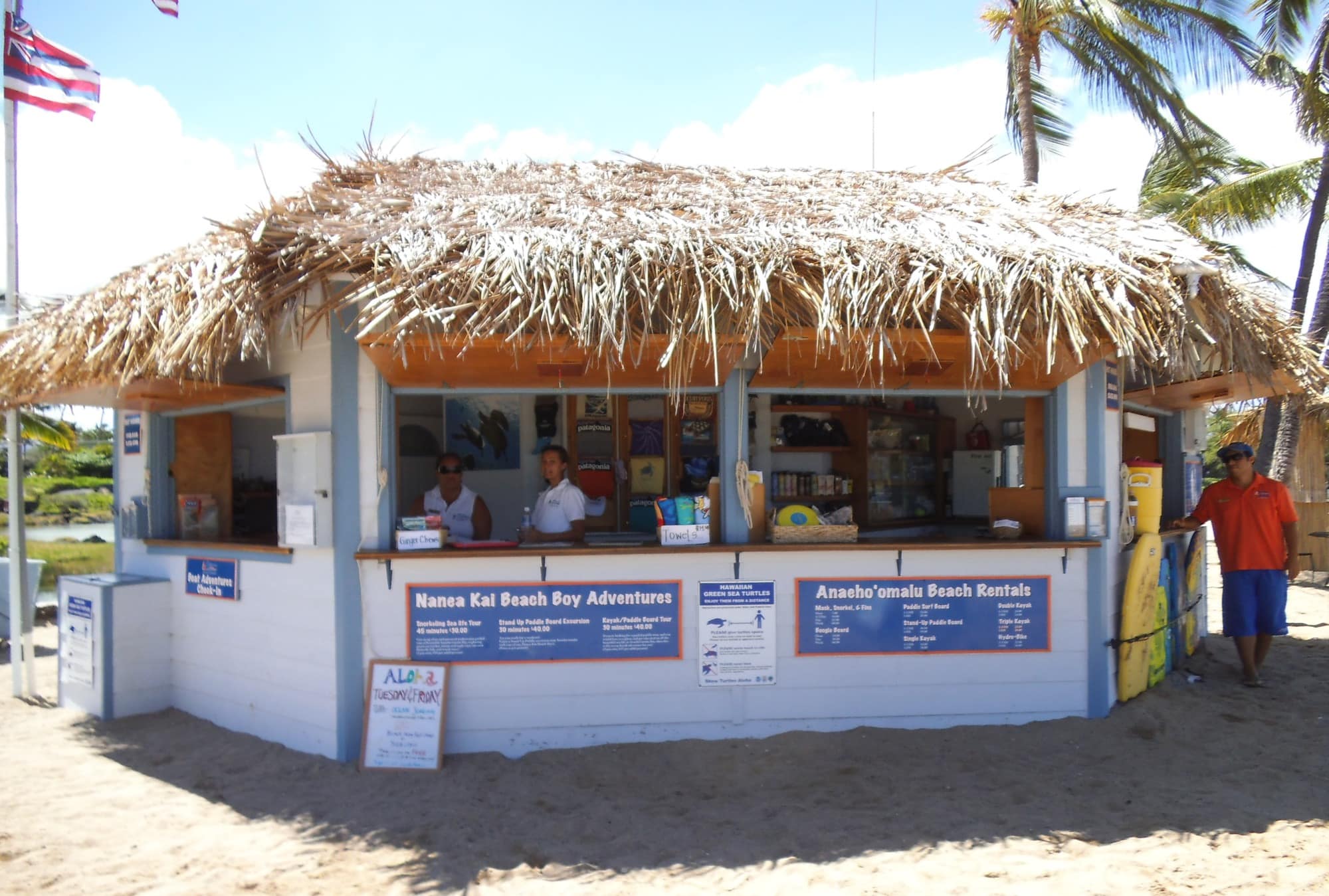
You can rent all kinds of beach (and ocean) gear at the Beach Hut. Image courtesy of Ocean Sports.
Kayaking, Boating, and other Rentals
Take out a paddle board or kayak to explore the entire bay, with views of the beach and mountains. In the shallow parts of the bay you can often spot sea life on the reef right through the water.
In addition to snorkel gear, the Beach Hut mentioned above offers paddle boards, kayaks, floats, boogie boards, hydrobikes and beach cabanas for rent. Lessons and guided tours are available including outrigger canoe rides and daily catamaran cruises.
Hiking
About a mile south of A Bay is Kapalaoa Beach which can be reached by walking along the coast via a section of the Ala Kahakai National Historical Trail or “Kings Trail”. This short hike passes many small inlets and tide pools worth stopping at for a dip. Turtles can often be spotted along this route basking on the sand.
This stretch of coastline is often totally deserted. For those interested in a longer trek and exploring remote beaches, you can continue along the coast all the way to Lone Palm, (Keawaiki Bay) on a 6.5-mile round trip hike.
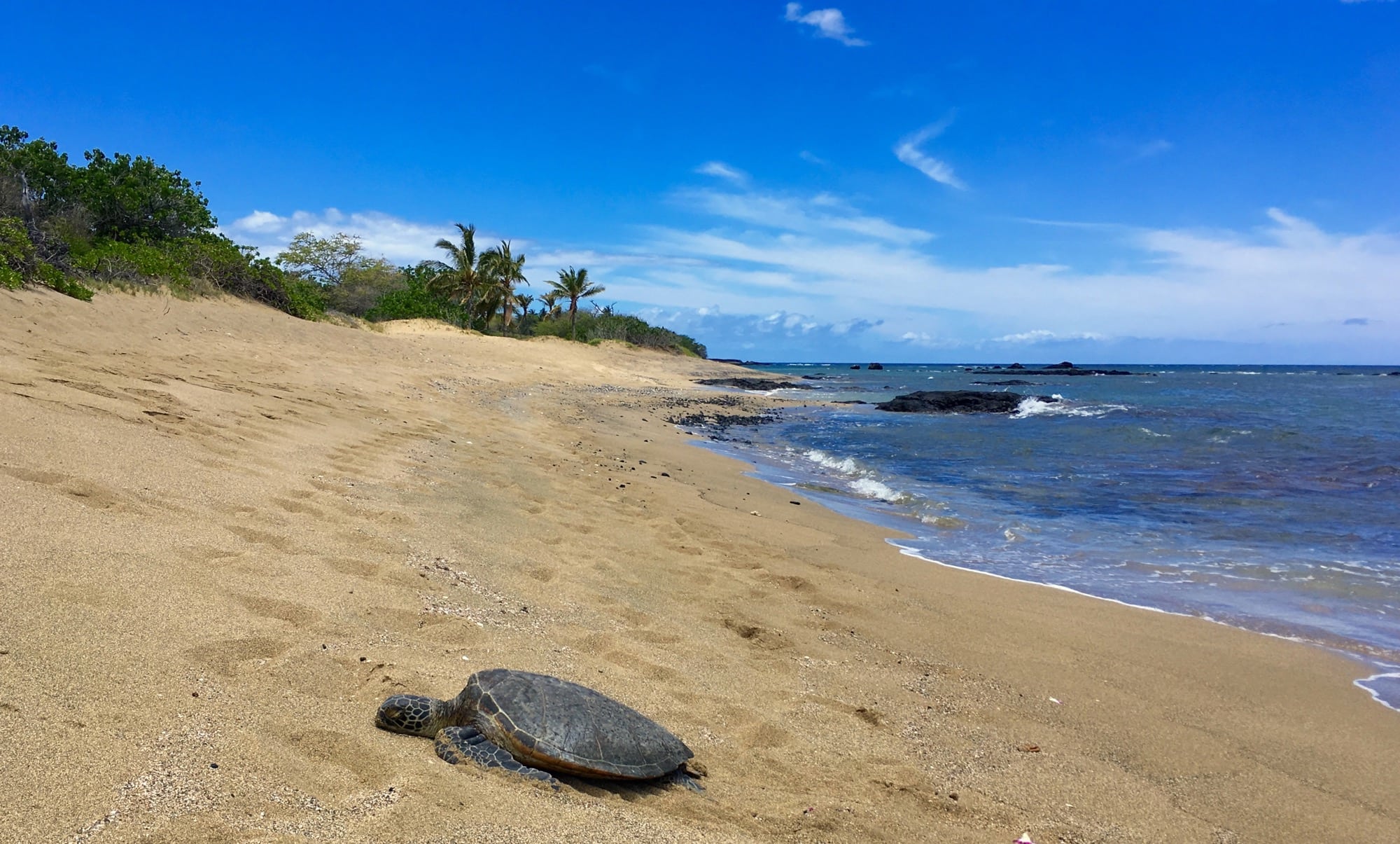
A turtle basking in the sun along the trail to Kapalaoa Beach. Photo by Emily Gleason
Seeing the sunset
A Bay sunsets are among our favorite sunsets on the Big Island and it’s worth hanging around for one if you are visiting in the afternoon.
To get the best views of the sunset you need to walk to the far side of the Kuʻualiʻi fishpond at the southern side of the beach (it’s huge, you can’t miss it). From here you can see the sun setting right into the middle of A Bay with palm trees and white sand in the foreground.
After the sun disappears, stick around and watch as the sky continues to light up with different hues, shifting from orange through purple. The reflection on the fishponds and the ocean, plus the silhouettes of palm trees on the beach provide endless inspiration for photographers.
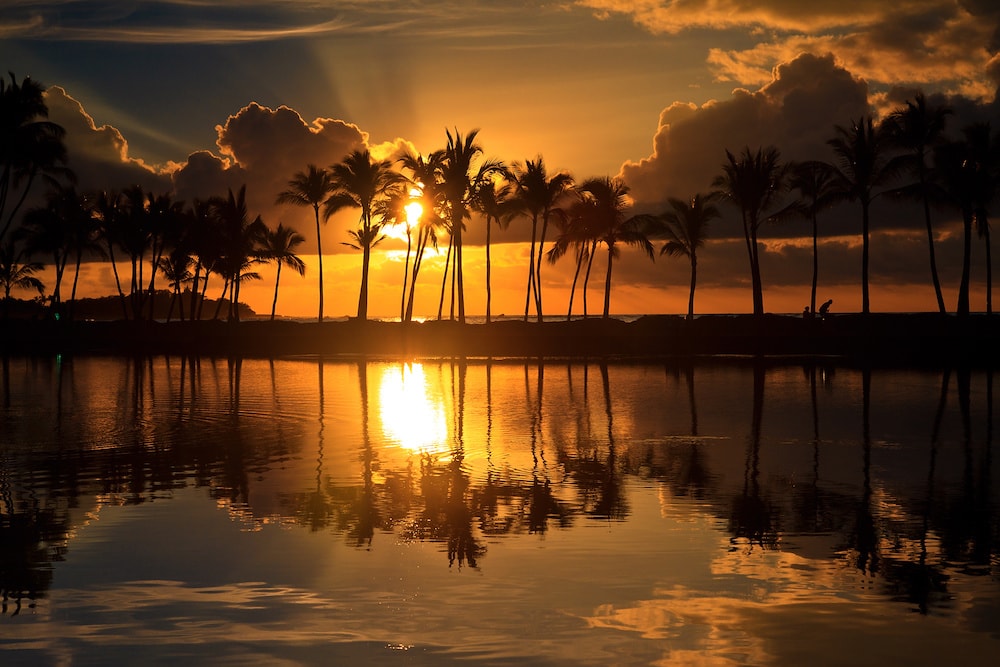
You can make great photos of the sunset at A Bay if you set up your camera behind the fish pond lined with palm trees. The palm tree silhouettes and reflections add something tropical to the sunset.
Practicalities
When to Go: Arrive early in the morning to avoid the hot midday sun and find a choice spot in the shaded palm tree grove. Because of its proximity to the Waikoloa resorts, A Bay gets more crowded during peak travel times like holidays and summer break.
Waikoloa’s unofficial nickname is “Waiko-blow-a” referring to its sometimes extremely windy weather. When the winds are blowing, head to A Bay to watch kite surfers.
Directions to A Bay: A Bay is about 40 minutes drive north from downtown Kailua-Kona. To reach A-Bay, turn off Highway 19 toward the ocean at Waikoloa Beach Drive. Pass Queen’s Marketplace on your left. Before reaching the Marriott Hotel, turn left at the intersection opposite the Kings Shops, onto Ku’ualil Place. Continue straight until you see the gravel public parking lot. Walk about 2 minutes to the beach.
Food and drinks: Lava Lava Beach Club sits on the southern end of A Bay. Relax in one of their big comfy chairs with your toes in the sand for lunch on the beach or sunset cocktails. They have nightly live music by local musicians. On Sundays you can wear your bikini or board shorts to their popular “Bloody Mary Brunch”.
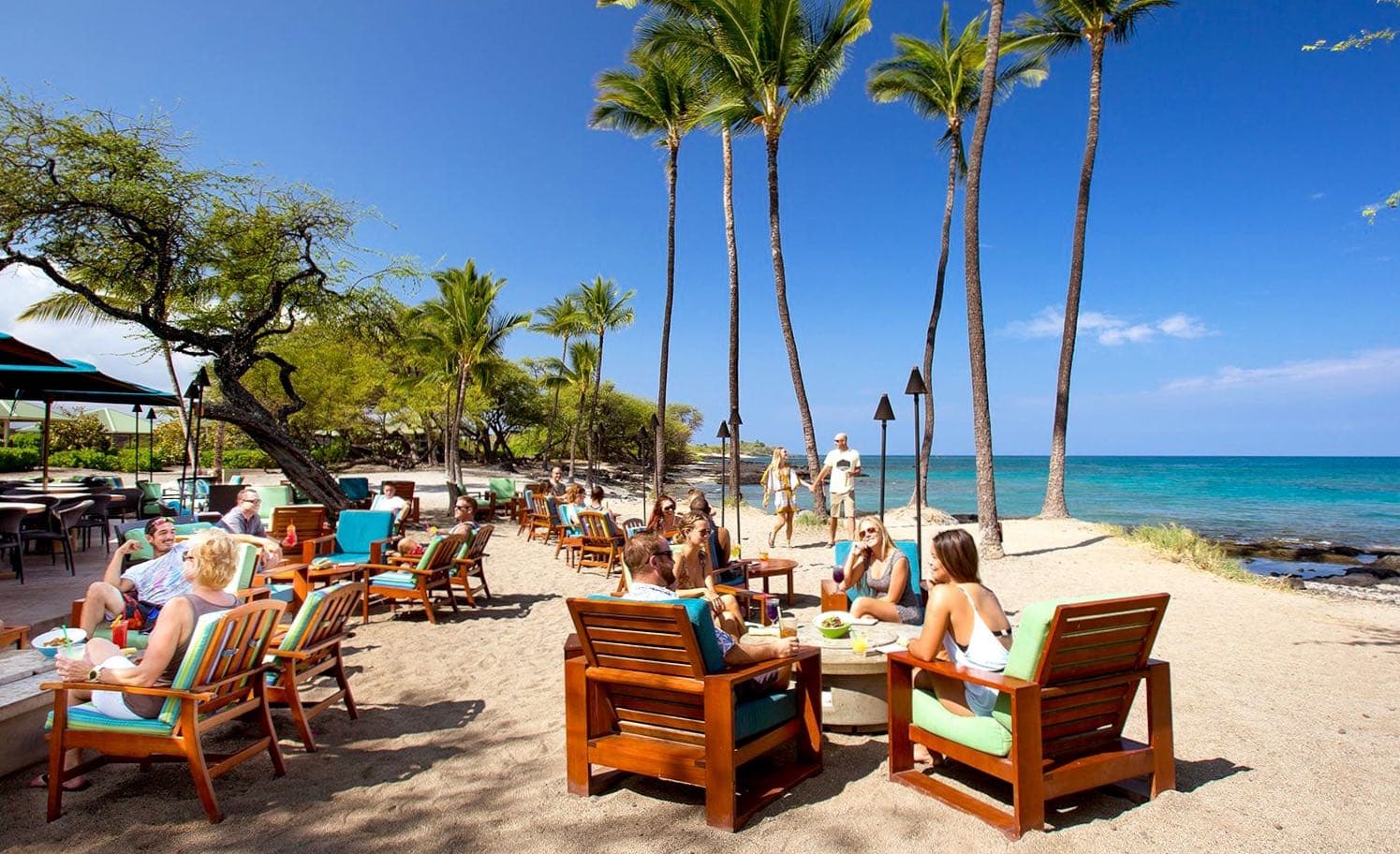
The views at the Lava Lava Beach club terrace get even better at sunset. Image credit: Lava Lava Beach Club
Amenities
Anaehoʻomalu Bay is better equipped than most of its neighboring beaches although it doesn’t have a lifeguard. You can find the following amenities at the beach:
- Showers and bathrooms
- Free parking
- A Bay Beach Hut for beach gear rentals
- No lifeguard
- Restaurant on the beach
Also there: Historic Fishponds and Petroglyphs
Anaehoʻomalu Bay and the surrounding Waikoloa area hold several significant historical sites from ancient Hawaiʻi:
Historic Fishponds
Directly behind A Bay’s beach are two large fishponds, Kahapapa and Ku’uali’i. Such ponds, or ‘loko’, were built by ancient Hawaiians and used to trap and raise fish for consumption. One of the translations for “Anaehoʻomalu” is “Bay of the Protected Mullet”, which is a type of fish that was often raised in the ponds (mullet in Hawaiian is called ‘ama’ama or ‘anae).
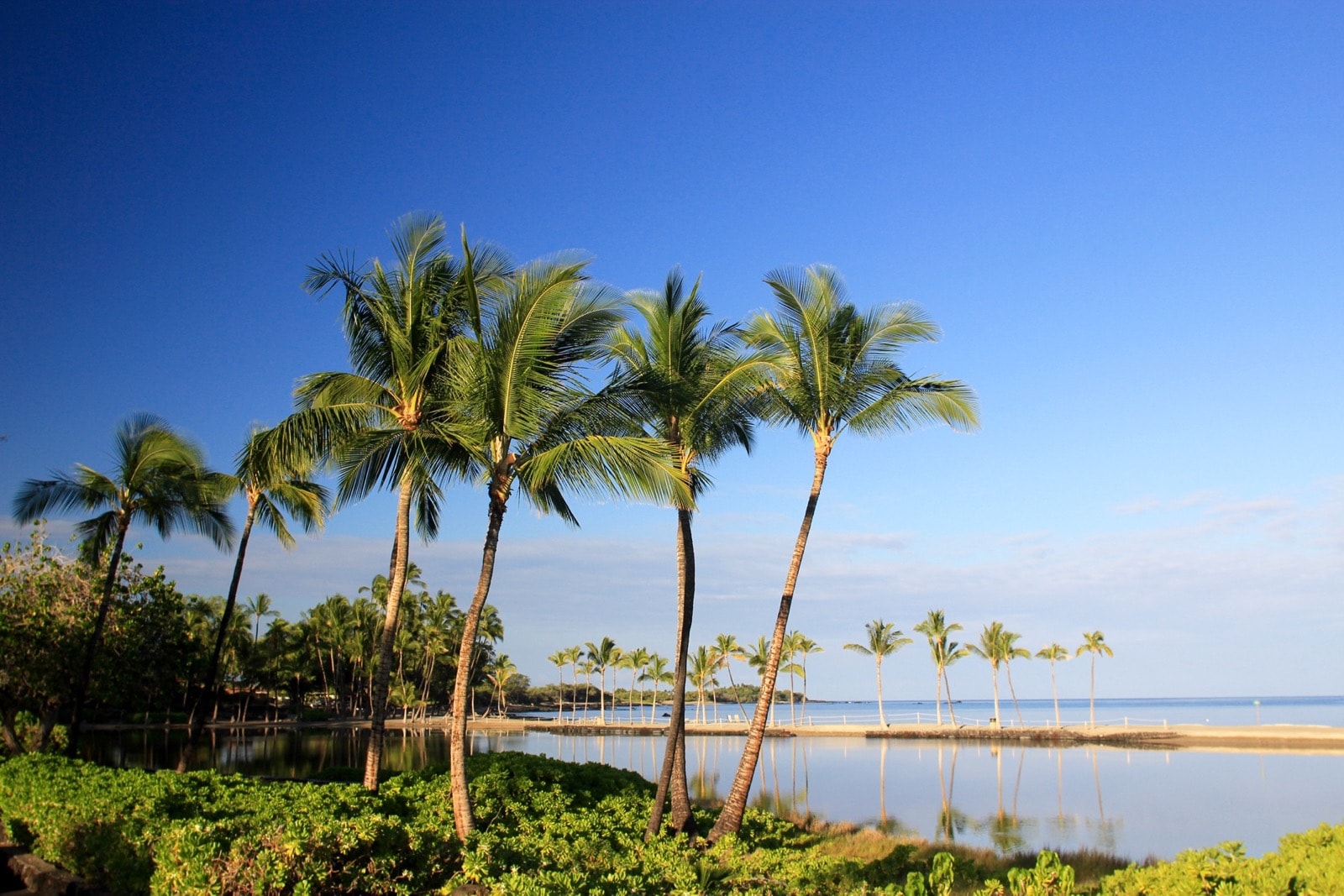
The Kuʻualiʻi fishpond at the southern side of the beach. Credit: Island of Hawaii Visitors Bureau (IHVB) / Kirk Lee Aeder
Fish ponds used to be an almost normal sight in the coastal regions of Hawaiʻi and were used as a method of sustainable farming. They are estimated to have produced up to 2 million pounds of fish a year at the time of first contact with western civilizations and fish from some of these ponds were only eaten by the Aliʻi (royalty / ruling class).
You can learn more about the history of Hawaiian fishponds here.
Waikoloa Petroglyphs
At 0.7 mile (a 14-minute walk) from the A Bay beach you can find the Waikoloa Petroglyph Reserve. This is one of the largest and best preserved sites of ancient Hawaiian petroglyphs on the Big Island with some 30,000 symbolic carvings depicting humans, animals, boats, and more, etched into the lava rock and dating as far back as the 15th century.
Petroglyphs are the closest thing to written language developed in ancient Hawaiʻi and this reserve is one of the easiest ways to have a good look at them.
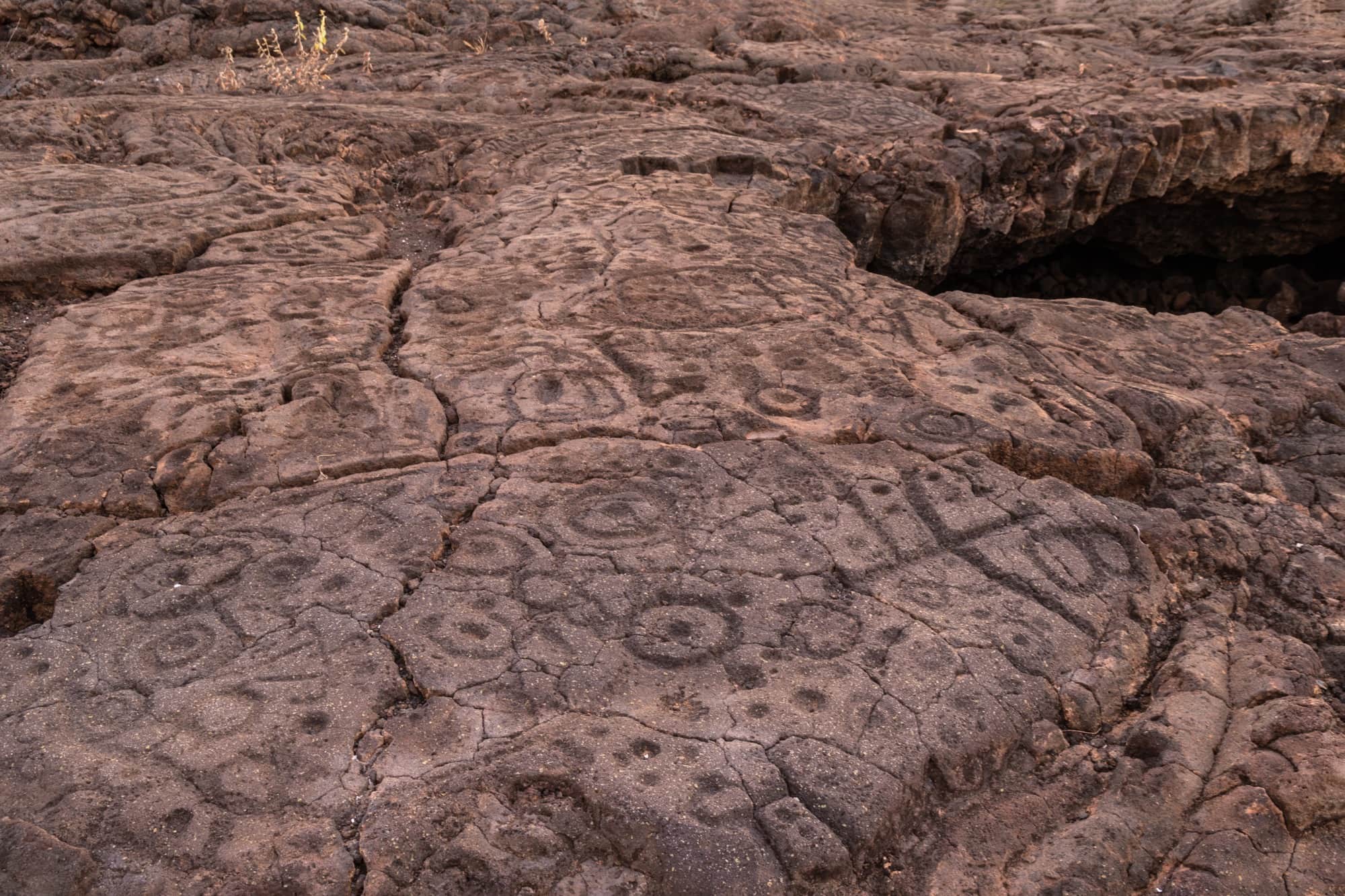
Petroglyphs in the Waikoloa Field. Carved into volcanic rock, the earliest of these carvings are centuries old.