
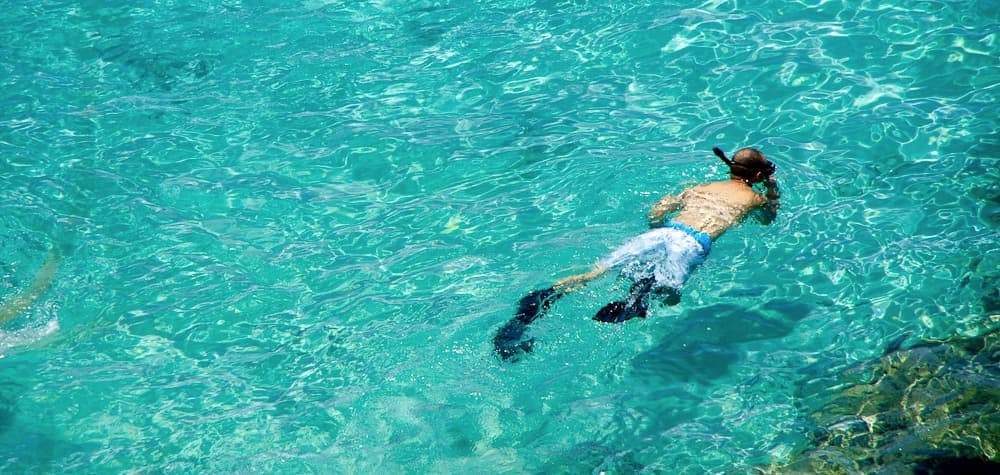
Almost all of the Big Island’s snorkeling is on the Kona (west) side: protected bays, consistent marine life, and enough shore-entry spots that you could snorkel somewhere different every day of a week-long trip. The Hilo (east) side receives more rainfall and surf, which limits visibility at most beach entries, but Richardson’s Ocean Park east of downtown Hilo stays calm most days and has reliable sea turtle sightings in shallow water.
This page covers gear rentals ($12-20/day from Snorkel Bob in Kona depending on the kit, or buy a basic kit at the local supermarket for $20-30), organized boat tours from $118, reef etiquette, and safety tips. The tour section covers full-service boat tours to Kealakekua Bay, zodiac-style aquatic safaris, private charters for larger groups, and the Kona manta ray night snorkel.
Table of contents
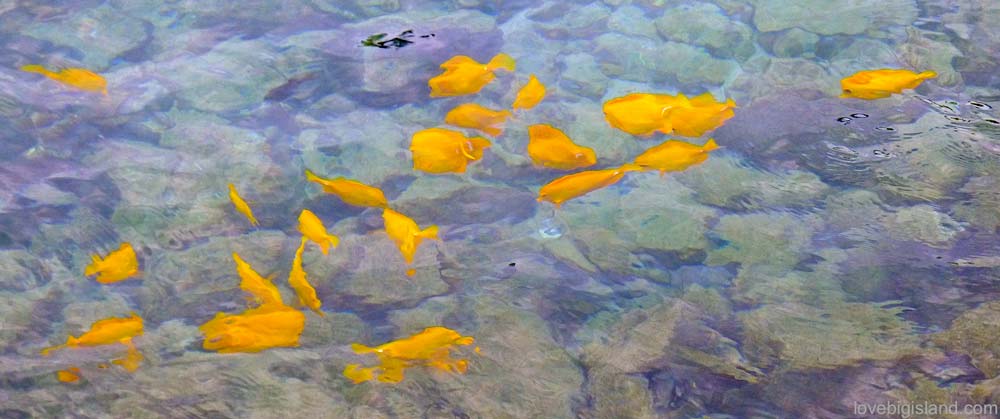
Yellow tang is one of the most common and easily recognized fish in Hawaiian reefs. You can see them on most Kona reefs, alone or in schools, individually, in small groups, and in large schools. Photo taken in Kailua-Kona Bay, along Aliʻi Drive.
Snorkeling Spots: Kona Coast and Hilo
The Kona coast runs roughly 60 miles from Keauhou in the south to Kawaihae in the north and has most of the snorkeling on the island. Each stretch has its own draw: South Kona has the best marine life, central Kona is the most convenient (and busiest), and the Kohala resort belt in the north has the calmest, clearest water.
The Hilo side has more rain and surf; Richardson’s Ocean Park is the reliable exception.
Summer (roughly May to September) has the calmest water island-wide; winter swells, strongest November through February, can shut down exposed spots like Hāpuna for days at a time, though the protected bays (Kahaluʻu, Two Step, Kealakekua) stay calm in most conditions. All 14 shore-entry spots with distances from town are listed on our Kona snorkeling spots page.
Kona Snorkeling Spots
- Kahaluʻu Beach Park, four miles south of downtown Kailua-Kona, is the most practical first stop on the island. The entry is easy, the reef starts immediately off the south end of the beach, and sea turtles feed on the algae year-round. Turtles feed here most mornings. Arrive before 9 a.m. to get parking and the clearest water before the afternoon wind picks up.
- Honokōhau Harbor, three miles north of town, is a mixed lava-and-beach entry with less predictable conditions but significantly fewer people on weekday mornings.
- Magic Sands Beach Park (White Sands Beach) has a shelf reef accessible from shore. The snorkeling is secondary to the beach, but it works for a quick stop if you are staying near town.
- King Kamehameha Hotel Beach (King Kam) is the most convenient entry point in the center of Kailua-Kona; the marine life is modest but it is the closest entry to the downtown hotels.
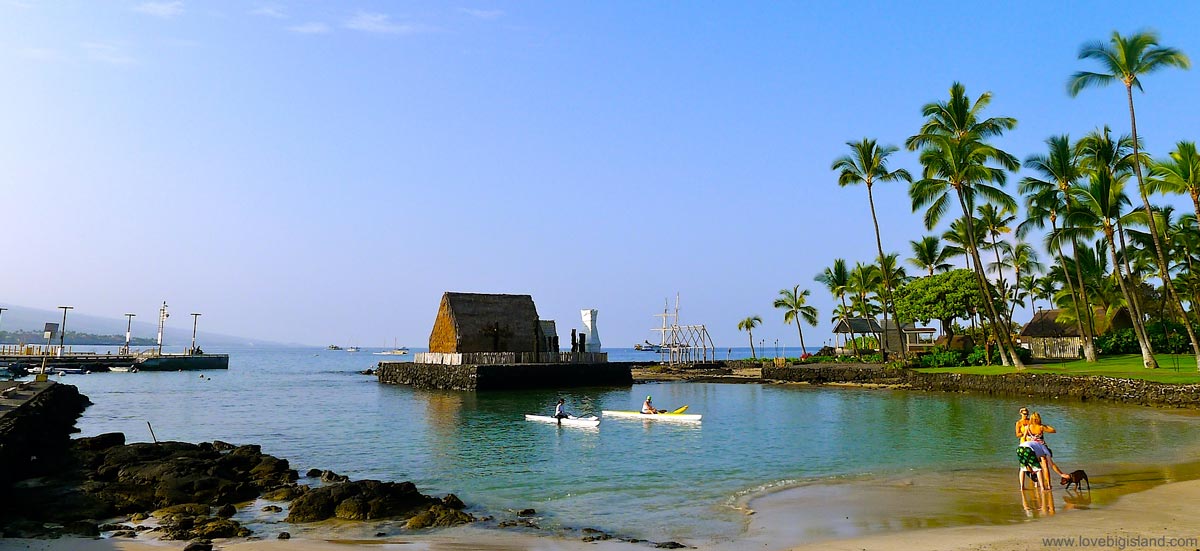
ʻAhuʻena Heiau sits right at the King Kam beach entry, so you can see the temple platform from the water while you snorkel.
South Kona Snorkeling Spots
Two Step and Kealakekua Bay are the two best snorkeling sites on the island.
- Two Step is what most people call the entry point at Hōnaunau Bay, adjacent to Puʻuhonua o Hōnaunau National Historical Park: a two-step lava ledge where you step down to the water with minimal scrambling and the reef starts in six feet of water directly off the ledge. The bay’s orientation shelters it from prevailing swells, so it stays calm most of the year, and the visibility runs 50 to 80 feet on a typical calm morning. Spinner dolphins use the bay as a resting area and are a common morning sighting. Parking is limited: the small lot at the boat ramp fills early, there is no fee, and latecomers park along the highway shoulder and walk in.
- Kealakekua Bay holds anchor rights for only a small number of permitted boats, which keeps the crowds down. The prime snorkeling is at the Captain Cook Monument on the north shore, reachable by kayak or tour boat. The shore trail is long and not recommended for the snorkel gear haul.
Both are covered in depth on our Big Island snorkeling spots guide.
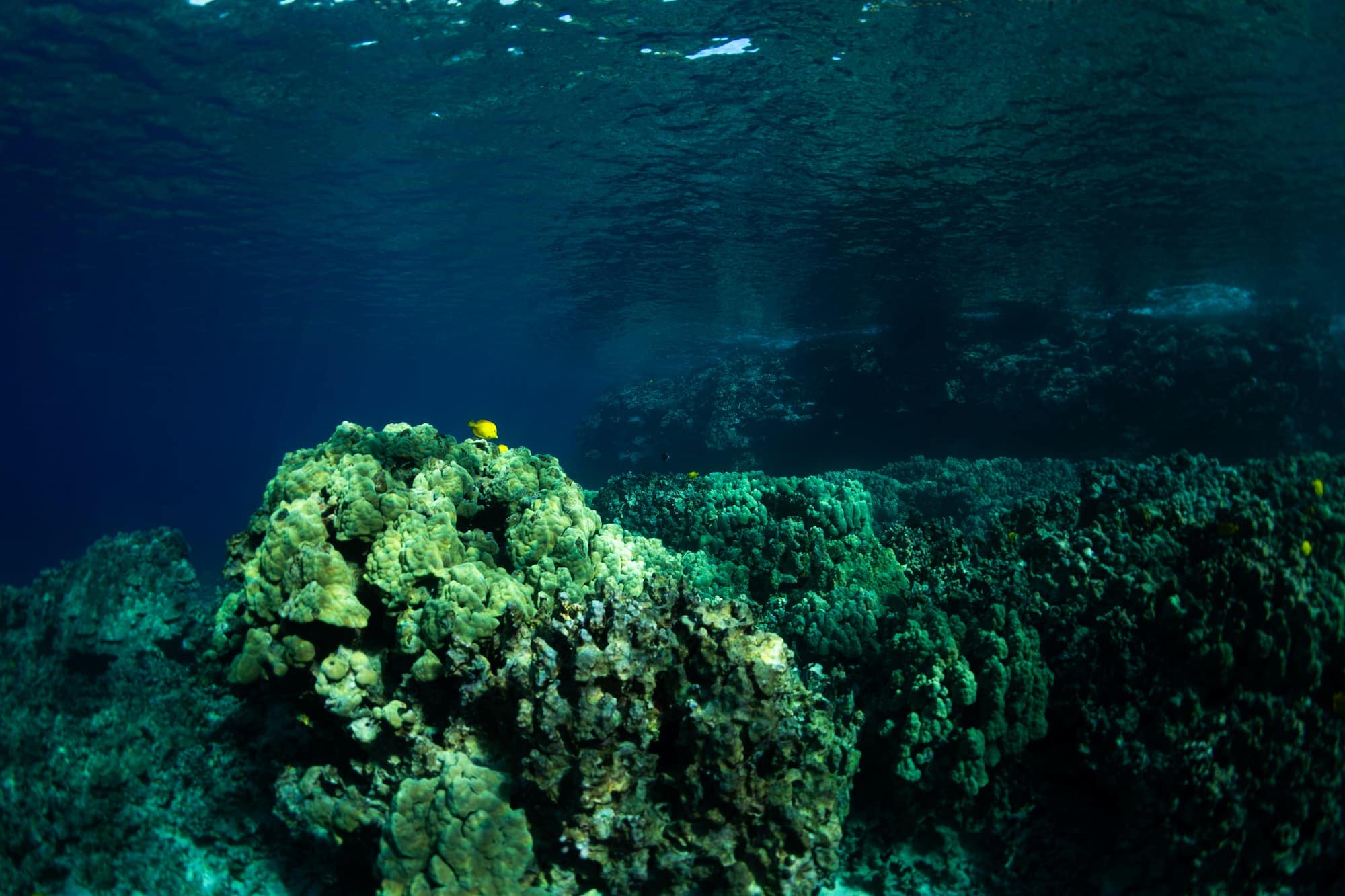
One of the many healthy coral formations within Kealakekua Bay on the Big Island of Hawaiʻi. Photo by Sarah Lee on Unsplash
Kohala Coast Snorkeling Spots
The resort beaches between Waikoloa and Kawaihae are publicly accessible. The access roads run through resort property, but public access is required by state law and the parking is clearly marked. These beaches have better water clarity and less wave action than anything within five miles of Kailua-Kona.
- ʻAnaehoʻomalu Bay (A Bay) at the Waikoloa Beach Marriott, 25 miles north of Kailua-Kona, has an offshore reef that keeps conditions calm on most days and good turtle activity along the rocky points at the south end of the bay.
- Makaiwa Bay at Mauna Lani is a protected beach with easy entry and a consistent reef.
- Waialea Beach (Beach 69), off Highway 19 at mile marker 69, has one of the calmer entries on the Kohala coast and a reef worth the 30-minute drive from central Kona.
- Kaunaʻoa Beach (Mauna Kea Beach) has the best snorkeling on the Kohala coast along the rocky points at each end; arrive before 9 a.m. because the small public parking lot fills fast.
- Hāpuna State Beach has good snorkeling on calm days but the beach is exposed. Conditions can deteriorate quickly in the afternoon, and it is not the right call if there is any swell running.
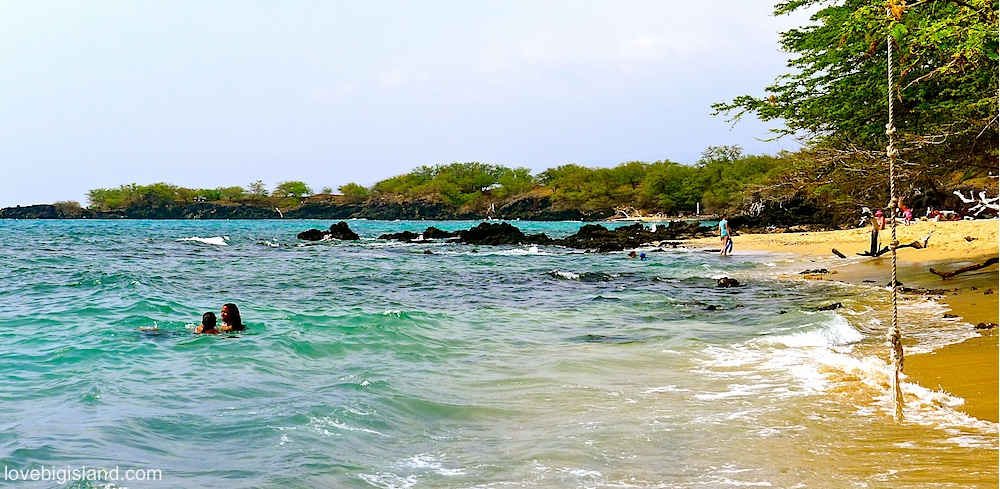
The best reefs at Waialea Beach are on the southern side of the bay, but there is also plenty of coral around the rocky prominence inside the bay and close to the rocky point on the right (north) side of the beach.
Snorkeling Near Hilo: Richardson’s Ocean Park
- Richardson’s Ocean Park is at the end of Kalanianaʻole Avenue, about three miles east of downtown Hilo. The park has a small black sand beach, lava rock tide pools along the edges, and a sheltered bay that stays calm on most days despite the rainfall and surf common elsewhere on this coast. You will usually see green sea turtles on the rocks along the bay or in the shallows. Morning visits give better visibility as afternoon wind picks up and can stir the water. The park has restrooms and parking but no gear rentals; bring your own or rent in Hilo before you go.
- Carlsmith Beach Park (Four Miles), a short drive closer to downtown, has a sheltered lagoon that stays calm even when the ocean is not. It is a reliable fallback on rougher days and also has regular turtle sightings in the protected pond area.
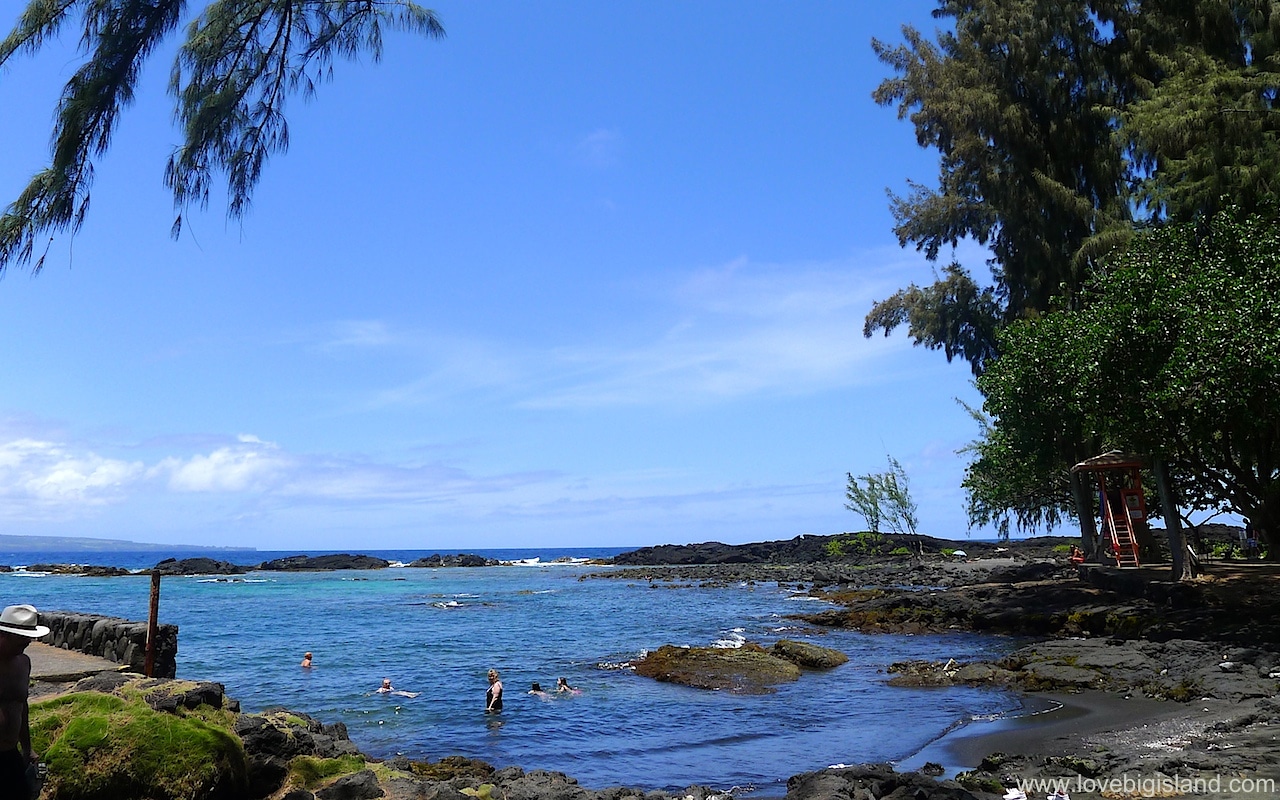
Richardson’s Beach Park, in Hilo on the Big Island of Hawaiʻi. This beach is one of the best places to snorkel on the Hilo side
Snorkel Gear Rentals: Buy or Rent
Renting is the practical option for most visitors.
- Snorkel Bob in Kona prices a full kit (mask, snorkel, fins) by tier: $12 a day for a standard adult set, $10 a day for a kids’ kit, up to $16 to $20 a day for the premium and prescription-lens options, with weekly rates running $30 to $60 depending on the tier. Gear is available at multiple Kona locations; you can pick up and drop off at any Snorkel Bob on the island, which is useful if you are splitting time between Kona and Hilo.
- On the Hilo side, Hilo Ocean Adventures on Kamehameha Avenue rents mask-and-snorkel sets separately from fins, a few dollars cheaper overall but with an extra pickup step.
The alternative is a basic kit from the local supermarket for $20 to $30. The fit will not be as precise as a rental, but it works fine for calm beach entries and you do not have to return it at the end of the day. If you are snorkeling on a boat tour to Kealakekua Bay, the operator includes gear.
For a basic kit you need a mask, snorkel, and fins. Add booties if you are entering over lava rock (Two Step, Richardson’s Ocean Park) and reef-safe sunscreen regardless of where you are going. Hawaiʻi state law bans the sale of sunscreen containing oxybenzone or octinoxate, and Hawaiʻi County goes further: only mineral sunscreens (zinc oxide or titanium dioxide) are legal to sell on this island, so check the label if you brought sunscreen from home.
A fish ID card is worth the few dollars. Yellow tang, Moorish idol, humuhumunukunukuapuaʻa, and Picasso triggerfish are common on any Kona reef,.
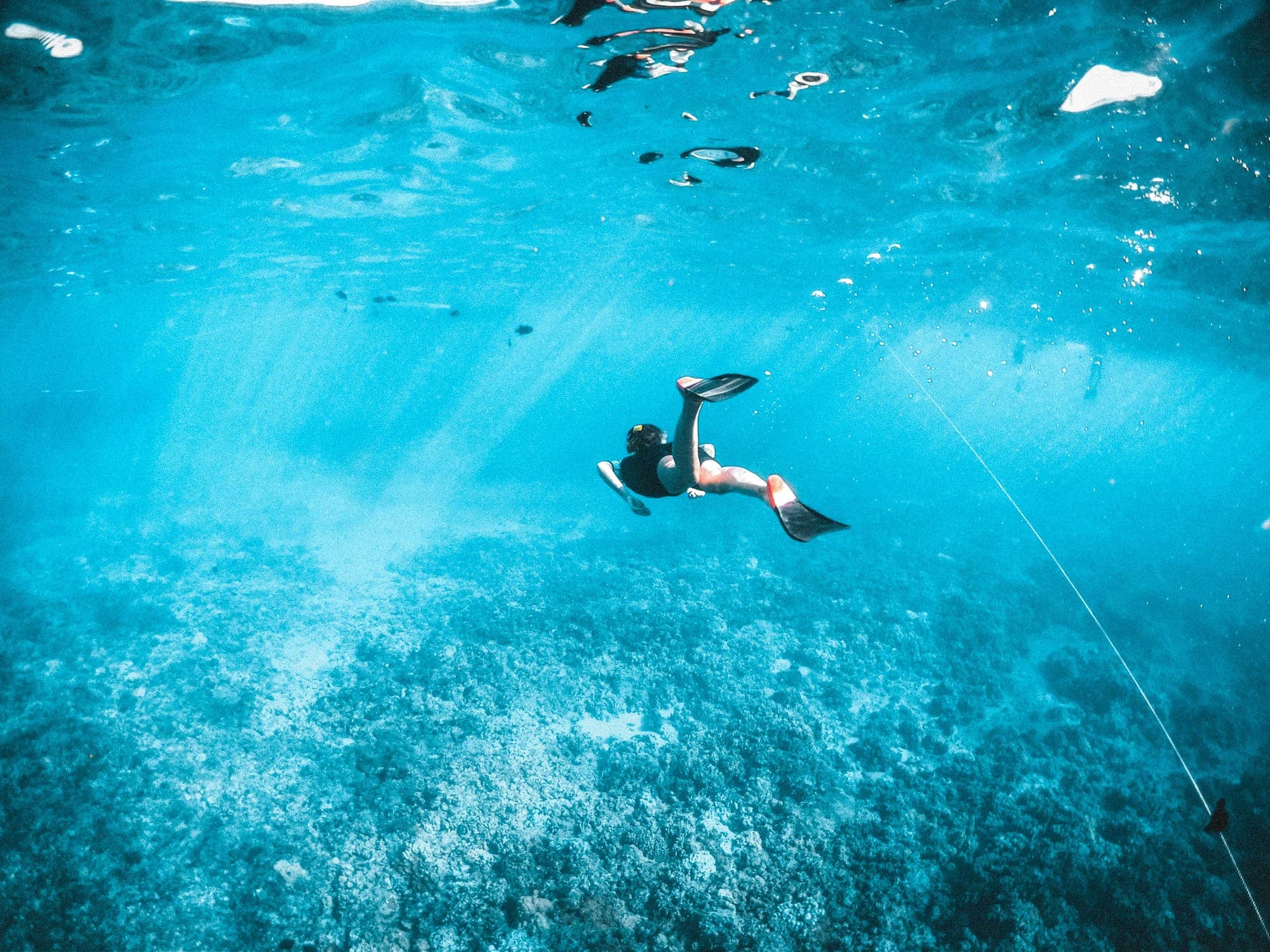
In order to go snorkeling, you’ll need a mask, fins, and snorkel, and perhaps a wetsuit or some kind of exposure protection if you get cold easily. Photo by Subtle Cinematics on Unsplash.
Snorkeling Tours from Kona: Boats, Zodiacs, and Charters
Shore entry works well at most Kona beach parks. A tour makes sense when you want to reach Kealakekua Bay, where the Captain Cook Monument reef is significantly better than what is accessible from shore, or when you want gear, food, and a guide included and do not want to manage logistics yourself.
Morning Boat Tours to Kealakekua Bay
Morning tours run four and a half hours, depart from Keauhou, and include two snorkel stops at Kealakekua Bay, priced from $165 for the option below. Sea Paradise operates from Keauhou Harbor and holds anchor rights in the Kealakekua Bay Marine Life Conservation District. Crew enters the water with every group, which is useful if you have first-timers along.
Fair Wind, also departing from Keauhou, runs a similar morning format visiting two snorkeling locations , with more time in the water. Fair Wind also sells a shorter, cheaper afternoon-only version of the same tour if the morning slot does not fit your schedule. Both operators include gear, meals, and a freshwater rinse.

Morning Sail and Snorkel to Kealakekua Bay and Red Hill
Sea Paradise holds anchor rights inside Kealakekua Bay, so the Hoku Nui drops anchor right over the coral, at a reef that otherwise takes a two-hour hike or kayak to reach.
from:
$165
What is a suggested tour?Our suggested tours are hand-picked tours that receive consistent good reviews, give back to the community, and work hard to minimize their impact on the environment. Read more about these tours on our website.Aquatic Snorkeling Safaris
An aquatic safari combines a snorkeling stop with a small-boat search for marine wildlife such as dolphins, humpback whales in season, and manta rays. Because time is split between wildlife searching and snorkeling, the in-water time is shorter than on a dedicated snorkel tour: expect 30 to 90 minutes of snorkeling depending on the operator and what is showing up that day.
The 2-hour Marine Wildlife and Reef Snorkel Adventure runs on a Navy SEAL zodiac-style boat, maximum 14 guests. The pace is fast and the ride is loud.
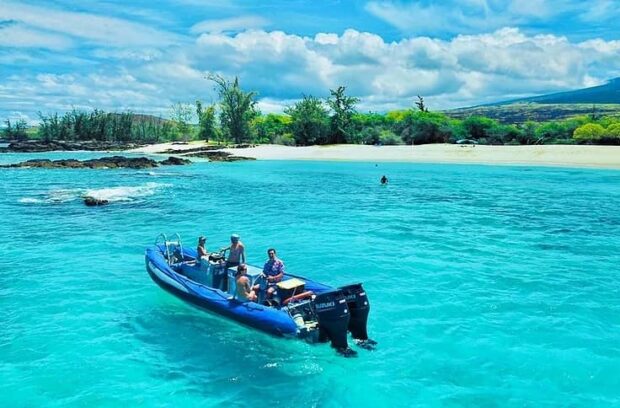
Marine Wildlife & Reef Snorkel Adventure
Marine wildlife safari and snorkel tour on a Navy SEAL Zodiac boat, only for guests who want a fast, bumpy ride. 14 guests max.
from:
$118
What is a suggested tour?Our suggested tours are hand-picked tours that receive consistent good reviews, give back to the community, and work hard to minimize their impact on the environment. Read more about these tours on our website.The 4-hour Aquatic Safari and Reef Snorkeling at a Marine Sanctuary covers more coastline, runs on a 38-foot vessel with 18 guests maximum, and gives more in-water time.
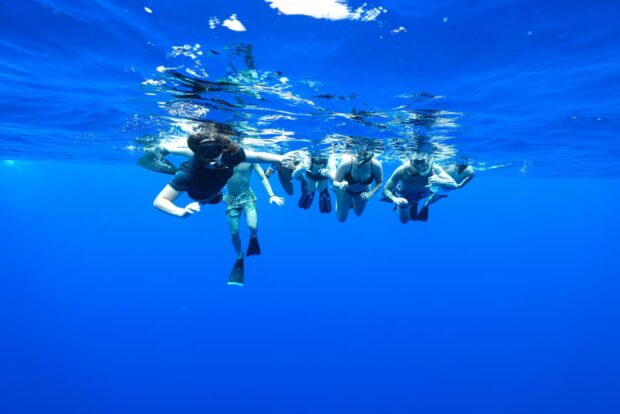
Aquatic Safari + Reef Snorkeling at a Marine Sanctuary
A 4-hour reef snorkeling and aquatic safari along the Kona coast on a fast 38ft vessel, 18 passengers max.
from:
$200
What is a suggested tour?Our suggested tours are hand-picked tours that receive consistent good reviews, give back to the community, and work hard to minimize their impact on the environment. Read more about these tours on our website.Private Sailing Charters: Worth It for Groups of 6+
A private charter makes sense for groups of six or more: the per-person cost on a 38-foot boat at that size becomes competitive with the full-service group tours, and you get control of the itinerary plus access to snorkel sites the larger boats cannot reach. The four-hour daytime charter is the main option in this category.
For a sunset option, Paradise Sailing runs a 2-hour sunset charter at $1,085 for up to 8 guests.

Private 38ft Boat Snorkeling Charter / Cruise
Excellent for families and friend groups, this 4 hour private charter on a 38ft boat takes you anywhere along the Kona coast you want!
from:
$1,500
What is a suggested tour?Our suggested tours are hand-picked tours that receive consistent good reviews, give back to the community, and work hard to minimize their impact on the environment. Read more about these tours on our website.Manta Ray Night Snorkel
On the manta night snorkel, boats drop lights into the water after dark, reef mantas about 12 feet across come up to feed on the plankton drawn by the light, and you float at the surface on a lighted board a few feet above them. Trips run 1.5 to 2.5 hours total, with 30 to 45 minutes in the water, and prices start at $118.
Sea Paradise leaves Keauhou Bay for Manta Village; Torpedo Tours leaves Honokōhau Harbor for Manta Heaven. A blank night (no mantas show up) usually gets you a free rebook or a steep discount. Full details, operator comparisons, and booking guidance are on our Kona manta ray night snorkel and dive guide.
Where to Find Fish: Near Coral and Rocks
Fish need shelter and food, so the densest activity is always near coral or rock structure, not open sand. Kahaluʻu’s reef starts right off the south end of the beach; Two Step’s ledge drops straight into 50 to 80 feet of visibility on a calm morning; Richardson’s Ocean Park has lava rock tide pools that hold fish even when the rest of the Hilo coast is too rough to get in.
Open sandy stretches between structure are quieter and the easiest place to enter and exit.
Watch your footing wherever there is rock rather than sand: sea urchins wedge into cracks at ankle depth, and standing on live coral kills it. Wear booties at any lava-rock entry (Two Step, Richardson’s) and use a sandy strip to get in and out when one is available.
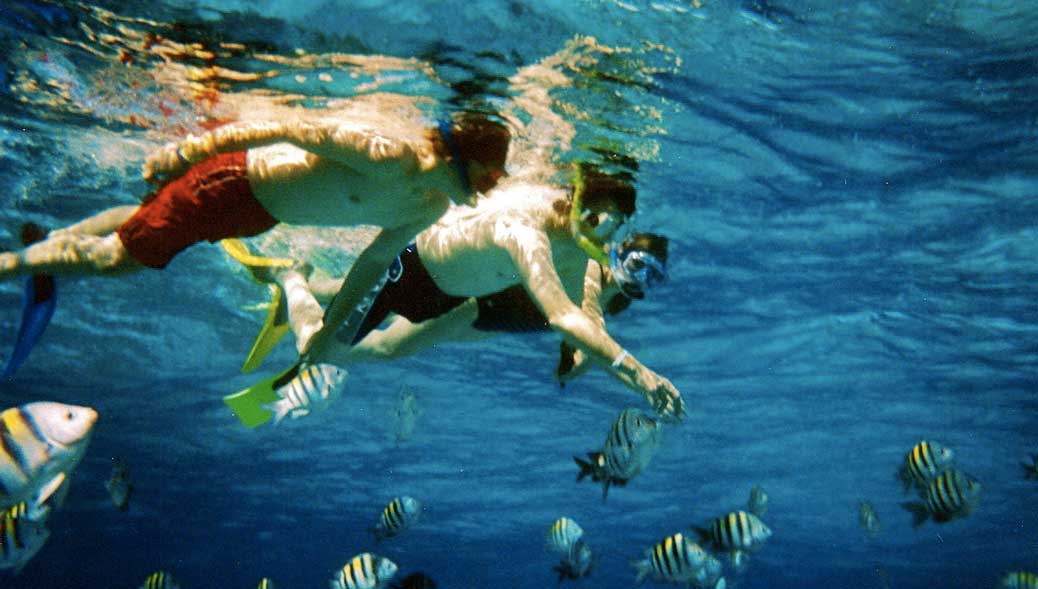
A group of snorkelers observing undersea wildlife. Image credit: Julie Falk on Flickr.
Mālama Kai: Hawaiian Reef etiquette
The ocean is Hawaiʻi’s most important resource, and more than a quarter of the sea life here is found nowhere else on the planet. It is important for everyone, locals and visitors, to practice an ancient Hawaiian tradition: Mālama kai. Loosely translated it means “take care of the ocean”.
If you have 8 minutes to spare please have a look at this informative video about Hawaiian Reef etiquette (go to 02:10 if you want to skip the introduction):
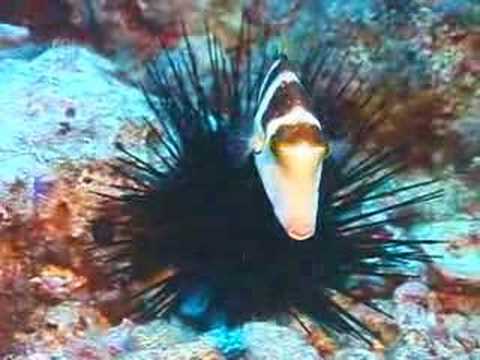
The video shows local fish (most prominently the Humuhumunukunukuapuaʻa) that tell the do’s and don’ts of conservation with a Hawaiian dialect against a background of original music and chants. It is narrated by some of Hawaiʻi’s top entertainers.
Marine mammals are protected and should not be fed or actively approached by boats or swimmers.
Snorkeling Safety Tips
- Watch for sea urchins and lava rock: the two most common Big Island snorkeling injuries are urchin spines underfoot and cuts from lava-rock entries. Wear booties at rocky spots like Two Step and Richardson’s, and use a sandy strip to get in and out where one exists.
- Check the wind, not just the surf: at Kahaluʻu and other Kona-side spots, wind picks up in the afternoon and stirs up the water. Morning sessions are clearer.
- Never snorkel in high surf. If you are a beginner, start in shallow water and only venture further out when you feel comfortable. Return to shore if you start feeling anxious. See also our 12 favorite snorkeling spots in Hawaiʻi for beginners.
- Always snorkel with a buddy: it’s more fun and much safer. In an emergency, your snorkel partner is the one who gets help.
- Learn to clear your mask before you need to: float with your feet down and face up, then exhale a burst of air through your mouth to blow the water out. Ask the rental shop staff to show you if you’re unsure.
- Reef contact kills coral. It looks like rock, but it’s a living animal built from millions of tiny polyps. Rest only on sand or bare lava, never on coral.
Snorkeling on Maui, Oʻahu, and Kauaʻi
If you are spending time on more than 1 island, our collections of top snorkeling spots on Maui, Kauaʻi, and Oʻahu::
- 11 Snorkeling Spots on Oʻahu for any itinerary
- 3 Favorite Big Island Snorkeling Spots for Beginners and Experts
- 11 great Kauaʻi Snorkeling Spots (for families, wildlife, and more)
- Our 10 favorite snorkeling spots on Maui (includes Molokini Crater, a half-submerged volcanic cone with 100-foot visibility on calm days)
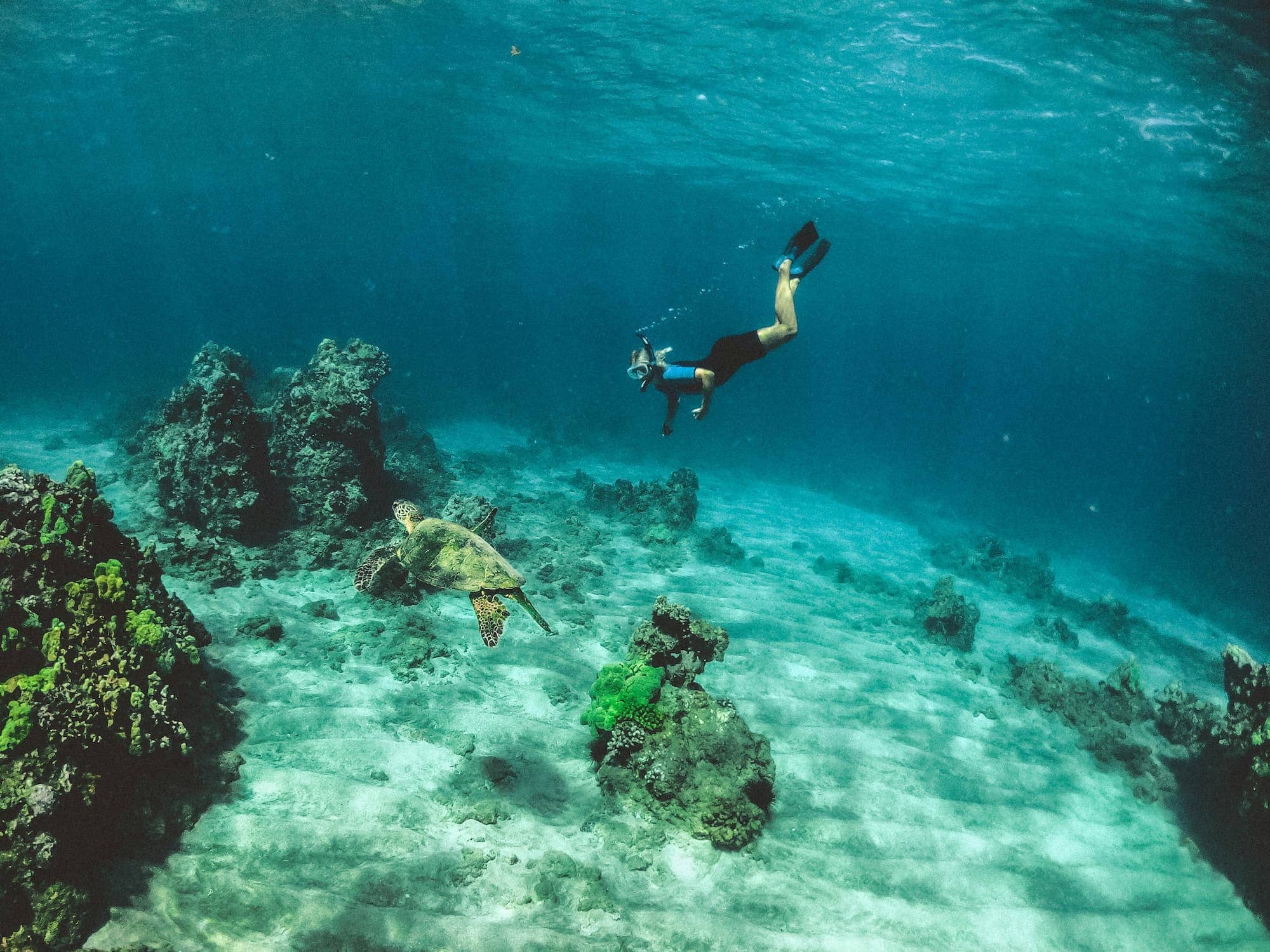
A snorkeler watches a green sea turtle in the waters around Maui. Photo by Subtle Cinematics on Unsplash
Banner image credit: Aaron Gilson on Flickr, source.