

You can walk from sea level to 13,000 feet on this island, through rainforest, across lava that cooled last decade, and out onto a coast with no road to it. Few people live here and there’s a lot of trail, so you’ll often have the place to yourself, and nearly all of the island’s waterfalls sit on the wet Hilo and Hāmākua side.
The island has 8 of the world’s 13 climate zones in 4,028 square miles, so an hour of driving can put you in a different one.
Table of contents
- Recommended hikes
- Hiking Tours (a guided hike in Hawaiʻi Volcanoes National Park, and a waterfall hike and swim)
- Safety tips
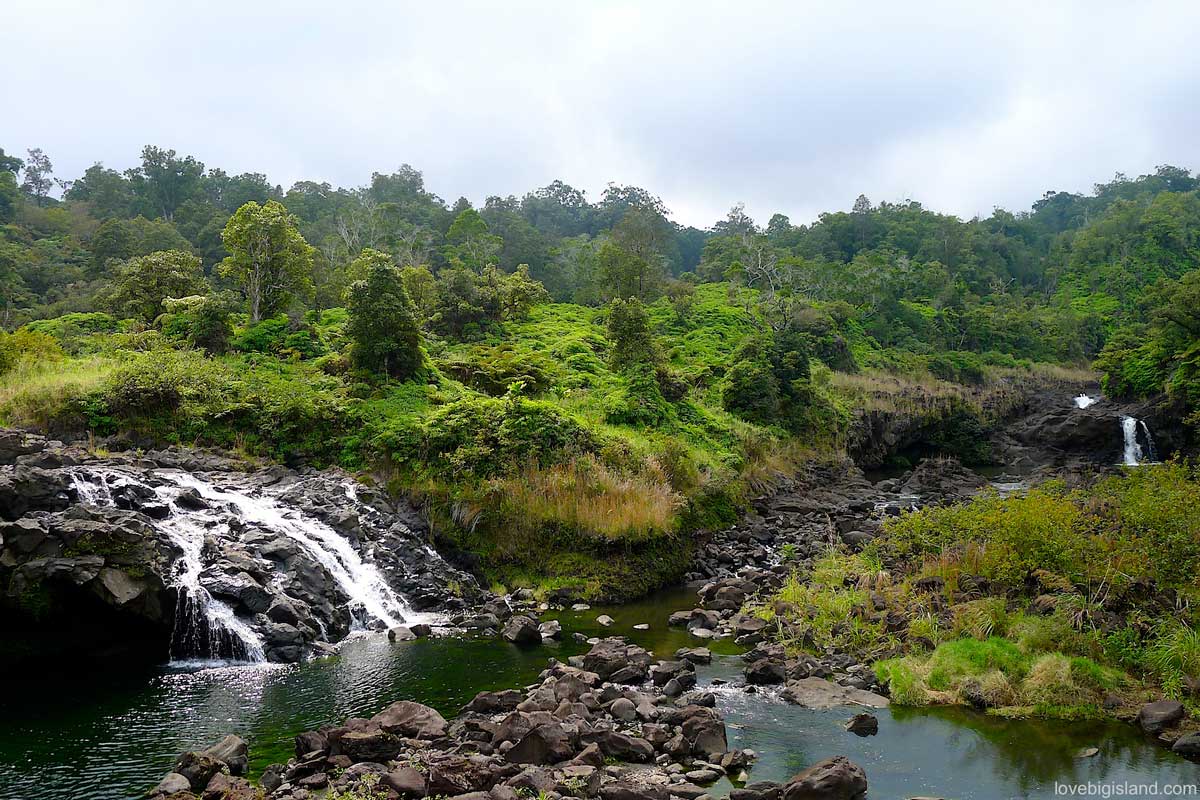
A rainforest stream dropping over old basalt into a series of pools
A hike here can mean coastal dunes, shrubland, rainforest or high alpine desert, and the range of difficulty is just as wide. At the easy end is the Onomea trail north of Hilo, rated easy by the state: 0.6 miles and 176 feet of elevation, with limited parking off the old Belt Road.
At the hard end sits the Hilina Pali Trail in Hawaiʻi Volcanoes National Park, which drops 24 switchbacks down a fault scarp into hot, dry country. It’s windy down there. The Park’s own trail description warned in August 2026 that sections are badly overgrown and the cairns may not be visible. It’s 4.8 miles from the Hilina Pali Overlook to Pepeiao Cabin and 8.0 miles to Halapē, one way.
The multi-day hike is on Mauna Loa. The Park states that the Mauna Loa Summit Cabin is not reachable from the Mauna Loa Trail, because the 2022 eruption damaged the trail. What’s open: 7.5 miles and 3,373 feet of climb from Mauna Loa Road to the Red Hill cabin, or 5.9 miles from the Mauna Loa Observatory to the summit cabin. Night temperatures are below freezing year round.
Recommended hikes on the Big Island
We’ve written up 5 easy hikes on the Big Island. A step up from those is the 2.5-mile walk out to Green Sand Beach, exposed the whole way.
For trails beyond the obvious ones, Big Island Hikes is the most thorough private write-up we know of. The official source is Nā Ala Hele, the state trail and access program run by the Hawaiʻi Division of Forestry and Wildlife, which lists 26 trails and access roads on Hawaiʻi Island, 18 of them tagged for hiking. Trails that aren’t on the state’s list aren’t managed for public use, and some cross private land.
Hilina Pali and Mauna Loa both sit inside Hawaiʻi Volcanoes National Park.
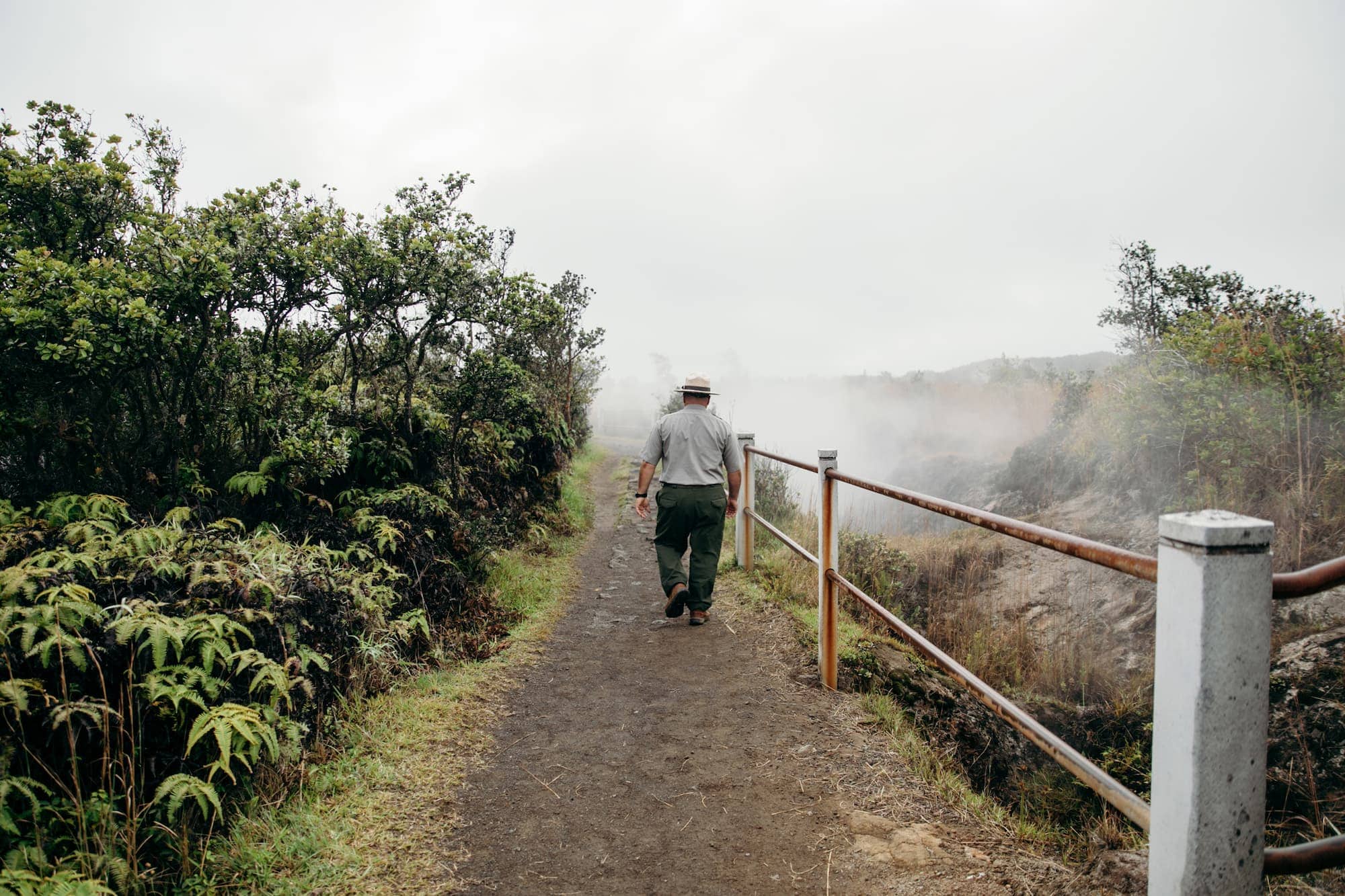
Warm steam smelling like sulfur rises up through cracks in the ground at the steam vents trail in Hawaiʻi Volcanoes National Park. Hawaii Tourism Authority (HTA) / Heather Goodman / @hbgoodie
Hiking tours
Book a guided hike if you’d rather not research trails and read conditions yourself.
No Big Island company specializes in multi-day guided treks. Hawaiʻi Forest & Trail runs scheduled guided day hikes in the national park, and the state permits commercial guiding on 13 Hawaiʻi Island trails, with group caps as low as 8. There is a wider list of organized Big Island hikes, or take one of the two tours below, which each include 2 to 3 miles of hiking:
Hike in Hawaiʻi Volcanoes National Park
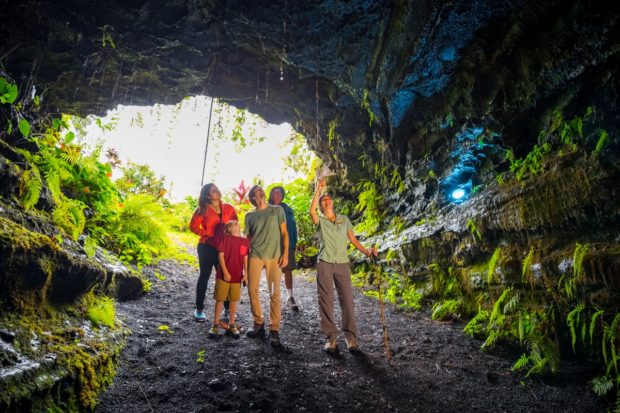
Volcano, Chocolate, & Waterfalls (in-depth volcano experience from Kona or Hilo)
Small-group volcano tour with a certified guide through Hawaii Volcanoes National Park, plus a tree-to-bar cacao farm tour and a private chocolate tasting at a waterfall. 11-12 hours from Kona
from:
$295
What is a suggested tour?Our suggested tours are hand-picked tours that receive consistent good reviews, give back to the community, and work hard to minimize their impact on the environment. Read more about these tours on our website.Waterfall Hike + Swim
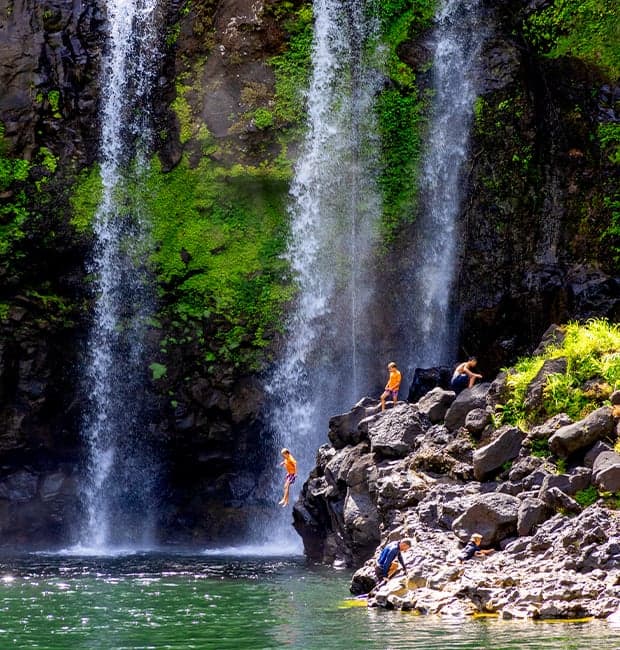
Kolekole Falls Waterfall Hike and Swim, Hamakua Coast
This guided hike covers 3 miles of private farmland and jungle near Honomu, passing three waterfalls before finishing at Kawainui Falls, where guests swim in a pool with no public access.
from:
$172
What is a suggested tour?Our suggested tours are hand-picked tours that receive consistent good reviews, give back to the community, and work hard to minimize their impact on the environment. Read more about these tours on our website.Hiking Safety Tips
Most of the advice below comes straight from the agencies that manage these trails. The Park warns that first-time hikers here regularly underestimate the difficulty.
- Two quarts per person for a day hike, four per person per day on the coast. That’s the Park’s figure, and the coast has no shade at all. You can sweat close to two quarts an hour walking in that heat.
- Stay on the trail. Earth cracks, thin crust and hidden lava tubes sit just off it. Lava rock is uneven and sharp. Keep skin covered and wear closed shoes; the Park recommends it.
- Check the air quality before you go. Volcanic gas can cause breathing trouble miles downwind of its source, and it hits people with heart or respiratory conditions hardest, along with infants and pregnant women.
- Know your turnaround time. There’s no daylight saving here and night falls fast. Trails are marked with stone cairns that are hard to see in mist and impossible in the dark, so if you’re still out after dark, stay put unless you know the trail and have a light.
- Tell one person your plan. Name the trail and your expected return time. On an overnight in the Park it’s required, and on a day hike that person is your only link to a rescue.
- Do not drink untreated stream water. Leptospirosis survives in fresh water and mud here and gets in through the eyes, nose, mouth and broken skin.
- Read the Park’s own guidance before your first hike here. Hiking Tips is the long version, and the safety checklist is the short one.