Papakōlea’s sand is roughly 90% olivine crystal, which weathers out of a roughly 49,000-year-old ash ring behind the beach. The beach sits near Ka Lae, or South Point, the southernmost tip of the 50 states. You can’t drive to it. From the South Point parking lot it’s a 2.5-mile hike each way, fully exposed and windy, with no shade the whole way.
This one rewards an early start. Go on a weekday morning before the heat builds and the lot fills. There’s no lifeguard, no food, and no water at the beach, so carry your own. You’ll be offered paid rides down the rutted road from the lot. Those drivers are operating illegally on Hawaiian Home Lands, and the road is closed to vehicles.
Table of contents
- About Green sand beach
- Directions to Green sand beach (hiking + driving)
- Green sand beach Trivia
Green sand beach isn’t the only reason to drive down to Kaʻū. If you are coming from Kona or Hilo, take a look at our list of things to do in Kaʻū to add a few worthwhile stops to the road trip.
About Green Sand Beach
The draw here is the sand itself. Olivine crystals give it a green cast you won’t see on another Hawaiʻi beach, and the color is strongest where the grains pile up.
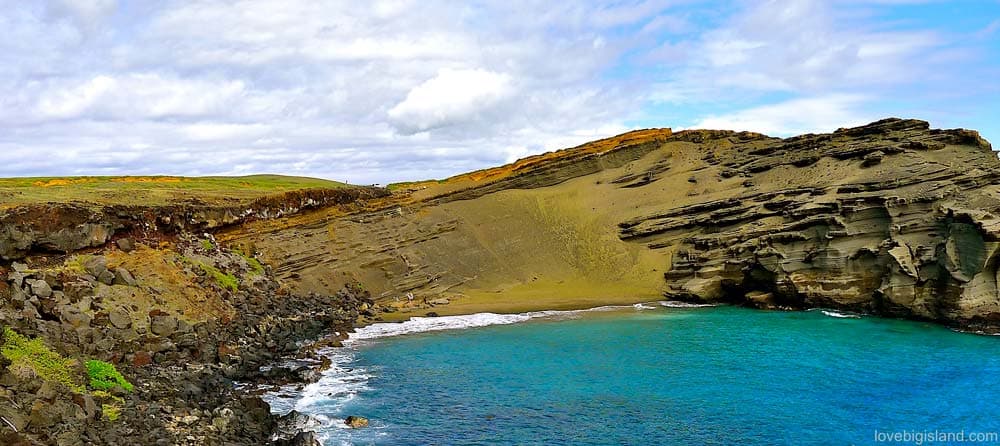
Green sand beach is a small, hard-to-reach beach close to the southern tip of the Big Island. If you are wondering about the name, you can find out why the sand of green sand beach is green here.
The green is mixed with black lava grains and white coral and shell, so some patches read far greener than others. Take a minute to pick up a handful and look closely: the green crystals stand out against the black and white.
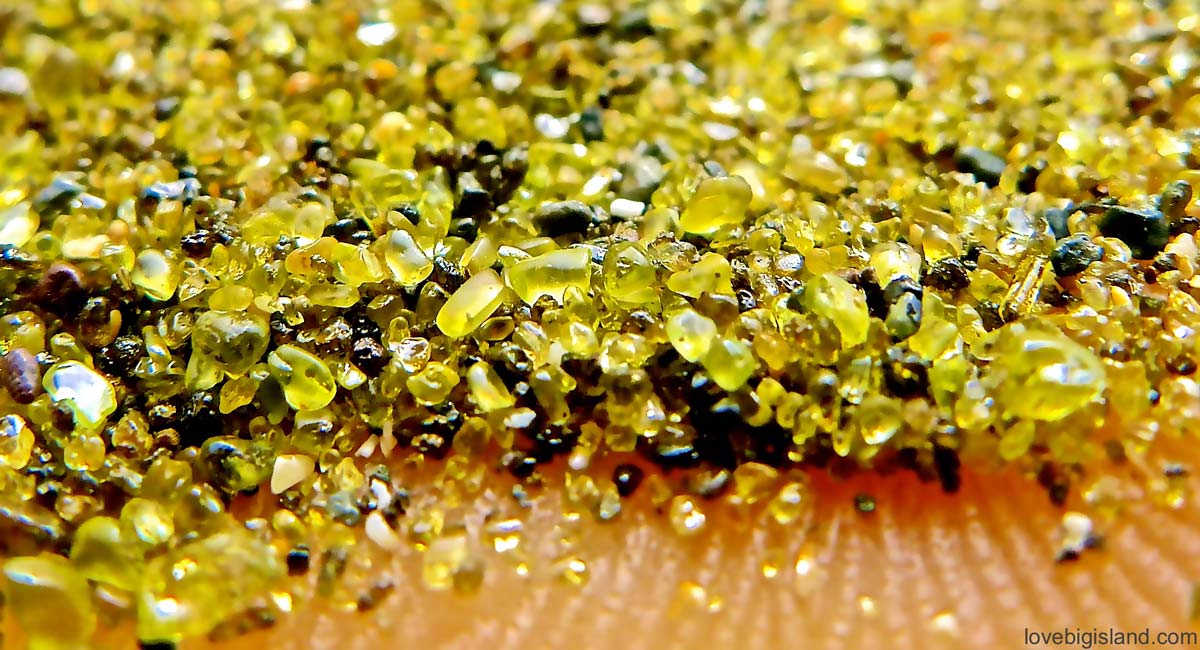
Green sand containing olivine crystals from Papakōlea (green sand beach) on the Big Island.
Swimming is possible, though the surf gets rough at times. There’s no lifeguard, no facilities, and nowhere to buy food or water, so bring everything you need and pack out all your trash.
There’s no shade anywhere on the beach or on the hike in. Bring a hat, sunscreen, and a beach umbrella if your skin burns easily.
When to go: beat the heat and the crowds
Aim to start before noon. The hike is fully exposed, so a morning start means cooler temperatures and a far easier walk, and a weekday morning keeps the crowds down at the trailhead and on the beach. Papakōlea has gotten much busier over the past several years, so the timing matters more than it used to.
Leave no trace: The old line still holds here, take nothing but memories, leave nothing but footprints. Please don’t take the green sand home as a souvenir, and bring an extra bag for your trash.
Getting there: drive to South Point, then hike
Reaching Papakōlea takes a drive followed by a hike. You drive to South Point at the bottom of the island, then walk 2.5 miles each way from the parking lot to the beach. Budget two to three hours round trip for the walk, plus your time at the beach. Arrive early and the remoteness works in your favor: most mornings you’ll have a good stretch of sand close to yourself.
Step 1: Drive to South Point
Turn onto South Point Road off Highway 11, between mile markers 69 and 70 (the stretch between Kona and Volcano Village), and follow it to the small harbor at the end. There’s a parking lot on the left where you can leave your car. It’s small and fills up on busy mornings, so an early start helps you get a space.
Step 2: Hike to Green Sand Beach
The hike is hot and exposed but not technically hard, mostly flat over rutted dirt.
Walk from the parking lot to the ocean and take the road to the left (facing the water, towards the east). Follow this road with the ocean on your right for about 2.5 miles and you will reach the cliffs above the Green Sand Beach. Climb down carefully along the lava cliff on the west side of the bay.
This corner of the island gets strong wind and full sun, so bring water and sunscreen. Along the way you’ll pass older sites, including heiau (Hawaiian temples).
Read more about the hike itself on the bigislandhikes website.
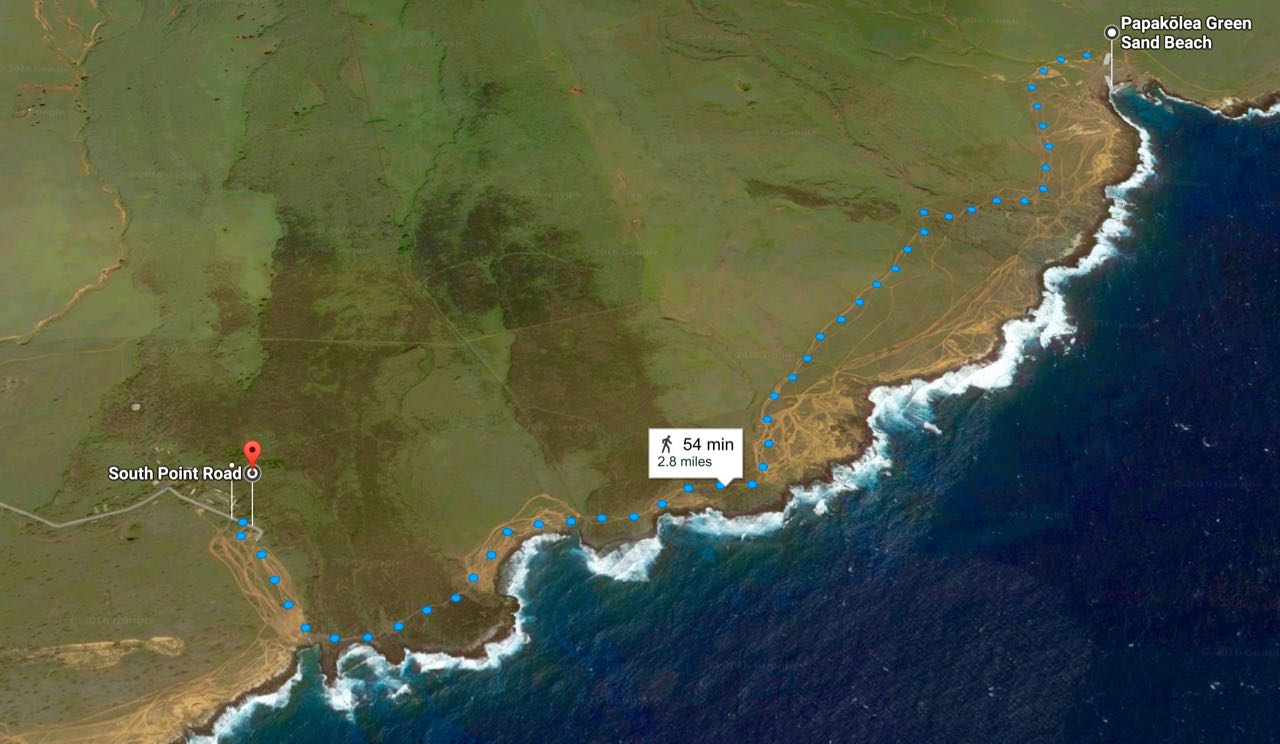
Walking directions from the parking at the end of South Point Road to Papakolea beach. Image credit: Google Maps
Driving to Papakōlea beach is illegal
The lands between the parking lot and the beach are fragile and hold many culturally significant places. Driving a car over the 4WD road to the beach damages the road and scars the landscape, and the landowner, DHHL, doesn’t allow vehicles on the road to the beach. Every car rental company on the Big Island also bans the road to green sand beach in your contract, so if anything happens to the car out there, you are on the hook for it.
This means that people offering you rides from the public parking lot to Papakōlea beach are doing so illegally.
Taking one of these rides makes you part of the damage to a culturally significant place. Please skip them and hike in. Mahalo.
Green sand beach trivia
The beach has three names. Officially it’s Papakōlea, after the kōlea bird often seen behind the beach. It’s also called Mahana, after the ash ring that gives the sand its color. Green Sand Beach is the newest of the three, and the one most visitors use.
The green comes from olivine crystals that washed out of the old ash ring next to the beach.
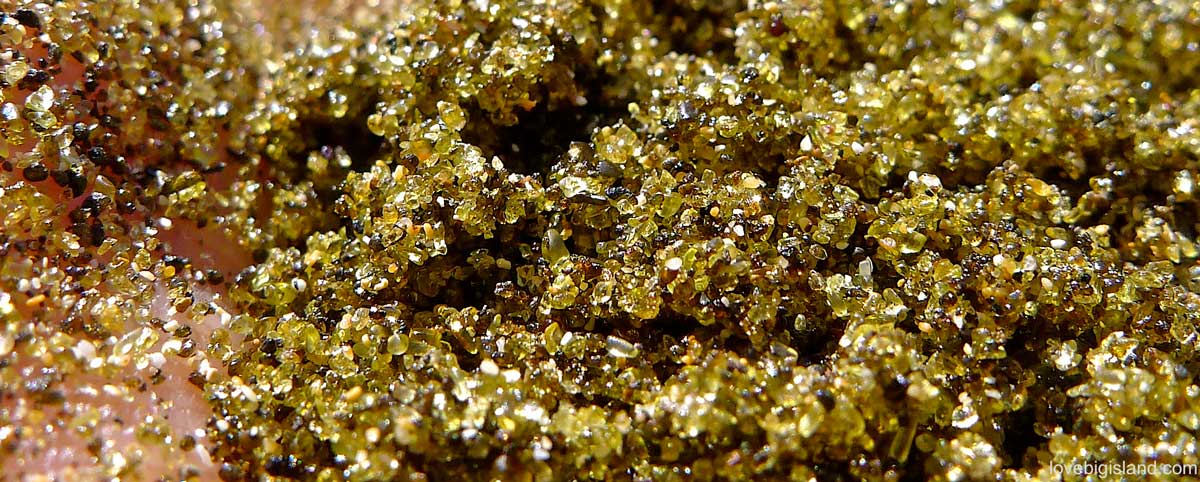
Close-up of the green sand at Papakōlea beach. You can see the many olivine crystals mixed with the lava (black) and shell (white) fragments
You can read more about the above two points, and more, on our dedicated page with green sand beach trivia.
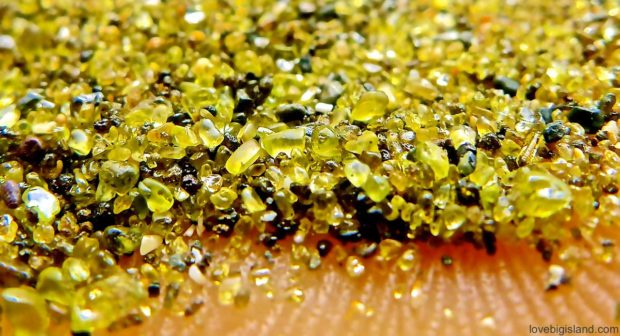
Green Sand Beach (Papakōlea): the geology and the myths
Roughly 90% of the sand at Green Sand Beach is crystal, mostly olivine. Papakōlea means plover flats, and the 'only four in the world' claim has no source.
South Point and Green Sand Beach time-lapse video
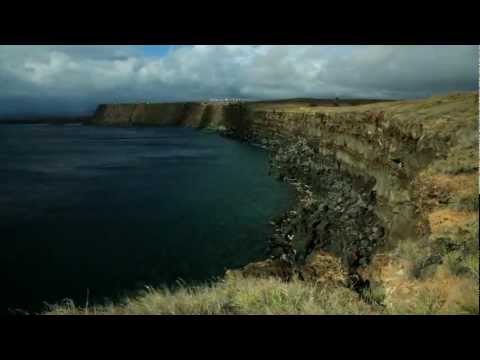
If you want to get a feel for what South Point (the starting point of your hike to green sand beach and the southernmost point in the 50 states) and green sand beach look like, have a look at the following time-lapse video.
To skip straight to Green Sand Beach, forward the video to the 3-minute mark.