The sand at Papakōlea is 88 to 92 percent crystals by weight, and most of those crystals are olivine. That is the green. They weathered out of Puʻu Mahana, the eroded ash ring standing behind the beach, and surf has been sorting them ever since, carrying the lighter grains out to sea and leaving the heavy olivine behind.
Green Sand Beach is the tourist name. Papakōlea is the older one, from papa (flats) and kōlea, the Pacific golden plover that winters here. The claim that this is one of only four green sand beaches on the planet traces to a 2017 magazine listicle, and the “only two” version that replaced it cites a source making no count at all.
Table of contents
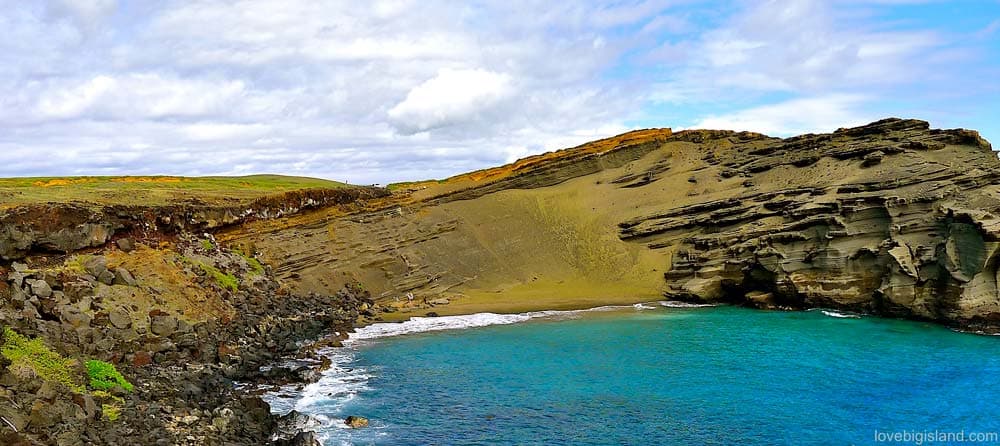
The eroded flank of Puʻu Mahana wraps around Papakōlea, near the south point of the island. The layered ash beds visible in the cliff are what the olivine weathers out of.
The different names of Green Sand Beach
Papakōlea Beach is the Hawaiian name. Mahana Beach comes from the cone behind it.
Papakōlea Beach
The name joins papa, flats, and kōlea, the Hawaiian name for the Pacific golden plover (Pluvialis fulva), which arrives around the end of August and leaves in early May for Siberia and Alaska. Pukui, Elbert and Mookini give the literal translation as plover flats.
Mahana Beach
The cone behind the beach is Puʻu Mahana, warm hill. Radiocarbon dating of charcoal from it came back older than the method can measure, so USGS gives a floor instead of a date: more than 49,000 years ago.
Green Sand Beach
The descriptive name, and the one on almost every map and tour listing.
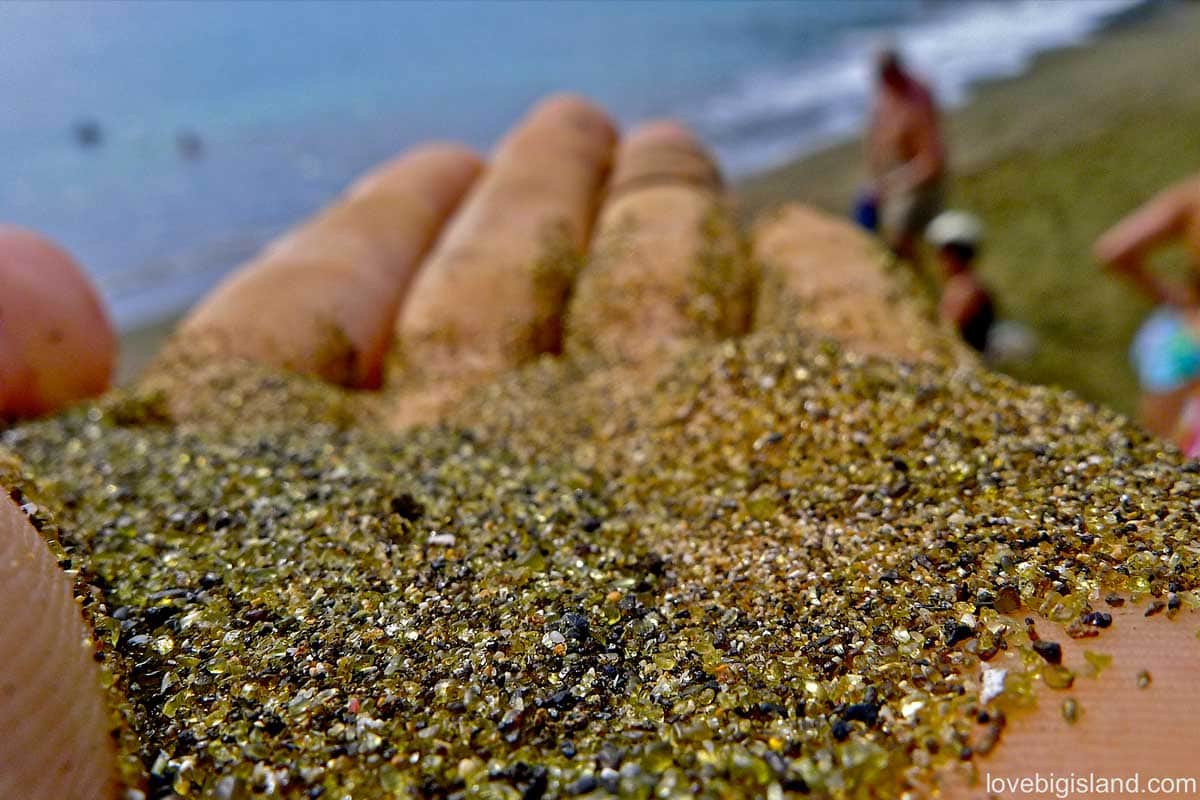
A handful of sand from Papakōlea Beach on the Big Island of Hawaiʻi
Why is the sand at Green Sand Beach green?
The color comes from olivine, a green glassy crystal that is denser and tougher than the ash fragments, volcanic glass and black pyroxene making up the rest of the beach. USGS records that olivine is sometimes called Hawaiian diamond, and that Diamond Head is reportedly named for the mineral in the cone above Waikīkī. Peridot, the jewelry-grade form of olivine, is the birthstone for August.
All of that ash came out of Puʻu Mahana, and geologists disagreed for years about what kind of cone it is. USGS classed it as a littoral cone in 1987, built where lava ran into the sea. George Walker’s 1992 study, written to answer exactly that question, identified it instead as a Surtseyan ash ring standing on a primary vent. The olivine was in the magma, and the ash preserved it.
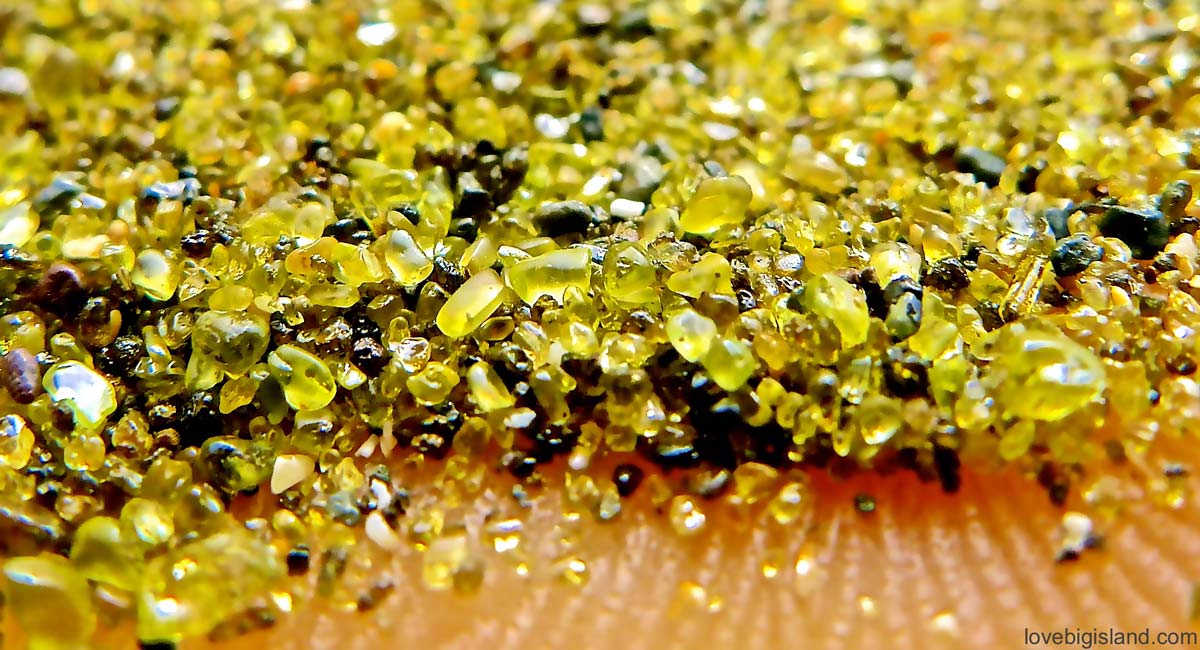
Green sand from Papakōlea Beach, held in the palm of a hand.
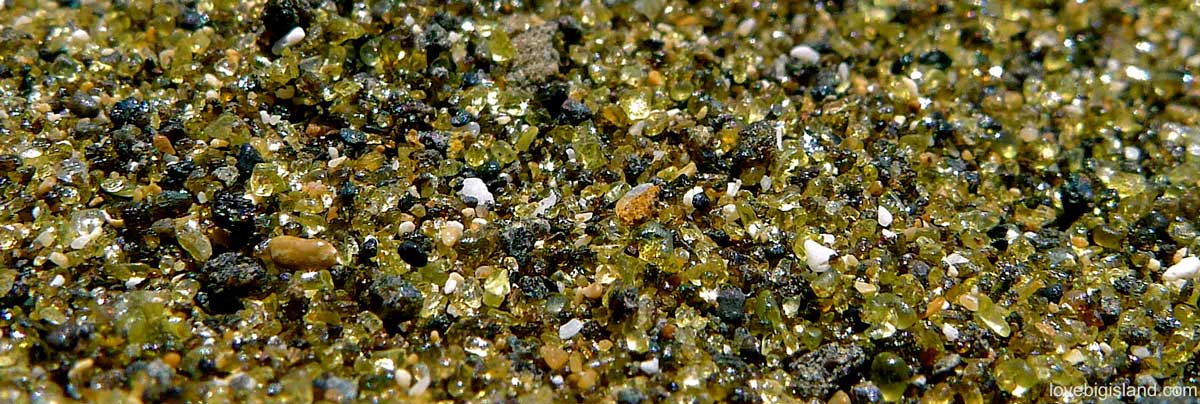
Up close the sand separates into green olivine crystals, black lava fragments and white pieces of sea shell.
How many green sand beaches are there in the world?
Nobody knows, and the number you will find quoted is almost certainly made up.
Where “only four” came from
For years the widely repeated figure was four: Papakōlea, Talofofo Beach on Guam, Punta Cormorant in the Galápagos, and Hornindalsvatnet in Norway. It came from a 2017 travel-magazine listicle by way of Wikipedia, where editors flagged it as inadequately sourced in 2023 and deleted it in May 2025.
Two of the four are not green sand beaches at all. Hornindalsvatnet is Europe’s deepest lake, 1,686 feet down, and it has no beach. Talofofo Bay’s sand is brown river silt. Wikipedia editors removed the Guam entry in 2008, 2012 and 2025 before it stayed gone.
Wikipedia now says two, Papakōlea and Punta Cormorant, citing the Galápagos Conservancy. That page describes Punta Cormorant’s olivine beach and makes no claim about a worldwide count at all.
Why no geologist has published a number
Because there’s no threshold. Olivine enrichment is a continuum, not a property a beach either has or lacks, so there’s no line to count across. The geologist Siim Sepp, who catalogs sands at Sandatlas, puts it plainly: greenish beach sands containing lesser amounts of olivine “are not uncommon in volcanically active areas”. There are less-green examples on the Big Island itself, including Richardsons Ocean Park in Hilo, where black lava sand is mixed with olivine but the sand does not look green.
And green sand doesn’t have to mean olivine at all. “Greensand” proper is a marine sedimentary sand colored by glauconite, a different rock in a different setting. Malachite, chlorite, epidote and serpentine each color sand somewhere too, though Sepp notes those cases are “really specific and spatially very confined”.
How concentrated the olivine really is
The beach holds an unusually high concentration of olivine. George Walker measured the beach sand at 88 to 92 percent crystals by weight, mostly olivine, and called it perhaps the finest example in Hawaiʻi. His comparison was to other Hawaiian beaches, in a peer-reviewed paper, and nobody has run the equivalent comparison worldwide.
Where the other sand colors on the Big Island come from
Our Big Island beaches article covers the black and white sand beaches and names our pick for each. Our visiting Green Sand Beach page covers the walk in to Papakōlea across Hawaiian Home Lands from the parking area.
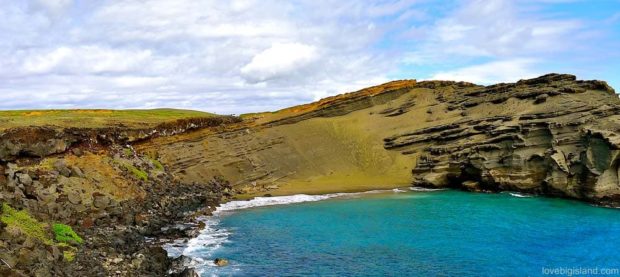
At Papakōlea roughly 90% of the sand is olivine crystal. Reaching it is a hot, shadeless 2.5-mile hike each way from South Point on the Big Island.