Big Island is the youngest Hawaiian island, but it nevertheless sits at the core of Hawaiʻi’s modern history. The man who would eventually “unite” the Hawaiian islands, King Kamehameha the Great, was born in Hawi and fulfilled many Hawaiian prophecies on his way to ascending the throne. This means there is much history to explore, as well as many archeological sites and opportunities for cultural understanding.
Table of contents
- Museums
- Historic Places and Palaces
- Cultural Experiences
- Archaeological Sites
- National + State Parks
- Map with all places mentioned in our guide
Below, we present a list of the most notable historical sites, as well as museums and other cultural points of interest on the Big Island. The stories attached to many of these places, from Pele to the shark child of Pānau, are retold in our guide to the Hawaiian myths and legends of the Big Island.
Museums
Most museums on the Big Island deal with the intersection of culture and environment, including marine science, astronomy, and volcanology.
ʻImiloa Astronomy Center
Located on the University of Hawaiʻi Hilo Campus, ʻImiloa (which translates to “seek far”) uses exhibits and planetarium shows to explore the deep connection between the Hawaiian islands, its culture, and the skies above. Take a journey to the top of Mauna Kea and learn about how ancient Hawaiians navigated via the stars.
Recommended visit: Time your visit to the museum with a planetarium show. You can check the schedule here. Otherwise, about an hour should be sufficient to explore the museum.
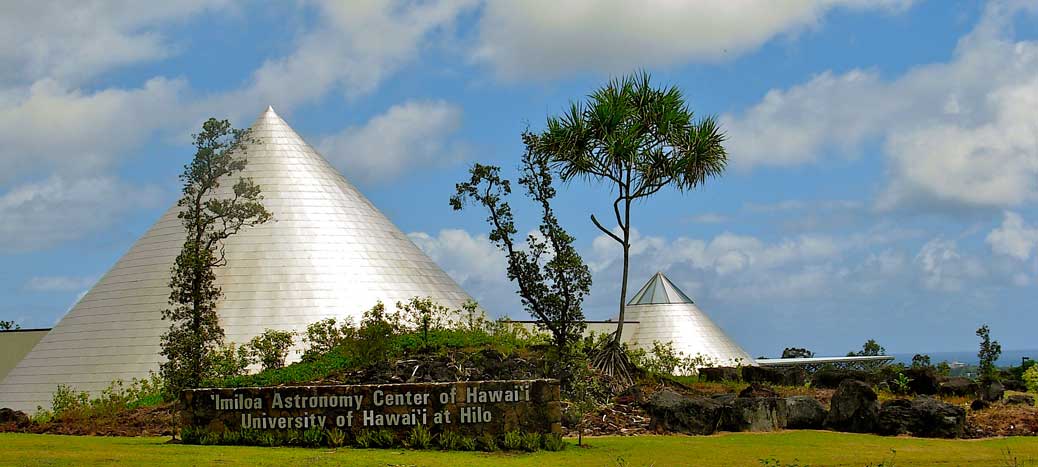
The ʻImiloa Astronomy Center of Hawai’i in Hilo. Photo credits: Brewbooks on Flickr under a CC BY-SA 2.0 license
Mokupāpapa Discovery Center
Want to learn more about what’s under the sea in Hawaiʻi? The Mokupāpapa Discovery Center focuses on the natural science, culture, and history surrounding the islands and their marine environments. Featuring a 3,500-gallon salt-water aquarium, visitors can learn more about Hawaiian coral reefs and see life-size models of local sea creatures.
Recommended visit: If you’re planning to go diving or snorkeling on your trip, you may consider visiting Mokupāpapa on one of your first days to learn more about what you will see underwater.
Pacific Tsunami Museum
Did you know the Hawaiian islands are susceptible to tsunamis, and that many places around the islands, including Hilo, have been badly damaged or destroyed by them in the past? Learn more about Hawaiʻiʻs history with tsunamis and read about past incidents at this educational and fascinating museum in downtown Hilo.
Recommended visit: The Pacific Tsunami Museum is small, and should only take an hour or so to visit. When visiting on a Wednesday or a Saturday try to add a stop at the Hilo Farmers Market around the corner of the museum.
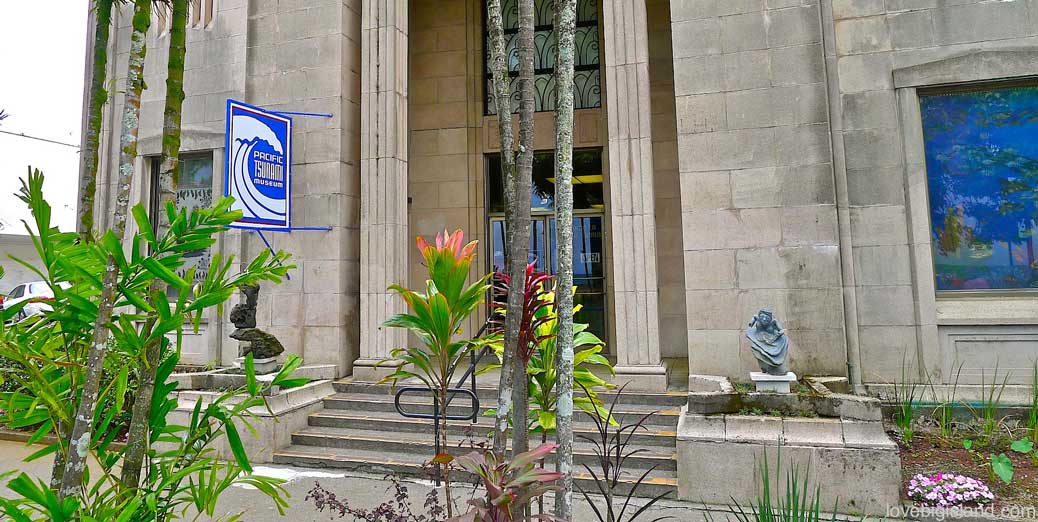
The Pacific Tsunami Museum in Hilo
More Big Island Museums
For more museum options on the Big Island, check out our list of all Big Island museums.
Historic Palaces/Places
There are many sites on the Big Island that explore Hawaiʻi’s history and the creation of the monarchy, mostly surrounding King Kamehameha’s rise to greatness. Here are some of the most important sites:
Captain Cook Monument
Captain James Cook (Britain) was the first westerner to land on Hawaiʻi’s shores. He spent time anchored along the Kona coast in Kealakekua Bay, an area chosen for its deep coastal waters that allowed Cook to bring his big ships close to shore. After some up and down relations with the Hawaiians, Cook was killed at Kealakekua Bay in a skirmish. Today, a monument stands in his honor along the shoreline, and Kealakekua Bay is a protected marine sanctuary with wonderful snorkeling.
Recommended visit: Captain Cook’s monument can only be reached on foot via the Kaʻawaloa Trail or via the water. Many snorkel tours visit Kealakekua Bay and explain some of the history along the way. If visiting on foot, bring snorkel gear, sunscreen, and plenty of water!
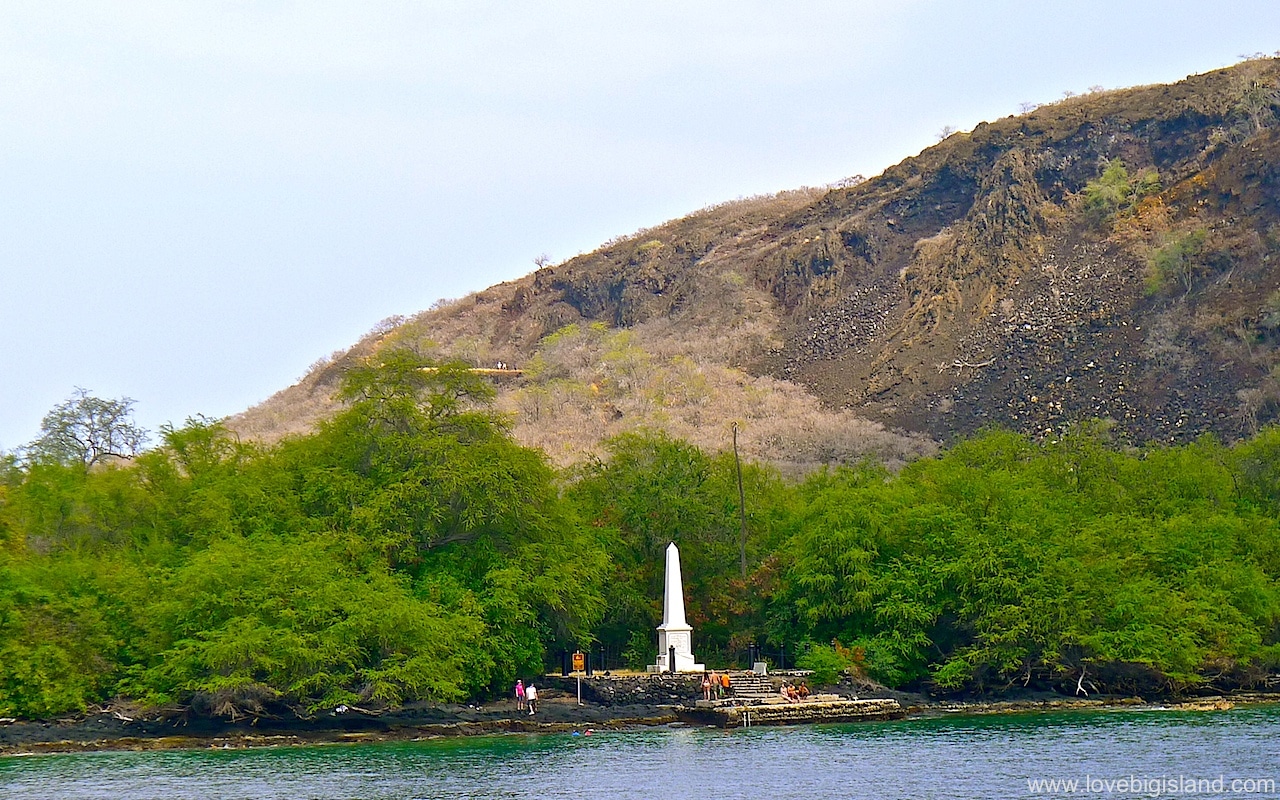
The best snorkeling in Kealakekua bay is around the Captain Cook monument, but getting there is difficult. The most easy option is to go on a snorkeling tour.
Huliheʻe Palace
Want to see how the Hawaiian royalty once vacationed in historic Kailua village and learn more about the monarchy? The Huliheʻe Palace, a waterfront estate featuring six rooms, was once a place of rest and relaxation for the royal families and their high chiefs. Restored in the 1920s, it contains artifacts such as koa wood furniture, quilts, portraits, and other cultural relics.
Recommended visit: Docent-led tours take place Wednesday through Sunday. You can make a reservation online.
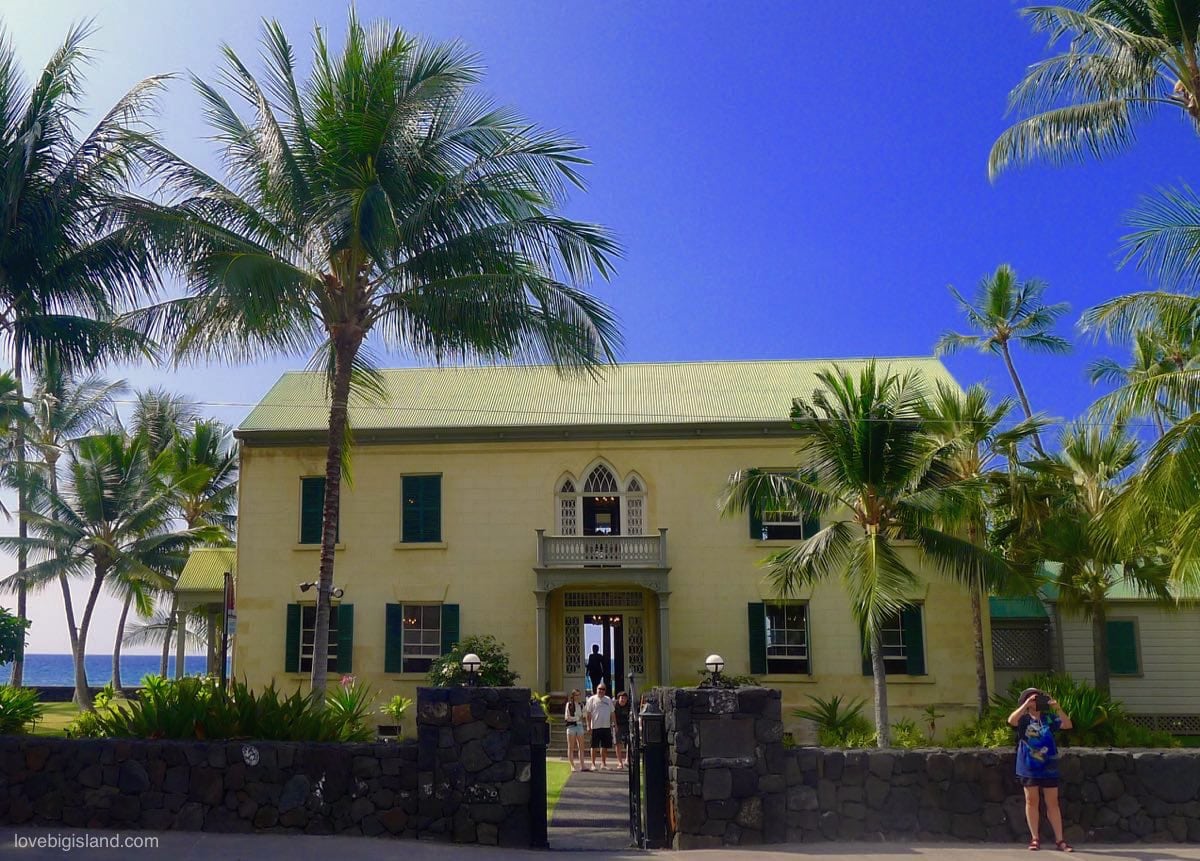
The Huliheʻe Palace in Kailua-Kona is a former vacation home of Hawaiian royalty that now is converted to a museum showcasing furniture and artifacts.
Naha Stone
Kamehameha’s rise to king was due to his reputation as a great warrior. According to Hawaiian prophecy, whoever had the strength to turn over the Naha Stone, which weighs about three tons, would one day rule the Hawaiian islands – a feat that Kamehameha was purportedly able to accomplish at the age of 14.
Recommended visit: The Naha Stone is on display in front of the Hilo Public Library. Stop by and check it out.
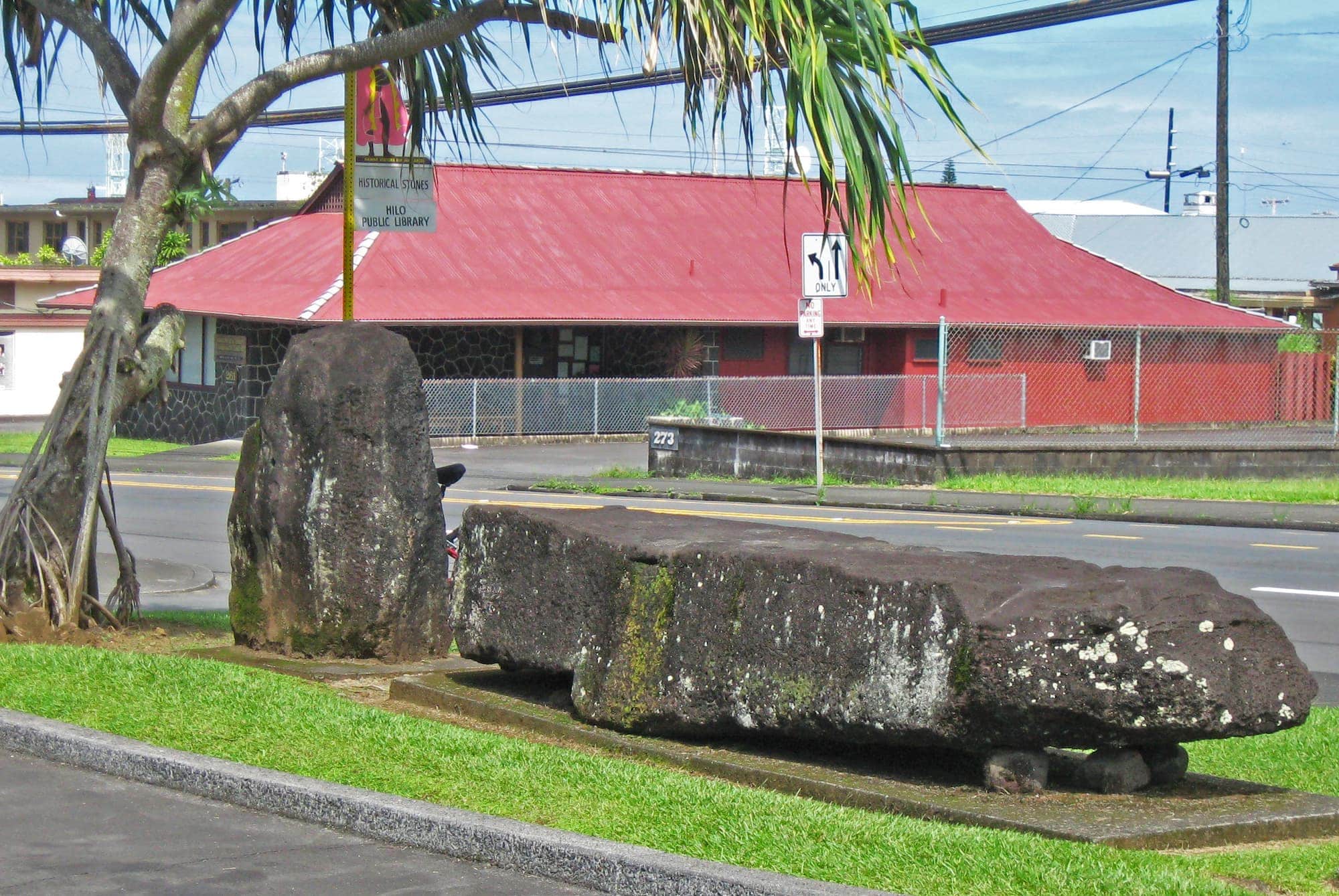
The “Pohaku Naha”, or Naha Stone, is on display at the Hilo Public library. By W Nowicki – Own work, CC BY-SA 3.0
Kamehameha Rock
In another display of strength, Kamehameha reportedly carried a large stone from the ocean uphill to higher ground during the construction of a heiau (temple). Not wanting to upset the “mana,” or power, associated with the rock, it still sits on the side of the road today. It’s easy to miss, as it is located just off the side of the road without much fanfare. We ask that you avoid touching it in order to ensure its preservation.
Recommended visit: Follow the road about two miles east of Kapaʻau toward Pololū Valley and keep your eyes out on the right hand side. Check it out on your way to the Pololū Valley overlook/hike.
Kamehameha Statue
Kohala was the birthplace of Kamehameha, and so it’s no surprise to see a large statue there in honor of him. What is surprising is the backstory behind the statue, which involved it being rescued from the sea floor after its transport ship sunk near the Falkland Islands.
Recommended visit: Located in Kapaʻau, you can check out the Kamehameha Statue as you visit Pololū Valley and nearby downtown Hawi.
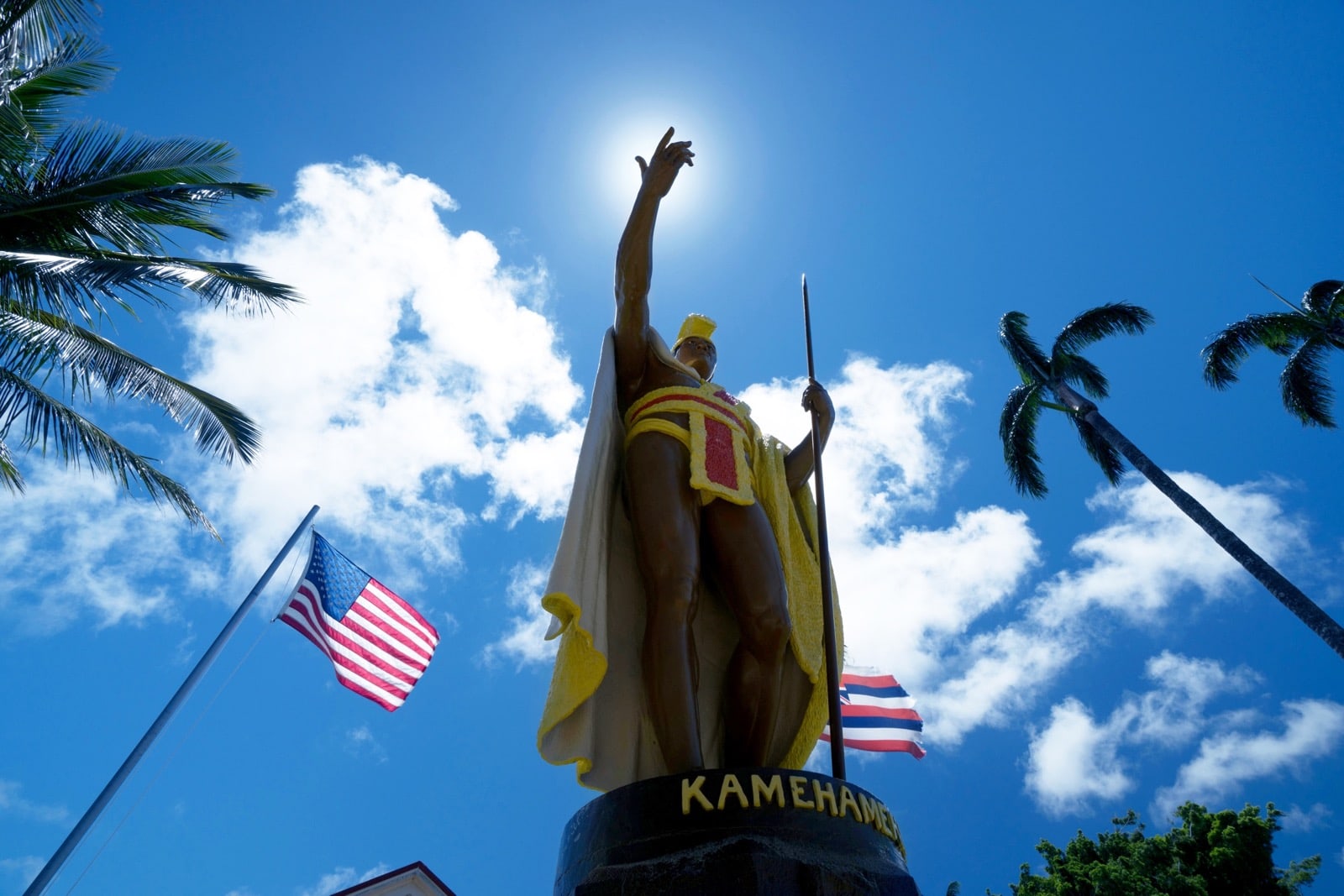
The Kamehamea statue in front of the North Kohala Civic Center (Kapaau, HI). Credit: Hawaii Tourism Authority (HTA) / Blake Bronstad
Cultural Experiences
To relive the past, try one of these cultural experiences on the Big Island:
Hike the King’s Trail
The Ala Kahakai National Historic Trail, casually known as the King’s Trail, was a major land route in Ancient Hawaiʻi that connected many of the land division communities, or ahupuaʻas, via foot path. Its restoration began in 2000, and today, the trail is 175 miles long, running from Upolo Point in the north, down the west coast, around south point, and through Hawaiʻi Volcanoes National Park to the former site of the Wahaʻula Heiau. Restoration is on-going and the trail is used as a historical teaching tool.
Recommended visit: We recommend reading more about the trail, its restoration, and its mission here before visiting. There are many places to get on the King’s Trail. One idea is checking out the section near Anaeho’omalu Bay and the Waikōloa Petroglyph Reserve for its ease of access/parking and its proximity to the beach for a post-hike dip.
Puakō Petroglyph Archaeological Preserve
Petroglyphs can be found all over the islands, but Puakō is one of the largest and most fruitful of sites. It’s 223 acres in size and contains more than 3,000 lava rock carvings. Petroglyphs were made by ancient Hawaiians for a variety of reasons, which include storytelling, event recording, and just plain fun.
Recommended visit: A walk through this preserve is great for families with children who will enjoy identifying humans, turtles, and canoes in the drawings. Those staying at the nearby Mauna Lani Hotel will find it easy to access.
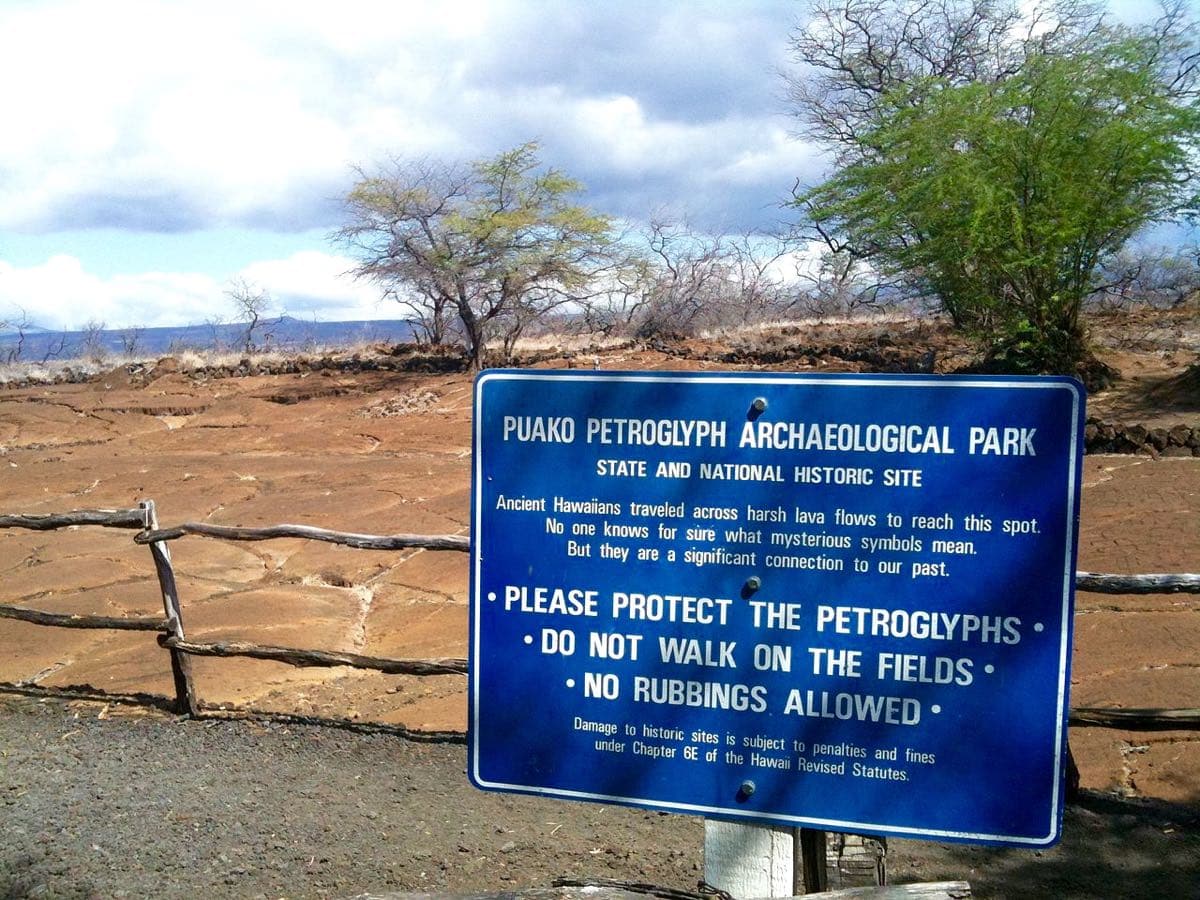
Sign at the Puakō Petroglyphs Archaeological park. Image by Christopher Carfi – puako petroglyphs, CC BY 2.0, Link
Archaeological Sites
The Big Island has more archaeological sites and heiaus that you could experience in one visit. Here are some of the most notable and important places to consider:
- Ahuʻena Heiau and Kamakahonu National Historic Landmark
- Moʻokini Heiau
- Puʻuhonua o Hōnaunau
- Puʻukoholā Heiau National Historic Site
Ahuʻena Heiau and Kamakahonu National Historic Landmark
Kamakahonu National Historic Landmark, located in the heart of downtown Kailua-Kona, is a historically important place for a myriad of reasons. It was where Kamehameha lived out the final years of his life (after conquering the other Hawaiian islands) and where the missionaries first came ashore in the 1820s.
Recommended visit: Today, the Island Breeze Luʻaū takes place on this historic site. There’s not much to interact with, but you can see some reconstructions of the original structures by simply walking the waterfront property in front of the Kamehameha Hotel.
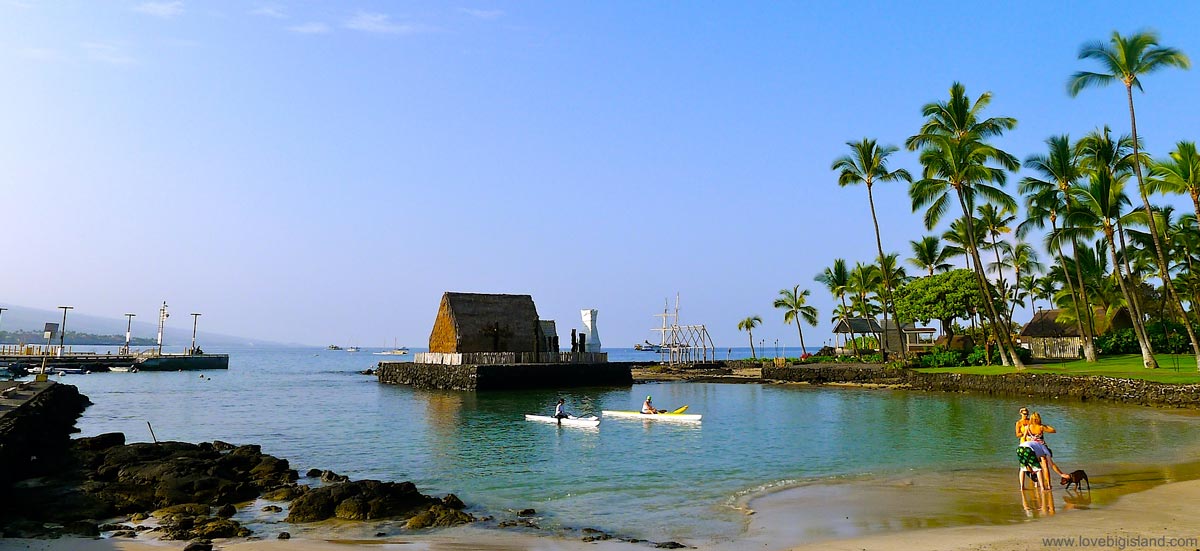
The Ahuʻena Heiau in Kailua Kona on the Big Island.
Moʻokini Heiau
If you’re looking for one of the oldest heiaus you can visit on the Big Island, check out Moʻokini near the town of Hawi in the Kohala district. It was originally built in the 5th century, then reconstructed somewhere in the 13th and 14th centuries.
Recommended visit: As always with heiaus, it is best to read up on the history behind Moʻokini before visiting to get a better understanding of what took place in the area. A visit can be worked into any trip up north to Kohala, perhaps in coordination with visiting the Kamehameha statue/rock or Pololū Overlook. Driving on a dirt road is required to reach the heiau, so high clearance and four wheel drive is recommended.
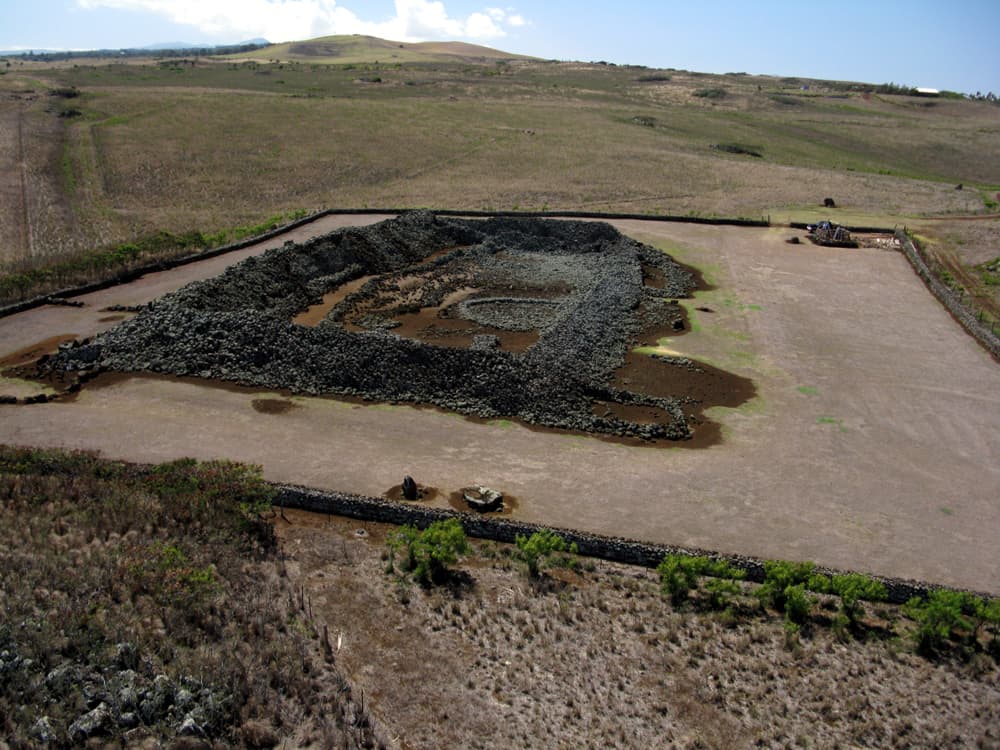
The Mo`okini Heiau as seen from the air. Image credit: Tom Benedict, source.
Puʻuhonua o Hōnaunau
Puʻuhonua o Hōnaunau is known as a “place of refuge,” or in simpler terms, a rehabilitation center for ancient lawbreakers. Staffed and run by priests, those who had broken a “kapu,” or ancient law, could find their way to established refuges, like Puʻuhonua o Hōnaunau, to do penance for their crime. It was also a place of safety for women and children during times of war.
Recommended visit: Time your visit with one of the ranger talks that take place in the amphitheater. This presentation will relay historical context, bring the place to life, and give you a better idea of what happened along these shores.
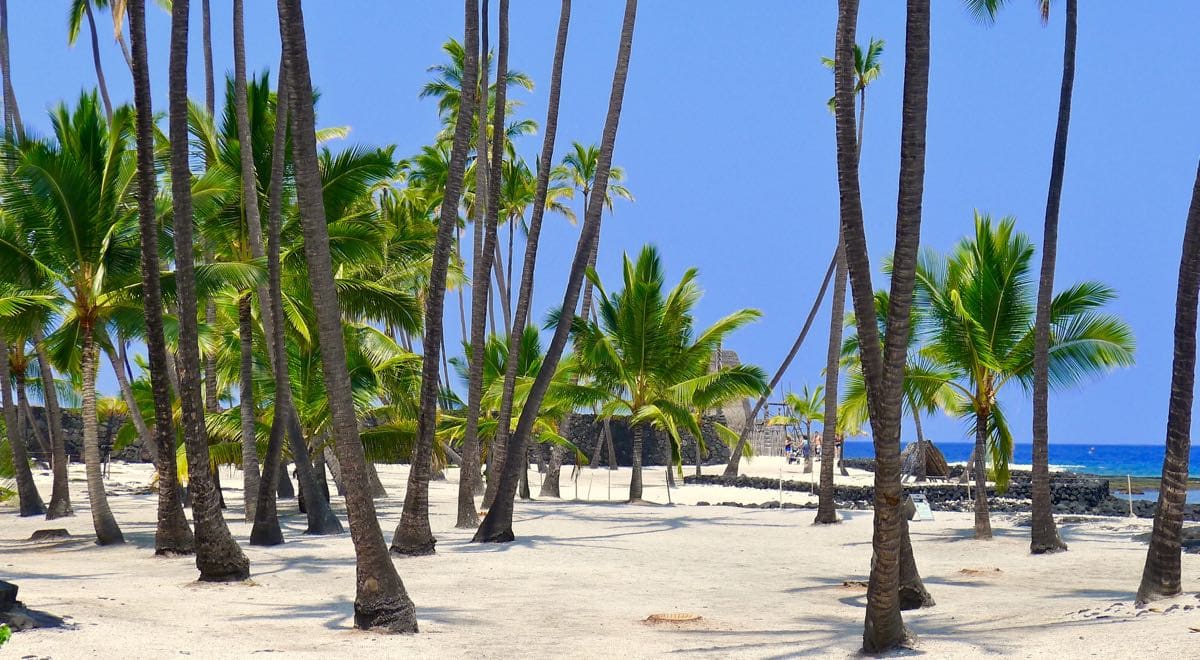
Pu’uhonua o Hōnaunau National Park on the Big Island of Hawaii is a good place to take in Hawaiian History. Next door (300 feet from the park entrance) is one of the best places of the island to go snorkeling
Puʻukoholā Heiau
The story of Puʻukoholā Heiau is one that tells of a uniting nation, a temple built in honor of King Kamehameha. At this multi-purpose complex, ceremonies of war and worship took place as he conquered and enveloped the other islands under his rule.
Recommended visit: There is a lot of information available about Puʻukoholā, so we strongly encourage reading up on it before visiting. Guided tours are also available. We suggest hiking around the complex before or after meeting with rangers. Wear good close-toed shoes and bring plenty of water.
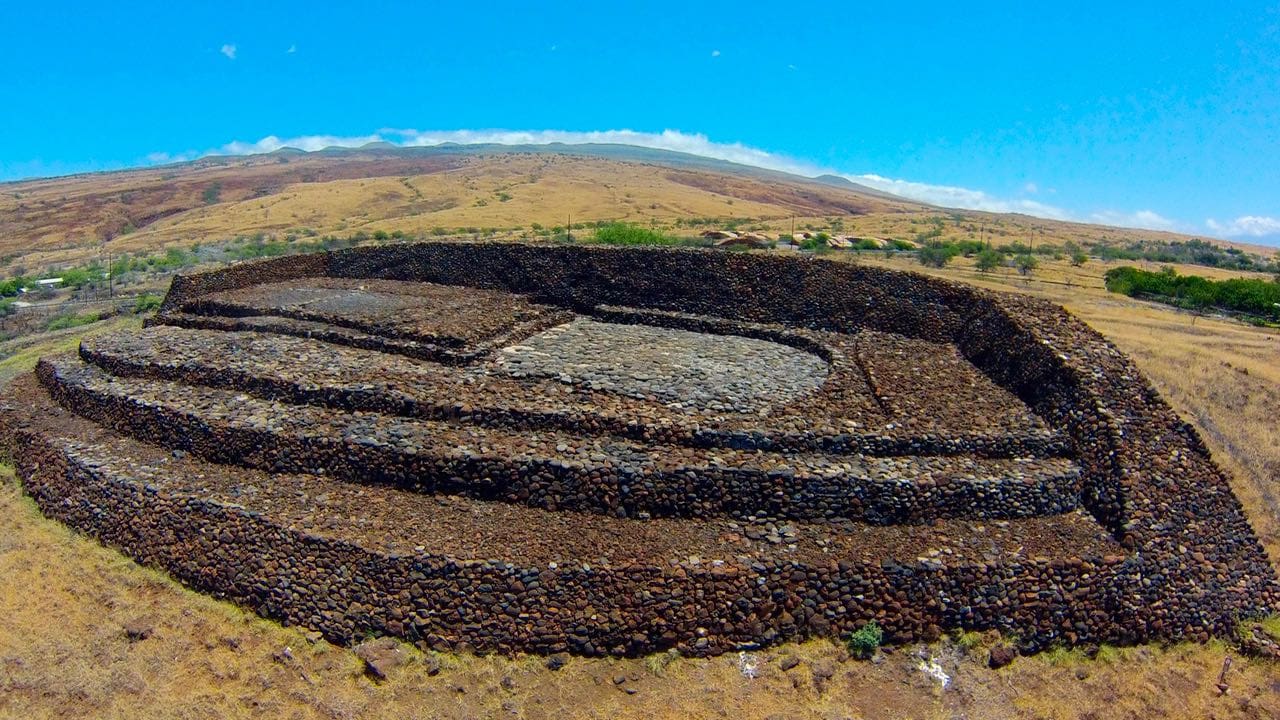
The Puʻukohola Heiau National Historic Site. Image credit: NPS
14 State + 4 National Parks
The Big Island of Hawaiʻi has fourteen state parks that include underwater marine preserves (Kealakekua Bay), pristine white-sand beaches (Hāpuna Beach), and massive waterfalls (ʻAkaka Falls). In addition to natural beauty, many sites offer historical/cultural context (Lapakahi, also great for on-shore whale watching during the winter months) and geological features (Lava Trees).
Learn more about all on-island parks in our guide to all Big Island State and National Parks.
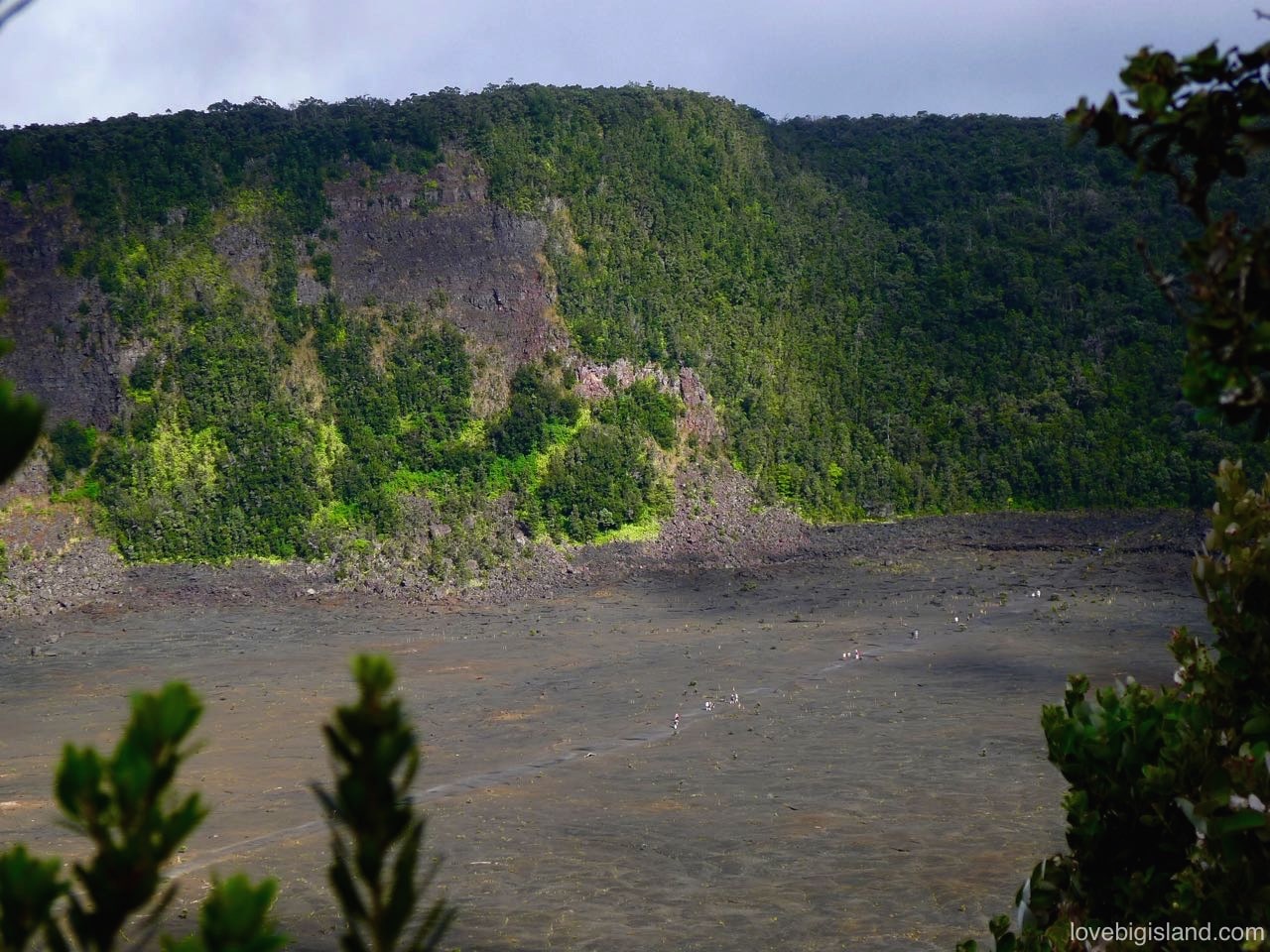
Hikers cross the floor of the Kilauea’iki crater in the Hawaii Volcanoes National Park. Find out more about this hike on our website.
Map
The map below will help you find all historic and cultural places mentioned on this page:
If you want to add this map to your Google Maps account for easy access, click the ‘star’ icon next to the map name. You can then view it on your cell phone or computer by heading to your Google Maps account, click the menu and add it to ‘Your Places’.
Cultural and historical experiences on the other Hawaiian islands
If you want to know more about discovering the rich historical heritage on the other Hawaiian islands we recommend our following guides: