Lava built the dive sites here. Flows that reached the water left arches and lava tubes that sit within reach of a single tank. On the Kohala Coast, the water is usually very clear on a calm day. A two-tank boat dive out of Kona starts around $169 per person, and shore entries at Puakō and 2 Step (Puʻuhonua o Hōnaunau) cost nothing.
Certified or not, you can be underwater on your first full day: a resort course takes about half a day, PADI open water runs three to four days. We tell people to pack a 3mm wetsuit and add a hooded vest for winter, when nearshore Kona water drops to about 74°F. There’s no recompression chamber on Hawaiʻi Island.
Table of contents
- Comparison map
- Your flight home and Mauna Kea
- Diving or snorkeling? A practical comparison
- Dive sites and conditions
- Kohala Coast Operators
- Kailua Kona Operators
- The manta ray night dive
- Getting PADI certified
- Scuba diving safety tips
Seven dive operators compared: price and duration
Seven operators run guided boat dives on the Big Island, all but one of them on the west side between Kawaihae and Honokōhau. The table below shows standard pricing and trip length for each. Six run a two-tank morning charter; Hilo Ocean Adventures runs a one-tank boat dive, which is why its price and duration sit lower than the rest.
| Name | Duration | Price* |
|---|---|---|
| 1Torpedo Tours (Details ↓) | 4.5 hours | $169 |
| 2Big Island Divers (Details ↓) | 5.5 hours | $179 |
| 3Hilo Ocean Adventures (Details ↓) | 2.5 hours | $189 |
| 4Jack's Diving Locker (Details ↓) | 6 hours | $200 |
| 5Puako Dive Adventures (Details ↓) | 4.5 hours | $210 |
| 6Kona Honu Divers (Details ↓) | 5 hours | $219 |
| 7Kohala Divers (Details ↓) | 6 hours | $229 |
| * Prices are for 2 tank morning dives. Full details on available dives, group size, gear, and what guests report, are in the operator sections further down. | ||
Plan your dives around your flight home and Mauna Kea
Dissolved nitrogen needs time to clear before you go up, and on this island “up” is not only an aircraft.
The Divers Alert Network publishes a minimum surface interval of 12 hours after a single no-decompression dive and 18 hours after multiple dives in a day or diving across multiple days. Those figures are built around a pressurized aircraft cabin, which tops out at the equivalent of 8,000 feet. The Mauna Kea summit road reaches 13,796 feet and Saddle Road crosses 6,632, both well above that ceiling.
Torpedo Tours tells its intro divers to wait 18 to 24 hours before flying or driving above 2,000 feet, which is the more useful threshold on an island where Waimea, Volcano, and the Saddle all sit above it.
Good to know: there is no recompression chamber on Hawaiʻi Island. The nearest is the Hyperbaric Treatment Center at Kuakini Medical Center in Honolulu, which the University of Hawaiʻi describes as the only 24/7 emergency hyperbaric facility in the Pacific. For a suspected decompression injury, call 911 or get to the nearest medical facility first, then call the DAN emergency hotline on +1-919-684-9111 for a consultation with the treating provider.
Scuba diving or snorkeling?
Both are worth doing here. The main differences are certification and cost.
Scuba diving
- Scuba diving is more expensive than snorkeling. You need more gear, and each dive requires planning. Guided two-tank boat dives start around $169 per person.
- Diving gives you three-dimensional access to the underwater environment. Lava tubes and ledges at depth are not reachable from the surface.
- Scuba diving requires certification. To rent gear independently, you need a PADI or NAUI card. If you’re not certified, a resort course qualifies you for a guided intro dive in a few hours without a full course.
- Scuba diving requires good health and some planning. You manage your own equipment and follow ascent and pressure protocols. Both take a baseline of fitness. Read our safety tips before you go.
Snorkeling
- No certification needed. If you can swim comfortably, you can snorkel. Gear is minimal and available to rent at most beach parks and dive shops.
- Snorkeling is low-commitment. You can bring a mask and fins to the beach and get in whenever conditions look good. No advance planning required.
- Snorkeling is substantially cheaper. Rentals are widely available at beach shops and tour operators. Many of the best snorkel spots on the island are free shore entries.
Most Kona dive boats sell a snorkeler seat on the same trip, usually $40 to $70 below the diver rate, so a mixed group doesn’t have to split up. See our snorkeling guide for locations and gear rental on the Big Island.
Dive sites and conditions
Most people who dive here do it from a guided boat. Local operators know which sites are working on a given day and handle logistics and gear. The west side also has several shore entry sites that experienced divers use independently.
Shore entry sites: Puakō and 2 Step
The west (Kona) side of the island is where most shore diving happens. Puakō is a reliable entry point, with good visibility and coral coverage at depths you can reach on a single tank.
2 Step at Puʻuhonua o Hōnaunau (Place of Refuge) is named for the two-step lava shelf at the waterline. Entry is manageable when the water is calm, but the shelf is bare lava rock with no sand and no handrail, and the step down is roughly waist height, so gear up fully before you step in and time your entry between sets rather than during one. If swell is breaking onto the shelf, the entry is off, and no amount of waiting fixes it that day.
Kealakekua Bay is the name that comes up in every Kona dive conversation. The good coral sits along the Kaʻawaloa side near the Captain Cook Monument, a four-mile round-trip hike from Nāpōʻopoʻo, or a kayak or boat ride across. Shore diving it from the Nāpōʻopoʻo end means a long surface swim over comparatively plain bottom. Diving the bay is a boat trip, in practice.
Other shore entries on the west side include Kawaihae, Hoʻokena Beach Park, Kua Bay, and the Kailua Pier. Conditions at all of these vary with swell direction and season. Check the National Weather Service Honolulu surf and marine forecast for the west-facing shores before committing to a shore entry, and treat a high surf advisory as a no. For dive reports and site-specific depth and conditions notes, Zentacle’s Big Island overview is a useful reference.
Water temperature and when the visibility is best
Nearshore Kona water runs about 74 to 76°F at its coldest, in February and March, and 82 to 84°F in the late-summer peak around September and October. A 3mm wetsuit covers most of the year. Kohala Divers, who rent both, put it plainly: most divers are comfortable in a 3mm, and some prefer a 5mm or a hooded vest in the cooler months. If you dive three times in a day in February, bring the hood.
The water on the Kohala Coast is often exceptionally clear in good conditions. The west side sits in the rain shadow of Mauna Kea and Mauna Loa, so it gets far less rain than the windward side and far less sediment washing off the land, which is the main reason the water stays clear. Conditions are best from spring through fall when surf is lower. Winter swells from the north can cut visibility at exposed west-side sites.
The east side of the island is a different environment, from Puna through Hilo and north along the Hāmākua Coast. Higher rainfall and river runoff mean less clarity than the Kohala Coast. Dive operators on the east side are limited; Hilo Ocean Adventures in Hilo covers both shore and boat diving for divers who want to explore that coast.
One booking note that applies across the island: charters get called off for weather, and the cancellation window you agree to is not the same everywhere. Kona Honu asks for 72 hours, Big Island Divers, Torpedo Tours and Kohala Divers 48, and Puakō Dive Adventures 24. Check what happens when the operator is the one who cancels before you build a tight itinerary around a dive day.
Kohala Coast dive tours
The Kohala Coast is the oldest volcanic region on the island. The underwater terrain here has had the most time to develop: arches and lava tubes at diveable depths. It is also the driest part of the island, which keeps the water consistently clear.
Kohala Divers: free shuttle from the resort corridor
Kohala Divers is a PADI 5-Star shop in Kawaihae, about 20 minutes north of the Waikoloa resorts. Their main offering is a two-site dive and snorkel trip of around six hours, with sites selected each morning based on conditions. Certified divers pay $229 and snorkelers $189, and there’s a complimentary shuttle from the Kohala Coast and Waikoloa resorts, which is the practical reason to pick them if you’re staying up that end and don’t want to drive to Honokōhau in the dark.
Their boat, the Namaka, has warm showers and easy entry and exit platforms. They’re among the highest-rated dive operators on the island on TripAdvisor. Minimum age is 6 for dive and snorkel charters, and anyone under 15 needs an adult on the boat. Certified 10 and 11 year olds dive as junior divers to a 40-foot limit with a private guide. PADI courses from Discover Scuba through professional certifications run through the Kawaihae shop.
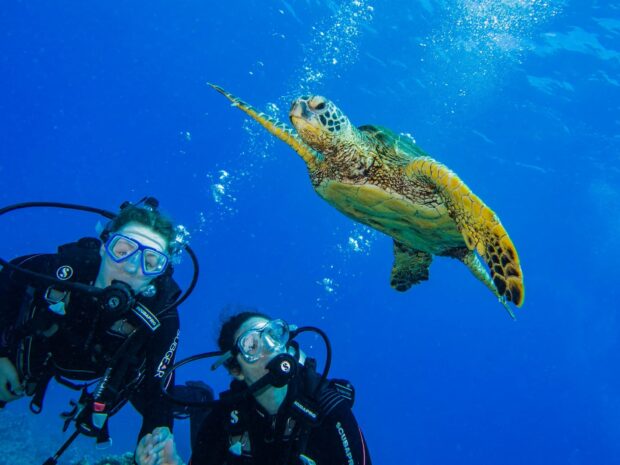
6-hour Morning Dive at 2 Stunning Kohala Coast Dive Sites
Dive at 2 Kohala Dive Sites with great underwater scenes on offer for every diver’s experience level (and snorkelers as well)
from:
$229
What is a suggested tour?Our suggested tours are hand-picked tours that receive consistent good reviews, give back to the community, and work hard to minimize their impact on the environment. Read more about these tours on our website.Puakō Dive Adventures: six guests, certified divers only
Six guests. That is the cap, the smallest of any operator on this page, and the boat leaves from South Kawaihae Small Boat Harbor. They rebranded their trip lineup recently: the morning two-tank is now Sunrise Explorer, the evening two-tank is Twilight Protocol, and the one-tank-plus-snorkel manta trip is Close Encounters. A humpback whale expedition runs December through April. The manta program comes with a guarantee: if you don’t see mantas, you rebook at no charge until you do.
This is a certified-divers-only operation, and they check your card at the dock before departure. Newly certified divers are welcome, including on a first ocean dive. Minimum age is 10 and gear is included. Their two-tank morning dive runs $150 to $210.
Book Puakō Dive Adventures here.
Kona dive tours
The Kona coast has the widest selection of dive operators on the island, with boats leaving Honokōhau Harbor for sites ranging from beginner reefs to advanced lava formations. Nearly every Kona boat departs Honokōhau rather than the Kailua Pier, so check your confirmation for the harbor name and give yourself time to find parking near the fuel dock.
The Kona Diving Company runs a two-tank morning charter at $200 on a 46-foot boat, capped at five divers per divemaster, and requires open water certification. The four operators below are the ones we get asked about most often.
Torpedo Tours: seven divers to a dive group
Torpedo Tours runs the same 38-foot USCG-certified vessel for their morning dives and their manta night trips. Both leave from Honokōhau Harbor. Check in for the morning dive is 8:00 AM, the boat leaves around 8:15, and you’re back by noon.
The boat carries a maximum of 12 guests, and shared dive groups max out at 7 divers. For comparison, they note that boats their size commonly take 14 to 18 divers, so this is a smaller group on the same hull rather than a stated guide-to-diver ratio.
The tour visits two to three sites from a rotation of more than 50 on the Kona coast, including lava tubes and marine sanctuary areas. Certified divers pay $169 and snorkelers $129. Non-certified divers can book an intro dive at $275 including gear. Gear rental for certified divers is $40 extra, and children under 14 need an adult with them.
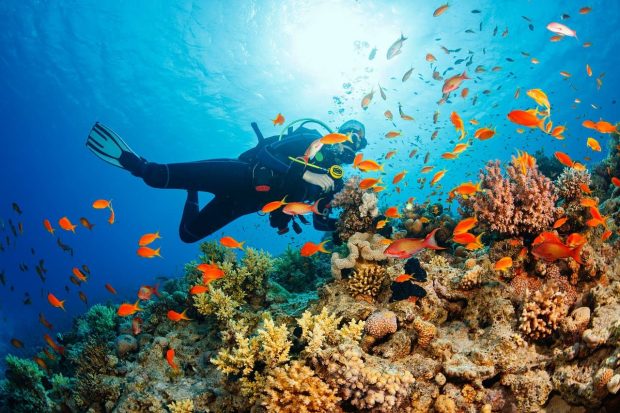
2-Tank Morning Dive on the Kona Coast
Explore world renowned Hawaiian reefs, lava tubes, and more! Not certified? No problem! Go for an introductory dive under the direct supervision of one of our world class instructors!
from:
$169
What is a suggested tour?Our suggested tours are hand-picked tours that receive consistent good reviews, give back to the community, and work hard to minimize their impact on the environment. Read more about these tours on our website.Kona Honu Divers: six to a group, and free nitrox
Dive groups here are capped at six. That buys 70-minute dive times, longer than the Kona average, and free nitrox for Enriched Air-certified divers. The Honu One has hot showers and a shaded upper deck. The operation has been running since 2006 and won all seven categories in Scuba Diving Magazine’s Readers’ Choice Awards.
The standard two-tank morning charter leaves Honokōhau Harbor, runs five hours, and takes divers from age 10, though 10 and 11 year olds need a private guide and 12 to 17 year olds must dive with a parent. You need to have dived within the last two years to join.
Beyond the morning charter, Kona Honu runs a manta ray night dive and a blackwater night dive. Blackwater is not an add-on for a curious beginner, and their own requirements say so: 18 and over, a minimum of 50 logged dives, a dive within the last six months, excellent buoyancy, and the ability to be self-reliant in open water. The dive drops you into open ocean after dark to watch deep-sea species that migrate toward the surface at night.
Big Island Divers: five boats and the widest schedule
Five boats out of Kailua-Kona and a crew of more than 40 give Big Island Divers scheduling room a single-boat operator does not have. Their Kona Local Two Tank starts at $179, runs 5.5 hours, and rotates across more than 40 named sites depending on conditions and experience level. Open water certification is required, and divers who have not been in the water for two years may be asked to take a refresher.
The Kona Advanced Two Tank ($239) requires open water certification, a minimum of 25 logged dives, and the ability to climb a vertical ladder unassisted in full gear. There are no students on that charter.
Their blackwater night dive ($199) sets the same 25-dive bar and adds a night dive with their own crew in the past 12 months, with divers tethered to a 50 foot line below the boat. Neither advanced trip takes anyone under 15. At 4.8 stars across 6,433 TripAdvisor reviews, Big Island Divers has the largest review base of any Kona operator by a wide margin.
Jack’s Diving Locker: Kona’s oldest shop
Jack’s Diving Locker runs daytime and evening boat dives from two Kailua-Kona locations (Aliʻi Drive and Honokōhau Harbor). The Classic 2-Tank Day Trip ($200, 5.5 hours) covers reef sites with sea turtles and lava formations, plus dolphin and humpback whale sightings in season. It takes all experience levels.
The Advanced Adventure 2-Tank ($270) is a different proposition: divers must be at least 15, comfortable to 120 feet, and comfortable running the whole dive without a line, safety stop included, plus one of the following: an advanced certification with a dive in the last six months; 50 dives with a dive in the last year; or 20 dives with recent experience diving with Jack’s. It needs four guests to run.
Their third format is Pelagic Magic ($230), a one-tank open-ocean night dive where divers hang tethered to the boat at about 50 feet over water 5,000 to 6,000 feet deep, watching deep-sea species rise after dark. It won Scuba Diving Magazine’s Best Night Dive award and runs Tuesdays and Thursdays with a maximum of six divers.
Worth knowing before you book: Jack’s publishes no logged-dive minimum for Pelagic Magic, while Big Island Divers requires 25 logged dives and a recent night dive for the equivalent trip. If you’re freshly certified, that silence is not permission. Boat groups on the day trips run around 20 people, larger than some Kona operators, and the crew expects divers to be reasonably independent in the water.
Book Jack’s Diving Locker here.
East side dive tours
The east side sees a fraction of the Big Island’s dive traffic. Wetter weather and rougher water keep most boats on the Kona side.
Hilo Ocean Adventures: Hilo’s only commercial dive boat
There is one commercial dive boat on the east side. It leaves Wailoa Harbor for reef sites including Horizons and Waiʻolena Reef, covering volcanic formations and coral ridges at 40 to 70 feet, with consistent sightings of Hawaiian green sea turtles, octopus, and eels.
The one-tank boat dive is $189 per person (approximately 2.5 hours, includes tank, weights, divemaster, snacks, and beverages). Non-certified companions can ride along as snorkelers at $139, so a group with one certified diver and three snorkelers can all go out on the same boat. Open Water certification is required and the minimum age is 10. Anyone under 18 needs an adult along.
They also run a shore dive at Waiʻolena Reef (also called Leleiwi), a few miles from downtown Hilo, where freshwater springs mix with the ocean and groups are capped at 6 divers. That freshwater mixing produces a visible shimmer in the water column and a noticeable cold layer, so it dives differently from anything on the Kona side. Certification courses accepting both PADI and NAUI run monthly. Shop at 1717 Kamehameha Avenue, open daily 9 AM to 5 PM.
Book the 1 tank boat dive in Hilo here.
Manta ray night dives: Garden Eel Cove, Kona
Manta rays feed at night by doing continuous loops through plankton drawn to light boards held at the surface. The lights concentrate it and the mantas come to feed, with no bait and no training involved, and on a good night you can count 10 or more passing within a few feet of the surface. The primary site in Kona is Garden Eel Cove, run by two operators: one goes out at sunset, the other adds an afternoon reef dive first and costs more.
Read more about the manta ray night dive on the Big Island.
Torpedo Tours: 18 guests, owner-operated for 30 years
Eighteen guests is the cap here, against 49 or more on some competing Kona boats. The boat departs Honokōhau Harbor at 6:00 PM (check in by 5:30 PM) for a 25-minute coastal cruise to Garden Eel Cove, arriving around sunset.
Snorkelers hold lit flotation boards at the surface and look down into the water column; certified divers sit on the ocean floor and look up. The mantas pass between both groups during their feeding loops. Snorkelers pay $129 and certified divers $159, and anyone under 16 needs an adult with them. Departure shifts with sunset through the year, so confirm your time when you book rather than assuming 6:00 PM.
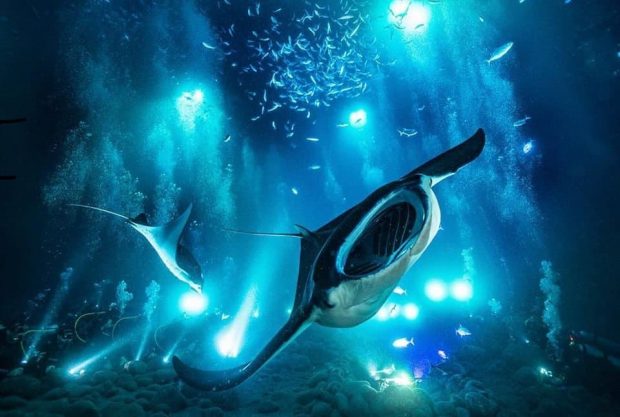
Torpedo Tours Manta Ray Night Snorkel and Dive
Manta rays at Garden Eel Cove off Kailua-Kona can reach 15-foot wingspans, and Torpedo Tours runs 18 guests maximum to see them: snorkelers and certified divers together on the same boat, owner-operated for over 30 years.
from:
$129
What is a suggested tour?Our suggested tours are hand-picked tours that receive consistent good reviews, give back to the community, and work hard to minimize their impact on the environment. Read more about these tours on our website.The same owners have run this route for over 30 years, with no-touch protocols and the 18-guest cap.
Jack’s Diving Locker: an afternoon reef dive first, then the mantas
Jack’s Diving Locker runs a two-part trip that begins before dark. The boat departs at 3:30 PM (April through September) or 3:00 PM (October through March) for an afternoon reef dive where garden eels and daytime species are common, followed by a surface break with sandwiches and drinks as the sun goes down. The manta dive comes second, after dark.
Both snorkelers and certified divers pay $230 per person. Staff include PADI Manta Ray Diver Specialty Instructors and certified Manta Naturalists credentialed through Hawaiʻi Community College. The tour runs Sunday, Monday, Wednesday, and Friday, returning around 9:00 to 9:30 PM.
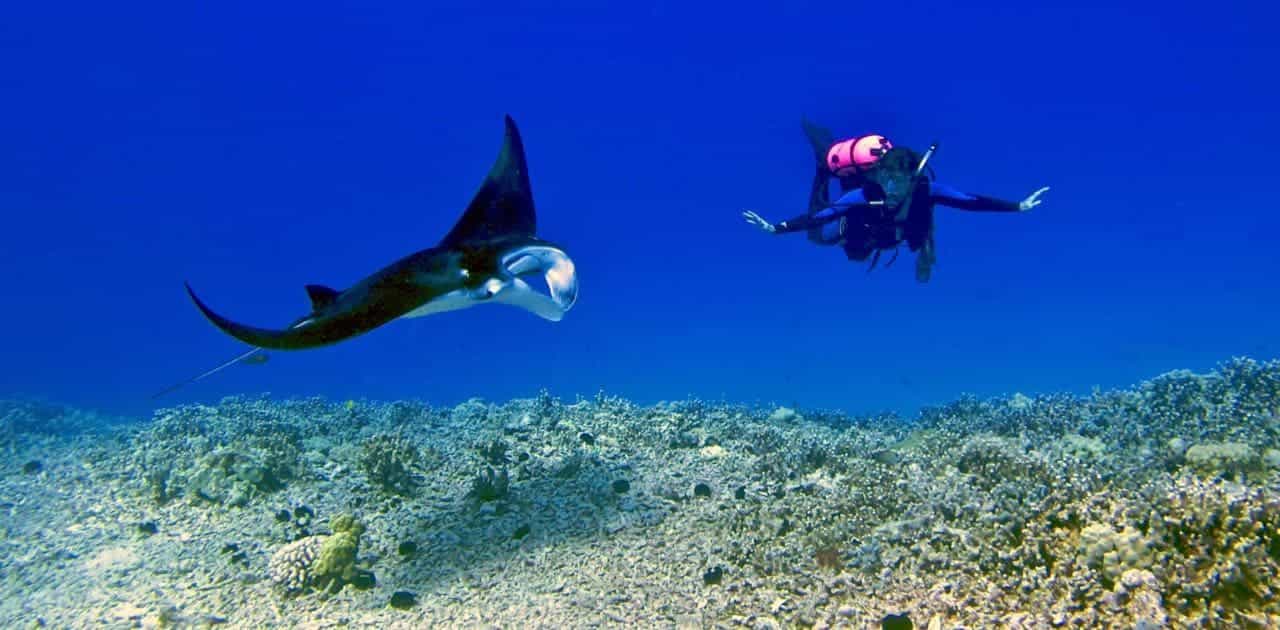
A scuba diver alongside a young manta ray in the Kona district. Photo by Steve Dunleavy, CC BY 2.0
PADI certification and resort courses on the Big Island
To rent scuba gear and dive independently, you need PADI or NAUI certification. If you’re not certified, there are two options:
- Resort course (discover scuba). A few hours of instruction qualifies you for a single guided dive at a real ocean site. No prior experience required. This is the fastest way to get in the water at depth if you don’t want to spend three days of your trip in a course. Torpedo Tours runs one at $275 with gear included, and Kona Honu, Kohala Divers, Big Island Divers and Jack’s all offer their own version.
- Full open water certification. A PADI open water course takes three to four days and qualifies you to dive independently to 60 feet. Getting certified here means open water training from day one rather than a cold-water quarry or an indoor pool. Most of the operators on this page run courses through their own shops, and Liquid Cosmos Divers, based at Kawaihae Harbor near Waimea, teaches theirs on private charters rather than in shared classes.
If you want to get the classroom part out of the way first, most operators let you complete the PADI e-learning theory at home and finish the water sessions here, which turns a four day course into about two days of your holiday.
Scuba diving safety tips
- Wait before you go up. Allow at least 12 hours after a single dive and 18 after multiple dives before flying, and longer before driving Saddle Road or Mauna Kea. It is the rule most likely to break an itinerary.
- Carry current certification. To rent diving gear independently, you need a PADI or NAUI card. If you have not dived in more than a year or are not confident in your skills, dive with a guide and book a refresher first. Several operators here require one after a two year gap, and Kohala Divers require it after five.
- Check conditions before you commit. Review the National Weather Service surf and marine forecast for west-facing shores before any shore entry. Conditions at lava rock entries like 2 Step change quickly with swell size. If the entry looks wrong on the day, it is wrong.
- Plan the dive and keep a gas reserve. Know your entry and exit points. Agree on a turn pressure with your buddy before you descend, and surface with gas still in the tank rather than running it down. Never dive alone.
- Night dives need their own kit and plan. Four of the trips on this page happen after dark. Carry a primary light and a backup. Agree on light signals and a lost-buddy procedure before you get in, and be honest with the crew about how many dives you have logged.
- Know where help is. There is no recompression chamber on this island; treatment is in Honolulu. Call 911 first, then DAN on +1-919-684-9111. Dive insurance is worth the cost when the nearest chamber is an inter-island flight away.