
On the Big Island’s Kona Coast, getting within 50 yards of a wild spinner dolphin is a federal offense that NOAA enforces. So no, you cannot legally swim with wild dolphins here. Most tours that promise it break the Marine Mammal Protection Act, and the boats that chase resting pods to drop swimmers are the ones to avoid.
If you still want to see dolphins, you have legal options. Spinner dolphins rest through the day in four shallow, sandy Kona bays, Makako, Kealakekua, Hōnaunau, and Kauhako, and you can often watch them from shore, sometimes right from Aliʻi Drive. To get in the water, two routes remain: a snorkel cruise where wild dolphins may surface near the boat, and the captive program at Dolphin Quest.
Table of contents
- Swimming with dolphins FAQ
- About Hawaiian dolphins (introduction)
- where to see dolphins
- How to behave around wild dolphins (+ boat guidelines)
- Responsible swim with dolphin tours:
- Snorkeling tours
- Visit/swim with captive dolphins
Swim with dolphin tours vs. dolphin well-being
Physically, swimming with dolphins here is open to anyone, any age and any swimming ability. The one thing to weigh first is the well-being of the dolphins themselves.
Spinner dolphins use these shallow Kona bays to sleep during the day, and the boat tours that promise a wild swim work by finding a resting pod and dropping swimmers in front of it. If a curious wild dolphin comes over to check you out on its own, enjoy it. If being in the water with a dolphin is the experience you most want, captive dolphins at Dolphin Quest are the one route that does not come at a wild pod’s expense.
Frequently asked questions about swimming with dolphins
Quick answers to the questions we hear most about dolphin swims on the Big Island. If yours isn’t covered here, get in touch.
Q: Where and how can I swim with dolphins on the Big Island?
There are two different ways of seeing dolphins as part of a tour when visiting Hawaiʻi: going on a snorkeling tour or swimming with captive dolphins. Read more about these options here.
Q: Is it OK to swim with dolphins in Hawaiʻi?
Under the Marine Mammal Protection Act, it’s illegal to swim with or approach within 50 yards of a wild spinner dolphin. That applies to swimmers and boats alike. NOAA enforces this actively on the Kona Coast so if you want to get very close to a dolphin on Hawaiʻi your only legal option is to see (and swim with) captive dolphins.
Q: What is the best way to see dolphins?
We think the best way to see dolphins while on Hawaiʻi is to take a snorkeling tour to a place where dolphin sightings are (almost) guaranteed, for example Kealakekua Bay.
Q: Which dolphin swim tours should be avoided?
Many dolphin tour providers offer dolphin swim tours where they track dolphins with their boat to put people in the water in front of the moving pod. According to NOAA rules this is prohibited, and tour operators offering such tours should be avoided.
Dolphins in Hawaiʻi
“Naiʻa” is the Hawaiian name for dolphins. It refers to any species of dolphins found in the Hawaiian waters, which covers four species here: [1] The Pacific bottlenose dolphin. [2] The rough-toothed dolphin. [3] The spotted dolphin. [4] The spinner dolphin.
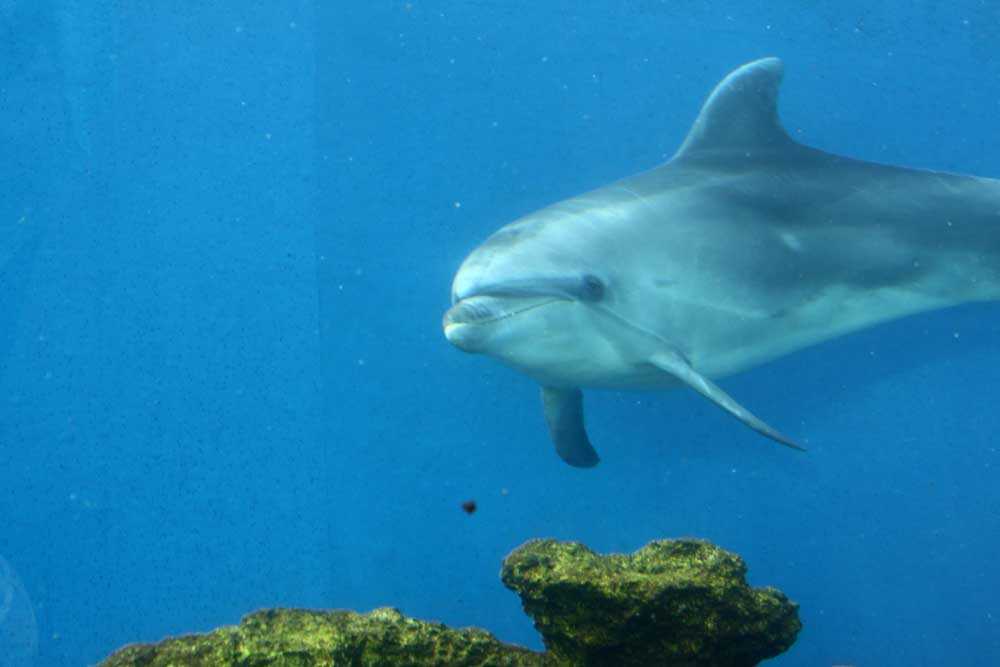
Spinner dolphins are the smallest of the four. They’re also the ones you’re most likely to see. The Pacific bottlenose dolphins are known for their playfulness and star appearances in aquariums worldwide.
What is the best place on the Big Island to see dolphins?
Spinner dolphins in Hawaiʻi rest during daylight hours in the shallow and sandy-bottom bays along the Kona Coast of the Big Island. These bays shelter them from deep-water predators but sit close to the offshore grounds where they feed overnight.
The best places to spot wild dolphins are at the Kona and Kohala coasts. The weather on this side of the island is good year-round so don’t forget to pack sunscreen. You can sometimes even see dolphins play from Aliʻi Drive in downtown Kona, in the bay.
How to be on your best behavior around wild dolphins
It can feel harmless, even mutual, to swim out and play with a pod. For the dolphins it rarely is. Seeking them out and crowding them disturbs their natural behavior and cuts into rest periods they depend on.
You can’t make these encounters good for the dolphins, but you can make them less bad. It comes down to one thing: leave resting spinner dolphins alone.
Spinner dolphins, the dolphins most commonly targeted by swimming with dolphin activities here on the Big Island, seek out sheltered bays with sandy bottoms to rest. These rest periods are crucial to their well-being. Unfortunately, tours that promise dolphin swims often go to these bays to find the dolphins during the resting periods.
Spinner dolphins are creatures of habit and have four well-known resting grounds where they socialize and rest during the day. These bays are:
- Makako Bay north of Kona, next to the Kona International Airport
- Kealakekua Bay south of Kona, one of the best snorkeling spots on the island)
- Hōnaunau Bay. Another great snorkeling spot, next to the Puʻuhonua o Hōnaunau National Park.
- Kauhako Bay 23 miles south of Kona, just above the Hoʻokena beach park and camp site.
Especially in these bays you should take care not to disturb dolphins during daylight hours, particularly so during their peak resting period between 6am and 3pm.
You can read more about efforts to reduce the tourist impact on Hawaiʻi’s spinner dolphins on the Raising Islands blog, and in this study on the importance of spinner dolphin resting habitats, which is discussed here in depth.
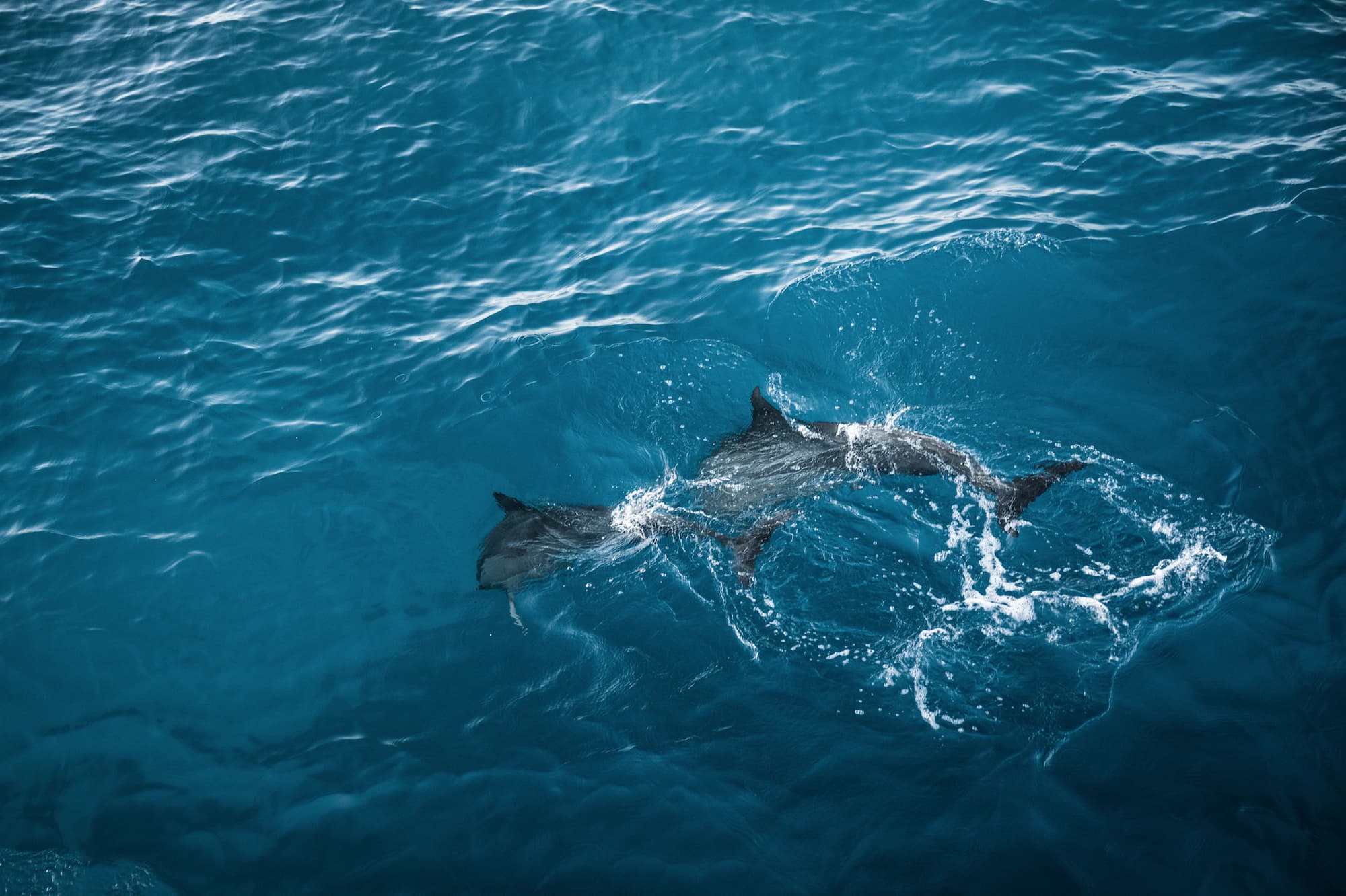
Spinner dolphins swimming off the Kona coast. Credit: Island of Hawaii Visitors Bureau (IHVB) / Julie Hotz
What is the best time of day to spot dolphins?
If you’re going DIY, aim for late afternoon. After 3pm the dolphins start moving toward offshore feeding grounds so you’re no longer interrupting their rest. Sightings at this time are still common near Kealakekua and Hōnaunau.
Guidelines for seeing dolphins with a boat
If you have your own boat and happen to see dolphins, please observe the following guidelines:
- Remain at least 50 yards (1/2 a football field) from spinner dolphins.
- Limit your time observing to 1/2 hour.
- Spinner dolphins should not be encircled or trapped between boats or shore.
- If approached by a spinner dolphin while boating, put the engine in neutral and allow the animal to pass. Boat movement should be from the rear of the animal.
You can find more information at the NOAA “protect dolphins campaign”. Please stay safe and treat the dolphins with aloha: observe them from a distance.
Swim with dolphins tours
Two kinds of tour get you near dolphins without chasing a wild pod. Neither is ideal for the animals, but both are a fair compromise between the demand for dolphin encounters and the animals’ welfare. A third kind, the boats that track and chase pods to drop swimmers in their path, is the one to avoid:
- Go on a snorkeling tour to a place where dolphin sightings are (almost) guaranteed
- See (and swim with) captive dolphins
- Tours you shouldn’t participate in
1: Dolphin snorkeling tours
You can run into dolphins on your own while snorkeling or paddling the Kona coast, but a dedicated snorkeling cruise makes it far more likely. These trips run the stretch of coast where dolphins turn up most mornings, so you often see them from the boat even though the snorkeling itself is the main draw.
These tours run about 4.5 hours and start around $180 per person, usually with snacks, water, and snorkel gear included. Confirm exactly what’s provided when you book.
Body Glove Hawaii runs a morning snorkel cruise with a good chance of dolphin and other marine-mammal sightings on the way to the snorkel site, though they make no dolphin guarantee. They follow NOAA viewing guidelines and never put swimmers in the water with the dolphins. The animals often come right up to the catamaran anyway, playing in the wake behind the boat.
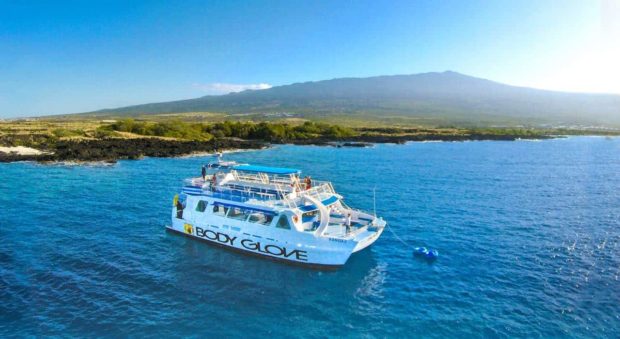
Deluxe Snorkel & Dolphin Watch
Step aboard a 65’ Catamaran for a fun-filled day of adventure! This 4.5 hour cruise offers breakfast, lunch, and all the comforts you would expect from being on a $2 million vessel.
from:
$180
What is a suggested tour?Our suggested tours are hand-picked tours that receive consistent good reviews, give back to the community, and work hard to minimize their impact on the environment. Read more about these tours on our website.2: Captive dolphin tours
As an alternative to open-ocean encounters, there is Dolphin Quest at the Hilton Waikoloa Village.
Dolphin Quest keeps resident bottlenose dolphins and is Humane Certified by American Humane and accredited by the Alliance of Marine Mammal Parks and Aquariums. You’re in the water close to real dolphins without disturbing a wild pod.
3: Tours you shouldn’t participate in
Some operators run dolphin tours that track a pod by boat and drop swimmers in front of the moving animals. Following and chasing a pod is stressful and disrupts the feeding and sleeping cycles these animals rely on. Please don’t support these kinds of tours: pick a more responsible way to see dolphins instead.