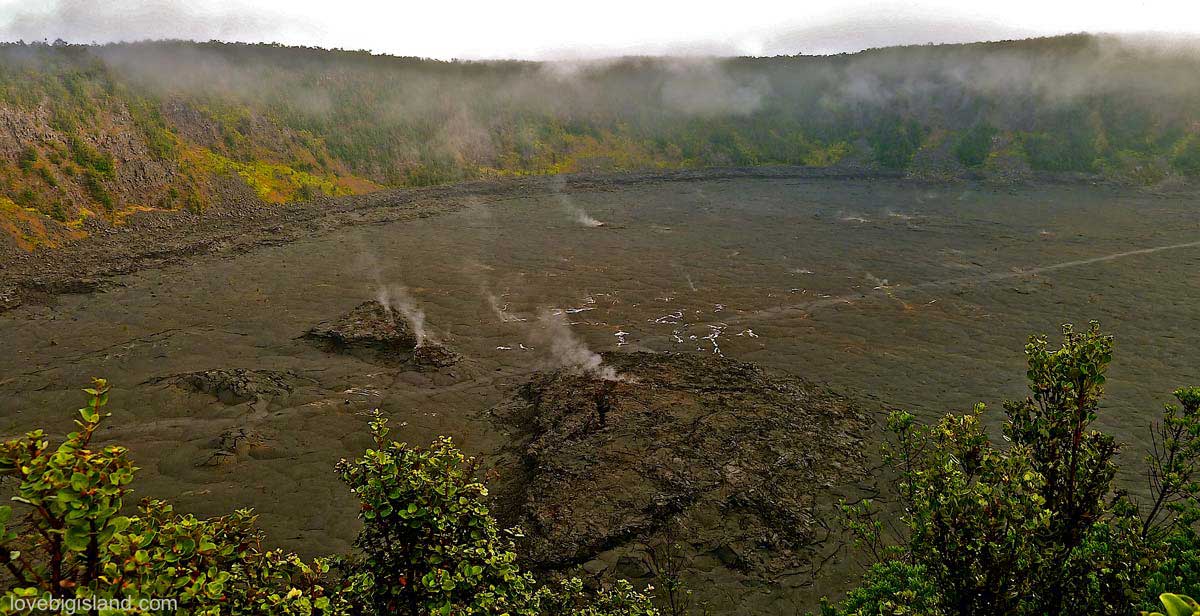
The Kilauea Iki trail is the best easy hike on the island, and it is not close. It drops you 400 feet into a crater that erupted in 1959, across a hardened lava lake still venting steam through the cracks, and back up through a forest of tree ferns and ohia lehua. Four miles, about three hours, suitable for most reasonably fit visitors.
The other four hikes on this list are in the same range: easy to moderate, each covering different terrain, each doable in a morning or afternoon. A cliffside drop to a black sand beach at Pololū. A mile-long trail through a coastal rainforest garden on the Hāmākua Coast. An open lava walk to the largest petroglyph site in Polynesia. A drive-and-walk up Mauna Loa to where the smooth pahoehoe meets the rough aʻa lava.
One note on Waipiʻo Valley: the valley floor has been closed to independent visitor access since February 2022. That entry remains below for reference, but it is no longer a hike you can do. The lookout at the rim is open and worth the stop.
Table of contents
- Kīlauea Iki Trail hike: 4 miles round trip, difficulty: medium
- Pololu Valley hike: 2.5 miles round trip, difficulty: easy
- Hawaii Tropical Botanical Gardens: 1.5 miles, difficulty: easy
- Mauna Loa Lookout: variable, at least 1.5 miles, difficulty: easy
- Puʻu Loa petroglyph trail: 1.4 miles round trip, difficulty: easy
- Currently closed: Waipiʻo Valley hike: 6.5 miles round trip, difficulty: medium
Details and map locations below last verified May 2026.
| Name | Duration | Distance | Entry fee |
|---|---|---|---|
| 1Kilauea Iki (Details ↓) | 1.5-3 hours | 4 miles | $30/vehicle (park entrance fee) |
| 2Pololu Valley (Details ↓) | 1.5 hours | 2.5 miles | Free |
| 3Hawaii Tropical Bioreserve & Gardens (Details ↓) | 2 hours | 1.5 miles | $35 |
| 4Mauna Loa Lookout (Details ↓) | 1 hour | 1.5 miles | Free |
| 5Pu’u Loa petroglyph field (Details ↓) | 45 minutes | 1.4 miles | $30/vehicle (park entrance fee) |
| 6Waipiʻo Valley (Details ↓) | 3 hours | 6.5 miles | Free |
Kīlauea Iki Trail (4 miles, medium difficulty) #
(4 miles round trip, difficulty: medium, Hawaii Volcanoes National Park)
This is the hike we would choose if limited to one during a first visit.
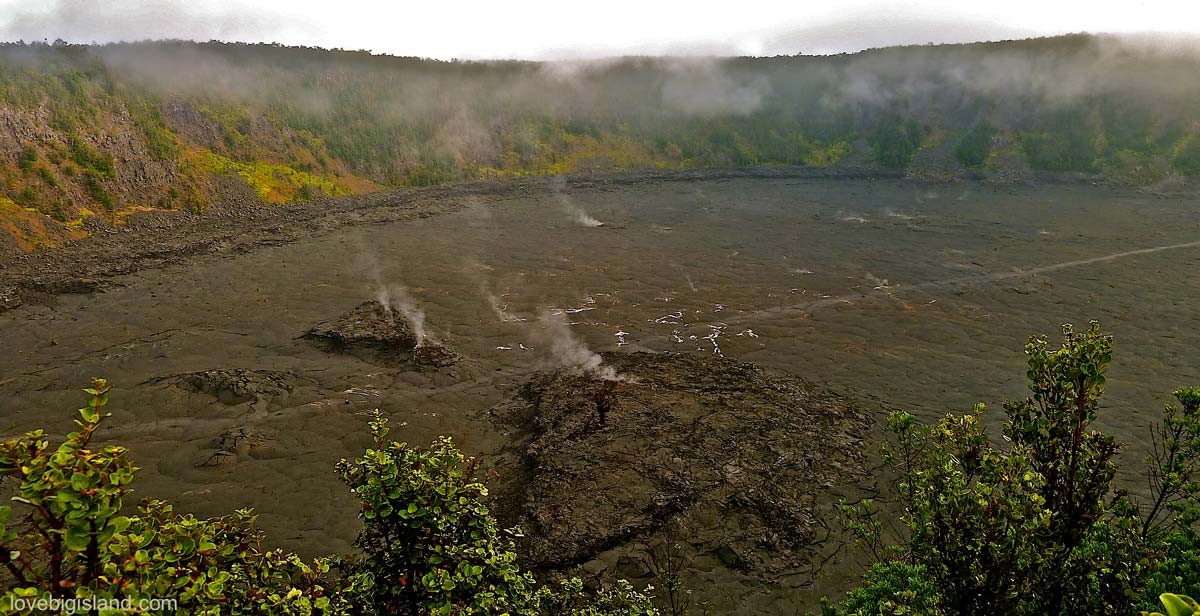
Overview of the Kīlauea Iki caldera, This caldera hosts one of the most spectacular (and moderately easy) hikes on the island
In 1959, a lava fountain at Kilauea Iki reached 1,900 feet into the sky, the highest recorded in Hawaiʻi at that point. The eruption filled the crater floor to a depth of several hundred feet in five weeks, then stopped (more about that eruption here). Today the trail crosses that hardened surface past steam vents still active in the cracks, then climbs back up through an ohia lehua forest growing in along the rim. Four miles total, two sections of 400 vertical feet each. Start by 8 a.m. to beat the heat and catch the birds when they are most active.
Directions: The Kīlauea Iki trail is located inside the Hawaii Volcanoes National Park at the Kīlauea Iki overlook parking lot.
The hike: Looking towards the crater pick up the trail turning rights following the trail, which slowly descends into the crater through a lush rainforest. Once you reach the crater look down to the ground every now and then. In and between the cinders you can find the little green crystals (olivines) that are also responsible for the green color of the sand at Papakolea beach. On the far side of the crater the trail goes up again. After a steep climb you pass the Thurston Lava Tube (well worth a 30 minute detour). You can find a more elaborate trail guide for this hike at the national park website.
We rate this hike as moderately difficult even though it is relatively short because you have to climb in and out of the crater. This means there are two relatively short stretches during which you have to cover 400 vertical feet up and down. We recommend that you start on this hike early (8 a.m.) to beat the heat and the crowds. Starting early also lets you hear the birds when they are most active and gives you the best photo opportunities.
Tip to avoid crowds: Park at Devastation and embark on a six-mile (9.7 km) round-trip hike into, up, and around Kīlauea Iki from Uēaloha (Byron Ledge). The scenery includes panoramic views of Kīlauea caldera, Mauna Loa (on clear days), and native forest with tall tree ferns.
About the Kīlauea Iki eruption: On November 14, 1959, a spectacular eruption began and flooded the crater with 68 million tons of lava, creating a lava lake several hundred feet deep, and a dramatic fountain that ejected lava 1,900 feet (580 meters) into the sky. The eruption ended five weeks after it started, and the surface of the lava lake solidified. Today, you can hike over that solidified lava lake on what hikers consider to be one of the finest trails in the park.
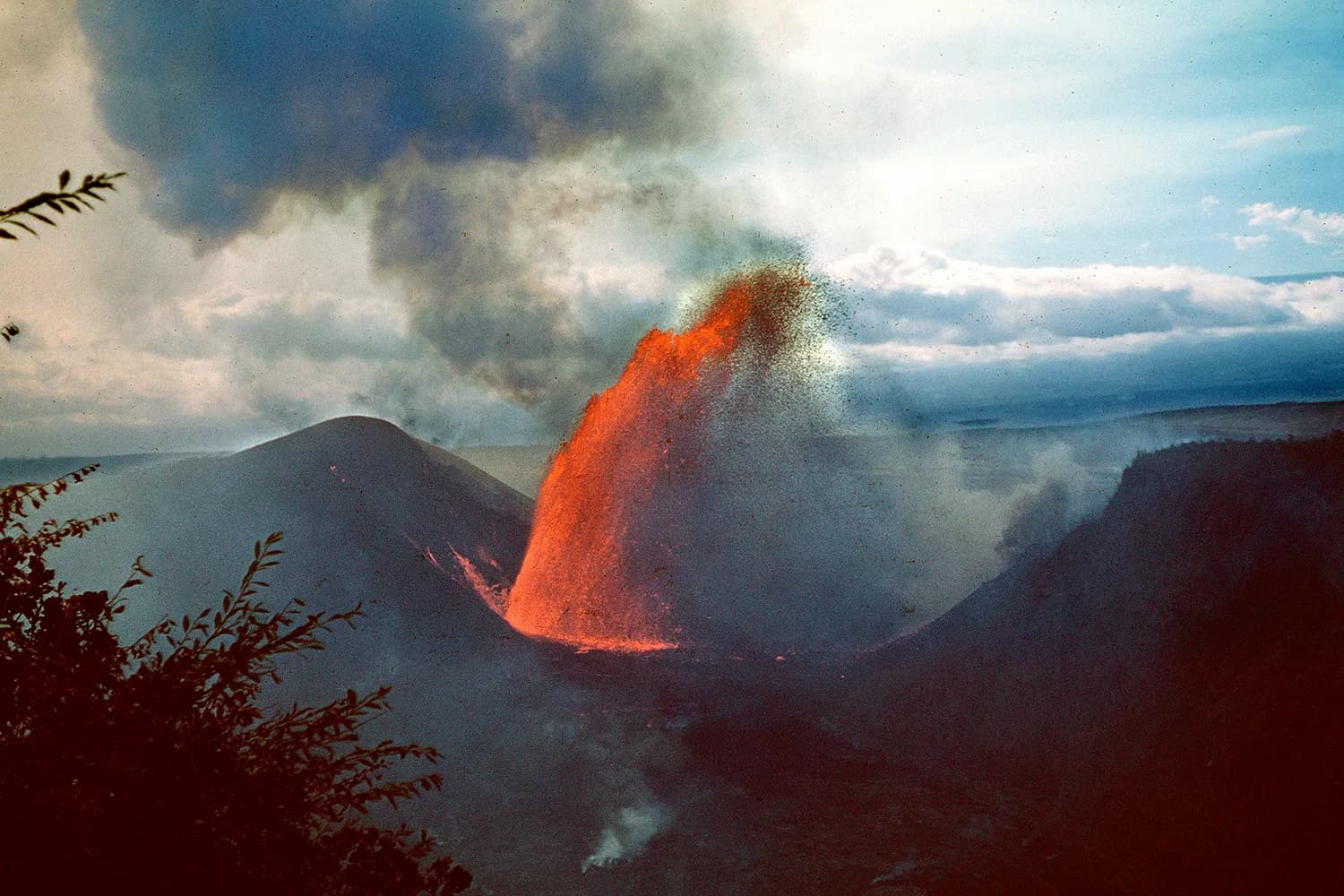
At the height of the eruption a lava fountain reached 1,900 feet (580 meters) into the sky. Credit: 1959 USGS photo.
Pololu Valley (2.5 miles, easy) #
(2.5 miles round trip, difficulty: easy, Kohala)
Pololu is an out-and-back: 0.9 miles of steep trail from the lookout at the road’s end down to a black sand beach, and the same trail back up. The views from the descent are the best part, with the Kohala coast extending back toward Waipio and the cliff line dropping to the water. The beach at the bottom is rough surf and not for swimming. Bring water and wear shoes with grip: the trail surface goes slick fast after rain.
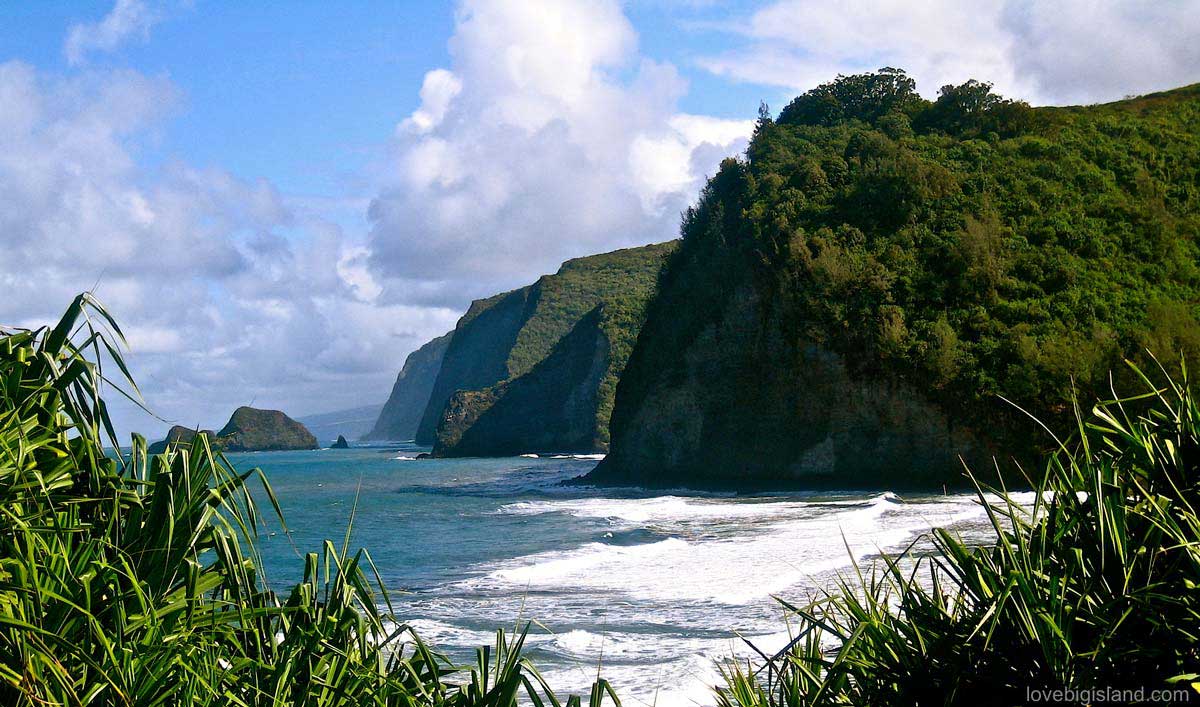
View of the Pololu black sand beach and the dramatic cliffs in the direction of Waipi’o valley
Directions: The Pololu Valley lookout is at the end of the Akoni Pule Hwy (270), East of the quaint town of Hawi on the Northern tip of the Big Island. Depending on how busy it is you may have to park your car along the road and walk a few minutes.
The hike: the steep but short hike takes you down a lush tropical cliff to a rugged black sand beach. The trip down can be made leisurely in 30-45 minutes one way, and we recommend to take a picnic basket along to enjoy while sitting one the rugged beach after a refreshing dip. (read more about picnic areas in Hawaiʻi)
Local grinds: Stop in Hawi for a snack at the Motek bakery (good pastries).
Hawaii Tropical Botanical Garden (1.5 miles, Hamakua Coast) #
(1.5 miles, difficulty: easy, HTBG website, close to Hilo)
The gardens sit at the bottom of a ravine above Onomea Bay, 7 miles north of Hilo. The drive in from the highway is 1.75 miles of one-lane road through dense canopy, and that counts as part of the experience. Inside, the self-guided trail is just over a mile and takes 90 minutes to two hours at a slow pace. The lower portion opens onto the bay. More than 2,000 plant species are on the property.
Directions: To get to the gardens turn Ma Kai (towards the ocean) between mile marker 7 and 8 on Hwy 19 coming from Hilo, onto the scenic drive in the direction of Onomea Bay. Continue for 1.75 miles to reach garden entrance.
The hike: there is no real hiking needed here, more a slow meandering around the gardens for a few hours. The self-guided tour is just over one mile long (round trip) and takes about 1.5 to 2 hours. If you would want to go on a longer hike you can take the 2.5 miles (round trip) donkey trail down to Onomea Bay and Turtle Cove whose trailhead is just outside the gardens.
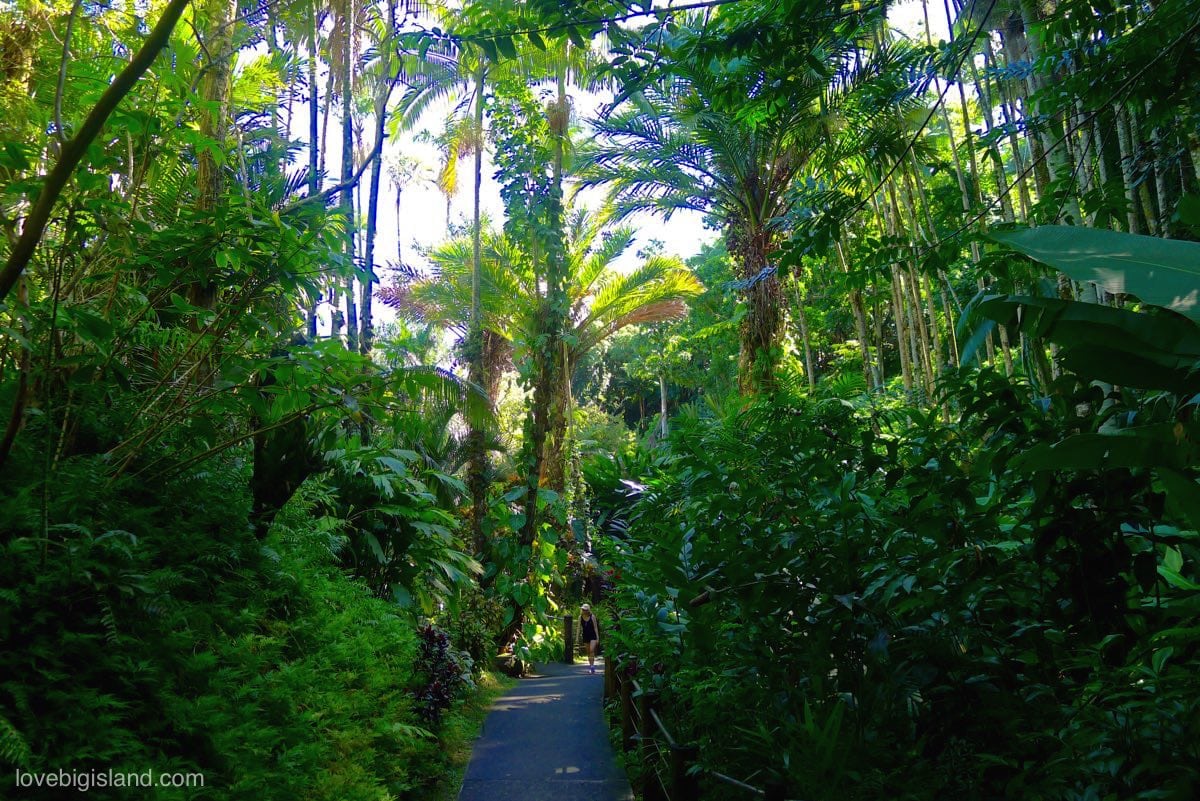
The 1 mile self-guided tour in the Hawaii Tropical Bioreserve & Gardens is one of our favorite short hikes on the Big Island
As an added extra, to get to these gardens you have to take one of the most scenic drives of the Big Island!
Admission to the gardens: Take note, admission to the gardens is not free. The fee for one day is $35 for adults, children ages 6 – 12 are $25 (kamaʻaina rates are $33 for adults). Children under 6 are free (2026 rates). The gardens are opened daily between 9 am and 5 pm, but the latest admission is at 4 pm.
You receive a trail guide when you purchase your ticket to the gardens. Try not to miss the bird aviary and the seascapes at the lower end of the gardens. The lower portion of the trail opens onto Onomea Bay and is a good place to stop.
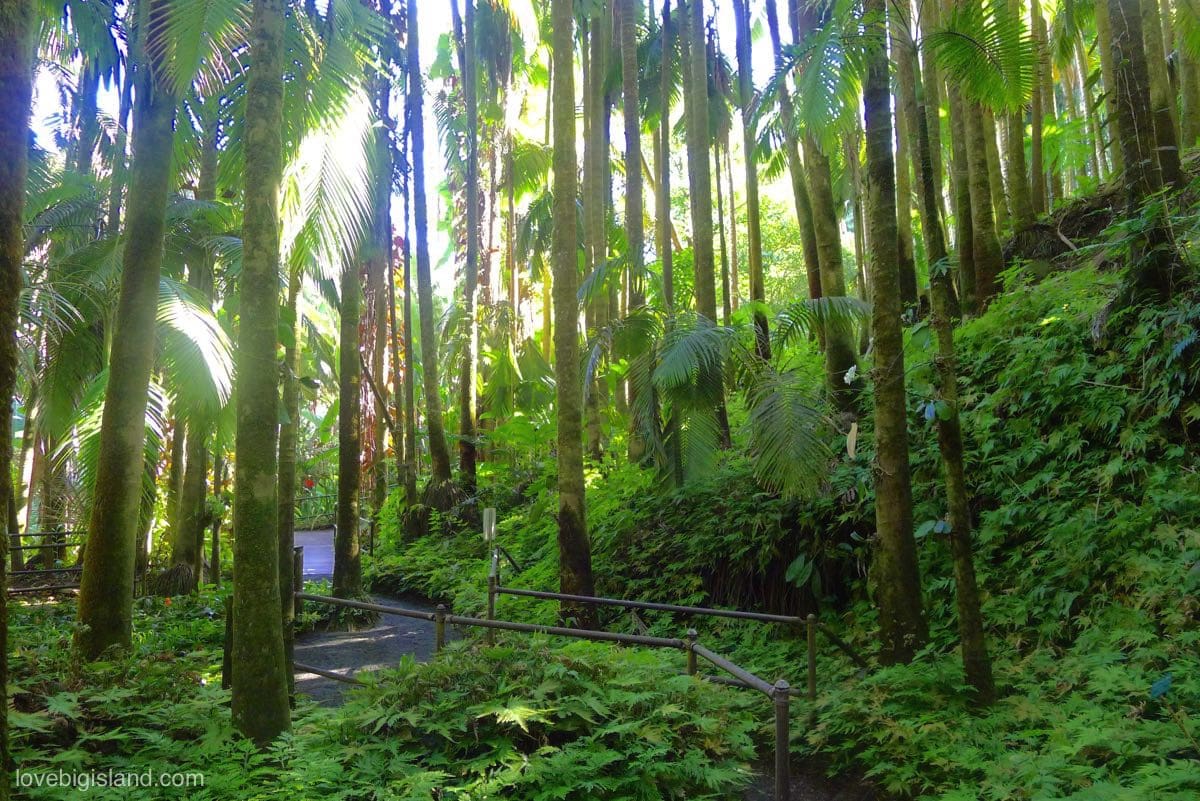
The lush Hawaii Tropical Bioreserve & Gardens are our favorite place on the Big Island to admire the plants and flowers from the rainforest
Have a look at the following video if you are interested in an impression of the gardens. Did we already tell you that it’s smart to take an umbrella? The gardens are in the rainforest after all :)

This is by far our favorite botanical garden on the island. If you want to see more however, have a look at our complete list of botanical gardens on the Big Island.
If you don’t feel like organizing a visit yourself you can always visit this garden as part of an organized tour, such as this day-long photo tour also visiting Waipiʻo Valley and several waterfalls.
Mauna Loa Lookout Trail (1.5+ miles, easy) #
(variable, at least 1.5 miles, difficulty: easy, Volcano Village)
The Mauna Loa Road climbs 11 miles from Hwy 11 to a trailhead at 6,662 feet. Most of that is slow driving through koa forest and old lava flows, which is worth the trip on its own (it is one of our 5 favorite scenic drives on the Big Island). At the top, the Mauna Loa Trail heads toward the summit 18 miles away. You do not need to go anywhere near the summit: follow the trail over smooth pahoehoe until it transitions to rough aa lava, then turn around. That is about 35 to 40 minutes each way. Do this hike on a clear day. Cloud cover at elevation removes the views that justify the drive.
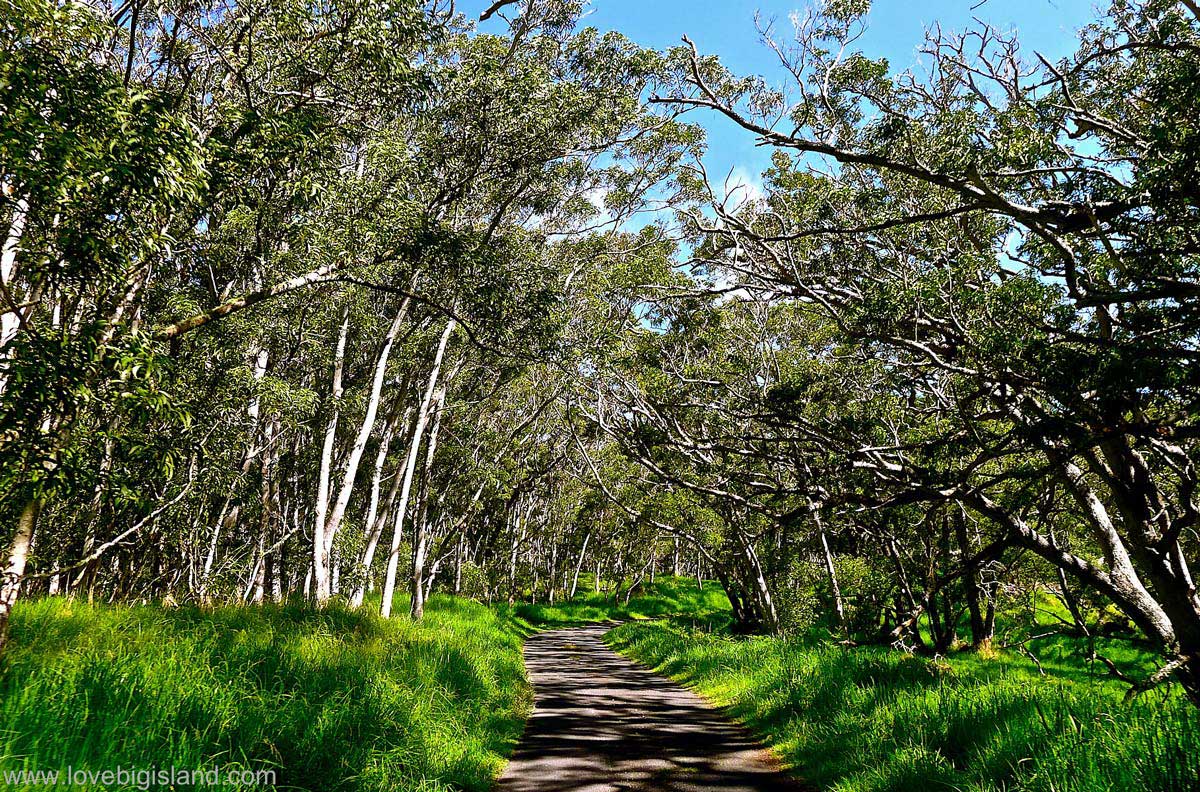
The Mauna Loa access road is an 11-mile scenic road climbing Mauna Loa up to over 6000 ft.
Directions: From Volcano Village, take Hwy 11 in the direction of Kona, and turn Ma Uka (towards the mountain) between mile marker 31 and 32 onto Mauna Loa Rd. After 1.5 miles you will reach a turnaround and the trailhead for the 1 mile Kipuka Puaulu (bird park) trail. On the far side of the turnaround you will find an open gate. Continue through this gate onto the Mauna Loa Scenic Strip. The road winds up the slope for 10 miles to an elevation of 6662 feet. Do take your time on this Scenic strip and look back to the Kilauea Crater often for dramatic views!
On the end of the road you find a little kiosk which is the trail head for the Mauna Loa Trail, also nicknamed the ‘Trail of Tears’. From this point it is still an 18-mile hike to the summit of Mauna Loa, so forget about reaching the summit.
The hike: You will only need to follow the Mauna Loa Trail for a short distance to see the rugged beauty of Mauna Loa. Follow the trail up the mountain over smooth red lava until you reach the black aʻa lava of the Keamoku flow. The trail will take you more directly up the mountain from here, and the trail will become less distinct and signed by rock cairns. Somewhere here is a nice point to turn around. Keep looking back on your way up to make sure you know how to walk back.
More information on the NPS website.
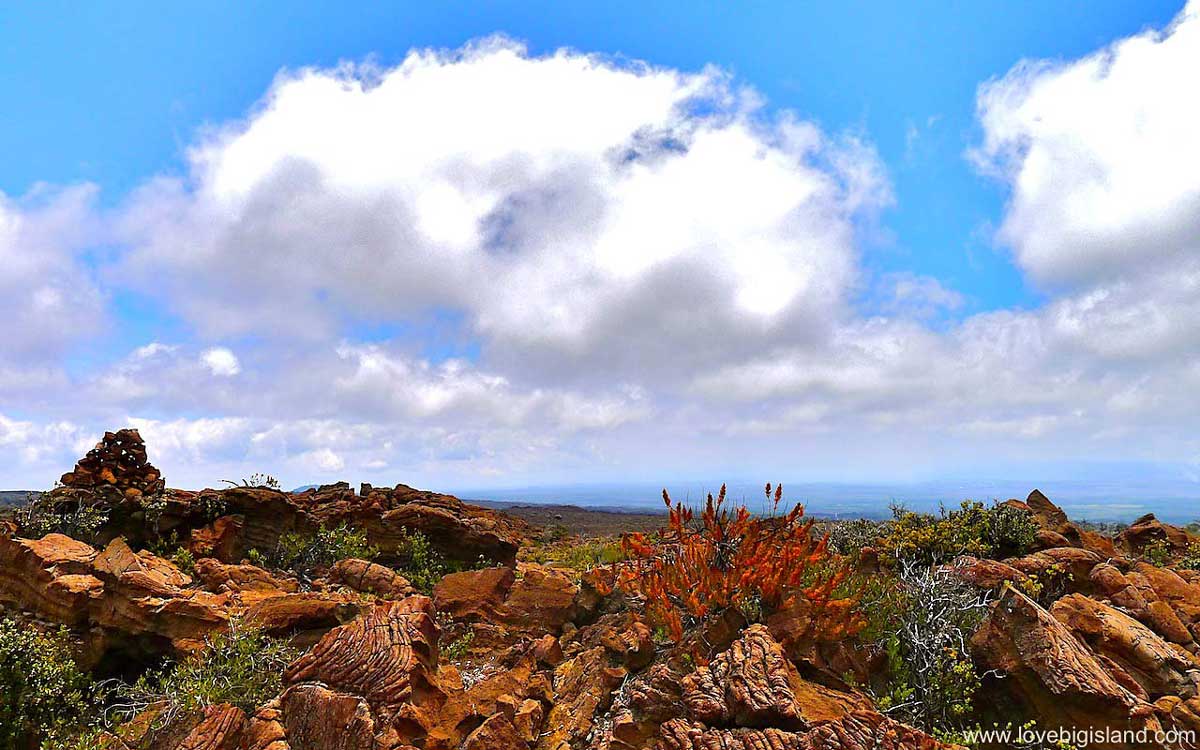
This will be your view back to the ocean after a 35-minute hike up the Mauna Loa trail.
Puʻu Loa Petroglyphs (1.4 miles, easy)
(1.4 miles round trip, difficulty: easy, Hawaii Volcanoes National Park / Chain of Craters Rd)
Over 23,000 images are carved into the lava at Puʻu Loa, the largest petroglyph site in Polynesia. For generations, Hawaiian families carried their newborns’ umbilical cords to this site and pressed them into small cups carved into the rock, a practice recorded continuously until at least the 1860s. The earliest Western account dates to 1823. You walk out across the same lava surface. The carvings are still there.
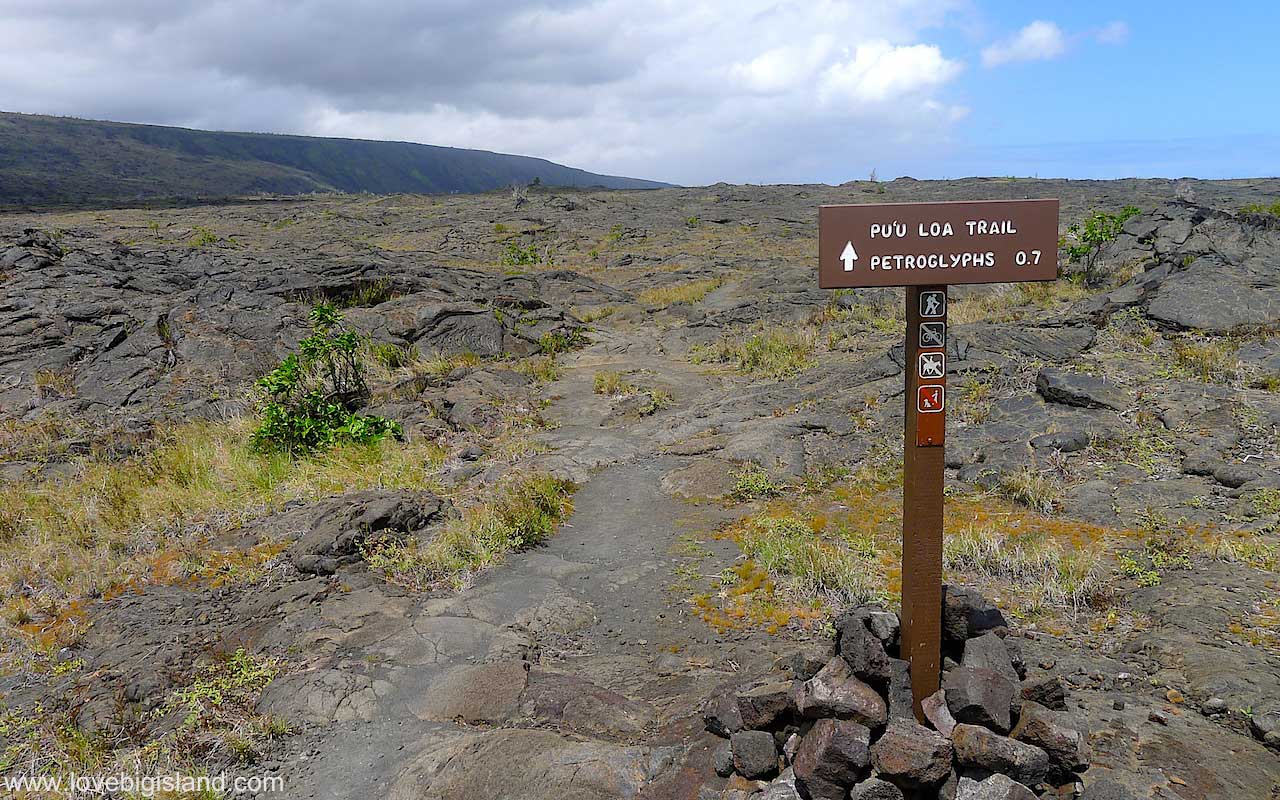
Trailhead of the Puʻu Loa Pertroglyph trail. To get here drive down the chain of craters road in the Hawaii Volcanoes National Park
The hike: The trail is 1.4 miles round trip from the Chain of Craters Road trailhead, across open pahoehoe lava with no shade. A boardwalk circles the main petroglyph field so you can see the carvings without stepping on them. Go in the early morning or late afternoon: slanting light picks out the shallow carvings in a way that midday sun washes flat. Bring water and wear shoes with grip on uneven rock. There is no shade anywhere on the trail and no place to sit before the boardwalk.
Directions: The trailhead is at Milepost 16.5 on Chain of Craters Road, about 20 miles from the park entrance near Volcano village. HVNP park entry applies.
Waipiʻo Valley Lookout (valley floor closed since 2022) #
(6.5 miles round trip, difficulty: medium, Kohala)
Since February 2022, the valley floor has been closed to independent visitor access following a geotechnical assessment that found active rockfall and slope instability on the access road. The hike described in older versions of this section is no longer permitted. The lookout at the rim is still open, free, and worth the stop: a full view of the valley floor, taro fields, the river running to the beach, and 2,000-foot cliff walls on both sides. A shuttle tour is the only current way to reach the valley floor. Our full Waipio Valley guide has current tour details and closure status.
Summary: this hike will take you down 800 ft into the ‘Valley of the Kings’. Make sure to take plenty of water, some food and a trash bag to pack out everything you take in.)
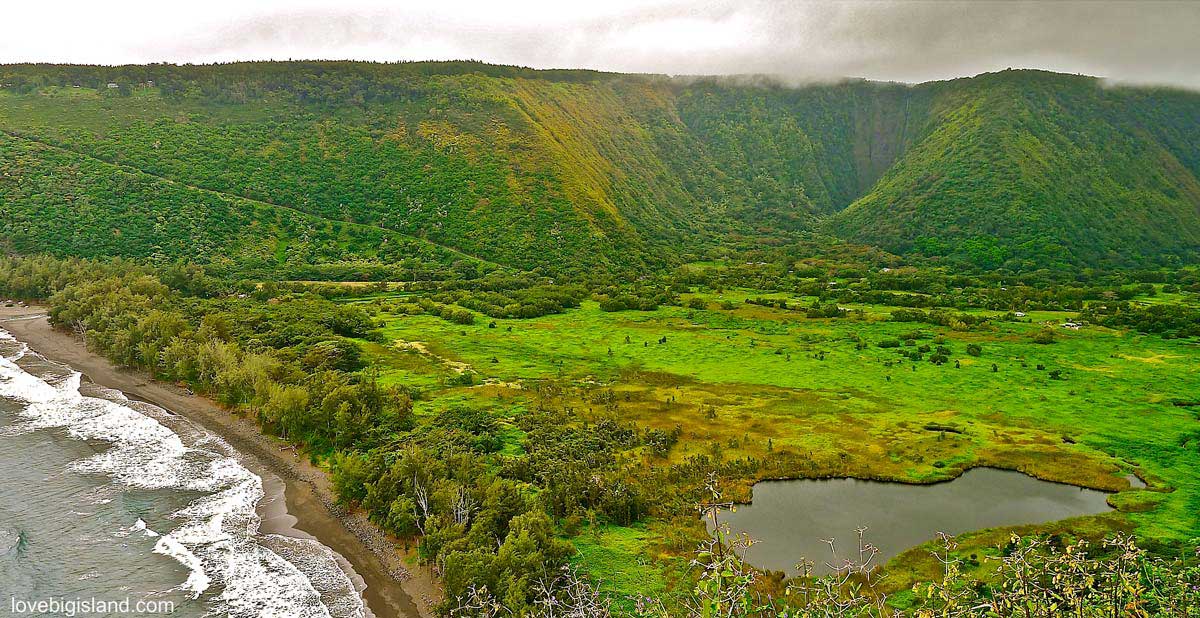
Overview of Waipiʻo Valley from the ‘opposite’ side. You can see the steep access road, the black sand beach, and taro fields.
Directions: Follow Hwy 240 to the end (coming from Honoka’a) park your car at the parking. A short stroll takes you to the Waipio Valley Lookout where you can read about the royal and disastrous history of the valley (a Tsunami in 1946 wiped almost the whole valley clean) and take some postcard perfect pictures of Waipi’o Valley.
The hike: This is where the ‘fun’ starts. You will have to hike down the Waipiʻo Valley access road. This road gains 800 vertical feet in only 0.6 miles, and has a 25% average grade! It is only accessible to 4WD cars (and rightly so, losing control over your car on this road would mean certain death, as witnessed from the many overgrown car wrecks on the cliff!). Take it slow on this road, you are not in a hurry and the payoff is worth it!
On the bottom of the road, turn right to reach Waipiʻo Beach after a short (10 min) hike. This fine grain black sand beach is popular with surfers. If you want to take a dip to cool down please go ahead, but watch out for the strong currents – don’t let the water get higher than your hips.
If you continue to the right on the coast, you will reach the Kuluahine falls. Hug the shore to reach the bottom of these falls. From here, double back to the Waipiʻo Valley access road. If you have spare time on your hands, consider to also turn left (coming from the lookout) on the bottom of the valley, you will find taro fields, and probably will spot some wild horses. You can also see the 1400 feet high Hiʻilawe on the far left of the valley from here. Take care to stay on the road and not to trespass on private property.
Local grinds: On your way to Waipi’o valley, stop at Tex Drive Inn for a good breakfast or their specialty: Portuguese Malasadas (deep fried donuts).
Our Hiking Guides for other Hawaiian Islands
Most people coming to Hawaiʻi visit multiple islands to make the most of the long trip needed to get here. If this is you and you are into hiking, we highly recommend our hiking series for the other islands.