
Spend day one on the Kona coast and day two at Kīlauea and in the Puna district. You start at Kailua-Kona with a swim, then drive south to snorkel and watch the sunset at Puʻuhonua o Hōnaunau. Sleep that night in Volcano Village, beside the national park.
For first-timers with one night to spare, two days is enough to see a lot, but expect to spend much of it driving. Day one ends with a long night drive up to the park; day two ends with the drive back across the island to fly out of Kona, unless you book your flight home from Hilo.
Table of contents
Seeing all of this in two days means long days. If you’d rather slow down, pick the one thing you most want to see and build the trip around it. For a first trip, we’d make that Hawaiʻi Volcanoes National Park, especially if you’re also visiting another Hawaiian island. With a week, our seven-day itinerary splits the nights between Kona and Hilo and adds Maunakea and the Hāmākua Coast.
The evening drive from Hōnaunau to Volcano Village is long and dark, so plan on a late arrival. We suggest it anyway because Volcano Village is next to the park, so you can start early the next morning.
As of October 2026, Kīlauea has erupted in short fountaining episodes since December 2024, with pauses of weeks between them, so check current lava viewing conditions before you count on a glow after dark. If you’re not up for the night drive, or you’ve already caught a Hawaiian sunset on another island, drive to the park in daylight instead.
Day 1: Kona and the beach
Pick up your rental car at Kona airport and drive 7 miles south on Highway 19 into Kailua-Kona. The town sits right on the water; take your first swim here before you head down the coast.
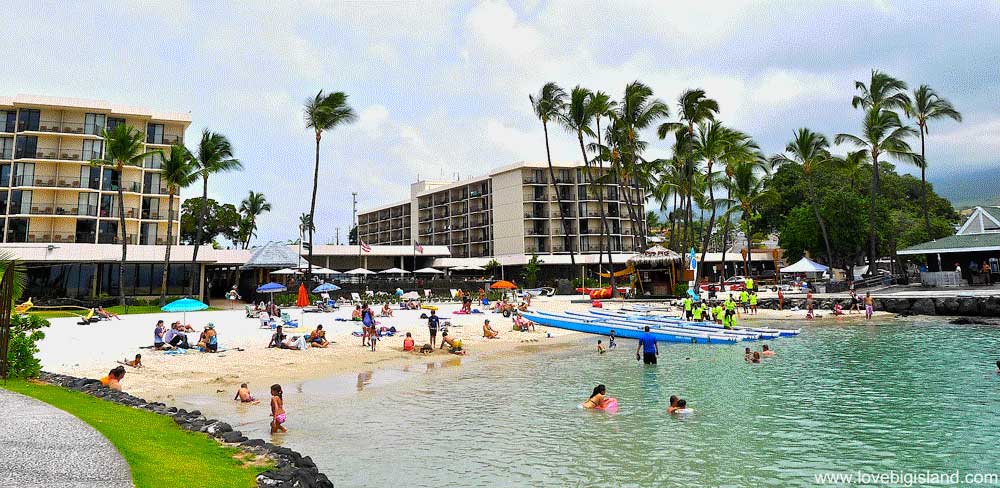
King Kam beach in downtown Kona is a good place to take a quick dip in between activities. There’s decent snorkeling on the other side of the pier.
From there, drive south down the Kona coast to Hōnaunau Bay, one of the best snorkeling spots on the island, right next to Puʻuhonua o Hōnaunau, the City of Refuge. Pick up food along the way and snorkel the bay in the afternoon. Stay for the sunset.
In the evening, follow Highway 11 up to Volcano Village. Book your place to stay in advance, since you’ll get in late (our list of Volcano Village vacation rentals, with what they cost). If you still have energy after checking in, the park entrance and its overlooks are only a few minutes away.
Day 2: The volcano and Pāhoa

The red glow from Halemaʻumaʻu crater at night, visible only when an eruptive episode is active.
Get up early and drive into the park, where entry is $30 per vehicle, card only. Ask the ranger at the entrance station what’s open that day, then spend the morning and early afternoon on the short walks: the Nāhuku lava tube, the sulfur banks, and the steam vents near the caldera.
With more time, drive down Highway 11 toward Hilo and take the Highway 130 exit at Keaʻau into the Puna district, the island’s eastern edge. Walk the short loop through Lava Tree State Monument and follow the palm-lined back roads of the lower coast down to Pāhoa, a good spot for an early dinner.
The 2018 eruption reshaped this coast: the old lava-field hikes are gone, and there’s no lava to walk out to here anymore. Stay off the newest coastal land; the state says it’s still settling and unsafe to cross.
Leave enough time to drive back to the Kona airport for your flight. If you fly out earlier in the day, skip Puna and spend the extra hours in the park instead, driving Chain of Craters Road down to where the old lava flows meet the sea.
To skip the drive back, fly home from Hilo’s airport instead. Pāhoa is about 20 miles from it, roughly half an hour on Highway 130, while Kona’s airport is about 95 miles back across the island. Book the car as a one-way rental from Kona airport to Hilo airport and check the drop fee. Flights home from Hilo usually cost more and often connect through Honolulu, but you spend the evening in Puna instead of on the road.
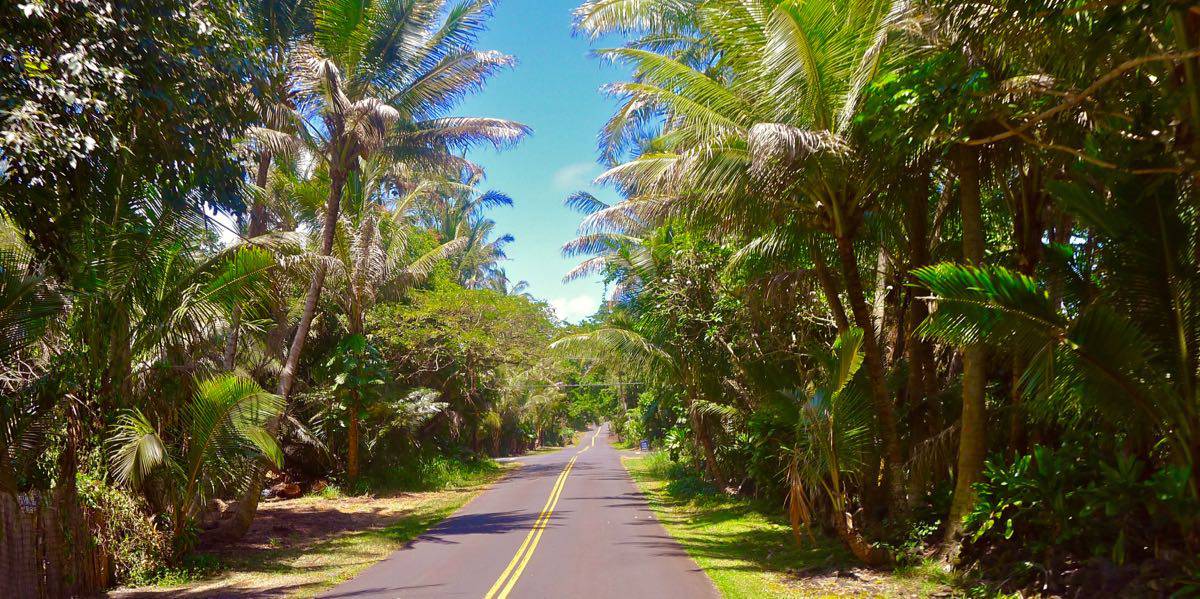
The Red Road (Highway 137) runs up the Puna coast under overhanging palms. Since the 2018 flow it dead-ends at Pohoiki, which has the island’s last easy-to-reach warm pond.