The Big Island is the largest island in Hawaiʻi, by far. In fact, if you combined all of the other islands – Oʻahu, Maui, Kauaʻi, Molokaʻi, Lānaʻi, Kahoʻolawe, and Niʻihau – they would still not equal the size of the Big Island. In this way, the Big Island really does live up to its name!
As you might expect, the Big Island’s incredible size means that it has the largest selection/variation of ecosystems and environments in all of Hawaiʻi. It boasts 8 of the 13 worldwide climate zones, as well as the most voluminous volcano (Mauna Loa) and the tallest sea mountain (Mauna Kea) on earth!
You can read more about the Big Island’s incredible makeup in our “Island of Extremes” article, but it goes without saying: If you’re interested in nature and wildlife, the Big Island has more to offer than you could ever see in a single visit. While some environments will overlap with other islands (such as the ocean), there are many ecosystems that are unique to the Big Island and found nowhere else in Hawaiʻi.
Table of contents
Below, we will walk you through the island’s major natural areas and advise you on the best places to observe wildlife, both in the ocean and on land.
ps: if you are also interested in seeing nature and wildlife on the other islands, we recommend you bookmark our following guides:
- Seeing nature and wildlife on Oʻahu.
- Seeing nature and wildlife on Maui
- Seeing nature and wildlife on Kauaʻi
Marine life and coral reefs
The oceans surrounding the Big Island are home to myriad species of fish as well as larger marine animals – whales, dolphins, sharks, turtles, and seals, just to name a few.
While snorkeling and marine-life watching can happen just about anywhere there’s water, some places are better than others. On the Big Island, there are many places that are protected or otherwise pristine where you have the best chance to view the most variety of marine life.
Below, we break down the best spots on Big Island to see tropical fish, explore coral reefs, and spot large marine animals. We also include a museum recommendation to better understand Hawaiʻi’s underwater world.
- Fish and coral reefs
- Larger marine life (turtles, manta rays, dolphins, whales)
- Mokupāpapa Discovery Center
1: The best places to see fish and coral reefs
The Big Island offers a collection of marine conservation districts where tropical fish and other marine life thrive. Managed by the State, these areas are controlled to prevent overuse and to limit human impact, using fishing and boating regulations to ensure the health of the underwater world. We recommend visiting these areas for activities like snorkeling, kayaking, or, in some cases, coastal walking.
THE MARINE LIFE CONSERVATION DISTRICTS ON BIG ISLAND ARE:
Kealakekua Bay
One of the Big Island’s most pristine snorkeling areas, Kealakekua Bay is a protected marine sanctuary that’s full of sea life and loaded with history. With depths ranging from 5 to more than 100 feet, a wide variety of tropical fish can be spotted in Kealakekua, along with larger marine animals, such as dolphins and reef sharks. In 1779, the famous British explorer Captain Cook was killed in the bay after an unstable, 2-year relationship with native Hawaiians, and a monument now stands on the shore in his honor. Note that there is no drive-up access to Kealakekua; one can access the area via a boat tour, a kayak trip, or on foot via a hiking trail.
You can learn more about Kealakekua Bay and how to access it.
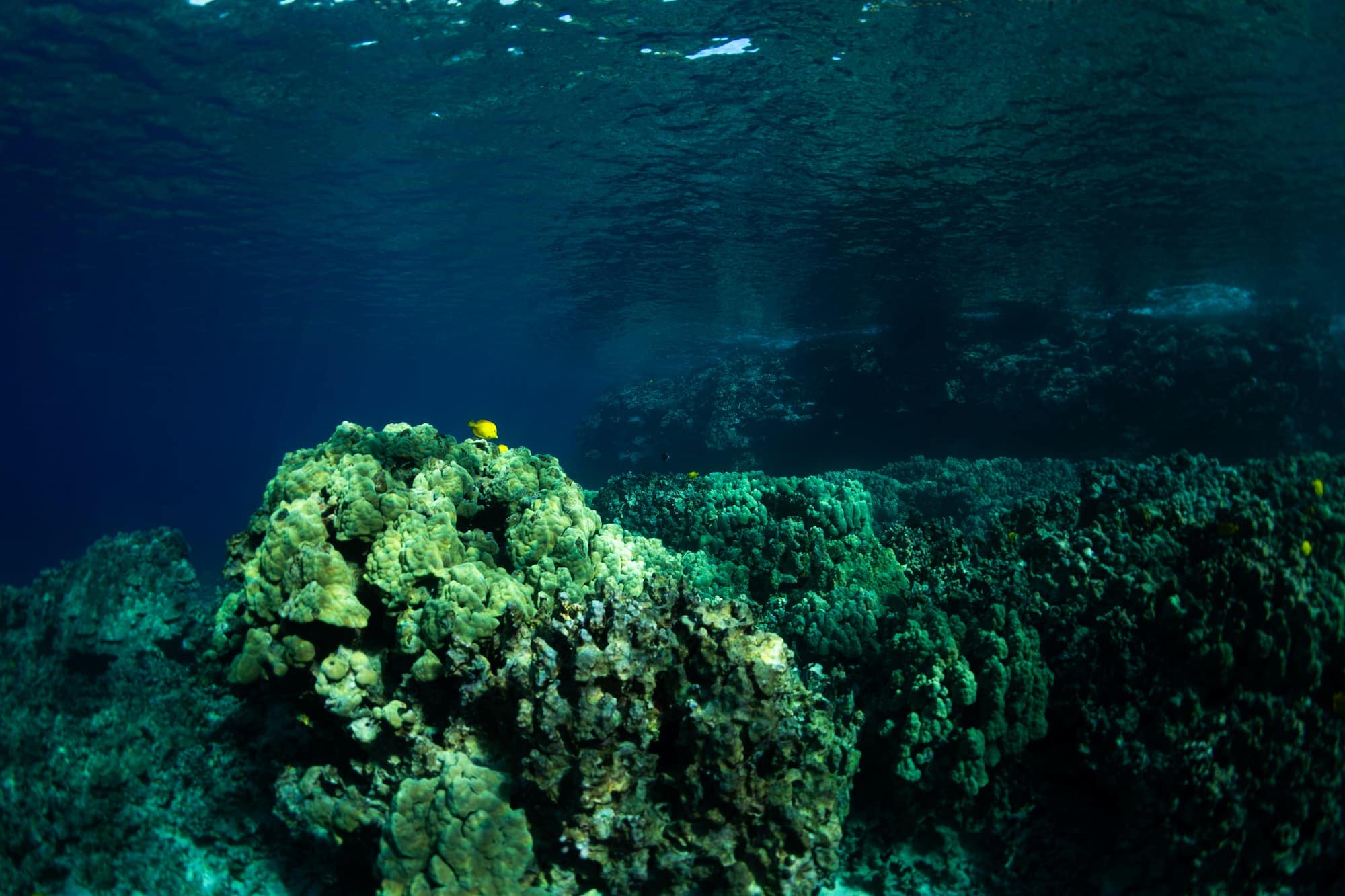
One of the many Pristine coral formations within Kealakekua Bay on the Big Island of Hawaii. Photo by Sarah Lee on Unsplash
Lapakahi
Lapakahi State Historical Park is located in the far north of the island and includes a protected marine area as well as preserved ruins that date back to the 1300s. Featuring two small, rocky beaches at Koai‘e Cove, one can access the water here for snorkeling atop lava rocks, home to myriad tropical fish. A coral reef can be found a bit farther offshore, with depths from 5 to 30 feet.
Old Kona Airport
The Old Kona Airport conservation district is beloved for its easy access from Kailua-Kona (Kona town). Access into the water is straight from the beach, which is a mix of sand and coral pebbles. Underwater, a combination of lava rock and coral reef await. This area is great for its convenience and proximity to town, ease of water entry, and for its long beach, which provides other opportunities for recreation, such as walking, sunbathing, swimming, and tidepool exploration.
Waialea Bay
Waialea Bay is another North Kona marine conservation district, but its access is less certain than the three areas above. One must drive a rough road to reach it, and during the winter, much of the beach is eroded. Summer brings better times, however, and those that make the journey will be rewarded with great snorkeling and scuba diving in the bay between ‘Ōhai Point and Kānekanaka Point.
Read more about visiting Waialea Bay (Beach 69) here.
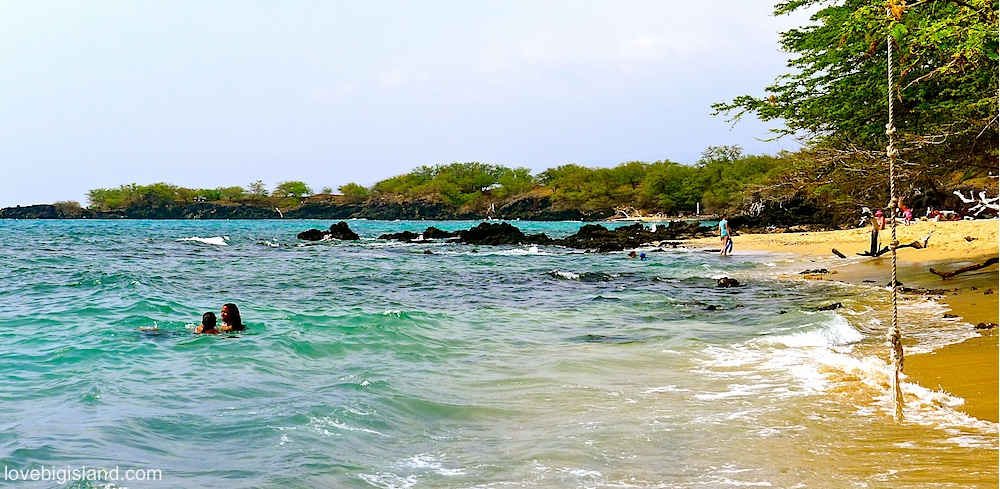
Waialea Beach is a somewhat “off the beaten path” beach in between the Waikoloa resorts and Hāpuna beach
2: Larger marine animals
Whales, dolphins, monk seals, and turtles are some of the most-common large marine animals found on the Big Island. Many are protected by federal and state laws. For example, turtles are allotted at least 10 feet (3 meters) of space from humans, whales get 100 yards (or 90 meters), and dolphins and monk seals are granted 50 yards (or 45 meters).
Remember, it is always best to observe wildlife from a distance to avoid unintended or unpleasant encounters.
Where and when to see Whales
Humpback whale season in Hawai‘i takes place every year from November to March. During this time, more than 10,000 humpback whales travel from Alaska to Hawai‘i to give birth. They are very easy to see during these months, with sightings from shore very common.
Whale watching tours are available for those that want to get a closer look at the whales and their activity, which include breaching and tail slapping. Most boat tours leave from either Honokōhau Harbor, Kailua Pier, or Keauhou Harbor.
Read more: about whale watching (DIY and Tours) on our website.
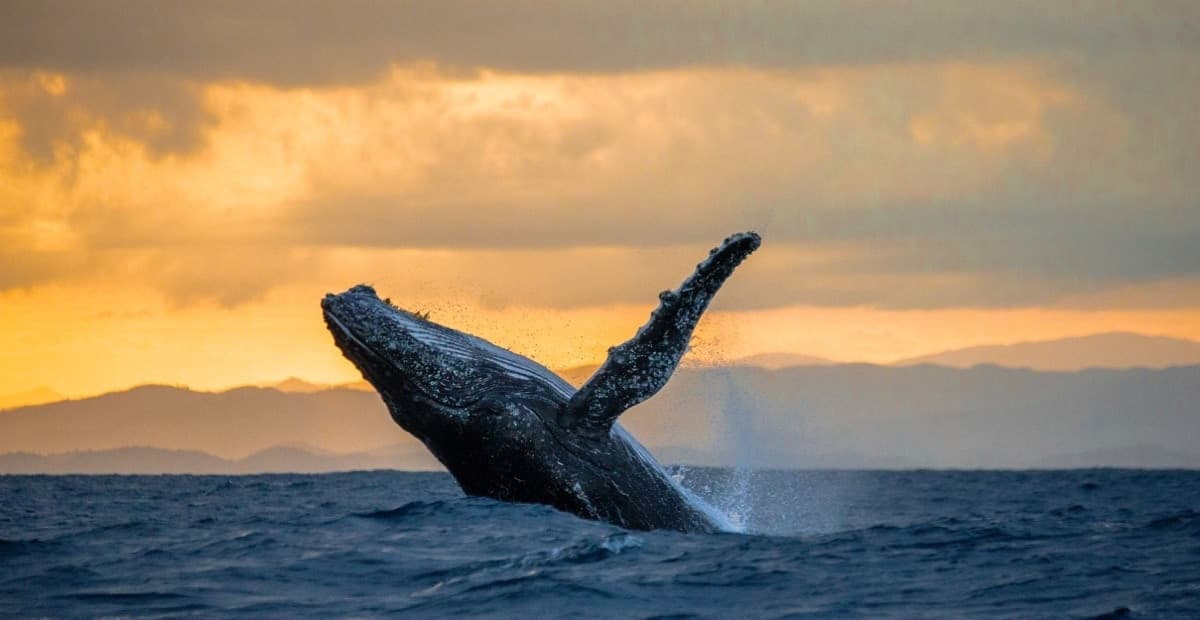
A humpback whale breaches the surface.
Where and when to see turtles
Turtles are perhaps the easiest of the large mammals to spot, as they tend to frequent their favorite places time and time again. Here’s where you can see them pretty reliably on the Big Island:
- In the water: Turtle encounters can happen at any time in the water, but of course, there are some areas that see more activity than others. For the best chance of seeing a turtle in the water, head to Kahulu‘u Beach Park. Here, there is a high chance of seeing turtles in the water, and it’s a great family-friend snorkeling area.
- On land: To see turtles on land, head to Kaloko-Honokōhau National Historic Park just north of Kailua-Kona, or Punalu‘u Black Sand Beach on the Big Island’s southeast coast. Both areas are known for turtles coming up on the beach to rest.
Read more: on our website about where to best see turtles and how to behave round them.
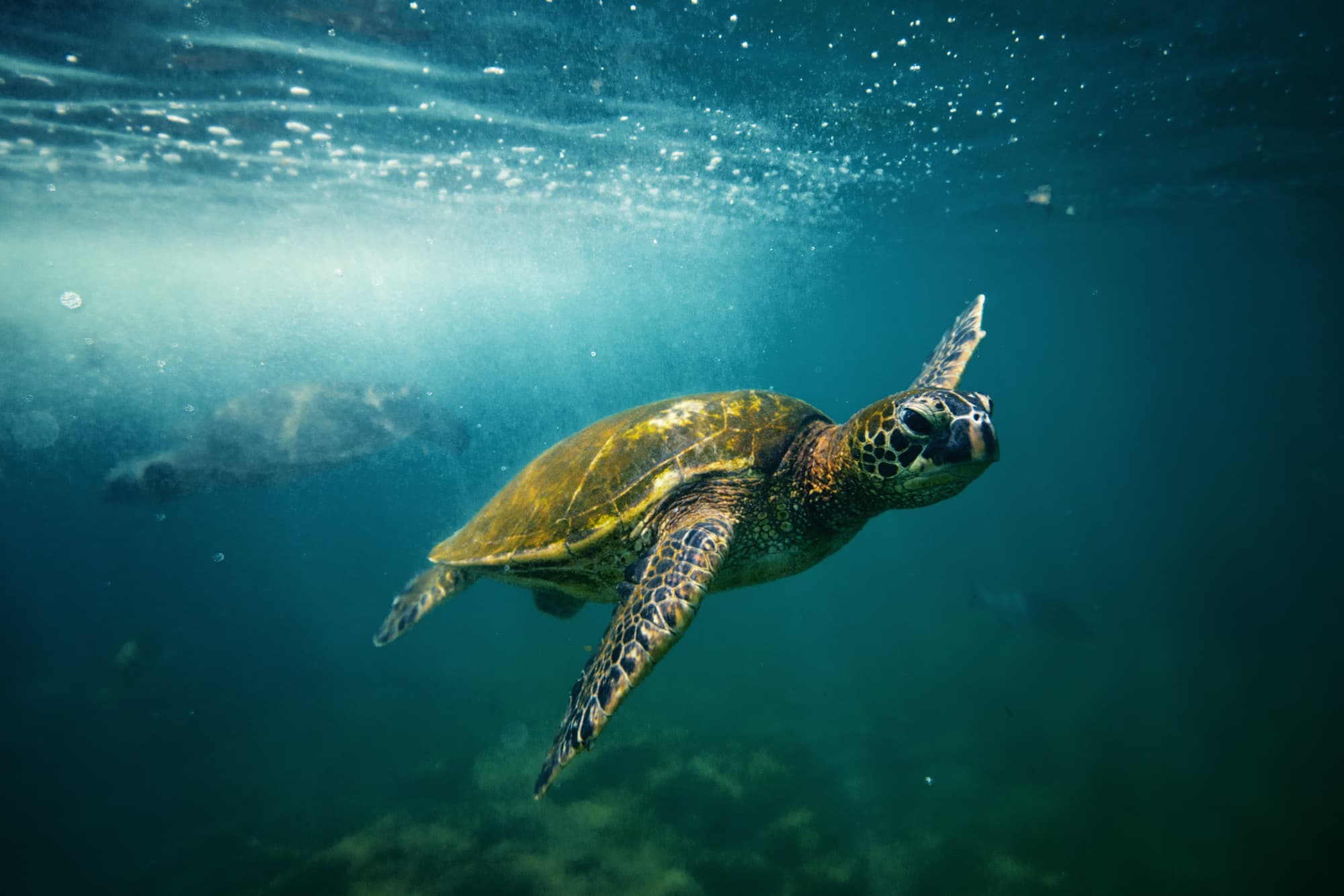
A Hawaiian green sea turtle (Honu) swimming off the coast. Credit: Island of Hawaii Visitors Bureau (IHVB) / Tyler Schmitt
Where and when to see Manta Rays
Giant manta rays live in Hawaiian waters, and the Big Island is the place to see them. These massive creatures visit the Kona coast each night, and the best way to see them is by jumping on an evening manta ray snorkeling tour. This is one of the most special and amazing experiences offered on the Big Island, and we highly recommend it!
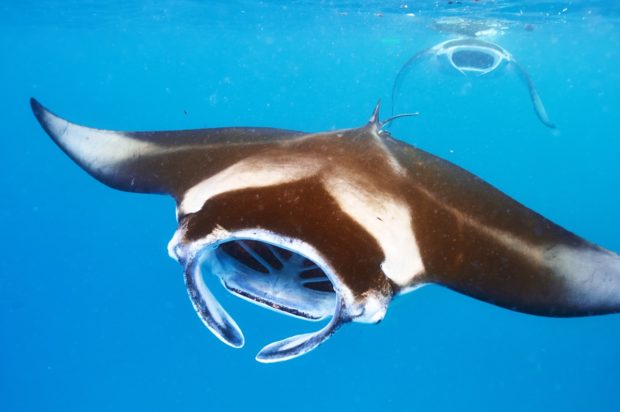
Sunset Manta Ray Night Snorkel at Keauhou Bay
Manta rays at Keauhou's Manta Village feed within inches of the lit flotation board. Sea Paradise has operated here since 1985, making them one of the longest-running operators at this location.
from:
$130
What is a suggested tour?Our suggested tours are hand-picked tours that receive consistent good reviews, give back to the community, and work hard to minimize their impact on the environment. Read more about these tours on our website.For more information about the manta rays and our tour company recommendations, see our guide to the manta ray dive/snorkel.
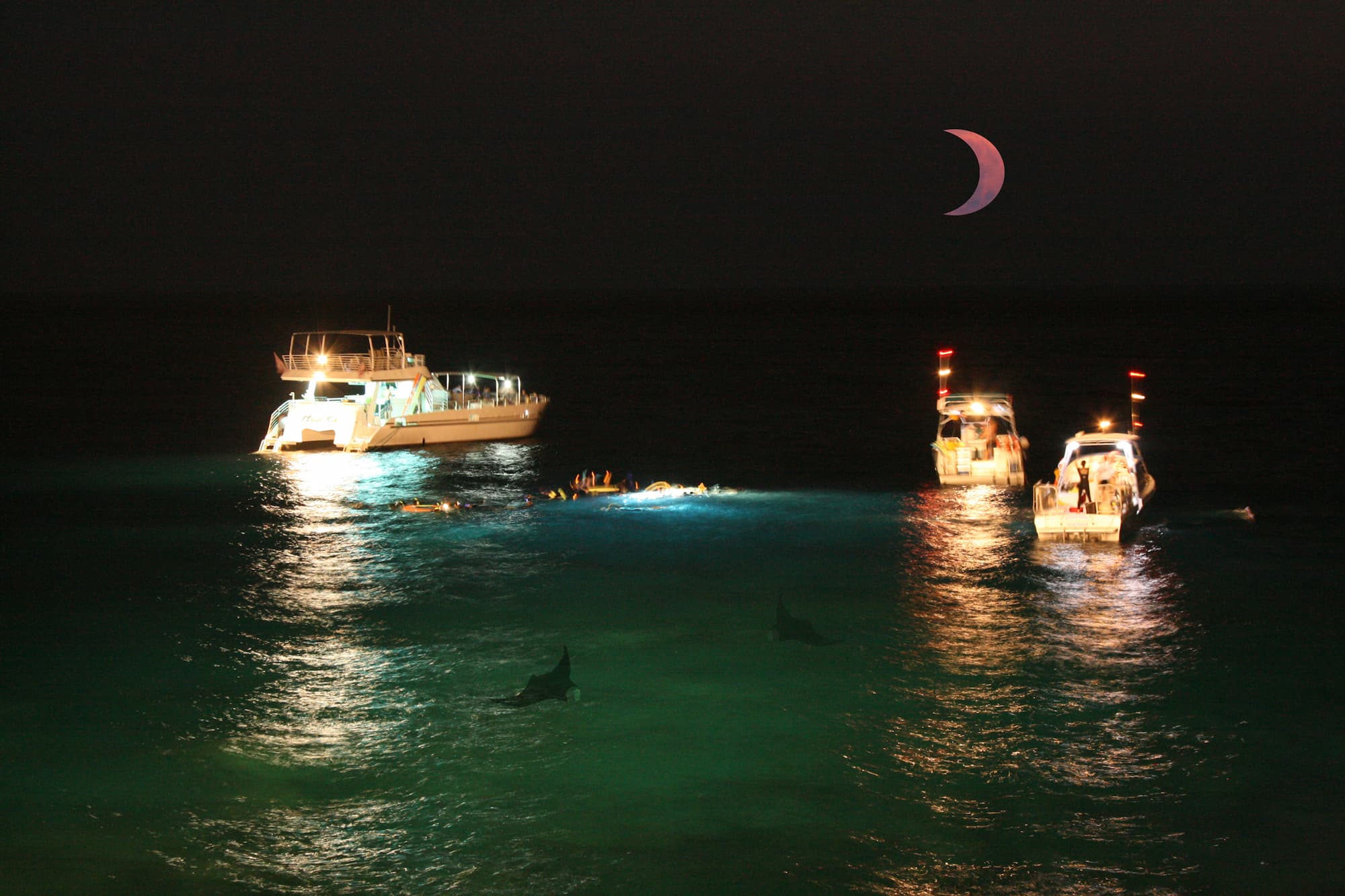
During most manta ray snorkels you will hold onto a floating raft to best see the manta rays. Image: Hawaii Tourism Authority (HTA) / Kirk Lee Aeder
Where and when to see dolphins
Those looking to spot dolphins in the wild are in luck – the Big Island is an excellent place to see them. The best way to get a look is to join a boat tour, such as the many dolphin tours that leave from Kailua-Kona. Most combine dolphin watching with snorkeling and make for a great half-day experience. Dolphins are often spotted in Kailua Bay right there in Kailua-Kona. It is also not uncommon to see dolphins in Kealakekua Bay.
Read more: Before choosing your boat tour, read our advice about seeing and swimming with dolphins.
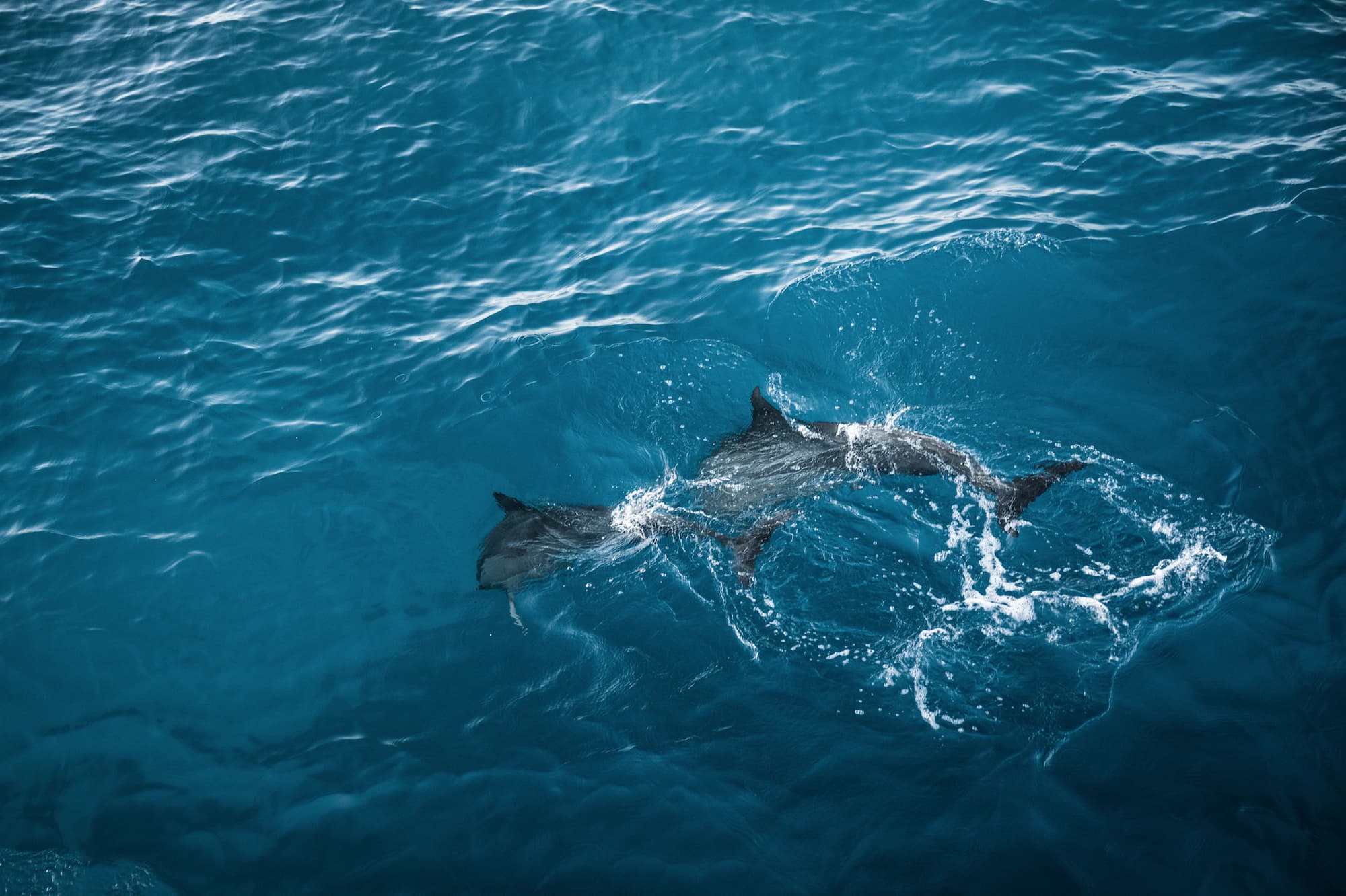
Spinner dolphins swimming off the Kona coast. Credit: Island of Hawaii Visitors Bureau (IHVB) / Julie Hotz
Where to see the Hawaiian monk seals
Hawaiian monk seals are endemic to the islands, but they are the most difficult animal to encounter due to their small numbers. An endangered species protected by law, the current population is less than 1,500, with most living in uninhabited islands to the northwest of the main Hawaiian Islands. As a result, seeing one is a special experience. They mostly frequent beaches that are less-visited, but sometimes they surprise us. Sightings have been reported, at Ho‘okena, Kipolo, and Magic Sands; however, finding them is not an exact science. But the more beaches you visit, the better chance you have!
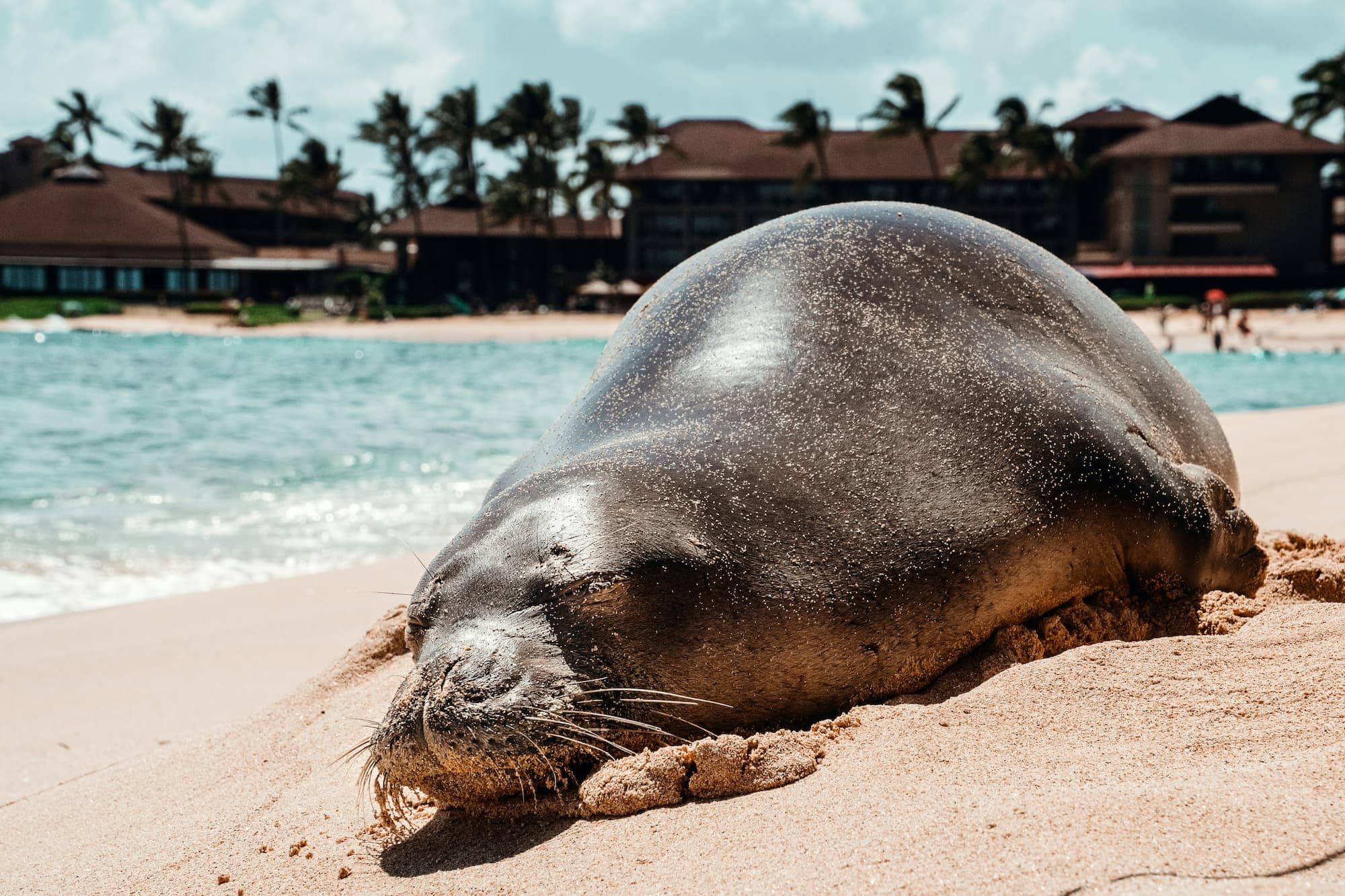
A Monk Seal resting on the Beach. Photo by Sebastian Coman Travel on Unsplash
3: Where to learn more about the Big Island’s marine life
Those interested in a deep dive into Hawaiian coral reefs and Hawaiian monk seals can visit the Mokupāpapa Discovery Center in Hilo:
Mokupāpapa Discovery Center
The Mokupāpapa Discovery Center opened in 2003 “to interpret the natural science, culture, and history of the Northwestern Hawaiian Islands and surrounding marine environment.” These islands are located far away from the modern-day chain, but provide great insight into how Hawaiian coral reefs and its accompanying marine life develop and behave without the influence of humans. This museum showcases what these reefs look like and raises questions about coral reef preservation here in modern-day Hawai‘i. The museum also explores other marine life topics, including a Hawaiian monk seal exhibit.
Native plants, trees, and flowers
Hawai‘i has the benefit of being amongst the most-isolated island chains in the world, resulting in a stunning collection of species, including approximately 11,000 native and 10,000 endemic species throughout the state. This includes about 3,000 varieties of plants, and of that, about a third are endemic to Hawai‘i.
We recommend reading up on Hawaiian native and endemic species in our blog before your trip. Once on the ground, there are many ways to explore the Big Island’s massive collection of flora, including botanical gardens, natural reserves, and nature tours.
1: Botanical Gardens
Botanical gardens are often overlooked in Hawai‘i. Not because they don’t have something to offer, but because, for most visitors, the islands themselves feel like gigantic botanical gardens, with tropical flowers and trees everywhere. It makes sense for the casual visitor; however, if you have an interest in tropical plants, we highly suggest making a botanical garden part of your itinerary. Not only do they house hundreds (if not thousands) of species in a contained area, but they tend to offer educational and cultural components via tours and signage.
There are nearly ten botanical gardens on the Big Island, and you can browse descriptions of them, as well as a map, on our botanical gardens page. Our favorite is the Hawai‘i Tropical Bioreserve & Gardens in Hilo because it serves as an easy hike (or scenic drive) and offers more than 2,000 species of tropical plants.
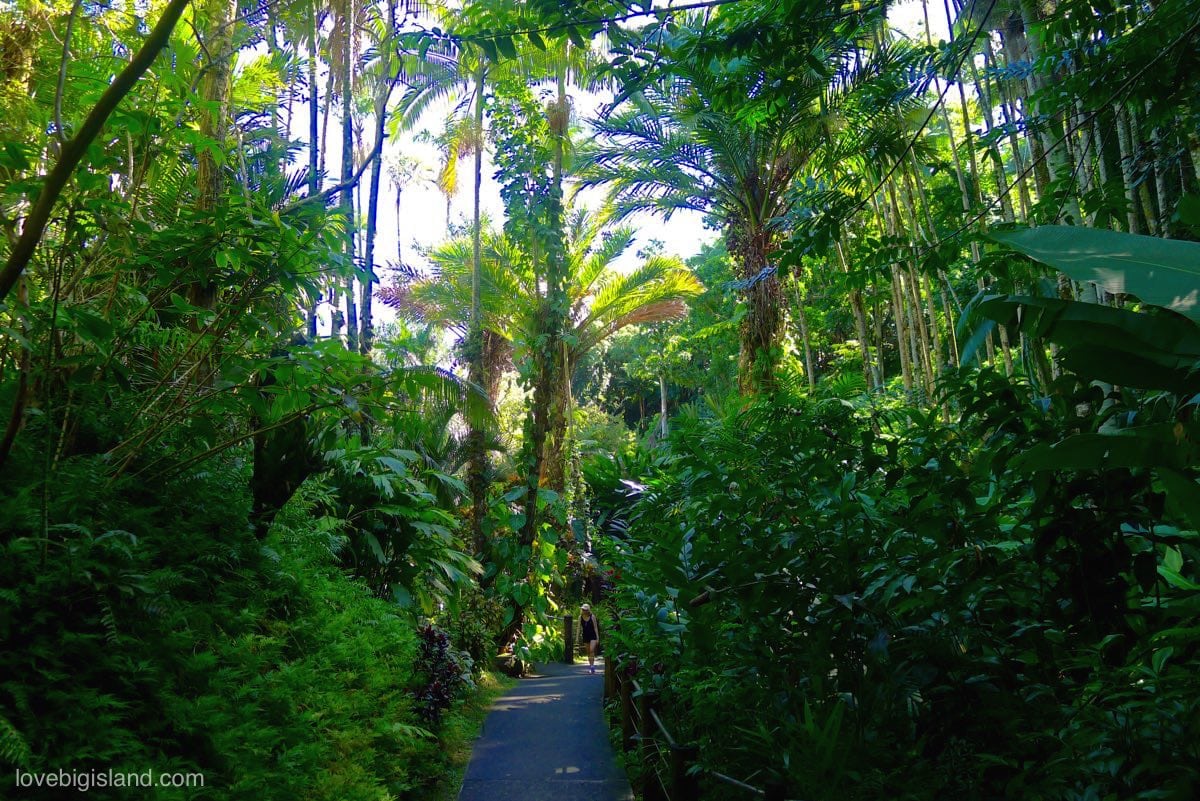
The 1-mile self-guided tour in the Hawai‘i Tropical Bioreserve & Gardens is one of our favorite short hikes on the Big Island
2: Hiking in Natural Reserves
Want to see the ecosystems and environments of the Big Island? Get out on a hiking trail in one of the many and diverse natural reserves found throughout the island. Some of these regions are included in our favorite hikes on the Big Island, but there are many other good trails throughout these areas. Here are some to look into:
- Kahauale‘a: Located on Kīlauea, the youngest of the Hawaiian volcanoes, Kahaule‘a is a region where you can walk through youthful forests that are regenerating after recent eruptions. Here, you’ll explore and learn about the “pioneer” vegetation on lava flows (such as the ‘Ōhi‘a tree), lowland rain forest, and mesic forest environments that receive consistent moisture. Kahaule‘a butts up against Hawai‘i Volcanoes National Park and offers lots of hiking options.
- Kipāhoehoe: This reserve runs down the slopes of Mauna Loa toward South Kona in a narrow, rectangular stretch of land. Public access to this reserve is very limited due to a lack of access roads. But, you will drive through this area on Highway 11 when traveling in South Kona.
- Laupāhoehoe: Located on the slopes of Mauna Kea, Laupāhoehoe occupies land between 1,600- 4,600 feet above sea level on the windward (east) side. It features five distinct ecosystems and butts up against the Hilo Forest Reserve. Trails include Kaluakaukua, Peneki, and Spencer trails. You can see a list of trails and trail map here (pages 26-29).
- Manukā: The Manukā is located on Mauna Loa in South Kona, and is home to the native Hawaiian bat, the hoary bat. For a good introduction to the area, pop on the Manukā Nature Trail, a two-mile loop that showcases a native Hawaiian forest and lava flows of various ages.
- Mauna Kea Ice Age: You can find this reserve way up on Mauna Kea, above 10,000 feet. It’s quite a journey to reach – a 4×4 vehicle is necessary – but it is home to the only alpine lake in Hawai‘i as well as a rare alpine aeolian desert ecosystem. Always check the weather before going, as it does get snow in winter. There are several trails in this area that cross through the reserve.
- Pu‘u Maka‘ala: A birder’s paradise, Pu‘u Maka‘ala protects large wet forests on Mauna Loa’s slopes above Kahaule‘a and Volcano Village. Take a drive to this reserve and explore its hiking trails.
- Pu‘u O ‘Umi: Want to explore the Kohala Mountains? This is your place. It features big ferns, mountain bogs, and big views. Experienced hikers only, as there are few maintained trails. Hiking routes follow routes established by hunters.
- Ka‘ū Forest Reserve: Though there are no official trails in this reserve, there are established hunting trails as well as vehicular access. Here you will find many native plants as well as native birds.
3: Nature Tours
Want some help getting out into nature and exploring the natural landscape? Link up with Hawai‘i Forest & Trail, our recommendation for the best outdoor tour operator on the Big Island. Volcano hikes, upcountry forest hikes, waterfall excursions, bird watching, forest restoration, and stargazing atop Mauna Kea are just some of the offerings that will get you out into various environments on the Big Island.
Terrestrial wildlife on the Big Island
Because the Hawaiian Islands are some of the most isolated in the entire world, there are only two native mammals that call Hawai‘i home: the Hawaiian monk seal and the hoary bat. Many other animals were brought to the islands over the centuries, but only these two can be considered native mammals.
Birds are another story! Hawai‘i is home to 294 different species of birds, including 63 native species.
1: Bird watching on the Big Island
The Big Island is a paradise for bird watching. Many of the natural reserves listed above are home to native birds, as well as the myriad state parks and Hawai‘i Volcanoes National Park. A great place to start is the Hawaii Birding Trails website, which features an interactive map showing hotspots and birding trails, and a printable checklists.
For a little help, you can check out the bird watching tours from Hawai‘i Forest & Trail, or one from Hawai‘i Bird Tours.
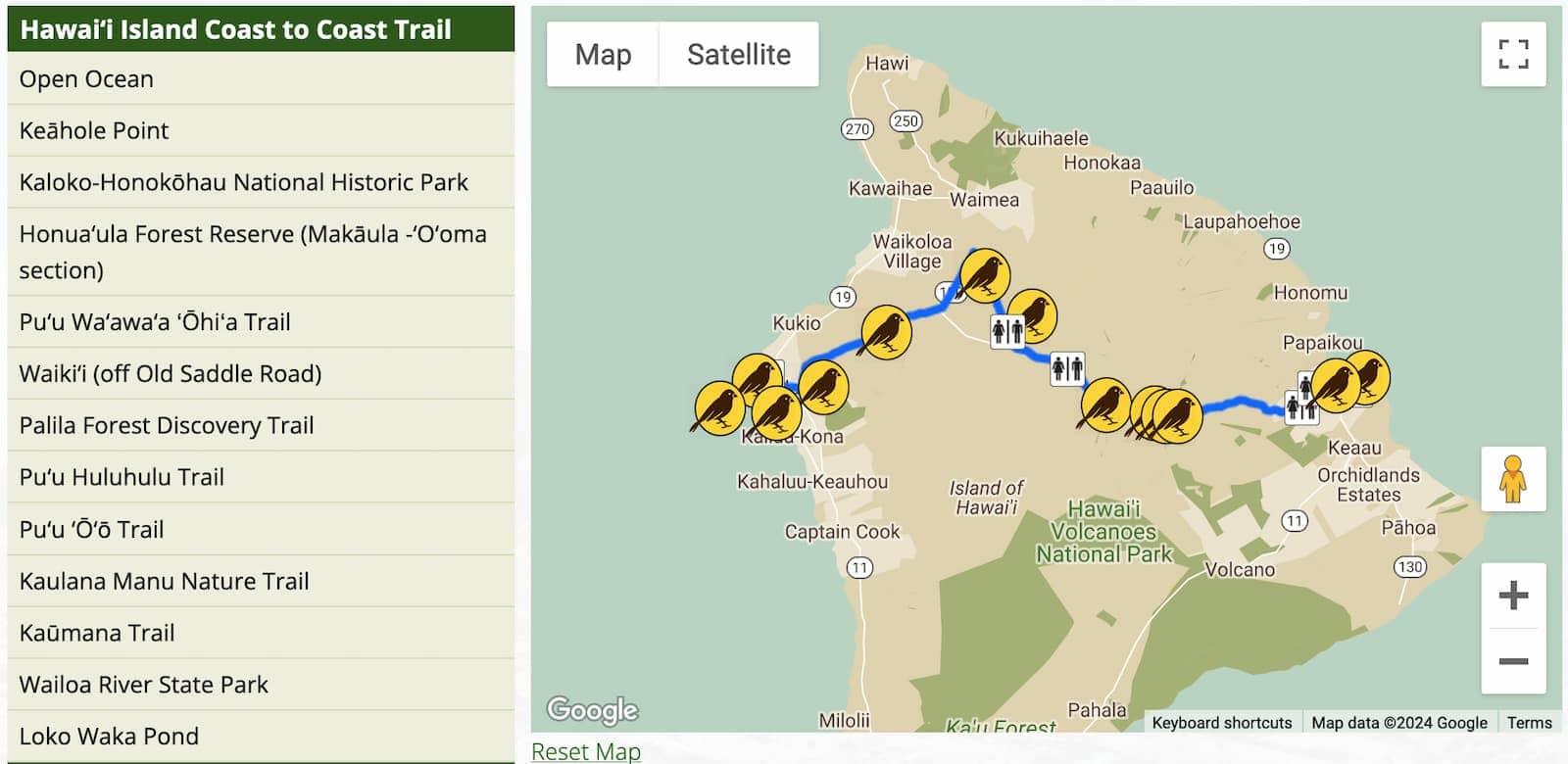
The Hawaiʻi Island Coast to Coast Birding Trail is a 90-mile cross-island driving route from Kona to Hilo that links a remarkably varied set of locales featuring a broad representation of island bird life, nature, geology, history, and scenic vistas. Image from the Hawaii Birding Trails website.