

Maui’s natural beauty has always been its allure. The island is blessed with white-sand beaches, coral reefs, rocky cliffs, volcanic landscapes, diverse rainforests, dry forests, and high-elevation mountains. These outdoor arenas are home to the local flora and fauna of the islands and provide myriad educational and recreational opportunities to explore Hawaiʻi’s nature and wildlife.
Hiking, snorkeling, kayaking, and nature tours are great ways to explore Maui’s ecosystems, reserves, and protected areas, while local institutions, such as the Maui Ocean Center, provide educational context and background.
Table of contents
Whether you love the ocean, tall mountains, or everything in between, there’s a lot to discover on Maui. Read on to learn about Maui’s unique natural areas and wildlife.
ps: if you are also interested in seeing nature and wildlife on the other islands, we recommend you bookmark our following guides:
- Seeing nature and wildlife on Oʻahu.
- Seeing nature and wildlife on the Big Island
- Seeing nature and wildlife on Kauaʻi
Marine life and coral reefs on Maui
If you’re looking for the most diverse and spectacular display of wildlife on Maui, head to the ocean. Here you will find a wide variety of coral and marine life, including more than 400 species of fish and larger, eye-popping marine animals, such as turtles, dolphins, sharks, and whales, to name a few.
There are several protected areas along Maui’s coast where you can explore some of this marine life, as well as boat tours that can get you up close and personal with humpback whales. Before you head out, check out one of the educational centers that focus on Maui’s marine biology to learn more about what you’re seeing.
Below, we break down the best places to see fish, reefs, and larger marine animals, as well as the best museums for marine biology.
- Fish and coral reefs
- Larger marine life (turtles, dolphins, whales)
- Maui Ocean Center
- Hawaiʻi Wildlife Discovery Center
THE BEST PLACES TO SEE FISH AND CORAL REEFS
You can see fish and other marine animals pretty much anywhere on Maui – each beach and tidepool offers its own secrets. However, some places are more rich and dense in life than others.
On Maui, there are several Marine Life Conservation Districts where fish thrive thanks to abundant food resources and limited, managed human presence (i.e., boating and fishing regulations). If you’re looking for a place to discover a variety of species, these districts are great places to go for snorkeling, kayaking, or coastal exploring (tidepools, etc).
The Marine Life Conservation Districts on Maui are:
Honolua – Mokulē‘ia
Located on Maui’s northwest coast, this marine area encompasses several bays, including Mokulē‘ia Bay and the iconic Honolua Bay in Kapalua. The area is wonderful for snorkeling during the calm summer months, with many types of colorful fish and sea turtles amongst its various reefs and rock walls.
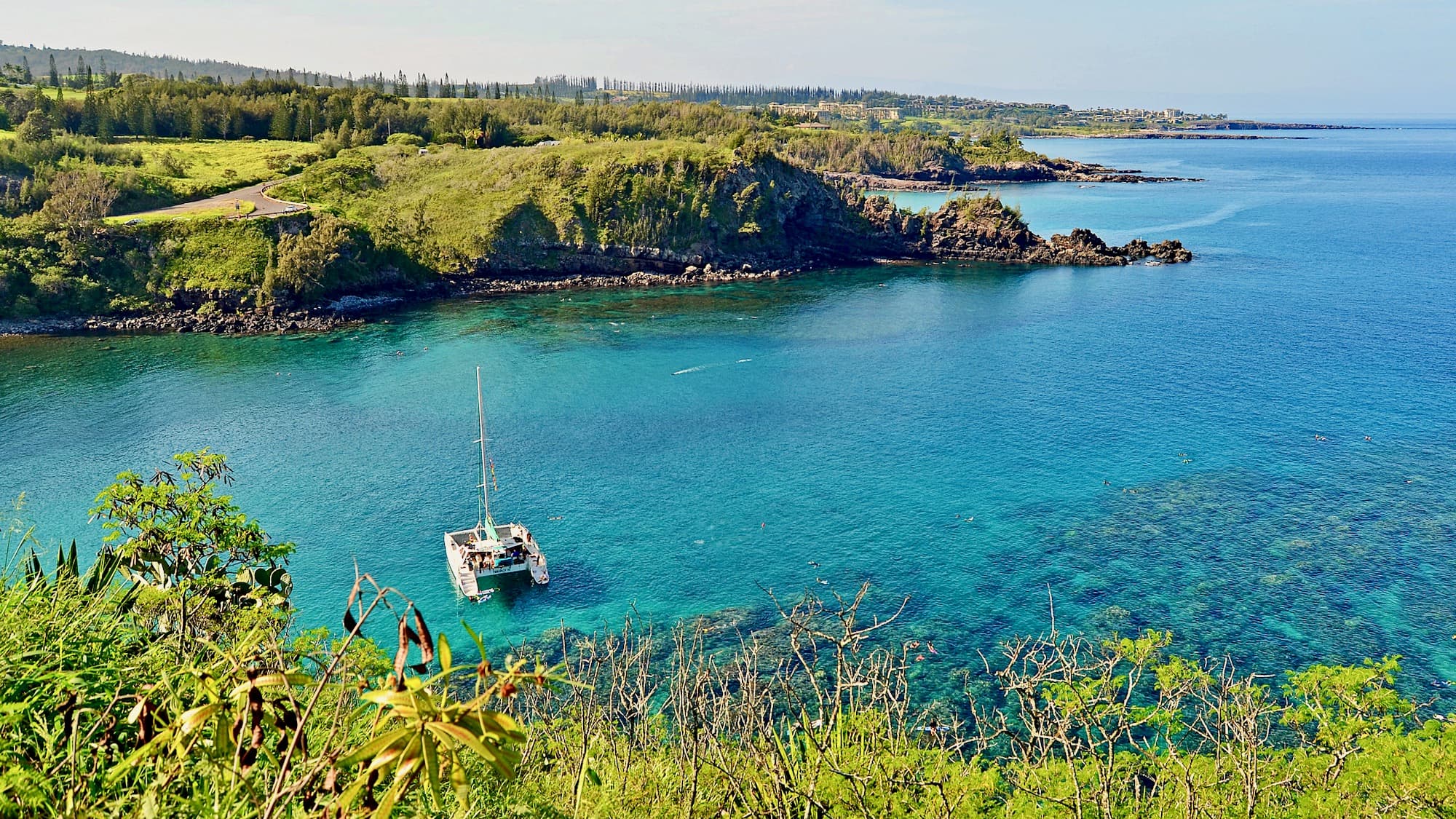
Snorkelers and a catamaran in Honolua Bay, one of the few sheltered bays to snorkel on Maui. Image credit: Edmund Garman, source.
Read more about snorkeling Honuloa Bay here.
Mānele – Hulopo‘e (DNLR website)
Jump on a snorkel boat on the west side of Maui, and you may find yourself cruising across the Au‘au Channel to the island of Lāna‘i. Part of Maui County, Lāna‘i’s coastline features another marine conservation district, known as Mānele – Hulopo‘e. Due to the low population and lack of development nearby, it is known as one of the better preserved reefs around Maui, home to an abundance of reef fish, coral, and larger marine animals, like sea turtles. You can reach this area by taking an organized snorkel tour, or you can jump on the Maui-Lāna‘i ferry for easy access to Hulopo‘e (bring your own snorkel gear).
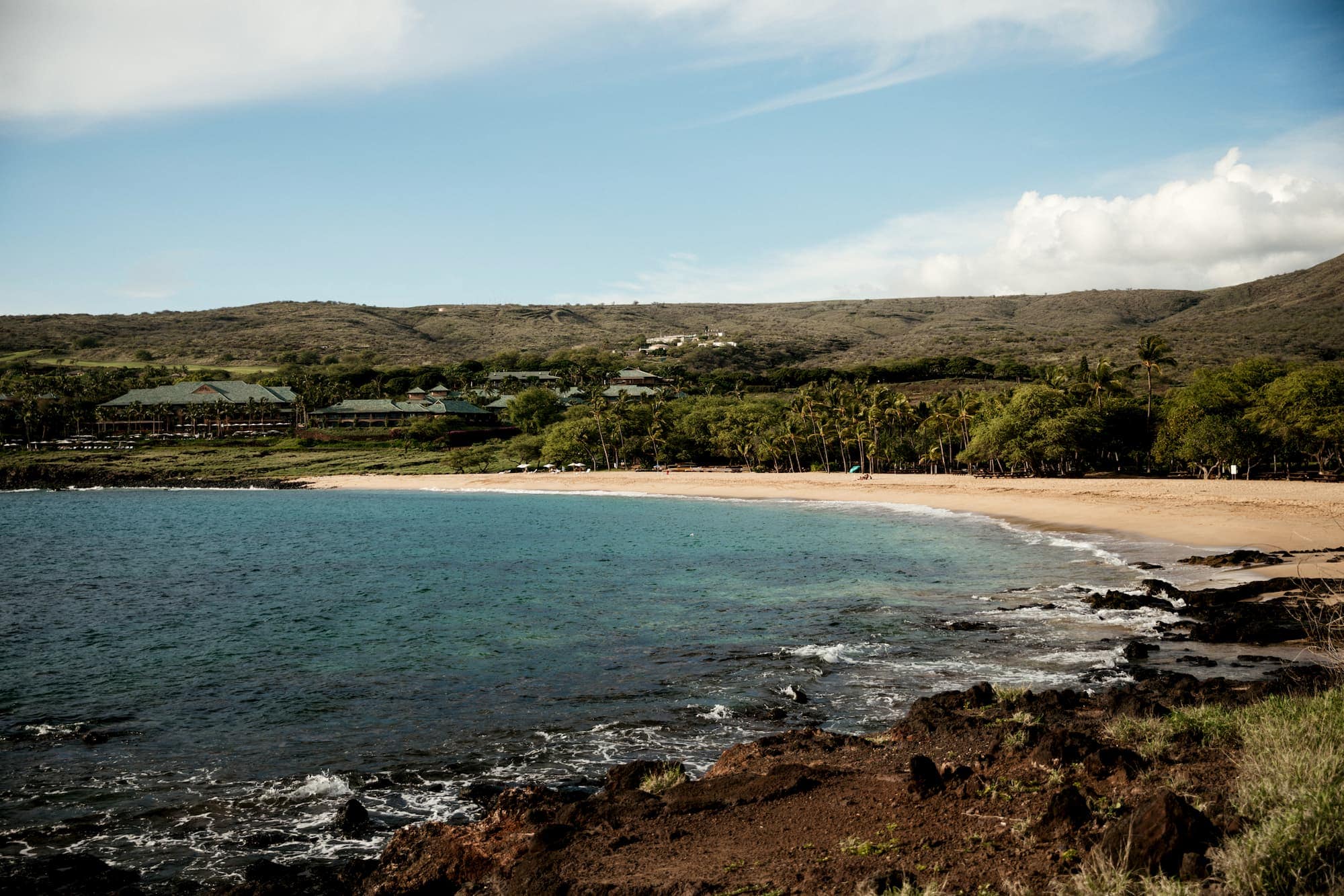
Hulopo‘e Bay has large tidepools at its left point. A shallow reef is just offshore, providing excellent snorkeling opportunities. Credit: Hawaii Tourism Authority (HTA) / Heather Goodman / @hbgoodie
Molokini (DNLR website)
Another preserved offshore area is known as Molokini Crater, an old volcanic formation located off Maui’s south shore. Accessible only via boat, it is a popular destination for snorkel and scuba diving tours, and is one of the most visited reefs not only on Maui, but in all of Hawai‘i. It’s a great destination for families with small children who are new to snorkeling, with typically calm waters and a beautiful boat trip to reach it.
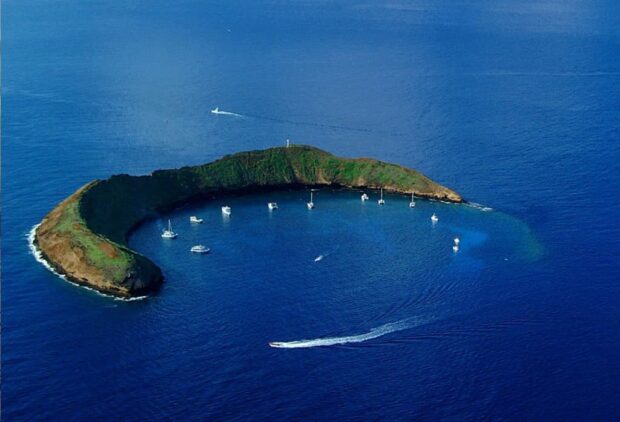
Molokini Snorkeling Tour & Catamaran Sail
Sail a catamaran to Molokini, a crescent-shaped crater and marine preserve off Maui. Breakfast and lunch are included.
from:
$185
What is a suggested tour?Our suggested tours are hand-picked tours that receive consistent good reviews, give back to the community, and work hard to minimize their impact on the environment. Read more about these tours on our website.One of our favorite snorkeling cruise companies that goes to Molokini is Sail Maui (see above). They operate 2 fast and stable sailing catamarans and have received over 3000 5-star reviews often complimenting them on the good atmosphere on board and on their focus on safety.
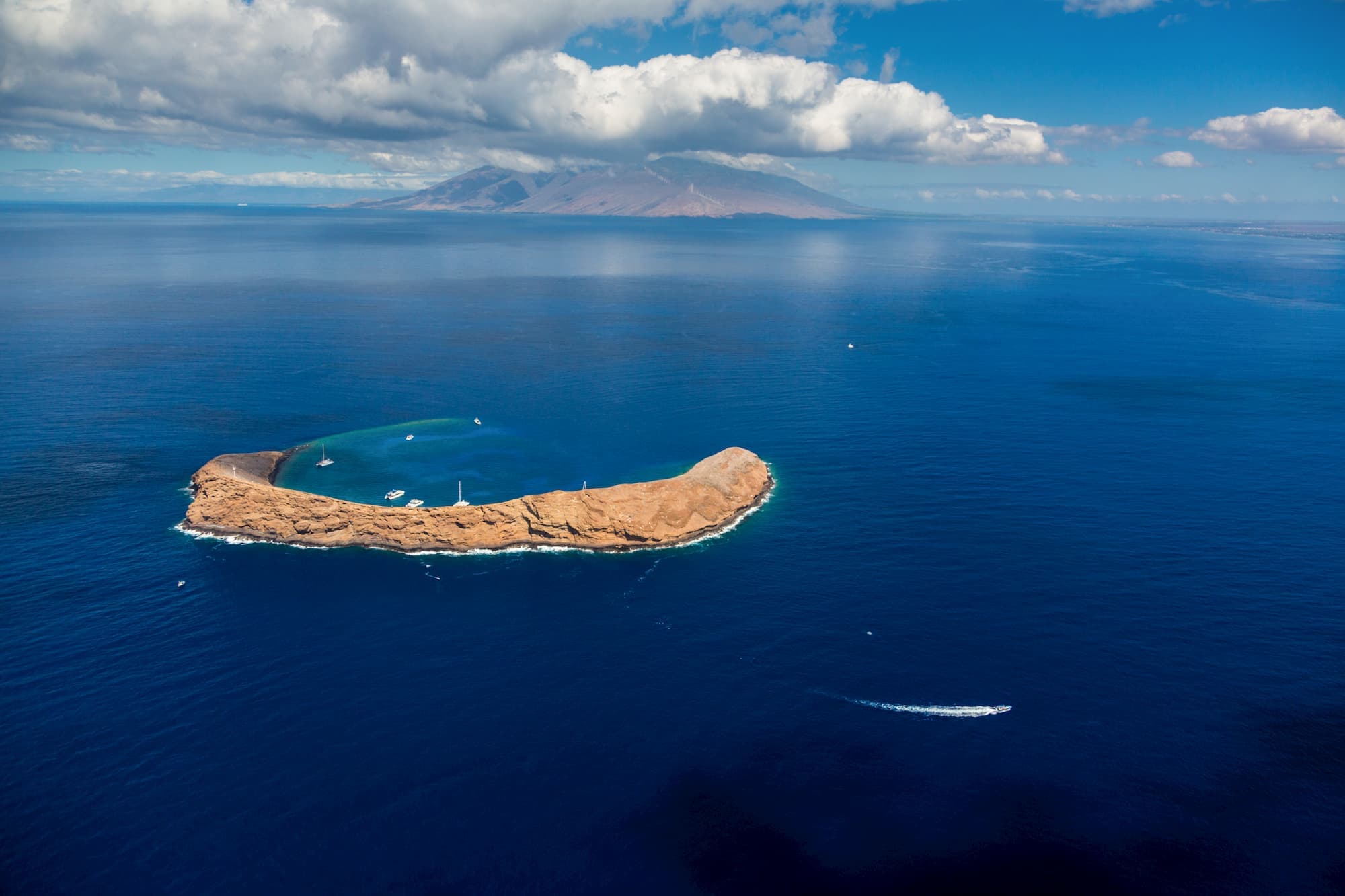
Molokini (with Kaho’olawe in the background) is one of the best places for snorkeling and scuba diving on Maui. Credit: Hawaii Tourism Authority (HTA) / Tor Johnson
‘Ahihi-Kina‘u (DNLR website)
‘Ahihi-Kina‘u is technically not a marine conservation district; instead, it is designated as a Natural Reserve Area. But it is unique in that it is the only Natural Reserve Area on Maui to include a marine component, and most people who visit do so to experience its coastline and offshore waters. Snorkeling and kayaking are popular activities here, with large animals such as dolphins, sea turtles, and monk seals often spotted. Protected from boating and fishing, there’s a healthy fish population at ‘Ahihi-Kina‘u: butterfish, trigger fish, parrot fish, surgeon fish, Moorish idol, and needle fish can all be found.
Larger marine animals on Maui
You can see a variety of larger marine animals when visiting Maui, including whales, turtles, dolphins, and monk seals.
Did you know? Sea turtles and other marine mammals are protected under state and federal laws. They should not be harassed or followed closely. Turtles should be given at least 10 feet (3 meters) of space, whales need 100 yards (or 90 meters), and 50 yards (or 45 meters) for dolphins and monk seals.
Where and when to see whales
Like the other Hawaiian Islands, Maui offers the chance to see larger marine animals, such as the Hawaiian green sea turtle, dolphins, and monk seals. But where it really shines is its whale population. The Au‘au Channel is home to the highest concentration of humpback whales in Hawai‘i from November through March, with easy shoreline viewing as well as myriad whale watching boat trips off Maui’s west coast.
Read more in our guide to whale watching on Maui.
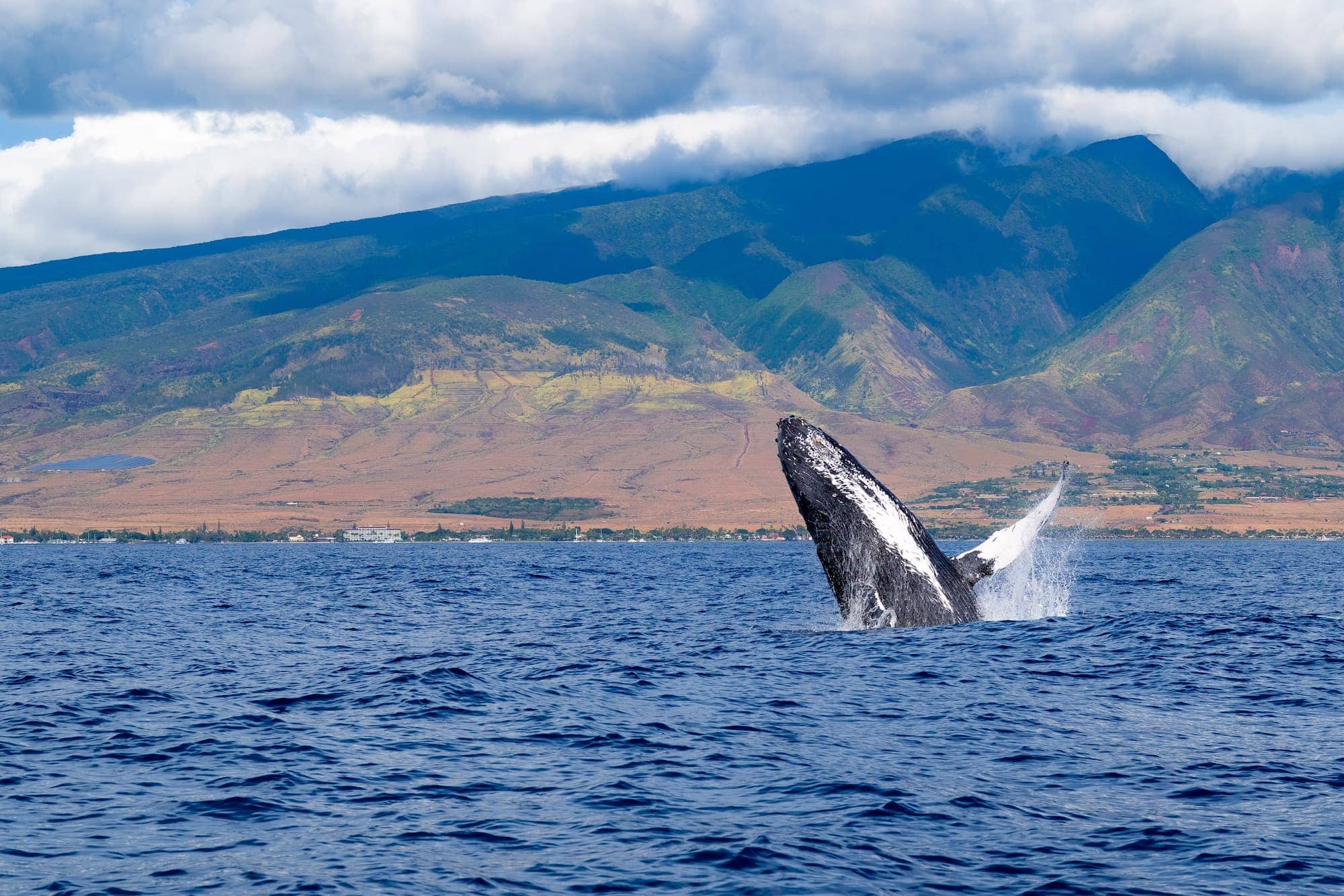
Humpback whale breaching off the west Maui coast. Photo by Steve Wrzeszczynski on Unsplash
Where and when to see turtles
You can spot turtles while snorkeling, or while visiting certain beaches on Maui. Here’s where we recommend:
In the water: You can come across a turtle in the water pretty much anywhere on Maui, but some places are more likely than others. The best places to run into turtles while snorkeling on Maui are Honolua Bay, Black Rock, Turtle Town, and Ulua Beach, among many others.
On land: For the best chance to see sea turtles on land, head to Maui’s north coast to Ho‘okipa Beach, where they often rest on land.
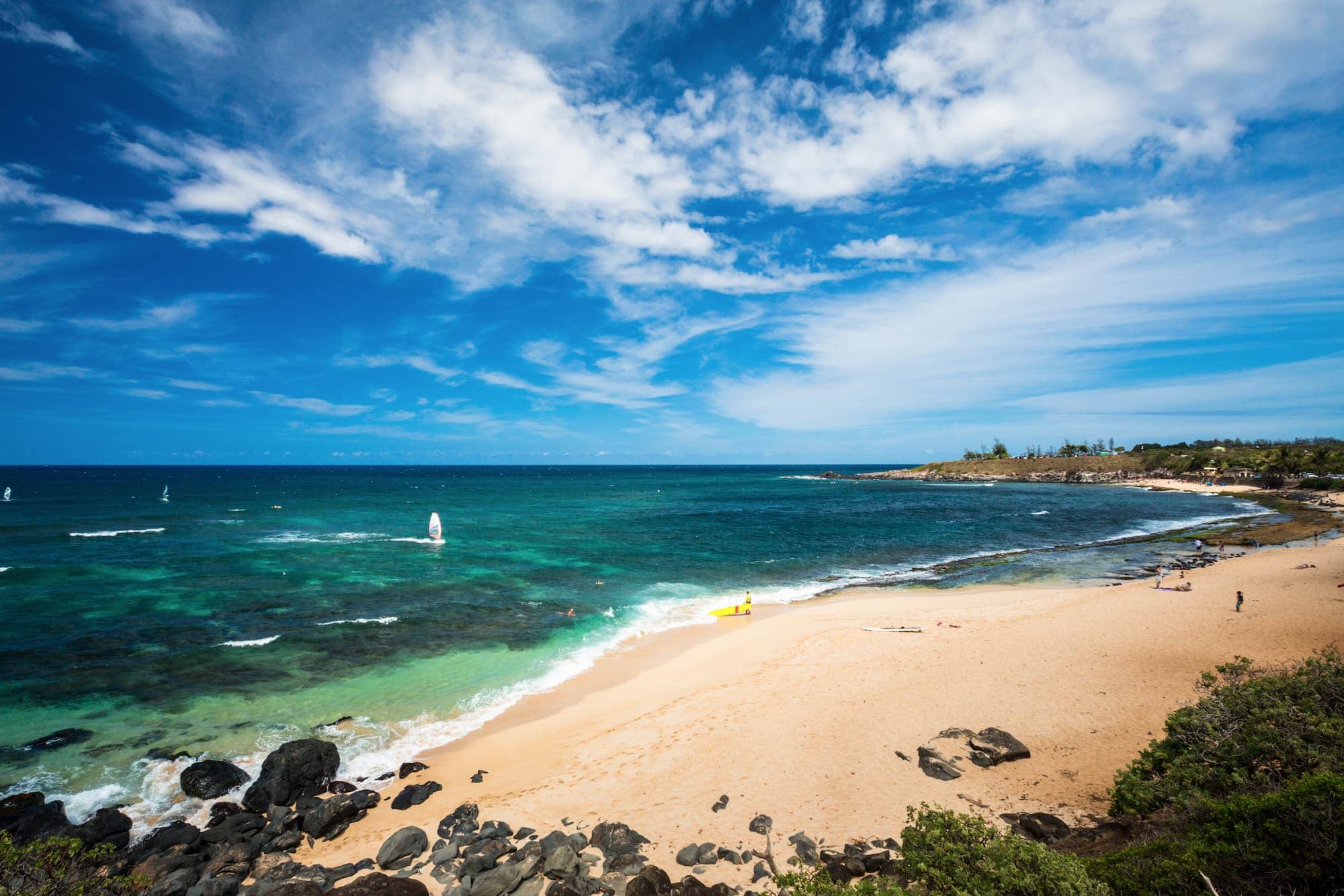
Located at Mile #9 on Hana Highway, Hoʻokipa is a beautiful white sand beach where turtles often rest on land. Credit: Hawaii Tourism Authority (HTA) / Tor Johnson
Related: the 9 best spots to find turtles in Hawaiʻi.
Where and when to see dolphins
Dolphins are a crowd-pleaser, for sure, and many folks want to see them while visiting Maui. Though they can be spotted from the shore on rare occasions, the best chance of seeing them will be while on board a boat cruise. There are many different cruises to choose from, with a variety of amenities and boat types/sizes.
Before choosing your tour company, we recommend you read more about interacting with dolphins in a responsible way in our guide to seeing and swimming with dolphins.
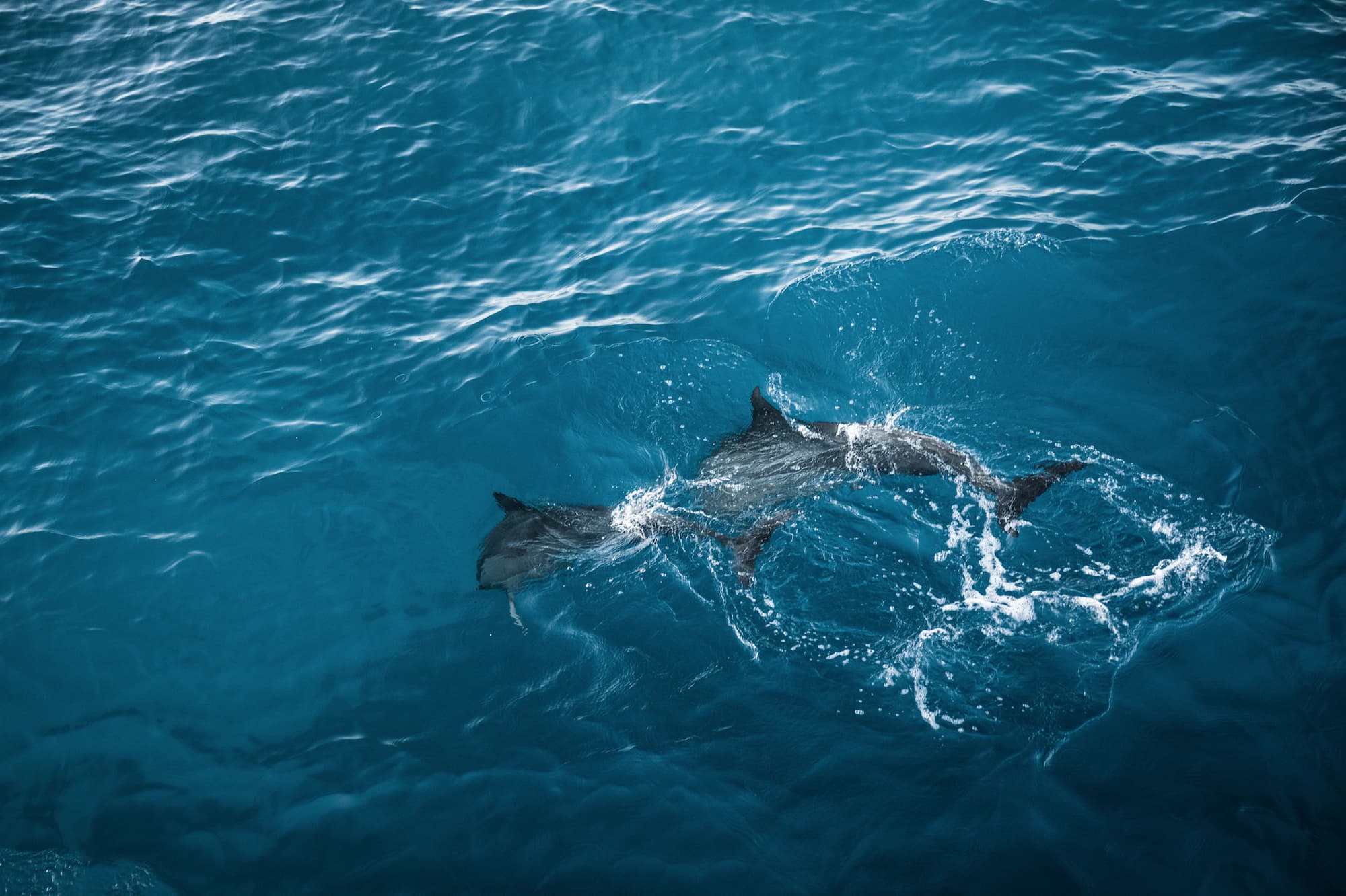
Spinner dolphins swimming off the Kona coast. Credit: Island of Hawaii Visitors Bureau (IHVB) / Julie Hotz
Where to see the Hawaiian Monk Seals
Monk seals are endemic to Hawai‘i, and they are also the hardest of the animals on this list to spot. You can find them sunbathing on a beach from time to time, although they tend to stick to more remote areas and away from crowded places. Seeing them in the water is also rare, and if you do, you should take great caution, especially if there are young ones around (watch this video to see what can happen).
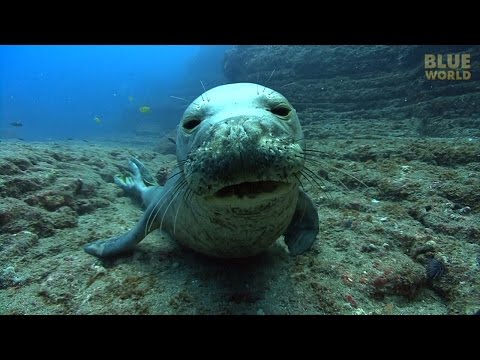
Hawaiian Monk Seals are one of the most endangered seal species in the world and are protected under the Endangered Species Act. Their current population is less than 1,500 and only a small percentage of those live in the waters around the main Hawaiian Islands (the rest make their home in the uninhabited Hawaiian Islands to the northwest of the main chain).
You can learn more about the Hawaiian Monk Seal here.
WHERE TO LEARN MORE ABOUT MAUI’S MARINE LIFE
There are two educational centers on Maui that focus on marine life in the Hawaiian Islands. They are great for families as well as those interested in marine biology and wildlife.
Maui Ocean Center
The Maui Ocean Center is centrally located in Mā‘alaea Harbor, easily reached no matter where you are staying. It’s worth the trip if you have small children or are interested in learning more about Maui’s coral reefs and marine biology. Here, you can visit the multi-sensory aquarium to get a look at underwater reefs as well as learn about marine animals and the connections Hawaiian culture has with the ocean.
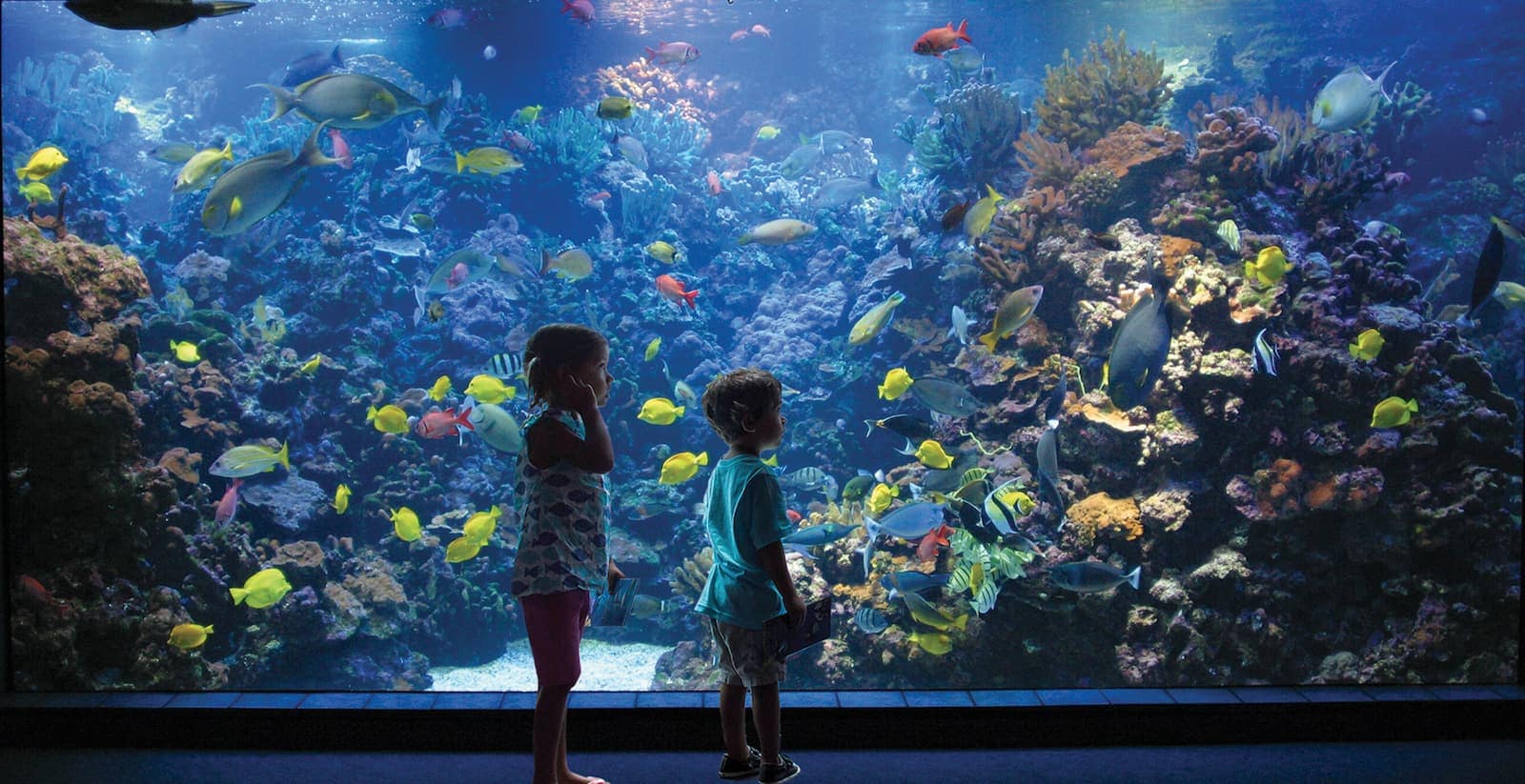
The Maui Ocean Center offers an up-close view of over 40 Hawaiian coral species that range from the shallow to deep-reef environments. Image credit: Maui Ocean Center.
Hawai‘i Wildlife Discovery Center
Located in Whalers Village, walkable from many hotels in Ka‘anapali, the Hawai‘i Wildlife Discovery Center is a multi-media museum with more than 30 exhibits dealing with conservation, marine debris, Maui’s whaling era, and Hawaiian cultural values. Admission is by donation.
NATIVE PLANTS, TREES, AND FLOWERS
Hawai‘i is one of the most isolated island chains in the world, and nature here has evolved and developed in unique ways. As of last count, we have more than 11,000 native and 10,000 endemic species in our islands, including more than 3,000 different plants, 1,150 of which are endemic.
Read more about Hawaiian native and endemic species in our blog.
How can you explore some of them? Below, we lay out several avenues for exploring Maui’s flora.
BOTANICAL GARDENS
Because all of Hawai‘i sometimes feels like a botanical garden, people often overlook visiting the official gardens themselves. But those interested in tropical plants should definitely visit one to see the flora all together, up close and personal, and to take advantage of the educational components, tours, and signage offered by the gardens.
There are many botanical gardens on Maui, so feel free to find one that’s convenient. Two of our favorites are the Maui Nui Botanical Gardens, which offers guided tours of its seven-acre complex, and the Kula Botanical Gardens, located 3,300 feet above sea level on the slopes of Haleakalā.
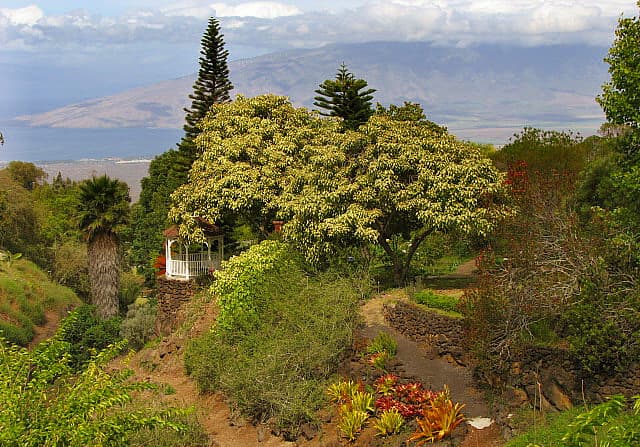
The Kula Botanical Garden is located on the slopes of Haleakalā and encompasses 8 acres of colorful and unique plants. Image: the Kula Botanical Garden website.
HIKING IN NATURAL RESERVES
Immerse yourself in the natural side of Maui via one of the many hiking trails. You can see our 15 favorite hikes on Maui here, but we’d also like to point you to the five natural reserves on Maui. These are protected areas where native flora and fauna can be found in abundance.
- ‘Ahihi-Kina‘u: Hot, dry, and sparsely vegetated, the reserve is unique in that its boundaries contain the most recent ‘a‘a lava flow on Maui, here on the dry south flank of Haleakalā. Coastal dry shrublands, coastal mesic boulder beach communities, and examples of pioneer vegetation also serve as habitats for other rare native plants and animals–primarily insects and birds.
- Hanawi: Is located on the wet slopes on the north flank of Haleakalā. It contains a rare subalpine grassland as well as montane and lowland semi-wet and wet grasslands and forests. Rare plants and endangered birds are also protected by this reserve.
- Kanaio is located in rough lava terrain on the southeast slope of Haleakalā. The reserve protects a remnant of the native dryland forest that once covered the leeward slope of Haleakalā. Kanaio protects a rich assemblage of native dryland trees and shrubs.
- West Maui: This reserve encompasses lowland and montane native communities ranging from dry grasslands to wet ‘ohi‘a forests. The reserve also includes bogs, montane lakes, forest bird habitat, and rare and endangered plants. The areas are extremely important watershed sites which contain the headwaters of perennial streams. This reserve is made up of four non-contiguous sections: Honokowai, Kahakuloa, Panaewa, and Lihau.
- Nakula: This reserve contains a rare leeward koa-‘ohi‘a forest and alpine shrublands on the south slope of Haleakalā. The reserve is potential reintroduction site for endangered birds.
You can read up on them here and discover different ways to explore them.
Nature Tours
Hele Wai (“go to the water”) offers in-depth eco-tours to better educate and inspire our island visitors and locals to help preserve and protect the ‘aina (land). Their guides are naturalists that share their knowledge about Hawaiian history and native plants with you during several guided hikes.
Read more on the Halewai website.
TERRESTRIAL WILDLIFE ON MAUI
Hawai‘i’s isolation in the middle of the Pacific Ocean means that anything living here would have had to arrive via the “three Ws”: Wind, Water, or Wings. As a result, there exists only two native mammals in the islands: a bat and the aforementioned monk seal.
The rest and majority of the land animals are birds. Bird lovers will be pleased to find out that Hawai‘i has 294 different bird species, with 63 being native.
BIRD WATCHING ON MAUI
Maui has myriad options and areas for bird watching, and includes a range of native species, from coastal birds like the Wedge-Tailed Shearwater to the high-forest dwellers like the Hawaiian Honeycreeper (Iʻiwi, see below).
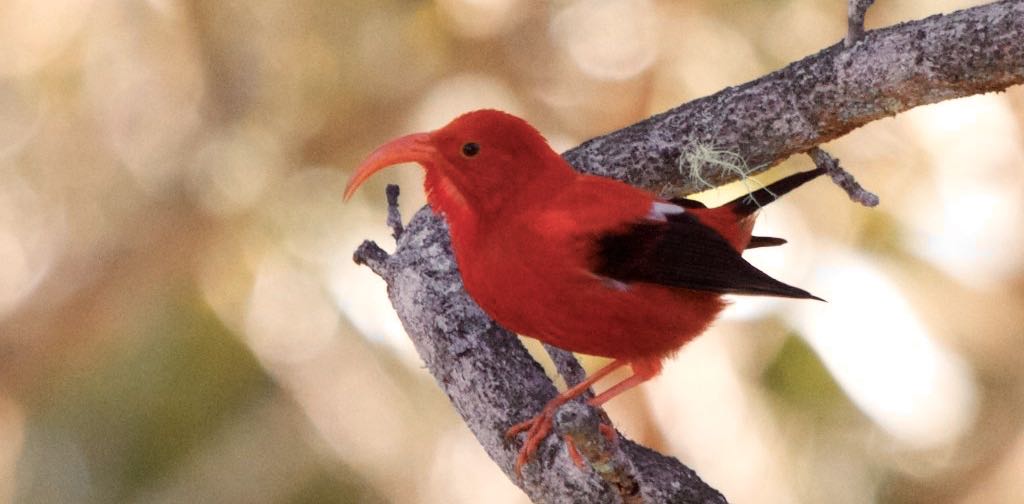
The I’iwi bird is endemic to Hawaiʻi. Source: I’iwi|Pu’u o’o Trail | 2013-12-17at12-43-209 by HarmonyonPlanetEarth and is licensed under CC BY 2.0
For native forest birds, head to the various upcountry areas, such as Hosmer Grove in Haleakalā National Park. Seabirds and coastal species are much easier to find thanks to the abundance and openness of their habitats. You can spot them from a variety of local beaches, of course, but there are also dedicated areas where you will probably have the best luck, such as Keālia Pond National Wildlife Refuge in Kīhei.
For more information on birding on Maui and the rest of Hawai‘i, check out the Hawaiʻi Aubon Society, the Hawaiʻi Birding Trails website, or this website for a listing of native bird calls.