
In 1990 a lava flow from the Puʻu ʻŌʻō and Kūpaʻianaha eruption buried the old Kaimū beach and most of the town of Kalapana under about 50 ft of rock and destroyed 180-plus homes. A new black sand beach is now forming on top of that flow, at the same bay, roughly 50 ft above where the old palm-lined beach used to be.
This is a geology stop, not a swim stop: strong waves, no shade, no wind protection, and at the shoreline you climb down 6 to 8 ft of sharp lava to reach the sand. The sand itself comes and goes, sometimes vanishing for weeks before returning overnight. You reach it on foot, a 300 meter walk on the marked Kaimū Beach Eco-Path across barren lava, past coconut palms planted to start the grove over again.
Table of contents
- Kaimū Beach
- Reasons to visit Kaimū beach
- Kalapana and Kaimū before the lava
- The lava flow that covered Kaimū beach
- Directions for Kaimū beach
- The short hike to the beach
The New Kaimū (Kalapana) Black Sand Beach
What you walk out onto at Kaimū is raw 1990 lava, flat and black nearly to the waterline, where the surf has started grinding the flow back into a thin strip of new sand.
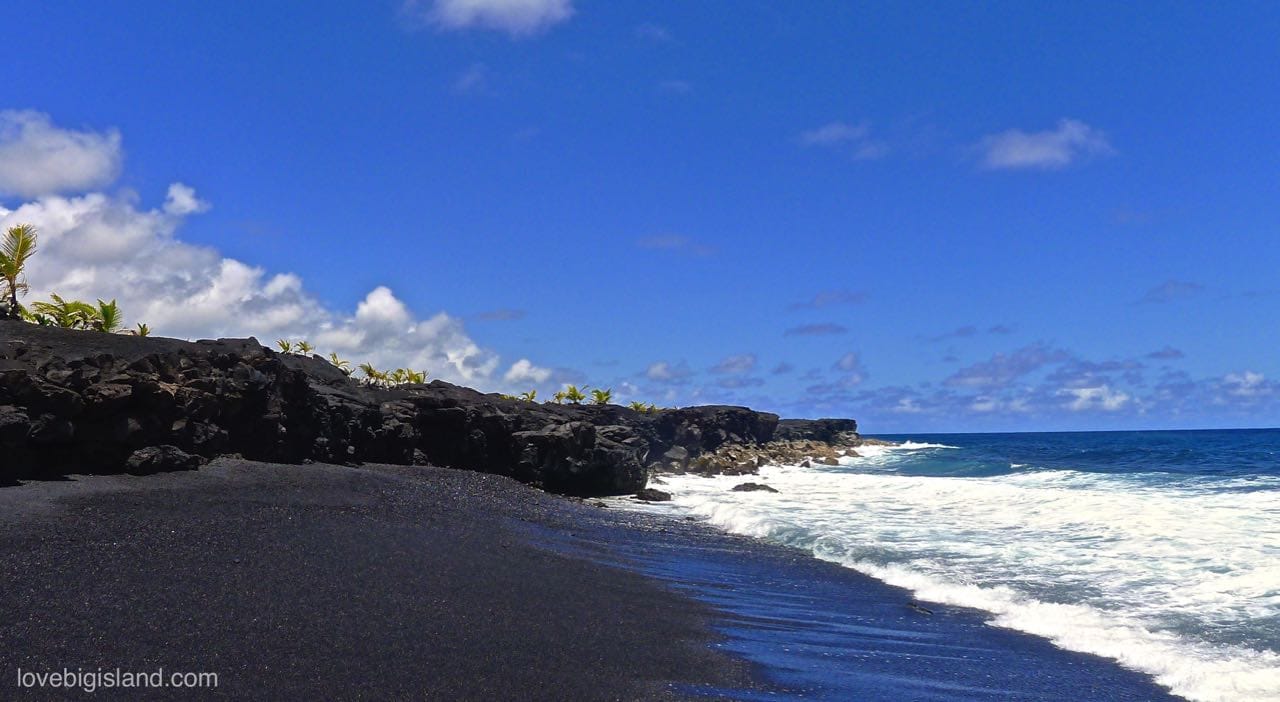
The new black sand beach at Kaimū bay is still very young. The ocean breaks down the black lava into black sand
Reasons to visit Kaimū beach
- At Kaimū you stand on a 1990 lava flow and watch the surf grind it into a new beach.
- New Kaimū beach is very young! How often do you get the chance to walk on a beach that is younger than yourself? (this point is obviously only valid for people born before 1990)
- The original Kaimū beach shoreline used to be very close to the houses where you can now park your car. Now the bay is filled in completely by lava and you need to walk 300 meters over this new land to get to the beach.
- Kaimū is at the end of the road in Puna. A visit can be combined with a visit to the lava flow, a stop at the even newer Pohoiki beach, or a scenic road trip between Kapoho and Kalapana.
- If you are visiting, stop by Uncle Robert’s Awa Club and kitchen for a snack. On Wednesday evenings the same spot hosts the Kalapana night market.
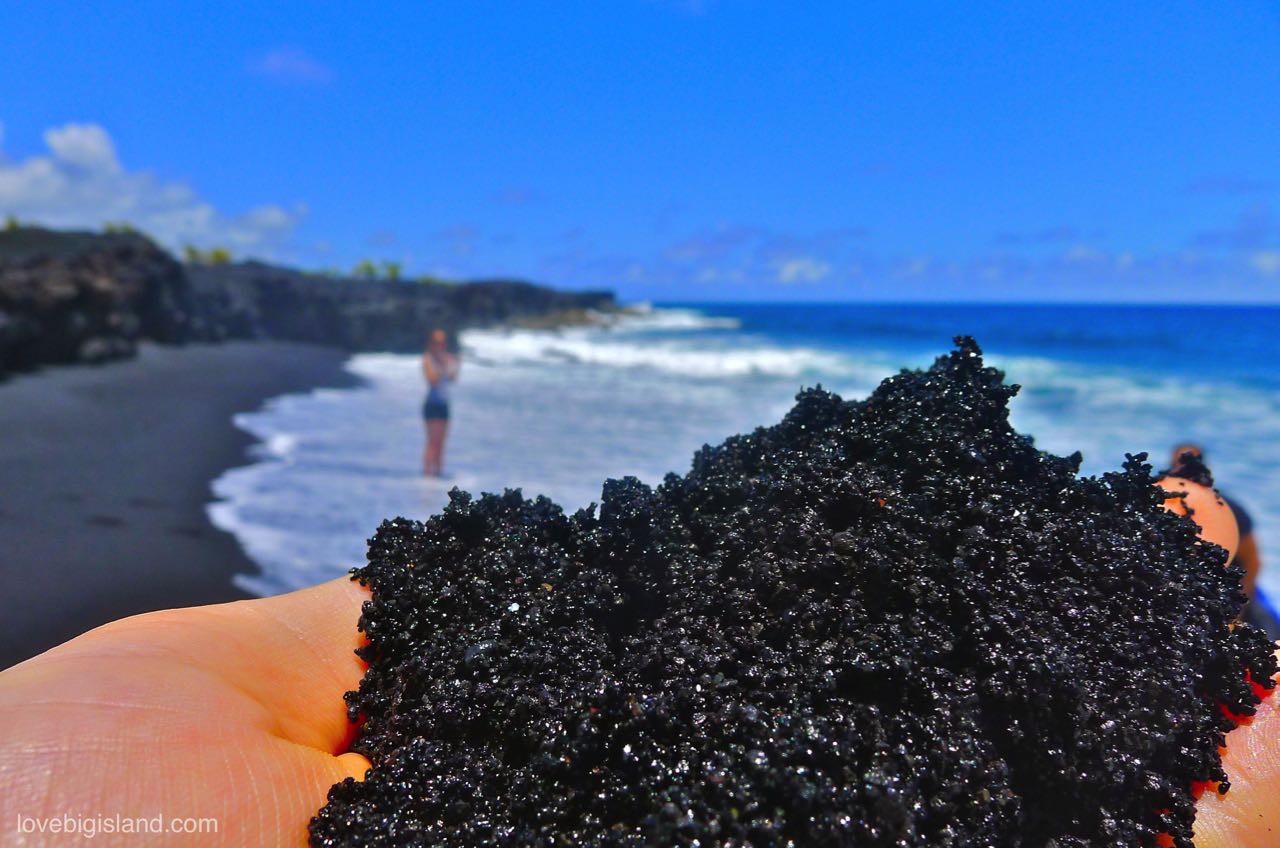
If you look closely you can see that the black sand at the beach consists of many small parts of solidified lava.
Sand or no sand?
The photos here show plenty of fine black sand, but the beach may look different when you visit. The waves move large amounts of sand along this coast, so the sand can vanish for weeks and then return overnight. If you arrive to bare rock, that is normal.
Kalapana and Kaimū before the lava
Before 1990, Kaimū was a wide black sand beach lined with coconut palms. The 1959 photo below shows the bay as it looked before the lava reached it.
The new beach is still a thin strip compared with the old one.
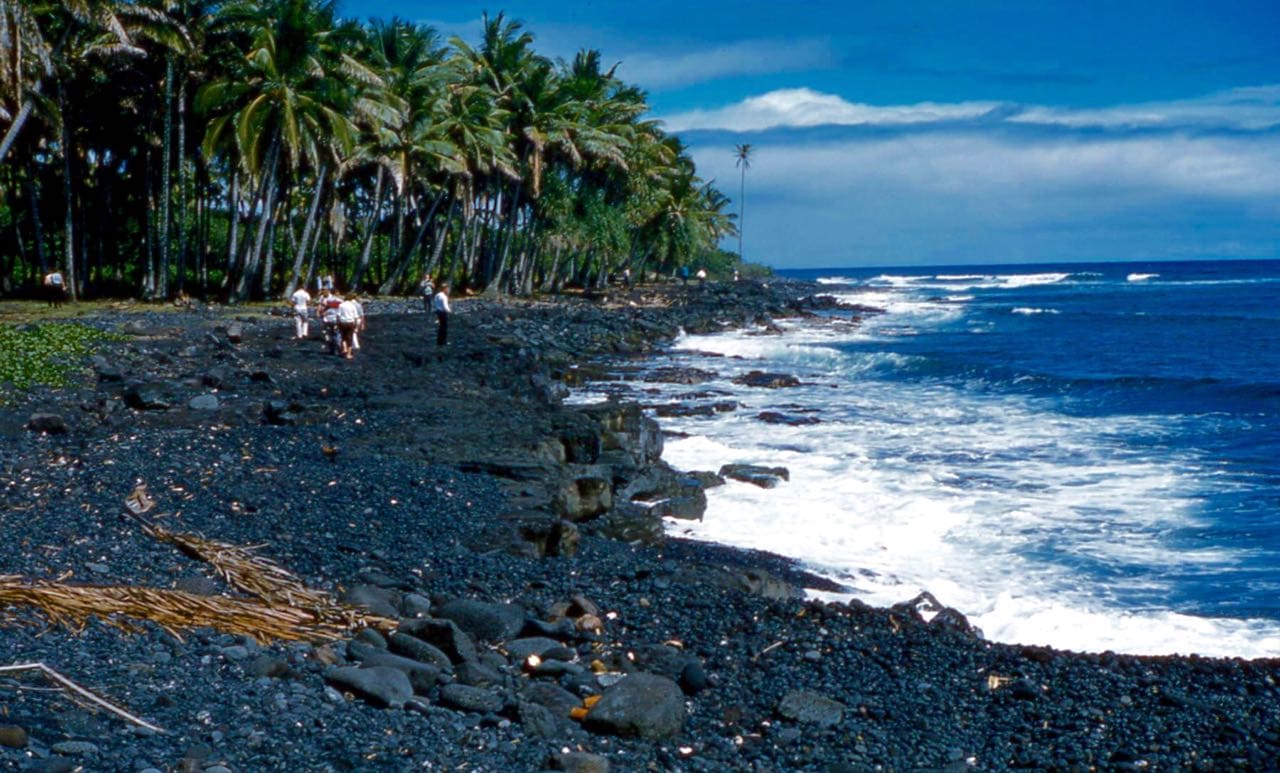
By Father of JGKlein, used with permission, Public Domain, Link
The lava flow that covered Kaimū Beach
The 1990 flow also moved through the town of Kalapana, burning Walter’s Kalapana Store and burying most of the community under a thick layer of lava. A few original houses survived, and others were later rebuilt directly on the new lava surface.
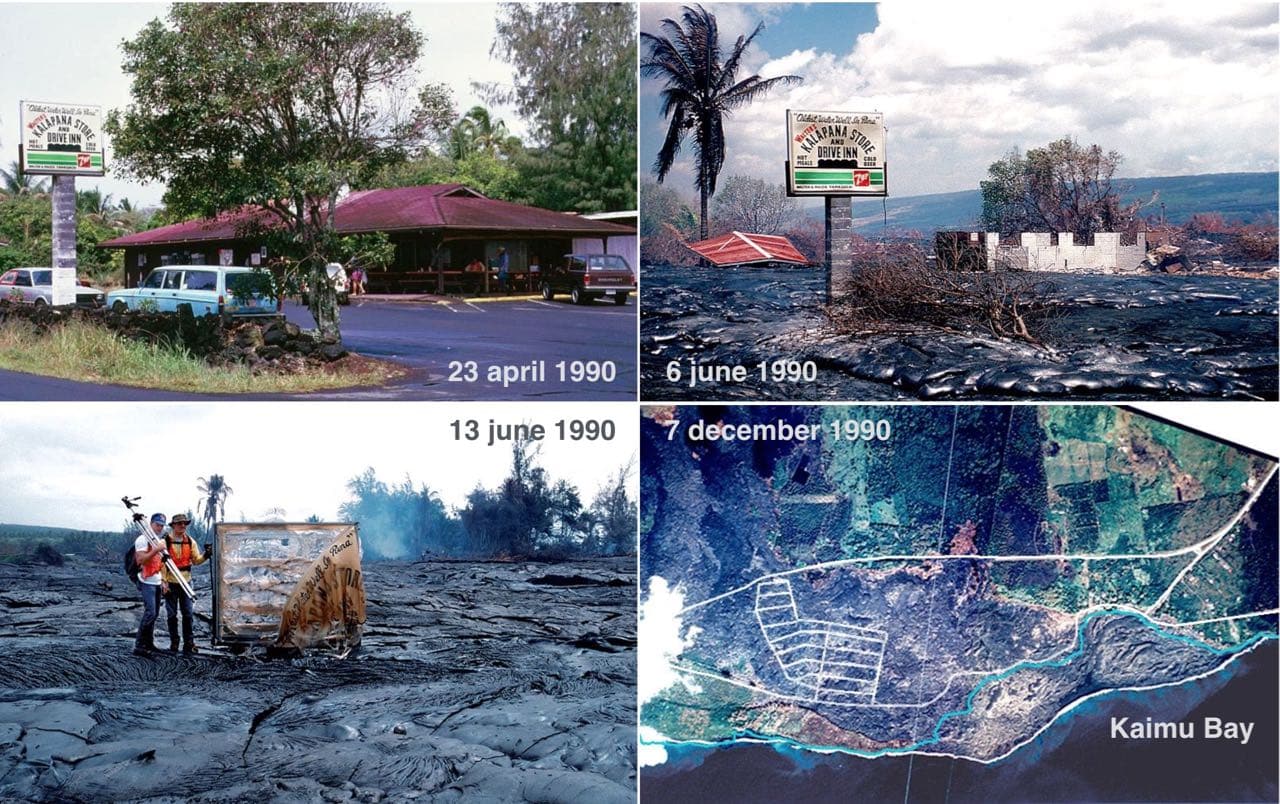
Walter’s Kalapana Store and Drive Inn (see the same sign in the top two and bottom left panels above) was burned and covered by lava in early June 1990 as flows moved through the Kalapana area. This same lava flow filled in Kaimū bay completely, as shown in the aerial photograph in the bottom right panel. Here, the former shoreline is shown in blue, and roads in Kalapana Gardens subdivision and Highway 130 are shown in white. Credit for all photos: USGS [source].
The USGS historical account covers the 1983 to 1990 Puʻu ʻŌʻō flows that buried Kalapana.
Directions to Kaimū Black Sand Beach
To reach the beach, follow the Kapoho-Kalapana Road (Hwy 137, coming from Kapoho) or the Pahoa-Kalapana Road (Hwy 130, coming from Pahoa) all the way to the end. You will arrive at a cluster of houses and a large parking lot where you can leave your car:
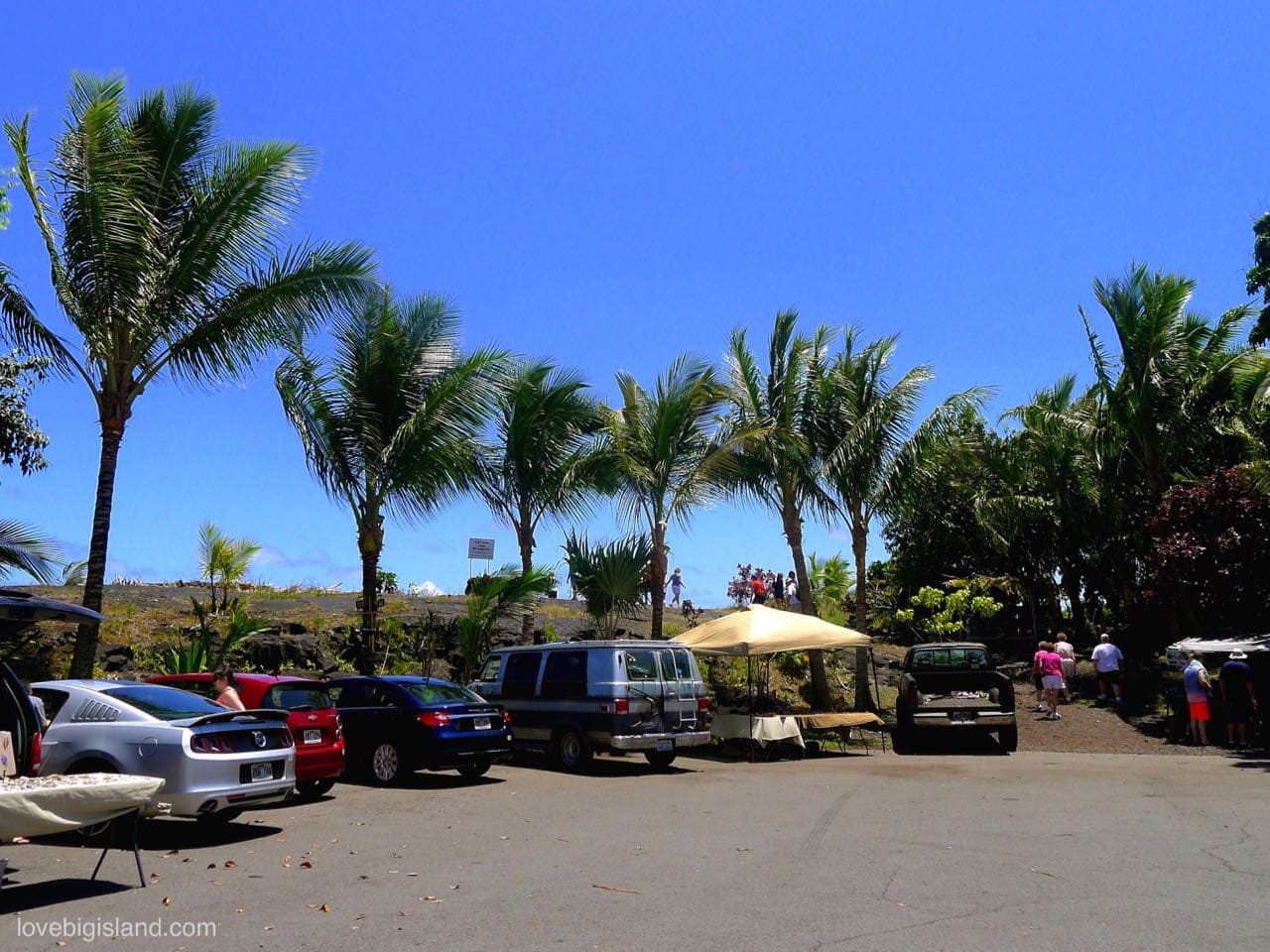
The trail to the beach is just off the parking lot at the Kaimū Kalapana beach park
The short hike to Kaimū beach
From the parking lot it is a 300 meter walk to the beach, 5 to 10 minutes, on the marked Kaimū Beach Eco-Path. The trail runs over open, barren lava past a few young coconut palms, with no shade the whole way, so bring water and wear closed-toe shoes for the sharp rock:
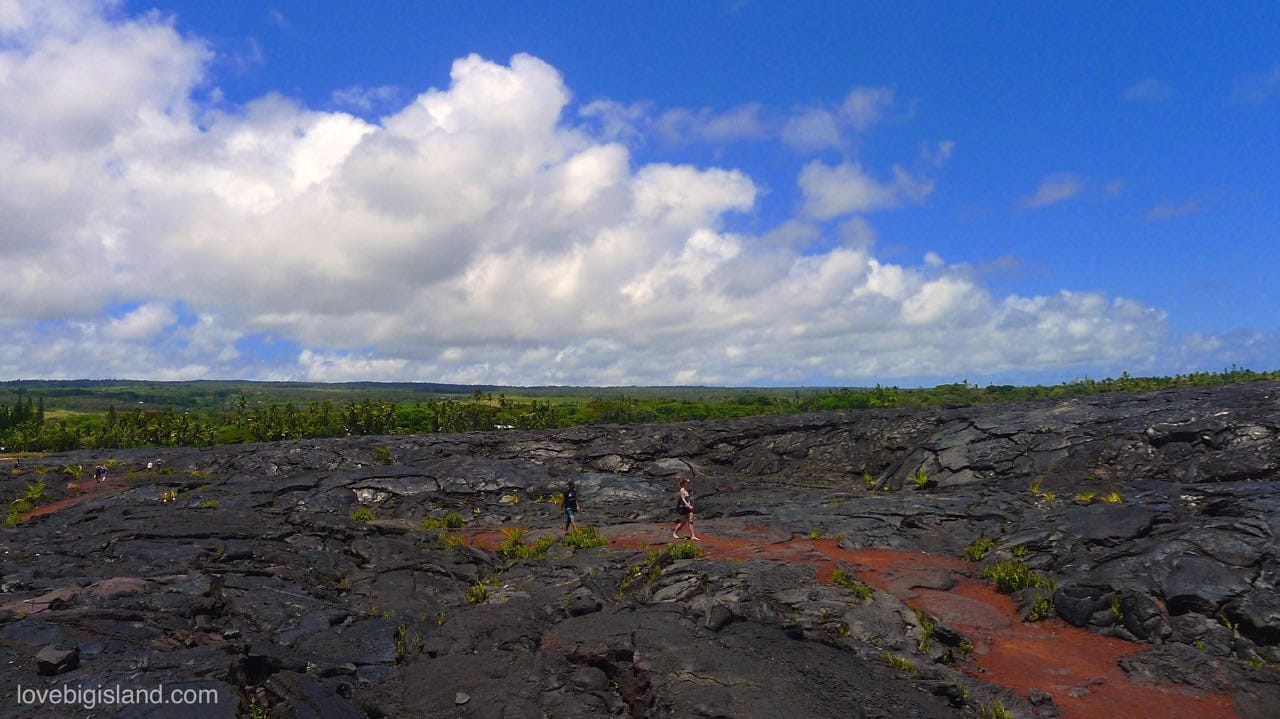
The road from the Kalapana parking lot to Kaimū black sand beach is ~ 300 meters long and marked with red gravel.
Once you reach the beach take care when climbing down to the water. There are a few spots where you can easily walk to the shoreline, but there are also many parts where you need to climb down 6 to 8 feet of sharp lava rocks. Take your time to look around and to find the best place to walk down to the water.
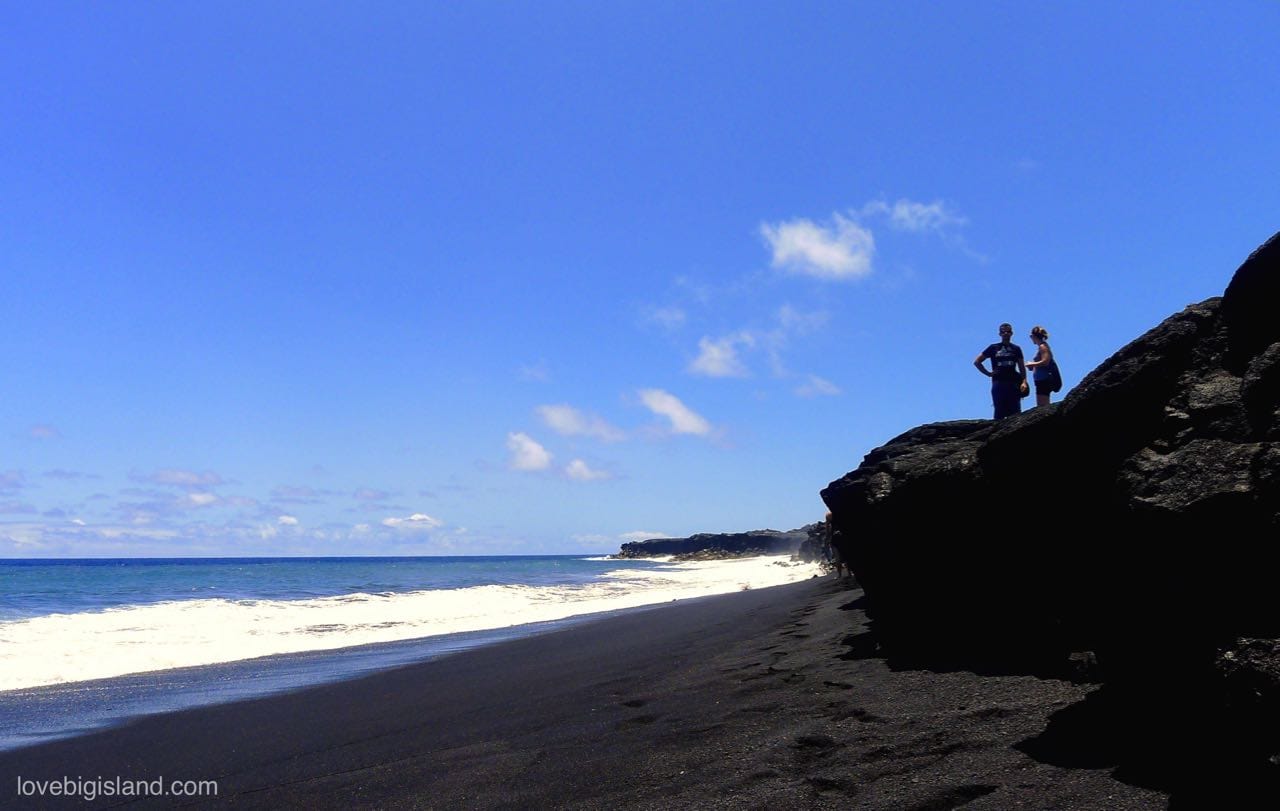
Because the beach is so new access to the black sand can be difficult. Don’t try to climb down cliffs like these, but look around for an easier place to walk down
You can see an overview including the parking lot (top right), the path from the parking lot to Kaimū beach (center), and the beach (bottom left), in the picture below:
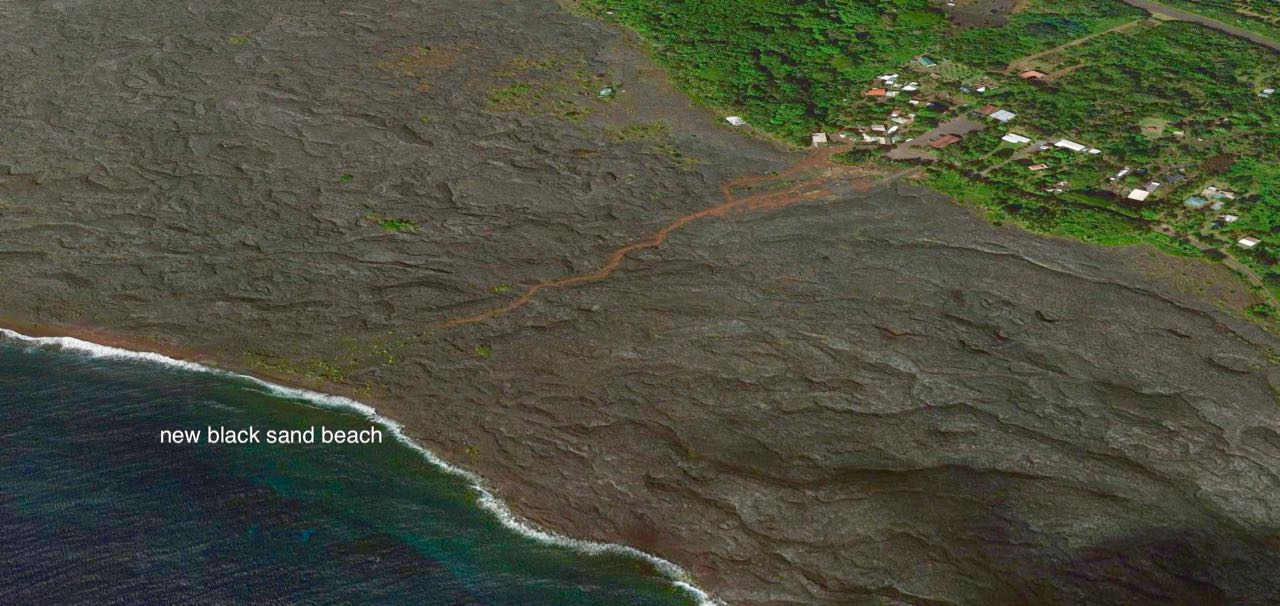
There is a new black sand beach forming after a lava flow covered the old Kaimū beach with 50 feet (15 m) of lava in 1990. Image adapted from Google Maps