
The Mission House on Haili Street was built in 1839 and still stands as the oldest wooden building on Hawaiʻi Island. It was built for New England missionaries David and Sarah Lyman, whose descendants opened the Lyman Museum next door in 1931. You can see the house plus the museum’s exhibits on the island’s natural history and on Hawaiian and immigrant culture.
It’s an easy indoor stop when the rain sets in on the Hilo side, and one of the few places you can step inside a house this old. The museum and the Mission House are two separate bookings, and you can only see the house on a short guided tour.
Inside the Lyman Museum
The current museum building next to the Mission House dates to 1971. It’s a Smithsonian Affiliate and one of only four museums in Hawaiʻi accredited by the American Alliance of Museums.
The Earth Heritage Gallery covers the island’s natural history. You walk through a model lava tube and move from alpine snow to open ocean, past full-size models of Hawaiian sea life that include a 10-foot tiger shark. It holds the only display anywhere of the bones of two flightless Hawaiian birds, and a mineral collection whose highlights include Orlymanite, the only known specimen of its kind, identified in 1987 and named for a great-grandson of David and Sarah Lyman.
The other gallery is about people: Hawaiian culture and the immigrant groups who came to work the sugar plantations and shaped the islands. The museum also holds artifacts and fine art, along with rotating special exhibitions and a gift shop. Its archives of historical documents, books, and photographs are open by appointment.
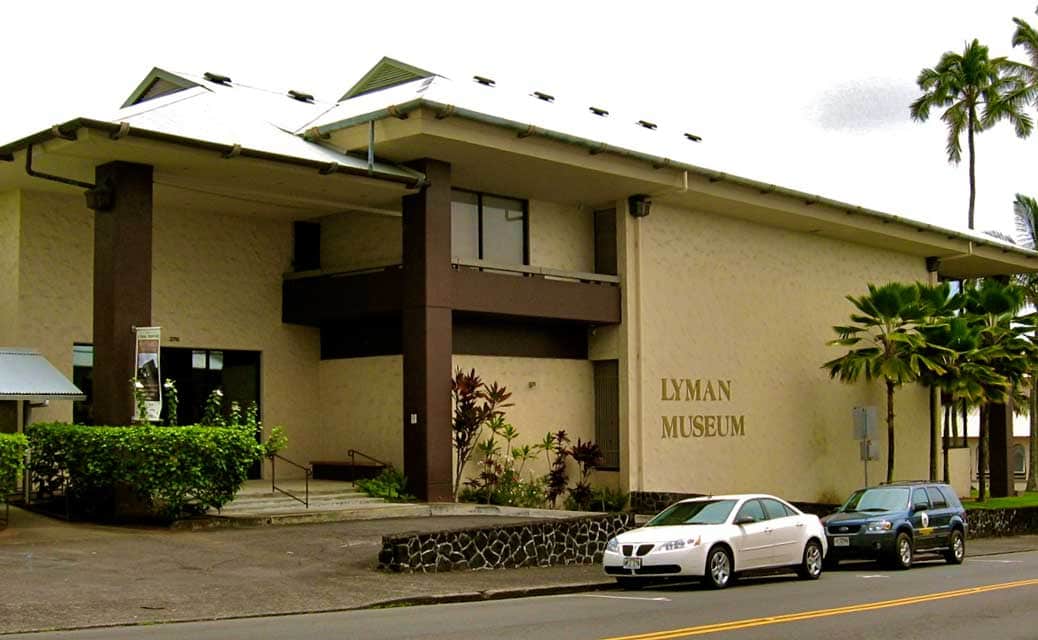
The Lyman Museum building was constructed in 1971, next to the historic 1839 Mission House. Hilo, Hawaii. Photo credits: W Nowicki
The Mission House
The Mission House next door predates the museum by more than a century. Built in 1839, it’s the oldest standing wooden building on Hawaiʻi Island and among the oldest in the state, on both the State and National Registers of Historic Places and restored in 2010. David and Sarah Lyman raised seven children here, and over the years its guests included Hawaiian aliʻi (royalty) and writers like Mark Twain and Isabella Bird.
Inside, the rooms look much as they did when the Lymans lived here, down to the period furniture and the absence of electricity or running water. For the Lymans that meant a home 5,000 miles and a six-month sea voyage from New England, in a place whose language and culture were nothing like their own.
The stairs are steep and there’s no elevator, so anyone using a wheelchair or with limited mobility can see the main museum but not the house.
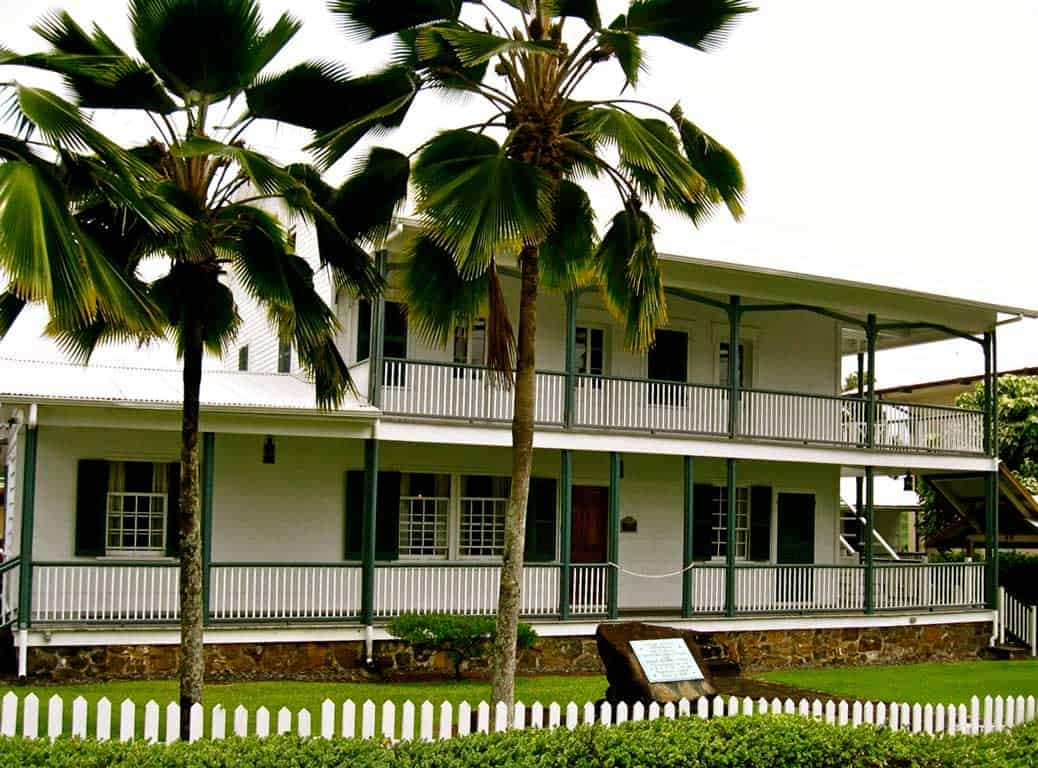
The Lyman House. Home of missionaries David Belden Lyman and Sarah Joiner Lyman, built in 1839, now part of the museum. Hilo, Hawaii. Photo credits: W Nowicki
Admission and opening hours
The Lyman Museum is open 10:00 am to 4:30 pm, Monday through Friday. It closes on New Year’s Day, Memorial Day, Independence Day, Labor Day, Thanksgiving and Christmas.
Good to know: museum entry and the Mission House tour are two separate bookings, not one ticket. The house has three guided tours a day, at 10:05 am, 12:20 pm and 2:35 pm, each about half an hour and capped at 5 people. Reserve online or by phone for either; walk-ins depend on space that day.
Museum admission:
- Kamaʻāina (Hawaiʻi residents): $5 adults, $3 seniors, $2 children (ages 6-17)
- Out-of-State: $7 adults, $5 seniors, $2 children
- University Students: $3
Mission House tour, booked separately:
- Kamaʻāina and Out-of-State: $3 adults, $3 seniors, $1 children (ages 6-17)
- University Students: $2
Rates and hours were current as of 30 August 2026.
Directions and parking
The Lyman Museum and Mission House sit in downtown Hilo, at the corner of Haili Street and Kapiolani Street, minutes from the bayfront. From Kamehameha Avenue, head 0.4 miles up Haili Street; the museum is on the right. Park on the street or in the lot next to the Mission House. The address is 276 Haili Street, Hilo, Hawaii 96720, and the phone number is +1 808 935 5021. Lyman Museum and Mission House website.
For hours and admission at the island’s other collections, see our guide to the museums on the Big Island.