
Where to Snorkel on Maui: Our Favorite Spots

Maui’s best snorkeling is on its west-facing coast, sheltered by Kahoʻolawe, Lānaʻi and Molokaʻi. In West Maui that means Kahekili Beach Park and, in summer, Honolua Bay. Snorkelers often see green sea turtles at Maluaka Beach (Turtle Town), and Molokini, the crater offshore, is reachable only on a boat tour.
Honolua Bay is a big-wave surf spot in winter, too rough to swim. If you’re new to snorkeling or not a strong swimmer, start at Kahekili, where the reef begins just past the water entry, or at Kamaʻole Beach Park III, which has a lifeguard. Wherever you go, get in the water in the morning, before the afternoon wind picks up.
Best Maui snorkeling spots for beginners, families, turtles, and fish
Our picks, by how well you swim and what you want to see:
What is the best snorkeling spot for beginners?
Kahekili Beach and Olowalu have easy water entries and reef close to shore. Kamaʻole Beach Park III is the one spot on our list with a lifeguard.
What is the best snorkeling spot to see turtles?
Go to the coast around Maluaka Beach and Five Graves in Mākena. The stretch takes its nickname, Turtle Town, from the green sea turtles that feed there often.
What is the best snorkeling spot for variety of species?
Honolua and Mokulēʻia Bay are both in the Honolua-Mokulēʻia Bay Marine Life Conservation District, where fishing is restricted, so the reef holds more fish and coral species. Go in summer, when the bays are calm.
What is the best snorkeling spot for families?
Kamaʻole III has a lifeguard, a playground and a grassy park, and Ulua Beach has reef a short swim from the sand. On a half-day boat trip to Molokini, the crew supplies the gear and keeps an eye on everyone.
What is the best snorkeling spot for experienced adventurers?
Five Graves, ʻĀhihi Bay and La Perouse Bay have sharp lava entries and deeper water, so save them for when you’re a confident snorkeler.
Map of snorkeling spots
The map and table show our snorkeling spots around the island, with the kind of entry at each and who it suits best. Click a name to jump to that spot.
Map of the 14 locations. The table below lists the same entries.
| Name | Area | Entry | Best for |
|---|---|---|---|
| 1 Honolua Bay | West Maui | From shore, summer only | Reef fish and turtles in summer |
| 2 Mokulēʻia Bay | West Maui | From shore, summer only | A quieter start than Honolua |
| 3 Kapalua Bay and Napili Bay | West Maui | Sandy beach | Beginners on calm days (Kapalua), confident swimmers (Napili) |
| 4 Molokini | Offshore | Boat tour only | Coral reefs, on a snorkel tour |
| 5 Lānaʻi (Mānele and Hulopoʻe) | Offshore | Boat tour, or ferry to Mānele Harbor | A half-day boat trip, or a ferry day at Hulopoʻe Bay |
| 6 Kahekili Beach Park | West Maui | Beach, reef close to shore | Families, beginners and turtles |
| 7 Olowalu | West Maui | Easy, shallow entry | Beginners; stronger snorkelers farther out |
| 8 ʻĀhihi-Kīnaʻu | South Maui | Sharp lava rock | Lots of fish in a protected reserve |
| 9 La Perouse Bay | South Maui | Lava coast, swim out to deep water | Experienced snorkelers |
| 10 Black Rock (Kāʻanapali) | West Maui | Sandy beach | Guests staying on Kāʻanapali Beach |
| 11 Kamaʻole Beach Park III | South Maui | Sandy beach, lifeguard | Kids and nervous swimmers |
| 12 Ulua Beach and Mōkapu | South Maui | Sandy beach | A calm-morning reef snorkel |
| 13 Maluaka (Turtle Town) | South Maui | Sandy beach, snorkel at the lava point | Turtles from shore |
| 14 Five Graves | South Maui | Sharp rocks, deep water | Experienced snorkelers |
Maui snorkeling tours and cruises
A boat reaches reefs you can’t swim to from shore, often with more fish and better coral, and the crew supplies the gear and a safety briefing. Most snorkel trips last a half day, some include food and drinks, and from November through April many add whale watching.
Sea Maui’s half-day trip loads straight from the sand at Kāʻanapali Beach, stops at two snorkel spots, and includes breakfast and lunch:
What is a suggested tour?
Our suggested tours are hand-picked tours that receive consistent good reviews, give back to the community, and work hard to minimize their impact on the environment. Read more about these tours on our website.
Choose the type of boat first, then compare prices. Families usually do better on a larger boat with more room and services (Sea Maui’s carry 30 to 50 or more guests, and 2025 reviewers mention crowding), while a raft or small boat carries fewer people and moves faster.
Other operators we would look at:
- Maui Eco Tours (guided kayak and snorkel tours from Mākena Landing and Ulua Beach)
- Redline Rafting (Kīhei)
- Sail Trilogy (snorkel sail from Kāʻanapali Beach)
- Hawaii Ocean Rafting (Lāhainā)
Snorkel cruises to Molokini and Lānaʻi
Every Molokini snorkel starts with a boat ride. Lānaʻi snorkel trips leave from Kāʻanapali and Lāhainā and snorkel off the Lānaʻi coast.
What is a suggested tour?
Our suggested tours are hand-picked tours that receive consistent good reviews, give back to the community, and work hard to minimize their impact on the environment. Read more about these tours on our website.
Sail Maui runs the Molokini trip on the card above on Akialoa, a 54-foot sailing catamaran that departs from Māʻalaea Harbor. Reviewers praise the crew. The captain may swap the snorkel site for weather, and two trips in fall 2025 were cancelled for low bookings.
Boat trips to Lānaʻi run about 4 to 5 hours, and several add a dolphin search. On Lanai Snorkel Safari, the captain picks two snorkel stops on the day based on ocean conditions, such as Mānele Bay or the Lānaʻi shipwreck.
Lānaʻi snorkel trips we would look at:
- Lanai Snorkel Safari (raft from Kāʻanapali Beach)
- Kaanapali Ocean Adventures (from Kāʻanapali Beach)
- Maui Ocean Adventures (from Mala Boat Ramp, Lāhainā)
- Hawaii Ocean Rafting (eco-raft from Lāhainā)
Tour boats aren’t allowed in Hulopoʻe Bay, a protected zone of the Mānele-Hulopoʻe Marine Life Conservation District. To snorkel it, take the Expeditions ferry from Māʻalaea to Mānele Harbor. The crossing takes about 1 hour 10 minutes, with several sailings a day. From the harbor, walk 10 to 15 minutes to the bay, where a shallow reef starts just offshore. Mānele and Hulopoʻe both have restrooms and showers. Kona (southern) storms bring dangerous swells and currents to both bays.
Whale watching cruises (November through April)
From November through April, thousands of humpback whales, about half of the North Pacific population, come to Hawaiʻi’s warm, shallow water to mate and give birth. You can see them around every main island, but they are most concentrated in the ʻAuʻau Channel off Maui’s west coast, where the water is shallow and sheltered.
On Maui you can whale-watch from Pacific Whale Foundation’s large boats, Sail Maui‘s catamarans (card below) or small rafts out of Lāhainā. Our Maui whale watching guide covers the peak months, the tours and the best shore lookouts.
What is a suggested tour?
Our suggested tours are hand-picked tours that receive consistent good reviews, give back to the community, and work hard to minimize their impact on the environment. Read more about these tours on our website.
The 13 Maui snorkeling spots we recommend
Most Maui beaches with rocks and reef have some fish. Our Maui beaches guide covers the swimming and sunbathing beaches coast by coast.
- Honolua Bay
- Mokulēʻia Bay
- Kapalua Bay and Napili Bay
- Molokini
- Kahekili Beach Park (Airport Beach)
- Olowalu
- ʻĀhihi-Kīnaʻu
- La Perouse Bay
- Black Rock at Kāʻanapali Beach
- Kamaʻole Beach Park III
- Ulua Beach and Mōkapu Beach
- Maluaka Beach (Turtle Town)
- Five Graves
- Wailea Beach (beach bonus)
Honolua Bay and Mokulēʻia Bay sit in the Honolua-Mokulēʻia Bay Marine Life Conservation District, ʻĀhihi-Kīnaʻu is a Natural Area Reserve, and Molokini is a Marine Life Conservation District of its own.
Snorkeling at Honolua Bay
Overview: Honolua Bay is a big-wave surf spot in winter, and too rough to swim then. The water is calm in summer. The bay is part of the Honolua-Mokulēʻia Bay Marine Life Conservation District, and its reefs have many kinds of reef fish and Hawaiian green sea turtles.
Good to know: Start by the rocks on the left (west end of the bay) and follow them out to Kalaepiha Point. Divers head for the east side of the bay, where the water is deeper. There is no lot: parking is only along the highway, and there are no restrooms.
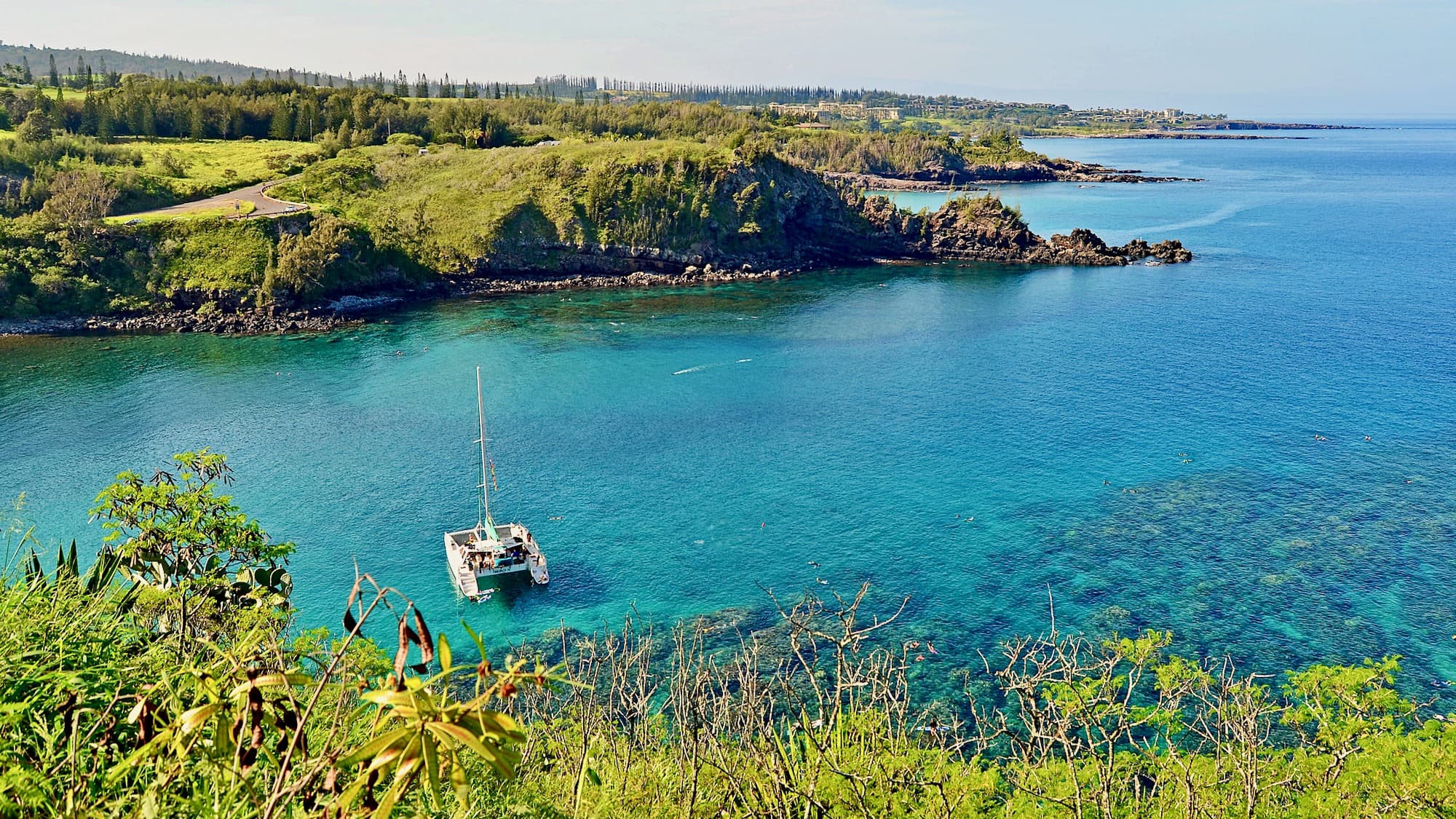
Getting there: the highway past Honolua Bay continues into one of our favorite scenic drives on Maui.
Snorkeling at Mokulēʻia Bay
Overview: Mokulēʻia Bay sits next to Honolua and is part of the same Honolua-Mokulēʻia Bay Marine Life Conservation District. If you’ve already snorkeled Honolua, or want a quieter entry, start from Mokulēʻia instead. Winter surf makes it too rough to swim here too, so plan it for summer.
Good to know: The bay’s other name, Slaughterhouse Beach, dates from the Honolua Ranch, which kept slaughterhouse buildings on the cliffs above the bay.
Snorkeling at Kapalua Bay and Napili Bay
Overview: Kapalua Bay is a small crescent cove on Maui’s northwest corner, with a rocky point at each end that partly shelters it from the open ocean. On calm days it’s an easy snorkel for beginners. The clearest water and most of the fish are along those rocky points, where turtles and eels also show up. Restrooms and showers are at the beach, and the public lot is small.
Napili Bay is the neighboring cove, and a protective reef keeps it calm and good for swimming most days. Turtles are common here. The water gets deep quickly, though, so Napili is better for confident swimmers than for small kids.
Good to know: Neither Kapalua Bay nor Napili Bay has a lifeguard. The nearest lifeguarded beach is D.T. Fleming Park, on the same stretch of coast. Winter north swells reach both bays, as they do Honolua Bay just north. In winter, check the surf forecast and watch the sets from the sand before you get in.
Snorkeling at Molokini
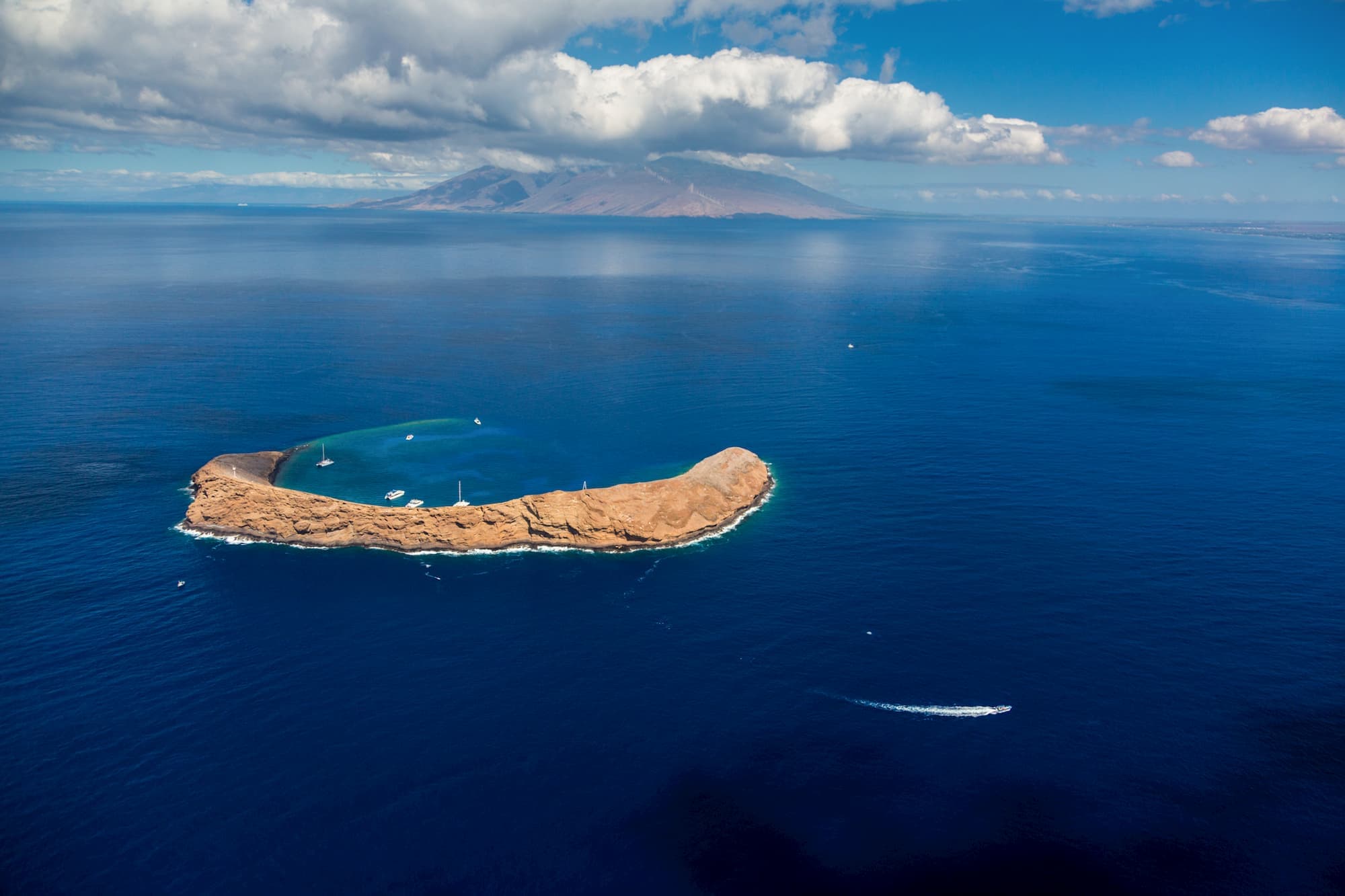
Overview: Molokini is a crescent-shaped volcanic crater about 3 miles off Maui’s southwestern coast, and nearly half a million people visit its coral reefs each year. On the boat ride out you can see back to Maui and across to the neighboring islands. Unless you have your own boat, the only way to snorkel Molokini is on a tour.
Molokini boats differ a lot in what they include. Compare the price against what you want on board, such as lunch and drinks. The Sail Maui catamaran trip we like is in the snorkel tours section.
Good to know: Molokini is busy: expect other snorkel boats moored inside the crescent. Hawaiian Paddle Sports has a short history of how the crater formed.
Snorkeling at Kahekili Beach Park (Airport Beach)
Overview: Kahekili is the easiest shore snorkel on the west side. It has ample parking, a grassy park at the edge of the sand, restrooms, and gazebos. The reef sits just beyond the water entry, so there’s no long swim before you see fish and Hawaiian green sea turtles. It’s popular with families, beginners, less-confident swimmers and shore divers. There is no lifeguard.
Good to know: The nickname Airport Beach comes from the old west-side airstrip here. Before the runway was built up north in Kapalua, Kahekili was the only place to land a plane on Maui’s west side.
Snorkeling at Olowalu
Overview: Olowalu also goes by “Coral Gardens” or “Turtle Reef” (a different place from Turtle Town in Mākena). The entry is easy and the water shallow and usually calm, so it’s a good spot for beginners. The reef runs farther out into deep water, where stronger snorkelers can follow it.
Good to know: From the road, Olowalu looks like a small, simple beach, but Hawaiian Paddle Sports has a history of Olowalu that runs from ancient Hawaiʻi to the sugar cane era.
Snorkeling at ʻĀhihi-Kīnaʻu
Overview: ʻĀhihi-Kīnaʻu is a Natural Area Reserve managed by the State of Hawaiʻi. Dolphins, sea turtles and monk seals often show up here, and because most of it is closed to boating and fishing, the fish population is healthy: butterflyfish, triggerfish, parrotfish, surgeonfish, Moorish idols, needlefish and more.
Good to know: Start at Kanahena Beach and explore ʻĀhihi Bay. In many places the reef begins right at the water entry, so watch your footing on the sharp rocks and keep off the coral. As of October 2026, parking costs $10 per car (card only), and the reserve’s northern section is open 5:30 a.m. to 7:30 p.m.
Snorkeling at La Perouse Bay
Overview: Keep driving south past ʻĀhihi-Kīnaʻu and the road dead-ends at La Perouse Bay. It sits outside the reserve but has the same jagged lava coast as ʻĀhihi Bay. You have to swim out to the deeper water, where schools of fish live among large coral heads, so skip it if you are a beginner.
Good to know: The lava here came from Haleakalā’s most recent eruption, 200 to 500 years ago. The coastline is undeveloped, with several hiking trails. There is little shade and it gets very hot, so bring plenty of water and wear mineral sunscreen.
Snorkel around Black Rock at Kāʻanapali Beach
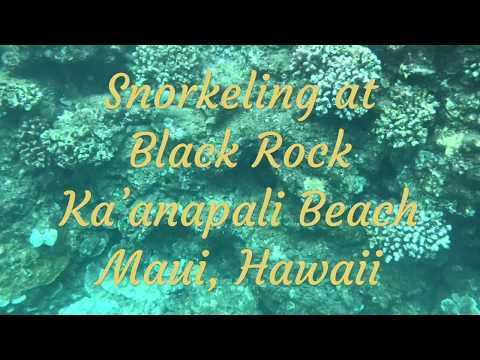
Overview: Black Rock (Puʻu Kekaʻa) is the large lava outcrop at the north end of Kāʻanapali Beach, jutting into the ocean like a small peninsula. The water is usually calm and you swim straight out from the sand, with reef fish against the dark rock. The snorkeling area is small and shallow, so snorkel it if you’re staying on Kāʻanapali Beach, but don’t drive over for it.
Good to know: Stay for sunset. Every evening a cliff diver lights the torches along the rock and dives into the water, reenacting a leap once made by Maui’s King Kahekili.
Snorkeling at Kamaʻole Beach Park III in Kīhei
Overview: Kamaʻole Beach Park III is the one snorkel spot on this list with a lifeguard, on duty every day. The bottom is mostly sand, and the snorkeling is at the reef and rocks on the north side, with reef fish and sometimes turtles. There’s less to see than at Ulua or Honolua, but the park is a good choice for a first morning in the water with kids or nervous swimmers.
Good to know: The 10-acre grassy park has an 82-space lot, restrooms, outdoor showers, picnic tables and grills, a large children’s playground, and an accessible ramp to the sand. Kamaʻole I and II, just north, have daily lifeguards too. Bodyboarders ride the shorebreak at III, so watch where the waves break before you walk in with kids.
Snorkeling at Ulua Beach and Mōkapu Beach in Wailea
Overview: Ulua Beach is a white-sand crescent between two rocky points in Wailea, the next beach north of Wailea Beach. A small grassy hill and a walking path run behind it. The reef is on the north side, to your right as you face the ocean, and it separates Ulua from Mōkapu Beach. From Ulua, snorkelers swim along that reef toward Mōkapu. The water is calm most mornings, and it’s a scuba site too.
Good to know: Maui County lists Ulua and Mōkapu as one beach park, next to the Shops at Wailea and maintained by the Wailea Community Association, with parking, public restrooms and showers. There’s no lifeguard on duty. Arrive in the morning. If you want a guide, Maui Eco Tours runs its kayak and snorkel tours straight from Ulua Beach.
Snorkel off Maluaka Beach (Turtle Town)
Overview: Maluaka and the coast around it, called Turtle Town, sit south of Wailea, and Hawaiian green sea turtles feed here often. They are wild animals, so a sighting is never guaranteed, but if you want to see one from shore this is the best place to try.
Good to know: Maluaka is usually calm, fine for swimming and a full beach day. As at most beaches in this area, the best snorkeling is along the lava-rock point at the end of the beach. Stay well off the rocks when there are waves.
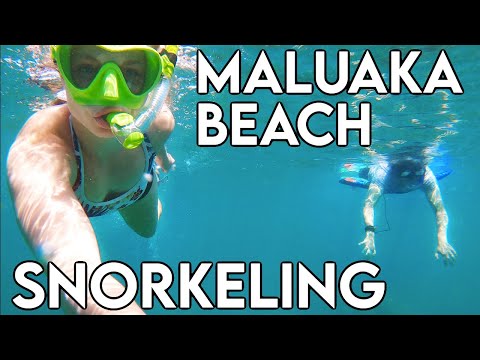
Take an outrigger canoe tour for a better chance of seeing turtles: this one-hour canoe tour departs from Wailea and paddles to Turtle Town. Your guide teaches the culture and sport of canoe paddling, and how Polynesian voyagers crossed the Polynesian Triangle (New Zealand to Rapa Nui to Hawaiʻi) by celestial navigation.
What is a suggested tour?
Our suggested tours are hand-picked tours that receive consistent good reviews, give back to the community, and work hard to minimize their impact on the environment. Read more about these tours on our website.
Snorkel at Five Graves
Overview: Five Graves is a mostly rocky shoreline along Mākena Road south of Wailea. Snorkelers can also enter at nearby Chang’s Beach, but Five Graves has its own parking lot farther south. Save it for experienced snorkelers: the rocks are sharp, the water is deep, and conditions are rougher than at the beaches nearby. Underwater there are large schools of fish, big boulders, coral reefs and plenty of sea turtles.
Good to know: Many snorkel tours stop offshore here, over the outer reefs. To snorkel farther out, join a tour that visits these waters. Divers come for the underwater caves; a local dive shop can take you.
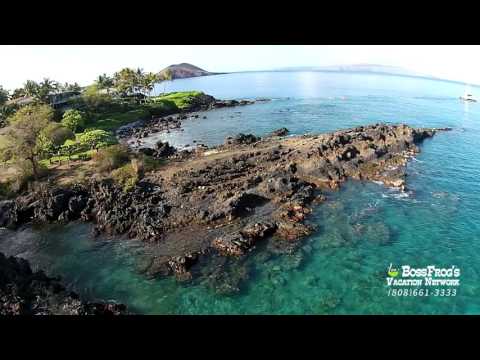
Bonus Snorkeling Spot: Wailea Beach
Wailea Beach sits a few miles north of Maluaka and Five Graves, next door to Ulua.
Overview: The snorkeling off Wailea’s point is good, but we include it for the people in your group who would rather sit on the sand. Of every spot on our list, this is the best beach for a beach day.
Good to know: The beach is busy because it is right in front of the Grand Wailea and Four Seasons resorts. For the best snorkeling, walk to the right side of the beach and swim around the point for about 800 feet (240 meters), until you are facing the condos on shore. Coral and visibility improve with depth, so swim out to where the water is about 10 feet (3 meters) deep.

Snorkel gear, tips and safety on Maui
The west and south shores are usually calmer than Maui’s north and east coasts, but surf can build quickly and the reef is sharp. Use good gear, go early and snorkel with a buddy.
Snorkel gear rentals
If you will snorkel more than a couple of times, buying a basic set at a local store can cost less than renting, and you don’t have to return it at the end of the day. Skip full-face masks: they have been called dangerous.
To rent, the two snorkel chains, Snorkel Bob’s and Boss Frog’s, both have stores in Lāhainā, Kīhei, Wailea and Napili. Snorkel Bob’s cheapest adult mask, snorkel and fins cost $12 a day or $38 a week as of October 2026. Surf shops, beach kiosks and hotel activity desks rent gear too.
Maui snorkeling tips: where, when and how to get in
Snorkel the west and south shores in the morning, and wade in over sand.
Snorkel the west and south shores
The west and south shores, from Kāʻanapali and Lāhainā down to Kīhei and Wailea, usually have calmer seas because they sit on the “leeward” side, away from the trade winds, and Lānaʻi and Kahoʻolawe shelter them offshore. Almost every spot on our list is on these coasts.
Go early
On most days the water is calmer in the morning, before the trade winds build and chop it up. Check the conditions before you get in.
Wear a rash guard
A rash guard protects your back from the sun better than sunscreen does. Any sunscreen you use on Maui must be mineral-only (see the sunscreen rules at the end of this section).
Look near rocks and coral
Fish need shelter and food, so look for them near coral and rocks. Watch for incoming waves when you snorkel near rocks.
Enter over sand
Watch for waves, coral, rocks and sea urchins as you get in. A sandy strip is the best place to wade in.
Snorkeling safety tips
Before you get in:
- Be prepared. Use high-quality snorkel gear. Bring fins, a mask, de-fogger and sun protection. A fish ID card helps keep track of what you’re seeing. Booties protect your feet.
- Be careful: Stay out of the water when the surf is high. If you are a beginner, start in shallow water and go farther out only once you are comfortable. If you feel anxious, return to shallow water where you can stand.
- Always snorkel with a buddy: Snorkeling with a companion is much safer: in an emergency, your partner could save your life.
- Use your gear properly: Ask the rental shop staff how to use the gear, including how to clear your mask under water. The usual method: float with your feet down and your face up, and exhale a burst of air through your mouth to blow the water out.
- Time your snorkeling properly: Snorkel or dive in the morning, when the water is clearest and the wind is calm. Check the local forecast, since a south or north swell can change that.
- Be respectful: The reef may look like plants and rocks, but it is made up of millions of tiny living animals. Stand or rest only on the sandy bottom.
Important: Maui allows mineral sunscreen only
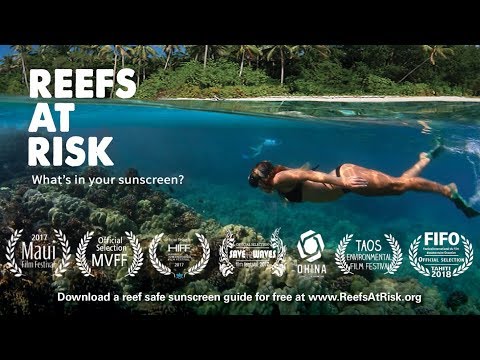
Since January 1, 2021, a Hawaiʻi law has banned the sale of sunscreen made with oxybenzone or octinoxate, two chemicals linked to coral damage. Maui County goes further: since October 1, 2022, county rules ban the sale and the use of any sunscreen that is not mineral-based, unless you have a prescription.
On Maui, that means a sunscreen whose only active ingredients are non-nano zinc oxide or titanium dioxide. Many sunscreens labeled “reef safe” do not qualify, so check the active ingredients before you buy.
This video explains why Hawaiʻi and Maui County keep these chemicals out of the water:
Related: best snorkeling spots on our neighbor islands
Visiting another island too? These are our snorkeling guides for the Big Island, Kauaʻi and Oʻahu: