
One person owns almost all of Lānaʻi. Larry Ellison bought the island in 2012, and it’s the smallest one in Hawaiʻi open to visitors: one small town of about 3,000 people, and no traffic lights.
There are two ways to visit Lānaʻi: a stay at one of its three hotels, or a day trip on the passenger ferry from Maui. Either way, plan on a 4WD Jeep to get around, since only about 30 of the island’s roughly 400 miles of road are paved. Which one you pick comes down to budget, and how much of the island you want to see beyond the resort.
Table of contents
- About Lānaʻi
- Where to stay
- Things to do
- Eat and Drink
- Sample itinerary
In the following video, cultural liaison Anela Evans, born and raised on the island, introduces Lānaʻi.

Recent Lānaʻi History
In 1922 Dole bought Lānaʻi and turned it into a pineapple plantation, eventually the largest in the world, and people called it “the Pineapple Island.” Most of the infrastructure you see on the island, from the residential houses to the buildings of Lānaʻi City, are from the pineapple era.
When the pineapple industry began to decline in the 1980s (competition from Central/South America and Asia undercut it), tourism replaced it. In 2012, Lānaʻi was purchased by its current owner, Larry Ellison, and remains privately owned today.
Lānaʻi City, the only town on Lānaʻi, sits at 1,644 feet above sea level, backdropped by a small forest of Cook Island pines. There are no traffic lights, and with a population of about 3,000, services in town are limited and the pace is slow.
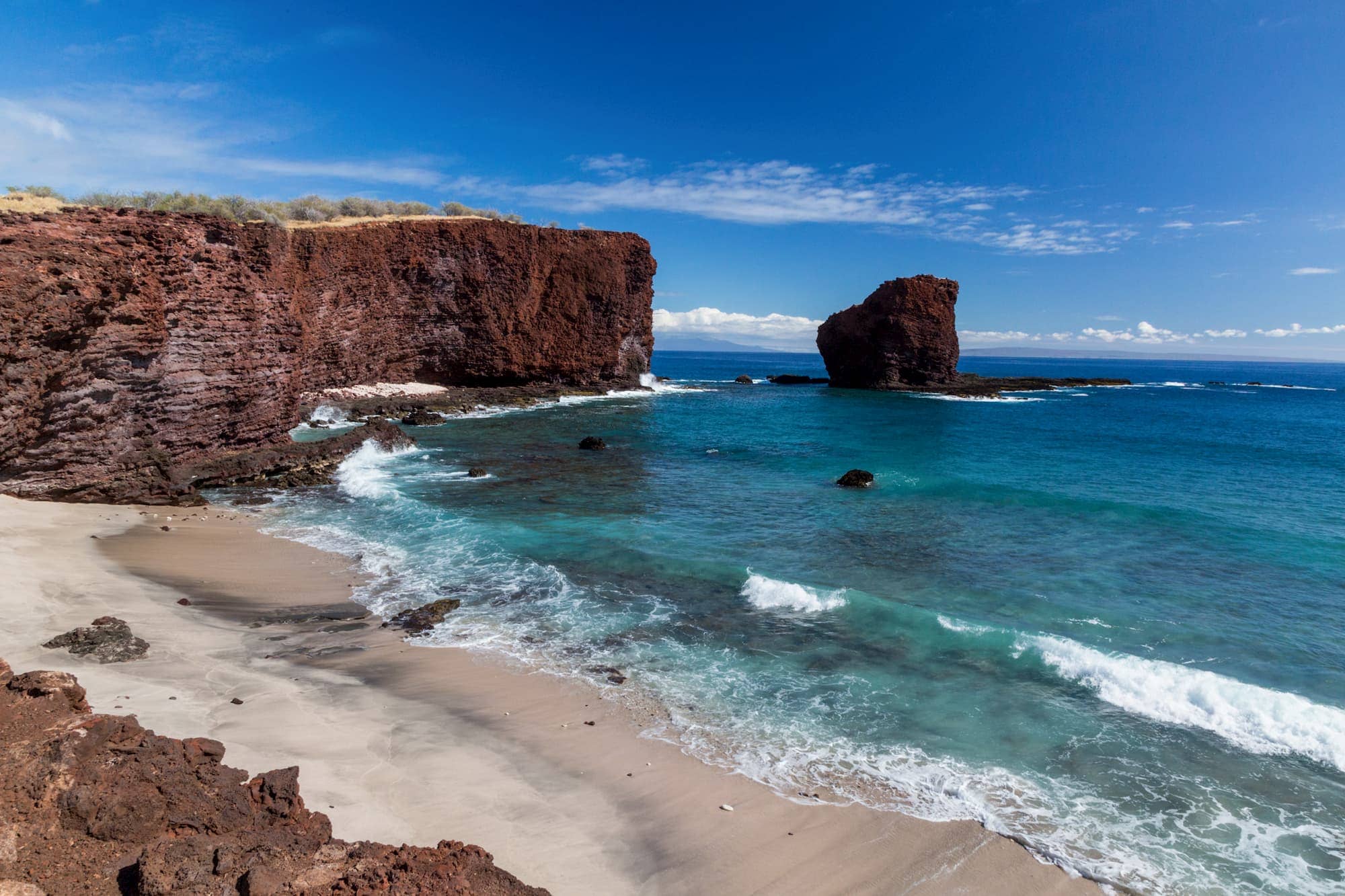
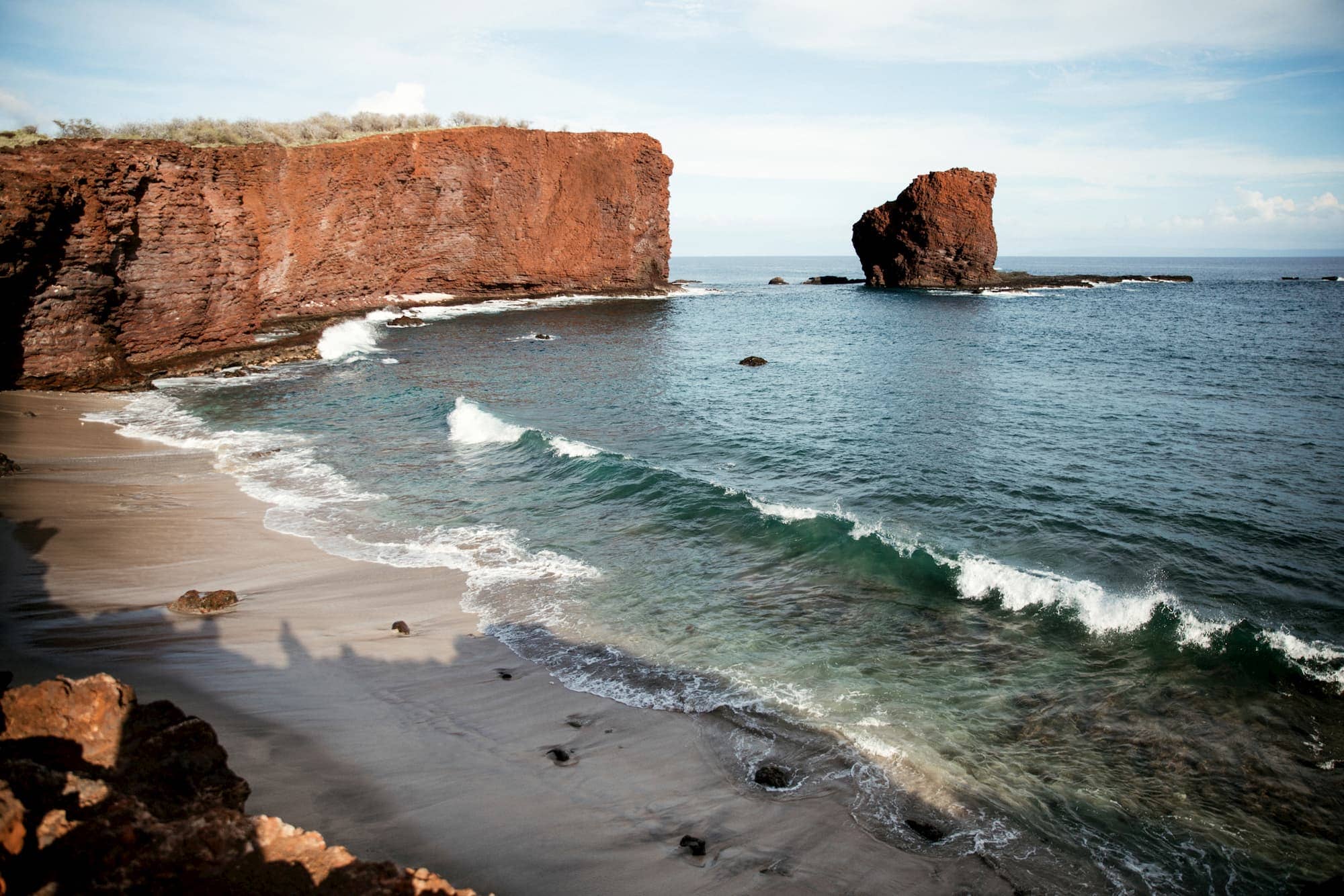
Cliffs near Puʻu Pehe (Sweetheart Rock), a popular sight on Lānaʻi. Credit: Hawaii Tourism Authority (HTA) / Tor Johnson
Where to Stay
Guests on Lānaʻi spend more on lodging than on any other Hawaiian island. There are only three hotels: two five-star resorts, and the small boutique Hotel Lānaʻi, where rates start above $300 a night.
Hotel Lānaʻi
The Hotel Lānaʻi is the oldest hotel on Lānaʻi, built in 1923 and renovated in 2018 (it closed for seven months for the work). It has just ten rooms plus a separate cottage. It sits in a grove of Cook Island pines, and its exterior still keeps the plantation-era look. Inside, the renovation added wood paneling and light accents.
In Lānaʻi City, the Hotel Lānaʻi is within walking distance of shops, restaurants, and tour operators. It’s not on or near the beach, but it’s quiet, ringed by tall pines and rolling hills.
Sensei Lānaʻi, A Four Seasons Resort
In the hills above Lānaʻi City, the adults-only Sensei Lānaʻi sits just a mile up the road from the Hotel Lānaʻi. It runs personalized wellness retreats, with a tailored program for each guest.
Four Seasons built it with Sensei, the well-being company founded by island owner Larry Ellison. Guests get a private wellness consultation on arrival to build a program for their stay: fitness such as yoga and meditation, nutrition goals, spa treatments, activities such as hikes and horseback rides, and journaling. For a sense of how a day plays out, see this sample itinerary.
Rates for the Sensei Lānaʻi start at roughly $950 per night and can climb well beyond a thousand dollars a night with add-on packaging. All reservations include airfare from Honolulu to Lānaʻi as well as airport transfers. Like the Hotel Lānaʻi, it is not near the beach.
Four Seasons Resort Lānaʻi
The Four Seasons Resort Lānaʻi sits right at Hulopoʻe Beach. It is the only place to stay on the island, other than the campground, at sea level. Guests step straight onto a white-sand beach and the Manele-Hulopoʻe Marine Life Conservation District, one of the best snorkeling spots on Lānaʻi.
The Four Seasons also has five-star service, a Jack Nicklaus-designed golf course along the sea cliffs, and four on-site restaurants.
Rates start at more than $1,000 a night for a garden-view room and run higher for ocean view. Roundtrip airfare from Honolulu and airport transfers are included.
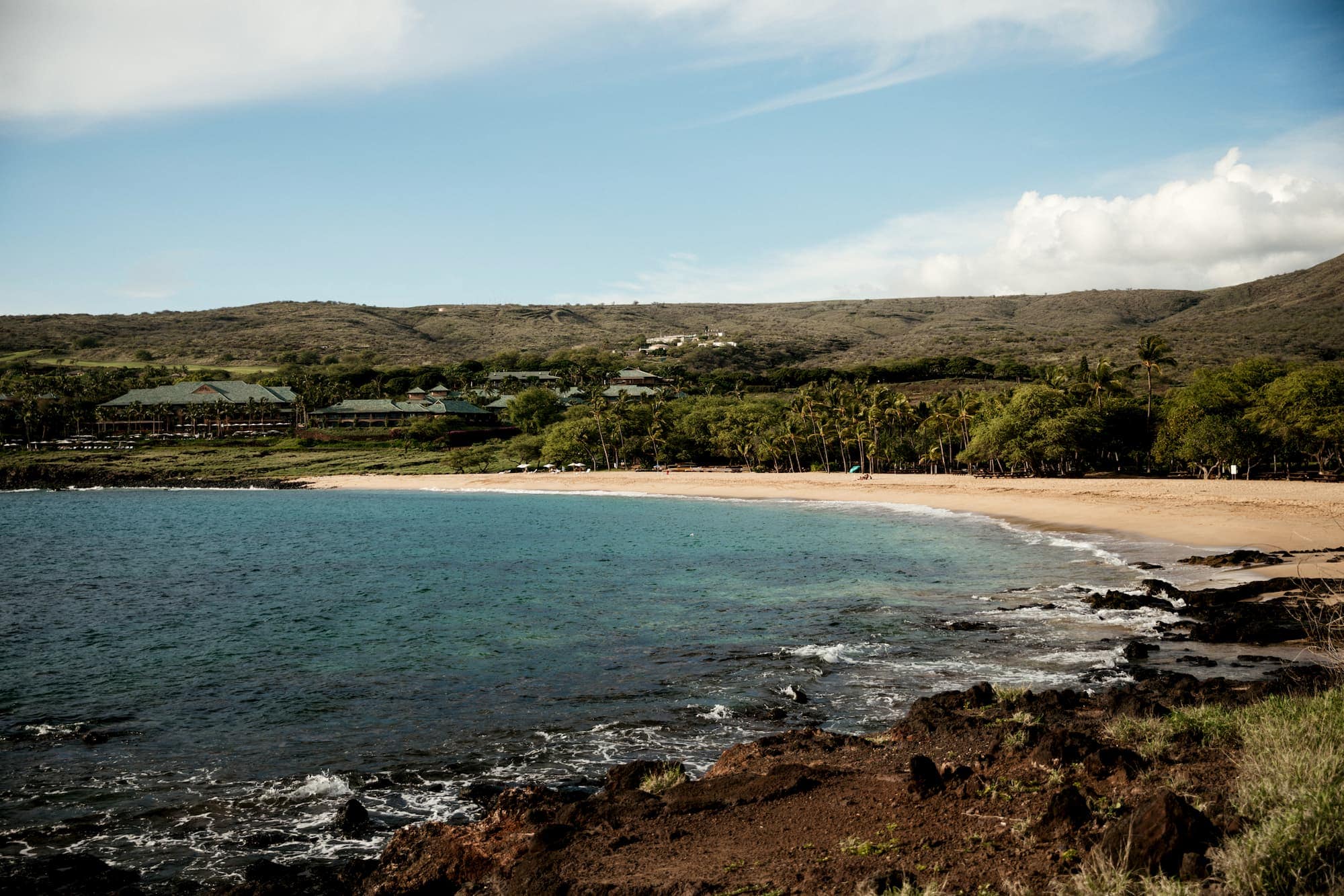
Hulopoʻe Bay has both the Four Seasons resort and a campground. Credit: Hawaii Tourism Authority (HTA) / Heather Goodman / @hbgoodie
Budget Options: B&Bs, Rentals, and Camping
Dreams Come True Bed & Breakfast, outside Lānaʻi City, is an old plantation house surrounded by tall Cook pines and fruit trees, with rooms around $200 a night. Ask about current rates and whether breakfast is served when you book.
There are vacation rentals on Lānaʻi through sites like Airbnb that cost about $200 a night, but these options are limited.
There is one campground on Lānaʻi, at Hulopoʻe Beach Park. Sites are $80 a night for up to four people, for a maximum of three nights, and you submit a reservation request ahead of time.
Things to Do
Lānaʻi has uncrowded beaches, back-road Jeep routes, Hawaiian cultural sites, and one of Hawaiʻi’s best-known dive spots.
Beaches
Lānaʻi has plenty of beaches, but most sit at the end of a dirt road you need a four-wheel-drive to reach. Check road conditions and directions before you set out, with your hotel or the rental agency. These are our favorites:
Hulopoʻe Beach Park: On the south side of the island, Hulopoʻe is the one beach reached by a paved road,. It fronts the Manele-Hulopoʻe Marine Life Conservation District, and it is good for swimming, snorkeling, kayaking, barbecuing, and sunbathing. Walking paths ring the bay, with vantage points over the rocky coastline, including Puʻu Pehe.
Kaiolohia (Shipwreck Beach): Lānaʻi’s north shore has rough seas. Shipwreck Beach is named for a rusted 1940s-era oil tanker beached on its coral reef. It is only one of many wrecks here. At least a dozen ships have sunk along this six-mile beach. The water is usually too rough to swim or snorkel, but the beach is good for walking and photography.
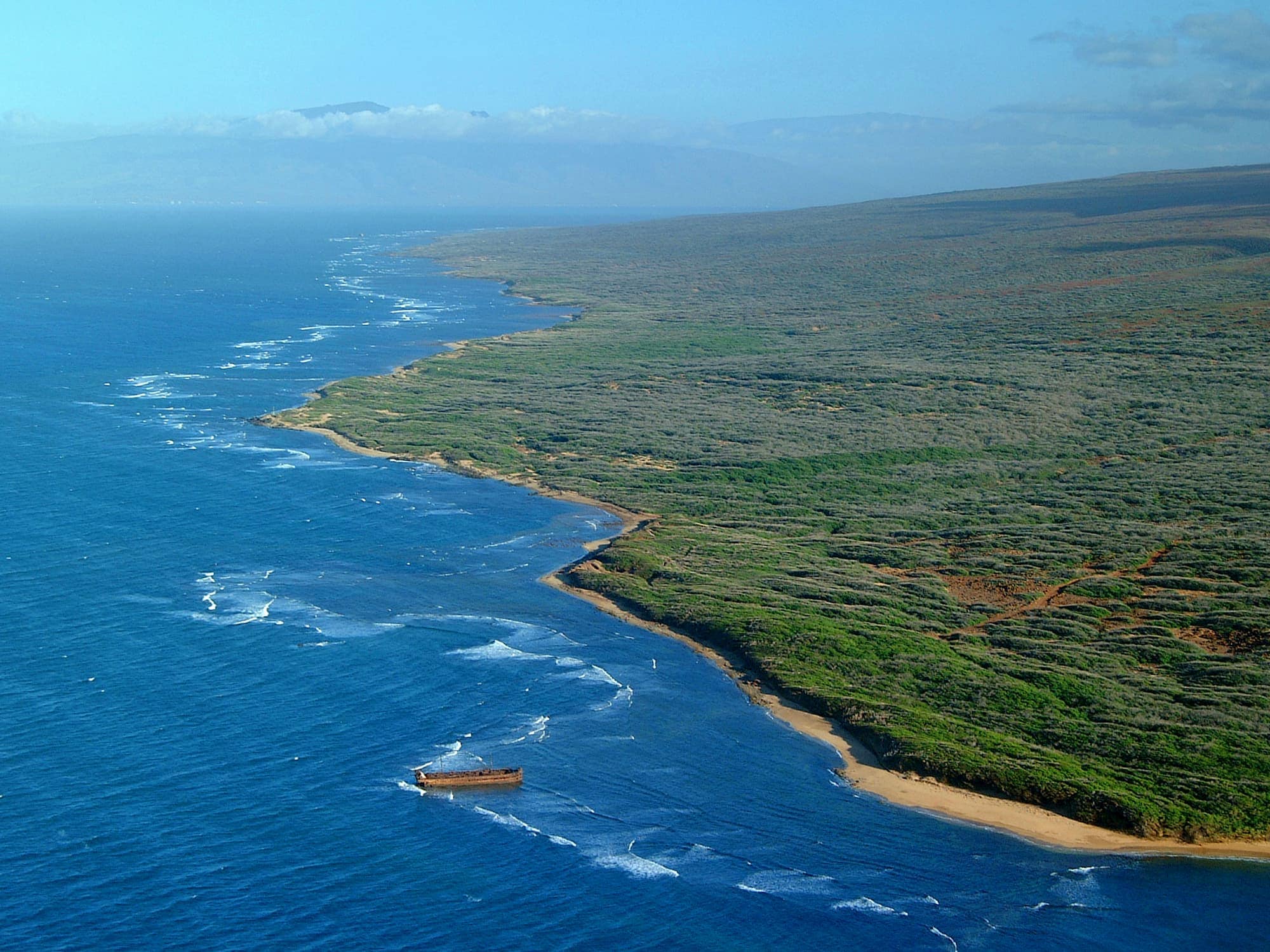
Kaiolohia (Shipwreck Beach) is named for the rusted tanker grounded on its reef, one of many wrecks along the six-mile shore. Credit: Hawaii Tourism Authority (HTA) / Ron Garnett
Polihua Beach: For a stretch of sand well out of the way, head to Polihua. It is farther than the other two, about an hour by four-wheel-drive Jeep, but you get a wide, empty beach at the end of it. If you’re not comfortable on the dirt roads, hire a guide to drive you.
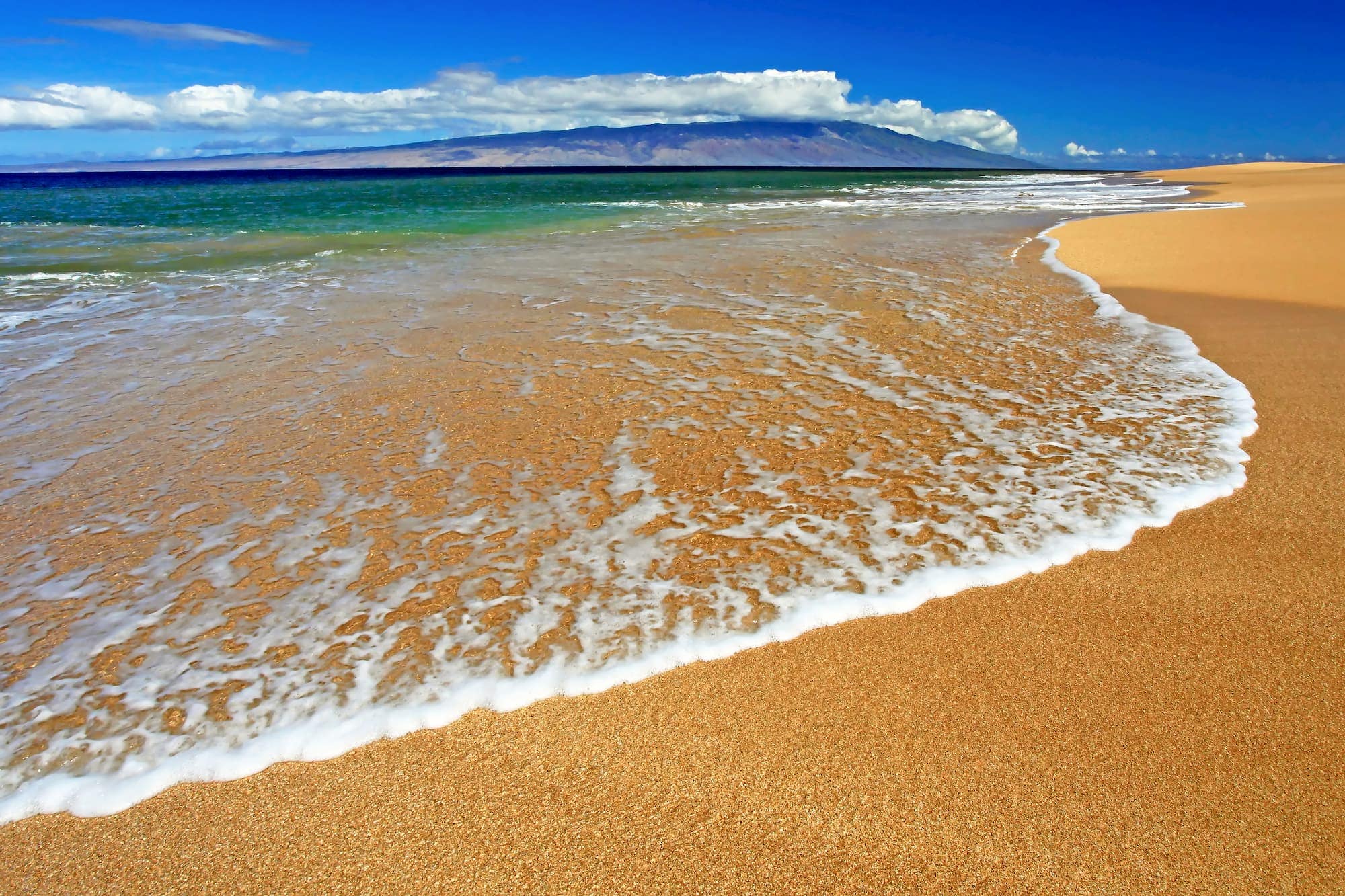
Polihua Beach is a secluded beach on Lānaʻi’s northwest shore. Credit: Hawaii Tourism Authority (HTA) /Joe West
Jeep Rentals
Only about 30 of Lānaʻi’s roughly 400 miles of road are paved, so you need a rented Jeep to reach the high plateaus and the remote coastlines. From the high ground of North Lānaʻi you can see across to Maui and Molokaʻi, or follow the Keomuku Highway and the Kaʻena Trail out to some empty beaches.
A few outfits in Lānaʻi City rent Jeeps. Jeep rental is not cheap: expect about $195 a day. Compare rates at Lanai Cheap Jeeps and Lanai Car Rental.
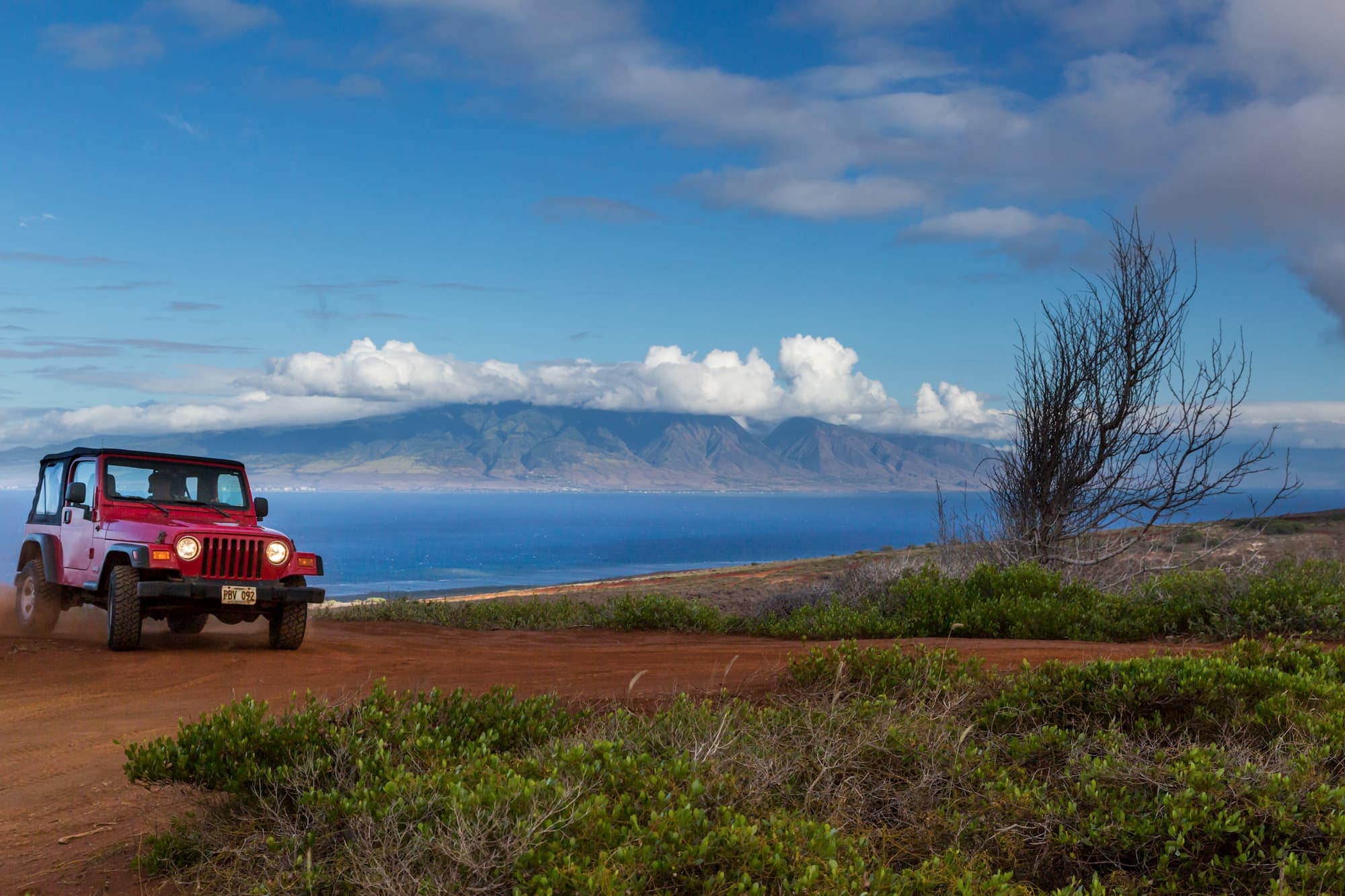
Renting a jeep is by far the best way to explore Lānaʻi’s many dirt roads. Credit: Hawaii Tourism Authority (HTA) / Tor Johnson
Hikes/Walks/Scenic Areas
Lānaʻi has a handful of good hikes and walks. These are our favorites:
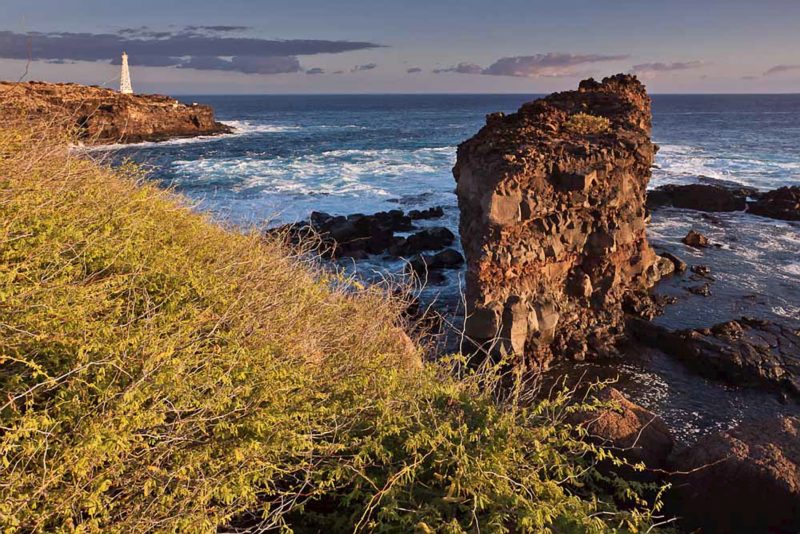
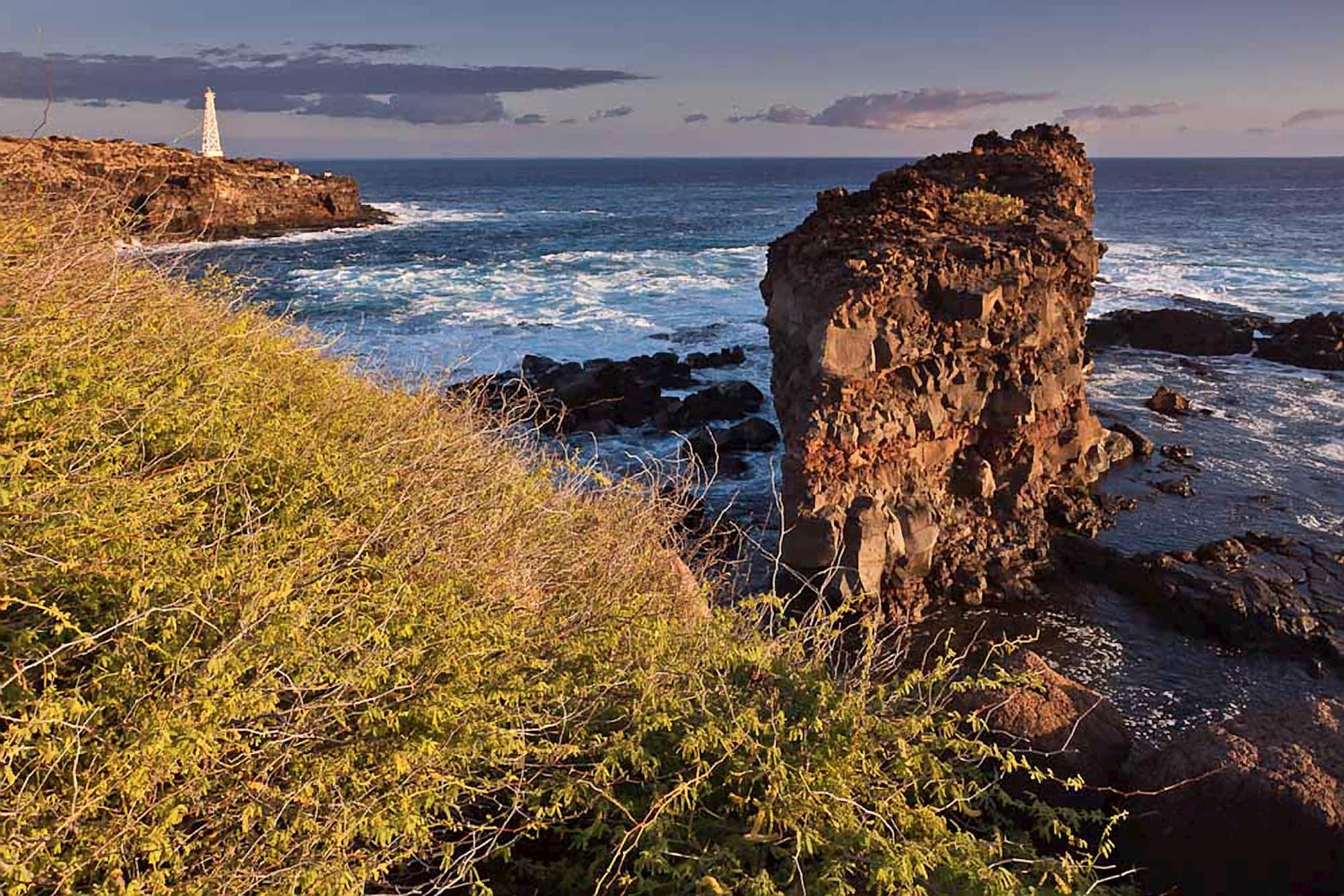
- Puʻu Pehe: Near Hulopoʻe Beach, this photogenic sea stack, Sweetheart Rock, takes its name from a cultural tale, and you reach it on an easy walk along a red cliffside. Anyone at Hulopoʻe Beach should make the short walk out to it.
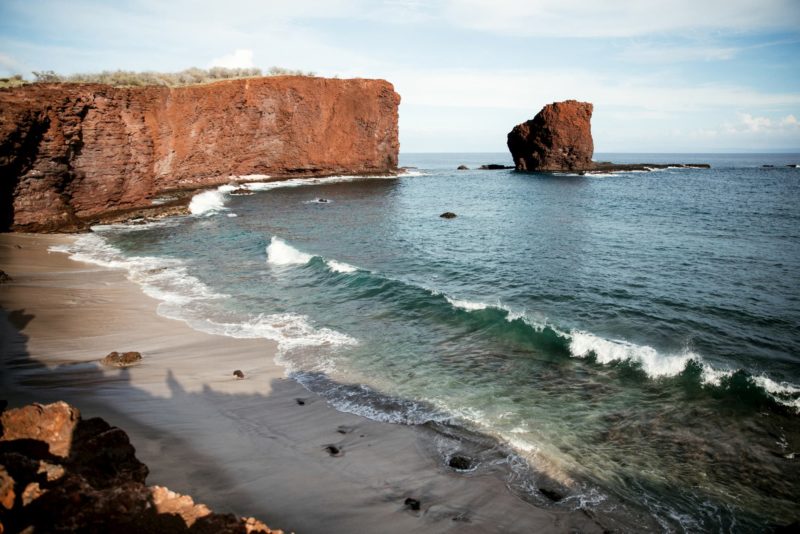

Puʻu Pehe (Sweetheart Rock) is a popular photo spot with a legend behind it. Credit: Hawaii Tourism Authority (HTA) / Tor Johnson
- Kapihaʻā Interpretive (Fisherman’s) Trail: This rocky 1.5-mile coastal trail starts near the golf clubhouse at the Four Seasons and runs along the shore, with open ocean views the whole way. It runs through the site of Kapihaʻā Village, with historical markers along the route.
- Koloiki Ridge Trail: This intermediate 5-mile out-and-back starts behind the Sensei Lānaʻi and climbs into the forest behind Lānaʻi City, with a clear view across to Molokaʻi from the top.
Cultural Sites
- Lānaʻi Culture & Heritage Center: This community museum in Lānaʻi City has exhibits and programs on the island’s history and cultural heritage. Stop here first for an overview before visiting the sites around the island.
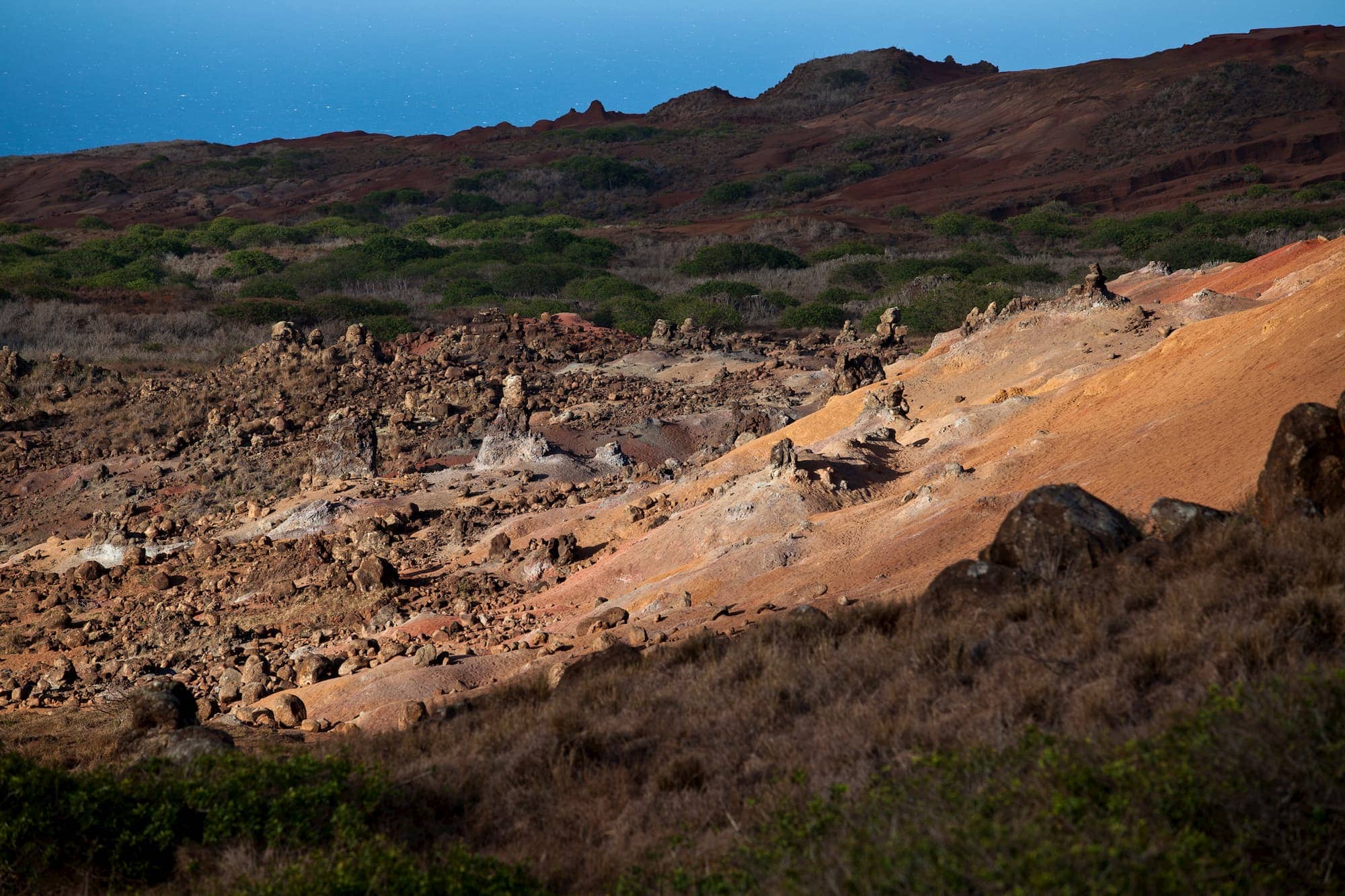
- Keahiakawelo (Garden of the Gods): This wahi pana (a legendary place) of red-dirt rock formations, boulders, and spires has an eerie, lunar look. In Hawaiian lore it is the result of a contest between two kahuna (priests) from Lānaʻi and Molokaʻi.
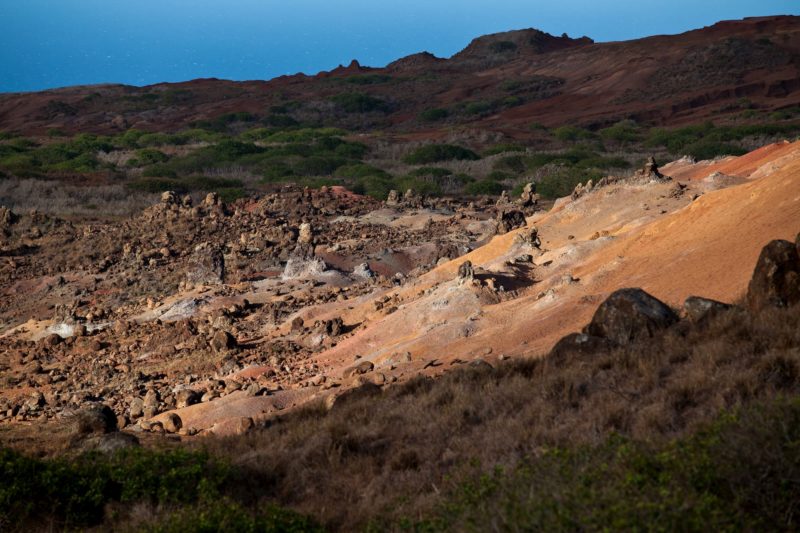

Keahiakawelo (Garden of the Gods) is a windswept landscape that, according to Hawaiian lore, resulted from a contest between two kahuna (priests) from Lānaʻi and Molokaʻi. Credit: Hawaii Tourism Authority/Pierce M Myers Photography
- Kahekili’s Leap: This rock ledge on the south shore is a well-known cliff-jumping spot, where Hawaiian warriors once proved their courage by leaping into the ocean below. You don’t have to jump, and a guide adds the cultural context you would otherwise miss.
- Kaunolū Village: Kahekili’s Leap is part of the larger Kaunolū Village site. It was once a favorite fishing spot of King Kamehameha, and today there are the remains of a heiau (temple) and some petroglyphs. It was designated a U.S. National Historic Landmark in 1962 and added to the National Register of Historic Places in 1966.
Kaunolū Village is a former fishing village that was abandoned in the 1880s. Credit: Hawaii Tourism Authority/Pierce M Myers Photography
Snorkeling
The best snorkeling on Lānaʻi is at Hulopoʻe Beach, thanks to its calm water and the Manele-Hulopoʻe Marine Life Conservation District just offshore. Do not snorkel at other beaches like Shipwreck; the currents and rough water there are dangerous.
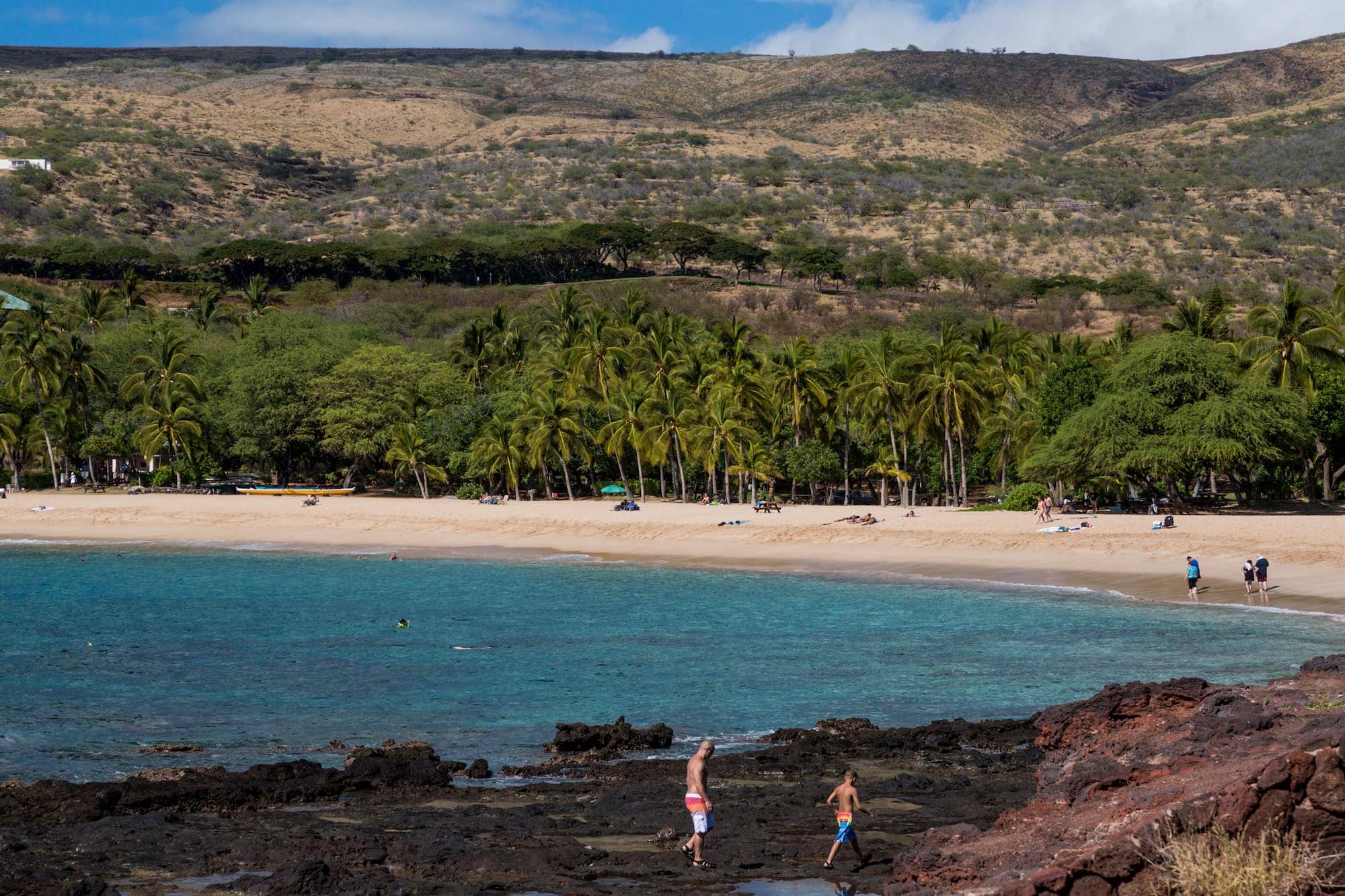
One of the highlights of Hulopoʻe Bay is its large tide pools on the eastern side of the bay. Credit: Hawaii Tourism Authority (HTA) / Tor Johnson
Scuba Diving
There are 13 dive sites on Lānaʻi in total, but the premier dive spot is the Lānaʻi Cathedrals: underwater lava tubes big enough to swim through.
On Lānaʻi, Trilogy Ocean Sports Lānaʻi is the island’s only dive operator. If you are staying on Maui, several dive shops there run day trips over to the Cathedrals and Lānaʻi’s other sites, so ask what they offer.
Golf
There are two golf courses on Lānaʻi: the 18-hole Manele Golf Course at the Four Seasons, and the 9-hole Cavendish Public Golf Course in Lānaʻi City. The former has oceanside holes and a full-service golf center; the latter is more a locals’ course, in the foothills of Lānaʻi City.
Food and Drink
Lānaʻi’s restaurants are either upscale dining at the hotels or basic local spots in Lānaʻi City.
Upscale Dining at the Hotels
- Four Seasons Resort Lānaʻi: There are four restaurants on site at the Four Seasons Resort Lānaʻi, and all are open to non-guests: One Forty (American steakhouse/Hawaiian seafood), Nobu Lānaʻi (Japanese/sushi), Malibu Farm (poolside, organic, locally-sourced dishes), and The Break (coffee and sandwiches).
- Sensei Lānaʻi: Like its Four Seasons counterpart, Sensei has a Nobu restaurant.
- Hotel Lānaʻi: The Lānaʻi City Grille is inside the Hotel Lānaʻi and was renovated with the hotel in 2018. It is open to the public, with a casual menu of sandwiches, burgers, and local specialties like venison loco moco and mahi mahi.
Local Eats in Lānaʻi City
There are a handful of local eateries in the downtown square of Lānaʻi City:
- Nō Ka ʻOi Grindz Lānaʻi: Local plate lunch.
- Pele’s Other Garden Bistro: A New York-style deli by day, and an Italian Bistro by night.
- Blue Ginger Café: This local-style café serves all the house favorites: Saimin, katsu, loco mocos, local fish, and chicken teriyaki plates, among others.
A Day-trip to Lānaʻi
Overnight stays on Lānaʻi are expensive, so the cheaper alternative is a day trip on the passenger ferry from Maui.
Take the Ferry From Maui
The Maui-Lānaʻi passenger ferry runs from Māʻalaea Harbor on Maui. It moved there from Lāhainā after the 2023 wildfire. The crossing to Mānele Harbor takes about an hour and ten minutes, with three departures each way, seven days a week. Tickets are sold one direction at a time, so a roundtrip is two of them, and an adult one-way runs about $66 and a child about $34, as of September 2026. Book ahead, since seats are limited.
Stay in Mānele
You can swim, kayak, or snorkel in the Manele-Hulopoʻe Marine Life Conservation District; hang out at Hulopoʻe Beach Park; walk the path to Puʻu Pehe, play a round of golf at the Manele Golf Course, or have lunch at Malibu Farm at the Four Seasons.
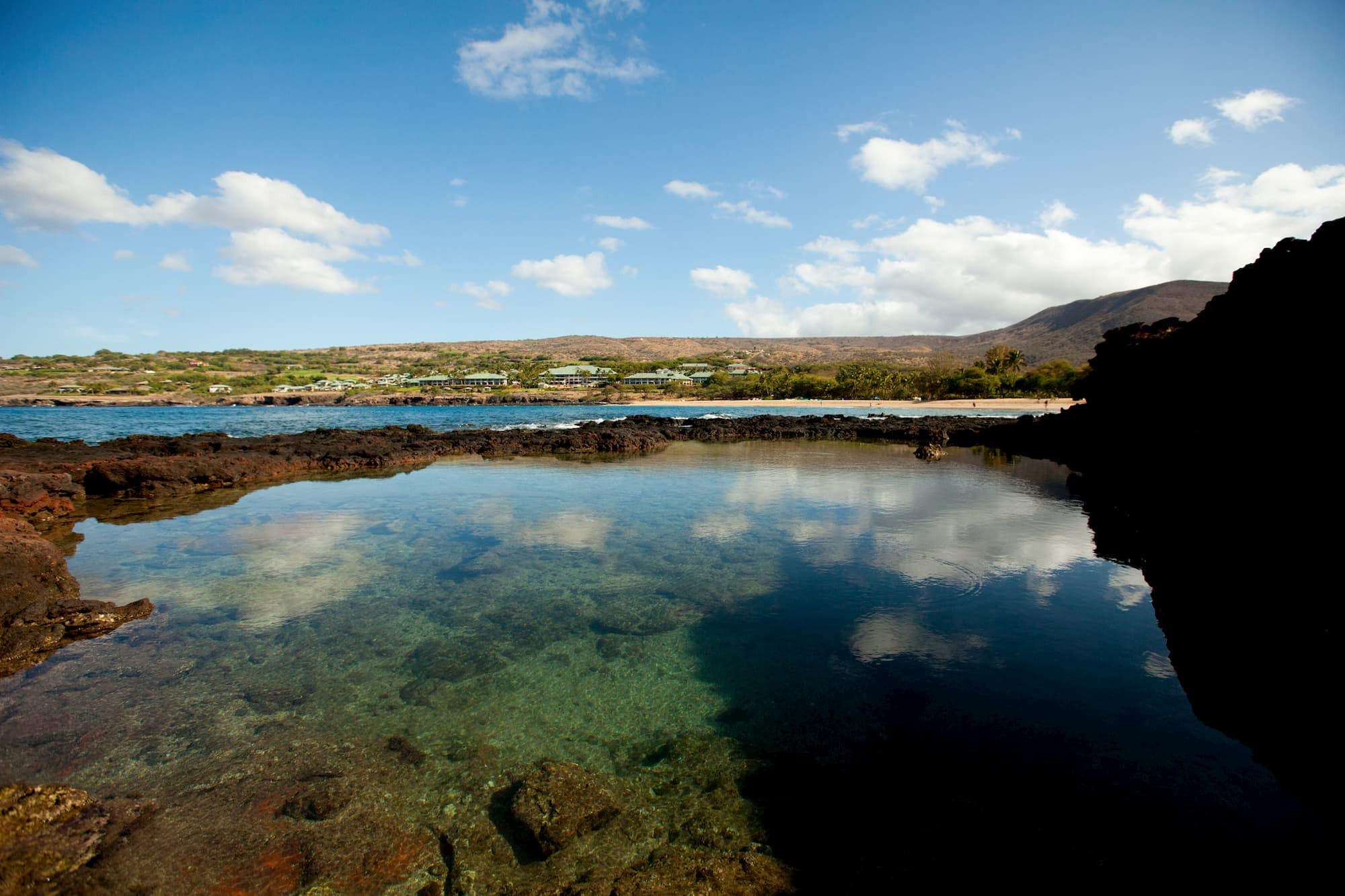
Adjacent to Hulopoʻe, Mānele Bay is another good beach for snorkeling and swimming. Credit: Hawaii Tourism Authority (HTA) / Dana Edmunds
Explore Beyond Mānele
Take a taxi up to Lānaʻi City (there is no Uber or Lyft on the island, so call ahead to arrange one) or take the shuttle run by the Four Seasons. You must contact the hotel to arrange the shuttle and purchase a day pass.
Once in Lānaʻi City, you can walk the downtown and visit its attractions: the cultural center, restaurants, and public parks. You could also rent a car or Jeep, or join an organized tour. Book any car, Jeep, or tour ahead, since availability is limited.
Another way to visit Lānaʻi on a day trip is as part of a snorkel tour. Some Maui tour companies, such as the Pacific Whale Foundation, offer snorkel excursions to the Manele-Hulopoʻe Marine Life Conservation District.