
A Big Island trip with a one to three year old takes more work than one on Maui or Oʻahu, where the hotels and beaches sit closer together. A toddler won’t remember the volcano, and the drives between the sights are long. What a one to three year old enjoys here is calm water to splash in and animals up close, with a lawn to run on afterwards.
We live here with a toddler of our own, so this is the trip we’d plan for family coming to visit. With a one to three year old, stay at one base and keep the days short, with time for naps. Trying to see the whole island in a week means hours a day in a car seat.
Table of contents
- Why we pick one base and stay put with a toddler.
- The calm beaches and pools where a small child can splash.
- Ideas for off the beach.
- The outings to skip with a toddler.
- Flights, car seats, and gear.
Pick one base and stay put
The drives here are long, so pick one base for the week. Kona to Hilo is about 100 miles on mostly two-lane roads, and moving between three towns in a week means hours of that in a car seat. The Kona or Kohala side is the easier base: calmer beaches, and resort pools that keep a toddler busy for a whole afternoon.
If you split at all, split once: a few nights on the west side and a few near Hilo, no more.
Calm beaches and pools for little kids
The beaches calm enough for a toddler are few, and the open ones get rough in winter and on windy afternoons.
Where the water stays calm
Kamakahonu Beach in downtown Kona is the one our friends here call Kids’ Beach. The water stays almost flat, and there’s a lawn behind it to dry off or nap, though it’s a quick stop rather than a full beach day. At Waikoloa, ʻAnaehoʻomalu Bay has a sandy entry and a shallow area to splash, plus free parking and a restaurant on the sand, but no lifeguard.
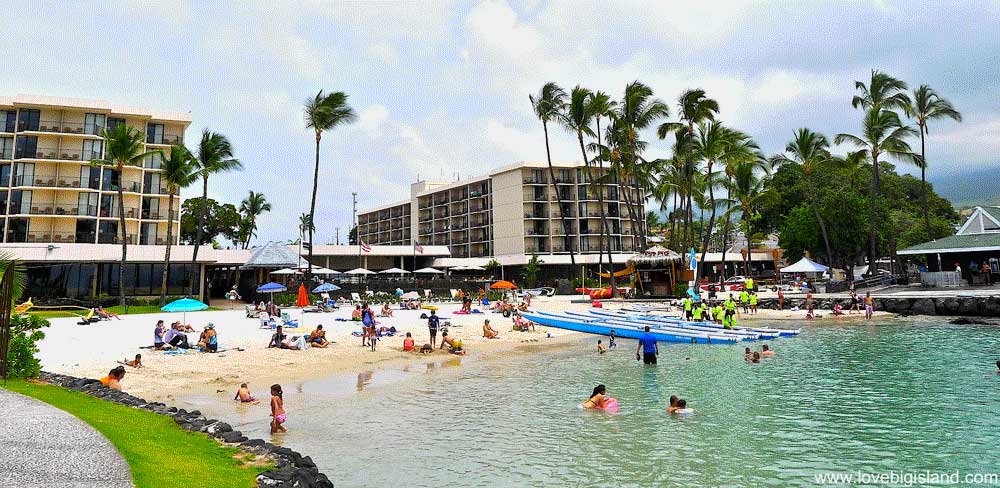
Kamakahonu (King Kam Beach) in downtown Kona, the calm beach described above. There is decent snorkeling on the other side of the pier.
On the Hilo side, Carlsmith is a walled lagoon where the water is almost still, grassy rather than sandy, so a toddler can wade with you. When the ocean is too rough, the resort pools and lagoons on the Kohala Coast are worth paying for.
Winter surf, and why mornings are better
Winter surf builds on the open, unprotected shores from about October to April. Once waves at Hāpuna top three feet, the rip currents and pounding shore break make it experts-only, not a winter beach for little kids. The walled and protected spots stay calm year-round, so Kamakahonu and Carlsmith are the safer winter picks. Before you drive to a beach that faces the open ocean, like Hāpuna, check the morning surf forecast and skip it if high surf is in the report.
Get to the beach early. The Kona and Kohala side has almost no natural shade, so a toddler overheats and burns fast once the sun is high. The afternoon wind also kicks up chop, and the blowing sand makes the beach itself less pleasant for little ones. Parking is easier early too: the Hāpuna lot fills fast on weekends, and street parking in downtown Kona is limited. An early start also means beach first, then back to the base for the nap.
Off the beach
On a rainy or fussy morning, the low-key options are near Hilo. The Panaʻewa Rainforest Zoo is small enough to walk in an hour with a toddler, and kids under three get in free ($5 for older children, $13 for adults). The ʻImiloa Astronomy Center has a full-dome planetarium and hands-on exhibits. Rainbow Falls is a drive-up waterfall with no hike to reach it, while the ʻAkaka Falls require a small hike
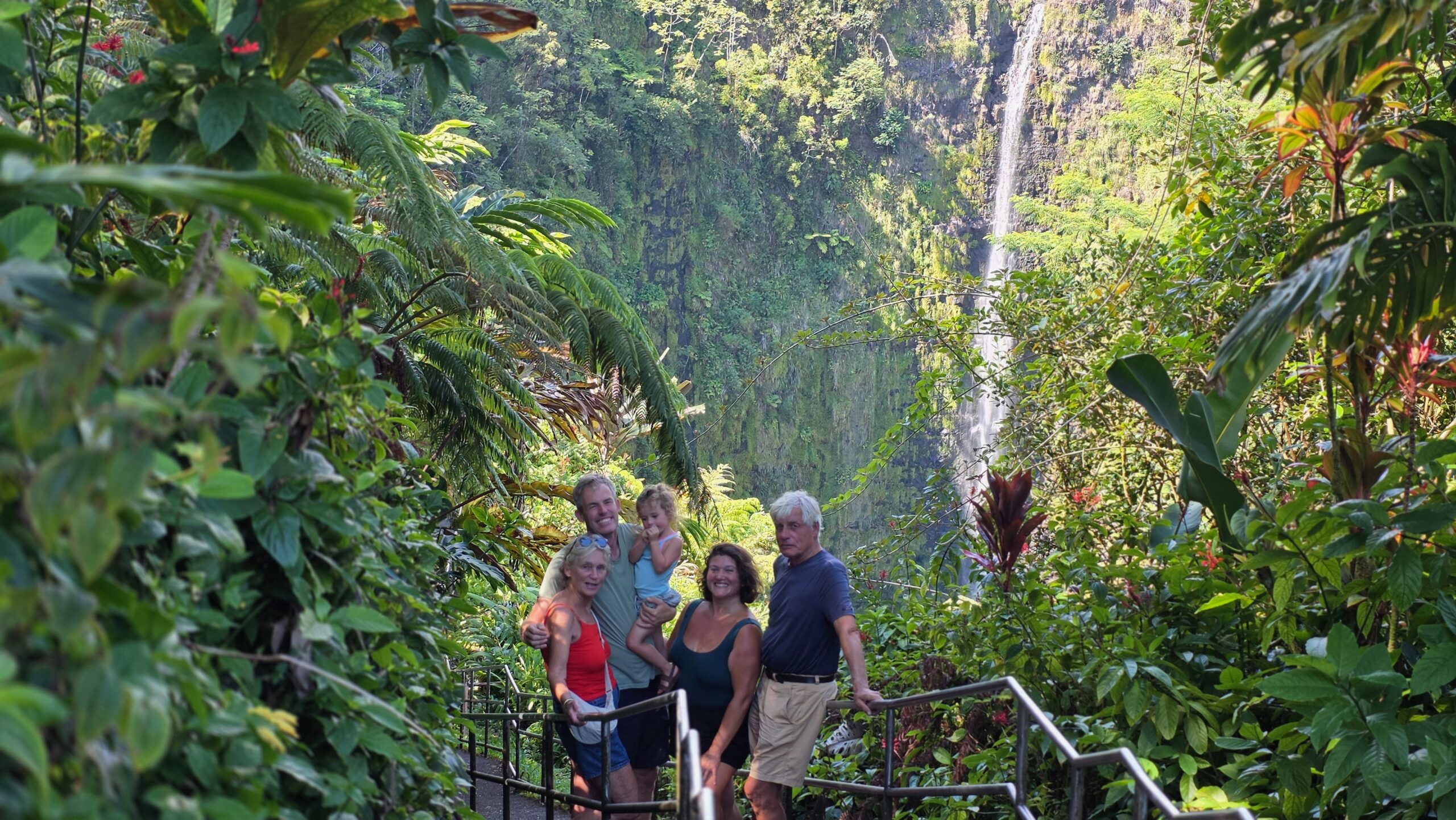
Gerrit’s parents visited from the Netherlands in October 2025. We took them to ʻAkaka Falls on day one, and our then 2.5 year old daughter walked half the loop by herself.
Near Kona, the seahorse farm has something hands-on for a small kid to do. For playgrounds, head to ʻAnuenue in Waimea or Kamakana at Harold H. Higashihara Park in Kona. Above Volcano Village, Lili House Farm opens on Fridays and Saturdays for a small fee, and toddlers can feed and hold the animals. The farm changes how it runs visits often, so check its site the week you go.
What to skip with a toddler
The Mauna Kea summit tours don’t take children under 13 because of the altitude, so save the stars for a lower-elevation tour. The manta ray night snorkel needs a confident swimmer who can climb a boat ladder.
At Hawaiʻi Volcanoes National Park, keep to Nāhuku (the Thurston Lava Tube) and the overlooks. The terrain is sharp lava, and volcanic gas is a hazard for infants and young children, so check current air-quality conditions before you go.
Flights, car seats, and gear
Fly the daytime route if you can. An overnight flight from the mainland saves a day, but you land with a jet-lagged toddler and a drive still ahead, so plan an easy first day near whichever airport you land at.
Car seats, a kitchen, and rented baby gear
You’ll be in a car every day, so bring your own car seats or reserve them with the rental car. Renting a condo with a kitchen and stocking up at Costco on arrival cuts what you spend on food and keeps you on nap and meal times. Local companies rent cribs, strollers, and high chairs and deliver to your hotel, if you’d rather not fly with them.
Carrier, stroller, and insect repellent
A stroller only helps at the flat, paved stops like Panaʻewa Zoo and the drive-up waterfalls, so bring a soft carrier for everything else. You’ll want it for the sandy beaches, and for the steps down into Nāhuku and the uneven lava at the Volcanoes overlooks.
Pack insect repellent. Mosquitoes are worse on the wet, windward side and at the rainforest stops you’ll use on a rainy morning, like the Panaʻewa Zoo and the farm visits up around Volcano. The dry Kona-Kohala coast has far fewer, so a small bottle in the day bag is enough for the days you head to Hilo or the rainforest.
If your kids are still in the stroller-and-nap stage and you mainly want easy beach days, plan the trip around the calm beaches and pools, and save the volcano hikes and the summit stars for a return trip when they’re older. Our full family guide covers the school-age and teen version of the same trip.