You can tour the Ocean Rider Seahorse Farm at Keahole Point, north of Kailua-Kona, and hold a live seahorse while you are there. This is a working farm and research operation, not an aquarium exhibit: a certified marine biologist leads the tour, which runs about an hour. The displays hold more than half of the world’s 36 seahorse species, plus baby seahorses, the pregnant males, and leafy and weedy sea dragons.
You cannot take the seahorse tour if you have visited another aquaculture facility the same day, a bio-security measure to protect the animals. The farm sits inside the Hawaii Ocean Science and Technology Park, the Natural Energy Lab (NELHA) campus that also has the sea salt, abalone, and coral nursery tours, so you can fit two or three of them into one half day.
Table of contents
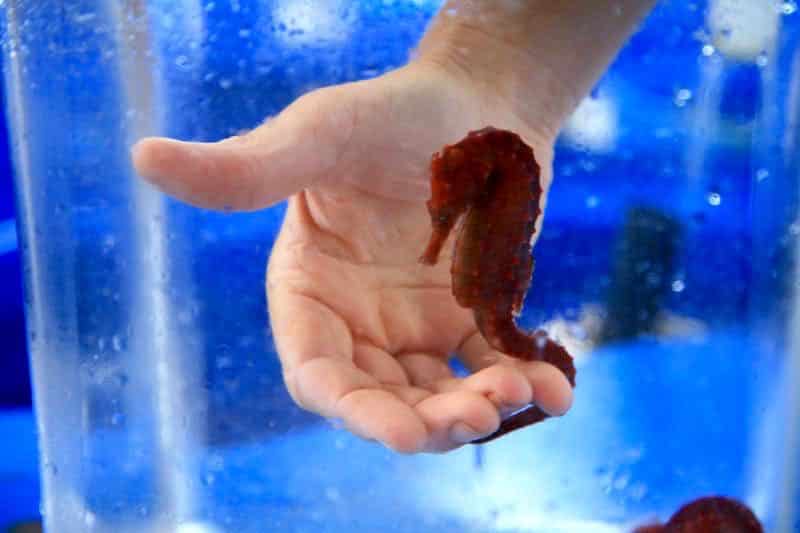
You can hold a seahorse during the tour at the Ocean Rider Seahorse Farm. Image credit: the Ocean Rider Seahorse Farm
Ocean Rider Seahorse Farm Tour Details
Tours run Monday through Friday, three times a day (10 am, noon, and 2 pm) in high season and fewer times in low season. Each one lasts about an hour and is led by a certified marine biologist trained in public speaking.
You will see baby seahorses, pregnant males, and leafy and weedy sea dragons, plus an aquarium displaying more than half of the world’s 36 seahorse species. There is an interactive tide pool and a fish-feeding station for kids. The ocean rider website lists the current season’s tour times.
Buy tickets online through their website or by phone.
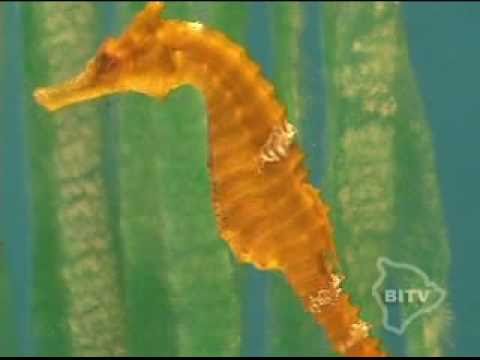
How to get to the Ocean Rider Seahorse Farm
The Ocean Rider Seahorse Farm sits 5 minutes south of the Kona airport, at Keahole Point. Take the exit for the “Natural Energy Lab” about one mile south of the Kona airport exit.
The road you turn onto is called Makako bay drive, and there is large white scaffolding with solar panels visible at the exit.
The address where they give the tours (for use with GPS) is: 73-4388 Ilikai Place, Kailua-Kona, HI 96740, USA.
Sea Salt Farm tours
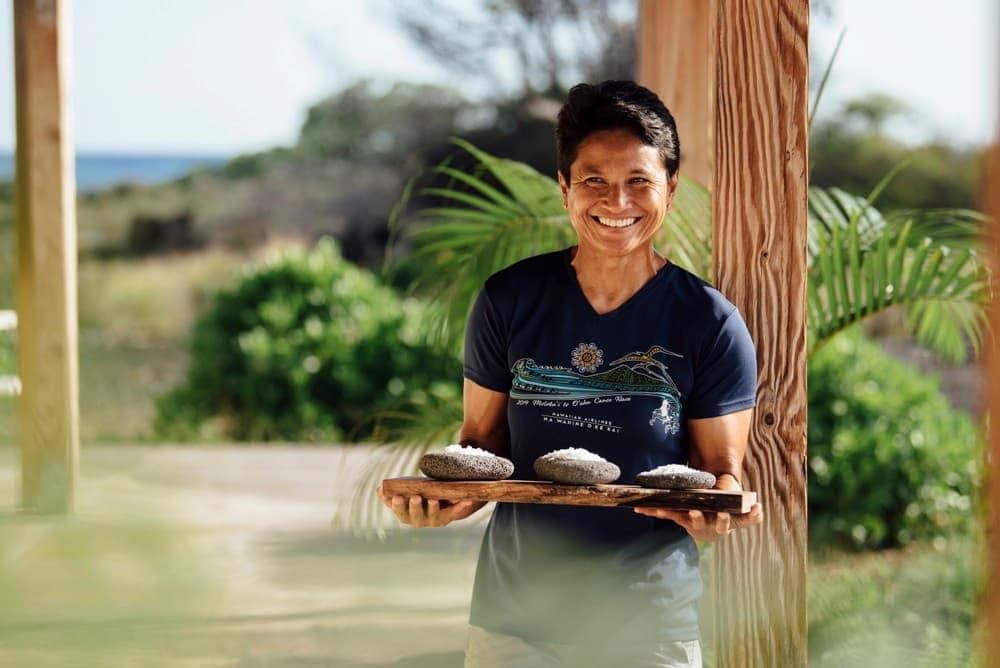
The Kona Sea Salt farm makes salt by evaporating seawater pumped from 2,200 feet below the surface, on a site buried by the 1801 eruption of Hualālai. Hawaiians have used salt in ceremonial blessings, for purifying, and for preserving fish.
During the tour of their facility you will learn how salt figures in Hawaiian culture and how they harvest it from their unusual water source. You will also get to taste several of the flavored salts they produce.
Book a farm tour on the Kona Sea Salt booking page
Big Island Abalone
Big Island Abalone (website) runs a 10-acre ocean aquafarm and ends every tour with a tasting of their fresh grilled abalone. Tours last an hour and cost $35 per person, or $17.50 for children 8 and under.
Your guide walks you through the farm’s history and how abalone are bred and raised. The seaweed (dulse algae) operation takes up almost half the farm and is the abalone’s favorite food. Near the end you get to handle different sea critters pulled from the farm’s ocean-water pipes, followed by the tasting.
Book through the booking website.
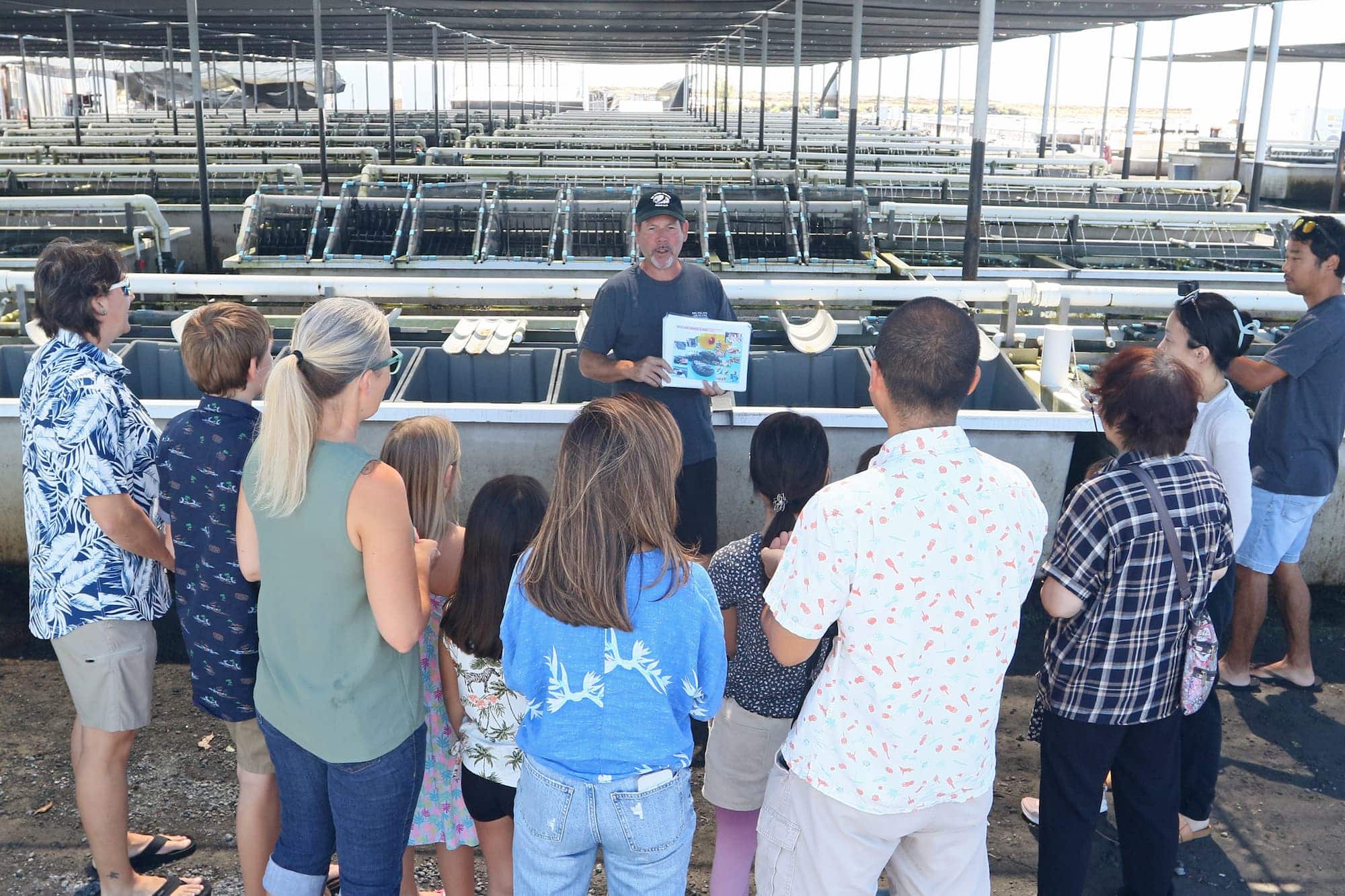
During the tour you learn how abalone are bred and raised. The tour ends with a tasting of grilled abalone.
ʻĀkoʻakoʻa Coral Nursery Tours
ʻĀkoʻakoʻa runs weekly behind-the-scenes tours of their working coral restoration facility on the west side of the island. Visitors get an up-close look at live coral growing in raceways (large flow-through tanks) and see the water filtration and pumping systems that keep the operation running. Guides cover the science behind reef restoration. The guides tie the science into Hawaiian cultural values and community education.
Tours run Fridays at 11 AM. Book by email and ask the price when you write.
The booking email is on the ʻĀkoʻakoʻa coral nursery website .
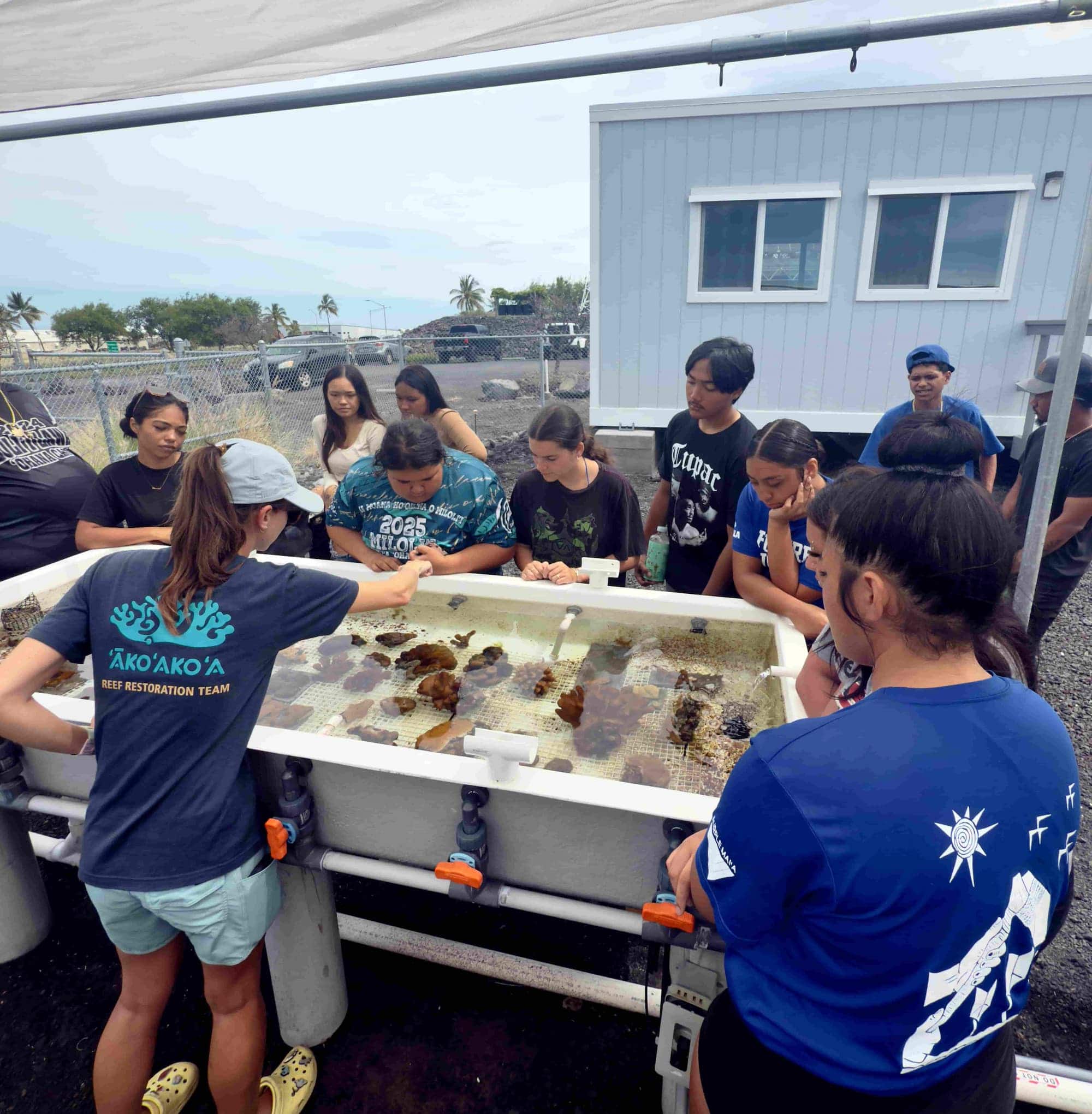
ʻĀkoʻakoʻa runs weekly behind-the-scenes tours of their working coral restoration facility on the west side of the island