
ʻAnaehoʻomalu Bay, A Bay for short, has a sandy entry that deepens gradually, so small kids can stand and splash. The bay is protected and calm enough to swim or paddle; there is no lifeguard. Plan a full beach day here for the swimming and the sunset. Snorkel elsewhere; the water is murky more often than clear.
A Bay is best for families and Waikoloa Beach Resort guests; the free gravel lot is a 2-minute walk from the sand. Two ancient Hawaiian fishponds sit behind the beach, and from the far side of the Kuʻualiʻi pond the sun sets into the middle of the bay behind the palms. That sunset is one we come back for; on holidays and in summer, arrive early to claim shade in the palm grove.
Table of contents
Things to do at A Bay
ʻAnaehoʻomalu (ah-nae-ho-o-MA-lu; everyone shortens it to A Bay) is a crescent of salt-and-pepper sand with a palm grove behind it on the Kohala Coast. You’ll spend most of a beach day in the bay itself: swimming, paddling, and watching the green sea turtles that feed here. The Ala Kahakai coastal trail runs south from the sand. The fishponds sit right behind the beach, and the petroglyph field is a short walk inland.
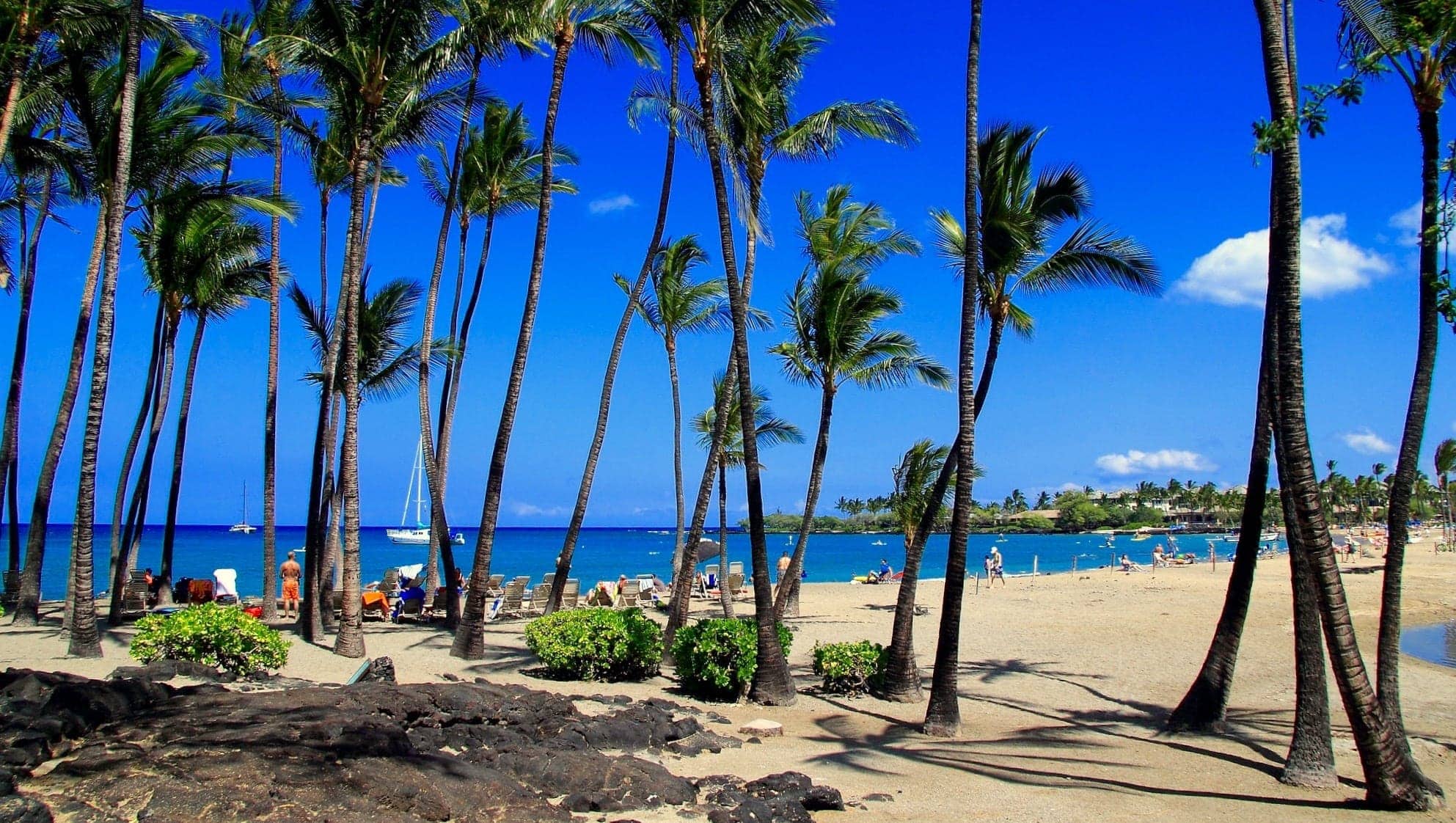
ʻAnaehoʻomalu Bay seen from the beach. Photo credit: jmenard48 on Flickr, under CC 2.0 license.
Swimming
The water entrance is sand rather than rock, and the bottom slopes gently, so a child can stand a long way out and an adult has to wade well into the bay before it gets deep. The bay is protected and usually calm. There is no lifeguard, so keep small kids within reach.
Showers and restrooms are right behind the sand, and the rental hut is about halfway down the beach from the public lot, an easy setup for a beach day with kids.
Snorkeling
The water at A Bay is often murky and visibility is poor for snorkeling. Conditions are usually clearer on the right (north) side of the bay, so head that way if you try it, and swim out a good distance (more than 500 feet) before the better fish and coral show up. You share the bay with kayaks and paddle boards, so keep track of what is moving around you.
The Ocean Sports beach hut rents a mask, snorkel and fins set for $10 an hour or $40 for 24 hours (as of September 2026), first come, first served, between 8am and 2pm. For clearer water, our Kona snorkeling guide maps 14 shore-entry beaches with their entry, visibility and parking.
Fish and turtles you can see at A Bay
The reef fish include Hawaiʻi’s state fish, the humuhumunukunukuāpuaʻa (reef triggerfish), plus yellow tang, needlefish, pufferfish, blue parrotfish and yellow trumpetfish. Green sea turtles feed in the bay and rest on the sand.
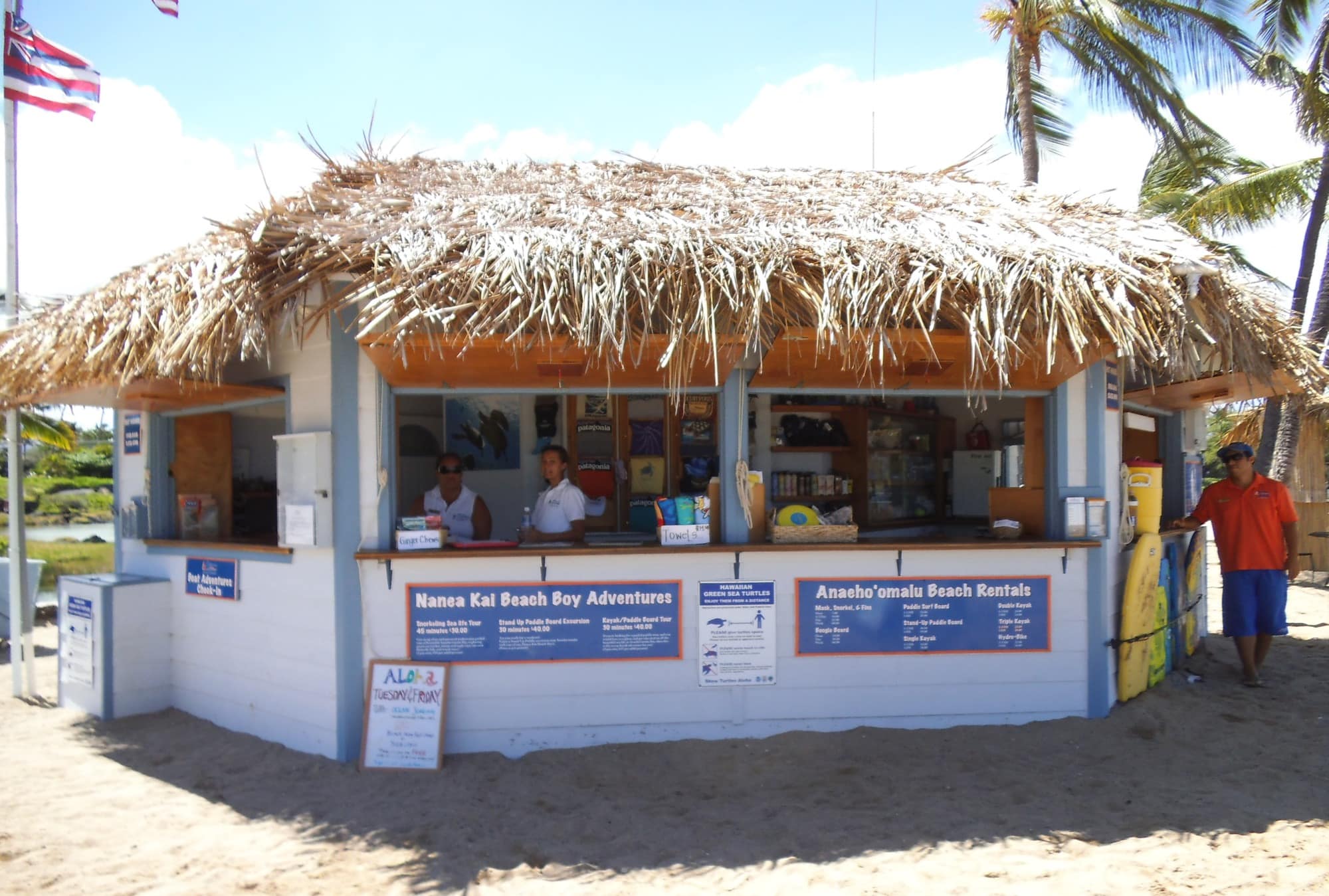
The beach hut halfway down A Bay rents snorkel sets, kayaks, paddle boards and boogie boards. Image courtesy of Ocean Sports.
Kayaks, paddle boards, and cabanas
A kayak or stand up paddle board is the best way to see the whole bay: the water inside is flat, and in the shallows you can watch the reef straight through the surface. Ocean Sports rents single kayaks at $50 an hour, doubles at $60 and paddle boards at $50 (as of September 2026; no reservations, 8am to 2pm). It also rents boogie boards and life vests. A shaded cabana on the sand is $75 for a half day or $150 for the full day, lounge chairs included.
Ocean Sports stopped running its catamaran sails from A Bay on August 2, 2026. Its 30-minute glass-bottom boat ride still runs inside the bay ($50 for adults, $25 for ages 4 to 12), and the snorkel, sunset and winter whale-watch sails that leave from the beach are now run by Hawaii Nautical.
Hiking
Kapalaoa Beach sits about a mile south of A Bay; you walk there along a section of the Ala Kahakai National Historic Trail, the old Kings’ Trail. The walk passes small inlets and tide pools you can stop at for a dip, and turtles often rest on the sand along the way. This stretch is usually deserted even when A Bay is busy.
For a longer walk, keep going to Keawaiki Bay (Lone Palm), a 6.5-mile loop that BigIslandHikes describes turn by turn; the return on the Kings’ Highway, a separate old trail inland from the coast, is hot at midday, so start early.
In September 2025 Waikoloa Land Company, the resort’s landowner, returned the 27-acre Kapalaoa parcel just south of Lava Lava Beach Club to a Native Hawaiian nonprofit, Nā ʻŌiwi O Puʻuanahulu. A management plan is still being written, so stay on the trail and leave the ponds and heiau (temple sites) untouched.
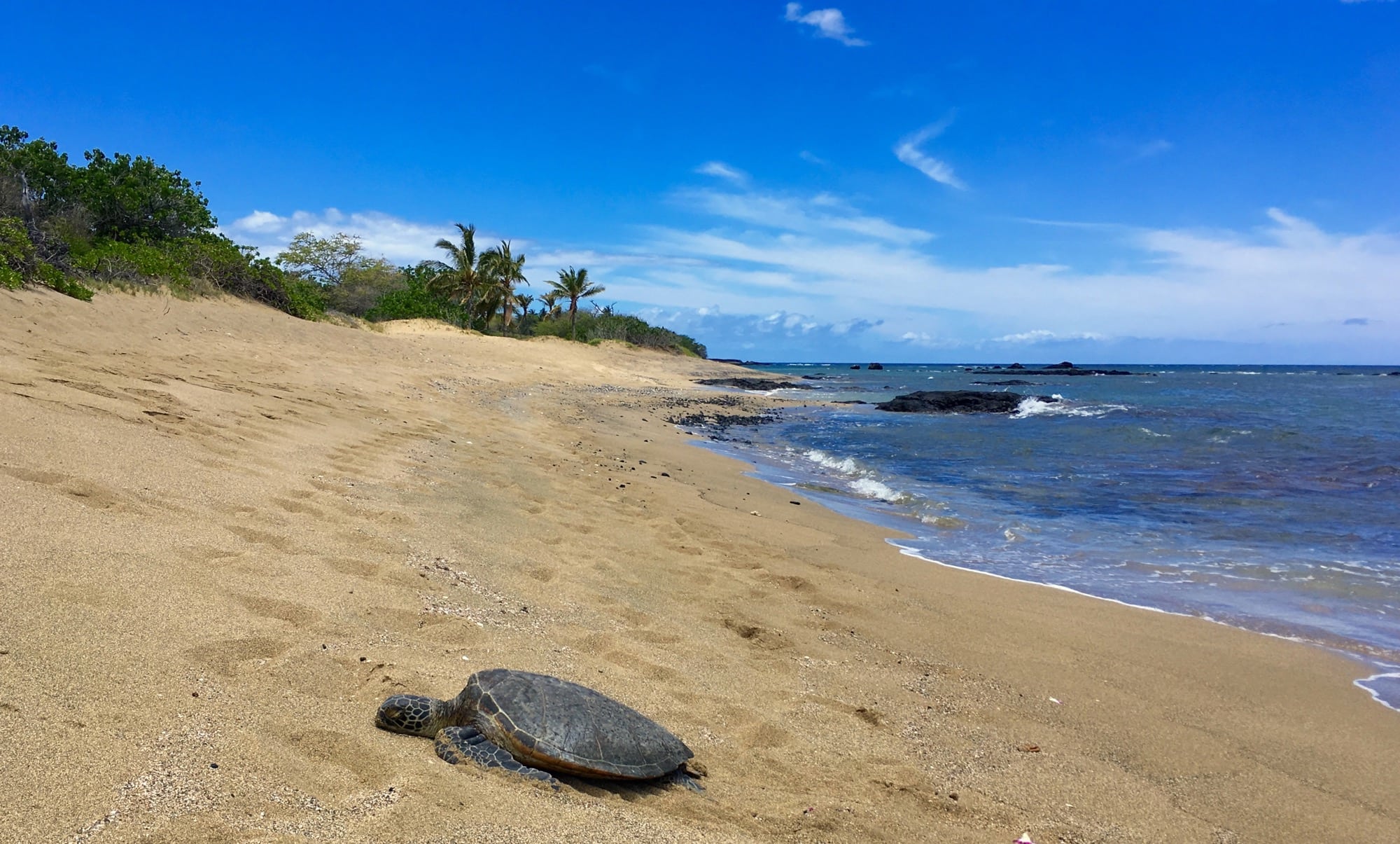
A turtle basking in the sun along the trail to Kapalaoa Beach. Photo by Emily Gleason
Seeing the sunset
A Bay is on our list of the best sunset spots on the Big Island. If you’re here in the afternoon, stay for it. Walk to the far side of the Kuʻualiʻi fishpond at the south end of the beach (it’s huge, you can’t miss it). From there the sun drops into the middle of the bay with palms and sand in the foreground.
After the sun disappears, stay put: the sky keeps shifting from orange to purple, and the fishpond and the ocean reflect all of it.
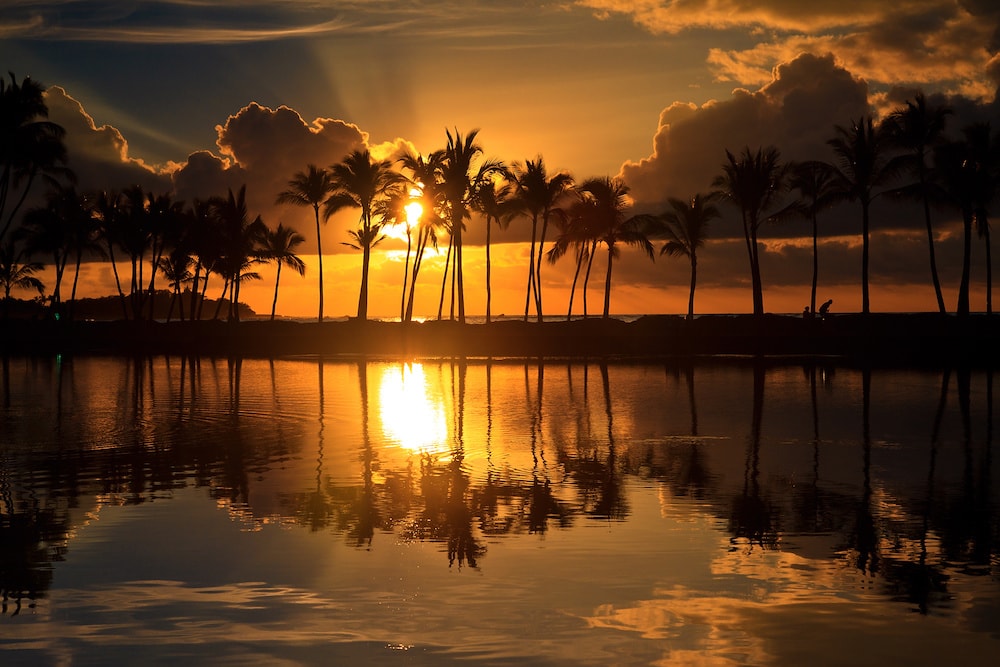
Set up your camera behind the palm-lined fishpond for sunset photos: the palms silhouette against the sun and the pond reflects it.
Parking, directions, and when to go
A Bay is the easiest Kohala Coast beach to reach: a free public lot inside the resort and a 2-minute walk from the lot to the sand.
When to go
Arrive early, before the midday sun, and claim a spot in the shaded palm grove; the shaded spots fill first. Because the Waikoloa resorts are next door, A Bay is at its busiest on holidays and during summer break.
Waikoloa’s nickname, “Waiko-blow-a”, comes from the wind. On windy afternoons kite surfers use the bay; our Waikoloa weather page shows what to expect by month and by hour of the day.
Directions and parking
A Bay is about 35 minutes (26 miles) north of Kailua-Kona on Highway 19. Turn toward the ocean at Waikoloa Beach Drive, pass Queens’ Marketplace on your left, and turn left at the intersection opposite the Kings’ Shops onto Kuʻualiʻi Place, before you reach the Waikoloa Beach Marriott. Follow the road to the gravel public lot; the beach is a 2-minute walk. Parking is free. If you navigate by GPS, aim for 69-1081 Kuʻualiʻi Place and park in the public beach lot.
Food and drinks
Lava Lava Beach Club sits on the southern end of A Bay, with big chairs in the sand for lunch or sunset cocktails. Lunch runs 11:30am to 3pm on weekdays, brunch 11am to 2:30pm on Saturday and Sunday with a Bloody Mary bar, happy hour 2 to 4pm daily, and dinner 4 to 9pm. Live music on the beach starts at 5:30pm every night, with hula around sunset. Walk-ins are seated; online reservations are for parties of up to six.
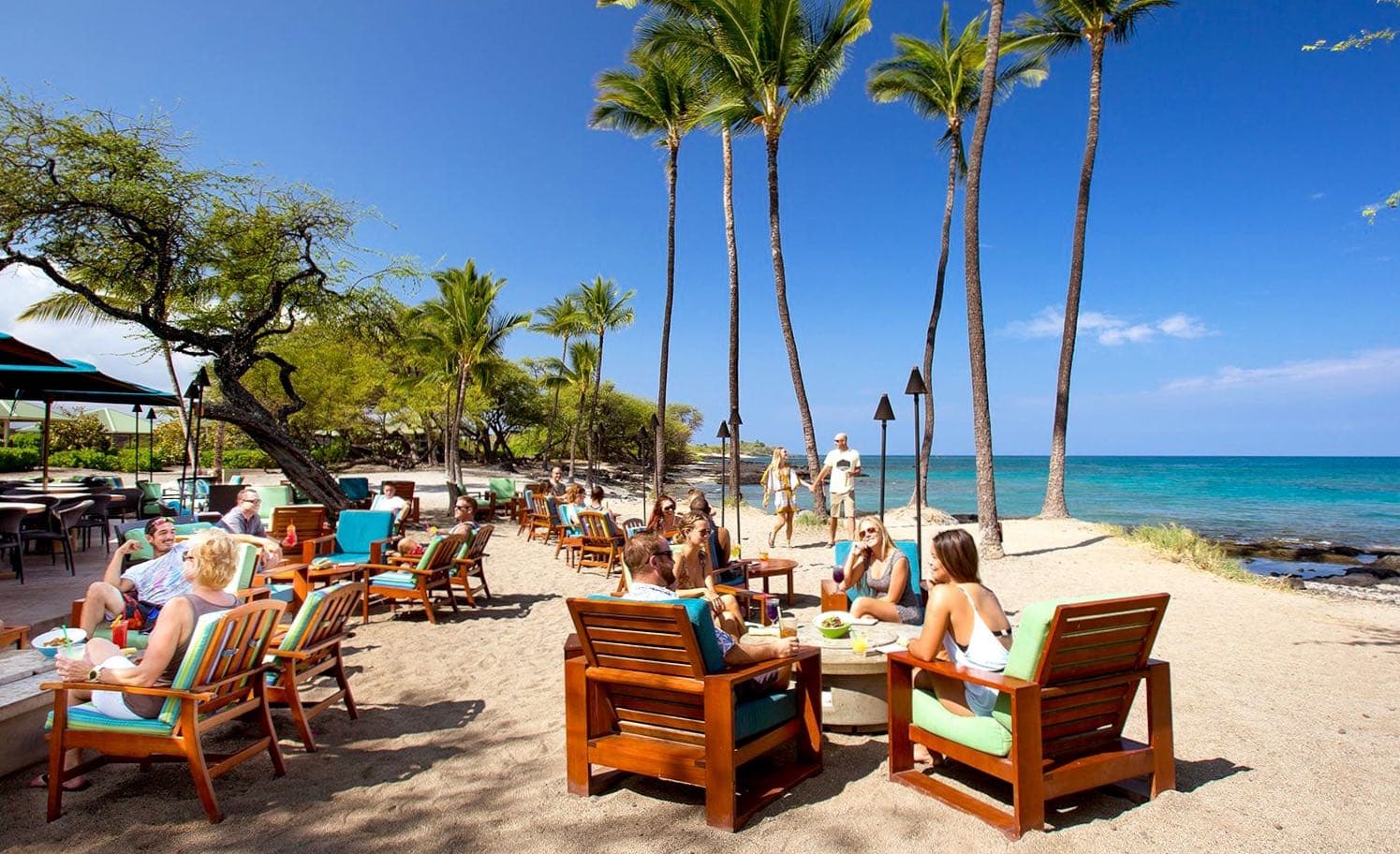
Beach chairs in the sand at Lava Lava Beach Club, on the southern end of A Bay. Image credit: Lava Lava Beach Club
Amenities
ʻAnaehoʻomalu Bay has more amenities than most Kohala Coast beaches, but no lifeguard. At the beach you’ll find:
- Showers and restrooms
- Free parking
- The Ocean Sports beach hut for gear rentals and cabanas
- A restaurant on the beach
Fishponds and petroglyphs next to the beach
The fishponds behind the beach and the petroglyph field inland both date from before Western contact. Both are free to visit and a short walk from the sand.
Historic fishponds
Directly behind the beach are two large fishponds, Kahapapa and Kuʻualiʻi. Hawaiians built such ponds, loko iʻa in Hawaiian, to trap and raise fish for the table. One translation of ʻAnaehoʻomalu is “bay of the protected mullet”, the fish most often raised in these ponds (mullet is ʻamaʻama or ʻanae in Hawaiian).
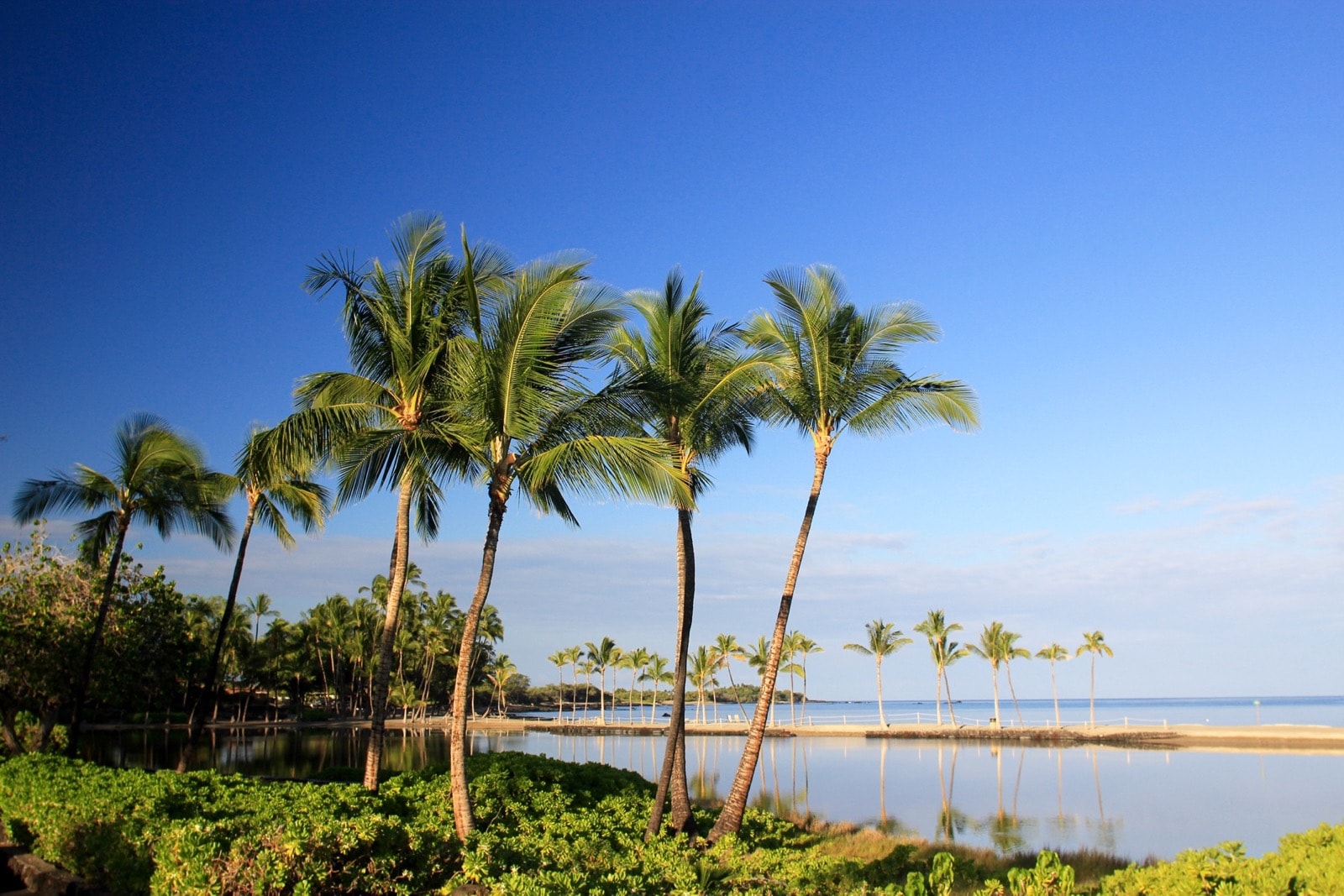
The Kuʻualiʻi fishpond at the southern side of the beach. Credit: Island of Hawaii Visitors Bureau (IHVB) / Kirk Lee Aeder
Fishponds were once a normal sight along Hawaiʻi’s coasts, a form of farming that kept feeding people year after year, and fish from some ponds were reserved for the aliʻi (chiefs). Ke Ola Magazine explains how the pond walls and sluice gates worked and how much fish an acre of pond could raise.
Waikoloa Petroglyph Preserve
The Waikoloa Petroglyph Preserve is a 0.7-mile walk (about 14 minutes) from the beach, between the Kings’ Shops and the golf course. It is one of the largest and best preserved petroglyph fields on the Big Island, with some 30,000 carvings of people, animals and canoes cut into the lava, the oldest dating to around the 15th century.
The resort runs free guided walks Thursday through Sunday at 9:30am from the marked trail near the Kings’ Shops gas station. Petroglyphs are the closest thing to a written language in old Hawaiʻi, and this field is one of the easiest places to see them up close. On your own, stay on the trail and don’t step onto the carvings for photos.
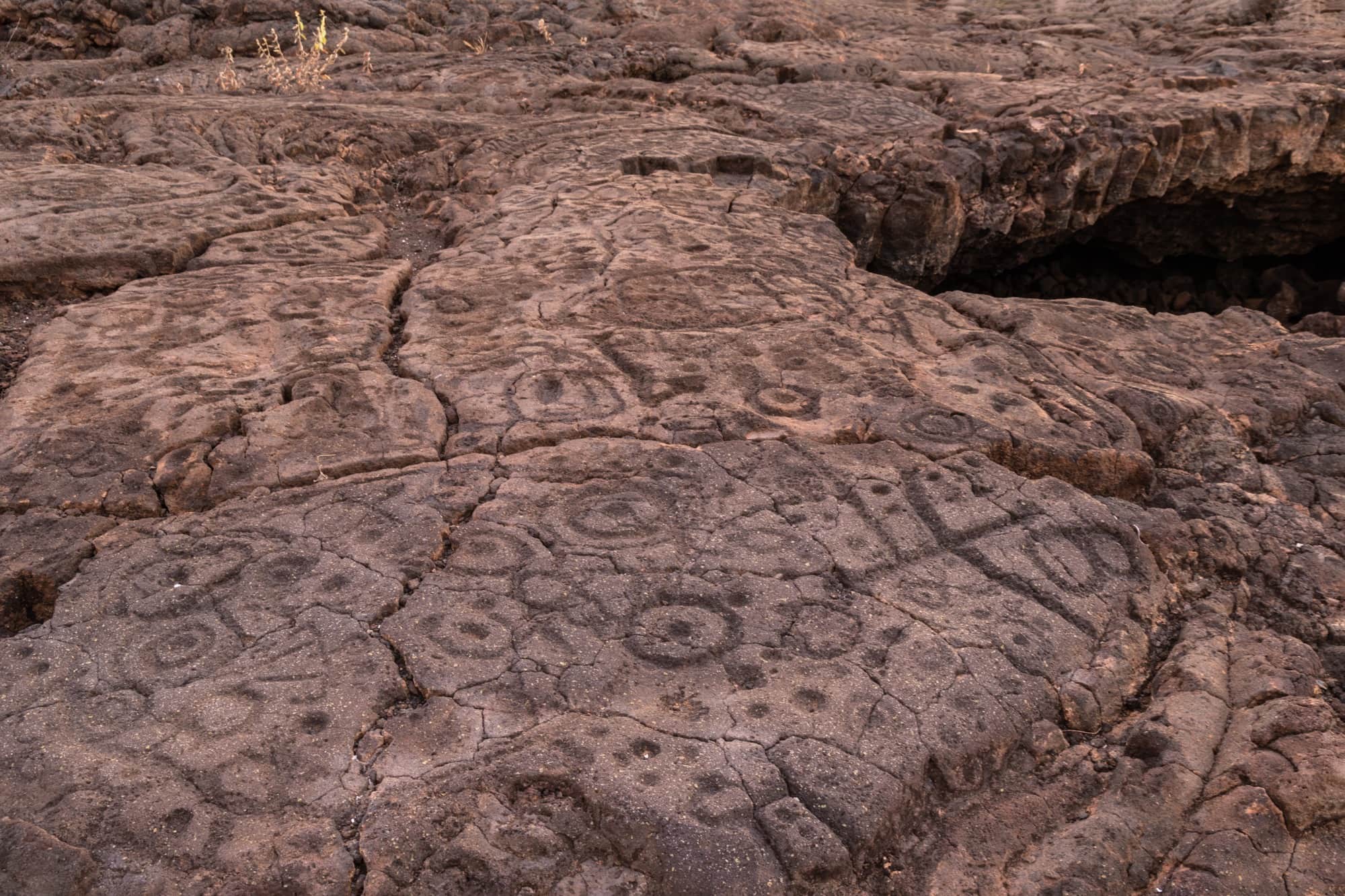
Petroglyphs in the Waikoloa field, carved into the lava.