
Before the fighting started, a Hawaiian army stood at Kawaihae and argued about which road to take. The chief who settled it was Lonoikamakahiki, and he had spent his life winning arguments.
The legend of Lonoikamakahiki
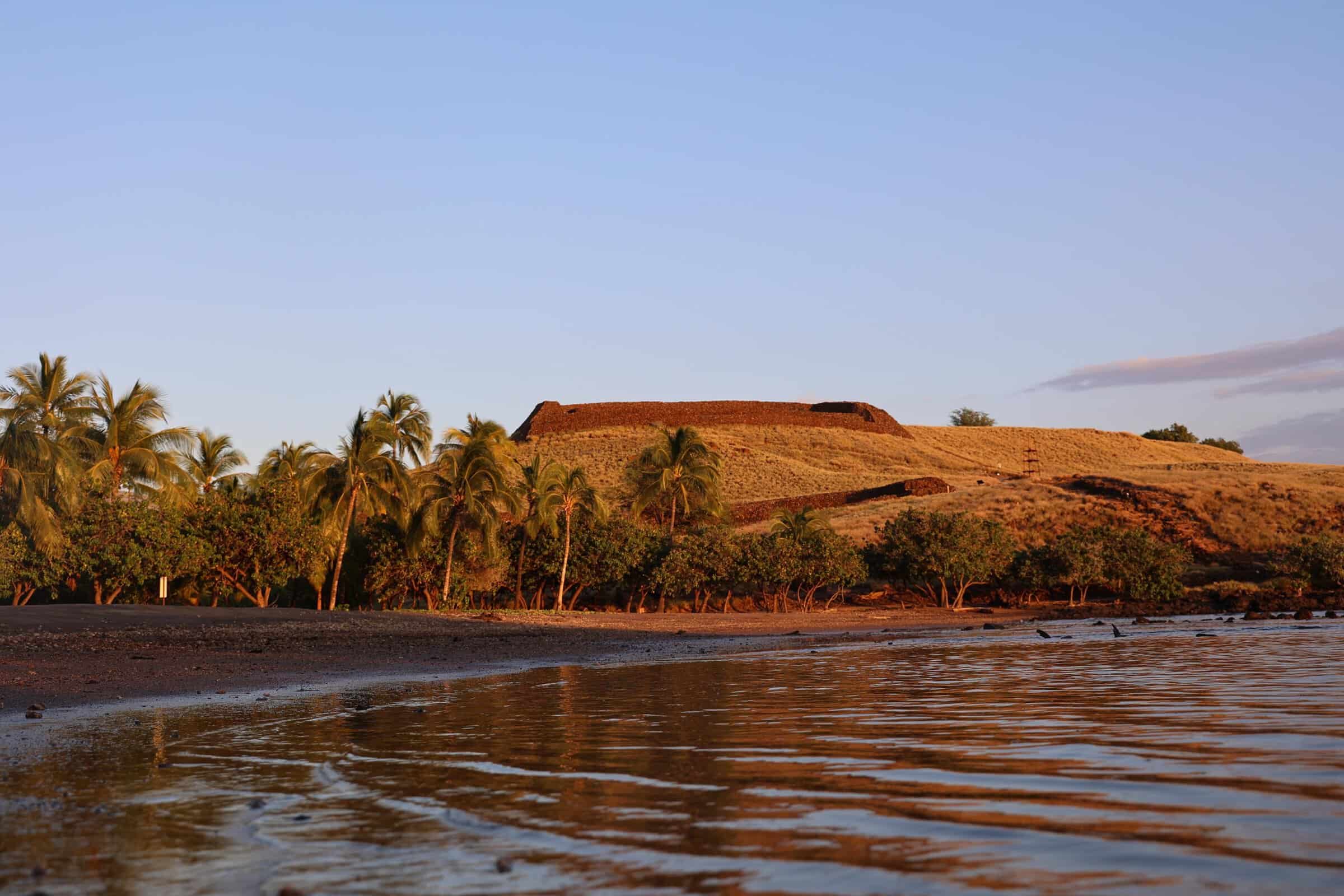
Puʻukoholā Heiau above Pelekane Bay, on the Kohala coast Lonoikamakahiki’s army crossed generations earlier. Image credit: NPS Photo, Puʻukoholā Heiau National Historic Site.
Lonoikamakahiki was the son of Keawenuiaʻumi and took the rule of Hawaiʻi Island after his father died. As a boy he was difficult enough that his attendants went to his father about it, and his father came to ask him directly what he was up to.
What he did with himself was learn hoʻopāpā, a formal contest of riddling and wit held in front of an audience that keeps score. He learned it at Hilo, went home to Nāpoʻopoʻo on the Kona coast, and practised on his friends until it was all he wanted to do.
Grown, he sailed to Oʻahu to take on Kākuhihewa, the chief there, and the two of them went at each other round after round. They came out of it friends.
Later Kamalālāwalu, the chief of Maui, sailed against Hawaiʻi. When Lonoikamakahiki’s men joined up with his commander Pupuakea’s, they argued about the route. The chief and his commander wanted to climb by the Waimea uplands. His priest Hāuna said go through Kohala instead, to Puʻumaneʻo, and set the battle there. Lonoikamakahiki took the priest’s road, and the army marched out of Kawaihae.
The roads out of Kawaihae
Kawaihae is the harbour on the northwest corner of the island, and both roads out of it are still there. One climbs inland to Waimea, The other runs north into Kohala. Those are the two directions the army was choosing between.
Nāpoʻopoʻo, where he learned to argue in the first place, is further south on the Kona coast. For the heiau and historic sites tied to chiefs like these, start with our history and culture guide.
About this telling
The account was collected in Hawaiian by Abraham Fornander in the 1800s from Hawaiian informants. We read it in the 1996 Hale Kuamoʻo edition.
Read more
- Fornander’s Collection of Hawaiian Antiquities, volume four. Free to read, and printed with the Hawaiian on one page and an English translation facing it, so you can follow the story in English and check it against the Hawaiian line by line.
- Ka Moʻolelo o Lonoikamakahiki, on Ulukau. The Hawaiian text on its own, in the 1996 Hale Kuamoʻo edition, free to read. This is the version our retelling works from.