
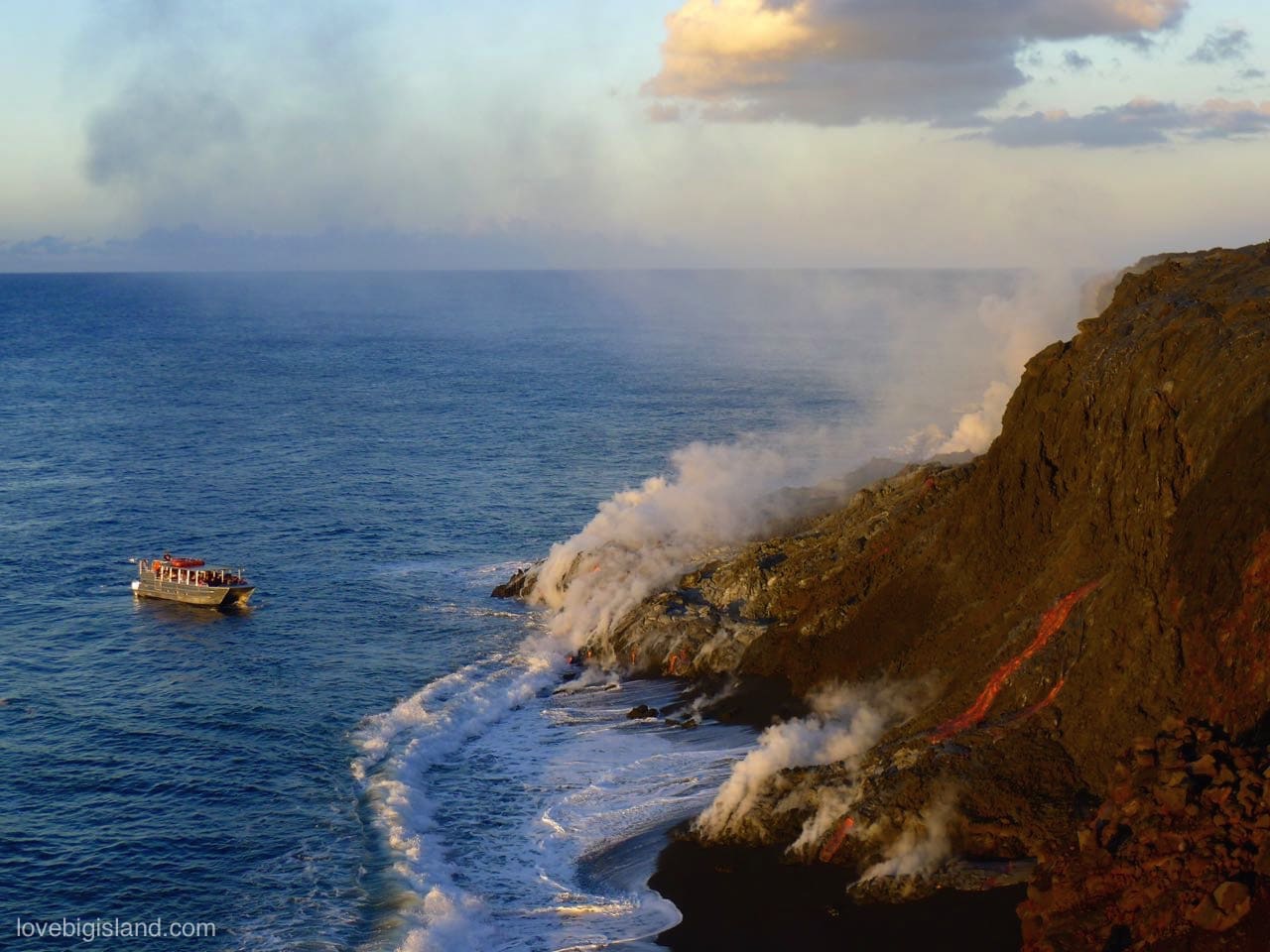
The Big Island is the only Hawaiian island where you can stand at the rim of an active volcano in the morning and be in the water with manta rays after dark. Four activities here exist nowhere else in Hawaiʻi: Hawaiʻi Volcanoes National Park, the Mauna Kea summit, the manta ray night snorkel, and active lava. Lava depends on the day: Kīlauea erupts in episodes and pauses between them, so check the USGS status page before you build a day around it.
The island is nearly the size of Connecticut, so one or two activities a day is the right pace. Start with the four exclusives, then fill in around your base, Kona in the west or Hilo in the east.
Table of contents
Activities You Can Only Do on the Big Island
The four activities below are only possible on the Big Island, so settle them before anything else. See also our guide to things to do on Oʻahu.
Q: Which activities are exclusive to the Big Island?
The following four activities are exclusive to the Big Island:
- The Hawaiʻi Volcanoes National Park, with active lava fields, summit craters, and rainforest that can all change in a matter of months.
- Visiting the Mauna Kea summit, home to some of the world’s major observatories, for stargazing and sunset.
- The manta ray night dive/snorkel.
- Seeing red-hot lava. This is only possible when Kīlauea is actively erupting. Check the USGS HVO status before planning your trip around it.
Q: Which activities do you recommend for Kona?
The Kona coast is the sunny side. Enjoy the many white-sand beaches, tour a coffee farm and taste Kona coffee, the Manta Ray Night Dive/Snorkel, and see the whales during winter.
See also our list of things to do in Kona.
Q: Which activities do you recommend for Hilo?
Hilo is the base for rainforest hikes, the Puna district, cascading waterfalls, scenic road trips, and the shortest drive to lava viewing when Kīlauea is in an active episode.
See also our list of things to do in Hilo.
Q: Which tours do you recommend?
We keep a short list of the tours we would send a friend on. We only list operators that are well run and that have held high guest ratings for years. Ones that cut corners on the community or the reef do not make the page.
Check out our list of tours on the Big Island.
Activity Picks by Coast (Kona vs Hilo)
If you’re based on the Kona side, you have access to the island’s sunniest weather and its best water-based activities. The manta ray night snorkel, Kona coffee farm tours, and the Kohala Coast beaches are all within easy range. Snorkeling at Kealakekua Bay is a half-day from Kona by boat tour, and whale watching runs out of the multiple Kona harbors from mid December through April. Mauna Kea is a 90-minute drive, so you can go up for sunset if you leave by late afternoon. For day trips to the volcano, plan a full day: it’s a long two-hour drive each way.
If you’re based on the Hilo side, the volcano and the waterfalls are closest. Hawaiʻi Volcanoes National Park is 45 minutes away, which makes it easy to do a morning session and still have the afternoon for waterfalls. ʻAkaka Falls and Rainbow Falls are both within easy reach of town. The Hāmākua coast’s botanical gardens, chocolate farms, and ATV tours are within an hour north of Hilo. The hot ponds at Pohoiki are about an hour south. For Kona-side activities like the manta ray night snorkel, plan an overnight or book a tour that includes transport from your side of the island.
All Big Island Activities, A to Z
All 32 activities below, in alphabetical order, each with a link to its full guide. Several of them cost nothing.
- Go off-road with an ATV ride
- Explore the beaches: white, black, and green sand
- Rent a bicycle and cover ground at your own pace
- Walk through one of the botanical gardens on the Hilo side
- Tour a cacao farm and taste locally made chocolate
- Go camping and reach beach parks with no day-use lot
- Tour a coffee farm and taste Kona coffee at the source
- See spinner dolphins from a snorkel cruise
- Join a farm tour and see how the island feeds itself
- Shop a farmers market for produce and prepared food
- Play a round at one of the golf courses
- Explore Hawaiʻi Volcanoes National Park
- See the Big Island from above with a helicopter tour
- Put on your boots and go hiking
- Go horseback riding through ranch lands and rainforests
- Soak in one of the geothermal hot ponds in Puna
- Put on your hard hat and explore miles of lava tubes
- See red-hot lava when an eruptive episode is running
- Get cultural (and culinary) with a luau show
- Join the manta ray night dive/snorkel
- Pack some food and go for a picnic
- Rappel down a waterfall on ropes
- Road trip: pick one of our favorite scenic drives
- Explore the underwater world with scuba diving
- Snorkeling is the self-guided alternative
- Stand-up paddleboard along the Hilo or Kona coastline
- Go stargazing at the Maunakea summit
- Catch a wave at the birthplace of surfing
- Volunteer and give back during your stay
- Visit one of the waterfalls on the north and east side
- See humpback whales from shore or from a boat
- Soar through the treetops on a zipline course
ATV Tours
Most of the Hāmākua and Kohala coastline is private land with no public trail access. ATV tours are one of the few ways to reach it: forested ridgelines, cliff edges, and waterfall pools that sit behind locked gates. Tours run 1.5 to 3 hours and cover 10 or more miles of private track; side-by-side UTVs seat up to four, so a family rides together rather than on separate machines.
All six operators are in our ATV tour guide, with routes and minimum ages.
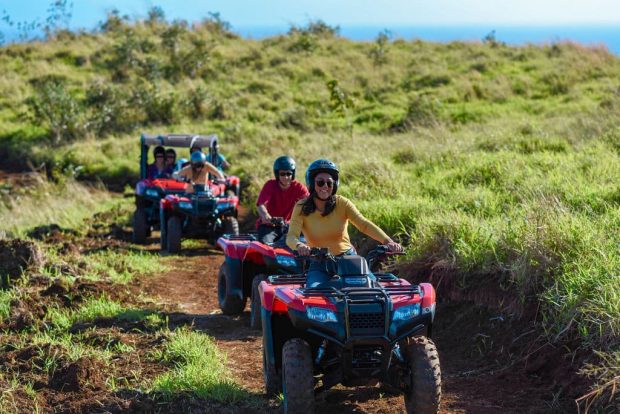
Umauma Deluxe ATV Waterfall and Swim Experience
Five and a half miles of private ATV trail on the Hamakua coast, muddy by design, with ocean views and a waterfall swim to finish. Good for mixed groups: the Side x Side UTVs seat up to four.
from:
$229
What is a suggested tour?Our suggested tours are hand-picked tours that receive consistent good reviews, give back to the community, and work hard to minimize their impact on the environment. Read more about these tours on our website.Beaches
The Big Island has three sand colors that no other single Hawaiian island can match: white, black, and green. The green sand at Papakōlea is 88 to 92 percent olivine crystals weathered out of the cinder cone behind the beach, and reaching it takes either a 2.5-mile hike each way or a ride from the trailhead. White sand clusters on the Kohala and Kona coasts; the black sand sits mostly on the east side near Hilo and Puna. Kohala and Kona have calm swimming; the east side has black sand and surf.
Our Big Island beach guide sorts every beach by sand color and tells you where the parking runs out first.
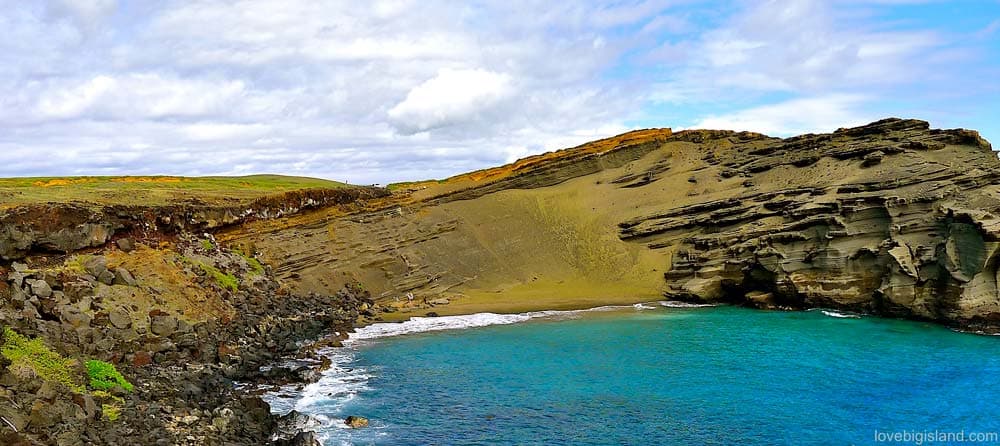
Green Sand Beach at Papakōlea. The beach sits below the eroding flank of Puʻu Mahana, the cinder cone that supplies the olivine.
Biking
E-bike rentals have made biking Hawaiʻi Volcanoes National Park realistic: the Crater Rim route is paved and mostly gentle grade, and it reaches overlooks the shuttle does not. Coastal cruising near Hilo or Kailua-Kona covers ground with little effort. Mid-elevation rainforest trails are the off-road option, and rental shops in both towns carry road, mountain, and electric bikes by the day.
Our biking guide lists the rental shops in Hilo and Kailua-Kona and says which roads have a usable shoulder.
Botanical Gardens
The Hilo and Hāmākua coasts get 130-plus inches of rain per year, and it shows in the gardens on that side. The Hawaii Tropical Bioreserve and Garden near Hilo is our first recommendation. It sits in a gorge above the ocean, takes 90 minutes to two hours to walk through, and the trail has enough elevation change that you will want closed shoes rather than sandals. Most gardens on this side of the island cost under $20 and are easy to pair with a drive along the Onomea Scenic Route.
Our botanical gardens guide has admission prices and walking times for all of them.
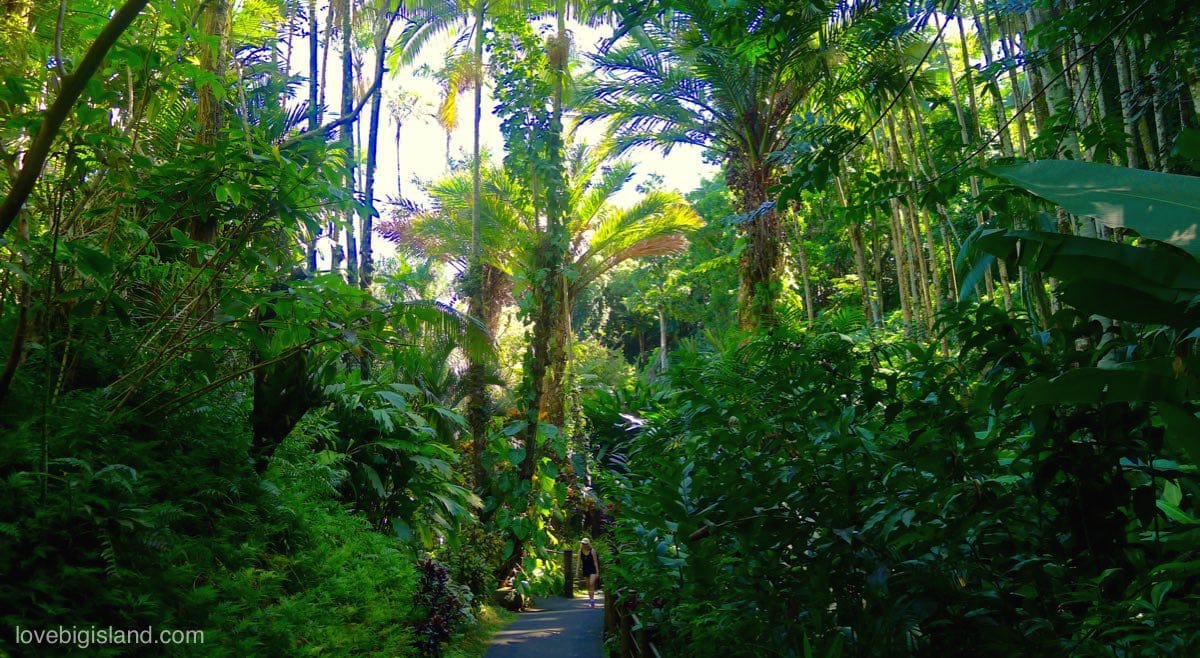
The Hawaii Tropical Bioreserve & Gardens near Hilo are our favorite botanical garden on the Big Island
Cacao Farm Tours
Hawaiʻi is the only US state where cacao is grown commercially, and nearly all of it grows on the Big Island. The farms are concentrated in two zones: two south of Kona and nine along the Hāmākua coast and near Hilo. Most tours run two to two-and-a-half hours, walk you through the orchard and processing facility, and end with a tasting. Prices range from around $30 to $125 per person.
Some farms take walk-ins and some need booking a week out. Our cacao farm tour guide says which is which.
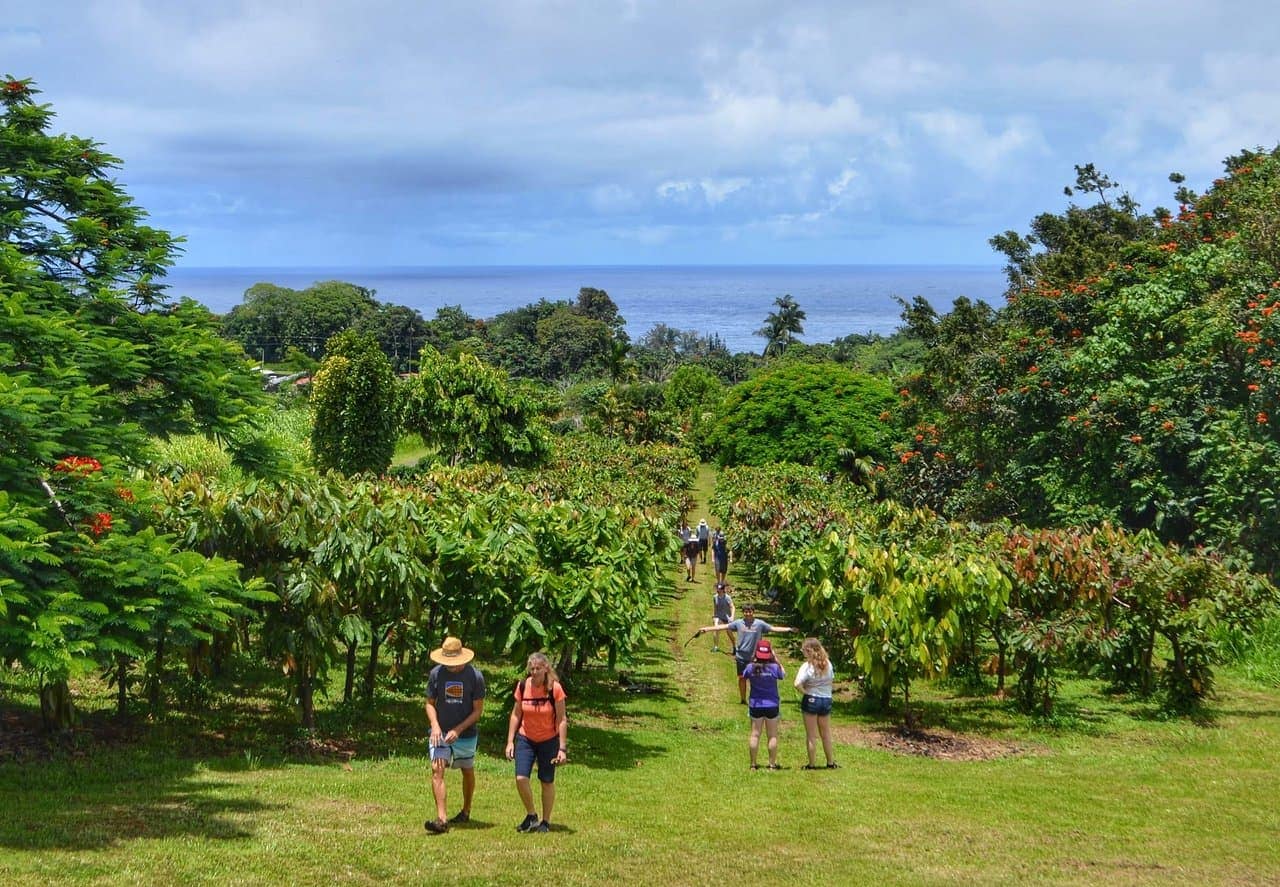
The 2.5 hour Hamakua Chocolate Farm tour takes you through their farm, gardens and cacao processing facilities. Image credit: the Hamakua Chocolate Farm.
Camping
Camping gets you to beach parks, forest reserves, and corners of Hawaii Volcanoes National Park that have no day-use parking anywhere near them. Most sites need advance reservations through the county or state system, and slots at the popular spots go weeks ahead. Book those before the flights, not after. County beach parks cost a few dollars a night; the campgrounds inside the national park charge more.
Camping permits run through two separate systems, county and state. Our camping guide covers both.
Coffee Farm Tours (Kona Coffee)
Kona coffee grows on a narrow volcanic strip along Highway 11 between Hōlualoa and Hōnaunau, and most farms welcome walk-in visitors. The majority of tours are free or under $30, run 20 to 45 minutes, and are easy to stack: two or three farms in a half-morning is a reasonable pace. A few go deeper, with roasting workshops, cupping sessions, and at least one farm offering an ATV ride through the crop with the owner.
Our Kona coffee guide says which farms roast on site and which run a proper cupping.
Dolphins and Spinner Dolphin Tours
Federal rules that took effect in September 2021 prohibit approaching Hawaiian spinner dolphins within 50 yards, or entering the water near them, anywhere within two nautical miles of shore. That ended the swim-with-dolphins format that used to operate here. What still works is a snorkel cruise through spinner dolphin habitat: the dolphins often come to the boat on their own and ride the wake. Any tour still advertising a swim with dolphins is operating outside the rule, and we do not recommend those operators.
Why the rule exists, and which operators respect it: our guide to dolphins on the Big Island.
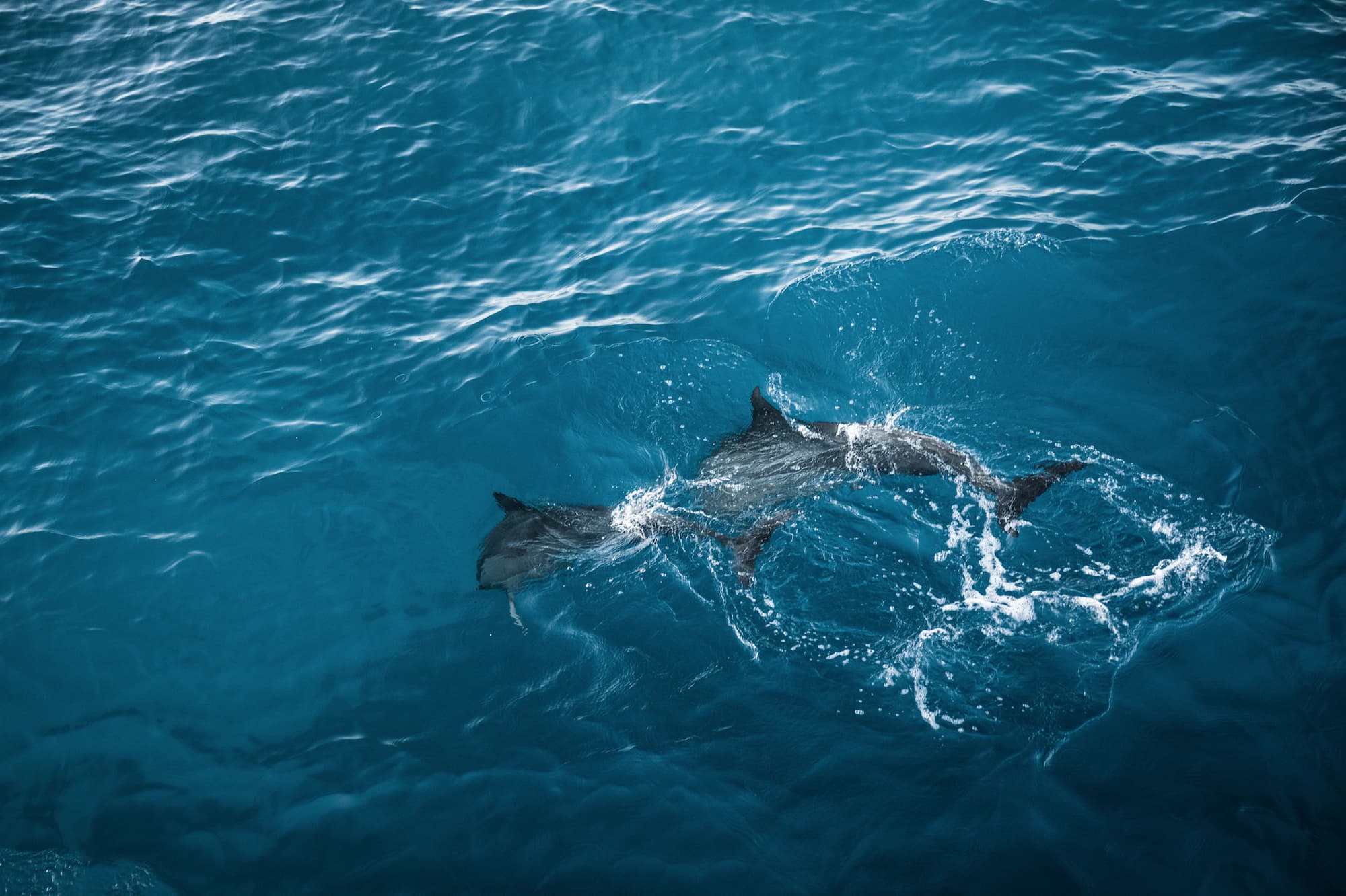
Spinner dolphins swimming off the Kona coast. Credit: Island of Hawaii Visitors Bureau (IHVB) / Julie Hotz
See dolphins on a tour the sustainable way
The practical version is a snorkel cruise that runs past places with healthy dolphin populations and lets the animals decide. The 4.5-hour morning cruise below is the one we point people at: it crosses dolphin habitat on the way to the snorkel site, and sightings are common. Nobody guarantees them. An operator who does is promising to chase the pod, which is the behavior the 50-yard rule exists to stop.
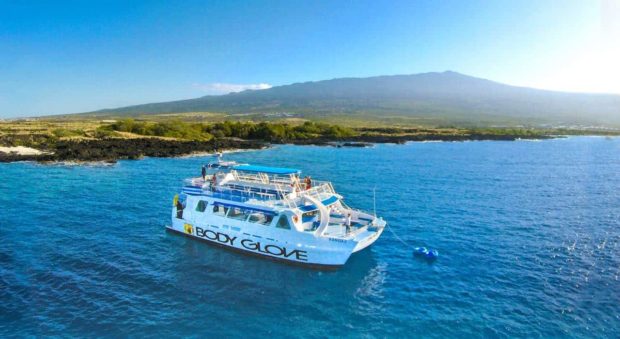
Deluxe Snorkel & Dolphin Watch
Step aboard a 65’ Catamaran for a fun-filled day of adventure! This 4.5 hour cruise offers breakfast, lunch, and all the comforts you would expect from being on a $2 million vessel.
from:
$180
What is a suggested tour?Our suggested tours are hand-picked tours that receive consistent good reviews, give back to the community, and work hard to minimize their impact on the environment. Read more about these tours on our website.Farm Tours
These are working farms that also run tours: coffee, vanilla, macadamia nuts, cacao, honey, and at Ocean Rider in Kailua-Kona, a seahorse hatchery where one will curl around your finger. Small farms often run free walk-throughs; the larger operations charge for a full morning.
Our farm tour guide has the booking details and what each farm grows.
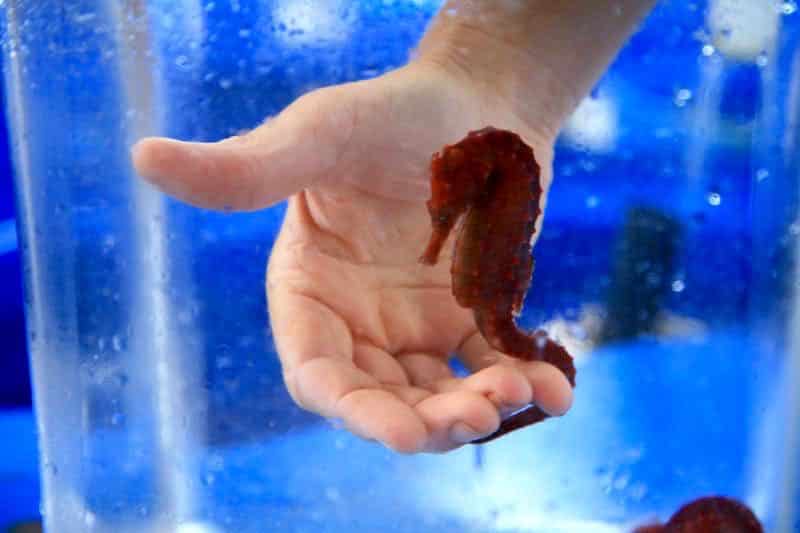
You can hold a seahorse during the tour at the Ocean Rider Seahorse Farm. Image credit: the Ocean Rider Seahorse Farm
Farmers Markets
A farmers market runs somewhere on the island almost every day of the week. The Hilo Farmers Market on Wednesdays and Saturdays is the largest, with produce, prepared food, and local crafts. Kona-side markets are smaller. Check the day and hours before you drive out: schedules shift by season and several run mornings only.
Our farmers market list has the day and the hours for every one of them.
Golfing
Green fees at the Kohala Coast resort courses run $200 to $350 per round, and most of them drop to a twilight rate after 2 p.m. The Volcano course and the municipal courses in Hilo cost a fraction of that, if your game does not require an ocean view.
Current rates, course by course, are in our Big Island golf guide.
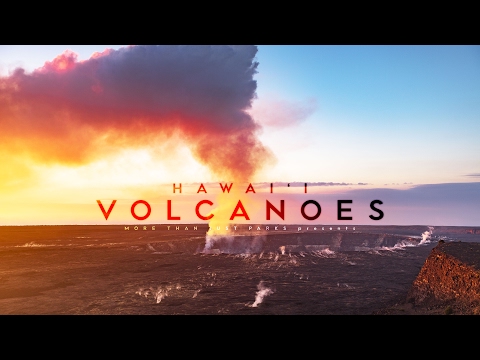
Hawaiʻi Volcanoes National Park
Hawaiʻi Volcanoes National Park covers 323,000 acres and ranges from sea-level lava flats on the Puna coast to the summit of Mauna Loa at 13,679 feet. Most visitors spend four to six hours on the Crater Rim Drive loop and the short walks off it, but the park fills a full day if you include Chain of Craters Road to the coast. The lava glow at Halemaʻumaʻu depends on whether an eruptive episode is running, so check the USGS Hawaiian Volcano Observatory status before planning an evening visit. Admission is $30 per vehicle, valid for seven days, and the entrance station takes cards only, no cash. The Kīlauea Visitor Center has been closed for renovation since February 2025; rangers and the bookstore have moved to a temporary welcome center just past the entrance.
Our guide to Hawaii Volcanoes National Park walks through the trails and overlooks and where to stay if you want an evening there.
Helicopter Tours
Some of the island’s best terrain has no road and no trail: the summit caldera at Kīlauea, the sea cliffs along the Kohala coast, and the waterfalls that drain into valleys nobody drives into. A helicopter is the only way to see those properly. Tours depart from Hilo, Kona, or Waikoloa, and run 30 to 75 minutes; the longer tours cover more of the island, including both the volcano and the Kohala coast.
Doors-off costs more and is worth it for photographs. Our helicopter tour guide compares the operators and departure points.
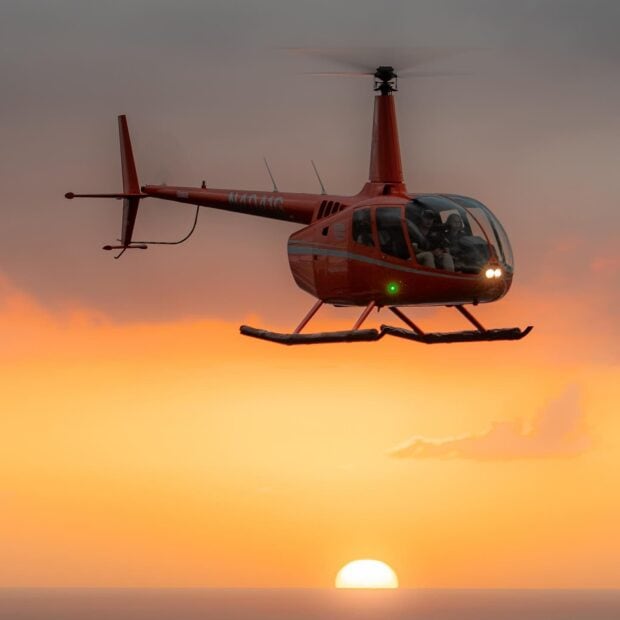
Private Kona Sunset Helicopter Tour
The Kona coast at dusk from a private helicopter: Kua Bay's white sand from the air, lava cliffs with no road access below, and doors-on or doors-off at no extra charge.
from:
$229
What is a suggested tour?Our suggested tours are hand-picked tours that receive consistent good reviews, give back to the community, and work hard to minimize their impact on the environment. Read more about these tours on our website.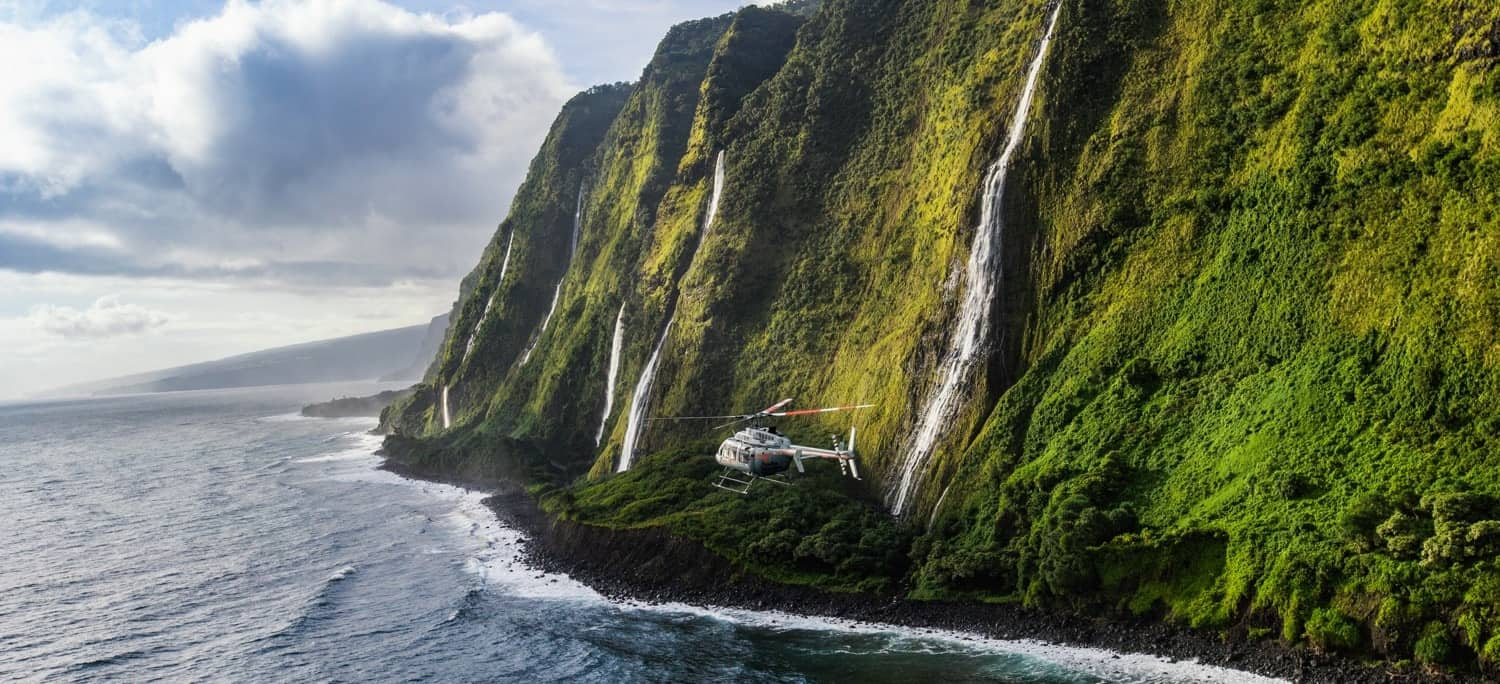
The steep cliffs of the Kohala coast from a helicopter.
Hiking
The Kīlauea Iki trail drops you onto a crater floor that held a lava lake in 1959: a 3.3-mile loop with a 400-foot descent and climb, two to three hours. The overlook lot is small, so park signs send hikers to the larger lot by the entrance instead. Eight of the world’s thirteen climate zones exist somewhere on this island, so a rainforest trail near Hilo and a lava-desert trail inside the park sit 45 minutes apart. Several coastal walks near Hilo and Kona take under an hour each way if you do not have a full day.
Our hiking guide has trail lengths, surfaces and current closures. If time is tight, start with our 5 favorite short hikes.
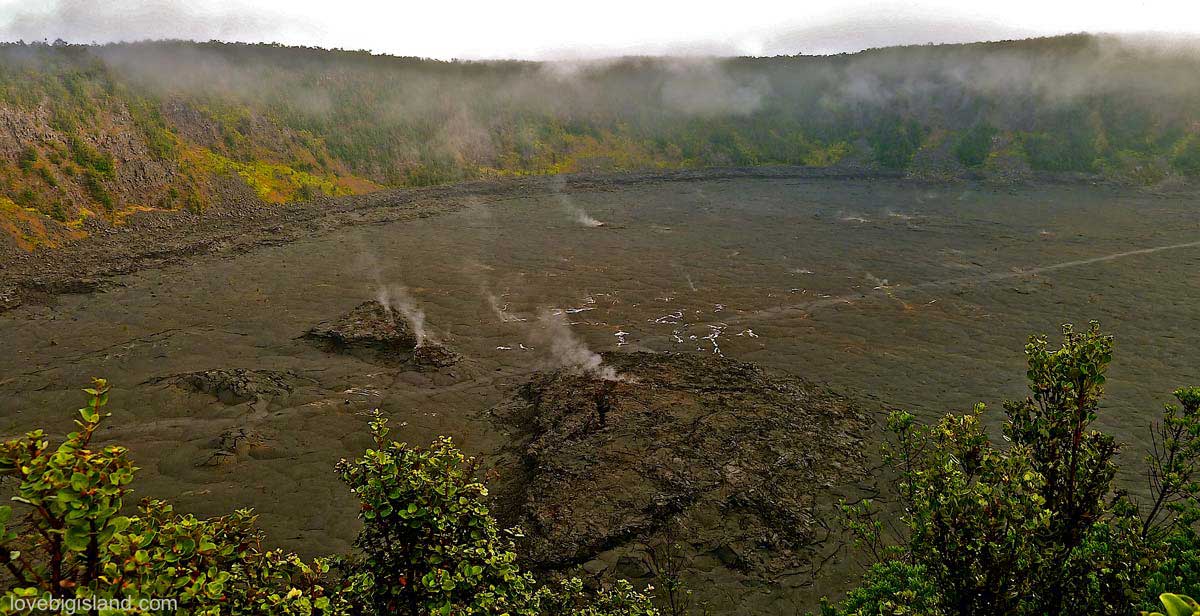
The Kīlauea Iki trail is one of our favorite hikes on the island
Horseback Riding
The Big Island’s ranching history goes back to the 1800s, and several of the original land grants still operate as working cattle ranches today. Horseback tours run from the Kohala and Waimea highlands, where the views drop toward both coasts, as well as from the Hāmākua coast and the Waipiʻo Valley rim. Most rides are 1.5 to 3 hours. Weight limits apply at all operators: check before booking if anyone in your group is over the stated maximum, as policies vary.
Waipiʻo Valley itself is closed to general access under a County of Hawaiʻi emergency rule that also bars pedestrians, so rides advertised around Waipiʻo run the rim and the Hāmākua ranch land above it unless the operator holds a county permit. Tours also run out of Waimea and Kohala, near Hilo, and in South Kona around Captain Cook. Weight limits, ages, and which outfits hold valley permits: our guide to horseback riding on the Big Island.
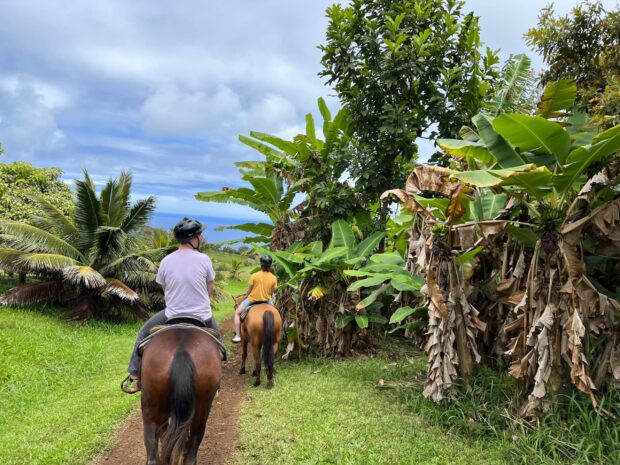
Waipiʻo on Horseback: Mountain-to-Ocean Ranch Ride on the Hāmākua Coast
A small group of eight rides a 500-acre working cattle ranch, mountain to ocean, with fresh fruit from the family farm along the trail. Set high above Waipiʻo Valley, with sea-cliff views to Pololū and, on a clear day, Maui.
from:
$150
What is a suggested tour?Our suggested tours are hand-picked tours that receive consistent good reviews, give back to the community, and work hard to minimize their impact on the environment. Read more about these tours on our website.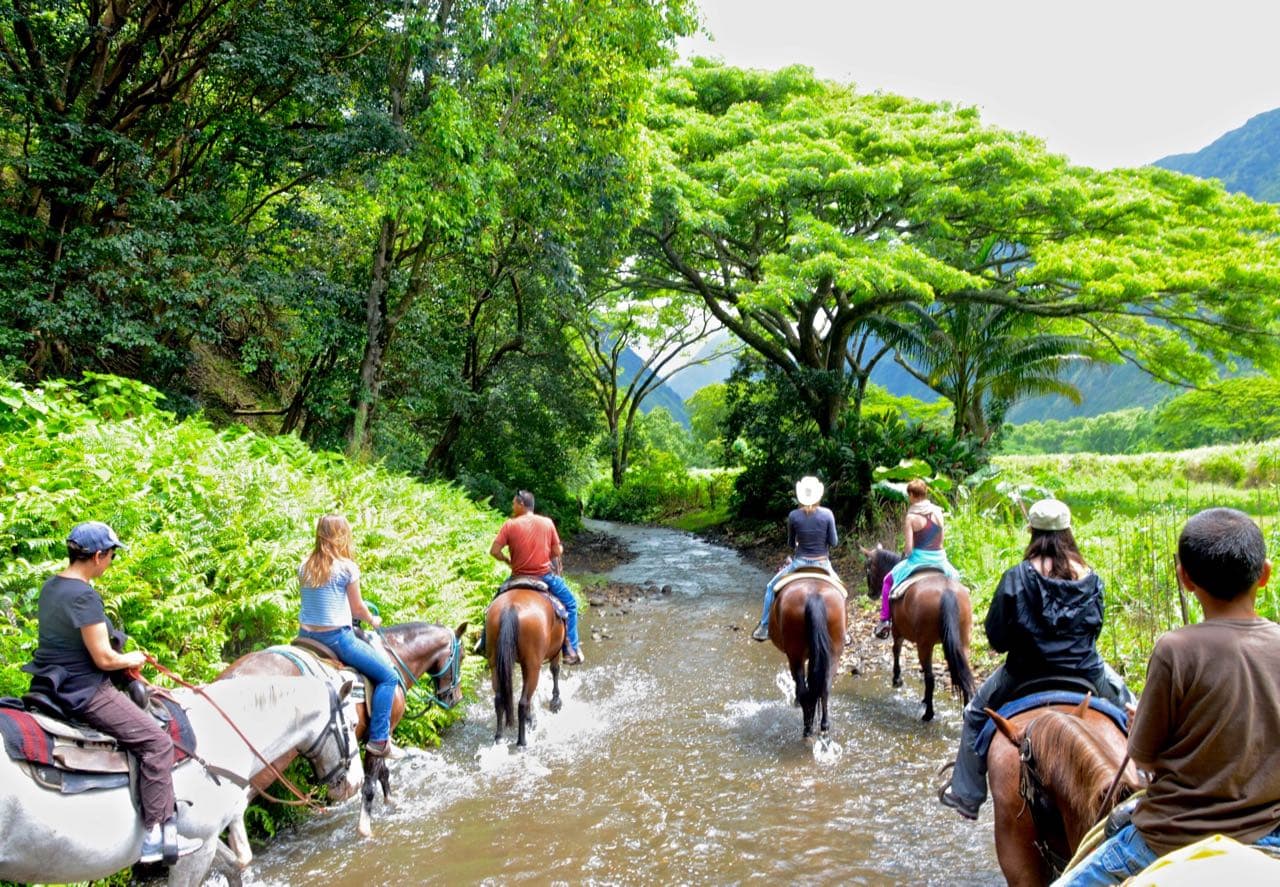
A horseback group crossing the stream on the floor of Waipiʻo Valley. Valley access is now limited to permitted operators, so most rides today stay on the rim and the ranch land above. Photo credit: Mike Neenan
Hot Ponds
The 2018 Kīlauea eruption buried most of the Big Island’s accessible geothermal hot ponds under lava. The ones that remain are in the Puna district on the east side. The best known is Pohoiki at Isaac Hale Beach Park, where the 2018 flow built a new black sand beach and left the hot springs themselves intact. Water temperature varies with how close you sit to the vents, so test before settling in. Most are publicly accessible at no charge, but check current access status before making this a centerpiece of your day.
Our hot ponds guide has the driving directions and the current access status for each one.
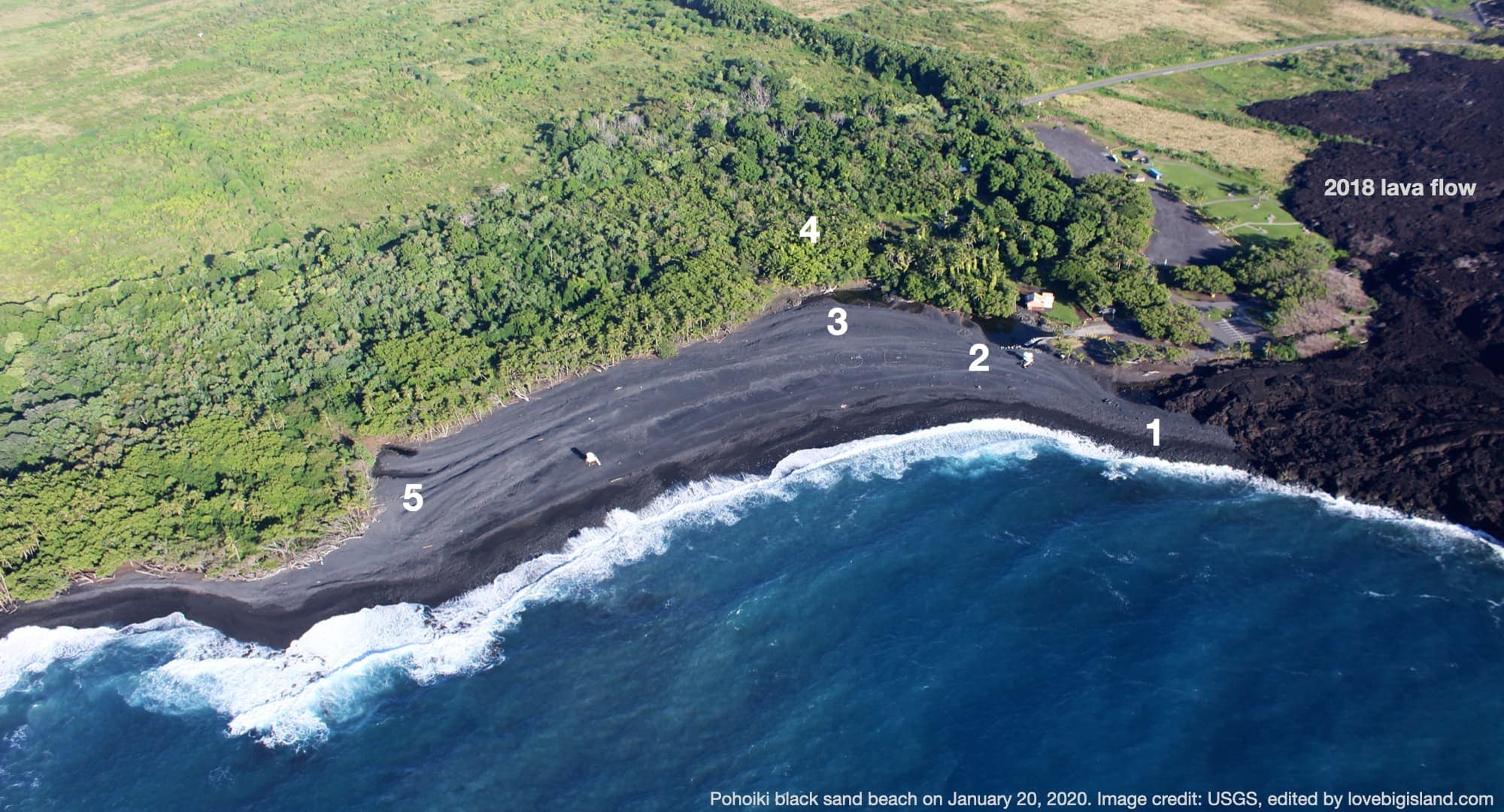
Aerial view of Pohoiki Bay at Isaac Hale Beach Park. The 2018 lava delta created the new black sand beach (right) while leaving the hot springs intact. Image credit: USGS (public domain)
Lava Tubes
Lava tubes are tunnels left behind when the outer shell of a lava flow hardened while molten rock drained out below. The Big Island has some of the longest and most accessible ones in the world. Kaumana Caves near Hilo are free and open daily; Nāhuku (Thurston Lava Tube) inside Hawaiʻi Volcanoes National Park is paved and lit from 8am to 8pm, and you need your own flashlight outside those hours. For something more involved, guided spelunking tours go considerably deeper and run three to four hours. Most lava tubes are on the south and east sides of the island.
Bring a headlamp and shoes you do not mind scuffing. Our lava tube guide says which caves are free and which need a guide.
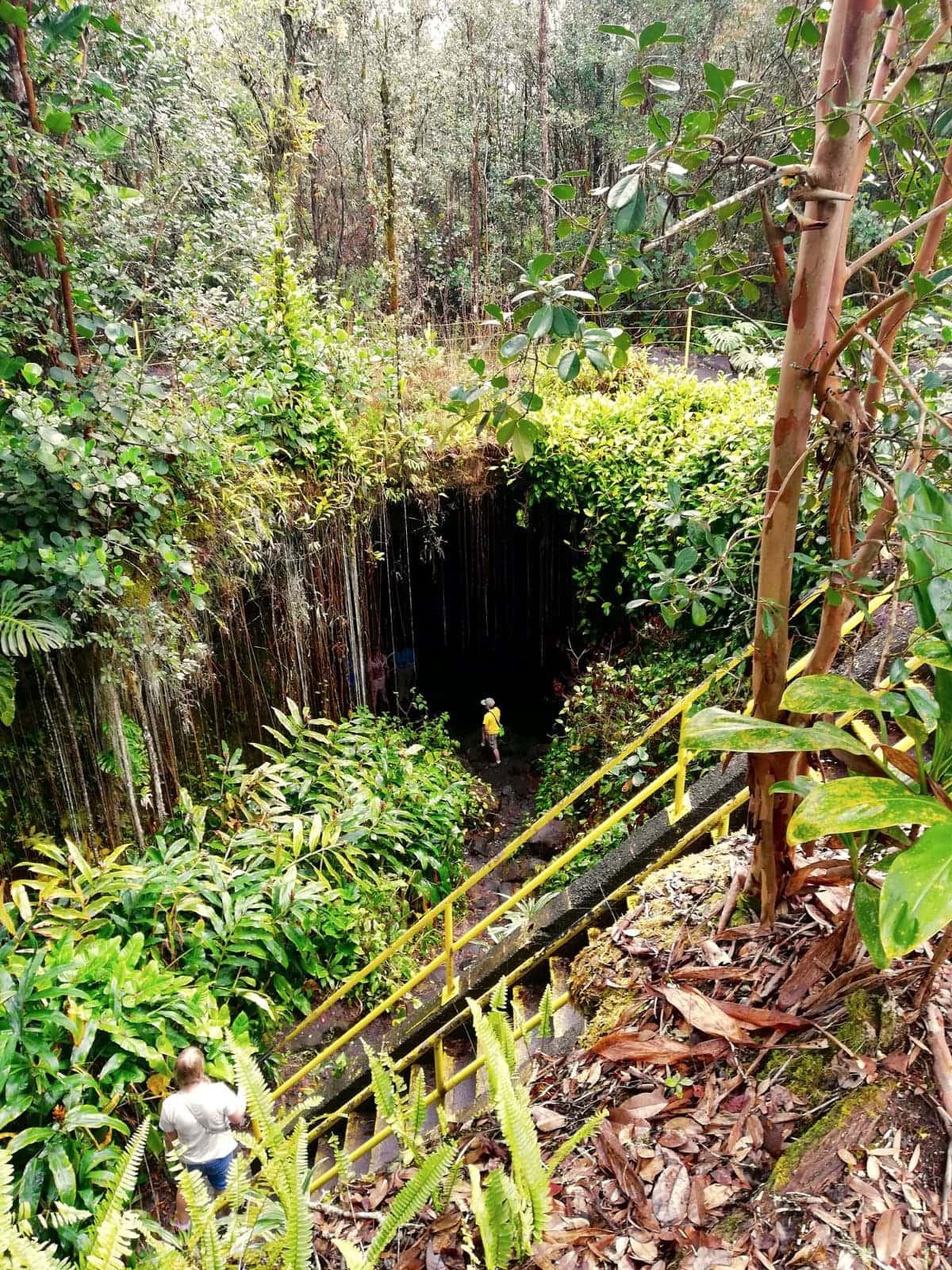
The Kaumana Caves in Hilo (free access) give access to many miles of underground lava tubes.
Lava Viewing
Kīlauea has been erupting in episodes at Halemaʻumaʻu crater since December 2024. Fountaining runs for a few hours at a time, and the pauses between episodes can last weeks, so there may be nothing to see on the day you drive up.
When an episode is running, the lava is visible from overlooks inside Hawaiʻi Volcanoes National Park, among them Uēkahuna, Kīlauea Overlook and Keanakākoʻi. The eruption area itself stays closed. Check the USGS Hawaiian Volcano Observatory status page before you drive up: it posts the current alert level, and during a pause it posts the forecast window for the next episode.
Volcano Village sits at the park entrance, Hilo is 45 minutes away, and Kona is a little over two hours each way, so visitors based in Kona often book a night in Volcano or join a day tour instead of driving it twice.
Our lava viewing guide covers the overlooks, the night-viewing logistics, and how to read a USGS update.
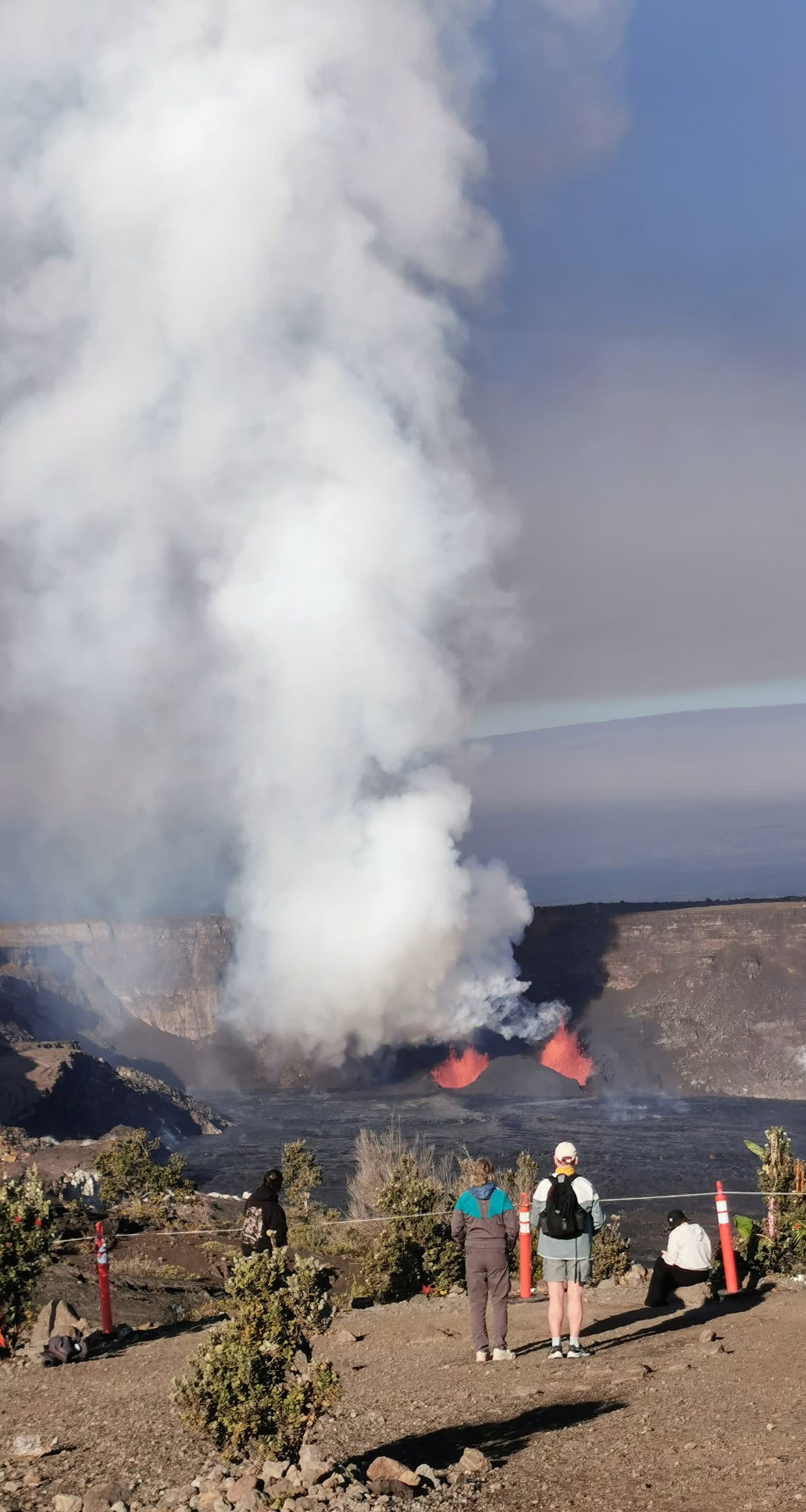
Lava activity at the Keanakekoʻi overlook in Hawaiʻi Volcanoes National Park.
Luau Shows and Hula Performances
Roughly eight luau shows run on the Big Island at any given time, and the format is consistent across all of them: a pig from an underground oven (the imu ceremony), a buffet, and Polynesian performances including hula and music. What differs is venue size, crowd size, whether alcohol is included, and how seriously the cultural content is treated. General admission starts around $180 and premium seating runs $230 and up.
We put them side by side on price, seating and how the cultural content is handled in our luau comparison.
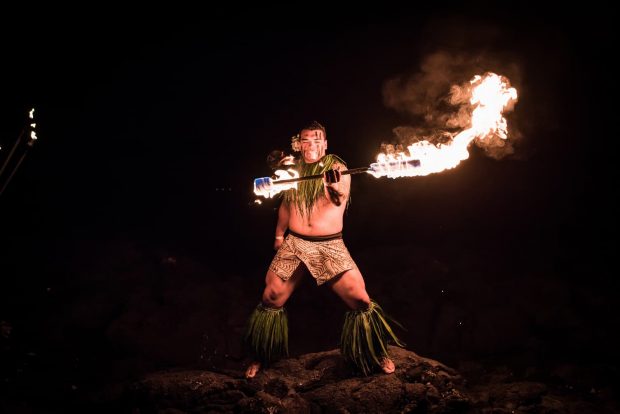
Voyagers of the Pacific Luau
An oceanfront luau on the lawn at the Royal Kona Resort, four nights a week, closing on the Samoan Fire Knife Dance (Siva Afi) from center stage.
from:
$182
What is a suggested tour?Our suggested tours are hand-picked tours that receive consistent good reviews, give back to the community, and work hard to minimize their impact on the environment. Read more about these tours on our website.Manta Ray Night Snorkel + Dive
The manta ray night snorkel in Kona puts you in the water with animals that reach an 18-foot wingspan, feeding within a few feet of your face on zooplankton drawn in by the boat’s lights. Two-hour trips run about $130 for adults and roughly half that for children.
Snorkel or dive, and which site to pick: our guide to the manta ray night dive.
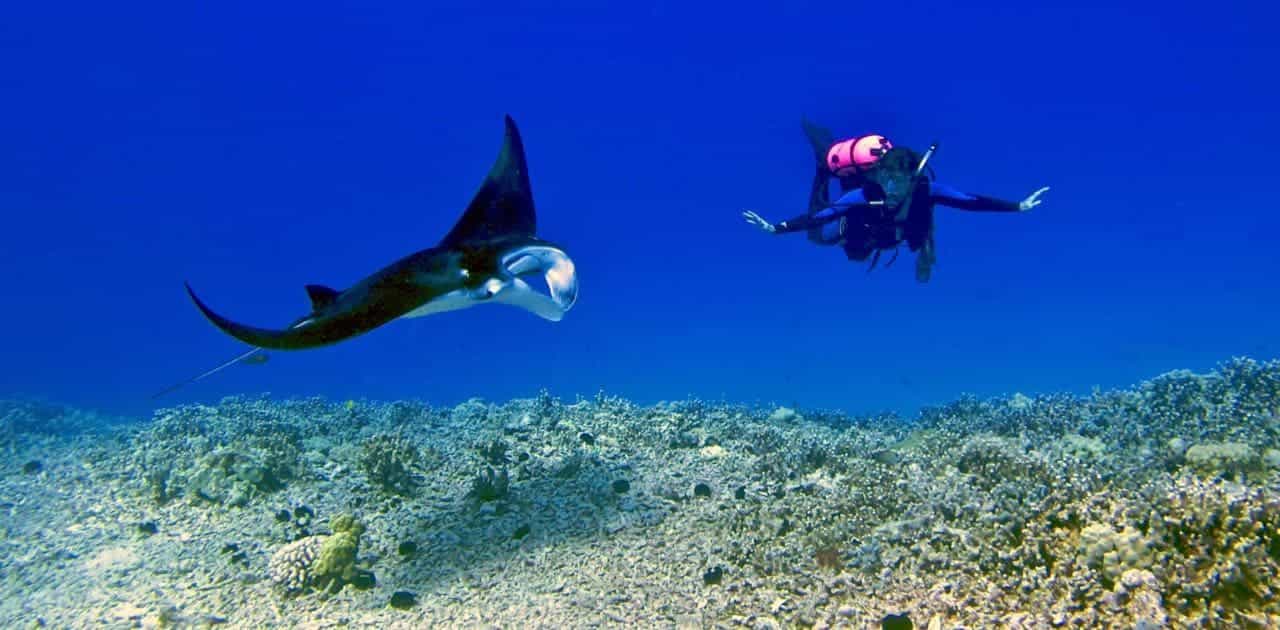
A female scuba diver swims with a young male Manta ray in the Kona district / Big Island. By Steve Dunleavy from Lake Tahoe, NV, United States – Nick and Isabelle, Kona Hawaii, CC BY 2.0, Link
Manta Ray Tours
We list several manta ray tours. The one below is our pick: they keep their distance from the animals rather than crowding them, and the price is $130 per adult as of September 2026.
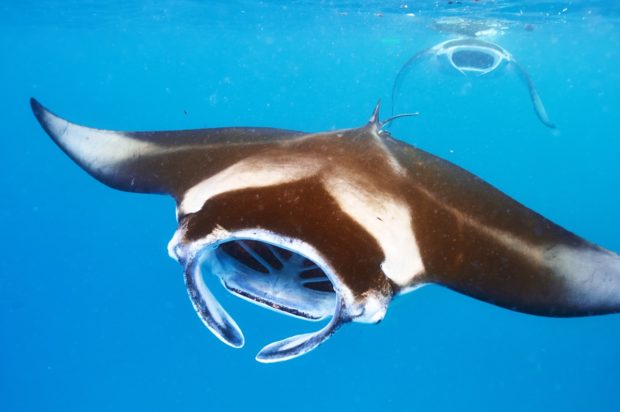
Sunset Manta Ray Night Snorkel at Keauhou Bay
Reef manta rays feed under a lighted float at Manta Village, off Keauhou Bay, on 85 to 95 percent of nights year-round. You hold still on the float while they pass; this is a fixed-position snorkel, not a free swim.
from:
$130
What is a suggested tour?Our suggested tours are hand-picked tours that receive consistent good reviews, give back to the community, and work hard to minimize their impact on the environment. Read more about these tours on our website.Picnic spots
A packed lunch saves an hour of driving back to a town with restaurants, and about $20 to $30 a head. It also puts you in places with no restaurant anywhere near them: beach parks, waterfall overlooks, and the pullouts along Saddle Road at elevation. The Hilo Farmers Market is a practical first stop for supplies if you’re based on the east side. Pack a cooler with cold drinks if you’re spending the day on the Kohala or Kona coast, where shade and facilities can be sparse.
Our favorite spots, with notes on parking and shade: picnicking on the Big Island.
Rappelling
Waterfall rappelling sits somewhere between ziplining and climbing: you descend a cliff face on ropes and a harness with an active waterfall alongside you. No experience is needed, guides cover the technique on-site before you go over the edge. There are two operators on the island, ranging from a beginner-friendly 45-foot training descent to a four-hour full canyoneering day with river swimming. Prices run from $97 for a short introductory session to $399 for the full experience.
Drop heights and age limits vary a lot between the two. Our waterfall rappelling guide has both, with prices.
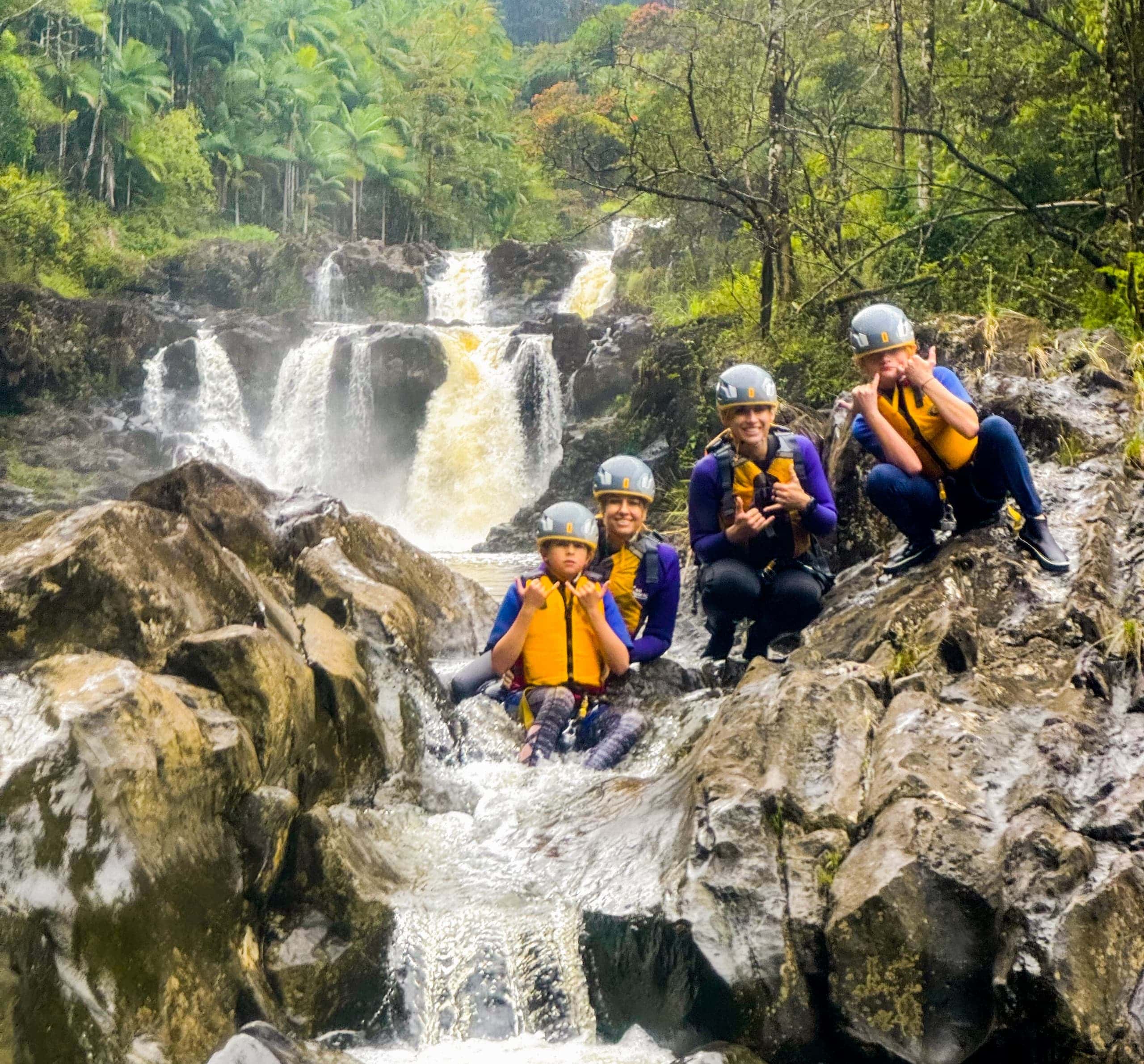
Rappel down the famous Triple-Tier waterfalls, swim, or float in river tubes. Image: Island Mountain Guides.
Scenic drives
The Chain of Craters Road inside Hawaiʻi Volcanoes National Park ends at the coast where lava buried it in eruptions between 1986 and 1996. The drive is 23 miles one way and passes multiple craters and lava formations. The Onomea Scenic Drive runs four miles through old-growth forest above Hilo Bay. None of these require a special vehicle.
Our scenic drives guide has the stops and how long each route really takes with them.
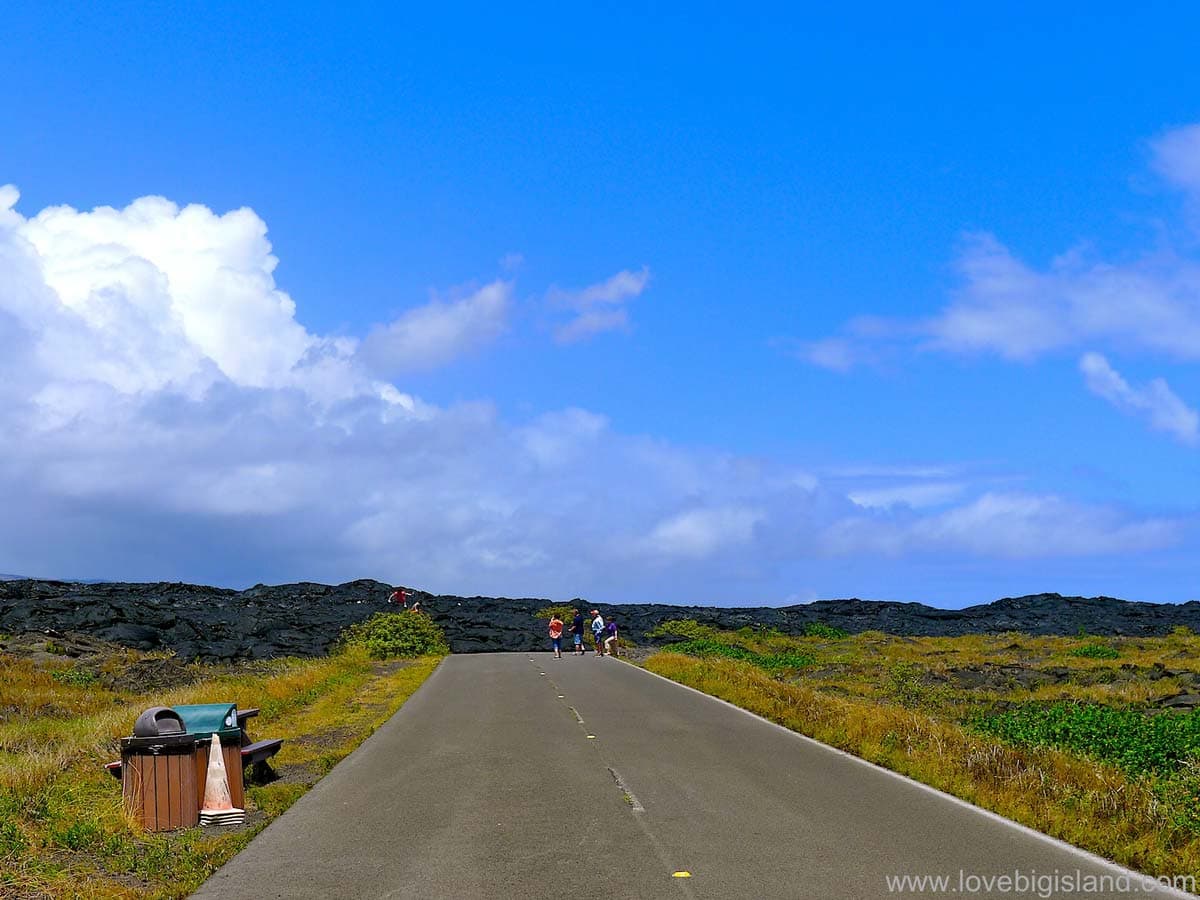
The Chain of Craters Road in Hawaiʻi Volcanoes National Park ends after 23 miles at lava flows that covered the road in several eruptions between 1986 and 1996
Scuba Diving
The Kohala Coast has healthy coral and noticeably fewer divers than the Kona sites south of it. Sea caves, submerged lava tubes, and coral belts run most of the length of the island, and the better sites need a boat. Most operators run morning two-tank dives out of Kona or Kawaihae, and visibility on a clear day routinely passes 100 feet.
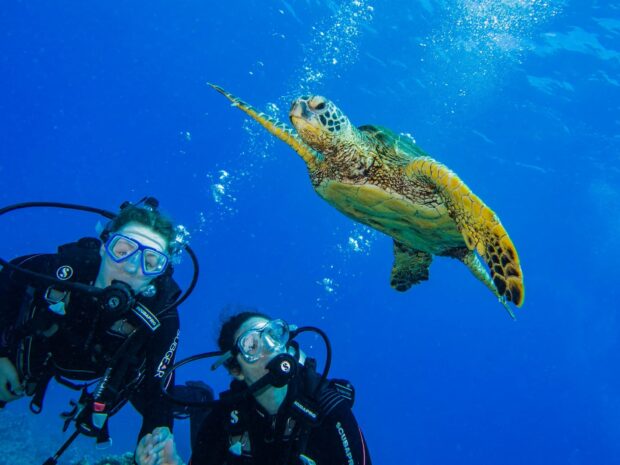
6-hour Morning Dive at 2 Stunning Kohala Coast Dive Sites
Dive at 2 Kohala Dive Sites with great underwater scenes on offer for every diver’s experience level (and snorkelers as well)
from:
$229
What is a suggested tour?Our suggested tours are hand-picked tours that receive consistent good reviews, give back to the community, and work hard to minimize their impact on the environment. Read more about these tours on our website.Our scuba guide goes site by site and lists the operators who run certification courses.
Snorkeling
The best spots are a Marine Life Conservation District at Kealakekua Bay, a bay that doubles as a spinner dolphin resting area at Hōnaunau, and several Kohala Coast beach parks where turtles surface within a few yards of swimmers. Kealakekua takes some planning: every vessel crossing the bay needs a State Parks permit, so most visitors arrive by tour boat, book one of the two permitted kayak operators, or take the long hike down. Gear rents cheaply near most beach parks, the water is warm year-round, and visibility usually runs 30 feet or better.
Our snorkeling guide covers every spot entry by entry, and how to get in and out without standing on the reef.
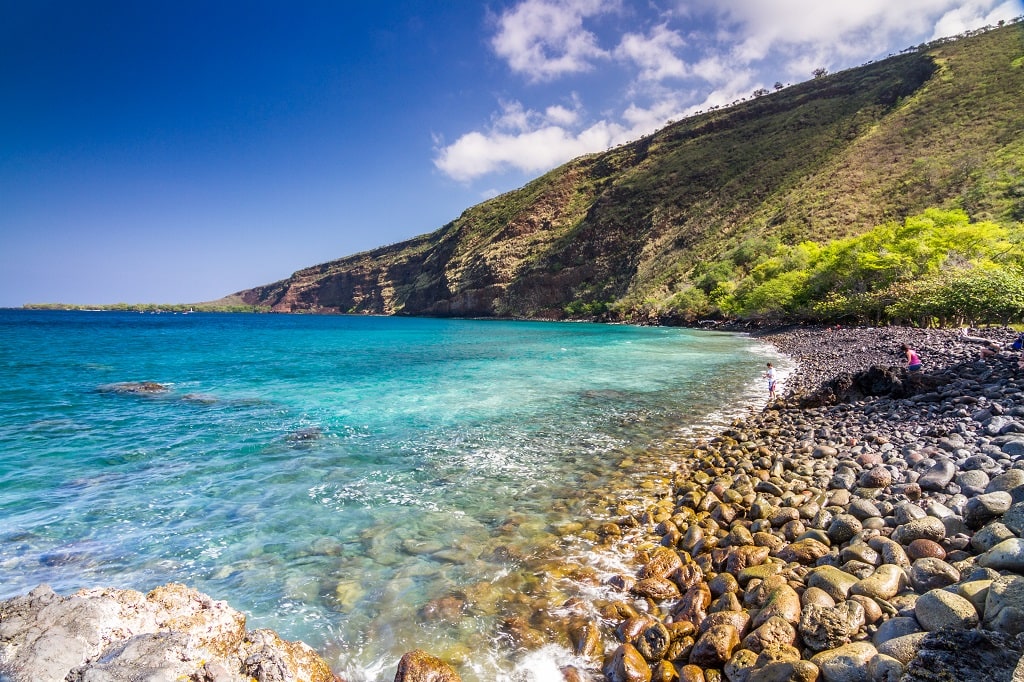
Kealakekua Bay is one of the best places for snorkeling on the Big Island
Snorkeling tours
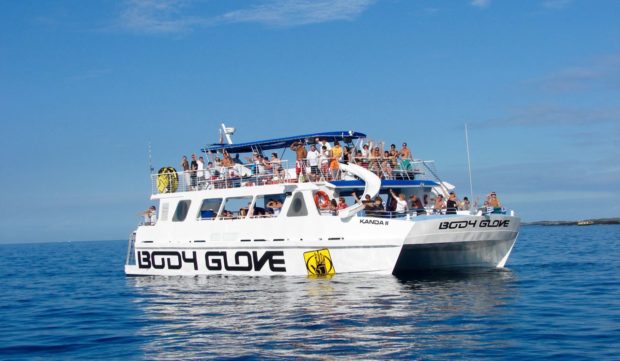
A boat gets you to reefs you cannot reach from shore, and it removes the gear-rental errand from a day you would rather spend in the water. Trips run 3 to 6 hours and usually include gear, food, and drinks. The morning sail to Kealakekua Bay below is about $165 for adults and 4.5 hours. We book Body Glove out of Kona harbor most often, and Sea Paradise sails from Keauhou just south of it.

Morning Sail and Snorkel to Kealakekua Bay and Red Hill
Sea Paradise holds anchor rights inside Kealakekua Bay, so the Hoku Nui drops anchor right over the coral, at a reef that otherwise takes a two-hour hike or kayak to reach.
from:
$165
What is a suggested tour?Our suggested tours are hand-picked tours that receive consistent good reviews, give back to the community, and work hard to minimize their impact on the environment. Read more about these tours on our website.Stand-Up Paddleboarding (SUP)
Hilo Bay and the sheltered stretches of the Kona coast are both forgiving places to learn, and shops in either town rent boards by the hour with a short orientation included. Go in the morning: the wind picks up after midday on both coasts. Paddling the Kona shoreline also gets you past sea caves and lava formations that are invisible from the road. Stand-up paddleboarding traces back to the surf instructors of Waikīkī in the early 1900s.
Our stand-up paddleboarding guide has the rental shops and the calmest launches on each coast.
Stargazing and the Mauna Kea summit
Maunakea’s summit sits at 13,796 feet, above 40 percent of the earth’s atmosphere. Thirteen major observatories stand on top of it. On a clear night the Milky Way is visible to the naked eye from the Visitor Information Station at 9,200 feet, and for most visitors that is far enough. The station is free, open daily from 9am to 9pm, and reached on paved road.
Two-wheel-drive vehicles are not permitted past the station, the pavement ends about 300 yards up, and the last four and a half miles are graded gravel. Rental agreements differ on whether that road is allowed, so read yours rather than assuming.
Stop at the station for at least 30 minutes to acclimatise before continuing. The University of Hawaiʻi advises against going to the summit at all if you are pregnant, under 13, have heart, blood pressure or respiratory conditions, or have been scuba diving in the previous 24 hours. There is no fuel and no water up there, and the nearest gas is about 35 miles away in Hilo, Waimea or Waikoloa Village. The summit closes to visitors 30 minutes after sunset, so the stargazing itself happens back down at the station.
Our stargazing guide explains how to time sunset and stargazing into one evening without rushing either.
Stargazing Tours to the Maunakea summit
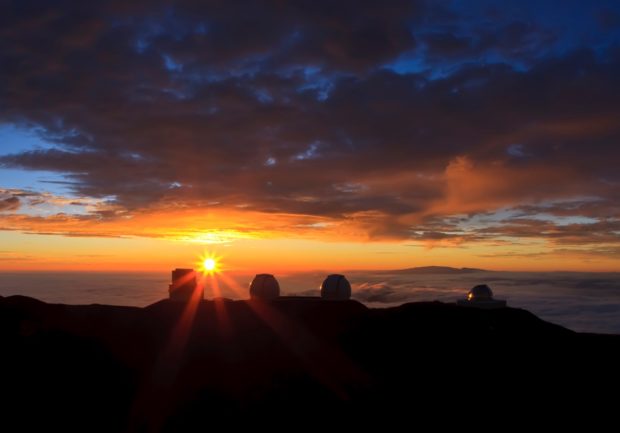
Book a tour if you want the summit for sunset and stargazing afterwards but would rather not drive the gravel or source a 4×4. The one below runs seven to eight hours, costs $315, takes ages 13 and up, and we recommend it for the guides more than the telescopes.
Maunakea Summit, Sunset, and Stargazing Tour
A small-group tour from Kona to the 13,796-foot summit of Maunakea: dinner at 9,200 feet, sunset above the cloud layer, and a private star show with an 11-inch telescope. Saturn, Jupiter, and the Milky Way on a clear night. 8 to 9 hours.
from:
$315
What is a suggested tour?Our suggested tours are hand-picked tours that receive consistent good reviews, give back to the community, and work hard to minimize their impact on the environment. Read more about these tours on our website.Surfing
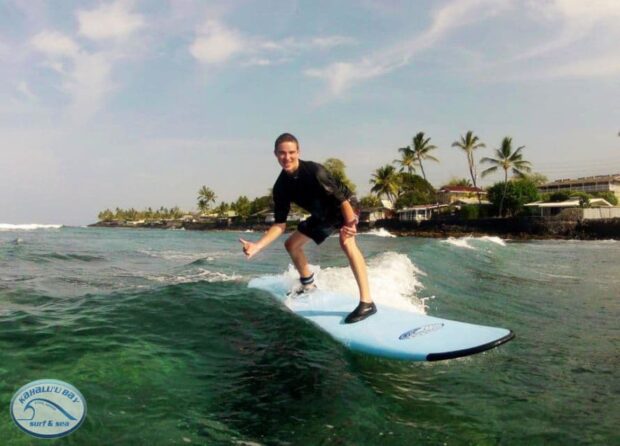
Kahaluʻu Bay in Kailua-Kona is the main beginner surf spot on the island: the break is consistent, the water is shallow over reef, and several surf schools operate there with instructors in the water alongside you. For intermediate and experienced surfers, the north shore beaches in Kohala and the east side near Hilo offer different conditions and less instructor traffic. Board rentals run about $25 to $40 per hour at most shops.
Our surfing guide goes break by break and lists the schools and rental shops at each.
Surf Lessons in Kona at Kahaluʻu Bay
Two-hour surf lessons at Kahaluʻu Bay, one of the more forgiving breaks on the Kona coast. CPR-certified instructors work in the water alongside you, timing waves and helping you catch them
from:
$139
What is a suggested tour?Our suggested tours are hand-picked tours that receive consistent good reviews, give back to the community, and work hard to minimize their impact on the environment. Read more about these tours on our website.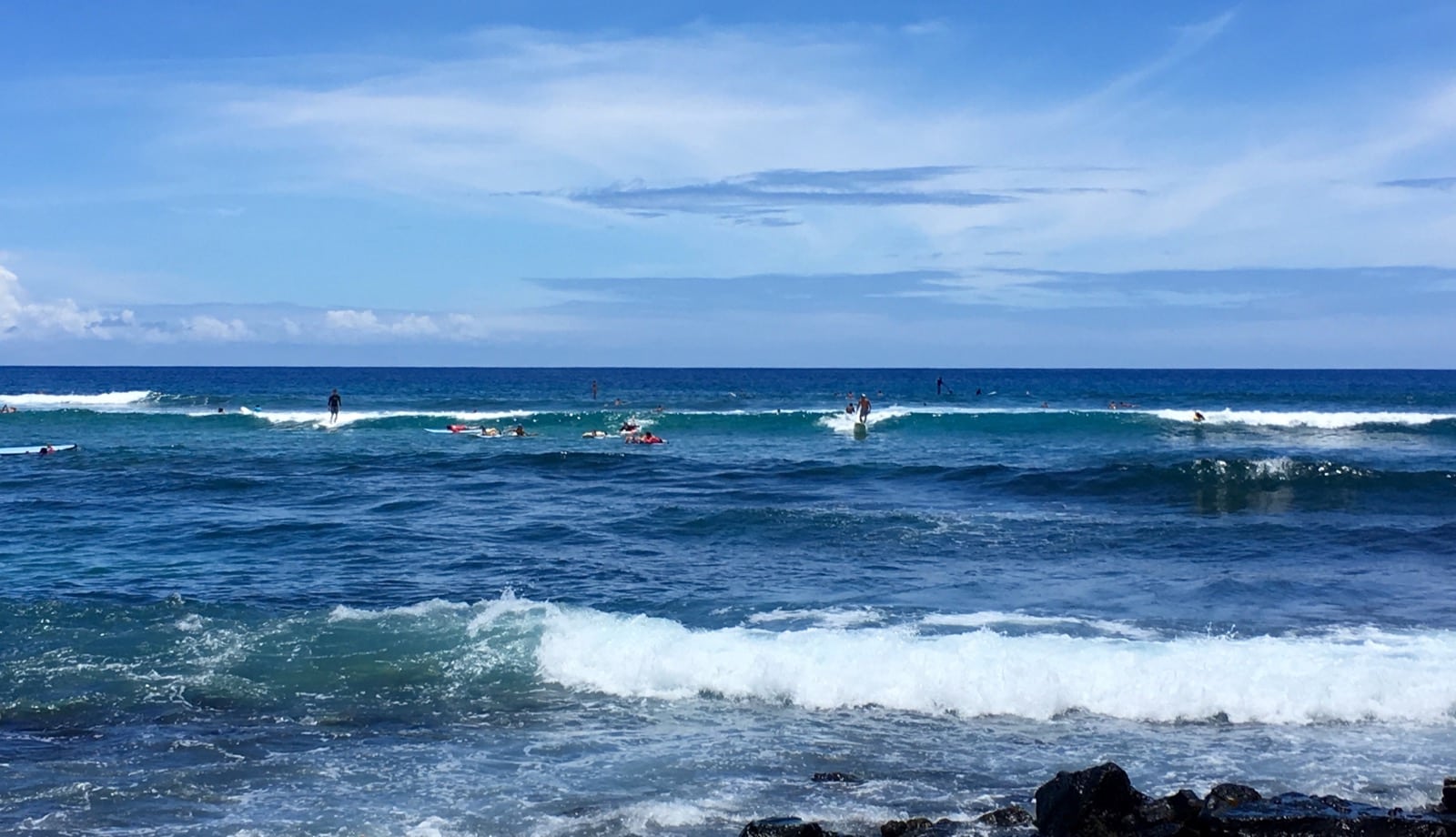
Kahaluʻu Bay is one of the more popular beginner surf spots on the Big Island.
Volunteer and give back during your visit
Volunteer programs cover watershed restoration, native bird habitat work, reef monitoring, and cultural site maintenance, and most run as a half day or a single day rather than a week. The work takes you into fenced native forest preserves above Hilo, coastal restoration sites on the Kona side, and off-trail terrain inside the national park, none of which have public access otherwise. On a trip longer than a week, one volunteer morning fits without costing you anything else.
Most programs want a week or two of notice. Our volunteering guide lists the organizations that take visitors.
Waterfalls
The north and east sides of the Big Island get the most rainfall, and the steep terrain between the highlands and the coast produces dozens of waterfalls within range of a day trip. ʻAkaka Falls drops 442 feet at the far point of a 0.4-mile loop. Allow half an hour for the loop. The path has enough steps that it is not wheelchair accessible. Rainbow Falls and Boiling Pots now share a single fee, introduced in January 2026: $5 per non-resident plus $10 per vehicle to park, card only, with Hawaiʻi residents free. Umauma Falls is on the same coast, and the three fit comfortably into one morning out of Hilo.
Our waterfalls guide lists them by height and trail length, and says where swimming is allowed.
Private Kulaniapia Falls Day Pass
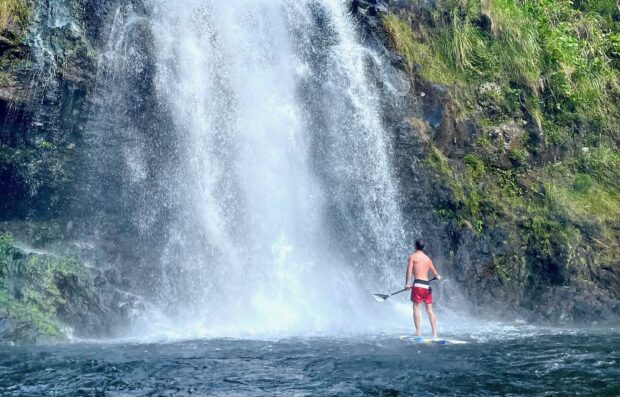
One of the only swimmable waterfalls near Hilo where a daily visitor cap means you won't share the pool with a crowd.
from:
$49
What is a suggested tour?Our suggested tours are hand-picked tours that receive consistent good reviews, give back to the community, and work hard to minimize their impact on the environment. Read more about these tours on our website.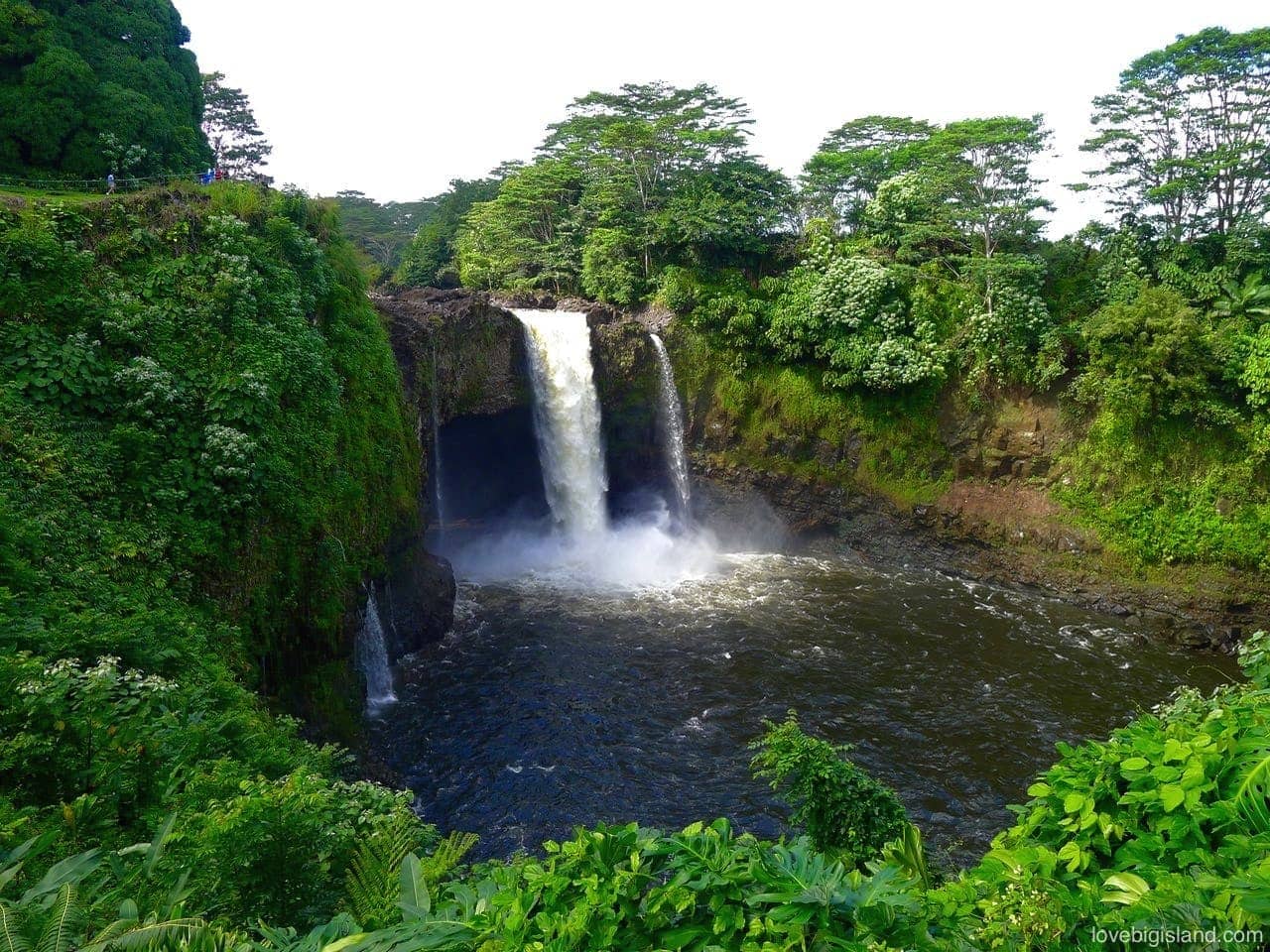
Rainbow Falls in Hilo is easy to access and produces rainbows during early morning visits.
Whale Watching
Humpbacks arrive in Hawaiian waters between November and April, and the Big Island is our favorite place in the state to watch them. Through the January to March peak they can be spotted from shore along the Kona coast with a little patience. Federal rules keep boats 100 yards off, so no operator gets you closer than that; what separates the good ones is a hydrophone, which lets you hear the males singing underwater. Trips run about 2.5 hours and around $140 for adults.
Our whale watching guide has the season timing and the best shore-watching spots, or go straight to the whale watching tours we rate highest.
Whale Watching Cruise from Kona
2.5 hour Whale Watching Excursion with free snacks, guaranteed whale sightings (or come again!), an on-board marine life naturalist, and underwater hydrophones so you can hear the whales sing.
from:
$140
What is a suggested tour?Our suggested tours are hand-picked tours that receive consistent good reviews, give back to the community, and work hard to minimize their impact on the environment. Read more about these tours on our website.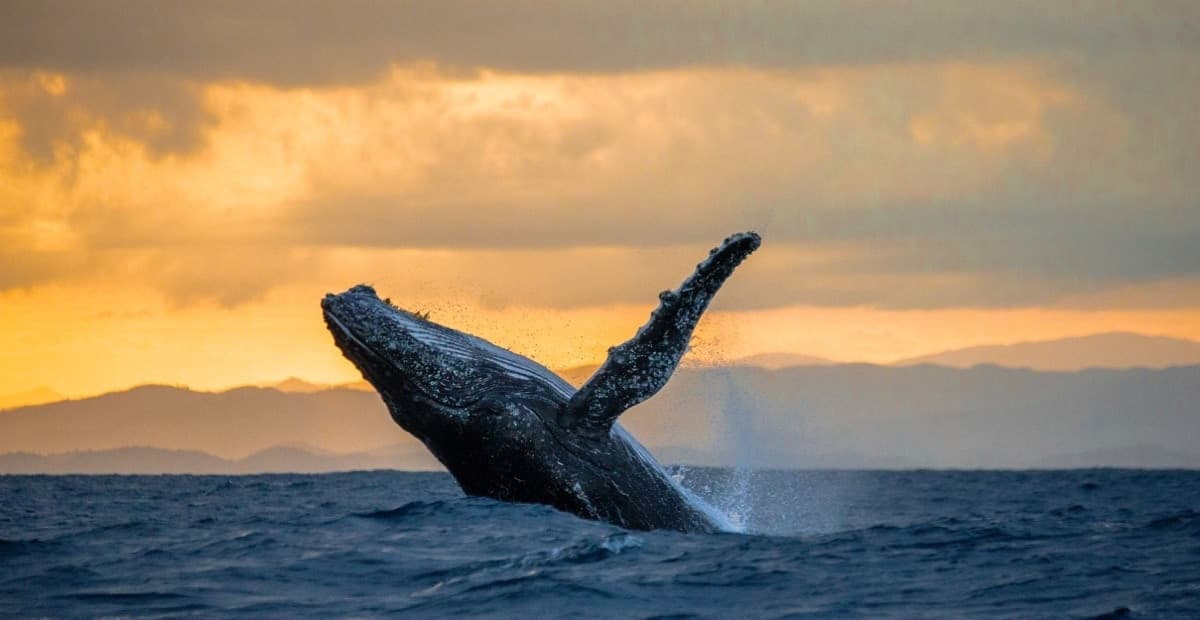
A humpback whale breaches the surface.
Ziplining
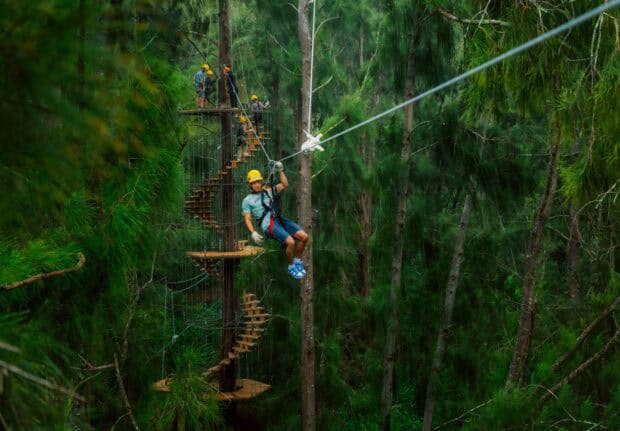
Four zipline operations run on the island: three on the Hāmākua coast near Hilo, strung over forest canopy and waterfalls, and one on the Kohala Coast north of Kona. Kohala Zipline is the largest, with eight lines, six sky bridges, and a rappel in a private nature reserve above Hāwī; it runs about two hours and $155. The Hāmākua courses are cheaper and shorter, and the nine-line Umauma course is $249. Plan on 1.5 to 3 hours whichever you pick.
Weight limits vary by operator. Our ziplining guide has them for all four courses, with current prices.
Kohala Canopy Zipline Adventure
Zip to a cliffside platform, then cross a sky bridge beside a waterfall. Five lines, two bridges, nine guests, and you control your own speed.
from:
$155
What is a suggested tour?Our suggested tours are hand-picked tours that receive consistent good reviews, give back to the community, and work hard to minimize their impact on the environment. Read more about these tours on our website.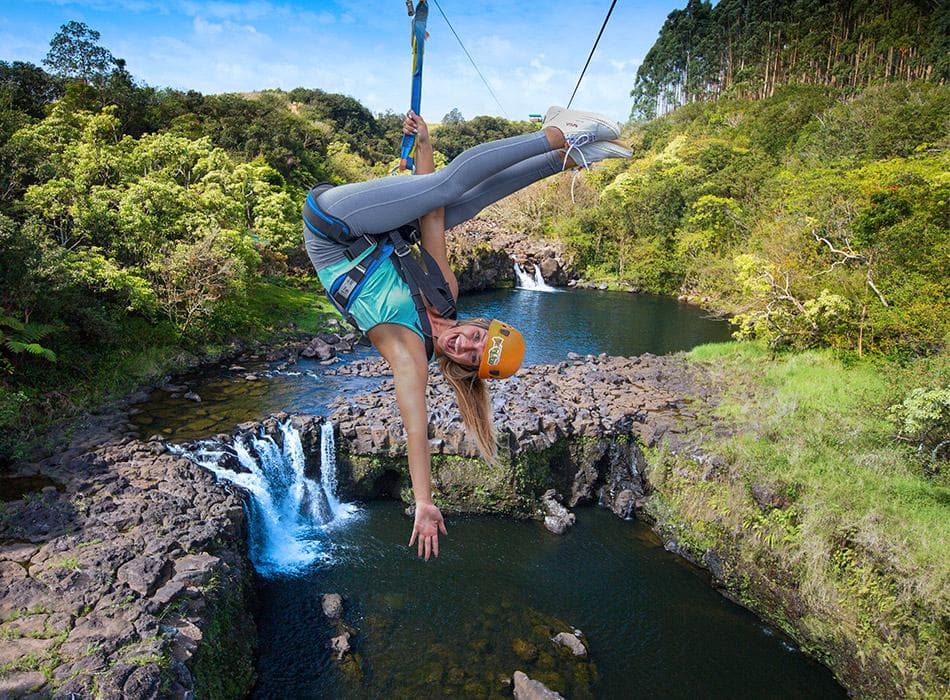
A zipline at the Umauma eXperience that lets you soar by the famous triple-tiered Umauma Falls.