
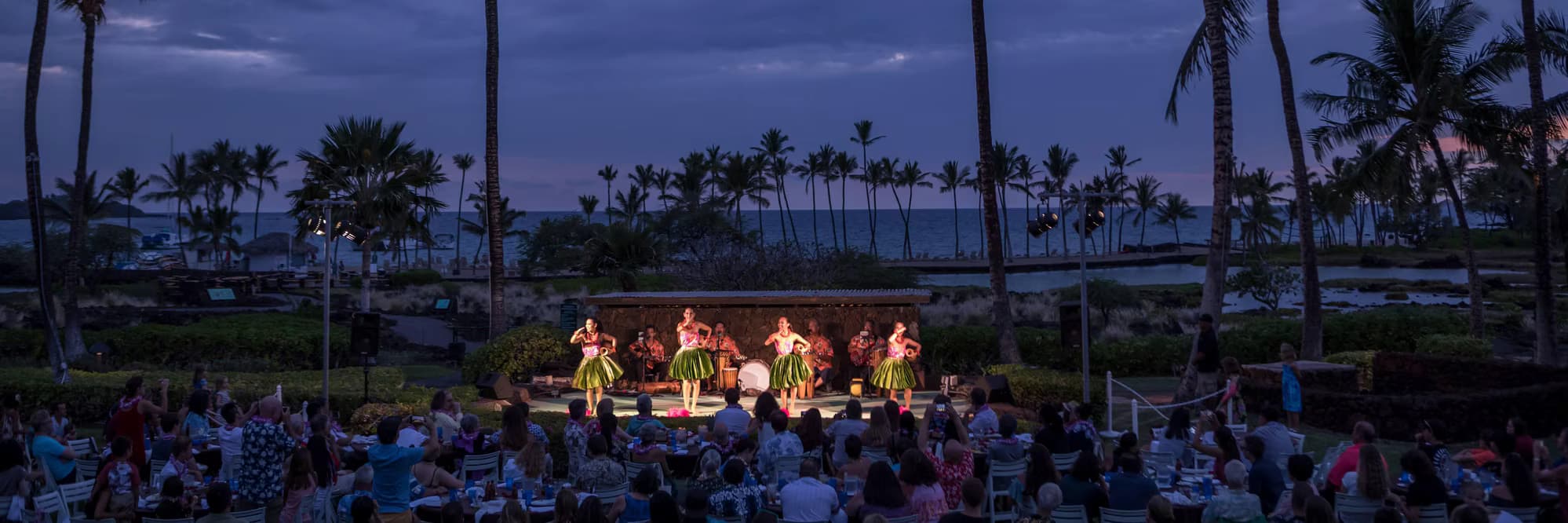
Eight luau shows run on the Big Island, all on the Kona or Kohala coast. Voyagers of the Pacific at the Royal Kona is the cheapest at $182, the Mauna Kea Luau the priciest at $256.41 with tax and fees in. Six of the eight include unlimited drinks; Mauna Kea, the best of them on food, covers one drink, then opens a cash bar.
Most shows run two to four fixed evenings a week and Hale Hoaloha is a Friday show, so start with the calendar. We went to Legends of Hawaiʻi at the Hilton Waikoloa, the most polished of the eight, where the imu ceremony, the opening of the underground oven, was the part that stuck. Check parking too: three resorts validate or include it.
Table of contents
- Luau FAQ
- Luau locations map + comparison table
- Complete List of all luau shows (8 in total) on the Big Island
- Should you go to a Luau?
- What happens during a Luau show?
- Crowds, cost and parking
- Luau history and background
- Typical dishes served at a luau
- What is Hula?
- Other (free) cultural events related to Hula
Big Island Luau FAQ
Quick answers to the questions we get asked most.
Q: What is the best luau on the Big Island?
Cheapest: Voyagers at $182. Best show: Legends of Hawaiʻi. Best food: the Mauna Kea Luau. The Voyagers of the Pacific Luau in Kona sets up on an oceanfront lawn. The Legends of Hawaiʻi Luau at the Hilton Waikoloa has the strongest production, and its ticket covers self-parking and gratuity, which no other show does. The Mauna Kea luau has the best food and the highest price at $256.41.
Q: How much does a luau cost?
Advertised adult prices run from $182 to $256.41 for standard seating. A preferred-seating upgrade adds $25 to $50 depending on the show.
Some advertised prices include tax and fees and some do not. Island Breeze, Legends of Hawaiʻi and the Mauna Kea Luau publish a figure with tax and fees already in; the rest publish a pre-tax figure and add roughly 10 percent at checkout. Children aged roughly 4 to 12 pay about half, and toddlers 3 and under are free at most shows. Prices for all eight are in the comparison table.
Q: What is the best Luau for families?
The Island Breeze Luau. It sits mid-range at $192, toddlers 3 and under are free, and the hotel runs daytime classes through its Aloaliʻi Cultural Resource Center that you can book separately: a hula lesson and lei making at $10 each, a lei kūpeʻe class at $5, and a free imu demonstration on Sunday, Tuesday and Thursday mornings.
One caveat for children under 5: the evening runs close to three hours from gates to finale, with waiting between the stages, and most of it after dark. The free morning imu demonstration and the $10 hula lesson at the same cultural center are the shorter, cheaper option for toddlers.
Q: Do Big Island luaus include an open bar?
Most do. Six of the eight current shows include unlimited drinks in the base ticket price: Voyagers of the Pacific, Island Breeze, Hawaiʻi Loa, the Sunset Luau, Feast & Fire, and Legends of Hawaiʻi. Hawaiʻi Loa closes its bar at 8:15pm, before the evening ends. Mauna Kea is the exception: one complimentary drink is included and the rest are cash bar. Hale Hoaloha at the Mauna Lani falls in between: standard tickets include a welcome cocktail, and the open bar is a premium-tier upgrade.
Q: Which luau makes sense if you do not drink?
The open bar is priced into the ticket at six of the eight shows, so a non-drinker pays for a bar they will not use. The two tickets that skip that cost are the Mauna Kea Luau, which includes one drink and then runs a cash bar, and standard seating at Hale Hoaloha, which includes a welcome cocktail only. Mauna Kea is also the strongest of the eight on food; pick it if the buffet matters more to you than the bar.
Q: Should you go to a Luau?
If you are on the fence, go once. It is a tourist production and a well run one: a buffet, an open bar at six of the eight, and a fire knife finale on a lawn by the water after dark.
Read our breakdown of what to expect before you book, and decide whether that evening is worth around $200 a head to you.
Q: How long does a Luau last?
Two and a half to three hours. Doors open anywhere from 4:30pm at Voyagers of the Pacific to 6pm at Legends of Hawaiʻi, and most shows are done by 8. The timing is built around sunset, so that you can see what you are eating and so the fire knife dance closes against a dark sky.
Q: When is the best time to book a Luau?
Popular luaus sell out a week or more in advance, especially over holidays and school breaks. Cancellation windows differ by show. Among the ones that publish a window: 24 hours for a full refund at Voyagers of the Pacific and the Mauna Kea Luau, 48 hours at Island Breeze and the Sunset Luau, and 72 hours at Legends of Hawaiʻi. Check yours before you commit to a date.
Q: Are Big Island luaus in Kona or on the Kohala Coast?
Both. Three shows are in or near Kona: Voyagers of the Pacific, Island Breeze, and Feast & Fire at Keauhou Bay. The other five are on the Kohala Coast, roughly 30 to 45 minutes north of downtown Kona. If you are staying in Kona, the Kona-side shows are the practical choice. If you are based on the Kohala Coast, you have five options within a short drive.
Nobody runs a luau on the Hilo side of the island, so from Hilo or Volcano this is a two-hour drive each way. The nearest thing on that side is Imu Mea ʻAi near Pāhoa, a morning imu-building workshop rather than a dinner show.
Big Island Luau Locations: Map and Comparison Table
Start with location: three shows are in or near Kona, five on the Kohala Coast, roughly 30 to 45 minutes north. The prices below are each operator’s advertised starting adult rate, and they are not all on one basis: Island Breeze, Legends of Hawaiʻi and the Mauna Kea Luau already include tax and fees, the rest add roughly 10 percent at checkout. The table has a ninth row, Imu Mea ʻAi, a morning imu-building workshop near Pāhoa rather than a luau show, so it appears at the top on price. Click any name to jump to the full write-up.
Prices, details, and map locations below last verified August 2026.
| Name | Price | Availability | Where | Open Bar? |
|---|---|---|---|---|
| 1Imu Mea ʻAi (Details ↓) | $150 | Monday, Wednesday | Pahoa | No |
| 2Voyagers of the Pacific luau (Details ↓) | $182 | Mon., Tue., Wed., Fri. | Royal Kona Resort (downtown Kona) | Yes |
| 3Feast & Fire Lūʻau (Details ↓) | $185 | Mon. + Thu. | Outrigger Kona | Yes |
| 4Island Breeze luau (Details ↓) | $192 | Tue., Thu., Sun. | Marriott King Kamehameha Kona Beach Hotel (downtown Kona) | Yes |
| 5Sunset luau (Details ↓) | $198 | Mon. + Wed. | Waikoloa Beach Marriott Resort & Spa | Yes |
| 6Hawaiʻi loa luʻau (Details ↓) | $215 | Saturday | Fairmont Orchid resort (Waikoloa) | Yes |
| 7Hale Hoaloha Lūʻau (Details ↓) | $230 | Friday | Mauna Lani resort | 1 welcome cocktail |
| 8Legends of Hawaiʻi luau (Details ↓) | $238 | Tue., Fri., Sun. | Hilton Waikoloa Village resort (Waikoloa) | Yes |
| 9Mauna Kea luau (Details ↓) | $256 | Tuesday + Friday | Mauna Kea Beach Hotel (Waikoloa) | 1 complementary drink |
All 8 Big Island Luau Shows, Reviewed
Island Breeze and Voyagers of the Pacific are the reliable Kona-side picks. On the Kohala Coast, Legends of Hawaiʻi has the production and the Mauna Kea Luau has the food. Each entry below gives the nights, what the ticket covers, the current adult price, and the parking, which most booking pages leave out and which one resort, the Mauna Lani, does not publish at all.
1: Voyagers of the Pacific Luau (Kona)
Voyagers of the Pacific sets up on the oceanfront lawn at the Royal Kona Resort, a short walk from downtown Kona, so it is the easiest of the eight to reach if you are staying in town.
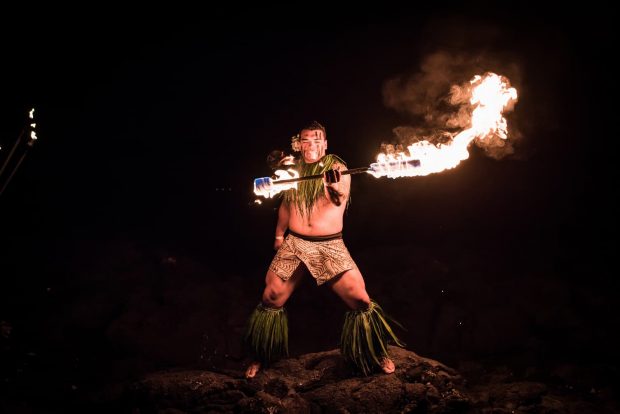
The evening runs the standard format: pre-show entertainment and hands-on classes, then an all-you-can-eat buffet. Unlimited Mai Tais, well drinks, beer and wine are in the ticket, and the resort closes the night with a Samoan fire knife dance it calls the Siva Afi.
When? Monday, Tuesday, Wednesday and Friday, 5pm to 8pm, gates at 4:30pm.
Where? At the Royal Kona Resort in downtown Kona.
Open bar? Yes, including beer, wine, standard well drinks, and Mai Tais.
Price: $182.32 for general admission, before tax. VIP admission with preferred seating is $227.90.
Parking: $5 per car for luau guests who are not staying at the resort, validated at check-in, card only. The resort’s normal self-parking rate is $25 a day.
Voyagers of the Pacific Luau
An oceanfront luau on the lawn at the Royal Kona Resort, four nights a week, closing on the Samoan Fire Knife Dance (Siva Afi) from center stage.
from:
$182
What is a suggested tour?Our suggested tours are hand-picked tours that receive consistent good reviews, give back to the community, and work hard to minimize their impact on the environment. Read more about these tours on our website.
What Voyagers guests praise, and what they flag
Reviewers most often praise the oceanfront setting, the staff, the fire knife finale and the open bar. On the buffet, reviewers single out the kalua pork and the island fish.
Two complaints recur: seats away from the stage lose the view, and the narration is hard to follow when the sound is off. Ratings stay positive overall.
2: Island Breeze Luau (Kona)
Island Breeze runs on the beachfront at Kamakahonu Bay, on the grounds of King Kamehameha’s Kona Beach Hotel and next to ʻAhuʻena Heiau. Kamakahonu is where the kapu system ended in 1819. The show opens with the Royal Court of Kamehameha I coming on stage behind a conch herald and a court chanter, then runs through a buffet, an open bar and a Polynesian revue with live dinner music.
Check-in is at 5:15pm at the Aloaliʻi Cultural Resource Center in the hotel lobby, dinner at 6, the performance at 7, and the evening ends around 8. Seating is first come, first served unless your party is eight or more.
The hotel also runs daytime classes at that same cultural center, booked separately from the luau: a hula lesson and lei making at $10 each, a lei kūpeʻe class at $5, and a free imu demonstration on Sunday, Tuesday and Thursday mornings from 8 to 9. If the underground oven is the part you came for, book the free morning imu demonstration.
When? Every Sunday, Tuesday, and Thursday, with a Wednesday added seasonally.
Where? At the Marriott King Kamehameha Kona Beach Hotel in downtown Kona.
Open bar? Yes, a full bar, open from the moment the luau grounds open.
Price: $192.41 per adult with tax and fees included, which is $183.75 before tax. The Aliʻi package at $220.50 before tax adds a preferred seating section, expedited check-in, a lei for every guest and a welcome cocktail.
Parking: $7 after validation. Bring the ticket the machine dispenses to the luau to get it stamped. The hotel’s normal rate is $40 a day.
Where to book: for more information and booking see the Island Breeze luau booking page1.
What Island Breeze guests praise, and what they flag
Reviewers most often praise the oceanfront setting, the cultural segments, the Polynesian revue and the arrival of the royal court. Kalua pork and grilled fish are the buffet dishes named most often.
Two complaints recur: seats farther from the stage make the evening harder to follow, and the audio is inconsistent. Reviewers rate the food average. Ratings stay positive overall.
3: Hawaiʻi Loa Lūʻau (formerly the “Gathering of the Kings”, Kohala Coast)
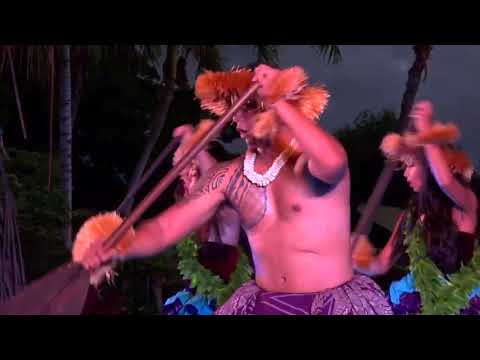
Hawaiʻi Loa runs on the Fairmont Orchid’s lawn and tells the story of the voyages that brought the first Hawaiians to these islands, through chant, hula dancers and live musicians. Seating and the bar open at 5:30pm, the performance starts at 7:30, and the bar closes at 8:15. Before the show there are cultural activities and games on the lawn.
The buffet is one of the broader ones: a poke station, poi, lomi lomi salmon, Molokaʻi sweet potato salad, kalbi-style beef, garlic shrimp, teriyaki chicken and kiawe-smoked kalua pork, with a separate keiki (children’s) station.
When? Saturday evenings, plus scattered Wednesdays that the operator publishes on its own booking calendar.
Where? At the Fairmont Orchid resort.
Open bar? Yes, from 5:30pm, but it closes at 8:15pm, before the evening ends.
Price: $215 per adult before tax through the booking page we link to below. Aliʻi seating at $240 adds front-row seats, an appetizer platter and a printed photo.
Parking: the booking page lists $15 valet for luau guests. Budget for it and ask when you arrive.
Where to book: On the Hawaiʻi Loa luau booking page.
What Hawaiʻi Loa guests praise, and what they flag
The review base is smaller here than at the big shows, roughly 120 reviews across TripAdvisor and Yelp. The recurring praise is for the storytelling, a personal, education-first program, and for a buffet reviewers rate above the usual luau line, with the poke and shrimp variety named most and special diets handled well.
Leis and photos cost extra, guests who linger find the bar closed at 8:15pm, and the cast is small, so the show runs shorter than the big productions up the coast.
4: Sunset Luau at the Waikoloa Beach Marriott Resort (Kohala Coast)
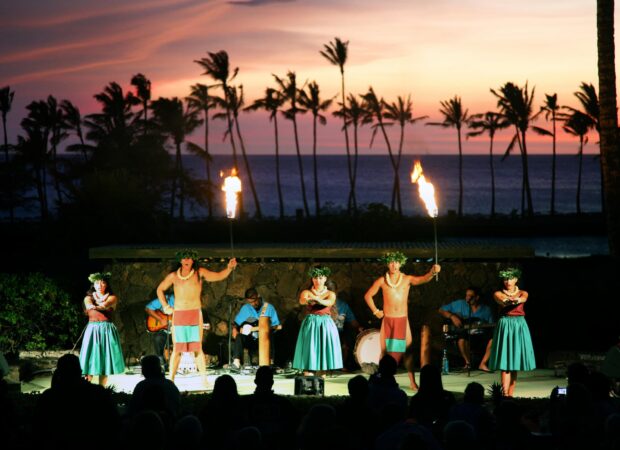
The Sunset Luau runs on the oceanfront lawn at the Waikoloa Beach Marriott Resort & Spa, one of the busier shows on the Kohala Coast. It starts at 5pm and runs three hours, longer than most, and the buffet includes contemporary takes on Hawaiian dishes alongside the traditional plates.
When? Every Monday and Wednesday, from 5pm.
Where? At the Waikoloa Beach Marriott Resort & Spa.
Open bar? Yes.
Price: about $198 by the time you check out. The advertised base is $179.14 for general seating, plus a service charge of $18.58 you can’t skip. Premier seating in the first three center rows is $225.84 before that charge, and comes with a lei greeting and a Hawaiian pūpū.
Parking: the Waikoloa Beach Marriott charges $35 a day for self-parking and publishes no luau validation.
Sunset Luau at the Waikoloa Beach Marriott
Oceanfront Polynesian dinner show at the Waikoloa Beach Marriott: imu ceremony, open bar, and Samoan fire dance over 'Anaeho'omalu Bay in 3 hours from $198 per adult.
Duration: 3 hours
By: Waikoloa Beach Marriott Resort and Spa
Free cancellation: up to 48 hours before tour
from:
$198
What is a suggested tour?Our suggested tours are hand-picked tours that receive consistent good reviews, give back to the community, and work hard to minimize their impact on the environment. Read more about these tours on our website.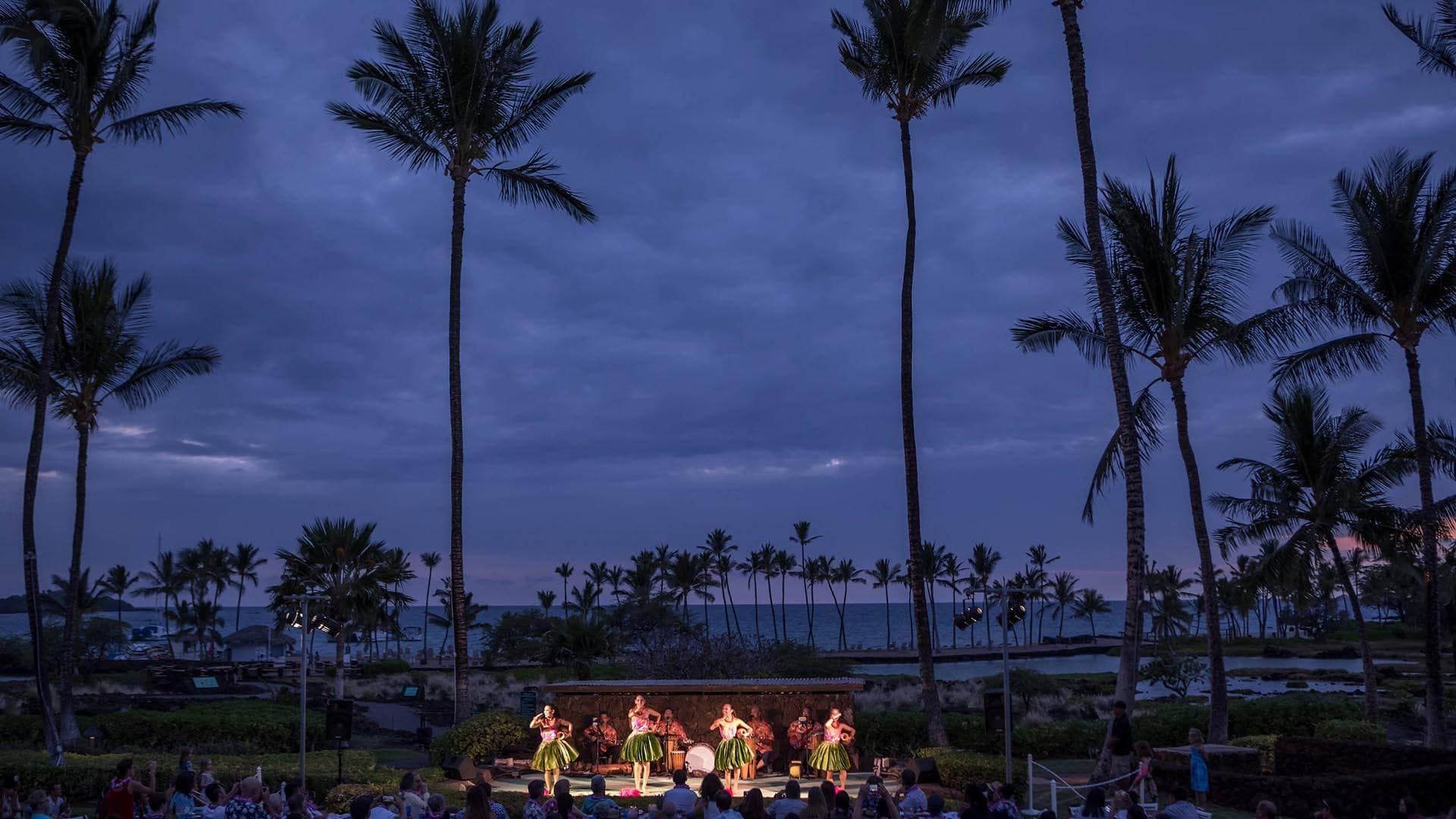
The Sunset Luau sets up on the oceanfront lawn at the Waikoloa Beach Marriott. Image credit: Marriott Hawaii.
What Sunset Luau guests praise, and what they flag
TripAdvisor rates the Sunset Luau 4.2 of 5, and the recurring praise is for the setting and the cast: sunset over ʻAnaehoʻomalu Bay, dancers and musicians reviewers rate highly, and an open bar reviewers rank above the usual luau pour.
Reviewers flag weather and waiting. The first hour can pass in full sun with no shade, the venue has been unprepared for rain, plates clear slowly, and several reviews describe a half-hour wait in the dark before the show starts. Reviewers say premier seating is the one upgrade worth paying for.
5: Legends of Hawaiʻi Luau (Kohala Coast)
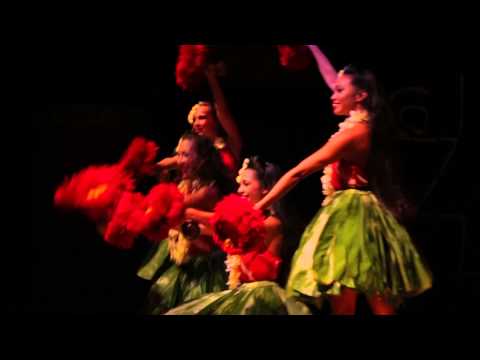
Legends of Hawaiʻi at the Hilton Waikoloa Village has the most polished production of the eight, with strong food and a professional cast. It plays in an open-air amphitheater at Kamehameha Court rather than on a lawn by the water, so there is no view. Self-parking and gratuity are both inside the ticket price, which is not true anywhere else on this list.
When? Every Sunday, Tuesday and Friday, 6pm to 8pm. Check-in is 5:45pm in June, July and August, and 4:45pm the rest of the year.
Where? At the Hilton Waikoloa Village resort.
Open bar? Yes: unlimited cocktails, beer, wine and soft drinks from the walk-up bar.
Price: $238.03 for general seating, tax and fees included. Aliʻi seating at $271.24 adds priority check-in, the seats closest to the stage, priority dinner service and tableside drinks.
Parking: included. Park in self-parking and bring the ticket for validation. The resort’s normal rate is $48 a day.
Cancel by: 72 hours, the longest window of the eight.
Where to book: On the Legends of Hawaiʻi booking page1.
What Legends of Hawaiʻi guests praise, and what they flag
The review base is the largest of the eight, and it rates lower than the others on both Google and TripAdvisor. The praise matches what the ticket promises: reviewers call the fire finale the highlight, and the buffet stays hot and plentiful. Kitchen staff handle vegan and allergy requests well.
General seating can queue up to an hour for the buffet while the Aliʻi tier eats first, and the walk-up bar pours low-end spirits. The Aliʻi tier lets you skip that queue.
6: Mauna Kea Luau (Kohala Coast)
The Mauna Kea Luau is held on its own section of the Mauna Kea Beach Hotel grounds, away from the main buildings, and it is the best of the eight on food. It is also the most expensive, and the only one where the bar is not included: one welcome drink, then you pay. The luau serves on wooden plates, and the hotel asks for aloha attire: an aloha shirt for men, a flowery print for women. The request is not enforced, and the evening runs a notch more formal than the rest.
When? Every Tuesday and Friday, 4:45pm to 8pm.
Where? At the Mauna Kea Beach Hotel.
Open bar? No. One complimentary Mai Tai or Keiki Drink is included.
Price: $256.41 for general seating, with tax and fees already included, the highest on the island. Premium front-row seating with preferred entry is $289.63.
Parking: $40 a day, self or valet, with no luau validation published.
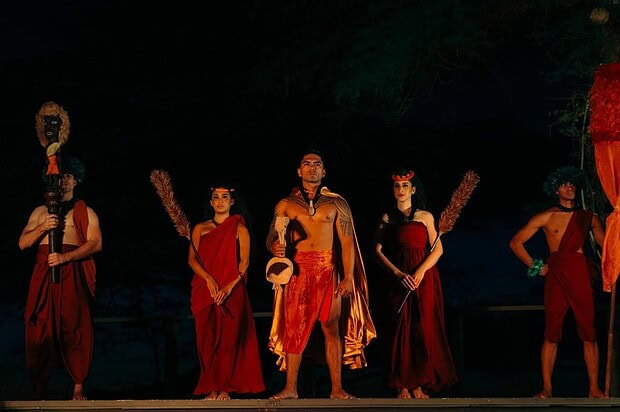
Mauna Kea Luau: Oceanfront Setting on Kaunaʻoa Bay
The best food we've had at a Big Island luau, with sunset views over Kauna'oa Bay from the oceanfront lawn of the Mauna Kea Beach Hotel
from:
$256
What is a suggested tour?Our suggested tours are hand-picked tours that receive consistent good reviews, give back to the community, and work hard to minimize their impact on the environment. Read more about these tours on our website.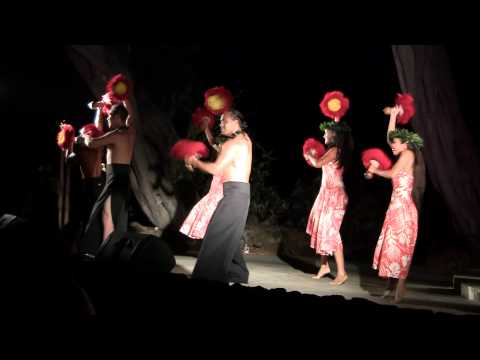
What Mauna Kea guests praise, and what they flag
Across roughly 390 reviews on TripAdvisor and Yelp, reviewers most often praise the setting: tables at the ocean’s edge on Kaunaʻoa Bay, with the food and the historical narration close behind. Guests who come for the storytelling get narration that traces the royal line to the present day.
The complaint that recurs is the line: check-in queues form early, seating opens at 5:30pm, and reviews describe long waits before the first plate. The narration that history fans praise runs long for guests who came for the dancing. Arrive at the front of the line or expect to stand in it.
7: Hale Hoaloha Lūʻau at the Mauna Lani, Auberge Resorts Collection
Hale Hoaloha runs Friday evenings at the Mauna Lani, an Auberge property on the Kohala Coast, with Monday nights added in the busy months. The crowd is smaller than at the big resort shows nearby.
The buffet is the broadest of the eight. There is a raw bar with shoyu poke, spicy poke, tofu poke, sashimi and shrimp cocktail; grill stations with a coffee-rubbed roast striploin, kalua pork, teriyaki chicken and garlic fried rice; Punaluʻu taro rolls; a keiki station; and a dessert table that runs to lilikoʻi haupia and a pōhā berry macadamia nut tart.
There is a real imu here. You can come by in the morning to watch the pig go into the ground and return that evening for the unveiling.
Check-in is 5:30pm, Makahiki games run on the lawn at 5:45, dinner at 6, and the performance at 7.
When? Every Friday, with added Monday nights seasonally.
Where? At the Mauna Lani (Auberge Resorts Collection).
Open bar? Partly. Standard seating includes one welcome cocktail; the open bar is a premium-tier upgrade.
Price: $230 per adult before tax through the booking page we link to below. The Aliʻi package at $270 adds the open bar, wine, priority seating and a printed photo.
Parking: ask when you book.
Where to book: for more information and booking see the Hale Hoaloha luau booking page.
What Hale Hoaloha guests praise, and what they flag
The review base is a few dozen on TripAdvisor and it skews high: 4.8, with 92 percent recommending. The praise centers on the program, a story-first evening of music and ceremony, and on the food, with the dessert table named as often as the raw bar.
At $230 a head, some reviewers judge the seating ordinary even at the top tier, and the Aliʻi package’s extra cost pays mostly for the open bar, not a better seat.
8: Feast & Fire Lūʻau at the Outrigger Kona Resort & Spa
Feast & Fire is performed by the Lim family of Kohala, six siblings who play Hawaiian music professionally. Their mother, Mary Ann Lim, was hired to entertain at the Mauna Kea Beach Hotel in the 1960s, and the family has performed in the islands and abroad since. PBS Hawaiʻi, profiling them, reported that their lineage traces back to Alapaʻi Nui, a chief who once ruled Hawaiʻi Island.
Lorna Lim, asked in that program what hula is for, said: “Hula, it is bringing those words to a living form. And then you realize that mele are portals back in time.”
The evening itself runs 5:30 to 8pm with a buffet dinner and an open bar, on the Outrigger’s grounds above Keauhou Bay.
When? Every Monday and Thursday, 5:30pm to 8pm.
Where? At the Outrigger Kona Resort & Spa at Keauhou Bay (south of Kona).
Open bar? Yes.
Price: $185 for general seating, before tax and fees. Aliʻi preferred seating near the front of the stage is $225.
Parking: the Outrigger charges $30 plus tax for self-parking and publishes no luau validation.
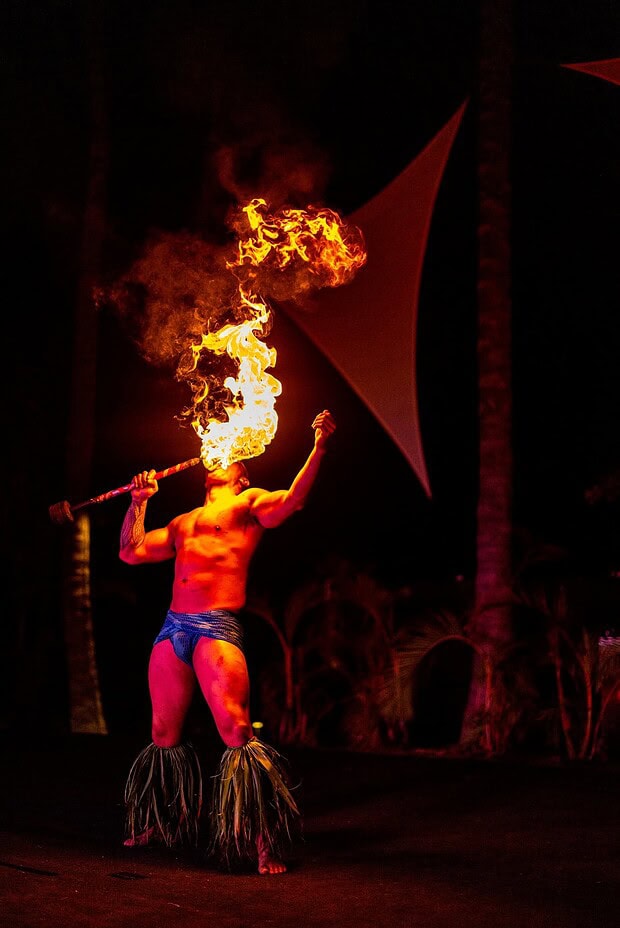
Feast & Fire Lūʻau at the Outrigger Kona Resort
Story-based Polynesian luau at the Outrigger Kona Resort above Keauhou Bay, with performers drawn from a Hawaiʻi arts program, fire dancing, open bar, and a 45-minute pre-show Artisan Village.
from:
$185
What is a suggested tour?Our suggested tours are hand-picked tours that receive consistent good reviews, give back to the community, and work hard to minimize their impact on the environment. Read more about these tours on our website.What Feast & Fire guests praise, and what they flag
Google rates it 4.1 across about 320 reviews; TripAdvisor’s small base of 23 sits lower at 3.3. Reviewers praise the show itself: the musicianship, the fire performer and the pre-show craft stations where you make your own lei or bracelet. Dietary requests get handled well.
Two complaints recur: cold food and rushed pacing. About 15 percent of the Google reviews land at one or two stars, most citing value at roughly $200 a head after tax, buffet dishes arriving cold, or the opening ceremony starting while guests were still at the buffet. Reviews split on the Aliʻi seats: front-and-center with quick service for some, only a closer chair for others.
No longer operating: Pilikana Lūʻau and Hoʻomau Waikoloa Luau
Pilikana Lūʻau at the Kona Inn and the Hoʻomau Waikoloa Luau both ran as recently as 2023 and both have closed. Check directly with the venues if you want confirmation before your trip.
Imu Mea ʻAi: build the imu yourself (Pāhoa)
Imu Mea ʻAi starts at 10 in the morning near Pāhoa, about 30 minutes south of Hilo, and runs four hours on your feet. You dig the pit in the red dirt and stack the lava rock with the Men of PAʻA, the Native Hawaiian nonprofit that runs it. The chanting is oli you learn and do yourself. There is no stage, no hula performance, no fire knife, no open bar, and no seat with a plate brought to it.
Several of the resort shows do open an imu in front of guests: the Mauna Lani lets you watch the pig go into the ground that morning, and King Kamehameha’s hotel runs a free imu demonstration three mornings a week. The difference here is that you build it. You harvest the plant material, gather the rock, help load the oven, and then uncover and share a feast that the group ahead of you prepared the day before.
It works for families and school or work groups. Adults are $150, ages 13 to 21 are $75, and 12 and under go free. Skip it if you want a polished evening show with cocktails, or if standing and bending on uneven ground for four hours is a problem. Come in closed-toe shoes you don’t mind getting muddy.
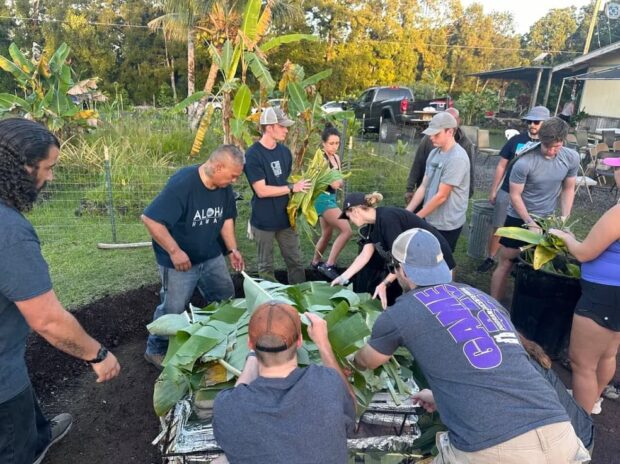
Imu Mea ʻAi Food Tour: Build a Hawaiian Underground Oven Near Pahoa
You dig the underground oven by hand and feast on kalua pork cooked in the imu the previous group built. A working Hawaiian alternative to the resort luau, run by a Native Hawaiian nonprofit near Pāhoa.
from:
$150
What is a suggested tour?Our suggested tours are hand-picked tours that receive consistent good reviews, give back to the community, and work hard to minimize their impact on the environment. Read more about these tours on our website.Should you go to a Luau?
A luau is a dinner show: buffet food, drinks, hula, and fire dancers, usually running about two and a half hours, three at the Sunset Luau. Cultural demonstrations fill the first half hour, dinner runs for an hour, and the performance closes the night. Shows start around dusk and most are finished by 8pm.
The case against: you are paying $182 to $256 per person to share a buffet with a crowd of strangers, at a resort that will probably charge you to park. The food is good and not exceptional. If your priority is Hawaiian food, you will eat better at a local restaurant for a fraction of the price.
The case for: food, live music, hula and fire dancing outdoors on a warm night is a good night out. When we attended Legends of Hawaiʻi, the imu ceremony was the kind of thing you don’t see anywhere else.
What happens during a luau?
The running order barely varies between the eight. Half an hour of child-friendly and cultural demonstrations, then an hour of buffet, then an hour of narration, hula and fire dancers. Where there is an imu ceremony it sits between the demonstrations and dinner, and the fire knife dance closes most of them.
The pig lifted out of the imu is not always the pork on your plate. The state health department’s own imu guideline describes the imu as part of the demonstration and entertainment element of the commercial luau, and Hawaiʻi luaus have served kitchen-cooked kalua pork while unearthing a separate show pig. If the distinction matters to you, ask the operator before you book.
Cooking in an imu for paying guests is legal. The Department of Health publishes Commercial Imu Sanitary Requirements: a permitted operator with a built, lined and drained pit, run as an extension of the resort kitchen, may serve what comes out of it. At Imu Mea ʻAi near Pāhoa you eat exactly that, and the Mauna Lani loads a real imu on the morning of its luau. At the other shows, treat the unearthing as ceremony and assume the kitchen cooked the buffet until the operator tells you otherwise.
Crowds, cost, and parking before you book
Check these before you book.
- You will be attending with a large crowd and may share a table with strangers. Staff release the buffet table by table, so you may wait a while to fill your plate. If you want to be first in line, consider a ‘preferred seating’ upgrade. What it buys varies: priority service at Legends of Hawaiʻi, expedited check-in at Island Breeze, the open bar at Hale Hoaloha, and mostly seat position plus small extras like a lei or a photo at the rest.
- A luau is not cheap, starting around $182 a head and running to $256, and the food is good, not exceptional. None of the eight currently publishes a show-only ticket without dinner, so if the show is all you want, the free hula shows are the cheaper option.
- Then there is parking, which most booking pages leave out. Only three of the eight sort it out for you: Legends of Hawaiʻi includes self-parking in the ticket, the Royal Kona charges luau guests $5 a car after validation, and King Kamehameha’s charges $7 after validation. The Fairmont Orchid’s luau booking page lists $15 valet. Beyond that, the posted resort day rates are $30 at the Outrigger Kona, $35 at the Waikoloa Beach Marriott and $40 at the Mauna Kea Beach Hotel; the Mauna Lani publishes nothing at all. Ask at check-in.
- Last, the ride home. The two downtown Kona shows, Voyagers of the Pacific and Island Breeze, are walkable from much of the town’s lodging. Every Kohala Coast show is a drive unless you are sleeping at that resort, and six of the eight tickets include an open bar, so settle who drives before the first mai tai.
If Hawaiian culture is the reason you are going and the food is not, skip the luau and go to one of the free hula performances held around the island. If you are visiting more islands, our comparison of 10 Luau shows on Oʻahu, the 6 Luau shows on Kauaʻi, and our Maui Luau overview cover the same ground there.
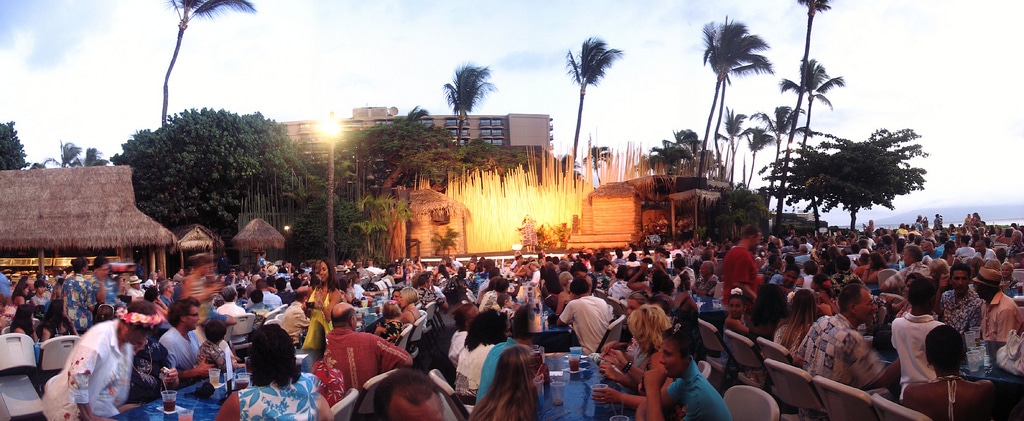
Luau Dinner Show impression from Maui. The number of people present at such shows varies. Image credit: Joe Parks under a CC-2.0 license.
The History of the Luau
The event usually tied to the first luau happened on the Big Island, and it was the collapse of the Hawaiian religious system. In 1819, six months after Kamehameha’s death, his son Liholiho sat down at the women’s table at Kamakahonu in Kailua-Kona and ate with them, which the ʻaikapu strictly forbade. Messengers went out to announce that the kapu system was over. He had tried to reinstate the kapu first, and his mother Keōpūolani and his co-regent Kaʻahumanu opposed him.
The National Park Service, which manages the site, records that this event, the ʻAi Noa or free eating, “shook Hawaiian culture to its foundations, leading to several battles, the destruction of most heiau on the islands, the relaxing of prohibitions surrounding the aliʻi, and the ending of much of the Hawaiian religious system.” The order it ended had governed Hawaiian religious and social life until then.
Calling that meal the first luau is a stretch: the word is younger than the event. Pukui and Elbert’s Hawaiian Dictionary dates lūʻau as a name for the feast to at least 1856, notes it was named for the taro tops always served at one, and records that a feast was formerly a pāʻina or an ʻahaʻaina. Kamakahonu is the same beach the Island Breeze luau sets up on.
The 7 dishes on nearly every luau buffet
The buffet is the middle hour of the evening, and the same seven dishes appear at nearly every one. A few may look unfamiliar. Try a little of each, including the poi.
- Kalua Pig (or Pork) is the centerpiece of the luau buffet. It is pork cooked in an imu, or underground oven, then shredded. It pairs with everything and turns up on menus across our local restaurants.
- Poi is a traditional Hawaiian “pudding” that was a main source of carbohydrate for the Native Hawaiians. Poi is a thick paste made from the taro root that is either steamed or baked and then pounded into a pulp. It tastes starchy and slightly sour from the light fermentation in the preparation process, and is the most divisive of all dishes on this list. Give it a try.
- Chicken Long Rice is inspired by Chinese cuisine. Its main ingredients are chicken soup, clear noodles, chicken and ginger.
- Laulau is worth a plate. It is pork, chicken, or fish wrapped in lūʻau (taro) leaves and steamed for a long time. The tough taro leaves go soft, almost like spinach, and the meat stays tender and juicy. Traditionally laulau is also prepared in an imu.
- Lomilomi Salmon is a traditional salad or side dish with fresh tomato, salmon, and onion.
- Haupia or coconut pudding is a sweet traditional dessert made from coconut milk and cornstarch.
- Poke is another one of our favorites. Poke is raw fish marinated usually with soy sauce, onions and lemon, though many other marinades exist. The “poke bowl” made it popular worldwide, but it is a Hawaiʻi dish and it is better here.
You don’t need to go to a luau to taste any of these foods. Many are also available at local supermarkets (KTA for example) or at one of our local L&L Hawaiian BBQ chain restaurants. See our list of Hawaiian foods for more local specialties and where to buy them.
What is Hula?
Hula is danced to a chant or a song, and the dancer’s hands and feet carry the words. Island Breeze Productions, the Kona hālau that performs at King Kamehameha’s, describes it this way: “Hula is the storytelling dance of the Hawaiian people, that connects us with our Hawaiian heritage. Hula animates our history, genealogy, and our lifestyle here on the islands.”
Hawaiian was not a written language before contact with the west, so hula and the chants that go with it are how history, genealogy and moʻolelo were carried forward. Hula still does that job. At a luau the dance is dinner entertainment; at a hālau’s competition it is the hālau’s own work, put in front of judges.
In the video below, Kaumakaiwa Kanakaʻole talks about what hula means from a Native Hawaiian perspective. Kanakaʻole has won multiple Nā Hōkū Hanohano Awards and has performed around the world.
Hula kahiko and hula ʻauana: how to tell them apart
A luau program will name both, and the quickest way to tell them apart is to listen rather than look.
Hula kahiko is danced to oli, chanted rather than sung, and accompanied by percussion only: the pahu drum, the ipu heke gourd drum, ʻuliʻuli feathered rattles. Kahiko means old or ancient. It is the form tied to ceremony, and at a pā hula it is performed as ceremony.
Hula ʻauana is the later form, danced to song with melody behind it: ʻukulele, guitar, steel guitar, bass. ʻAuana means to wander or drift. The Merrie Monarch Festival in Hilo judges the two as separate contests every spring.
Free Hula and other cultural events on the Big Island
There are fewer free hula shows than a year ago. The Volcano Art Center‘s monthly Hula Kahiko series at the pā hula in Hawaiʻi Volcanoes National Park is suspended while tephra from the Halemaʻumaʻu eruptions sits on the dance platform. The center plans to restart it once the site is cleared. Four listings still run, three of them on a fixed weekly schedule.
Free hula and cultural events that run weekly
- Queens’ MarketPlace, Waikoloa: a free hula show at the Coronation Pavilion, Mondays 6pm to 7pm, with both kahiko and modern hula [events calendar]
- Keauhou Shopping Center, Kona: free hula in the courtyard, Fridays 6pm to 7pm [events calendar]
- Aloaliʻi Cultural Resource Center, Kailua-Kona: a free imu demonstration at King Kamehameha’s Kona Beach Hotel, Sunday, Tuesday and Thursday 8am to 9am, booked ahead [activities and booking]
- Kings Shops, Waikoloa: runs a weekly program with weekly hula and bi-monthly fire knife performances [events calendar]
Free annual cultural festivals at the two national park sites
- Puʻuhonua o Hōnaunau holds a free cultural festival on the last weekend in June, with hula, canoe rides, the hukilau, lei making, weaving and ʻohe kapala [park page]
- Puʻukoholā Heiau holds the Hoʻokuʻikahi Establishment Day Hawaiian Cultural Festival every August, free and open to the public, opening at 6am with a hoʻokupu (offering) ceremony at the base of the heiau, followed by lauhala weaving, kapa making, featherwork, Hawaiian games and live mele [park page]
The three National Park Service calendars are worth a look before your trip:
- Hawaiʻi Volcanoes National Park event calendar
- Puʻuhonua o Hōnaunau event calendar
- Puʻukoholā Heiau event calendar
Etiquette at heiau and hula grounds
Two of these are active cultural sites rather than venues. The Park Service calls Puʻuhonua o Hōnaunau wahi pana, a sacred place, and its own visitor guidance asks you to stay on marked trails, not to sit, stand, walk on or lean on the rock walls, not to build rock stacks, and to “stay quiet and observe cultural ceremonies from a distance”.
Puʻukoholā Heiau, where the August festival opens with a dawn hoʻokupu ceremony, is the same kind of place. A hula kahiko performance at a pā hula is a ceremony too. Watch it the way the Park Service asks here: quietly, and from a distance.
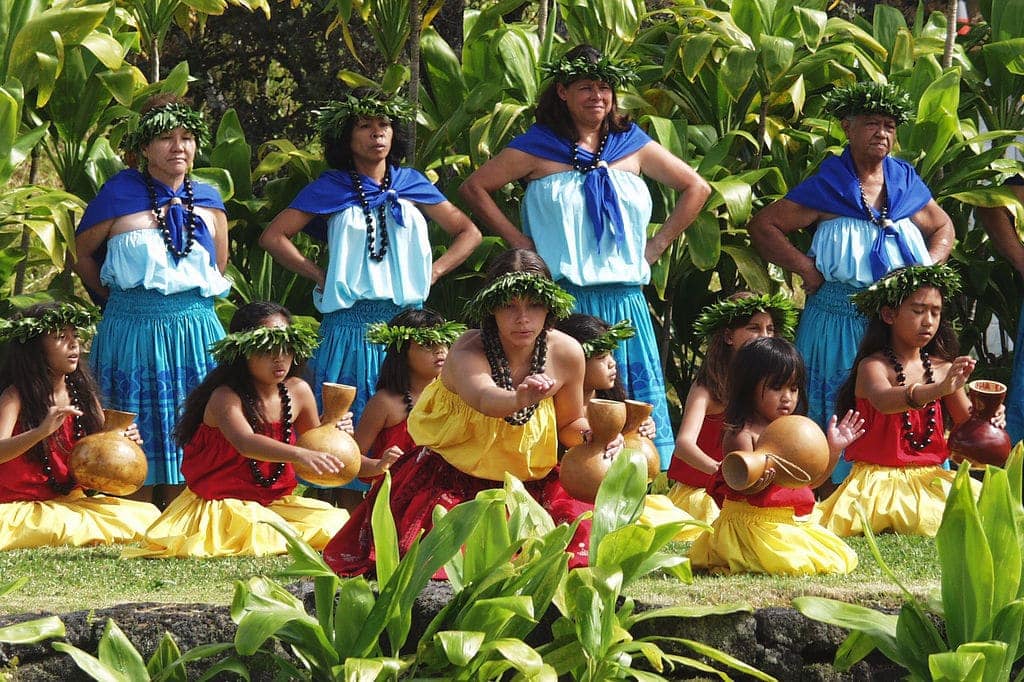
Hula kahiko at the pā hula in Hawaiʻi Volcanoes National Park. The Volcano Art Center’s monthly series here is suspended while tephra sits on the platform. Image credit: Ron Ardis under a CC-2.0 license.
More historic and cultural things to do on the Big Island
Our list of cultural and historical things to do on the Big Island covers the archeological and historic sites in one place.
1. We are part of the TripAdvisor and Hawaii Tours affiliate programs. Read more about our participation. ↩