
A stretch of coast below Kīlauea is named for a chief who lost a bet over a rat. The chief, Hōʻiu, bet his life against Pīkoi, a rat shooter from Kauaʻi who said a giant rat lay asleep at Hōlei. Pīkoi hit it on the nose.
The legend of Pīkoi, Hōʻiu and the giant rat
Pīkoiakaʻalalā, Pīkoi for short, was born at Wailua on Kauaʻi. His father was ʻAlalā (crow), his mother was Koukou, and his older sisters were ʻIole (rat) and ʻŌpeʻapeʻa (bat): a family of rats who could take human form. Pana ʻiole (shooting rats with a small bow and arrow) was a sport of chiefs. Pīkoi was the greatest rat shooter in the islands and beat the famous champions of his day.
Pīkoi traveled from Kauaʻi to a village near Puʻumanawaleʻa, a mound on the southeast coast of Hawaiʻi Island where the people got their water. There he saw a large gray-black rat with twisted teeth asleep on the hillside of Hōlei. The villagers all denied that such a rat existed: there were only small rats, they said, nibbling the sweet potatoes.
Pīkoi insisted it was real and bragged he could hit it right on the nose with an arrow. To settle it, he made a wager with Hōʻiu, the young chief of the area: Pīkoi’s life and the lives of ten of his men against Hōʻiu and ten of Hōʻiu’s men, with a pig, a dog, a fish, poi (pounded taro) and sweet potatoes added on.
Pīkoi took aim and shot the rat on the nose. It woke and ran off to ʻĀpua, where it died. Eight witnesses were sent to Puʻumanawaleʻa, and they told it exactly as Pīkoi had said. By the terms of the bet, Hōʻiu and ten of his men were baked in an imu (underground oven). Ever since, the coast seaward of Laeʻapuki has been called Hōʻiu, and the gentle breeze there is called the Puʻulena.
Where the legend’s places are in Hawaiʻi Volcanoes National Park
Hōlei and ʻĀpua, where the story is set, are inside the park on the southeast coast below Kīlauea. Hōlei Pali is a steep cliff, about 2,000 feet high, along Chain of Craters Road. The road runs 18.8 miles from the summit to the coast. Our Hawaiʻi Volcanoes National Park guide has a section on Chain of Craters Road.
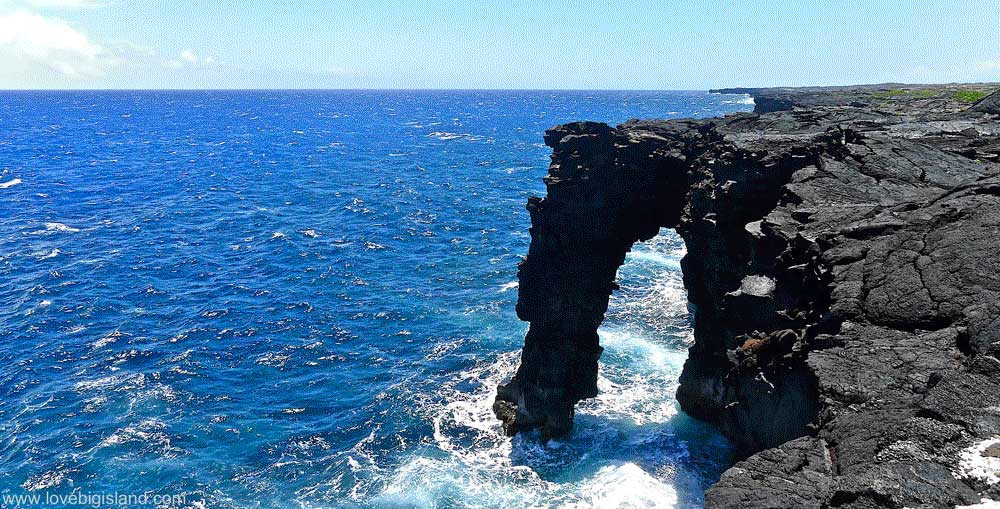
The Hōlei Sea Arch on the Chain of Craters coast in Hawaiʻi Volcanoes National Park, before it fell into the sea in late September 2026.
When Gerrit stopped at the Hōlei Sea Arch viewpoint, near the end of Chain of Craters Road, on 29 September 2026, the arch had just fallen into the sea, but it was still a good place to get out of the car and walk to where lava covered the road.
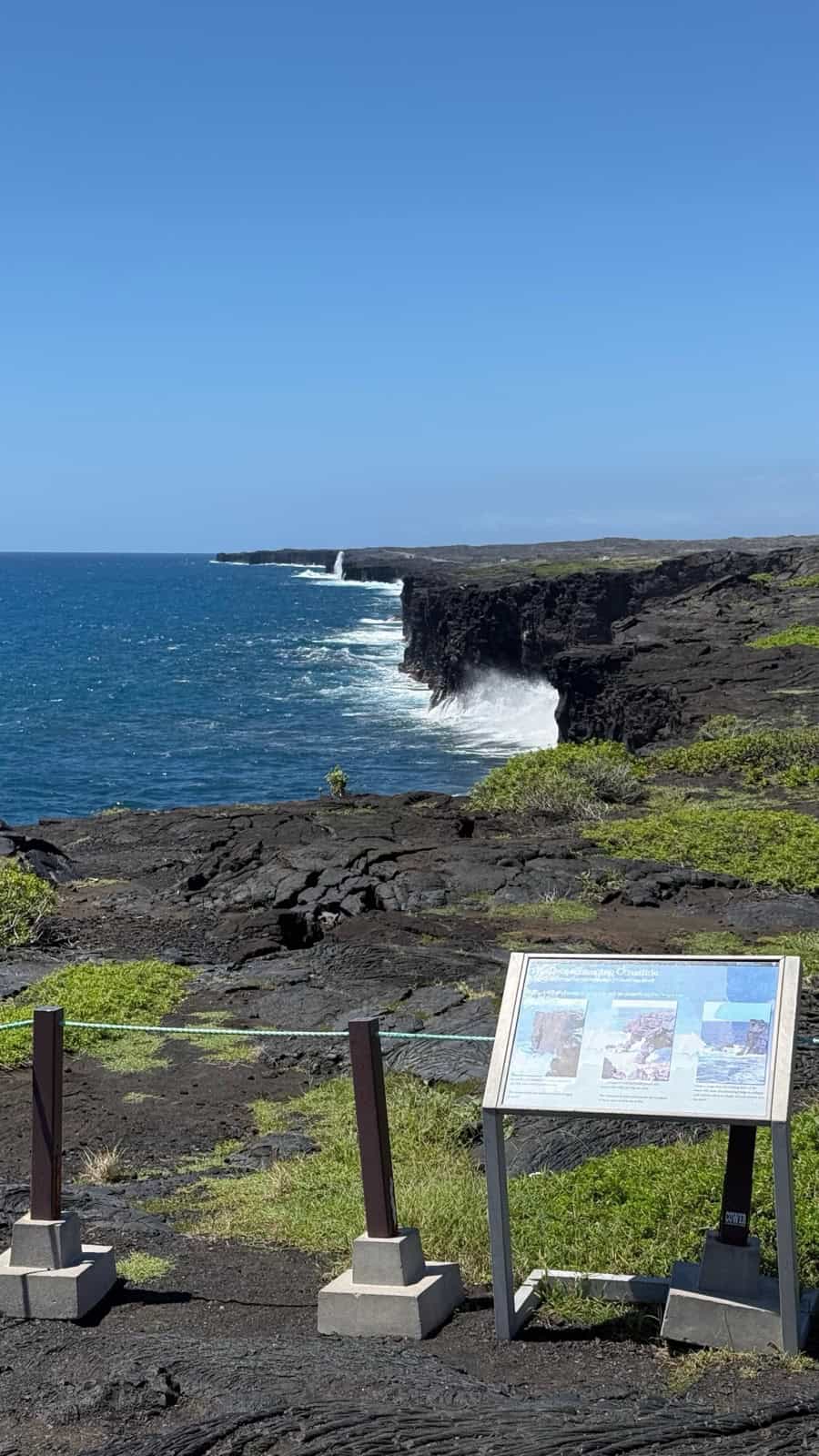
The Hōlei Sea Arch viewpoint on Chain of Craters Road on 29 September 2026, days after the arch fell into the sea. Credit: Gerrit van der Plas
ʻĀpua, where the rat died, is in the park’s backcountry. ʻĀpua Point is 6.6 miles along the Puna Coast Trail from the trailhead at the Puʻuloa Petroglyphs, and camping there needs a backcountry permit. Our mythology hub lists the other Big Island legends we retell.
About this telling
The rat wager and the naming of Hōʻiu follow the National Park Service’s telling from Hawaiʻi Volcanoes National Park. Pīkoi’s rat family and contests come from the Hawaiian-language “Story of Pikoiakaalala,” printed with an English translation in Abraham Fornander’s folklore collection (vol. 4, 1916-17).
In that story, Pīkoi goes to Kohala to shoot birds for the chief Keawenuiaʻumi; in Mary Kawena Pukui and Caroline Curtis’s Hawaiʻi Island Legends, he shoots night birds raiding a Puna chief’s gardens. Neither book has the Hōʻiu wager.
Read more
- Pīkoiakaʻalalā and the Giant Rat, at the National Park Service. A short English telling of the rat wager at Hōlei.
- The Story of Pikoiakaalala in Fornander’s collection, on Ulukau. His whole story in Hawaiian, with the English translation on facing pages. Open it for his family and his rat-shooting contests.