
The old stories of the Big Island are attached to real places. The volcano is a woman with a family and a temper. A boy from Kohala gets even with a shark by letting it eat him. A chief settles a war by winning an argument about a road.
These are our own retellings, kept short, for anyone who wants the story without the lecture. Most of them end somewhere you can drive to.
Table of contents
- The places these stories attach to
- Pele and her family
- The two shark stories
- Waterfalls
- Chiefs and heroes
- Plants and animals
The places these stories attach to
Every story here attaches to a place you can drive to. The map below has all thirteen, and each row under it jumps to that story’s summary.
| Name | Group | Place | What you can see there |
|---|---|---|---|
| 1Pele comes to Kīlauea (Details ↓) | Pele and her family | Halemaʻumaʻu, Kīlauea summit | The crater she settled in, still erupting |
| 2Pele, Hiʻiaka and Lohiʻau (Details ↓) | Pele and her family | Lava Tree State Monument, Puna | Tree molds left standing by a lava flow |
| 3Pele and Kamapuaʻa (Details ↓) | Pele and her family | Kīlauea crater rim | The rim he stood on to get her attention |
| 4ʻŌhiʻa and Lehua (Details ↓) | Pele and her family | Kīlauea Iki, ʻōhiʻa forest | The tree itself, on almost every trail |
| 5Poliʻahu and Pele (Details ↓) | Pele and her family | Mauna Kea summit | Snow in winter, and Lake Waiau below the top |
| 6Kaʻehuiki, the shark child (Details ↓) | Sharks | Puʻu Loa petroglyphs, Puna coast | A boardwalk loop through the carvings |
| 7Punia and the shark (Details ↓) | Sharks | Honoipu, North Kohala | The lava shelf coast his father fished |
| 8Hina and the moʻo Kuna (Details ↓) | Waterfalls | Rainbow Falls, Hilo | The cave behind the falls, from the parking lot |
| 9ʻAkaka Falls (Details ↓) | Waterfalls | ʻAkaka Falls State Park | A 442-foot fall on a 0.4-mile loop |
| 10Lonoikamakahiki (Details ↓) | Chiefs and heroes | Kawaihae, South Kohala | Puʻukoholā Heiau above the bay |
| 11Naupaka, the half flower (Details ↓) | Plants and animals | Nāhuku, Hawaiʻi Volcanoes NP | Where the half-flower grows, on the loop trail and the coast |
| 12Kōlea, the plover god (Details ↓) | Plants and animals | Cape Kumukahi, Puna | The easternmost point and its red stone; wintering plover |
| 13Ka-Miki and the place of refuge (Details ↓) | Chiefs and heroes | Puʻuhonua o Hōnaunau, South Kona | The Great Wall, Hale o Keawe, and the refuge grounds |
Most of these attach to somewhere you can go. The Puʻu Loa petroglyph field is on the same Puna coast as Pānau, reached by a boardwalk off Chain of Craters Road. Puʻuhonua o Hōnaunau was a place of refuge, where someone who had broken a law could be absolved. The petroglyph fields at Puakō and Waikoloa sit on the Kona and Kohala side.
Pele’s hair, the strands of volcanic glass that drift downwind of a vent, is named for her: Pele’s hair. Haumea, her mother, also names a dwarf planet: Haumea. For heiau and historic sites, start with our history and culture guide, and for hula and chant performed rather than read, the luʻau and hula page.
We work from Hawaiian-language sources where we can reach them, mostly the Hawaiian newspapers of the 1800s and early 1900s and the modern editions of them published by Hale Kuamoʻo at UH Hilo, which are free to read online at Ulukau. Each page says at the bottom whose telling it follows. Caren Loebel-Fried is the local storyteller and author we point people to for these in print.
Pele and her family
Five of the eleven are hers. Her arrival on the island, the two quarrels that shaped it, and the tree and the snow that came out of them.
How Pele came to Kīlauea
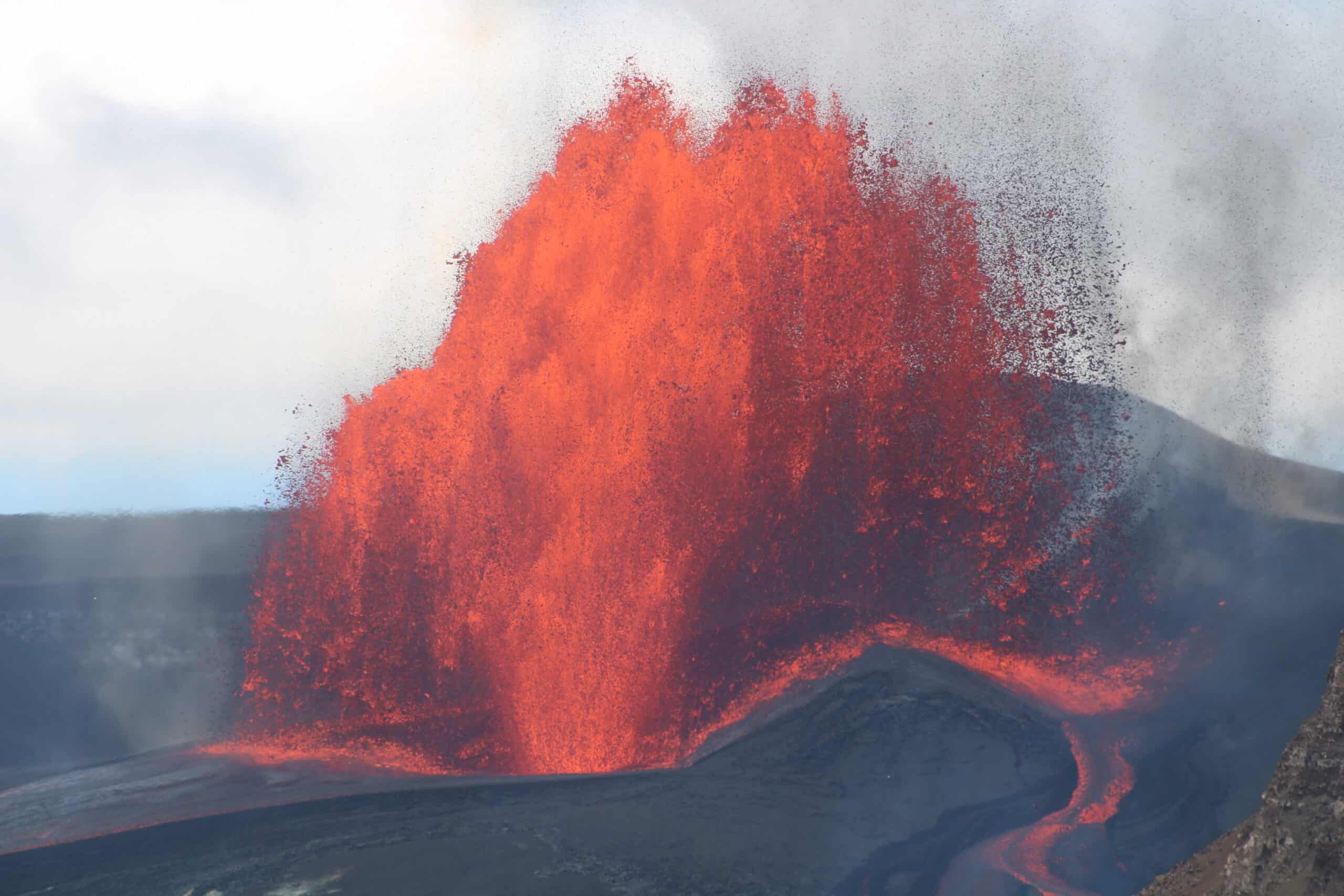
Pele’s house, mid-eruption. The Hawaiian texts call Halemaʻumaʻu her kapu chiefly house, and the crater has kept erupting into our own time. Image credit: USGS Hawaiian Volcano Observatory.
Pele was born in Kahiki and left after falling out with her older sister. She came down the island chain looking for a home and found one at Halemaʻumaʻu, the crater at the summit of Kīlauea, where the accounts say she lives now. She is not a closed subject either: for some families in Puna and Kaʻū she is still a family deity.
Read it: Pele, goddess of the volcano.
Pele’s love story, and the forest she burned
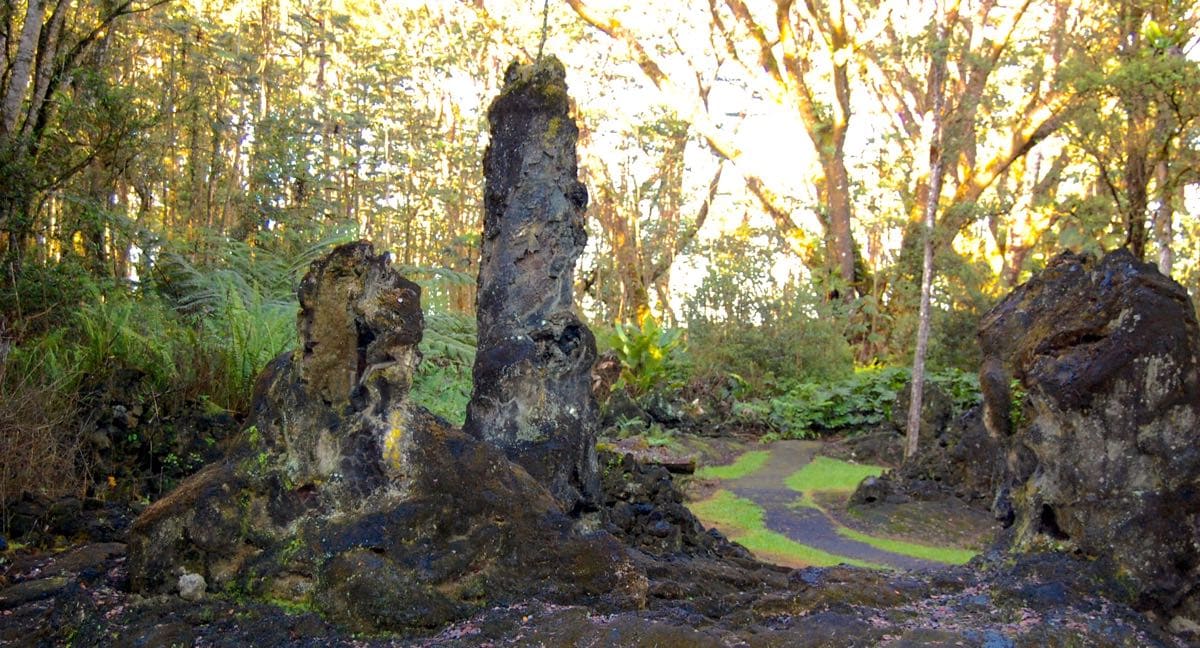
Lava tree molds at Lava Tree State Monument in Puna: what is left standing when a flow runs through a forest and burns the trunks out of its own casts. Image by Sean A. Clevenger [CC BY-SA 3.0 (https://creativecommons.org/licenses/by-sa/3.0)], from Wikimedia Commons.
Read it: Pele, Hiʻiaka and Lohiʻau.
Why one side of the island is wet and the other dry
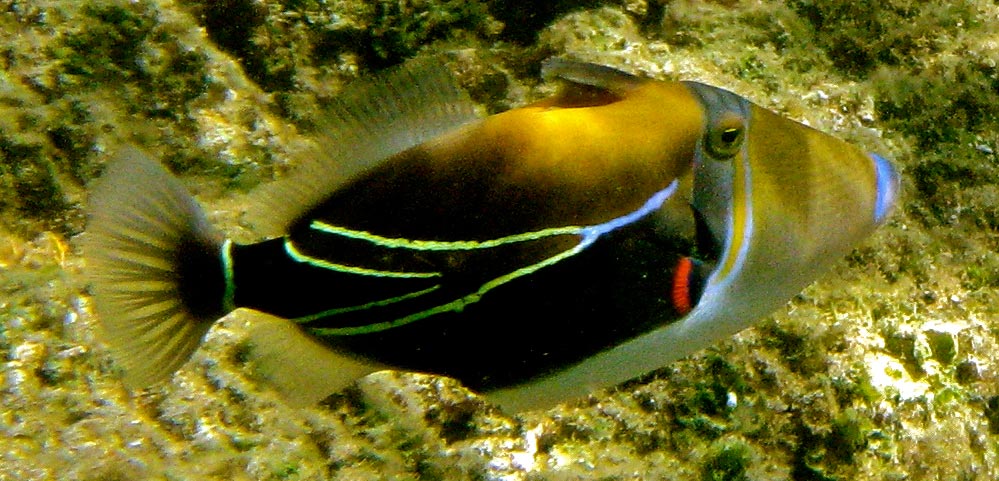
One of the forms Kamapuaʻa takes in the 1861 text is the humuhumunukunukuāpuaʻa, the fish whose name ends in “pig”. Humuhumunukunukuapuaa (reef trigger fish), the state fish of the Big Island of Hawaii. Image credit: Wikipedia.
Why the east side of the island is wet and the west side is dry. Pele and the demigod Kamapuaʻa were lovers, it went badly, and they split the island between them: he took the rainy windward side, she kept the dry leeward one.
Read it: Pele and Kamapuaʻa.
ʻŌhiʻa and Lehua: why picking the flower brings rain
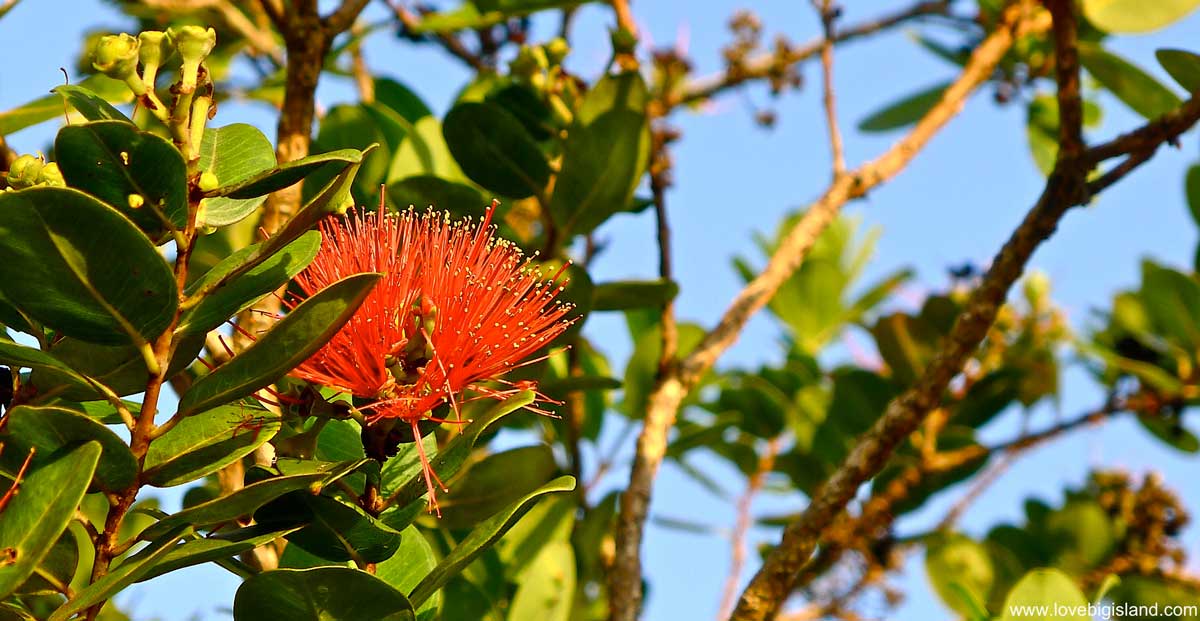
The lehua blossom. Pick one and it rains that day. Red Ohia Lehua flower.
Pele wanted a warrior named Ohia, who was already promised to Lehua. When he turned her down she turned him into a twisted tree, and the gods made Lehua its flower so the two would stay together. Pick one and it rains that day.
Read it: Ohia Lehua, and the jealousy of Pele.
Poliʻahu and Pele, the snow and the fire on Mauna Kea
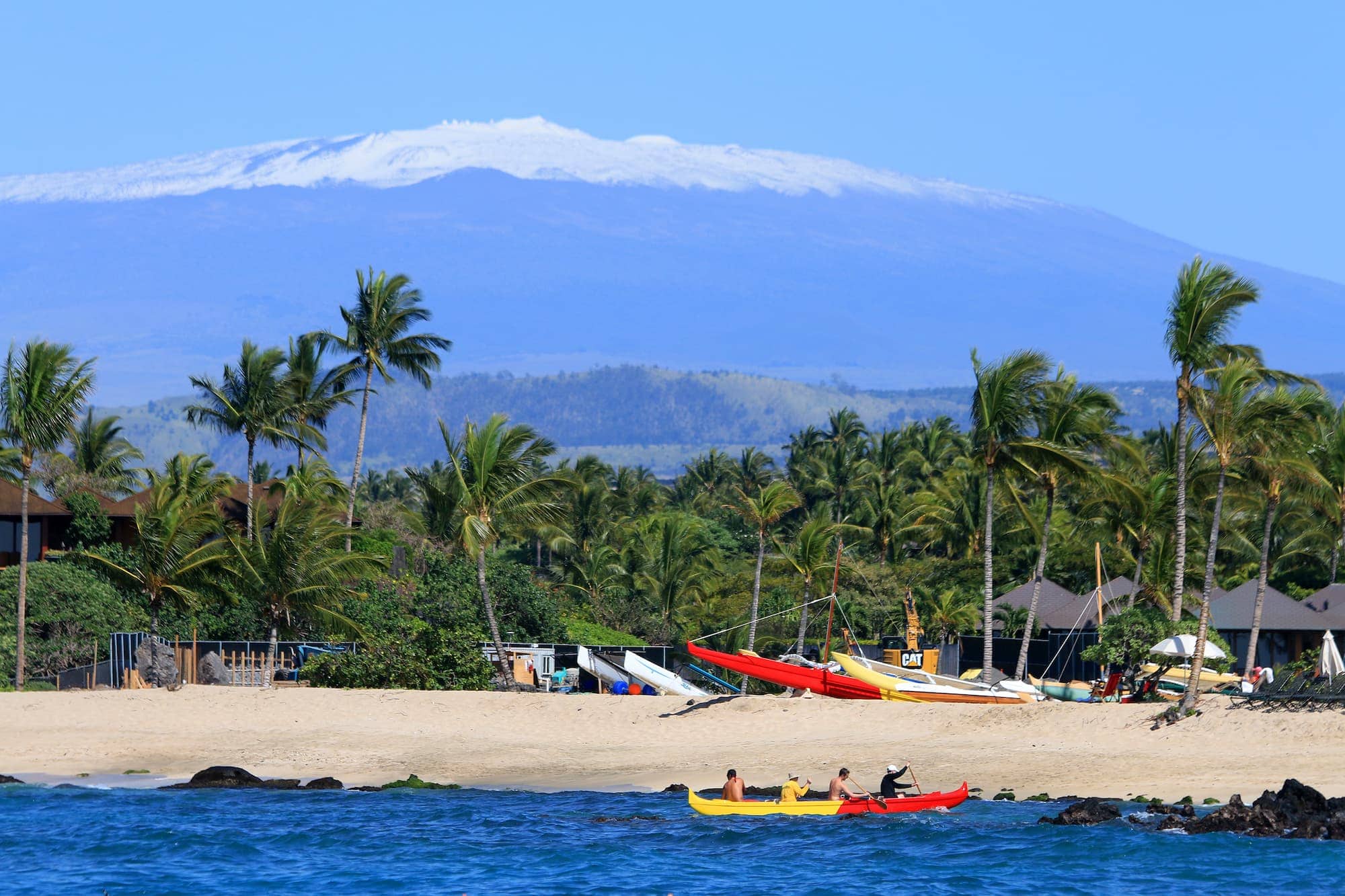
Snow on the summit of Mauna Kea, the mantle Poliʻahu throws over Pele’s fire in the legend. Image credit: Hawaii Tourism Authority (HTA) / Kirk Lee Aeder
Mauna Kea keeps its snow while the island’s fire stays south at Kīlauea, and this legend explains the divide. Poliʻahu, the snow goddess, welcomes a stranger to a sled race on the slopes above Hāmākua and wins. The loser is Pele, and losing is more than she can take.
Read it: Poliʻahu and Pele, the snow and the fire on Mauna Kea.
The two shark stories
Two stories from opposite ends of the island. In one a shark wants a family, in the other a boy wants revenge on one.
Kaʻehuiki, the child born a shark
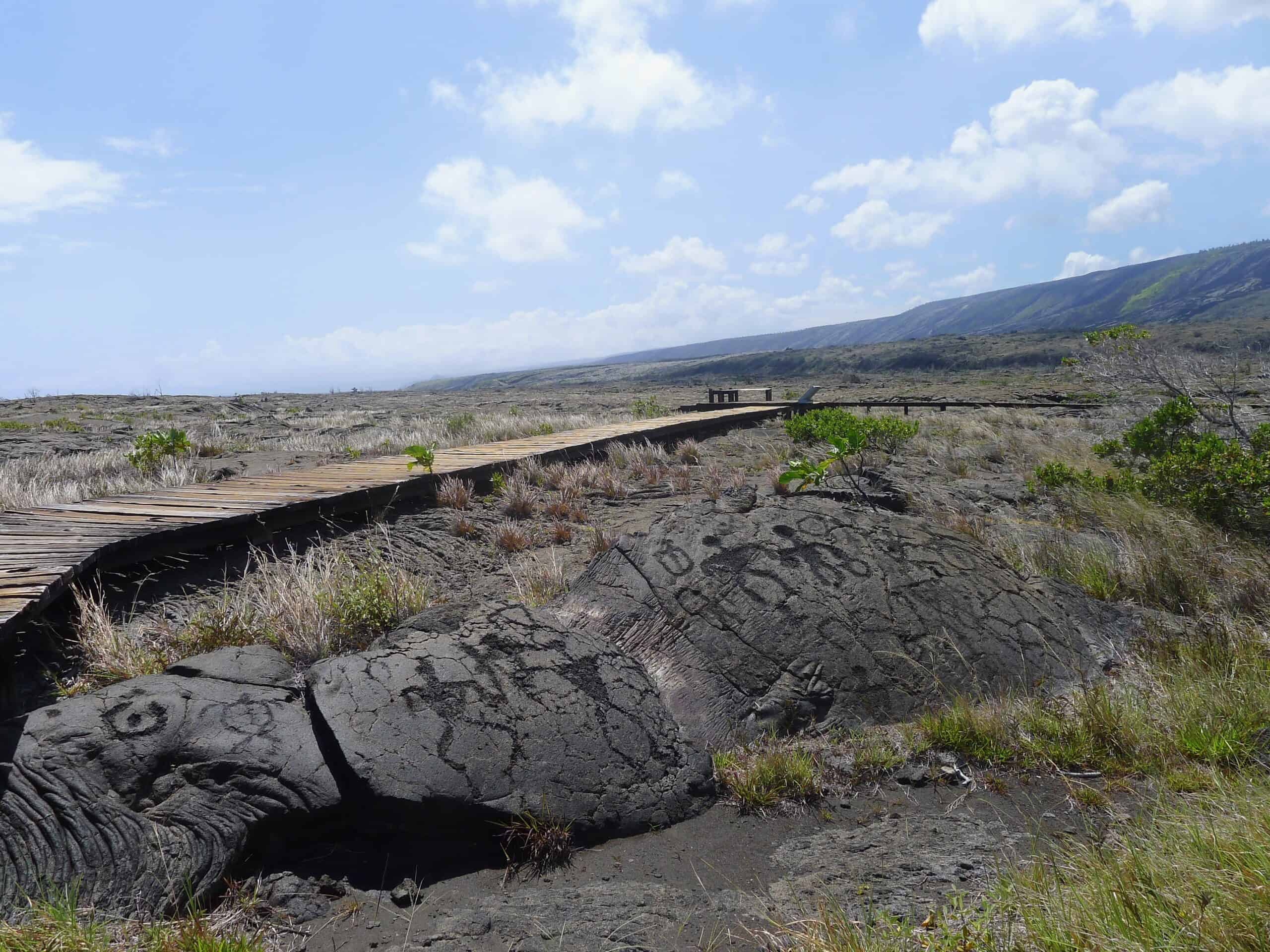
The boardwalk at Puʻu Loa runs a loop around the carvings, on the same stretch of Puna coast as Pānau. Staying on it is what keeps the petroglyphs intact.
A couple on the Puna coast have a child who is born a shark. He grows up wanting a place among the great sharks of the islands, travels the coast paying his respects to the shark chief of every district, and gets past a dangerous one on Maui by swimming into its mouth.
Read it: Kaʻehuiki, the shark child of Pānau.
Punia, the boy who let a shark swallow him
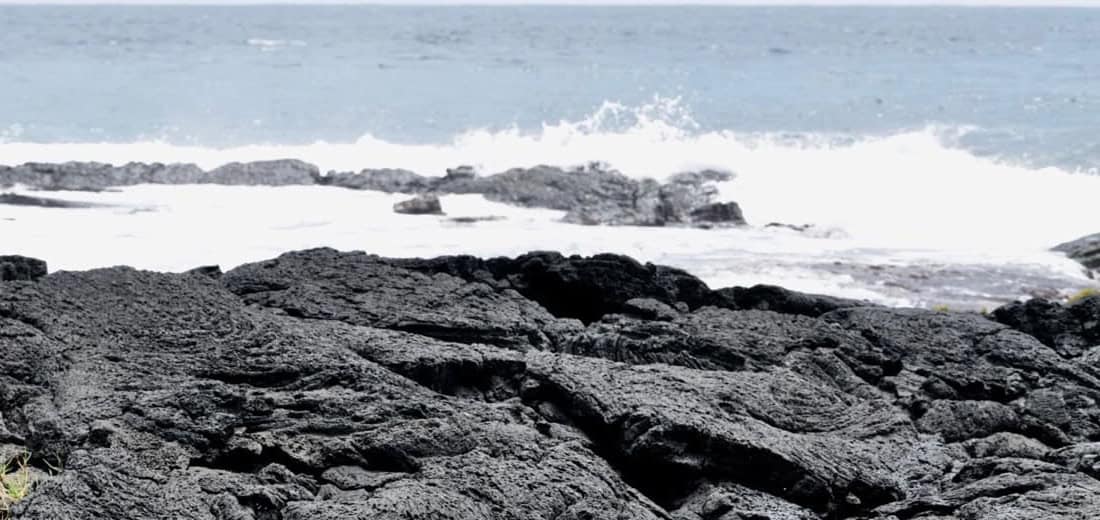
Punia’s father dived for lobster at a hole in a shore like this one, and the shark pack killed him there.
A shark kills a fisherman at his lobster hole in Kohala. Years later the fisherman’s son goes back to the same hole with a rolled mat and two carved sticks, and lets the shark swallow him whole. The best scene is on the beach afterwards.
Read it: Punia and the shark Kaiʻaleʻale.
Waterfalls
Both of these attach to a waterfall you can walk to in an afternoon, one in Hilo and one just up the coast from it.
Hina, Māui, and the moʻo Kuna at Rainbow Falls
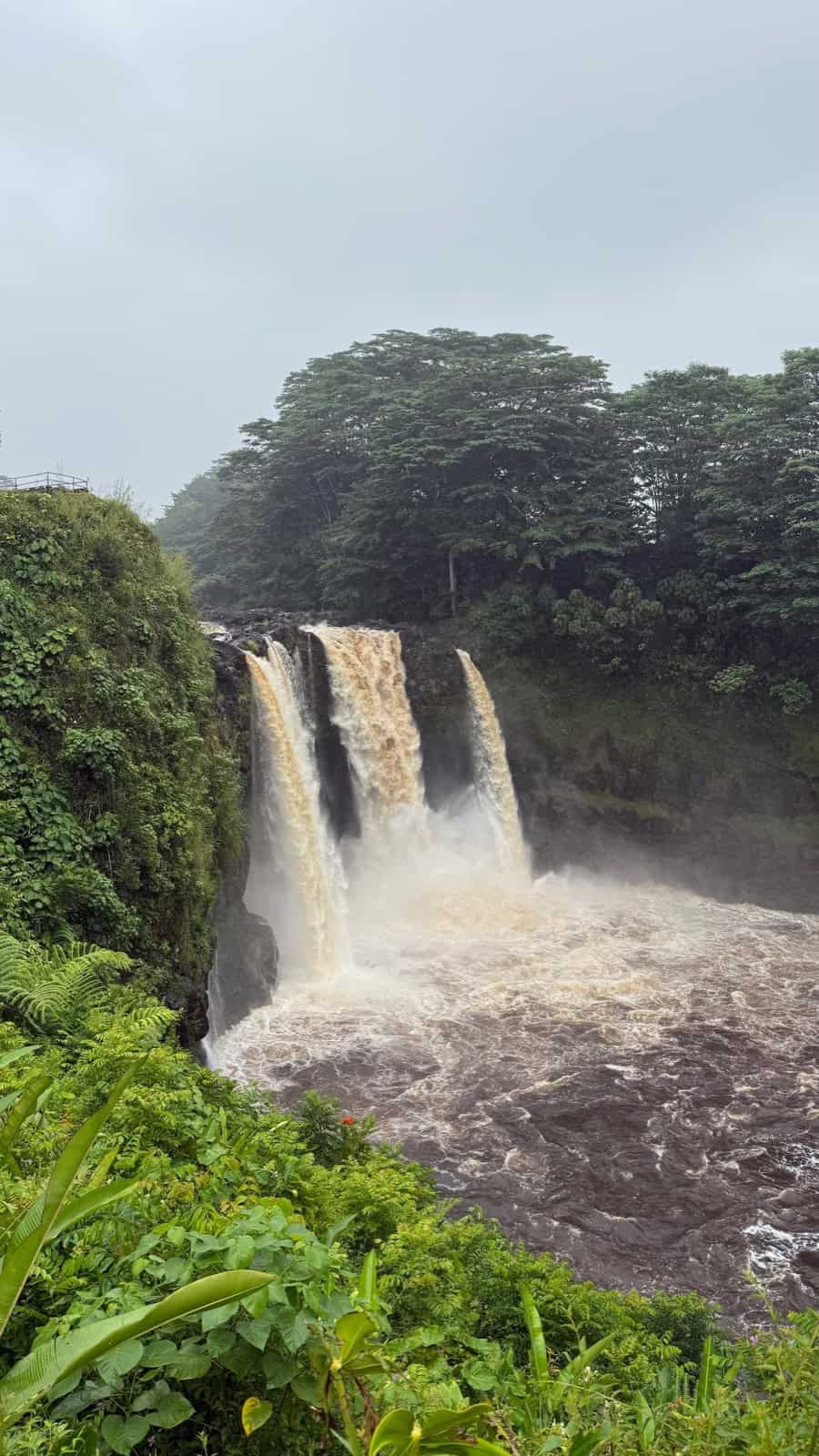
The Wailuku River pours over Rainbow Falls after overnight rain. The cave behind the falls is the legendary home of Hina.
Hina made kapa in the cave behind Rainbow Falls until the moʻo Kuna dammed the Wailuku River one stormy night to drown her. Her son Māui paddled from Haleakalā, broke the dam, boiled Kuna out of the potholes at Boiling Pots with Pele’s hot stones, and clubbed him over the falls. The moʻo lies there still, a great rock in the river.
Read it: Hina, Māui, and the moʻo Kuna at Rainbow Falls.
ʻAkaka Falls: the chief and the rain stone
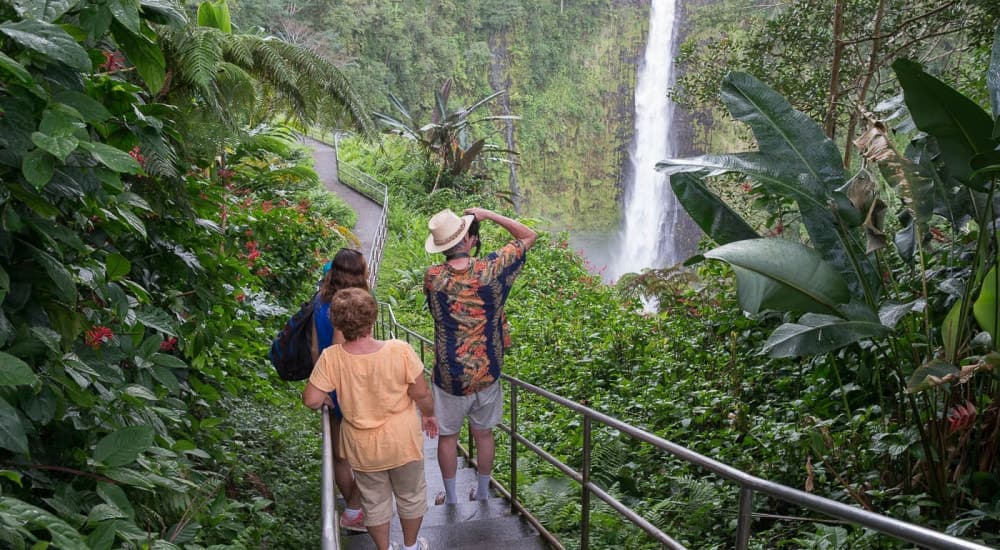
ʻAkaka Falls drops 442 feet above Honomū on the Hāmākua Coast. Image credit: Wasabi Tours
ʻAkaka Falls drops 442 feet on the Hāmākua Coast above Honomū. The story people tell today is a chief who leapt from the cliff after his wife found his two lovers. The older tradition for the place is different: a stone at the water called Pōhaku-a-Pele, struck with a lehua branch to call down rain.
Read it: ʻAkaka Falls: the chief and the rain stone.
Chiefs and heroes
A chief who fought a war with words, and two brothers who ran for the refuge at Hōnaunau.
Lonoikamakahiki, the chief who fought with words
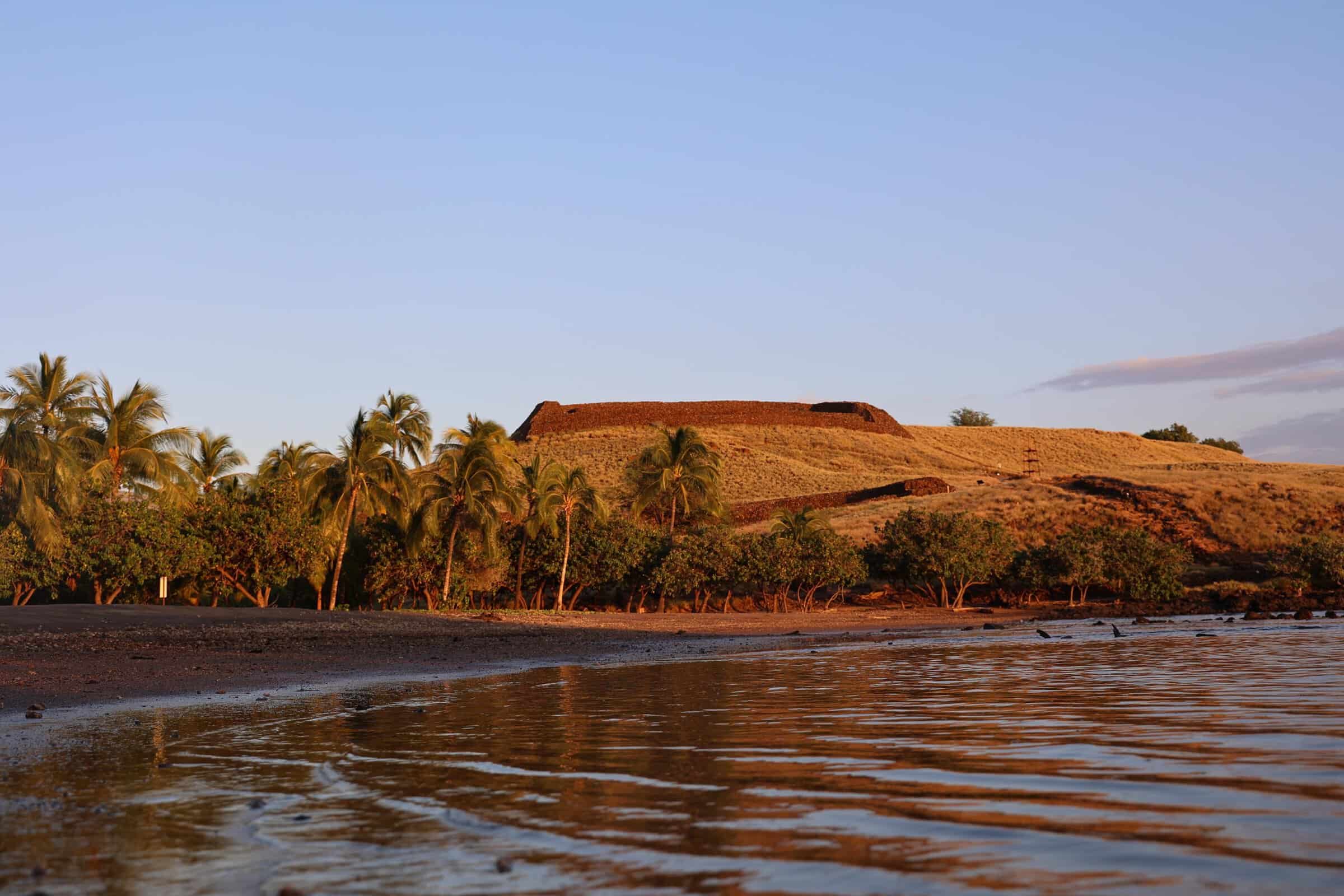
Puʻukoholā Heiau stands above Pelekane Bay, on the Kohala coast Lonoikamakahiki’s army crossed generations earlier. Image credit: NPS Photo, Puʻukoholā Heiau National Historic Site.
A chief of Hawaiʻi Island who spent his youth learning a formal contest of riddling and wit, beat the chief of Oʻahu at it round after round, and later settled where to fight a war with Maui by taking his priest’s advice about which road to march out of Kawaihae.
Read it: Lonoikamakahiki, the chief who fought with words.
Ka-Miki and the place of refuge
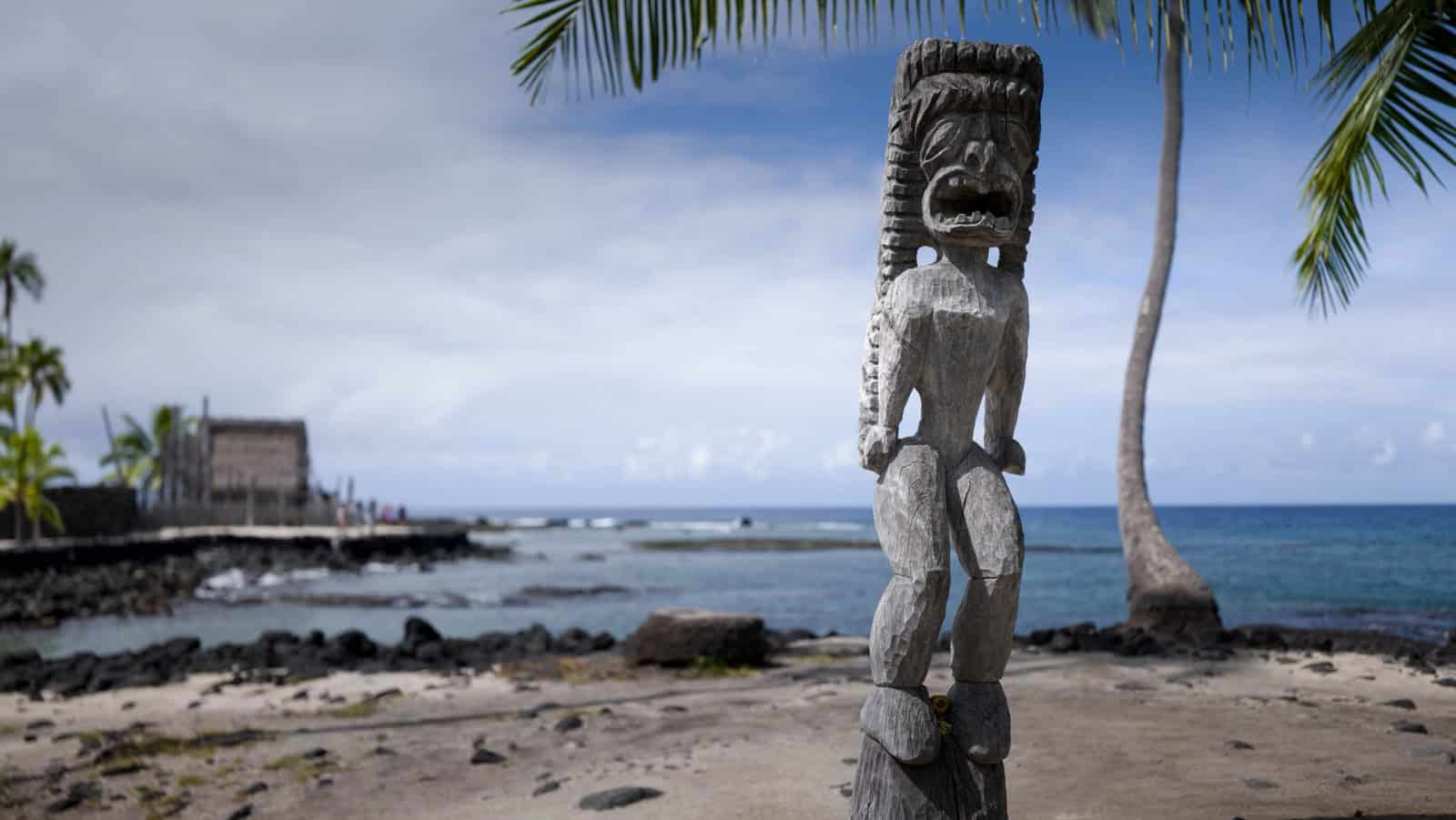
Carved kiʻi at Puʻuhonua o Hōnaunau, the place of refuge. Credit: Peter Schat
Two supernatural brothers, Ka-Miki and Makaʻiole, travel Kona beating every champion, then refuse to prostrate during a sacred ceremony at Hōnaunau. When the chief’s officer comes for them, they flee into the temple and throw themselves before the priest, who will not give them up: this is a puʻuhonua, and no one can be taken from it.
Read it: Ka-Miki and the place of refuge
Plants and animals
Two here: a flower that blooms in halves, and the plover that belongs to a god.
Naupaka, the half flower
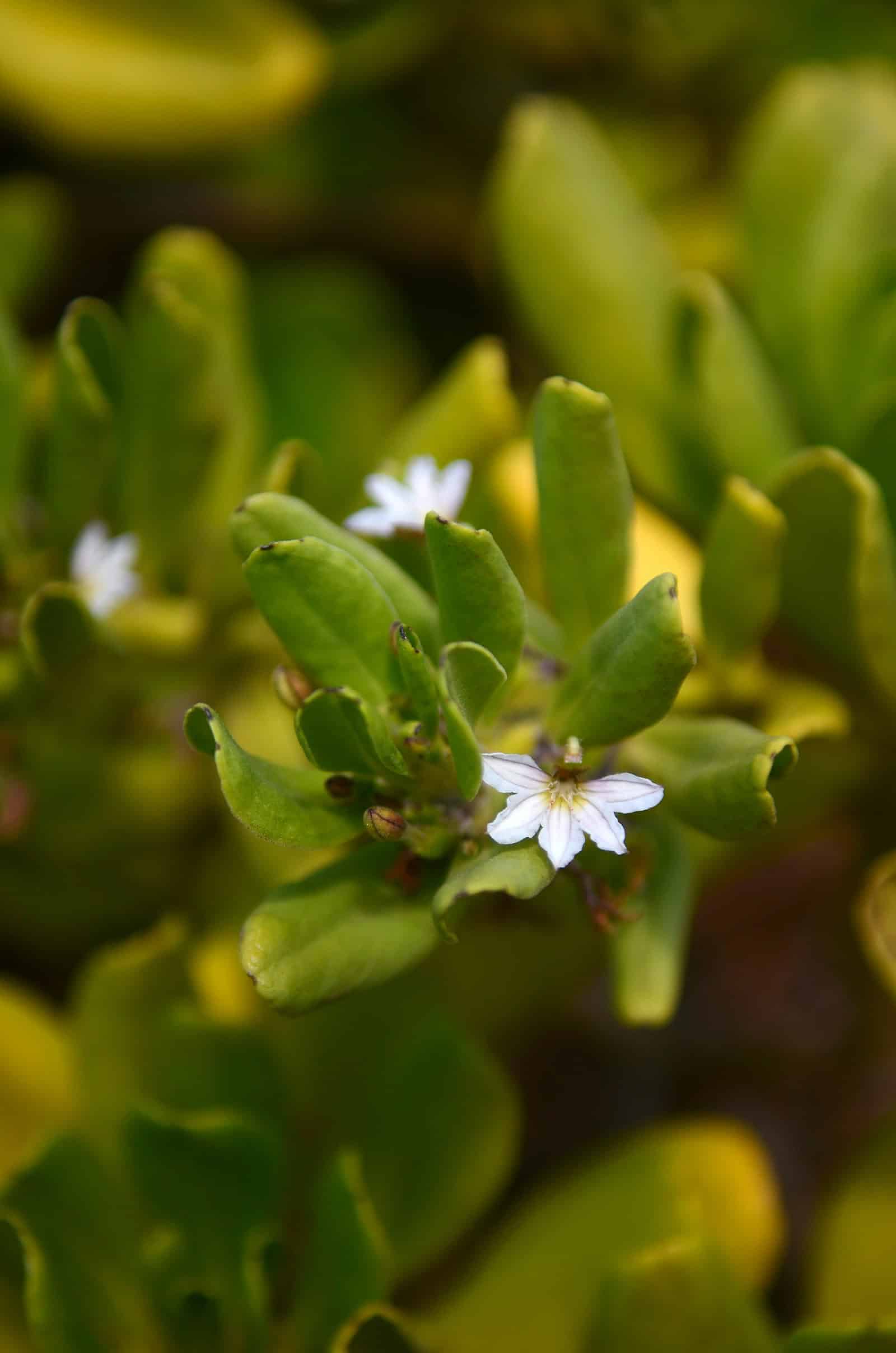
The naupaka half-flower, every petal fanned to one side. Photo: Emma Renly / Unsplash.
Naupaka blooms as half a flower, one shrub on the coast and one in the mountains, and the two halves fit into a whole. The best known story parts two lovers, a chief’s daughter and a commoner told they could not marry. An older telling makes Naupaka a man and ʻŌhikimakaloa his wife. You meet the plant in Hawaiʻi Volcanoes National Park.
Read it: Naupaka, the half flower
Kōlea, the plover god Kumukahi
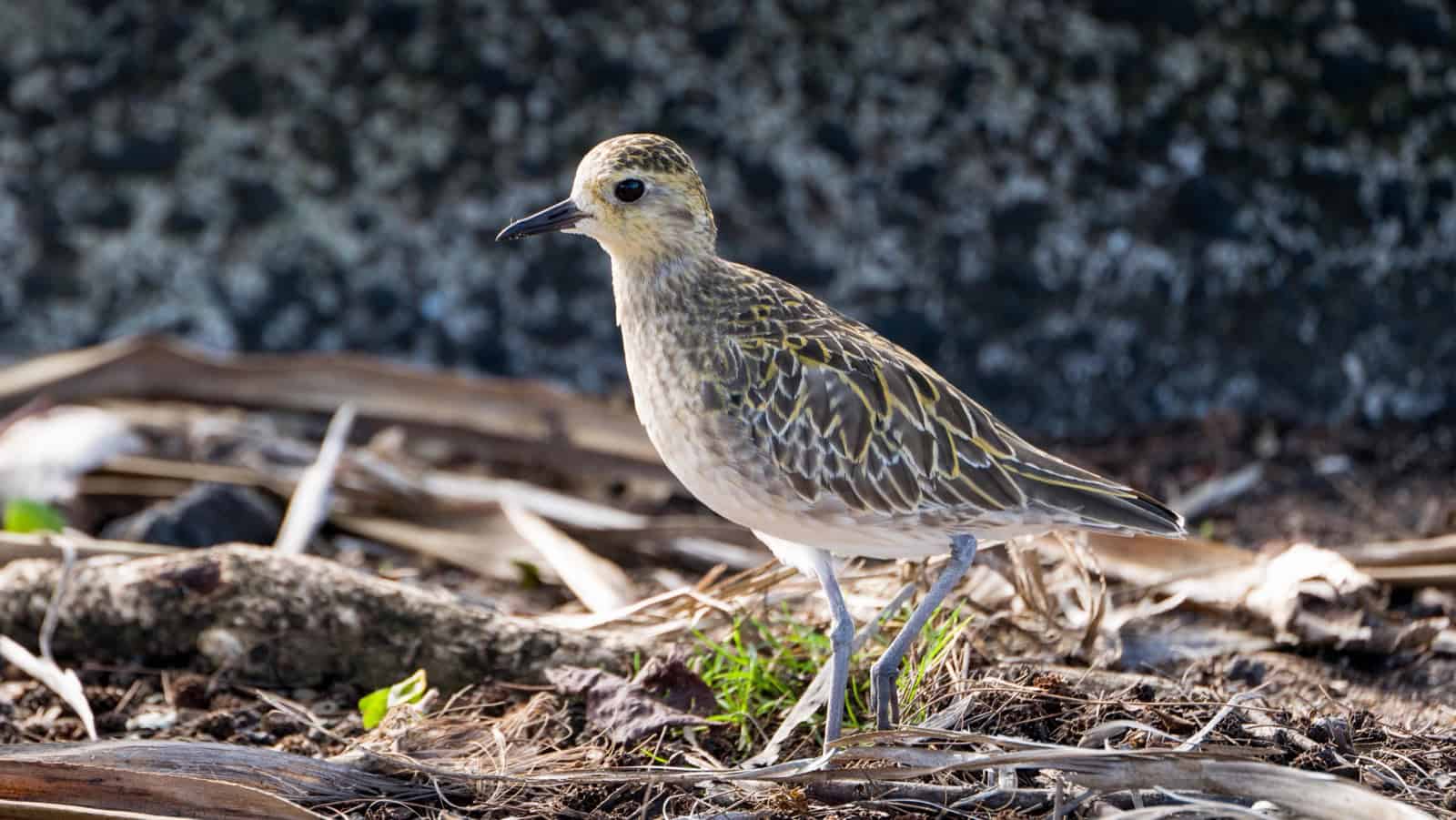
A kōlea in its plain winter coat on the Big Island. Credit: Peter Schat
The kōlea, the Pacific golden plover, flies in from Alaska each fall and belongs to Kumukahi, a relative of Pele who settled at the easternmost point of the island and could walk as a man or fly as a plover. Pele chased him to the sea and buried him in lava; a red stone at Cape Kumukahi marks him still.
Read it: Kōlea, the plover god Kumukahi.