
Haleakalā rises to a 10,023-foot summit and makes up roughly three quarters of Maui’s land mass. The national park protects two very different landscapes: the high, barren Summit District up top, and the coastal Kīpahulu District on the backside, with rainforest and waterfalls, including the Pools of ʻOheʻo. Most visitors go to the summit for its crater views, stargazing, and sunrise, while the backside is quieter and takes a full day to see.
The summit can be 30 to 50°F colder than sea level, and it’s windy, so we pack warm layers even in summer. Getting there is slow going: 1.5 to 2.5 hours from most Maui towns, up a switchbacked road. Sunrise up top needs an advance reservation; sunset does not.
Table of contents
- Know before you go
- Things to do
- Food & Drink
- Tours to Haleakalā
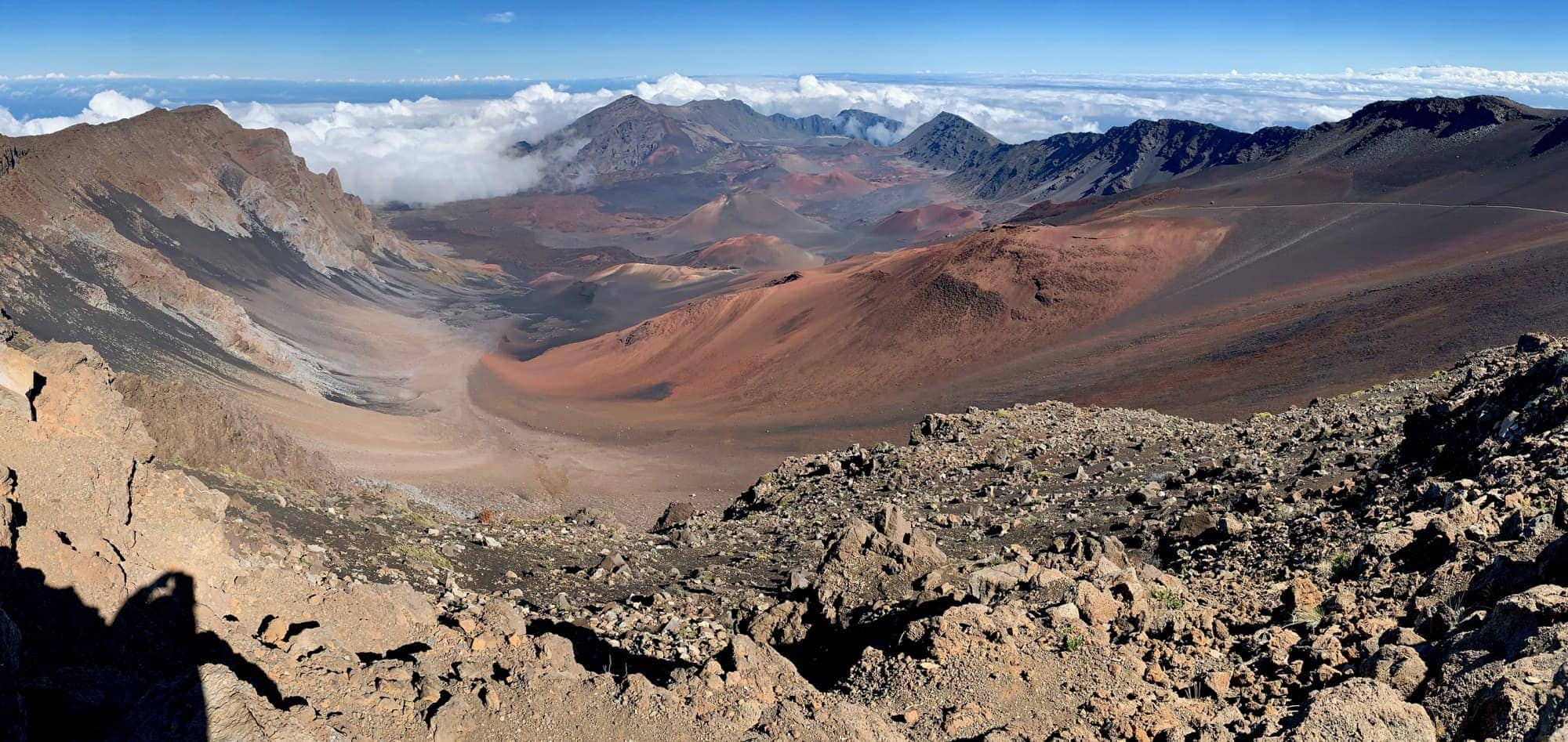
Panorama of the Haleakalā summit crater. Image credit: Anita Gould, source.
Good to Know Before You Go
The summit is a slow drive from anywhere on Maui, the park charges an entrance fee, and the weather up top is nothing like the coast,. The park itself stays open 24 hours a day, year-round.
Getting There
You reach the summit by the Haleakalā Highway, a switchbacked climb of about ten miles from the main entrance gate up to the upper craters and viewing areas. Those ten miles are slow, twisting and turning past frequent pull-offs. Door-to-door travel time from most Maui hubs is 1.5 to 2.5 hours, so plan to take your time.
If you don’t have a car or would rather not drive, you’ll need to join a tour that provides transportation.
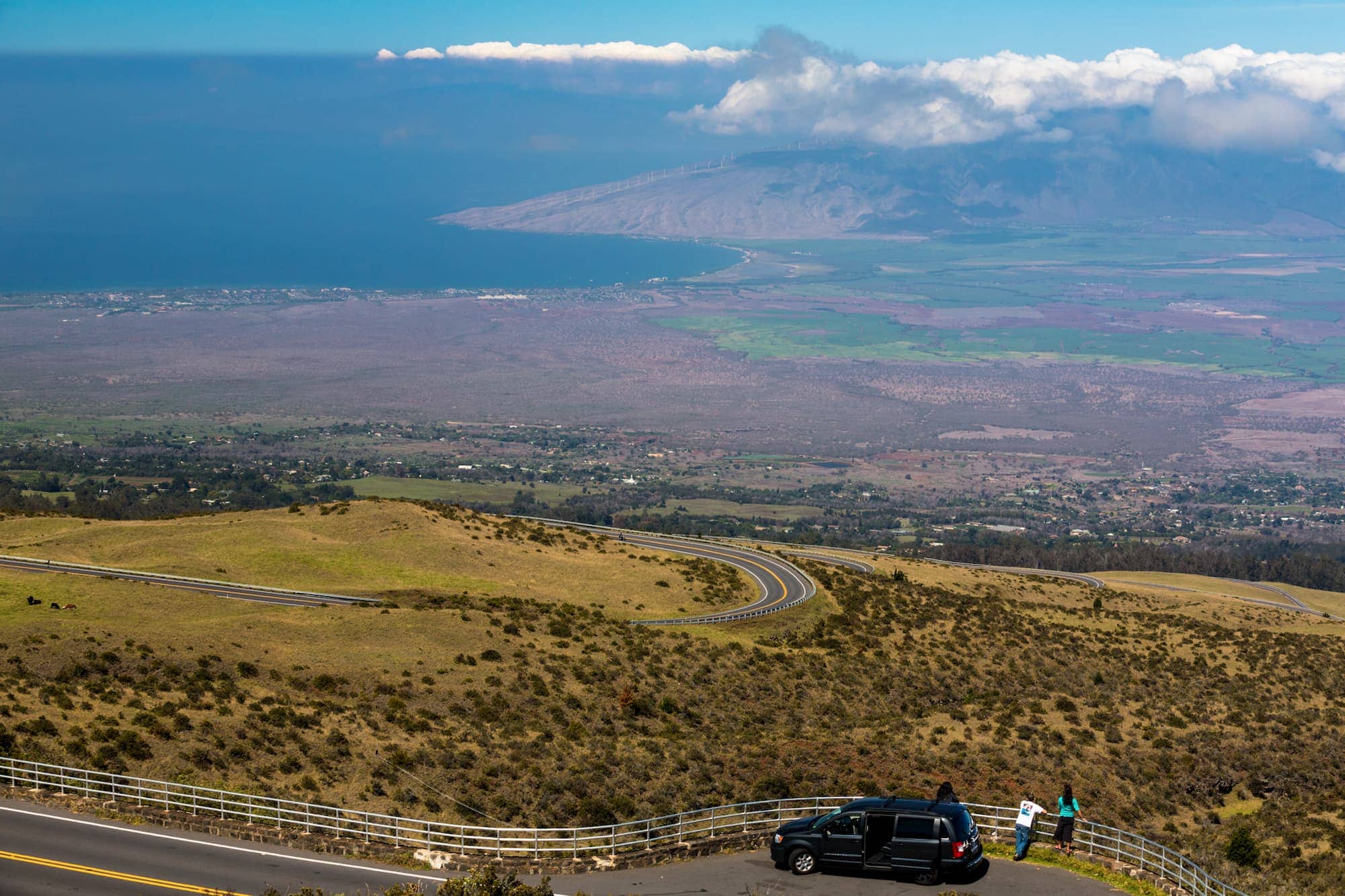
Scenic overlook point on the Haleakalā Crater Road overlooking West Maui. Credit: Hawaii Tourism Authority (HTA) / Tor Johnson
More scenic drives on Maui
The drive up the Haleakalā Highway is one of several scenic drives on Maui, both for the road itself and for where each one leads, a remote town or the volcano summit. You can read about all four (the Road to Hāna, the Haleakalā summit road, the Kahekili Highway, and Upcountry Maui) in our guide to road tripping on Maui.
Haleakalā National Park Entrance Fees
All visitors need a recreational-use pass to enter Haleakalā National Park. The pass is non-transferable and valid for 3 days, including the date of purchase. Entrance costs $30 per private vehicle, $25 per motorcycle, or $15 per person on foot or bicycle; youth 15 and under are free.
Several annual passes also cover entry. See the Haleakalā fees and passes page for the full list and the most current prices.
Climate & Altitude
From your hotel at sea level, you’ll climb more than 10,000 feet to the top of Haleakalā. At that elevation, you have both the altitude and the weather to deal with.
Don’t be that person standing at the summit in shorts when the wind is howling and it’s near freezing temperatures. Be sure you bring extra layers to change into upon arrival, as temperature differences between sea level and the summit can be anywhere from 30 to 50 °F (about 17 to 28 °C). The wind can be strong, as can the sun, increasing the risk of exposure (bring plenty of sunscreen, especially if hiking).
If you’re not used to being at elevation, take your time. Walk slow, drink plenty of water, and stop to rest often, especially if you feel lightheaded. Developing a strong headache can be an early-warning sign of altitude sickness. Don’t panic if this happens, just make your way back down to sea level and your condition should improve.
Summit District (Frontside) vs. Kīpahulu District (Backside)
Most visits happen at the Summit District, where you can explore the craters and take in the high-altitude, barren landscape. It has the park’s main visitor center, and the Haleakalā Highway runs up to it.
The park boundaries also reach down to sea level (see the park map). The Kīpahulu District, the “backside” of Haleakalā, sits at sea level, the Kīpahulu District, at sea level, is where old lava flows met the sea and left waterfalls and rainforest, including the Pools of ʻOheʻo.
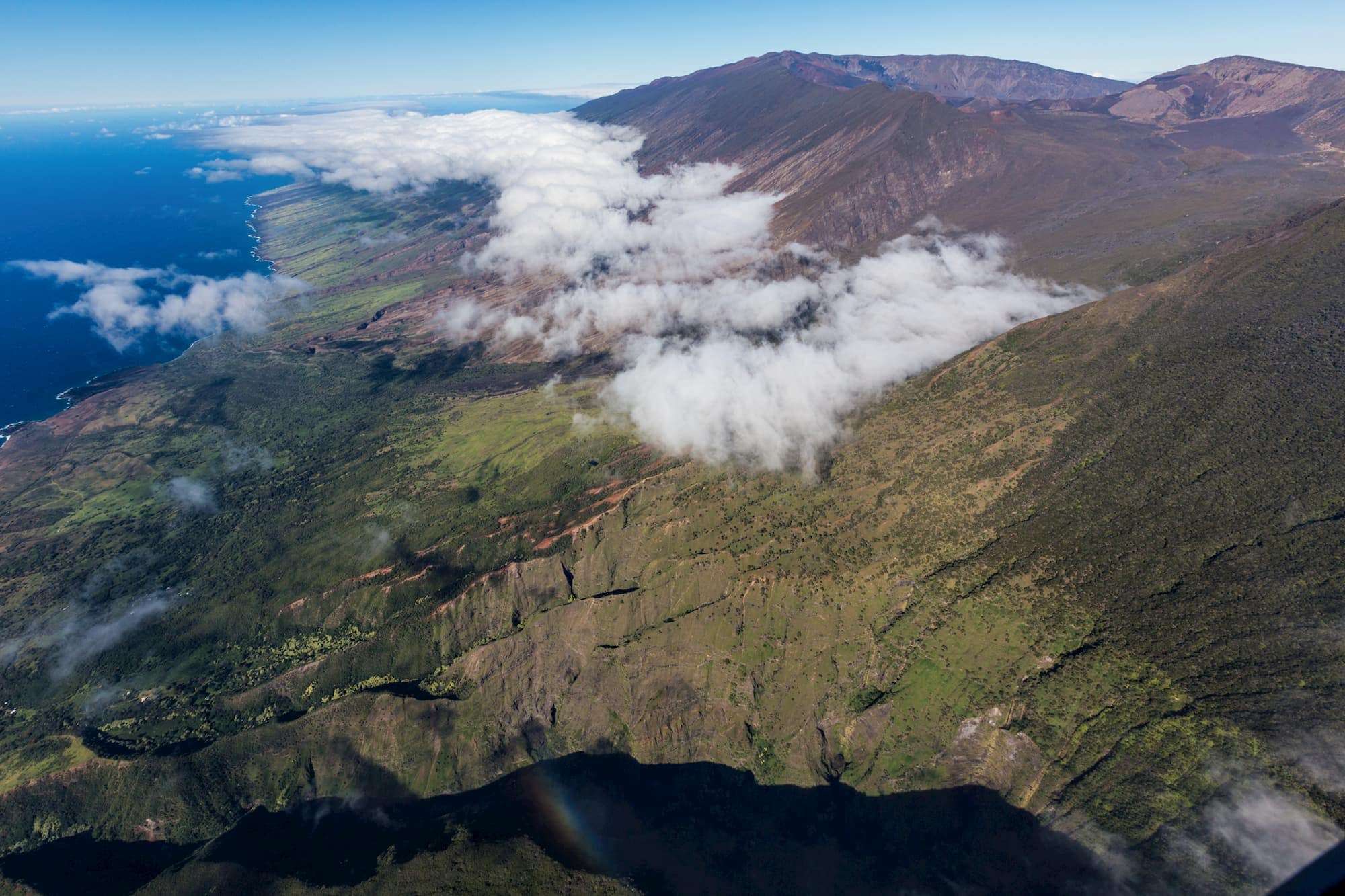
The ‘backside’ of Haleakalā, the Kīpahulu District, sees far fewer visitors than the summit. Credit: Hawaii Tourism Authority (HTA) / Tor Johnson
The two sides are very different, and we suggest making time for both: the barren summit up top, rainforest and coast down below.
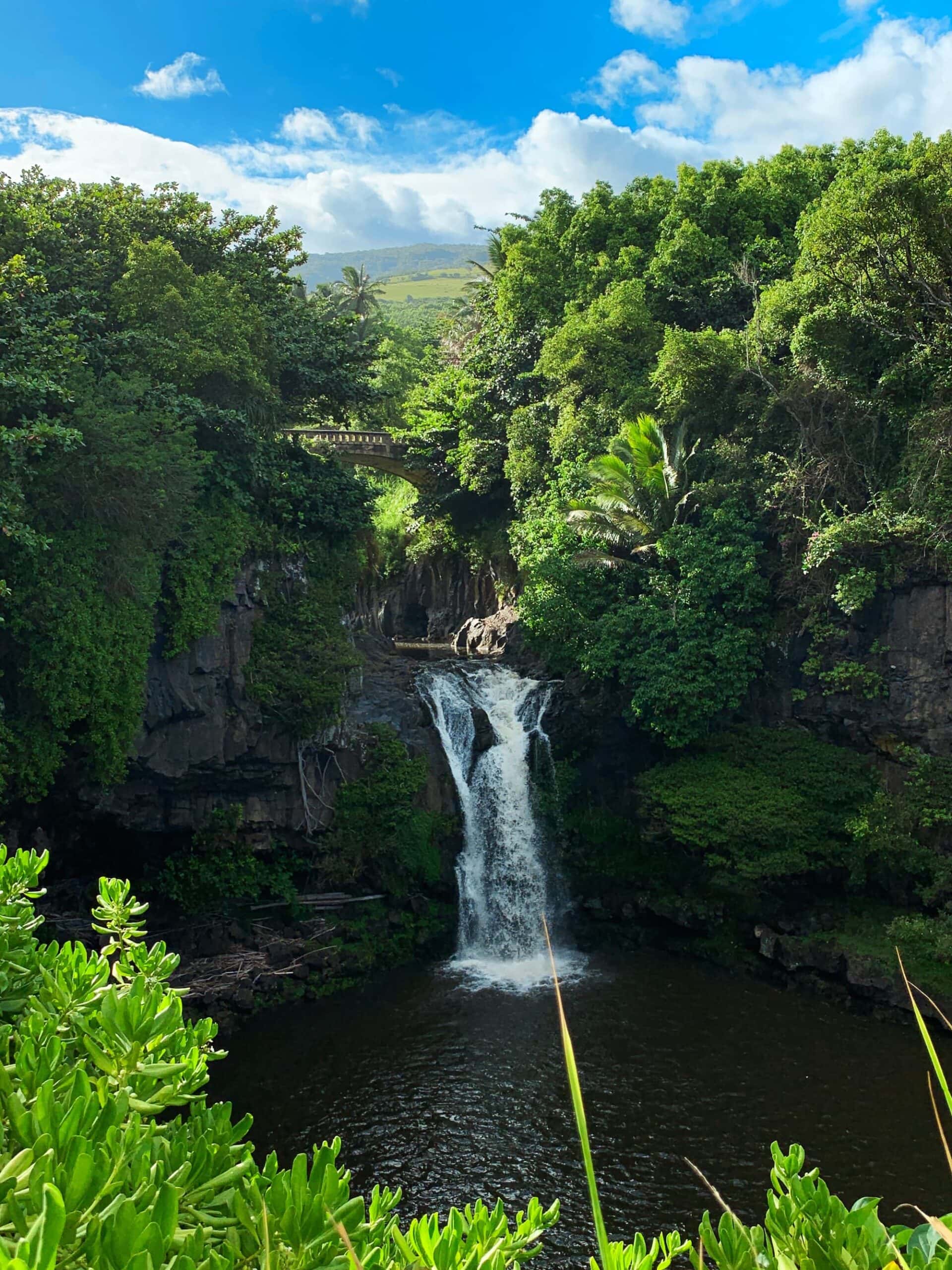
The famous Pools of ʻOheʻo in the ʻOheʻo Gulch are tiered pools fed by waterfalls. Photo by Tamara Bravo on Unsplash
The video below shows the park from the ocean up to the summit. It was created for the More Than Just Parks website, where you can also read their take on how to best visit Haleakalā.

Things to Do
There’s plenty to do, both at the summit and down in the Kīpahulu District:
- Scenic drive and overlooks
- Hiking
- Stargazing
- Cultural points of interest
- Camping
- Seeing the sunrise and sunset
Scenic Drive and Overlooks
As you climb, the landscape changes in front of you: forest at the main gate thins to shrubland, then to the bare, rocky summit where the native silversword grows. Frequent pull-offs give you valley views and photo stops along the way.
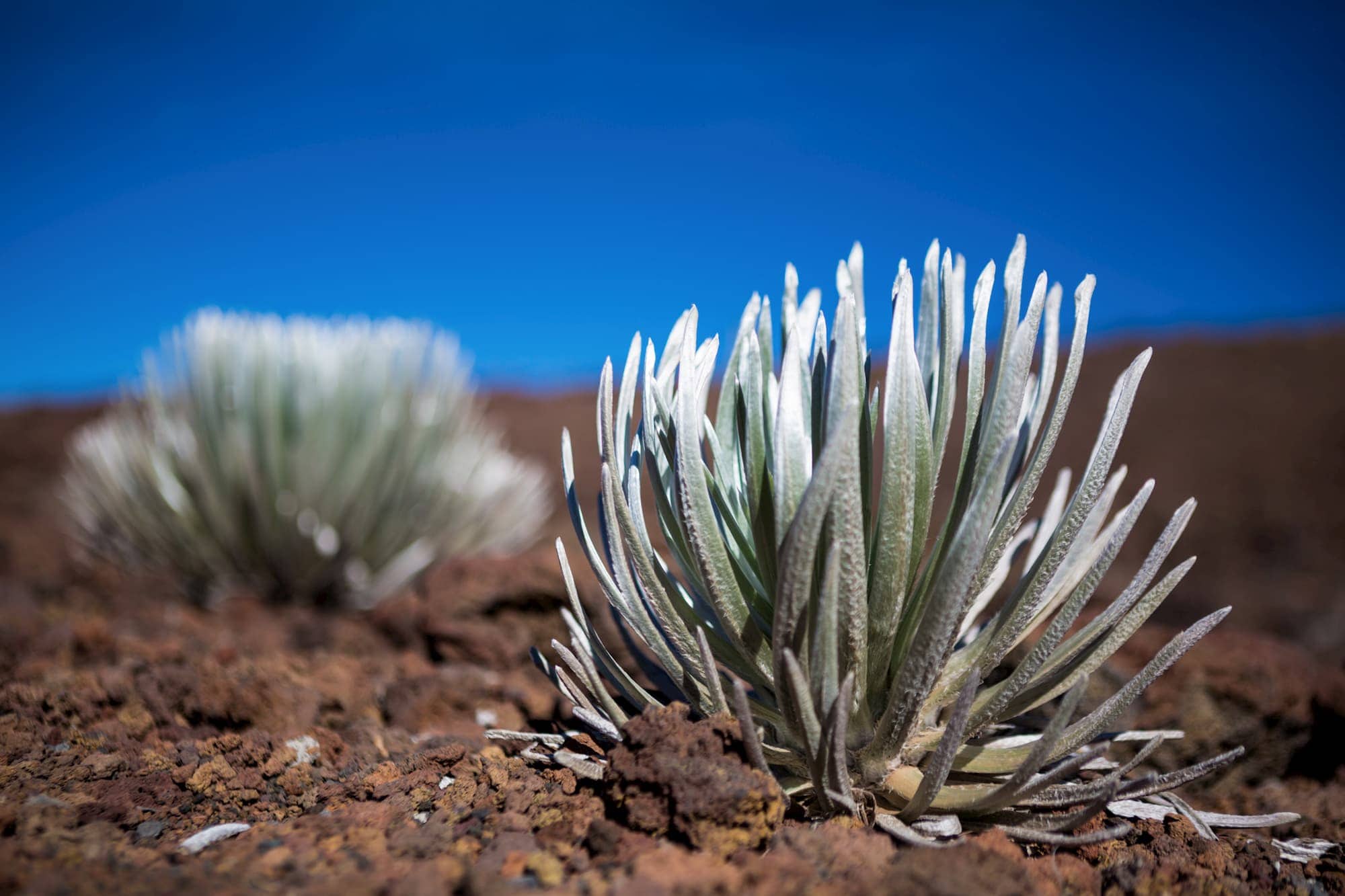
Close up of hinahina (silversword) plants, on the slopes of Haleakalā. Credit: Hawaii Tourism Authority (HTA) / Tor Johnson
Hiking
The summit and the backside both have strong hiking, over very different terrain.
At the summit, the Sliding Sands Trail drops from the main parking area into Haleakalā’s summit crater. The full trail runs 11 miles, but most hikers head out a mile or two and turn back. Expect old lava flows, small pit craters, and bands of color in the rock. Other paths leave from the summit too, such as the Halemauʻu Trail.
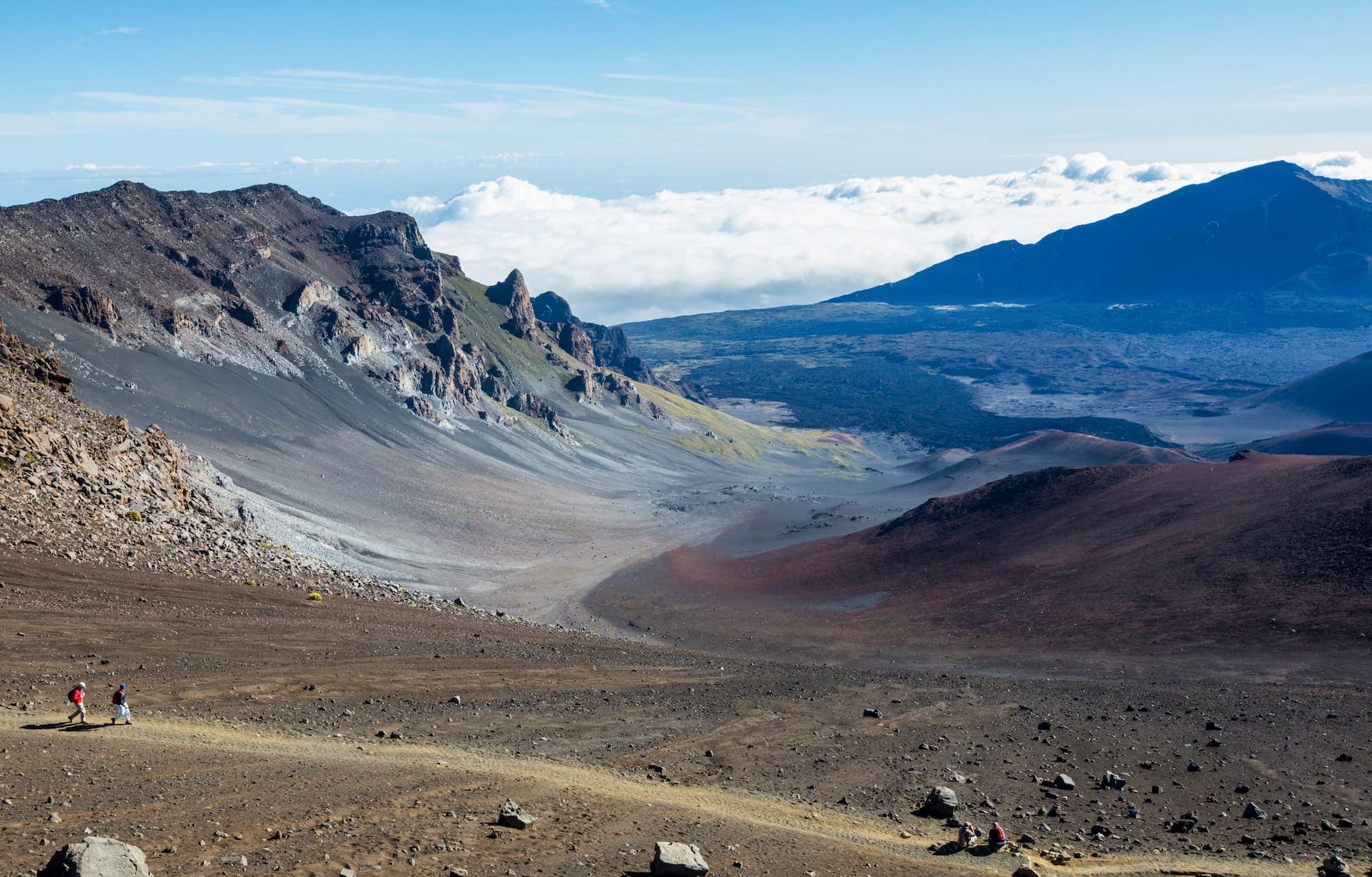
Part of the hiking trail along Haleakalā Crater (2 people for scale in the lower left corner). Credit: Hawaii Tourism Authority (HTA) / Tor Johnson
In the Kīpahulu District, the hiking runs along the coast through rainforest, down at sea level on the island’s windward (east) side. The Pīpīwai Trail runs through a bamboo forest to waterfalls, and the Kūloa Point Trail leads to the Pools of ʻOheʻo, the Pools of ʻOheʻo, also called the Seven Sacred Pools. Arrive early or late to beat the midday crowds.
The NPS site has the full list and map of Haleakalā’s trails.
Stargazing
Several of Hawaiʻi’s high volcano summits host international telescopes, and Haleakalā is one of them. The observatories are here for the same thin, dry air that keeps the night sky clear. The Haleakalā Observatory isn’t open to the public, but you’ll pass it at the summit, and.
Good to know: MaunaKea on the Big Island is another stargazing summit.
Haleakalā is one of our favorite stargazing spots on Maui. Stargazing tours run most nights (see Tours), but you can also head up on your own. We’d go to the summit at sunset and stay put as the stars come out. Bring your own telescope, or use an app to name constellations. You’ll want something to help, because no matter where you’re from, you’ll see far more stars than you’re used to, and picking out even the Big Dipper gets harder with so many in view.
Also, temperatures drop fast after sunset. Bring warm clothes so you can stand outside comfortably, and pack hot chocolate or coffee in a thermos.
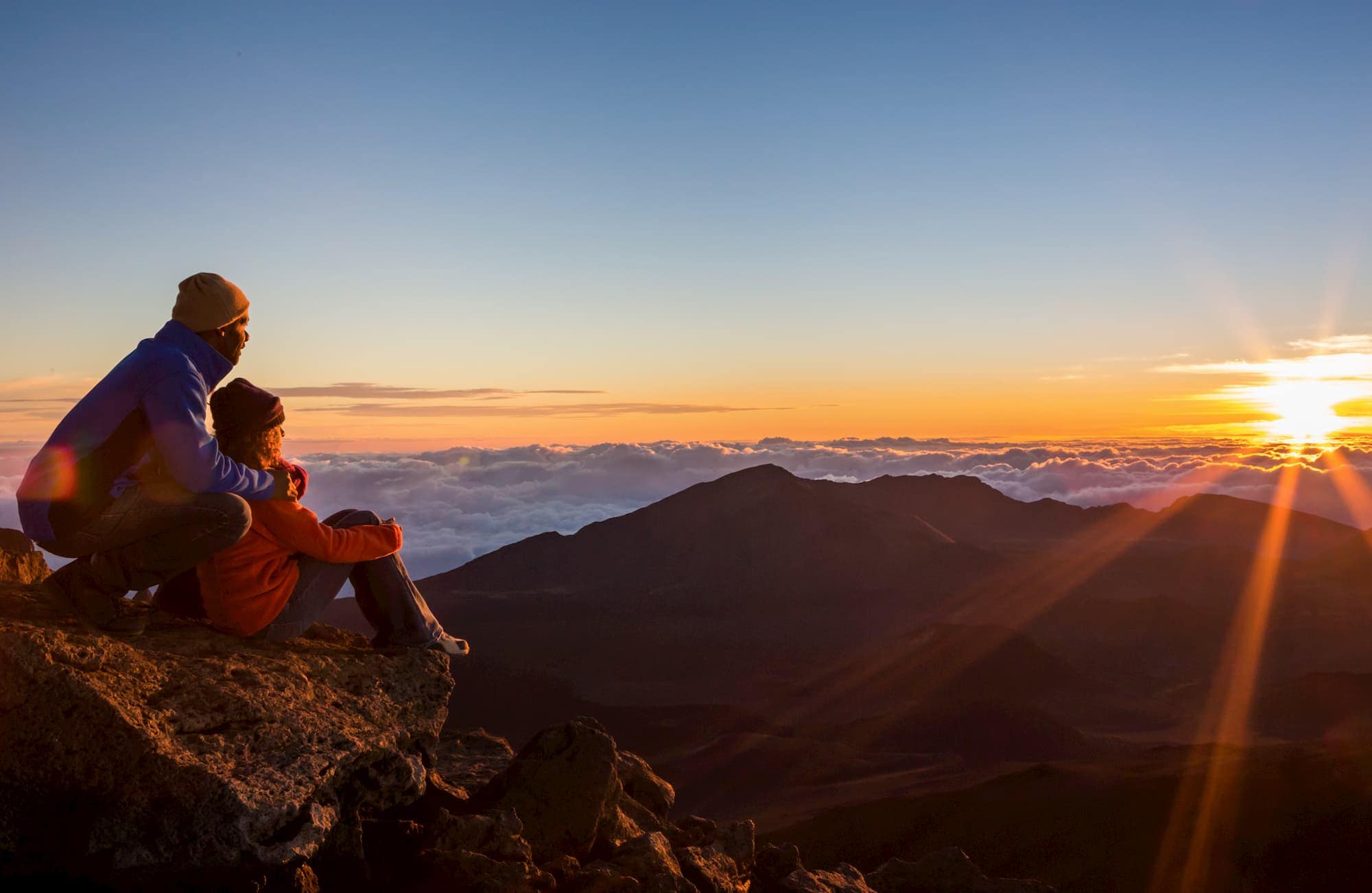
If you plan to stick around after sunset, or come up for the sunrise, dress for cold and wind at the summit. Credit: Hawaii Tourism Authority (HTA) / Tor Johnson
Cultural Points of Interest
Haleakalā’s summit is a sacred area for Native Hawaiians, who believe it holds great “mana,” or power. The name Haleakalā, which translates to “House of the Sun,” The name Haleakalā translates to “House of the Sun”; the summit gets the first light each day..
When you visit, stop into the visitor center and ask about cultural programming. The schedule varies, but interpretive walks often share the historical and cultural stories of the summit area.
Camping
Haleakalā National Park has two drive-up campgrounds, Hosmer’s Grove and the Kīpahulu campground, plus backcountry options.
Hosmer’s Grove
Hosmer’s Grove sits near the main entrance and the start of the Haleakalā Highway, at about 7,000 feet above sea level. That puts it in the cloud belt, so expect cold and changing weather, but the dense forest around it has native birds, and the birders who follow them. The campground has pit toilets, picnic tables, BBQ grills, and drinking water, and and it’s right at the park entrance.
Kīpahulu
Kīpahulu is the park’s coastal campground, right at sea level. The campsites spread along the rocky coastline, with restrooms, picnic tables, drinking water, and barbecue grills. The campground looks out over the ocean in a green, tropical setting, next to the area’s main hikes and attractions. Camp here if you want to explore: you can wake up, hike the Pīpīwai Trail and bamboo forest, visit the Pools of ʻOheʻo, and be back at camp before most day-trippers arrive.
Backcountry Camping and Cabins
There are also backcountry camping sites in Haleakalā. These are for experienced adventurers only, as they require a significant hike to reach and you must carry-in everything you need, including food and water. There are also three backcountry cabins, but these too take a serious hike to reach. If you feel like this is the adventure for you, check out the links above to see maps and the specs on the backcountry options.
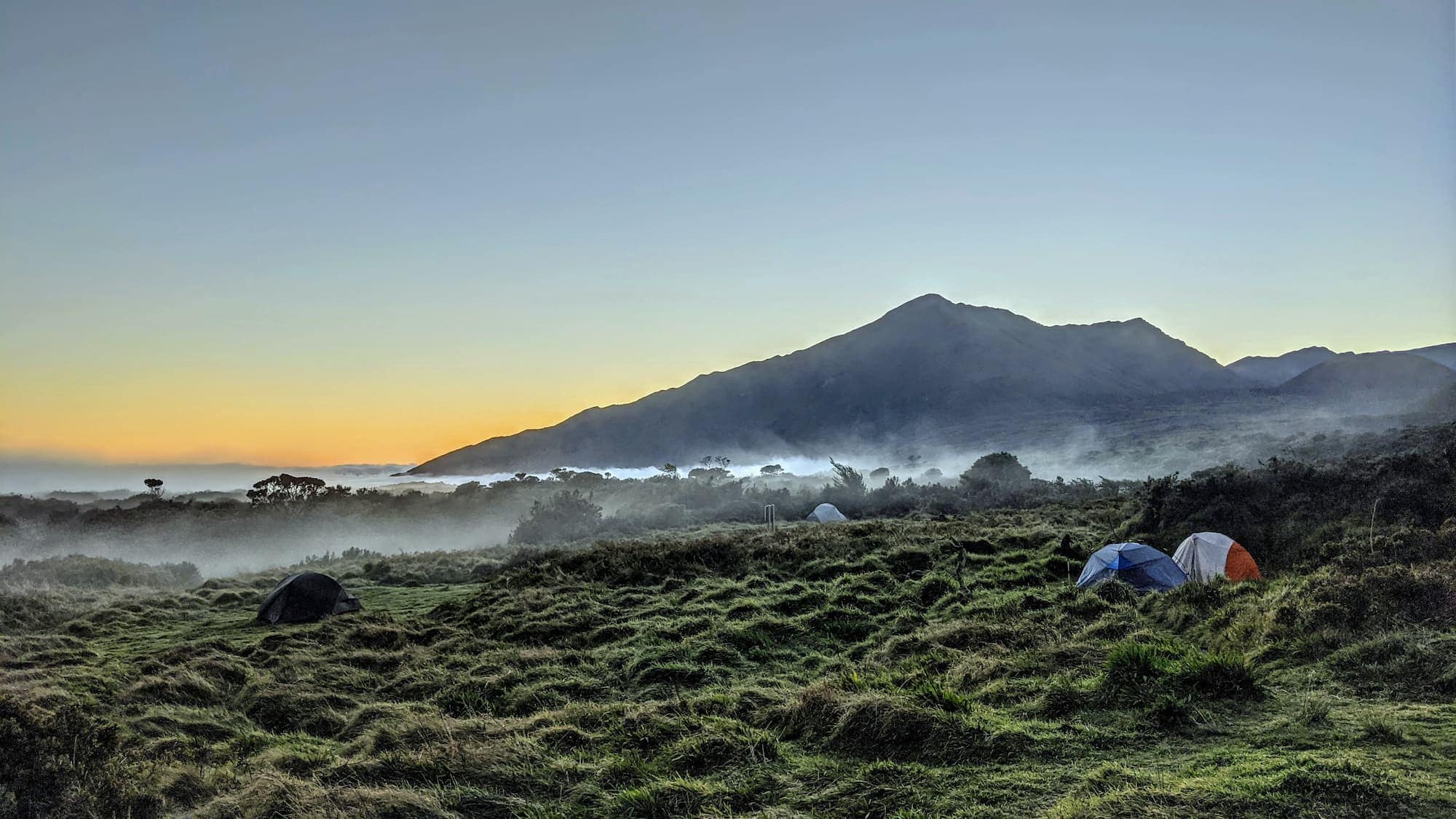
Sunset at the Paliku wilderness campsite on the slopes of Haleakalā. Photo by Lyle Wilkinson on Unsplash
How to see the Sunrise or Sunset
Watching the sunrise from the Haleakalā summit is one of the park’s most popular experiences, and the one that needs the most planning. To enter the summit for sunrise, between 3 and 7 a.m., you need an advance reservation. Reservations cost $1 per vehicle, on top of the park entrance fee, and open 60 days ahead on recreation.gov, with a second batch released 48 hours before each date. The park added the rule to curb the traffic and overcrowding sunrise viewing was causing.
If you can’t get a reservation, sunrise tours are also available (see Tours below).
A sunrise visit means an early start. Sunrise runs between 5:30 and 6:30 a.m. throughout the year, so you’ll need to leave around 3 or 4 a.m. to make it. If that sounds like too much, consider going up for sunset instead. No reservation is required, and you get the same summit view. You can then stay until dark and watch the stars come out.
Good to know: if you’d rather not join a tour but still want help with planning and directions, a GPS audio guide narrates the whole drive. See these Haleakalā sunset and sunrise guides.
For either one, bring warm clothes and enough food and water to stay comfortable.
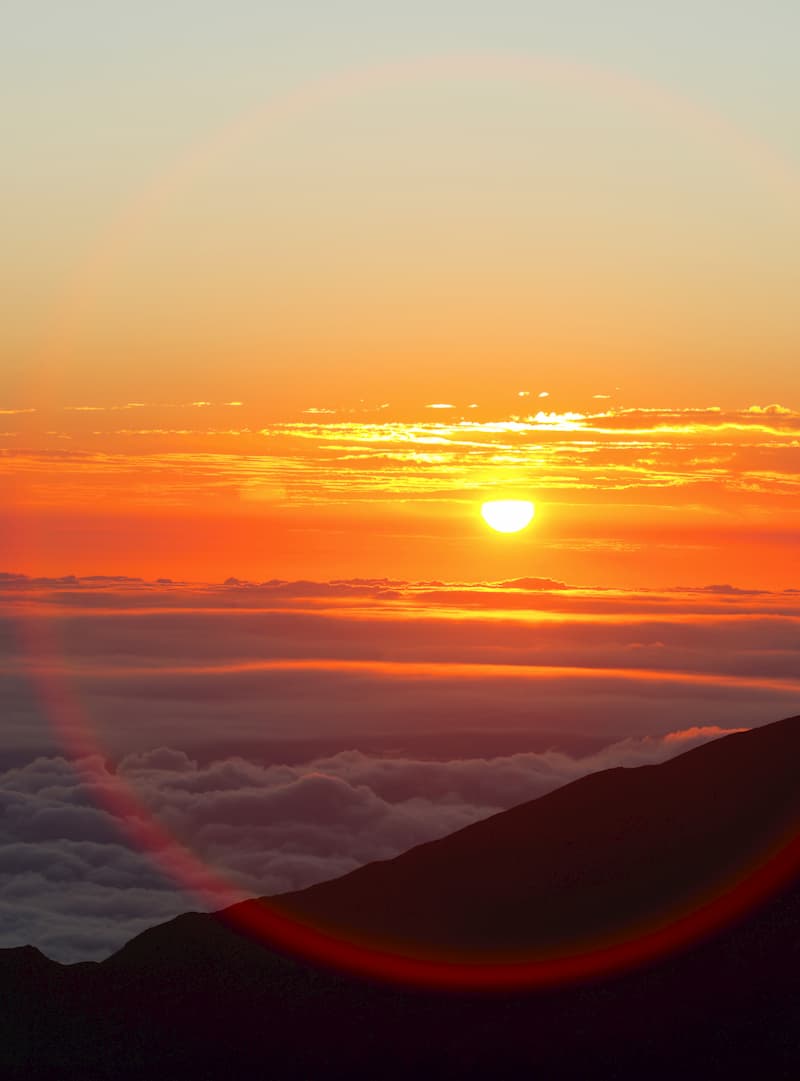
Seeing the sunrise at the Haleakalā summit is one of the most popular things our visitors do on Maui. Credit: Hawaii Tourism Authority (HTA) / Kuni Nakai
Food and Drink
There’s no food or drink for sale inside the park, aside from water fountains. Pack plenty of snacks, and if you’re planning to hike, bring a full lunch.
If you want to stop for a meal on the way, a few options sit in the upcountry town of Kula.
- Kula Lodge: The Kula Lodge sits on the slopes of Haleakalā with wide valley views, an outdoor garden, and a patio. The sit-down restaurant is closed after a fire, but the on-site food truck serves daily from 7 a.m. to 7 p.m., with outdoor tables and the same valley views.
- Kula Sandalwoods: Just down the road from the Kula Lodge is Kula Sandalwoods, a collection of small cottages with an on-site restaurant. While it’s not as flashy as the Lodge, it has its own modest patio with views and a range of local lunch offerings, such as pulled pork sandwiches and burgers.
- La Provence: If you’re after coffee and a couple of pastries with a nice view, French-influenced La Provence sits on the way to the park. You can also grab a crepe or quiche for breakfast, or pick up a sandwich to go.
- Nui’s Garden Kitchen: This food truck is part of Maui Nui Farm, serving a mix of Hawaiian and Thai dishes made with vegetables from the fields. The menu rotates and hours change, so check ahead, but it’s out in the rural, farming country on Haleakalā’s slopes.
Tours to Haleakalā
The driving distance, altitude, and changeable weather make a guided tour a practical way to see Haleakalā. Pick a tour by what you want to do up there; each type has a few operators.
Stargazing Tours
Stargazing and astronomy tours run most nights, with a guided look at the night sky from the summit. Tours include the drive up and often hot drinks, snacks, and telescope use.
Only specific companies are permitted to run nighttime tours at the summit, so you must book one of the approved vendors. They include Maui All Stars, Kaze Enterprises, Maui Stargazing, and Amazing Maui Stars.
Please respect this and confirm any company is permitted by the park before you book. Operators running night tours without a permit are doing so illegally.
Hiking and Birding Tours
Like stargazing, only approved vendors can run hiking and birding tours at the summit. The current companies are Aloha Nui Loa Tours, Inc., Explore Maui Nature, and Holo Holo Tours.
Sunrise Tours
If you’d rather not wake up at 3 a.m. and drive yourself to the summit for sunrise, you can join a tour. You’ll still get picked up early, but you won’t have to drive. Sunrise tours often add stops in Makawao, Kula, or elsewhere around Haleakalā. Hawaiʻi Tours runs one such guided sunrise trip you can book online. For background and operator options, haleakalacrater.com is a useful resource, though it’s an information site rather than a booking company.
Biking Tours
Another popular way to experience the summit is a bike tour down its slopes. Companies shuttle riders to the top of the Haleakalā Highway, then send them back down by bike. Specifics vary: some keep you together as a group, some let you ride at your own pace, and some pair the ride with sunrise, so pick what fits your ability and preferences.
Biking tours are regulated differently from hiking and stargazing and run through several operators. We recommend Bike Maui and Maui Sunriders.