
About a dozen countries operate telescopes on Mauna Kea, and they picked Hawaiʻi for the same reason you should stargaze here: the islands sit alone in the mid-Pacific. The best spots follow two patterns. Go high, to summits like Haleakalā at 10,000 feet, where you climb above the clouds, or go west, to leeward coasts like north Kona and Kekaha that stay clear when the windward side socks in.
The spots below cover the Big Island, Maui, Oʻahu, and Kauaʻi, including Waimea Canyon and Kaʻena Point. One warning up front: you can’t stargaze at the Mauna Kea summit itself. Everyone has to be off the summit half an hour after sunset, so viewing happens at the Visitor Information Station at 9,200 feet.
Table of contents
7 Stargazing Tips for Hawaiʻi
Before you pick a spot, these seven rules shape every good stargazing night in Hawaiʻi:
1: Stargazing conditions are best away from population centers
The more light pollution, the fewer stars you will see. State and national parks have few buildings and little lighting, which is why so many of the good spots are inside park boundaries.
2: Pick the right night
The Milky Way forms a bright band across the sky on dark nights, but some nights are better than others. If you can, time your outing to a new moon (see tip #7) or a meteor shower.
Have a look at our yearly astronomy calendar for Hawaiʻi to see what’s going on in the Hawaiian skies this year.
3: Be safe
Getting away from town lights and population centers is encouraged, but be safe about it. Don’t hike off into the dark without proper footwear and a flashlight with spare batteries.
4: Gaining elevation can help
Stargazing on the volcanoes, Mauna Kea on the Big Island above all, is prized because the viewing areas sit above the cloud layer. Even if it’s cloudy at sea level, driving up in elevation can often get you a clear sky.
5: Head west
Check out the map below (source), which shows the frequency of clouds in different parts of the islands.
The north and east (windward) sides of the islands get more weather, so they sit under clouds more often. If you’re planning a dedicated stargazing outing, the west coasts will be more reliably clear.
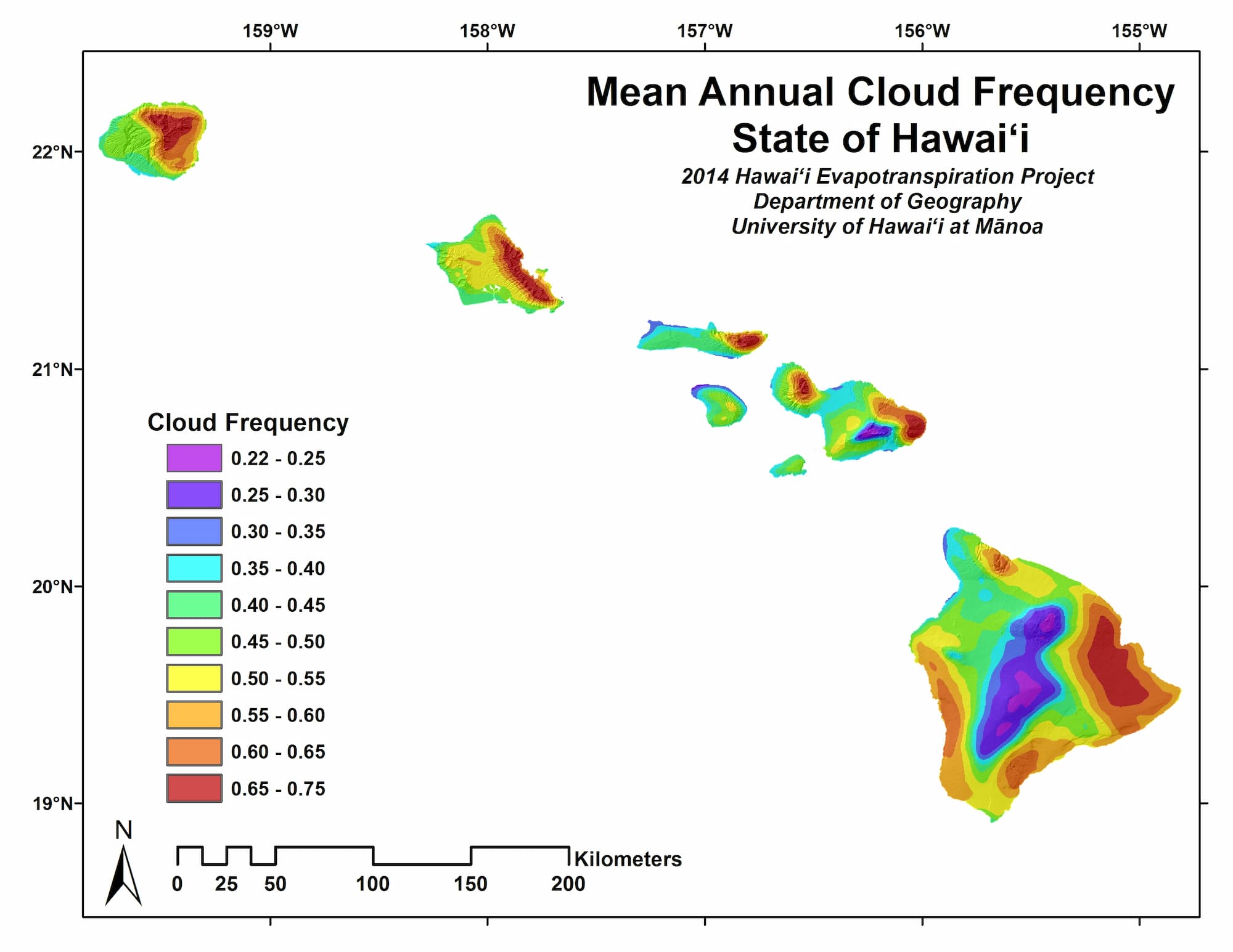
Mean annual cloud frequency for the state of Hawaiʻi. Credit: Giambelluca, T.W., X. Shuai, M.L. Barnes, R.J. Alliss, R.J. Longman, T. Miura, Q. Chen, A.G. Frazier, R.G. Mudd, L. Cuo, and A.D. Businger. 2014. Evapotranspiration of Hawaiʻi. Final report submitted to the U.S. Army Corps of Engineers, Honolulu District, and the Commission on Water Resource Management, State of Hawaiʻi.
6: Watch the weather in advance
Check the forecast the day before you head out. If it calls for clouds, pick another night or another coast.
7: Plan around the moon
Full moons are a sight of their own, but moonlight washes out most stars. Even a half moon makes a big difference.
The best stargazing happens when the moon is below the horizon. Check when the moon rises and how bright it will be on the Time and Date website.
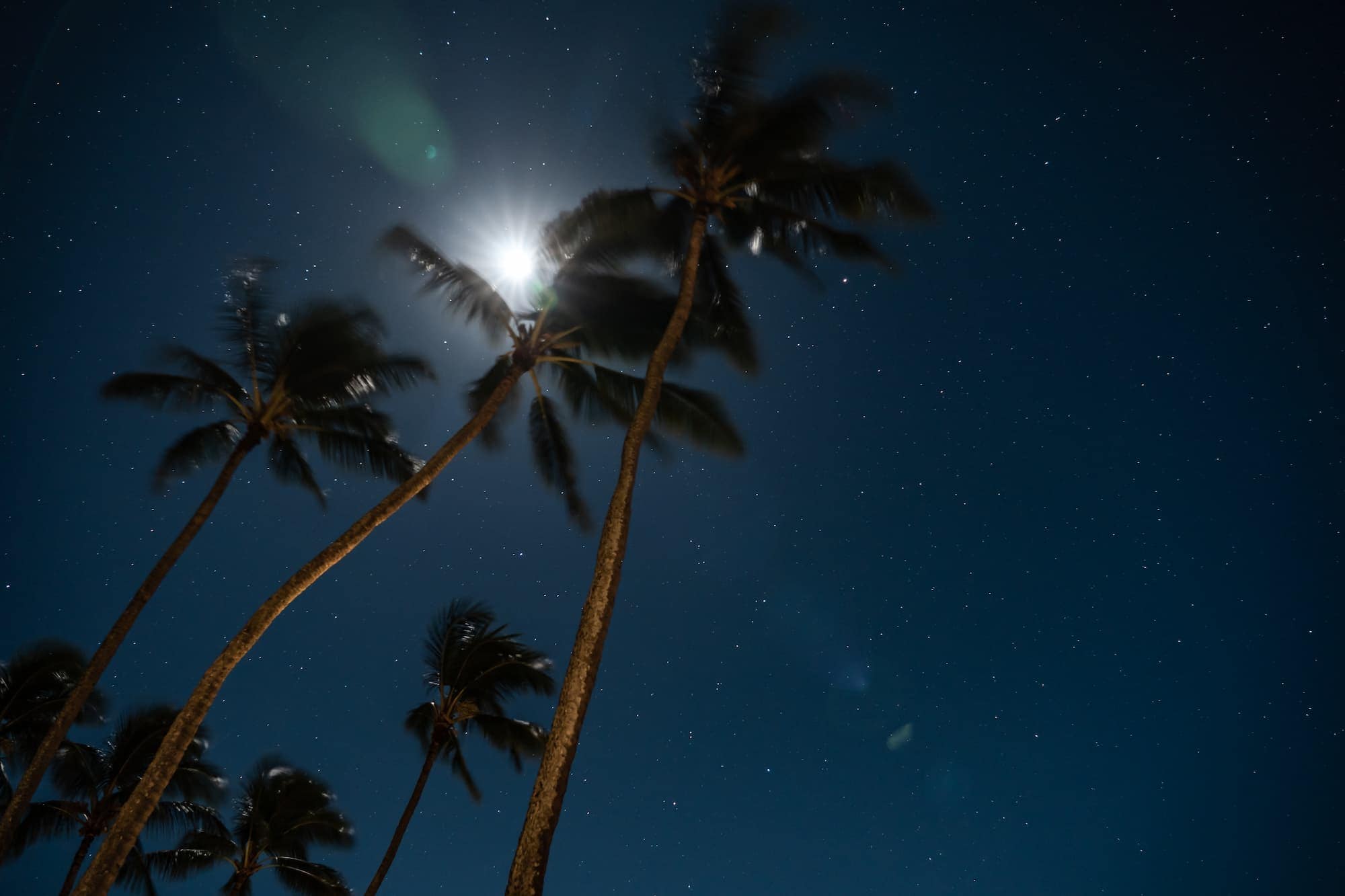
While very photogenic, a bright moon can drown out all but the brightest stars in the sky. Photo by Pascal Debrunner on Unsplash
5 Stargazing Spots on the Big Island
The Big Island has many international telescopes: its summits and dry leeward coast have the best night skies in the state. Three areas stand out, five spots in all:
Hawaiʻi Volcanoes National Park (3 spots)
Hawaiʻi Volcanoes National Park is open 24 hours a day, one of the few truly dark places you can visit legally at 2 a.m. You can drive a little beyond the Visitor Center and pull over where it’s allowed, or head for one of the more remote corners of the Park. The following 3 are good stargazing spots:
- The Kulanaokuaiki Campground sits about 5 miles down Hilina Pali Road at 2,700 feet (820 m) elevation. The nine campsites are first-come, first-served ($10/night) if you plan to stay overnight.
- The Kīpukapuaulu (Bird Park) parking lot is a few minutes west of the park entrance and known for relatively clear skies.
- Halfway down the Chain of Craters Road, the Mauna Ulu lookout is a wooden observation deck surrounded by fields of black lava rock. Drawbacks: no cover (it can get windy) and relatively low elevation (clouds can move in). On clear nights, though, the wide-open lava field makes it one of the best stargazing platforms in the Park.
Good to know: The summit of Kīlauea is subject to changing weather, so keep an eye on the forecast. When the lava is “glowing” in the summit crater, its radiance can affect stargazing, as can the many headlights of other visitors in and around the Visitor Center.
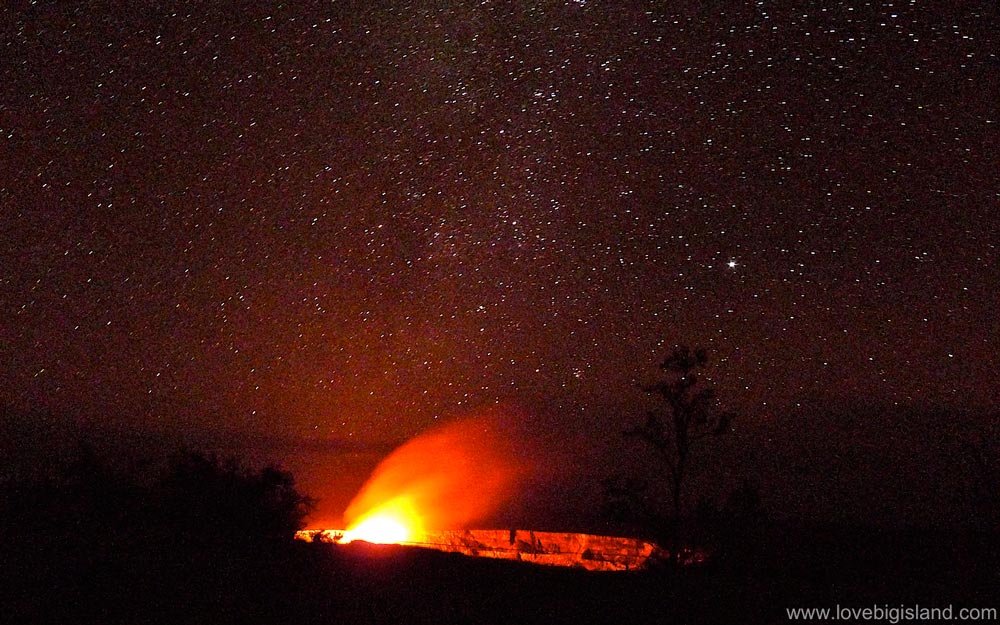
The glow from the Halemaʻumaʻu crater at night in Hawaiʻi Volcanoes National Park, seen from the (now closed) Jaggar Museum overlook
Mauna Kea Visitor Information Station
Mauna Kea’s summit sits at nearly 14,000 feet and holds one of the best collections of telescopes on Earth. Visitors stargaze almost a mile lower, at the Visitor Information Station at 9,200 feet. The access notes below refer to the Station, not the summit.
Good to know: You can join a tour that combines seeing the sunset at the summit of Mauna Kea with a private stargazing tour at lower elevation (such as this one from Hawaiʻi Forest and Trail), or go to the Visitor Information Station (open 9 a.m. to 9 p.m.) for nightly self-guided stargazing and monthly stargazing events. Check the schedule online before driving up.
Learn more: see our dedicated Maunakea visitor guide.
Important: no stargazing happens at the summit
The summit of Mauna Kea has to stay dark for the telescopes, so visitors can’t stay after nightfall. Summit hours run from half an hour before sunrise to half an hour after sunset.
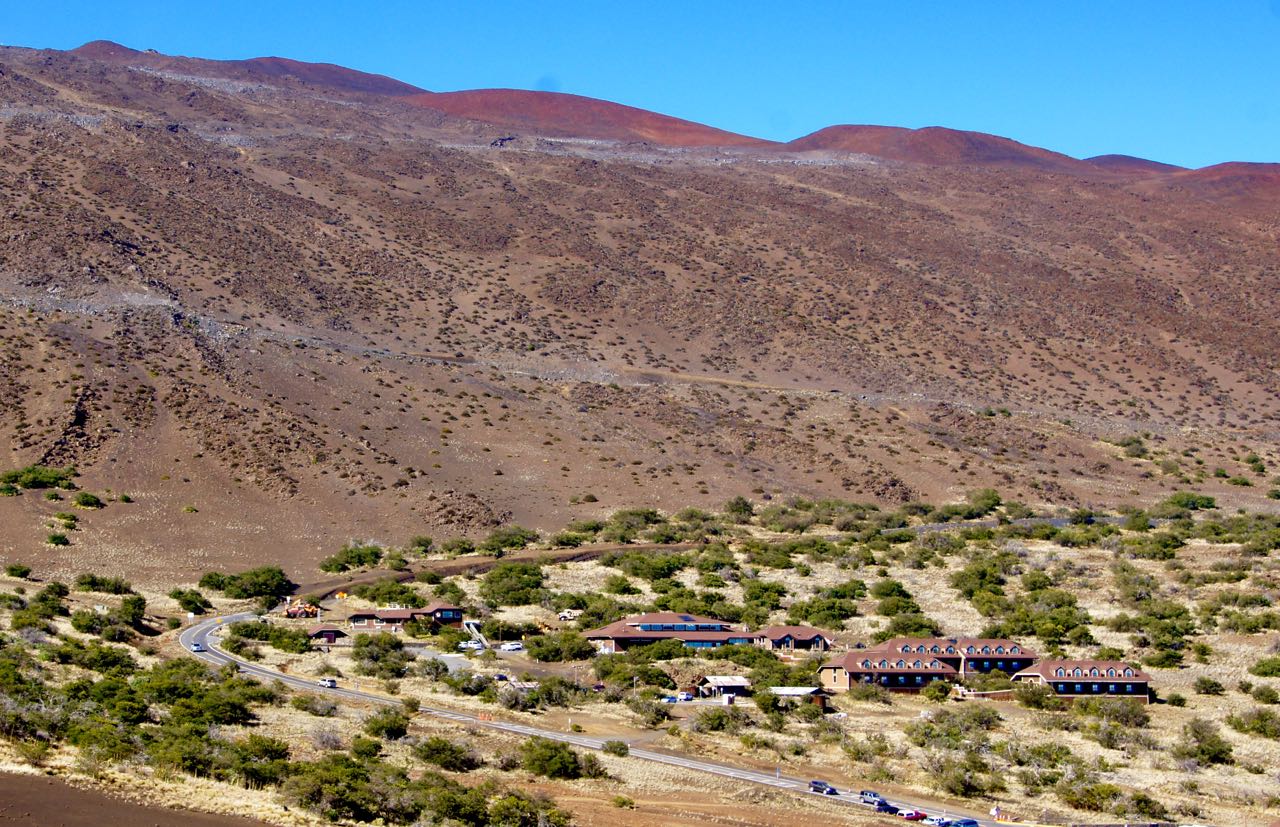
A view of the Onizuka Center for International Astronomy Visitor Information Station on the slopes of Mauna Kea. Credit: Madereugeneandrew (own work), CC BY-SA 4.0
North Kona Coast
The west side of the Big Island gets clear, dry weather much of the year. The city lights of Kailua-Kona wash out the view from town, so find your way to less inhabited parts of the North Kona coast for darker conditions.
Good to know: If you’re looking for a wilderness area, try the Puʻu Waʻawaʻa Forest Reserve. Or, simply head to parts of the coast with minimal development, like Hāpuna Beach or the Kīholo State Park Reserve, among others.
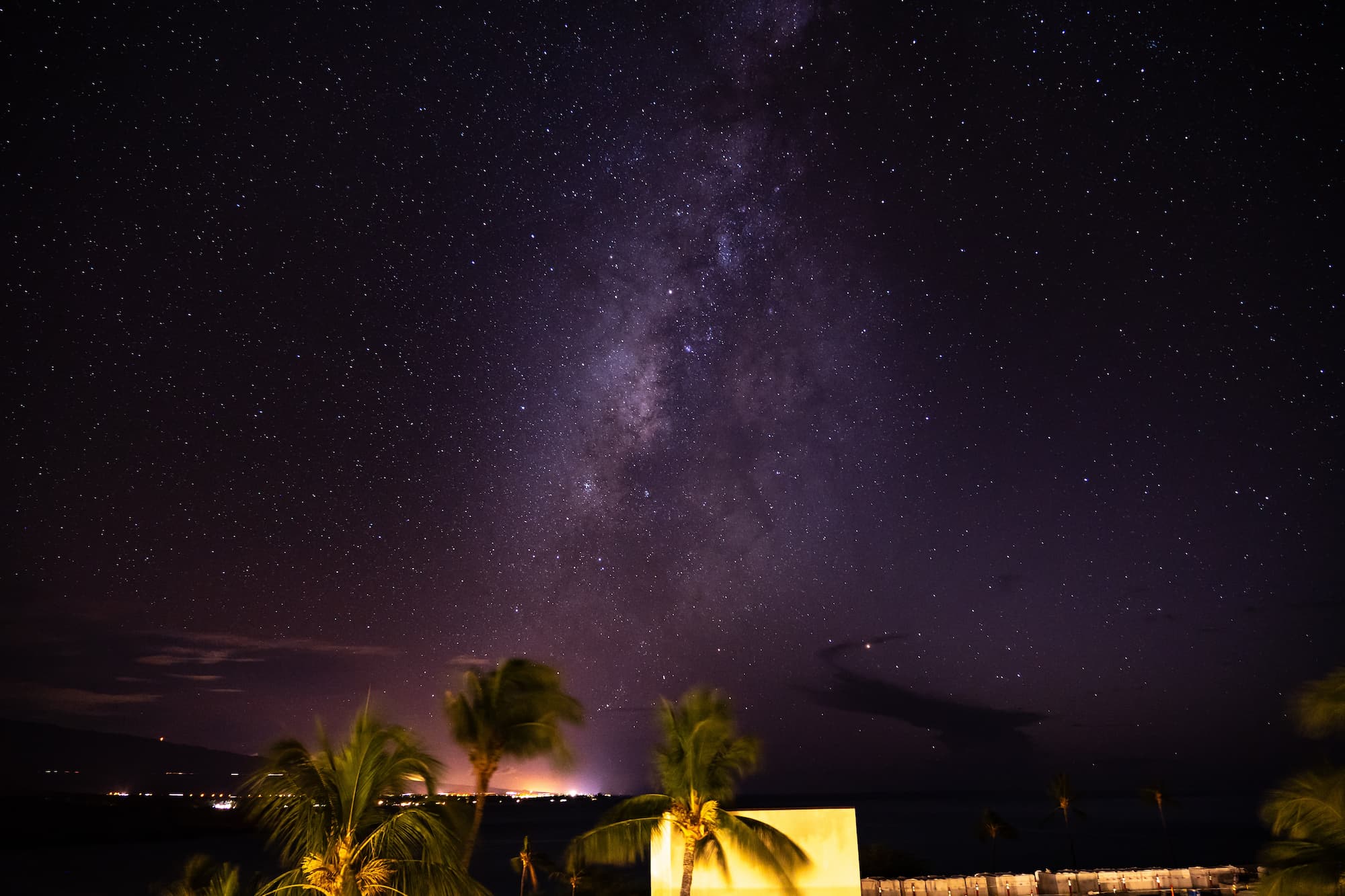
Photo of the Milky Way taken from the Westin Hapuna Beach Resort on the Kohala coast. Photo by Pascal Debrunner on Unsplash
3 Stargazing Spots on Kauaʻi
Kauaʻi‘s nickname is the Garden Island, and gardens need rain. The south and west coasts stay much drier than the rest of the island, and that dry side is where the island’s stargazing happens.
Waimea Canyon
Waimea Canyon sits more than 3,000 feet above sea level on the dry southwest side of the island, and its established lookouts double as stargazing platforms after dark.
Good to know: Waimea Canyon is remote with no nearby services, so bring food and water, and dress warm: it cools off fast at elevation. It will be very dark up at the canyon, so bring a flashlight for walking. Camping at Kōkeʻe State Park is also an option.
Kekaha/Barking Sands Beach
The southwest coast of Kauaʻi is sparsely developed around the towns of Waimea and Kekaha, and the beaches in the area are an easy place to lie back and watch the stars.
Good to know: Kekaha Beach Park and Barking Sands Beach are both reliable options in the area. When stargazing on the beach at night, always go with a buddy and be respectful of local residents who may live nearby.
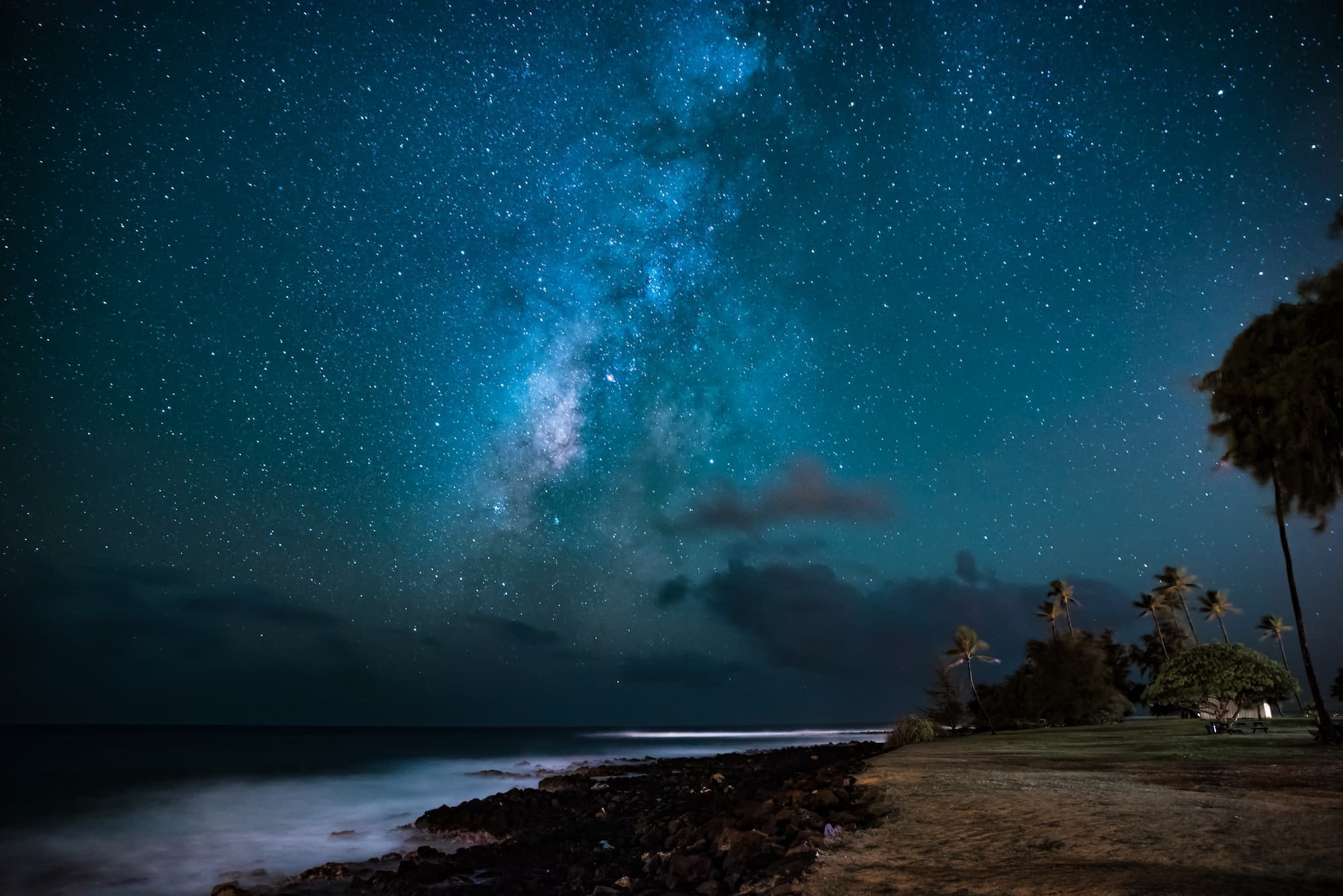
Long exposure shot (notice the elongated star trails) of the Milky Way from Poʻipū beach on Kauaʻi. Photo by Casey Horner on Unsplash.
Polihale State Park
This remote beach park on the west side of Kauaʻi sits about as far from light pollution as you can get on the island.
Good to know: The park gate closes at 6:45 p.m., so for a full night of stargazing, reserve a campsite ($30/night for non-residents) and stay over: go for the sunset, then lie back as dusk settles in and the stars appear. The access road is unimproved dirt and can flood; 4WD is recommended.
3 Stargazing Spots on Maui
Maui pairs high upcountry terrain with remote, undeveloped coasts. Three spots stand out:
Haleakalā and Upcountry Maui
The summit of Haleakalā rises to 10,000 feet and is home to a handful of telescopes and scientific endeavors. The cloud layer rests below the summit most nights, so the viewing area sits under open sky.
Good to know: Go for the sunset and stay for the stars. Or, consider jumping on a guided stargazing tour.
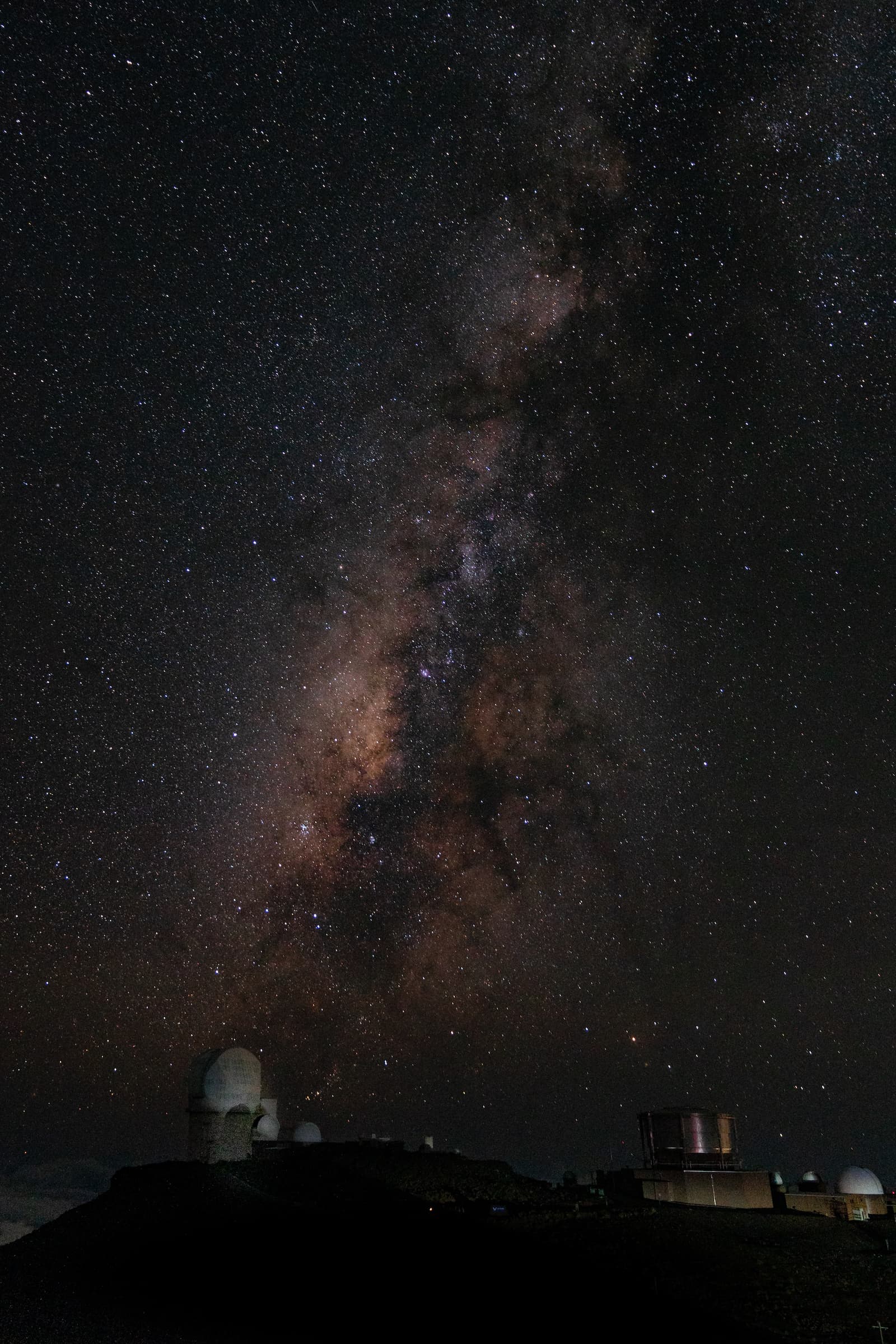
The Milky Way over the observatory at the Haleakalā summit is the reward for a 1:00 a.m. alarm and an early morning drive up the crater. Photo by Kameron Kincade on Unsplash
Hāna/Kīpahulu
This one is a gamble. Hāna is one of the most remote towns in all of Hawaiʻi, cut off from all major development. And nearby Kīpahulu is considered the backside of Haleakalā National Park, with no development to speak of. That darkness is real, and so is the rain. Hāna and the east side of the island get clouds most nights, so budget for being clouded out.
Good to know: This is a nice roll of the dice for people who split the Road to Hāna over two days with a night in Hāna. Spend a night at one of the small inns (or the Hana-Maui Resort) and accept that you may get clouded out.
La Perouse Bay
La Perouse Bay sits at the end of the road along the far south coast of Maui. It borders reserve land, with no development around the bay. Take a short walk out into the lava fields for unobstructed views of the sky.
Good to know: La Perouse Bay has lots of sharp lava rock, so be sure to bring a flashlight and wear closed-toe shoes when exploring at night. Bring a chair or blanket to sit on the ground.
3 Stargazing Spots on Oʻahu
The city lights of Honolulu make stargazing harder on Oʻahu than on the other islands. But three spots still get you a dark enough sky.
Kaʻena Point
Kaʻena Point State Park is the northwest corner of the island, about as far from Honolulu as you can get. It’s usually clear and dry out there.
Good to know: Park at the end of the road along the north shore and walk a few hundred yards out along the dirt road/trail. Bring a flashlight and a blanket or chair.
North Shore Beaches
The North Shore is the darkest stretch of Oʻahu, far from the dense south shore. Make your way to one of the many North Shore beach parks on a clear night and lie back in the soft sand.
Good to know: Many of these beach parks sit directly in front of homes, so be mindful of where you park and keep noise and lights down.
Attend a ‘Star Party’
As Oʻahu is the “party island,” it makes sense that the Hawaiʻi Astronomical Society offers “star parties” several times per month: meetups where club members set up their telescopes and anyone can walk up and look through them.
Good to know: The star parties usually take place at Kahala Community Park (East Oʻahu) or Geiger Park in ʻEwa (Leeward Oʻahu), with occasional dates at Dillingham Airfield (its gates lock at 7 p.m., so arrive early). You can see a full list of events and contact them here for more details and to sign up.