
On Maui’s Kīpahulu coast, a chief’s son named Laka needed a canoe to bring his father’s bones home from Hawaiʻi Island. Every tree he cut down stood up again by morning, until he caught the Menehune (the small, skilled builders of Hawaiian legend) at it.
The legend of Laka and the Menehune
Laka’s father, the chief Wahieloa, lived at Kīpahulu. While Laka was small, Wahieloa sailed to Hawaiʻi Island for a gift for his son. He landed at Punaluʻu in Kaʻū and was killed, and his bones were hidden in a cave kept by an old woman named Kaikapu.
When Laka asked about his father, his grandmother said he was thought dead, and sent Laka up the mountain for a canoe tree with leaves curved like a young moon.
Laka felled one by sundown, and by morning it stood upright again, as did every tree after it. So he dug a trench where the next would fall, felled the tree into it and hid inside.
That night came a chant, then a hum, and the forest filled with little people trying to lift the tree. Laka jumped out and grabbed two of them. One, Mokuhāliʻi, bargained: kill us and no one will build your canoe or haul it down for you; spare us, build a canoe shed and feed us, and we will do both.
Laka built the shed. One night the hum sounded three times, and the Menehune carried the finished canoe down by hand and laid it in the shed. Food was spread out for them there, and at dawn they went home.
Laka sailed for Punaluʻu with four helpers, to prop the cave door open, light the cave, search it and reach inside. They offered Kaikapu a bowl of soup, and she called it not salty enough and slammed the door.
The reaching helper tried the salt of one sea after another until the salt of Puna suited her. When Kaikapu opened the door to take the bowl, the four brought out the bones. Laka laid them in a cave at Kaumakani in Kīpahulu whose entrance, the story says, no one has found.
Visiting Kīpahulu and Punaluʻu
Kīpahulu is now the coastal district of Haleakalā National Park, 12 miles past Hāna, with the Pīpīwai Trail and the Pools of ʻOheʻo (closed to entry). Our Road to Hāna guide covers the drive out, and our Haleakalā guide covers hiking and camping there.
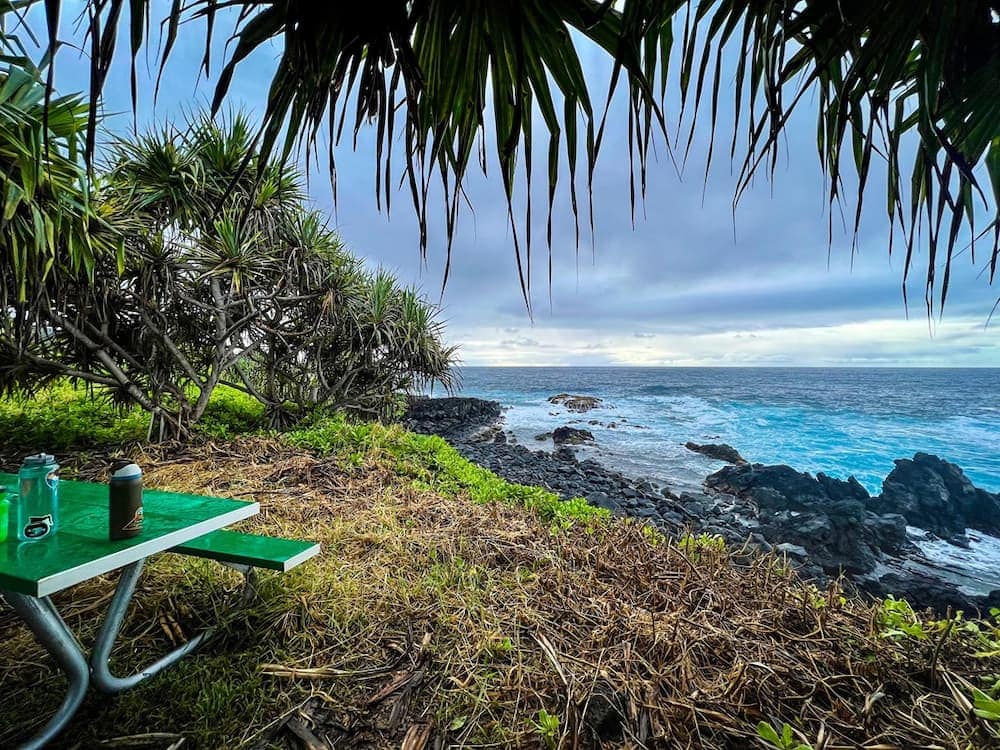
The Kīpahulu coast, where Laka built his canoe. The campground overlooks ocean cliffs and is a short walk from ʻOheʻo Gulch. Image: NPS
Punaluʻu, where Wahieloa died, is a black sand beach in Kaʻū on the Big Island. Our Punaluʻu guide has directions to the beach.
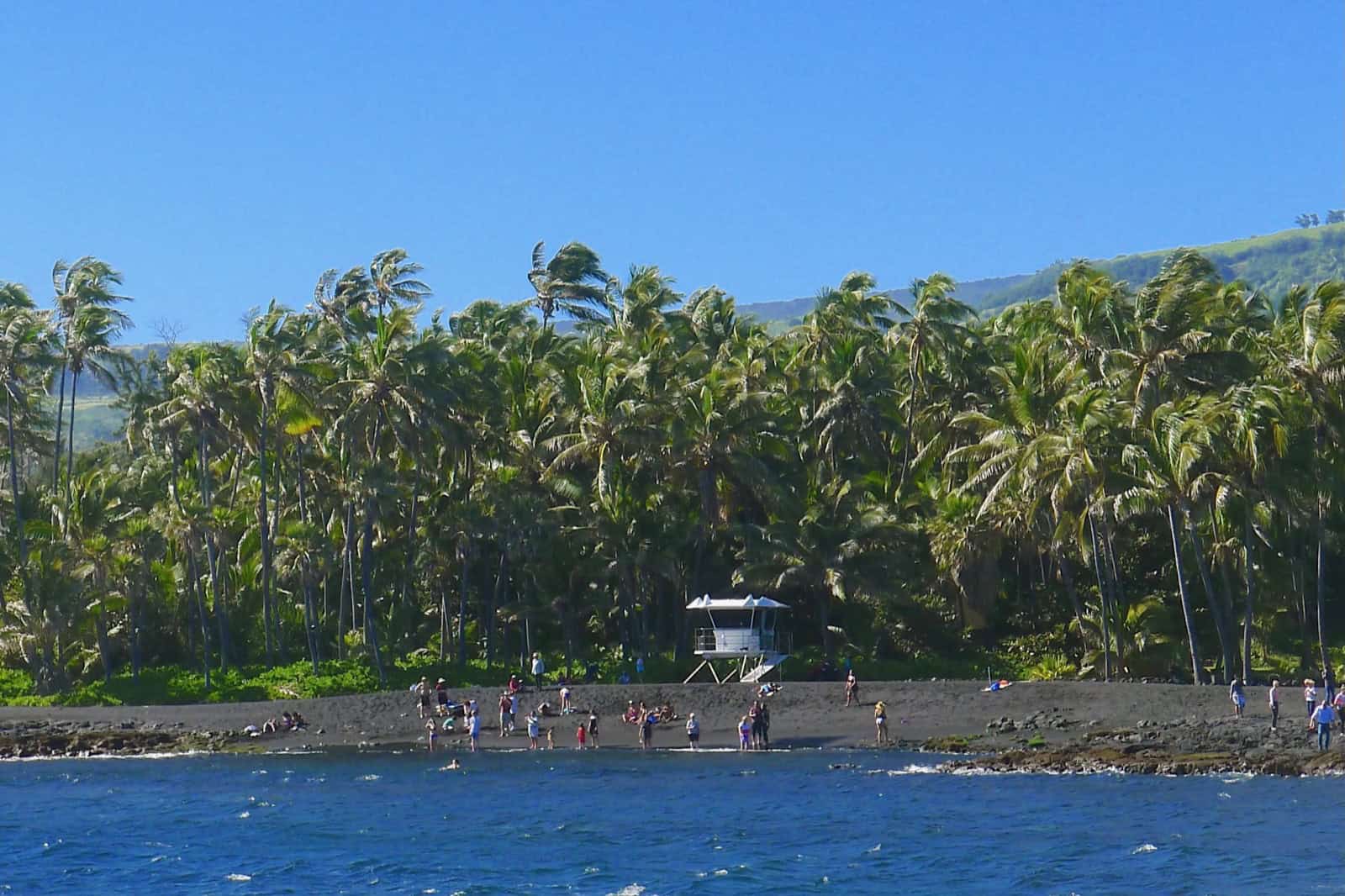
Punaluʻu, where Laka sailed to bring back his father’s bones. The coconut grove is the marker you pick out first from the water, with the Kaʻū hills rising behind it.
Related: Hawaiian myths and legends, our other retellings, with a map of where each story is set.
About this telling
The canoe half of the story follows the National Park Service’s telling from Haleakalā National Park, which adapts “Laka’s Adventure” in Thomas G. Thrum’s Hawaiian Folk Tales (1907). Thrum printed it among stories “gathered from various native sources” without naming the tellers or translators, and we did not find or read a Hawaiian-language text of it.
The voyage to Punaluʻu is in neither. We checked Samuel Kamakau’s Hawaiian-language history column in Ke Au Okoa (28 October 1869) in a rough scan transcription: it places Wahieloa’s family and Laka at Kīpahulu, quotes a chant naming Laka’s searchers, and says the bones were brought home to Kaumakani. The rest of the voyage follows Martha Beckwith’s English summary, in Hawaiian Mythology (1940), of a 1930 manuscript by Jonah Kaiwaaea of Kīpahulu. This Laka, son of Wahieloa, is not Laka the goddess of hula.
Read more
- Menehune and Laka, at Haleakalā National Park. A short English telling from the park that includes Kīpahulu, on its page of Hawaiian deities. Scroll to “Menehune and Laka” for the canoe and the hum in the night.
- Kamakau’s “Ka Moolelo Hawaii” in Ke Au Okoa, 28 October 1869, on Nupepa. His Hawaiian-language history column, in Hawaiian, with the chant of Laka’s searchers and the return of Wahieloa’s bones to Kīpahulu. Open the page image, since the typed transcription is rough.