
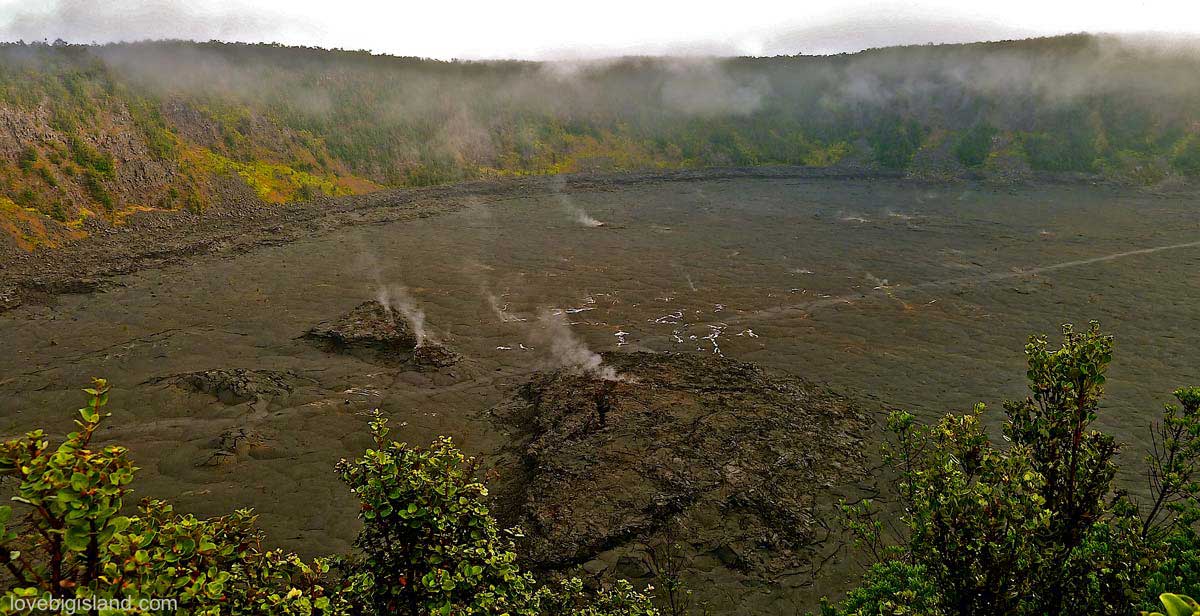
As of September 2026, Kīlauea has erupted in more than 50 episodes since December 2024, some lasting only hours, separated by pauses of days or weeks. Between episodes there is a full day here: the 3.3-mile Kīlauea Iki loop across a crater floor, six viewpoints on the caldera rim, and 18.8 miles of Chain of Craters Road down to the coast. The park is open 24 hours a day, year round.
Come with layers. The summit sits near 4,000 feet and runs 12 to 15 degrees cooler than sea level, so it can be raining at the rim while the coast is hot and windy. The Kīlauea Visitor Center is closed for a two-year renovation, and the temporary Welcome Center that replaced it runs 9am to 4:45pm daily.
Table of contents
- A short introduction on the Kīlauea volcano
- 12 things to do in the Hawaiʻi Volcanoes National Park (with video)
- Where to stay: camping and the Volcano House
- Directions & opening hours
Volcano Village is the practical base if you are staying more than a day. The village sits in rainforest, a 5 minute drive from the park entrance, with a good supply of vacation rentals.
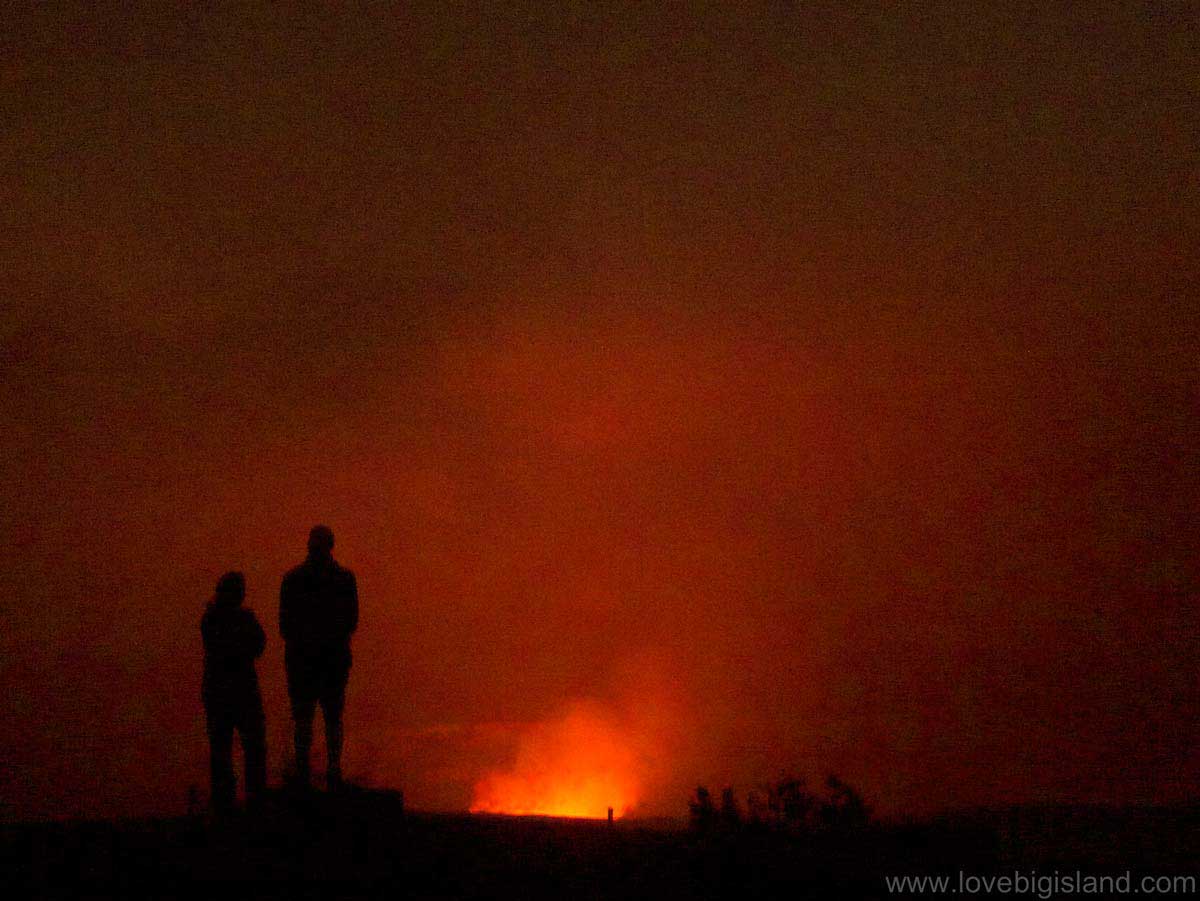
You can visit the Hawaiʻi Volcanoes National Park at night to see the glow over the Halemaʻumaʻu crater.
See our page with park pictures for more images of the Hawaiʻi Volcanoes National Park.
Halemaʻumaʻu, the crater at the summit, is where the Hawaiian accounts say Pele lives. We retell how she got there, and six other Big Island legends, on our Big Island mythology page.
The Kīlauea volcano (a short introduction)
The Big Island is built from five volcanoes: Kohala, Mauna Kea, Hualālai, Mauna Loa, and Kīlauea. Mauna Kea measures 13,796 feet and is the tallest mountain in the state and the tallest sea mountain in the world. Mauna Loa is the largest volcano on Earth in terms of volume and area covered. The park encompasses two of these volcanoes: Mauna Loa and Kīlauea.
Only one of the two is active right now. Mauna Loa has been quiet since its 13-day eruption in November and December 2022 and sits at USGS alert level green. Kīlauea, the youngest and most active of the five, is the one whose lava you can often see, either flowing toward the ocean or glowing in the Halemaʻumaʻu crater at the top of the park grounds.
You can read more in-depth information about the Kīlauea volcano on the USGS website. Read more about the five volcanoes on the Big Island in our blog.
12 things to do in the Hawaiʻi Volcanoes National Park
Two full days will not exhaust the park. There are short and long hikes, plenty of stops you can reach by car, and a weekly evening lecture series called “After Dark in the Park“.
These 12 stops are where we would start, and the park has more.
- Welcome Center (the visitor center is closed)
- Halemaʻumaʻu crater overlooks (the glow)
- Kīlauea Iki crater + hike
- Thurston lava tube
- Chain of Craters road (scenic drive)
- Day hikes
- Volcano art center
- The sulphur banks
- The Mauna Loa Road Scenic Drive
- The junior ranger program + workbook (kids aged 12 and below)
- Keanakākoʻi Crater + Halemaʻumaʻu overlook
- Seeing lava in the park
Start at the Welcome Center (the visitor center is closed)
The Kīlauea Visitor Center is closed for a two-year renovation. A temporary Welcome Center has taken over its job and is open daily from 9:00 a.m. to 4:45 p.m.
Make it your first stop anyway. The rangers there post the current eruption status and the day’s ranger-led programs, plus trail and area closures. It’s also where you pick up a map and ask which viewpoints are open. Confirm the current hours on the national park website before you drive up.
6 Halemaʻumaʻu crater overlooks (where to watch the glow)
When lava is present in the crater, the glow rising off Halemaʻumaʻu after dark is why the overlooks fill at night. Important: the eruption area itself is closed, for loose cliff edges, ground cracks, falling tephra and volcanic gas. You watch from the caldera rim, and the park keeps six named viewpoints open for exactly that.
- Uēkahuna, at the end of Crater Rim Drive West, a 2.8 mile drive from the entrance station. The largest lot of the six, and rangers are often on site.
- Kīlauea Overlook (Kapālikapuokamohoaliʻi), 2.5 miles from the entrance station and a short walk from its lot, or 0.4 miles on foot from Uēkahuna.
- Wahinekapu (Steaming Bluff), 1 mile from the entrance station. It’s the first overlook you reach from the entrance station.
- Kūpinaʻi Pali (Waldron Ledge). Park at the closed visitor center and walk 0.5 miles, about 20 minutes, past the Volcano House. Furthest from the vent of the six.
- The Keanakākoʻi overlooks, a 2 mile round-trip walk from the Devastation Trailhead, about an hour.
- The overlook near the Welcome Center: cross Crater Rim Drive and follow the Crater Rim Trail toward the steam vents. The shortest walk of the six.
Lots at the closer overlooks fill on any night with a glow, so have a second one on your list before you drive in.
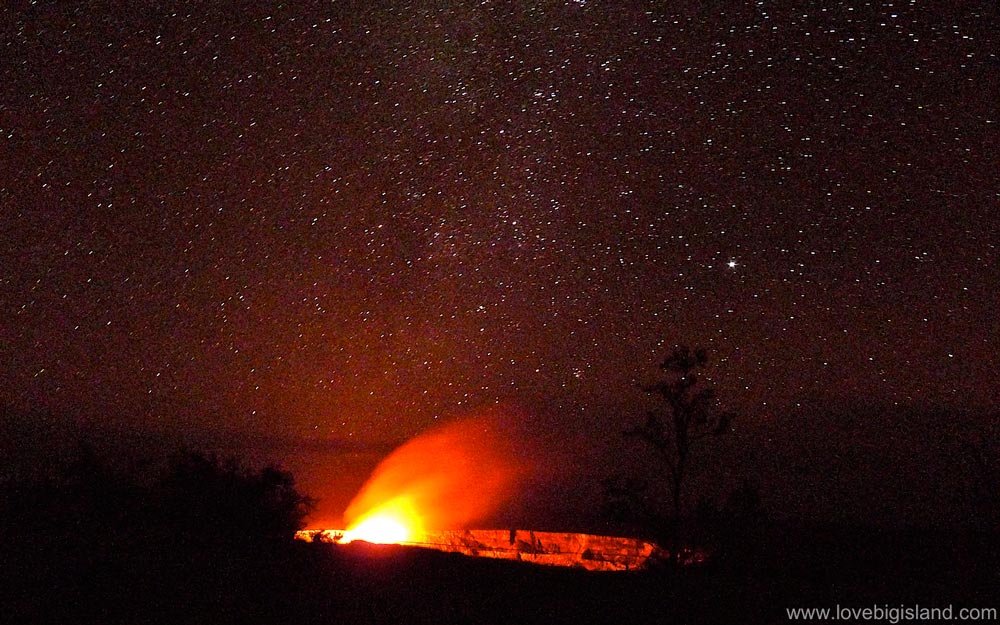
The glow from the Halemaʻumaʻu crater at night in the Volcanoes National Park, seen from the (now demolished) Jaggar Museum overlook
The Kīlauea Iki crater
The Kīlauea Iki hike is our favorite short hike on the Big Island (more about this hike). It drops you down through rainforest and across the crater floor, which was a churning lava lake during the 1959 eruption, then climbs back up to the rim.
The loop measures 3.3 miles with 400 feet of elevation change, and the park allows 2 to 3 hours for it and rates it moderate to challenging. Nearly all of that climb is the return, on switchbacks, after the flat crater floor has already tired your legs.
The standard start is the Kīlauea Iki Overlook, but the park calls parking there extremely limited and steers hikers to two alternatives: 6 miles round-trip (4 to 5 hours) from the Devastation Trailhead by way of Uēaloha (Byron Ledge), which adds wide views of the caldera, Mauna Loa on clear days, and native forest with tall tree ferns; or 5.3 miles round-trip (3 to 4 hours) from the Welcome Center area along the Crater Rim Trail.
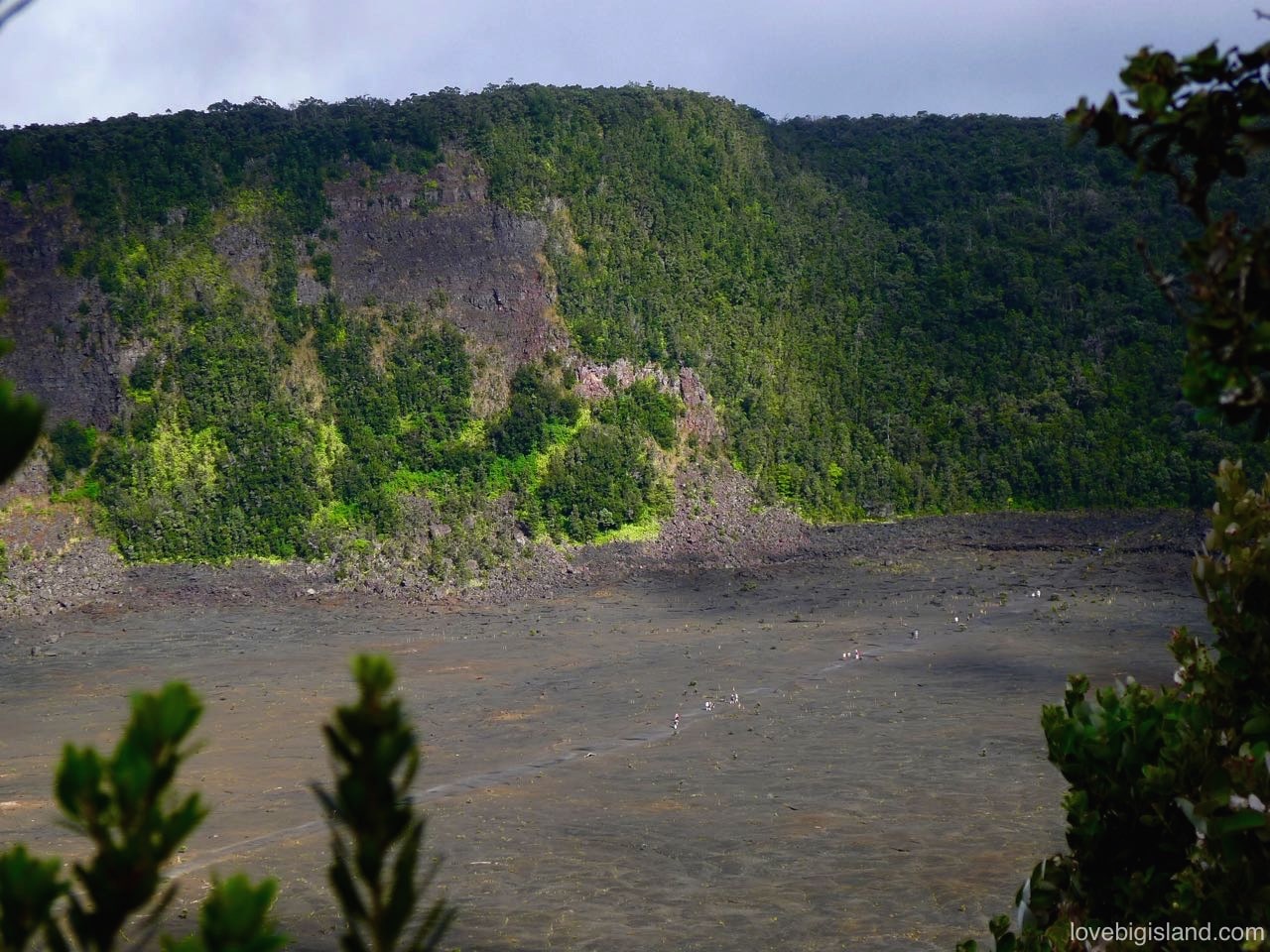
Hikers cross the floor of the Kīlauea Iki crater in the Hawaiʻi Volcanoes National Park. Find more information about this hike on our website
Thurston Lava Tube
Thurston Lava Tube (Nāhuku) is the most accessible lava tube in the park: a walk through a tree fern forest into a lit, cave-like tube 500 years old and wide enough to drive a truck through. The park describes it as a 1.5 mile round-trip from the Kīlauea Iki Overlook.
Good to know: because of a bridge replacement, the trail is open one way only, in and out from the eastern exit end. The rainforest approach to the front entrance, the bridge itself, and the first 50 feet of the cave are closed while the work runs, which the park expects to finish in mid-August 2026. The restrooms stay open.
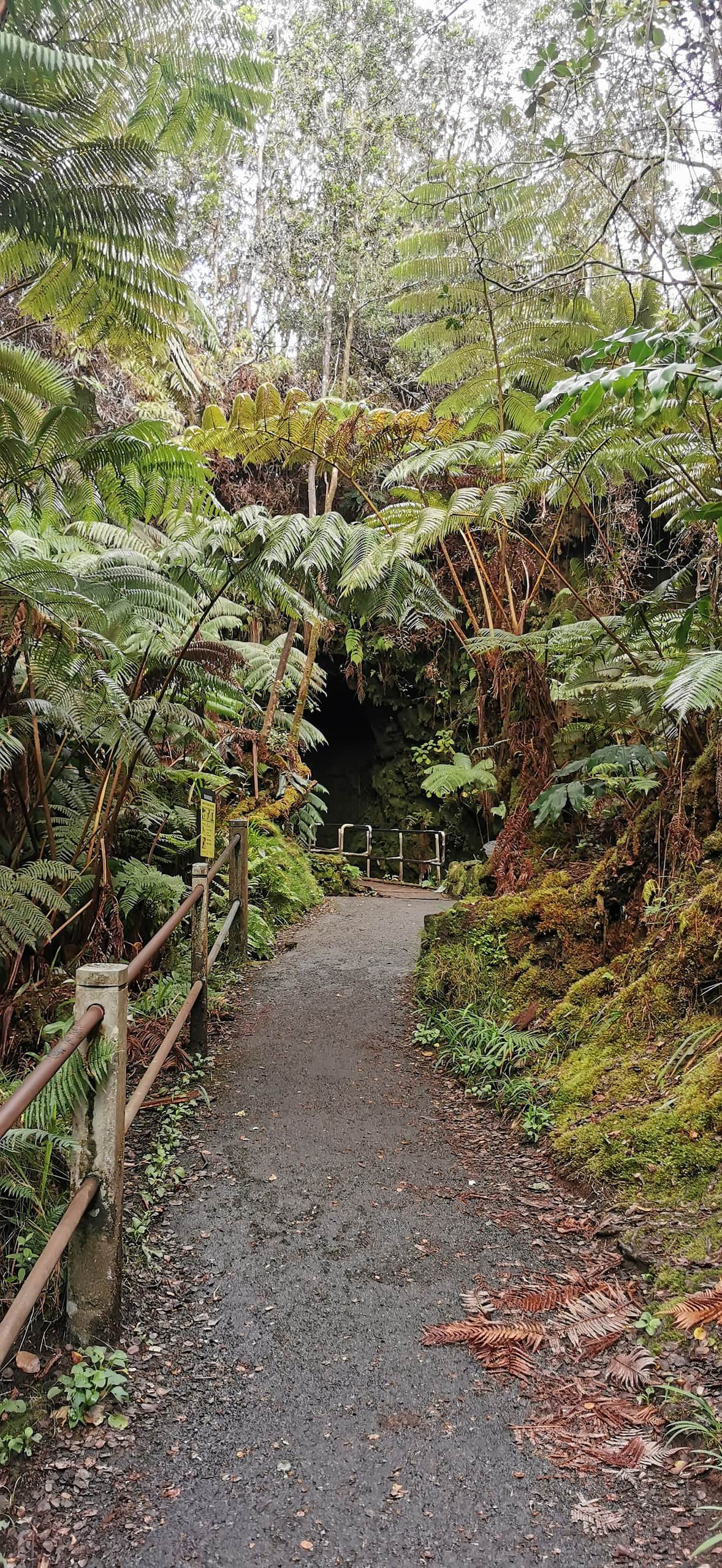
A fern-filled rainforest path leads to the dark entrance of Thurston Lava Tube (Nāhuku) in Hawaiʻi Volcanoes National Park.
The tube is lit from 8 a.m. to 8 p.m. Outside that window, carry a flashlight; a phone screen is not enough on its own. After the lights cut out, the tube is as dark as it was for its first five centuries.
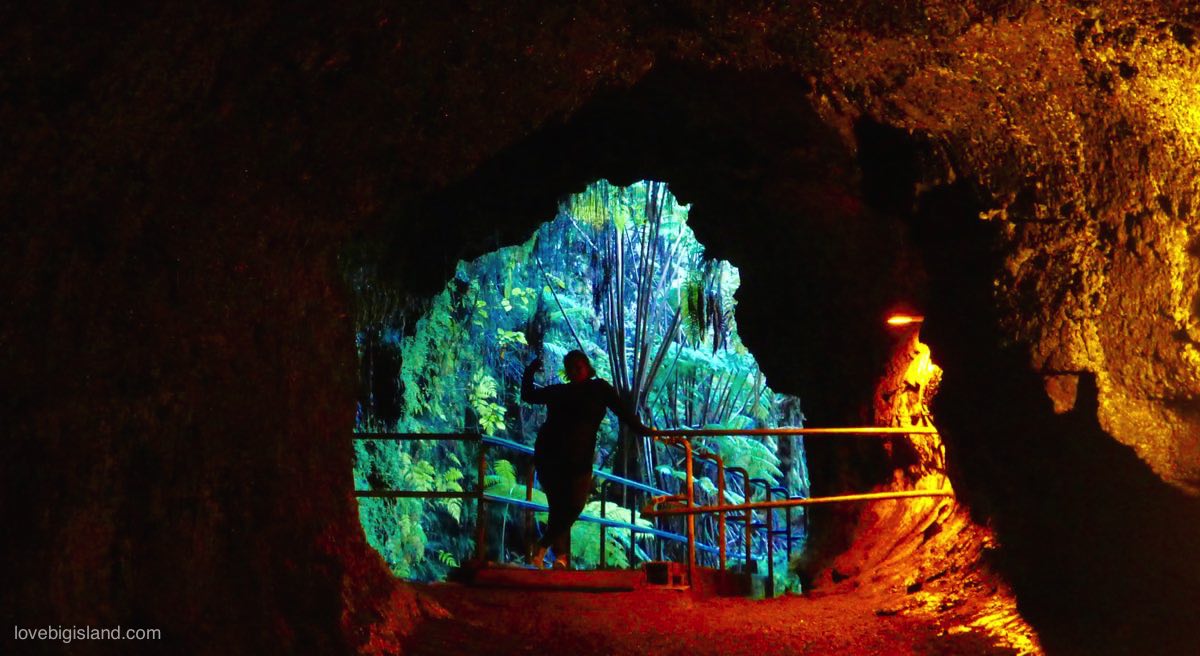
A 500 year old lava cave in the Hawaiʻi Volcanoes National Park, wide enough to fit a truck
You can see more pictures of Thurston lava tube on our website or on the official park website. We have also made a list of 5 Big Island lava tubes you can explore after Thurston.
The Chain of Craters Road
The Chain of Craters Road runs 18.8 miles from the summit down to the coast, ending where lava buried it. It passes craters and pullouts the whole way down, and it is one of our favorite scenic drives on the Big Island. The park describes the route stop by stop on its website.
Important: there is no food, no water, and no fuel anywhere along the road or at the end of it. The only facilities are vault toilets at the Maunaulu parking area and at the road’s end. Fill the tank and fill your bottles at the summit, because turning around from the coast is a long way back.
The burial happened in stages. Lava first cut the road in 1969 during the Maunaulu eruption, and it was realigned and reopened in 1979. Then the Puʻuʻōʻō eruption crossed it repeatedly, inundating close to 9 miles of pavement and taking the Wahaʻula Visitor Center in 1989, the village of Kamoamoa in 1992, and the Wahaʻula heiau (temple) in 1997.
Chain of Craters audio guide
A GPS-triggered audio guide is a good way to drive the Chain of Craters Road. Along with flagging the pullouts and trailheads you pass, these guides tell the myths and history tied to the landscape. See for example this audio tour of the Hawaiʻi Volcanoes National Park by Shaka Guide.
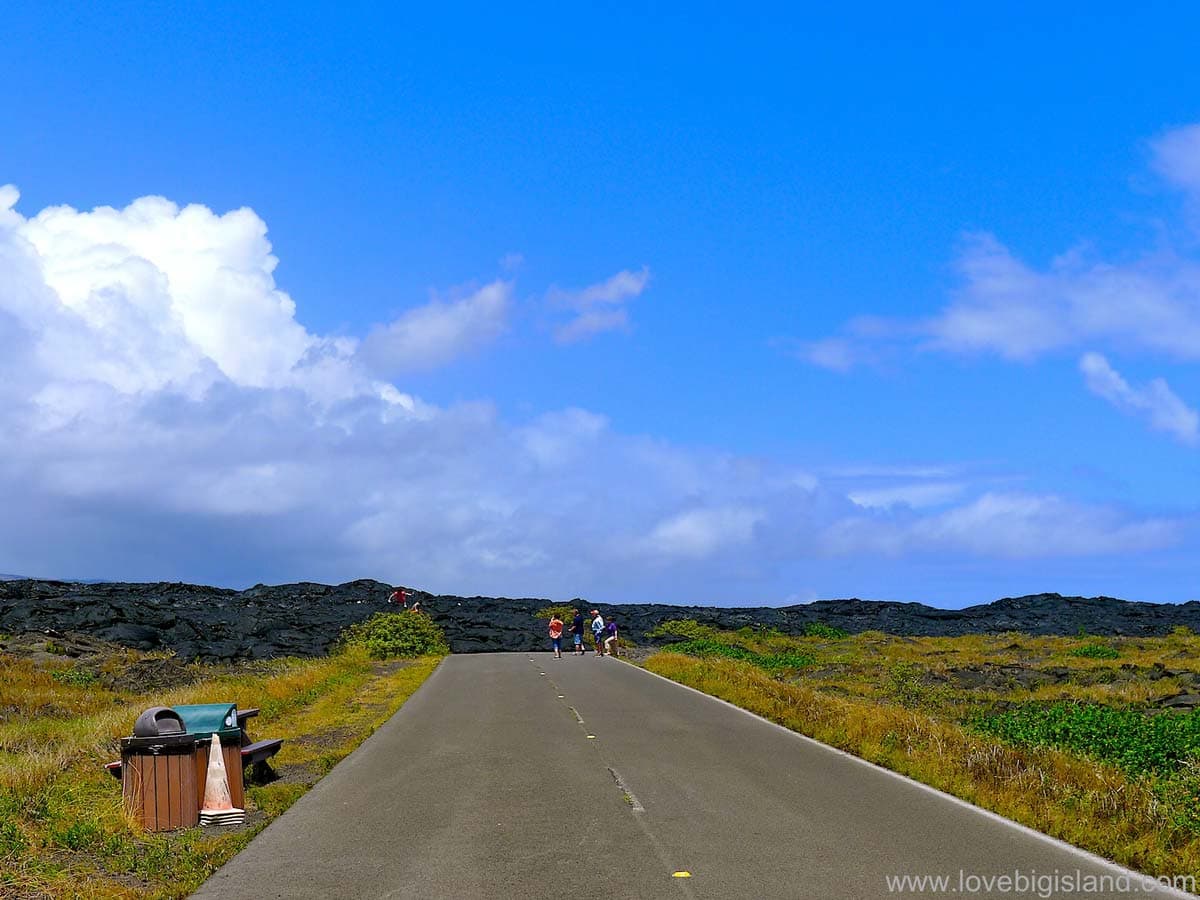
The scenic Chain of Craters Road in the Hawaiʻi Volcanoes National Park ends after 18.8 miles at lava flows that covered the road during the Puʻuʻōʻō eruption
10+ day hikes in the park
The park has more than 10 day hikes, each described on the park website. Over 100 miles of trail run through old lava tubes and rainforest and across old and new, still-steaming lava flows. The park also runs ranger-led programs, but it no longer publishes a schedule online: the day’s programs are announced at the Welcome Center each morning.
If you are looking for longer and more challenging hikes a good place to start is the Big Island Hikes website (the hikes are listed at the bottom of the page).
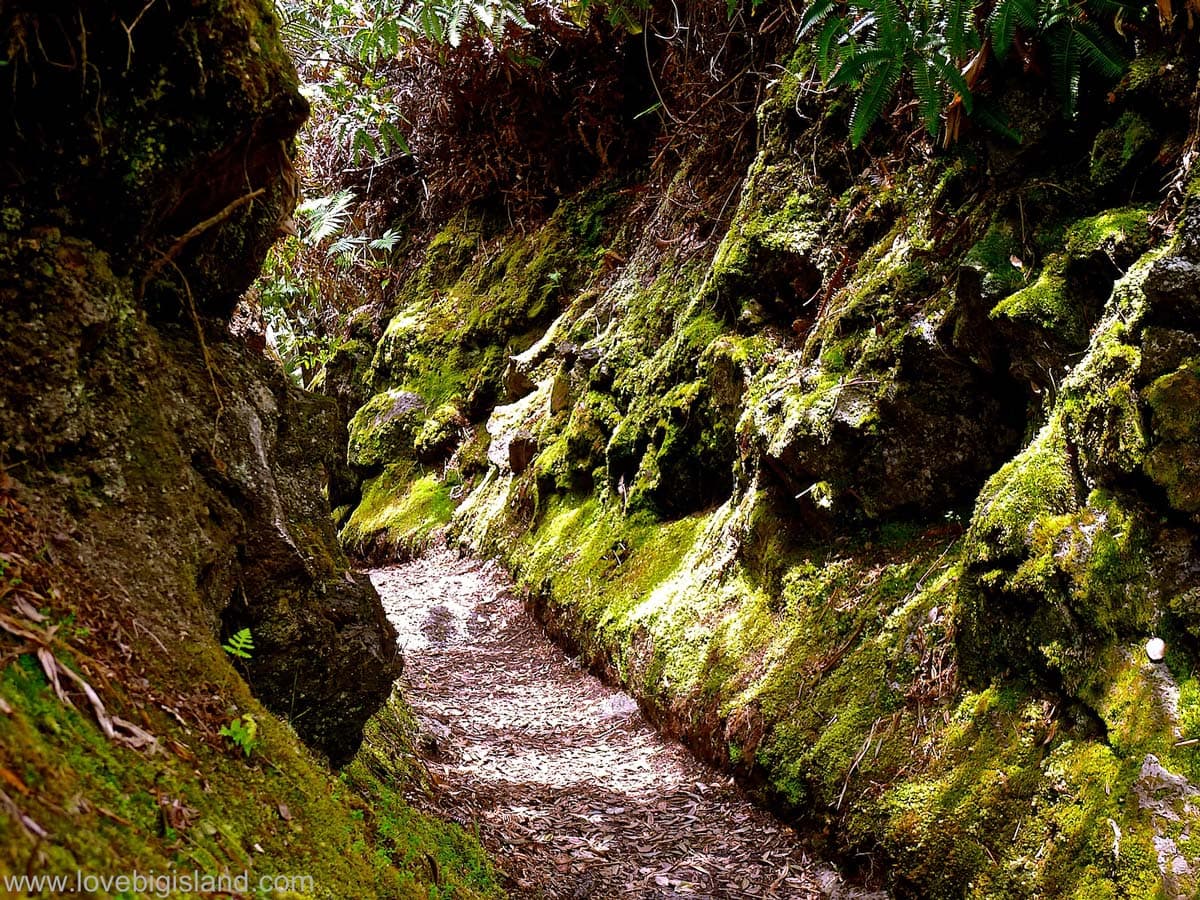
Part of the Halemaʻumaʻu Trail in the Hawaiʻi Volcanoes National Park, which runs from the visitor center area down toward the Halemaʻumaʻu crater floor
The Volcano Art Center Gallery
The Volcano Art Center Gallery sits next to the closed Kīlauea Visitor Center and is open 9:00 a.m. to 5:00 p.m. daily. More info on the Volcano Art Center here.
The Haʻakulamanu (Sulphur Banks) trail
At the Sulphur Banks, volcanic gas and groundwater steam seep straight out of the ground, leaving the rock crusted yellow and green. The smell of rotten eggs is hydrogen sulfide, and it carries a long way on a still morning.
Important: the gas here is a health hazard. Along with hydrogen sulfide the vents release carbon dioxide and sulfur dioxide, so people with heart or respiratory conditions such as asthma, pregnant women, infants, and young children should skip this walk.
For everyone else it is an easy 1.2 mile (2 km) round-trip on the Haʻakulamanu trail, which starts from the Kūkamāhuākea (Steam Vents) parking area (more information on the park website).
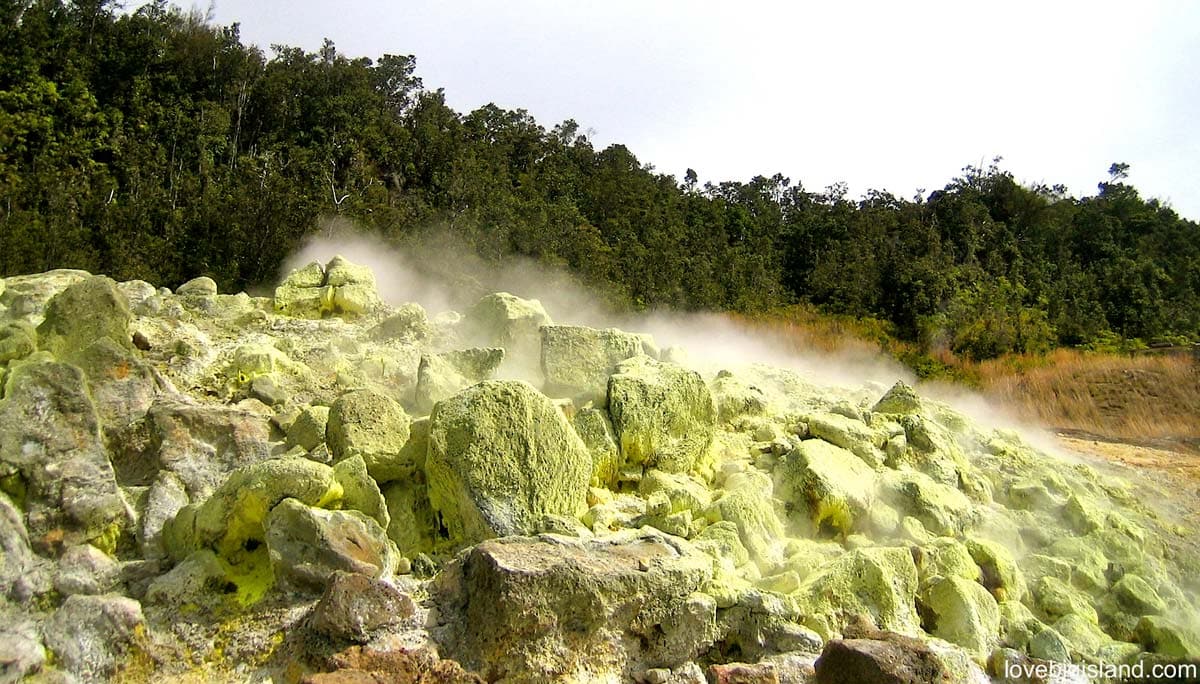
The sulfur banks are a short walk from the Kūkamāhuākea (Steam Vents) parking area
The Mauna Loa Road Scenic drive
The Mauna Loa Road climbs off Highway 11 to the Mauna Loa Lookout at 6,662 feet (2,031 meters). On the way up and back you pass volcanic features and open views across the Kaʻū district and Kīlauea.
Past Kīpukapuaulu the road narrows to a single lane with tight corners, and it is popular with joggers and cyclists, so take it slowly. The road itself is open. The Kīpukapuaulu trail at the bottom of it was closed for hazardous trees as of July 2026, for what the park expected to be several more weeks.
We rate this drive highly, and you can read more about it in our article on the best scenic drives on the Big Island.
Special activities for kids in the Hawaiʻi Volcanoes National Park
Kids up to the age of 12 can earn a Hawaiʻi Volcanoes junior ranger badge by working through a booklet of park activities. Pick the booklet up at the Welcome Center when you arrive.
Booklets often run out, and the park does not mail booklets or badges. There is an at-home route, three online activities plus a parent’s permission emailed in, but it earns a sticker rather than the badge. More information is on the be a junior ranger website.
Keanakākoʻi Crater + Halemaʻumaʻu overlook
This stretch of the old Crater Rim Drive, near the Devastation Trail parking lot, is closed to cars and open to walkers and cyclists. It is 1 mile each way to Keanakākoʻi Crater, 2 miles round-trip, and takes an hour to an hour and a half, with overlooks along the way that frame Halemaʻumaʻu Crater and Mauna Loa.
From those viewpoints you can see how much the Halemaʻumaʻu crater grew during the 2018 collapse.
Parking at the Devastation Trailhead is extremely limited while the volcano is erupting. The overflow lot at Puʻupuaʻi Overlook adds half a mile in each direction, so budget the extra time or pick a different overlook when the lot is full.
Seeing lava in the park
Since December 2024 Kīlauea has erupted in more than 50 separate episodes at the summit, each one separated from the next by a pause of days or weeks. An episode can run for only a few hours. Whether you see lava depends entirely on the week you visit, and nobody can promise an answer months out.
The eruption area is closed, so even during an episode you watch from the caldera rim, well back from any vent. The glow shows best after dark, so the overlooks fill at dusk.
Check the USGS Hawaiian Volcano Observatory Kīlauea status page the morning you go: it carries the current alert level and says whether an episode is underway, in a pause, or forecast. Our lava viewing guide for Hawaiʻi covers where and how to see it across the island.
More pictures
See more pictures of our favorite places and activities in the Hawaiʻi Volcanoes National Park. The following video shows four of the best stops in the park:
- The Halemaʻumaʻu crater overlook
- The Thurston lava tube
- The Kīlauea Iki crater
- Part of the Chain of Craters road.

The video was made by Will and Jim Pattiz, who have set out to film and document every National Park in the United States. Check out their other National Park videos and guides if you like their style.
Stay in (or near) the park overnight: camping and the Volcano House
Give the park at least one night. Staying inside it puts you close to the after-dark overlooks. You have four options: two campgrounds, the park hotel, and vacation rentals in nearby Volcano Village. A fifth, the Kīlauea Military Camp, is open only to those who qualify.
Nāmakanipaio is the larger campground, in a eucalyptus grove at about 4,000 feet. Tent sites run $15 a night, first-come, first-served. It also has ten rustic one-room camper cabins that sleep up to four and must be reserved in advance, and pre-pitched tents at $40 a night that are set up and taken down for you.
Kulanaokuaiki is the smaller and quieter of the two, $10 a night for one of nine first-come sites, or $5 with a Golden Age or Golden Access pass, and no cabins or rentals. Both cap you at seven nights, and both are on top of the park entrance fee.
The park hotel, the Volcano House, has 33 rooms. Book it for the lounge, which looks straight out at the Halemaʻumaʻu crater; the rooms themselves are average for the money. Price it through its booking page for your dates.
If camping or the Volcano House doesn’t appeal, stay in Volcano Village, a few minutes from the park entrance. It has many affordable vacation rental houses.
That fifth option, the Kīlauea Military Camp (KMC), sits inside the park and rents units of one to seven bedrooms. Eligibility runs much wider than active duty: reservists and the National Guard, retirees, honorably discharged veterans, Purple Heart recipients and former prisoners of war, un-remarried surviving spouses, current and retired Department of Defense and Coast Guard civilian employees, Department of the Interior staff, and sponsored guests of anyone in those categories. Check the eligibility page before you assume you are out.
Directions and opening hours
The Hawaiʻi Volcanoes National Park is open 24 hours a day, every day of the year. The entrance is on Highway 11 between the 28 and 29 mile marker south of Hilo, and the temporary Welcome Center is just inside on Crater Rim Drive, open daily from 9:00 a.m. to 4:45 p.m.
The gate stays open outside those hours, so arriving before dawn or staying past dark costs you nothing but the drive.
Dress for the summit, not for the beach. The Welcome Center area sits at roughly 4,000 feet and runs 12 to 15 degrees cooler than sea level, and the park warns it can be rainy and chilly at any time of year. The coastal plain at the end of Chain of Craters Road is the opposite, often hot, dry and windy. Pack a rain layer and sun protection in the same bag for a day that covers both.
Important: volcanic gas is a standing hazard at the summit, not only at the Sulphur Banks. Check air quality during your visit. People with heart or respiratory conditions, pregnant women, infants and young children are most at risk. Ash and glassy tephra strands also collect near the summit during eruptive episodes: do not handle them, and closed-toe shoes and eye protection are worth having in the car.
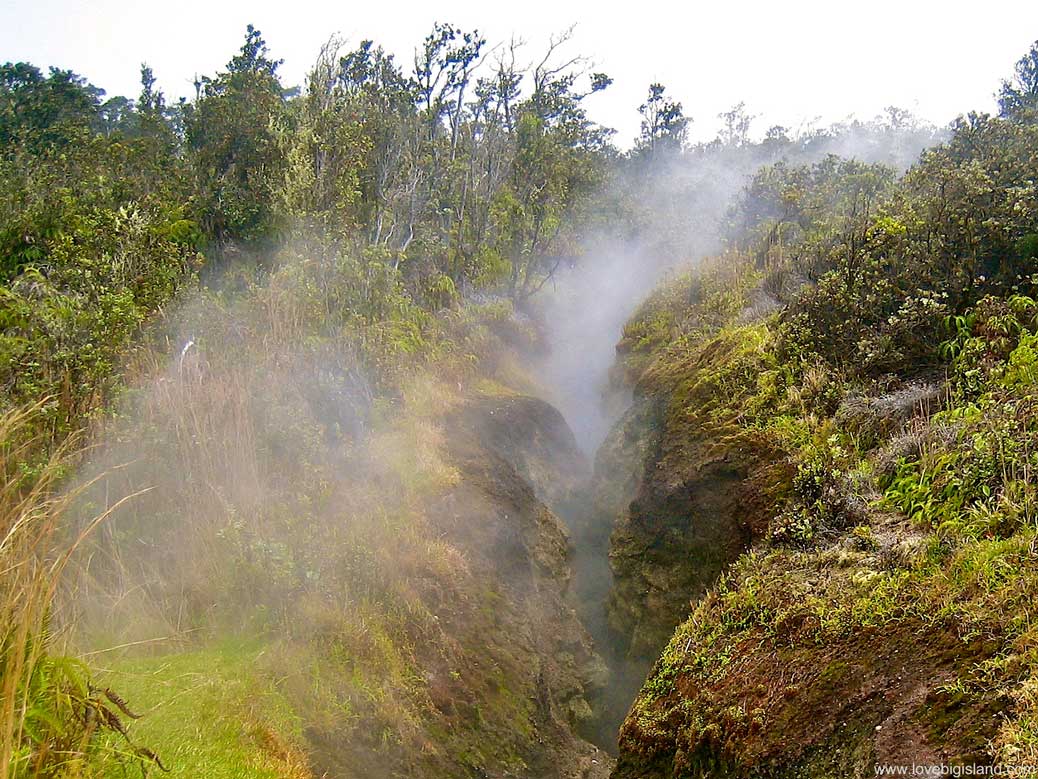
Steam vents at the Hawaiʻi Volcanoes National Park
Entrance fees for the Hawaiʻi Volcanoes National Park
General admission is $30.00 per private non-commercial vehicle, $25.00 per motorcycle, or $15.00 for pedestrians and cyclists. Keep the receipt: it is good for seven days of entry. An America the Beautiful annual pass covers entry here too, and the park sells them at $80.00 for residents and $250.00 for non-residents, with free versions for military, for holders of an Access pass, and for fourth-graders.
If you are staying longer in Hawaiʻi, look at the annual Hawaiʻi Tri-Park Pass ($55.00). It runs 12 months from the month you buy it and covers:
- The Hawaiʻi Volcanoes National Park (this page),
- The Puʻuhonua o Hōnaunau National Historical Park on the Big Island, and
- The Haleakalā National Park on Maui.
The Tri-Park pass admits the holder and spouse plus accompanying passengers in a single private, non-commercial vehicle. If you enter by other means (bike, on foot, Hele-On bus), it covers the purchaser and accompanying immediate family. The pass is not refundable or transferable.
Map of Hawaiʻi Volcanoes National Park
This map covers the summit area, where most first-time visitors spend their time. You can find larger maps of the full park and the island in the maps section of the national park website.
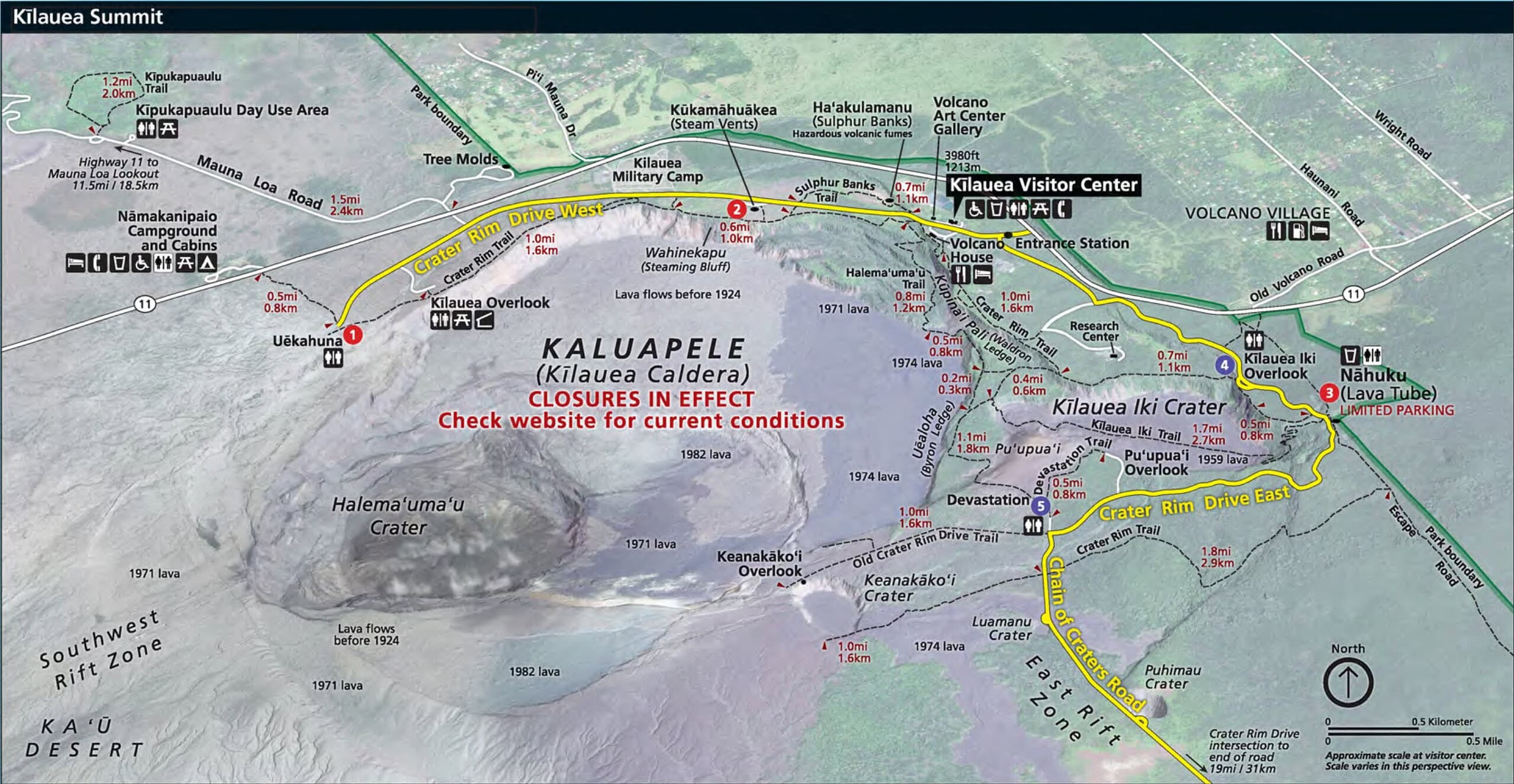
Map of the Hawaiʻi Volcanoes National Park Kīlauea summit region. June 2026.