
The Road to Hana is about 50 miles of two-lane highway through the wet, green east side of Maui: 620 turns, 59 one-lane bridges, and a drive that averages 25 mph on a good day. On a busy one, you’ll crawl. Budget a full day, not a half. In heavy rain the low stream crossings flood and the bridges turn slick, so if the forecast is wet, save the drive for a clear day and see our Maui rainy day activities guide instead.
The road passes waterfalls you can swim under, a bamboo forest, a 400-foot waterfall deep in Haleakalā National Park, taro farms, a lava tube, and a small village reshaped permanently by a 1946 tsunami. Three or four of these is a realistic day. Plan more and you spend the day driving, not stopping.
Table of contents
- Know before you go
- Popular stops and sights
- Lesser visited points of interest
- Things to do in Hana
- Tips for finding Road to Hana tours
Pick your route before you leave the hotel, out-and-back to Hana or the full loop past Kīpahulu, and decide whether Waiʻānapanapa State Park is on your list. Waiʻānapanapa needs an advance reservation you book before you leave home.
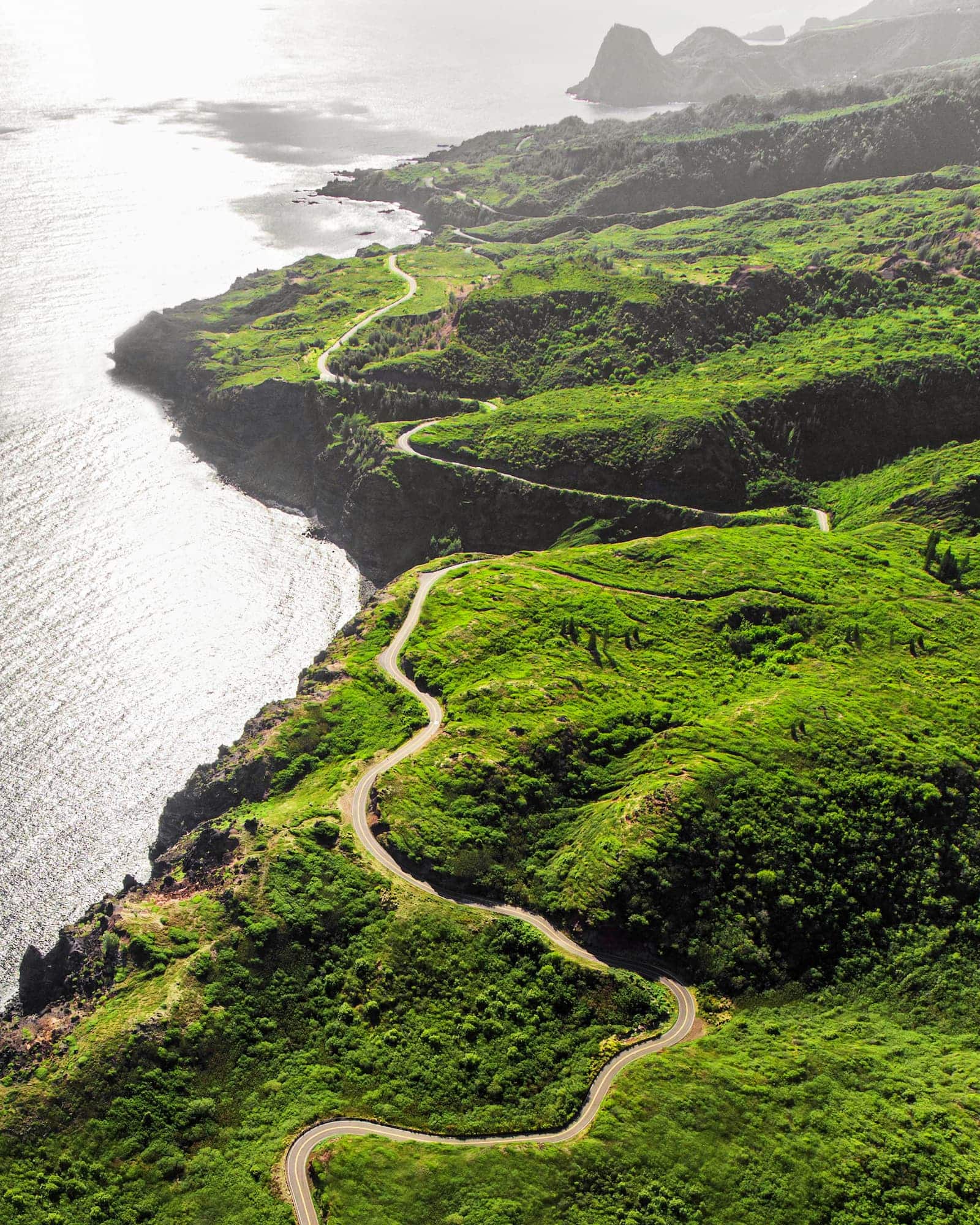
The Road to Hana runs along Hawaiʻi Routes 36 and 360, connecting Kahului to the town of Hana in east Maui. Image: Hawaii Tourism Authority (HTA) / Tommy Lundberg.
More scenic drives on Maui
The Hana Highway is one of several scenic drives on Maui. You can read about all 4 of them (the Road to Hana, the Haleakalā summit via the Haleakalā highway, Kahekili Highway, and Upcountry Maui) in our resource on road tripping in Maui.
Good to Know Before You Go
Leave Early, Pick Three or Four Stops, and Take Your Time
Between the points of interest, the pull-offs, the fruit stands, the trails, the waterfalls, and the town of Hana itself, you cannot see all of it in one day. People still try, making stop after stop and spending every ounce of daylight along the route.
If that is how you like to travel, go ahead. We would slow down.
- Gas: Fill up in Kahului before you leave. There is one gas station in Hana and it charges well above Maui prices. Pāʻia is the last town before Hana with fuel.
- Departure time: Leave Kahului by 7:30am. Twin Falls and other early stops get crowded by mid-morning and stay that way.
- Cell service: Coverage drops off past Haʻikū and stays unreliable for most of the drive. Download your navigation route offline before you leave your accommodation.
- Rental cars and the back road: Hana to Kīpahulu is paved highway. The trouble starts on the Piʻilani Highway past Kīpahulu, through Kaupō toward Kula: one lane for long stretches, with unpaved sections and low-water crossings. Rental agreements vary and several restrict it, so read yours before committing to the loop.
- Waiʻānapanapa reservations: day-use requires an advance reservation. Non-residents pay $5 per person plus $10 per vehicle; Hawaiʻi residents are free with a state ID, and children 3 and under are free. The park is open 7:00am to 6:00pm. Reservations fill quickly during peak season, so book before you leave home.
- Entry fees: Kaʻeleku Cave ($12 adults, temporarily closed), Kahanu Garden ($18 self-guided, $30 guided, weekdays only), Waiʻānapanapa ($5 per person + $10 per vehicle, reservation required), Haleakalā National Park ($30 per vehicle, valid 3 days and covering both the summit and Kīpahulu).
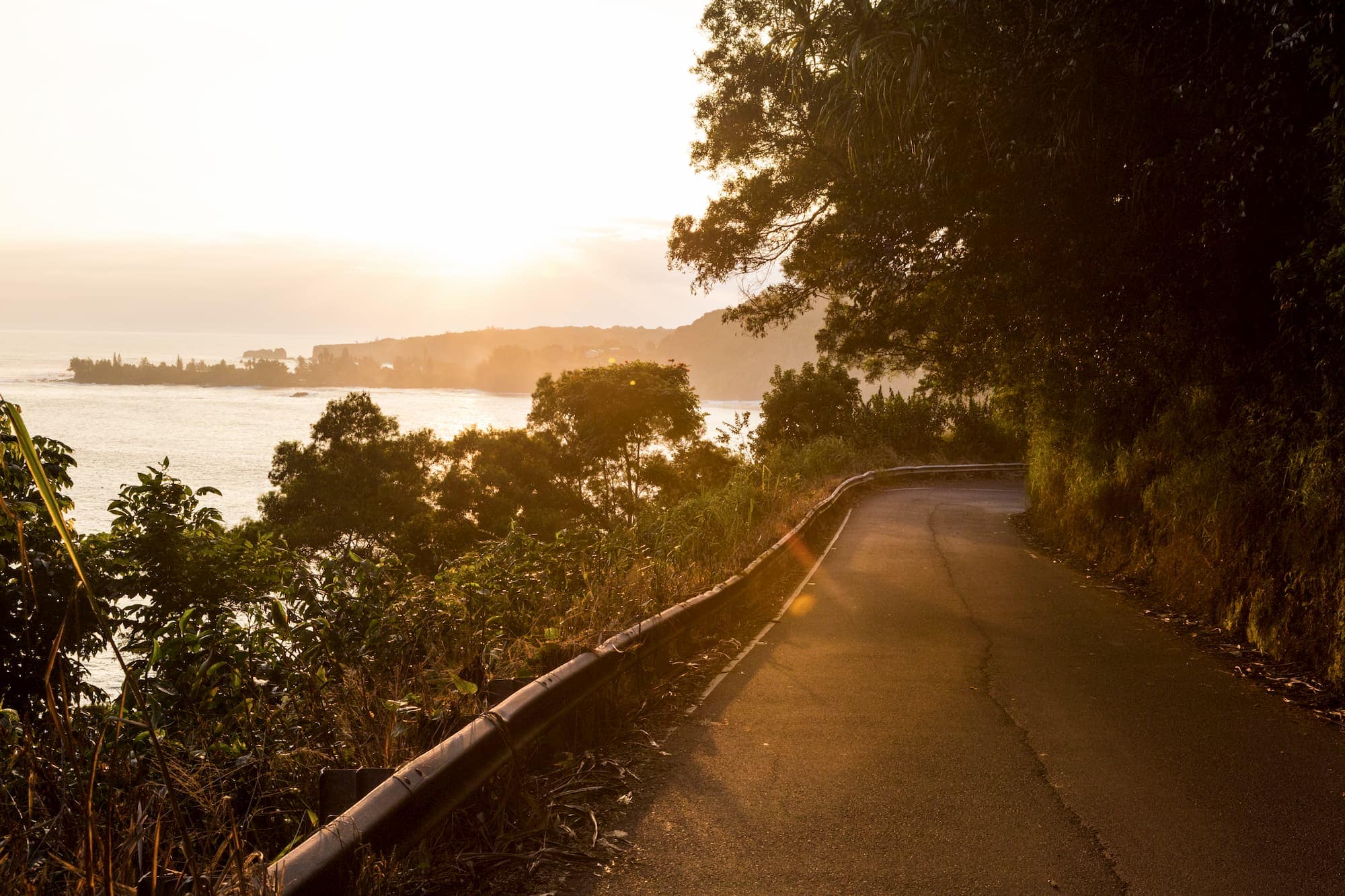
Leaving Kahului by 7:30am is the single best decision you can make about this drive. Credit: Hawaii Tourism Authority (HTA) / Tor Johnson
In theory you could fit in five, six, maybe even ten stops. It looks good on paper. The problem is how it plays out: parking lots fill and traffic slows to a crawl. Some stops are quick, others take an hour. The more you plan, the more pressure you put on yourself to do it all, and that mostly costs you the quality of each stop.
You end up checking spots off a list without getting to know any of them, and the stopping and starting brings on a wave of fatigue. The constant twisting and turning tires you out.
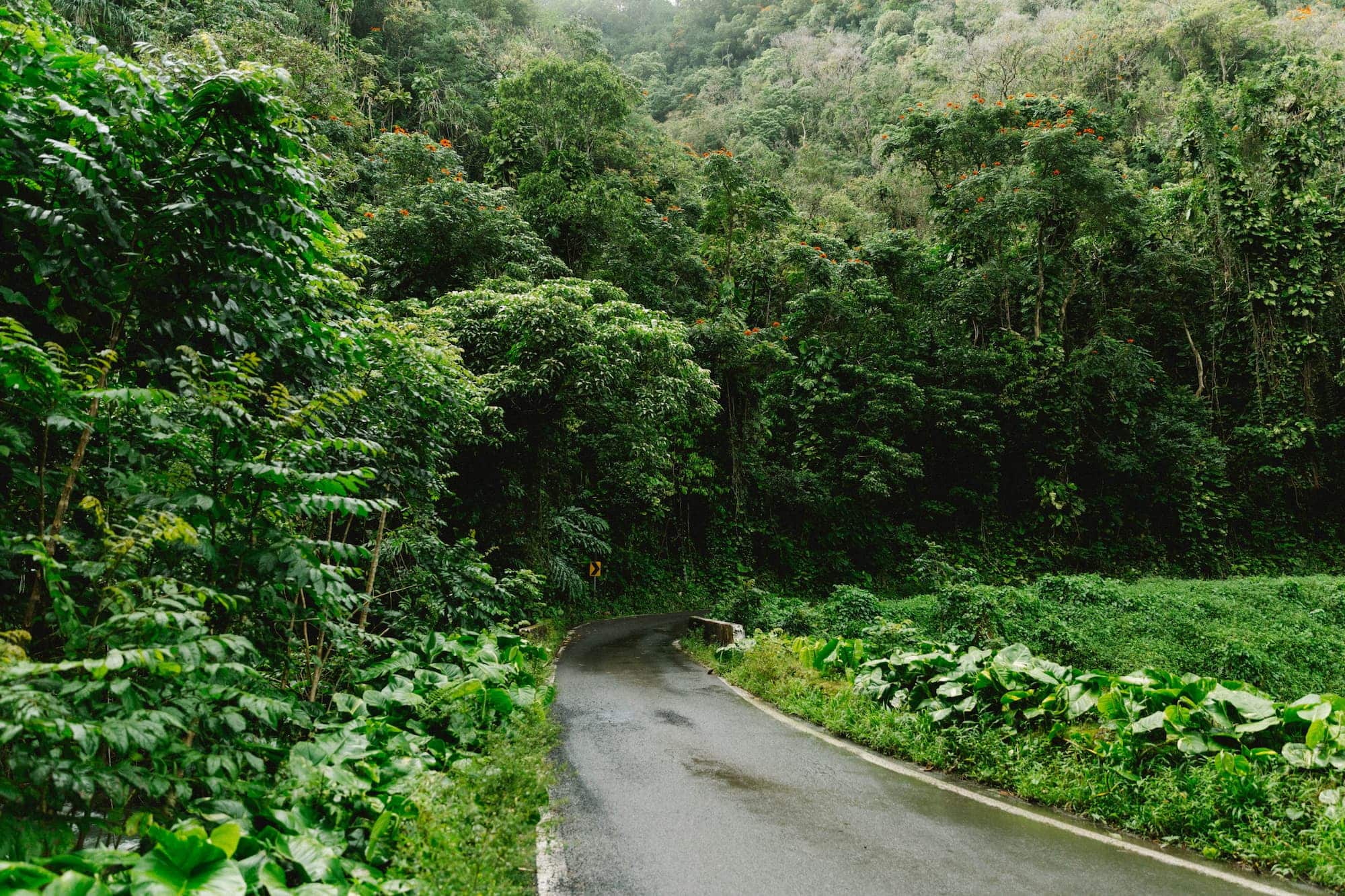
Take it easy and you get time to look at the forest the road runs through. Photo by Jordan McQueen on Unsplash
Pick three or four stops to target, with a couple of backups in case a place is already congested. Take your time, bring snacks, and don’t try to do too much. The drive can be a different experience every time, so make it early in your trip. If you love it, come back a few days later and do it again with new stops.
Letting someone else plan and drive is another way to take it easy. A guided tour runs eight to ten hours and costs from around $210; an audio guide is about $20 and leaves you driving.
The Route: 2 options
On a map the Road to Hana looks straightforward. It’s about 50 miles from Kahului to Hana, 35 of them past Mile Marker Zero where the route’s own mile markers begin.
It takes a full day. It’s a small two-lane country road with 620 turns and 59 one-lane bridges. Much of it runs slower than 25 mph, and at some points you’ll crawl in traffic or yield at a bridge.
It’s a start-and-stop drive, with pull-offs and points of interest the whole way. Cars are constantly turning on and off the road, and if you’re not one of them you’re missing the reason to come. Budget an entire day, with relaxation and patience in mind.
There are two options for completing the Road to Hana.
- Kahului-Hana-Kahului: Wherever you begin the day, you’ll drive through Kahului and start from there, running along the Hana Highway through Pāʻia and past Hoʻokipa. From there you reach the official Mile Marker Zero, and then it’s 35 miles to the town of Hana. Once you reach Hana, you turn around and come back the way you came.
- Kahului-Hana-Kīpahulu-Kula: The outbound drive is the same. Instead of turning around, you continue 12 miles past Hana on paved highway to the Kīpahulu District of Haleakalā National Park, then carry on around the back of the mountain on the Piʻilani Highway to the much drier south shore, eventually reaching the upcountry town of Kula. Check your rental agreement before you commit to the loop: several restrict the Piʻilani Highway.
| Out-and-back (Kahului to Hana and back) | Full loop (Kahului, Hana, Kīpahulu, Kula) | |
|---|---|---|
| Time added | Baseline | 2+ hours extra |
| Key addition | None | Kīpahulu District, Pīpīwai Trail |
| Rental car restriction | No restriction | Several agreements restrict the Piʻilani Highway past Kīpahulu |
| Road condition | Paved throughout | Paved to Kīpahulu, then one lane with unpaved sections toward Kaupō |
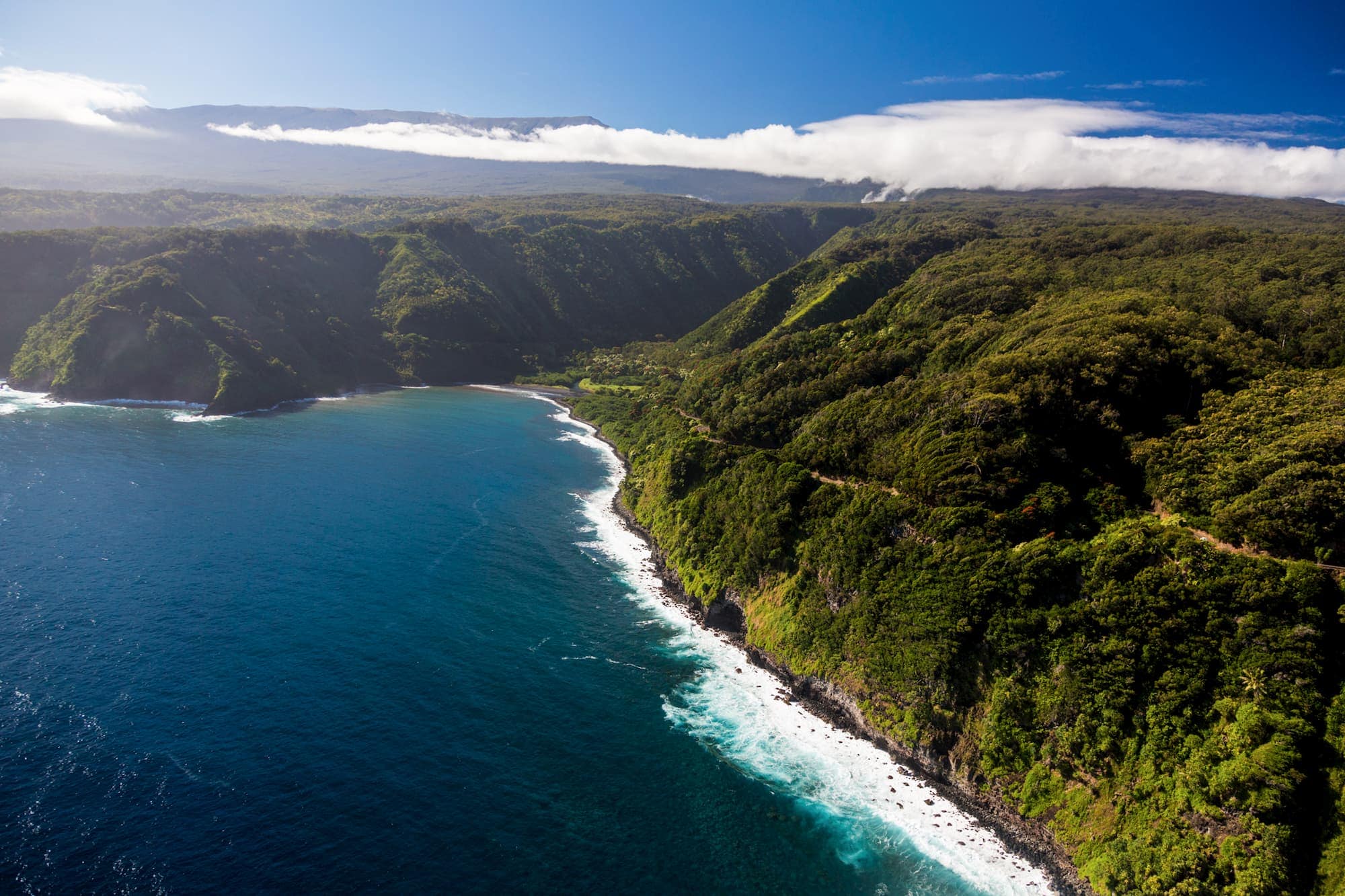
Both route options include the Hana highway, part of which is shown here. Hawaii Tourism Authority (HTA) / Tor Johnson
Driving Through Residents’ Home: What That Means
There are plenty of places to stop along the Road to Hana. When you do, think about the people who live there. Residents along the Hana Highway have been hit hard by illegal parking, trespassing on private property, and overcrowding. This area is home, so please keep the following in mind:
- Be sure to park in designated areas only, and if it’s too full or crowded, come back later or choose a different stop.
- Be kind and courteous to local volunteers who patrol the area to help manage crowds.
Residents have watched this get worse every year, so treat a full pull-off as closed and drive on.
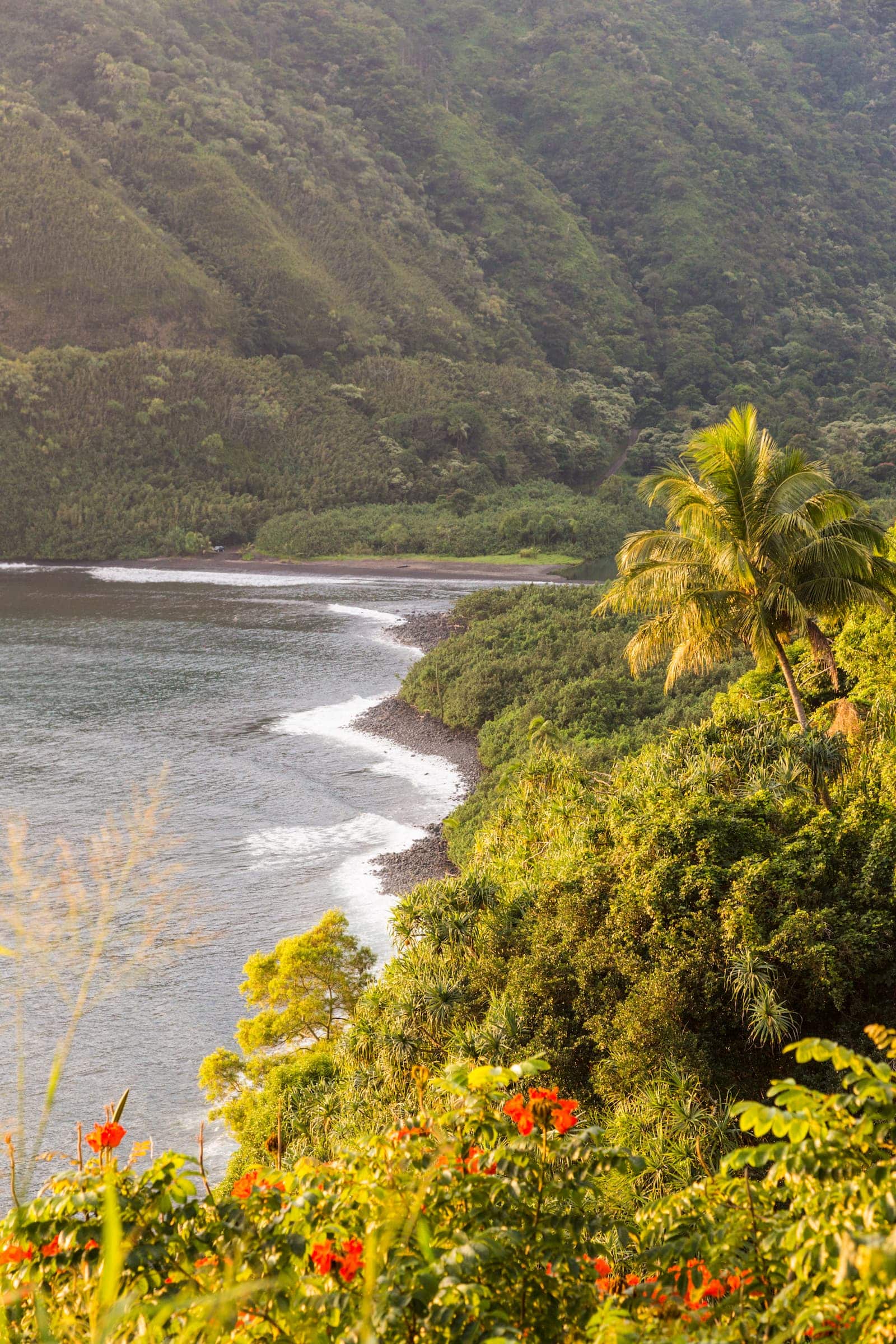
A small bay hidden in the mountainside along the Road to Hana on Maui. Credit: Hawaii Tourism Authority (HTA) / Tor Johnson
Leave Enough Daylight for the Drive Back
Almost everything written about this road covers the way out. The return leg is unlit and you are already tired. You have been driving and stopping for six or eight hours, and you drive the same turns back, blind after dark.
Turn around from your furthest stop with enough daylight to get back. If you are running late, Hana has accommodation, and the drive is better in the morning than in the dark.
Popular Stops on the Road to Hana
These are the established, popular places along the Road to Hana. They get crowded, and they are still worth your time.
Fruit Stands
Location: Various
Description: There are too many to list, and their hours vary, so keep an eye out for fruit stands along the Road to Hana selling fruit, smoothies, breads, and other local treats.
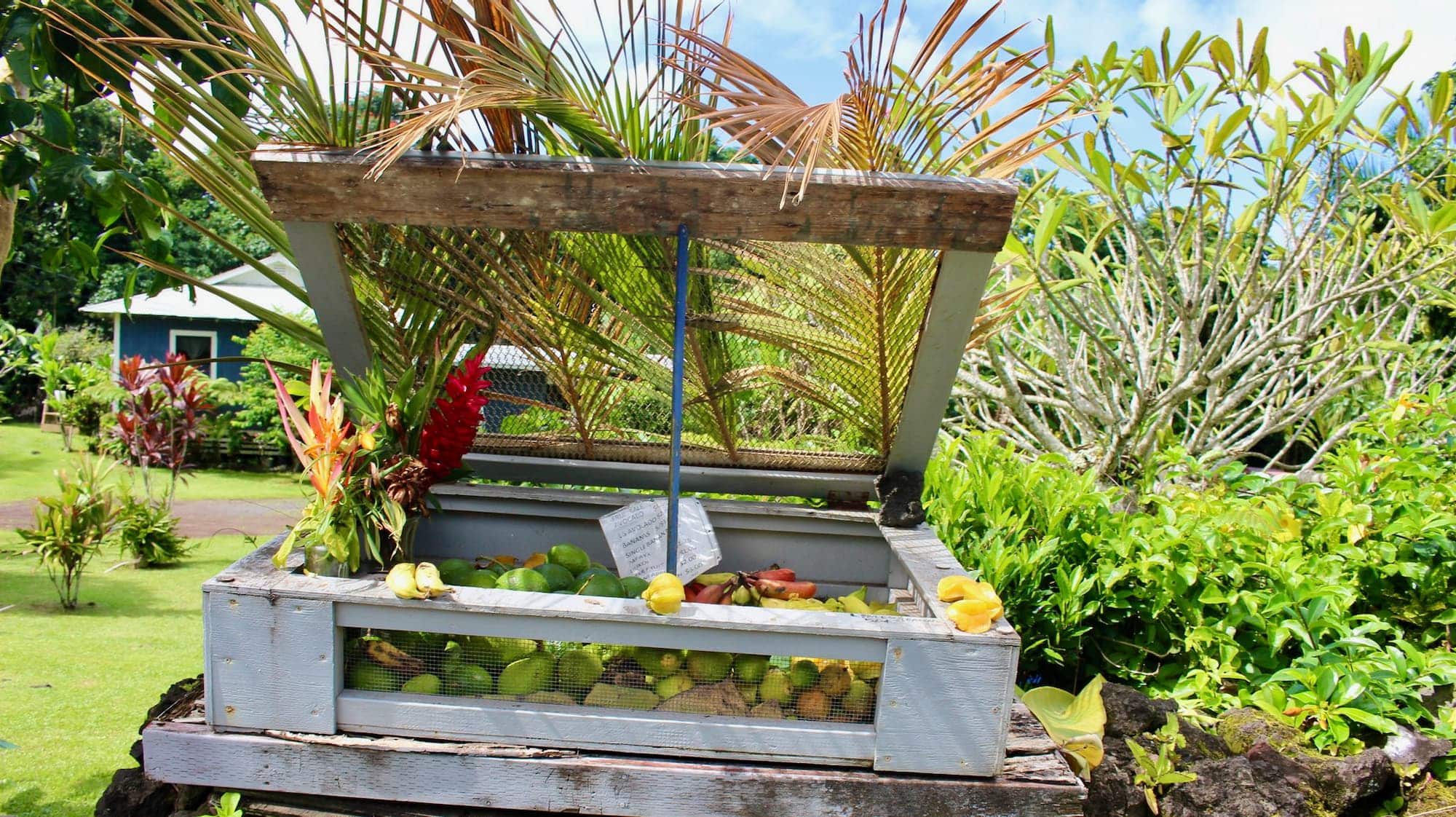
Fruit stands along the Road to Hana come in all sizes and shapes. Image credit: Amy Meredith, source.
Bridge Crossings
Location: Various
Description: Expect cars stopped at bridge crossings, because water falls below a lot of them. It adds to the congestion, and the drops are narrow green valleys with water running through. If you decide to stop, park out of the way, and skip any bridge that is already crowded.
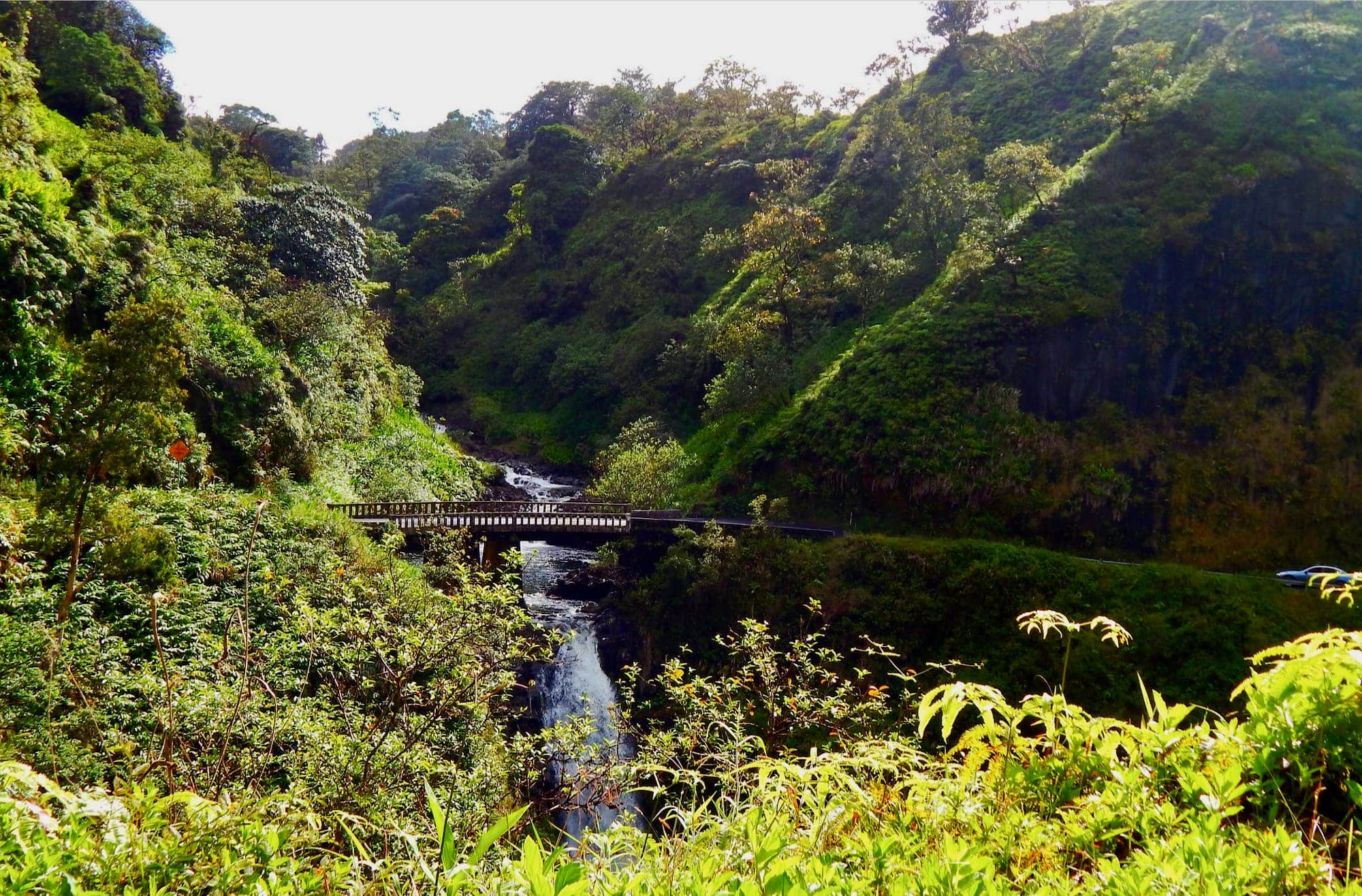
One of the many one-lane bridges and waterfalls on the road to Hana. Image credit: Forest and Kim, source.
Twin Falls
Location: Mile Marker 2
Time needed: 45-60 min including hike.
Description: The first easily accessible waterfall on the Hana Highway, and one of the most popular as a result. The appeal is a wide, circular swimming pool at the base of a 15-foot waterfall, three quarters of a mile in on foot. It is usually packed, but the pool is wide enough to find a spot, and the hike-and-swim combination works well for families with small children.
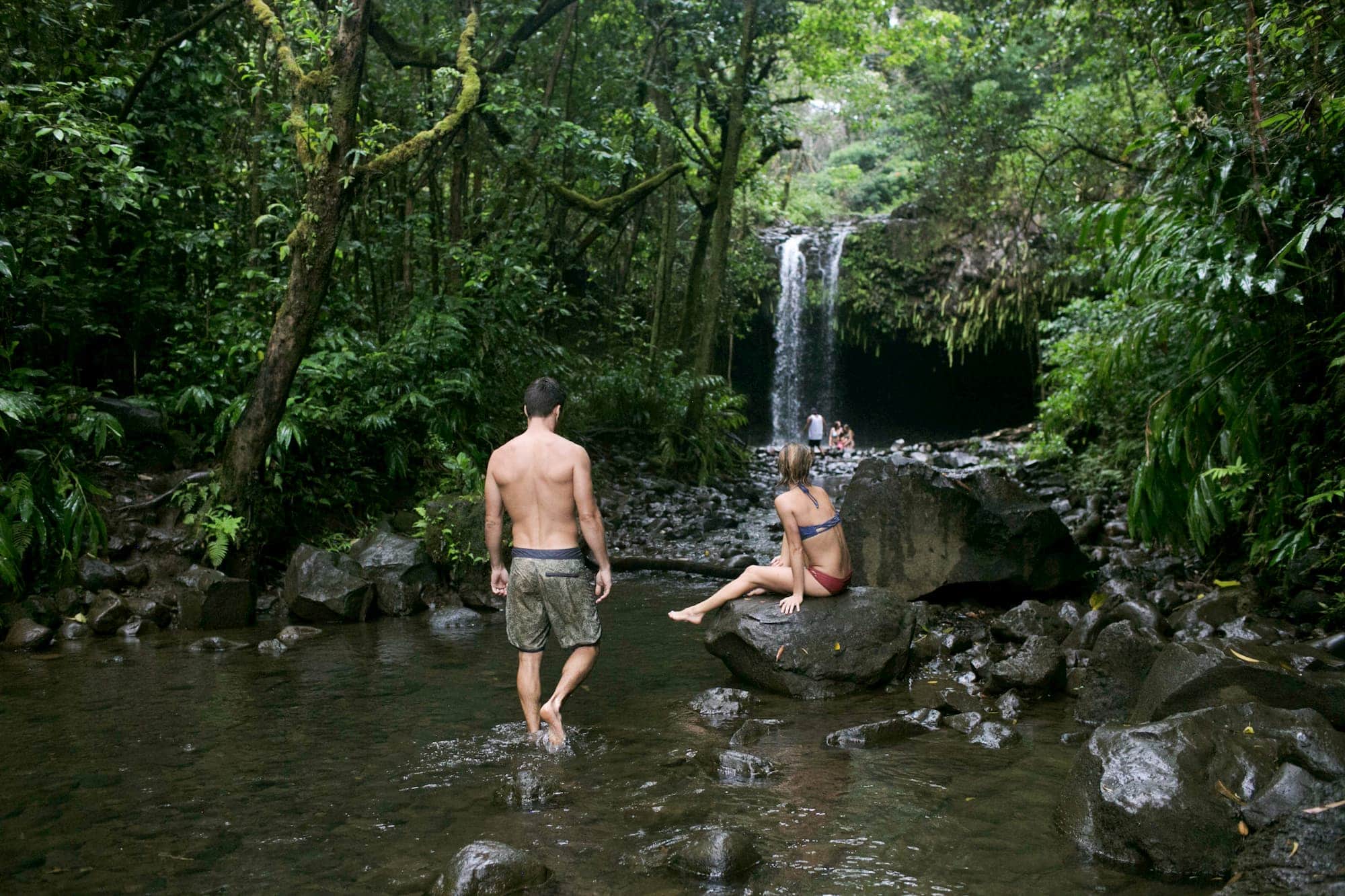
Bring a towel and wear swim gear when hiking to the Twin Falls. Credit: Hawaii Tourism Authority (HTA)
Kaumahina State Wayside Park
Location: Mile Marker 12
Time needed: 15-20 min
Description: Kaumahina is the first state park on the road, and the first stop with restrooms, so most people pull in for a bathroom break. Don’t be in such a rush. This 8-acre park has wide views of the eastern coast, plenty of shade, picnic tables, and walking paths. If you drive to Hana and back the same way, this works well as a final stop on the way home.
Upper Waikani Falls (aka Three Bears)
Location: Mile Marker 19
Time needed: 10-15 min
Description: Also known as Three Bears, this spot has three side-by-side 70-foot waterfalls.
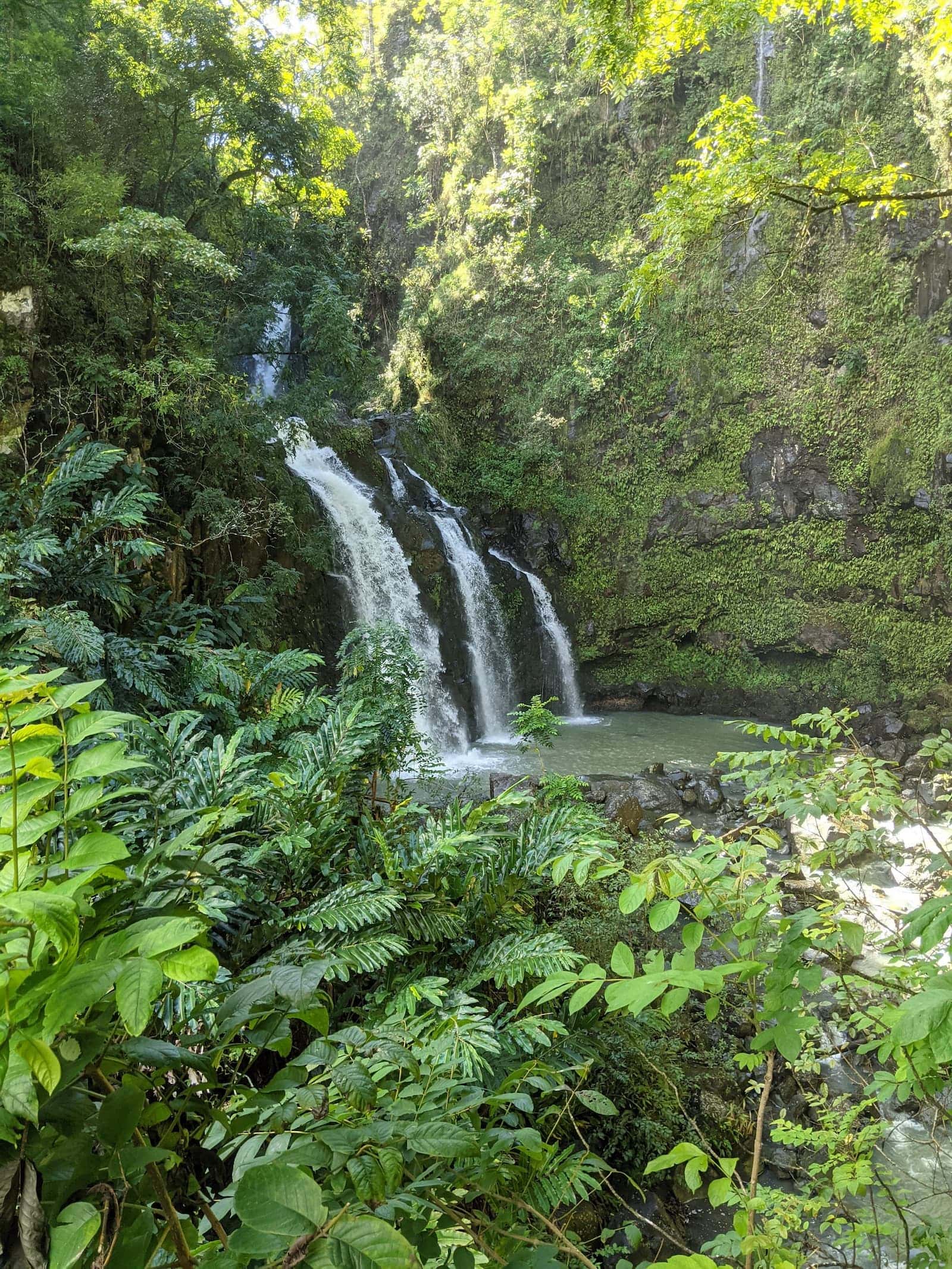
The Upper Waikani Falls are a popular stop on the Road to Hana because they are photogenic and sit right off the road. Photo by Kevin Barasa on Unsplash
Puaʻa Kaʻa State Wayside Park
Location: Mile Marker 22
Time needed: 20-30 min
Description: A busy stop where you can take a quick bathroom break and then swim in a waterfall pool. Picnic tables are there if you want to stay longer, but most people come and go in under thirty minutes.
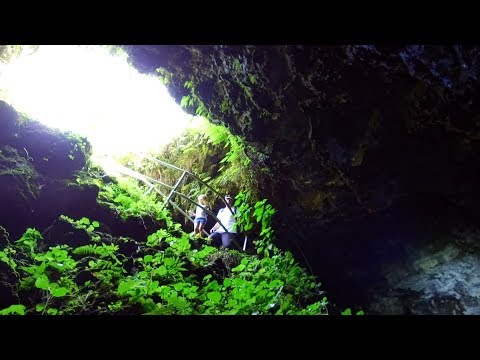
Kaʻeleku Cave (Hana Lava Tube)
Location: Mile Marker 31
Time needed: 45-60 min
Currently closed. The operator reports the cave is temporarily closed by the government, with no reopening date, while an archaeological survey of the cave is scheduled. Treat the rest of this entry as background for when it reopens, and check mauicave.com before you count on a visit.
Description: This stop lets you walk through a lava tube. Even with an entry fee ($12 for adults) and no waterfall attached, it has become a well-established stop, with bathrooms and a maze for children.
Tip: You’ll want close-toed shoes for this one.
Kīpahulu District of Haleakalā National Park
Location: 12 miles past Hana on the Hana Highway.
Time needed: 3-4 hours
Description: Our guide to Haleakalā National Park covers the whole park. What to do in the Kīpahulu District:
The Pīpīwai Trail is the main reason to stop here. It’s 4 miles round trip from the visitor center with about 800 feet of elevation change, and the first stretch runs through a bamboo forest dense enough to block the sky. Past the bamboo, the trail opens into a grassy plateau before the landscape closes in again at the base of Waimoku Falls, which drops 400 feet off a basalt cliff.
The trail is often muddy: Kīpahulu is in a rainforest. Plan 2 to 3 hours for the round trip, not counting time at the falls.
The Pools of ʻOheʻo are a series of tiered freshwater pools stepping down from the Kīpahulu Valley toward the ocean. You cannot swim in them. The National Park Service has closed the pools themselves over a range of safety concerns: you can look but not go in. This is a standing closure rather than the old weather-dependent one, so do not plan a day around a swim here. You can still see them: the half-mile Kūloa Point Trail from the visitor center reaches the viewpoints, and the lower pools spill straight into the surf.
The Kīpahulu campground is the best reason to stay overnight out here, because you get the area to yourself once the day-trippers clear out in the late afternoon. Sites are $20 a night with a three-night maximum, reserved through Recreation.gov on a 30-day rolling basis.
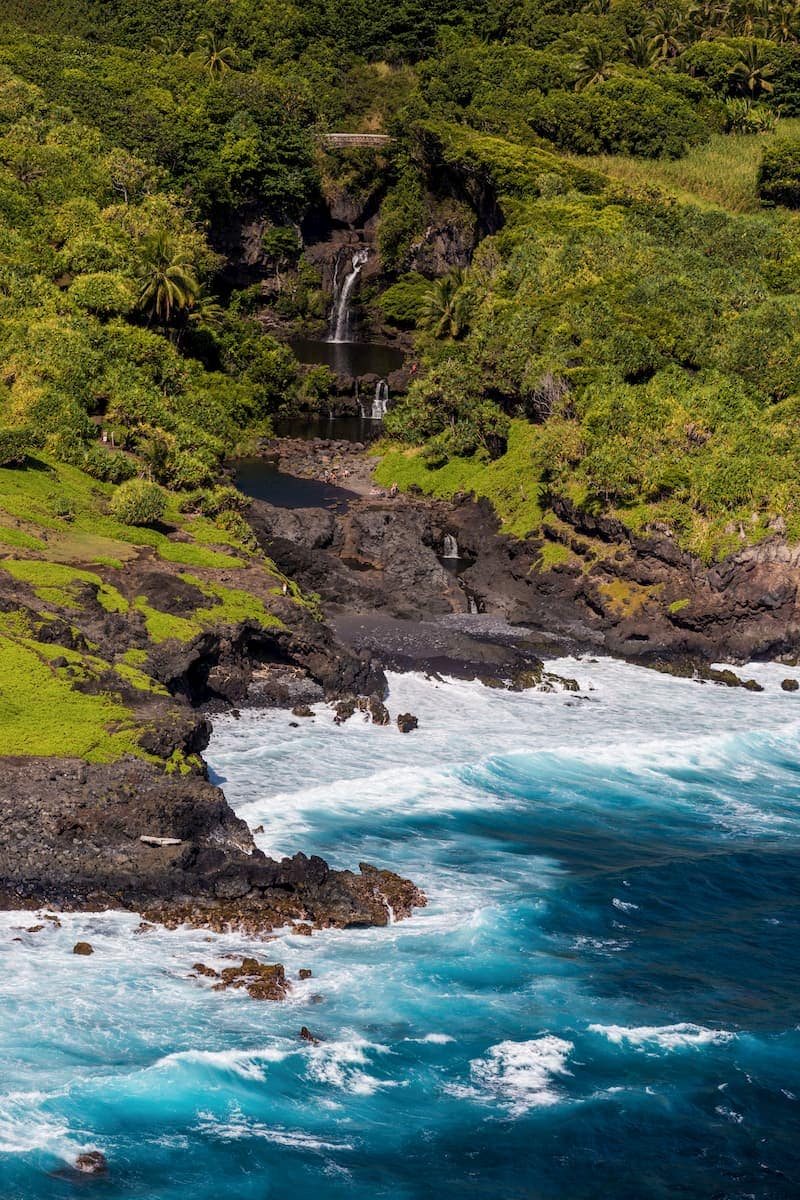
The Pools of ʻOheʻo running into the ocean. They are closed to swimming, and viewable from the Kūloa Point Trail. Credit: Hawaii Tourism Authority (HTA) / Tor Johnson
Less-Visited Stops Worth the Detour
There aren’t many publicly accessible secrets left on the Road to Hana, and you’ll meet other people wherever you go. The stops below draw smaller crowds, mostly because they have no waterfall or because they charge to get in. All of them are still easy to reach and still on the map.
Rainbow Eucalyptus Grove
Location: Mile Marker 7
Description: This grove is not marked by any sign, so it’s easy to miss. On the Ma Kai side (ocean side) of mile marker 7 is a small stand of rainbow eucalyptus, whose trunks peel into streaks of green, orange and purple. Be careful about where you pull over here.
Waikamoi Ridge Trail
Location: Mile Marker 9.5
Description: This small two-loop trail takes under an hour and runs through eucalyptus, kukui nut, bamboo and more tropical plants than you can count. It stays quiet: it doesn’t lead to a waterfall, people driving the Road to Hana fixate on waterfalls, and it is usually muddy. We rate it anyway as a walk through dense Hawaiian rainforest. Bring a towel for your shoes.
Keʻanae Peninsula
Location: Mile Marker 16.5
Time needed: 20-30 min
Description: A small working village most drivers pass without slowing down. The April Fools’ Day tsunami of 1946 struck the peninsula and killed 24 people. A stone church built in 1856 is one of the few buildings that survived, and most of the peninsula today is a working farm for taro and other crops. The end of the peninsula has room to spread out and is a good place to sit for a while, and hardly anyone walks the whole way out.
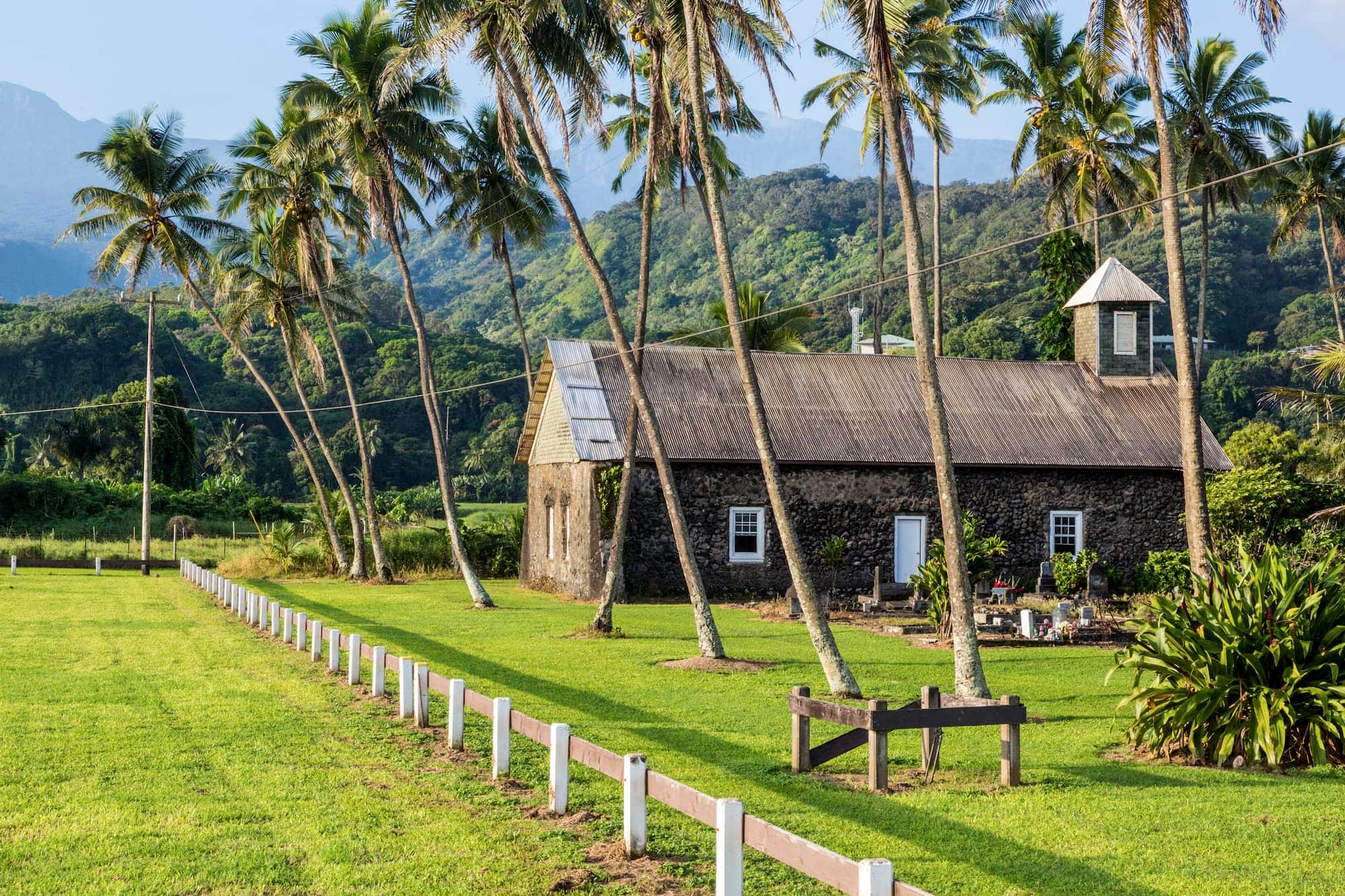
On your drive down the peninsula you’ll pass a stone church built in 1856, one of the few buildings left standing after the 1946 tsunami. Credit: Hawaii Tourism Authority (HTA) / Tor Johnson
Kahanu Garden
Location: Mile Marker 31
Time needed: 1 hour self-guided, 2 hours guided
Description: An established botanical garden that stays quiet most days, partly because of the $18 entry fee and partly because most drivers are trying to hit as many stops as possible and this one takes one to two hours. Kahanu tells the history of the area and its settlers, and holds a restored Hawaiian heiau (temple).
Check the days before you plan around it: the garden opens Monday to Friday only, 9am to 3pm, and the guided tour ($30, 2 hours) runs on Friday mornings at 9:30 only. Children 12 and under are free, and kamaʻāina pay $10 with a state ID.
Things to Do in Hana
A lot of people treat the Road to Hana as the drive alone and spend no time in Hana itself, turning around or carrying on to Kīpahulu. In our book that’s a mistake. Spend some time in the area, visit the local beaches, and eat at a local restaurant or food truck.
Beach Parks
Here’s a list of beach parks to check out in Hana.
Waiʻānapanapa State Park: This black-sand and black-rock beach is the largest beach park in the area and a local favorite for fishing, barbecuing, and hanging out. Day-use needs an advance reservation: $5 per person plus $10 per vehicle, booked before you fly.
Koki Beach Park: People come for the red sand and the surf break. Don’t swim here. The currents that draw the surfers are too strong for it. It’s a good place to sit and watch.
Kaihalulu Beach: Another famous red-sand beach in Hana. Reaching it takes a short but slippery and steep hike along the coast, over roots and unmaintained trail. Note: visiting this beach is controversial with locals because the trail crosses private property. You will see others doing it. We recommend Koki instead, out of respect for the residents.
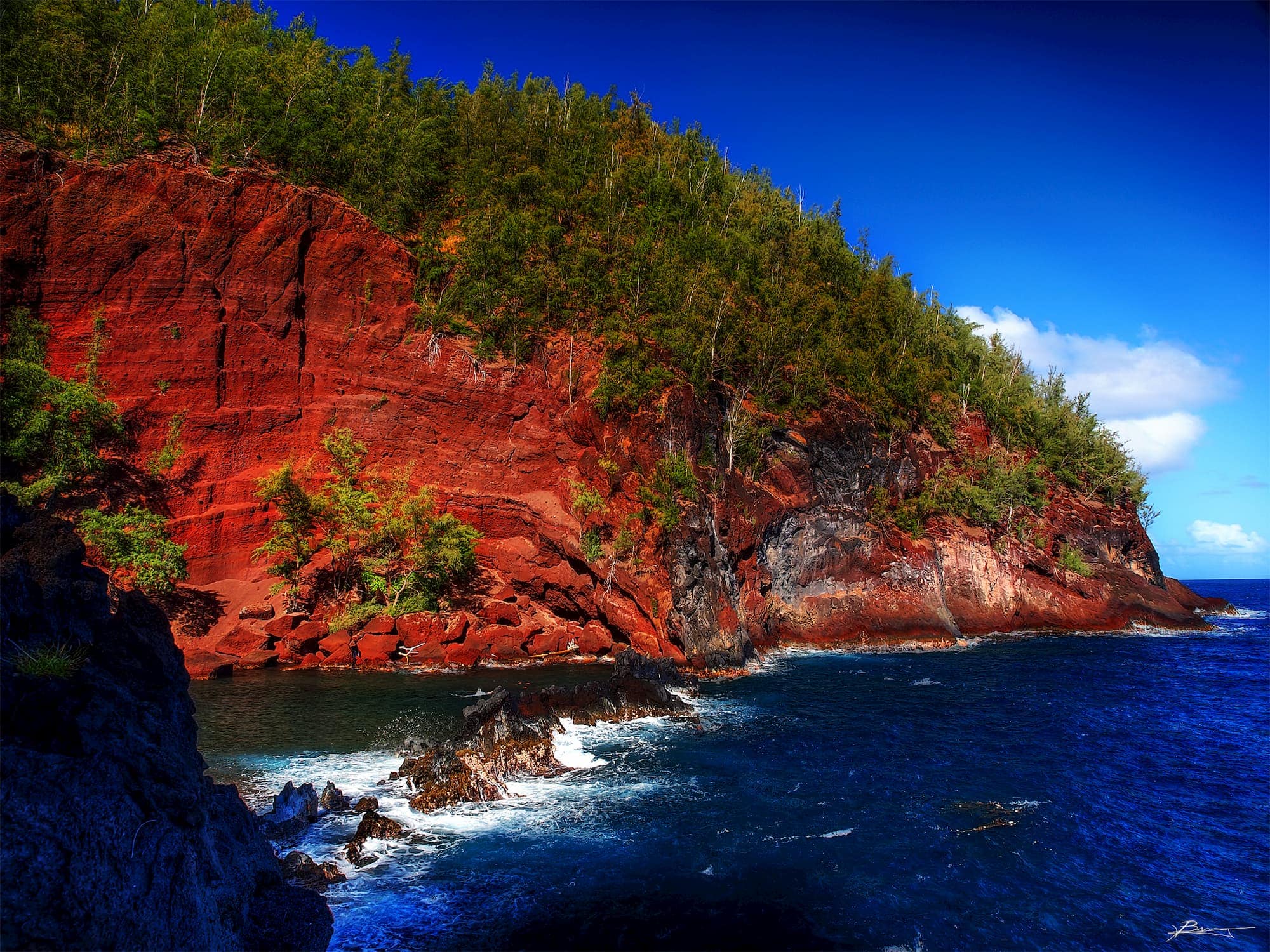
Crescent-shaped Kaihalulu (red sand) beach is cut deep into the Kaʻuiki Head cinder cone, whose rust-red lava supplies the beach with red sand. Image credit: Paul Bica, source.
Hāmoa Beach: A crescent of sand backed by low green cliffs, with room to spread out. When it’s calm, swimming and snorkeling both work, and the break draws bodyboarders and surfers. Read the water before you go in: the same break that makes it good for surfing produces shore break and strong currents when there is any swell, and there is no lifeguard.
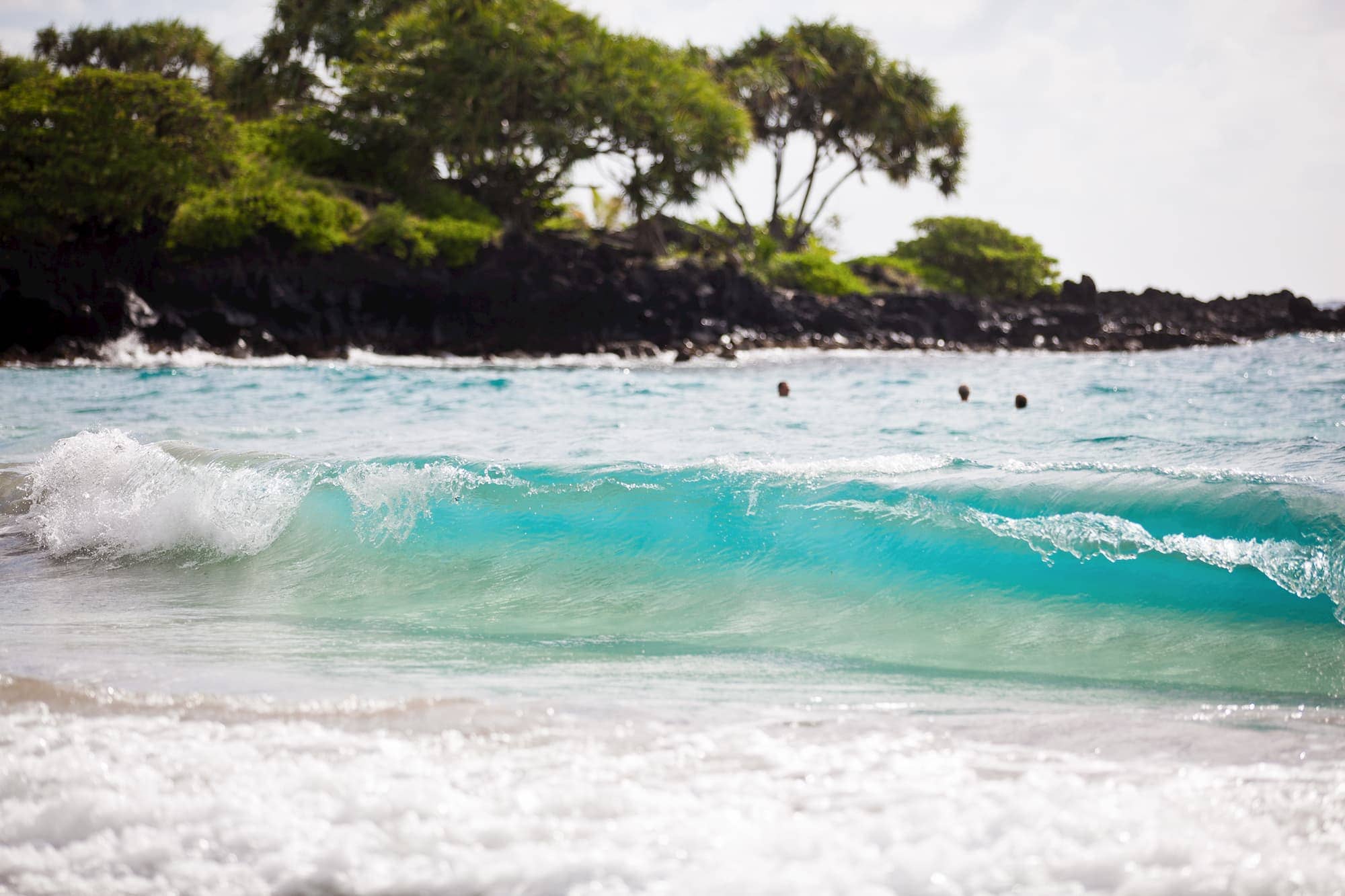
Hāmoa Beach is a surf spot as much as a swimming beach, with clear water, sizeable waves at times, and strong currents. Credit: Hawaii Tourism Authority/Tor Johnson
Accommodations
One way to beat the fatigue of the drive is to split it over two days with an overnight in Hana. You’ll see more, and get a better feel for the area. Here are some places we recommend.
- Hana-Maui Resort: this resort has changed ownership several times and now runs as part of the Destination by Hyatt collection. Whoever owns it, it is still the most comfortable place to stay in Hana, on a sloping hillside that gives many of the rooms and the pool a long view.
- Ala Kukui Retreat Center: Ala Kukui has a studio apartment for rent. It sits above the retreat’s yoga studio in a green valley, with quiet grounds and tropical gardens, and a Hawaiian cultural program. Ask for a rate by email.
- Waiʻānapanapa State Park Campground and Cabins: the best rustic option in Hana, with a campground and cabins near the black-sand shore. Campsites run $30 a night for non-residents and cabins $100, both by advance reservation, and cabins must be booked at least 7 days ahead.
Read more in our complete accommodation guide for Maui.
Vacation Rentals and Condos
There are various inns, vacation rentals, and condos in Hana. You can find them on Airbnb and similar websites.
Food
You’ll find small fruit and food stands along the Road to Hana, but for a proper restaurant, plan on one of these in the town of Hana.
- Hana Ranch Restaurant: the full-service option, with a bar, now run as the signature restaurant of the Hana-Maui Resort. Lunch and dinner run 11:00am to 9:00pm, with happy hour from 2 to 4 and a takeout window open 7:00 to 11:00am. Try the Hana burger, made with beef from Hana Ranch, the working cattle ranch it is named for, or an island standard like poke or kalua pork.
- Da Fish Shack: a food truck serving a mix of seafood using local fish. The classics are the fish burger and the fish tacos.
- Ae’s Thai Kitchen: Hawaiʻi is full of Asian food and this truck serves solid Thai. Try the shrimp pad Thai or, on a rainy day, one of the house-made curries.
- Troy’s Plate Lunch: Troy goes fishing each week and sells his catch at his food truck, alongside chicken and pork plate lunch options.
Hana is a small town and its food trucks keep their own hours, so check before you build a day around one.
Road to Hana Tour Options
One way to skip the need to self-drive and the job of choosing between stops is to take a tour, such as the ones run by this local family:
Road to Hāna, Hawaiian Style
A native Hawaiian family from Hana guides groups of up to 12 through the Road to Hana, with stops at the black sand beach, a waterfall swim, and fresh banana bread at Aunty Sandy's.
from:
$210
What is a suggested tour?Our suggested tours are hand-picked tours that receive consistent good reviews, give back to the community, and work hard to minimize their impact on the environment. Read more about these tours on our website.Plenty of companies run tours along the Road to Hana, so here’s what to weigh:
- Choose a small-group tour (12 people or less). You get a more personal trip, and it cuts the impact on the road, since bigger buses take up more parking.
- Ask about the van. Does it have large windows? Is it climate controlled? It’s a winding drive, so comfort counts.
- Ask about the planned stops. Different companies stop at different places. Some are more adventurous than others.
- If you’re at a resort, ask the activity desk. Operators run desk-only rates that don’t show up online.
- Consider the time commitment. Many tours run all day, eight to ten hours. Driving yourself, you control the timing and when you head home. On a tour, you don’t.
Road to Hana Audio tours
Audio tours sit between a fully DIY trip and a guided one. They cost about $20, track your position by GPS, and tell you about the stops and viewpoints as you reach them, along with local history and Hawaiian culture. See for example this audio guide ($19.99), which covers 32 stops on the loop route and is built for a full day of driving.