
As of September 2026, Kīlauea has erupted in more than 50 episodes since December 2024, and the Big Island is the only Hawaiian island where that’s true. Pick the Big Island for volcanoes and variety of landscapes, and Kauaʻi for white-sand beaches and the Nāpali Coast. Kauaʻi’s Hanalei and Poʻipū beat any beach on the Big Island.
If you’re picking one island for a single trip, trip length settles it in most cases: the Big Island needs 7 days and a rental car, since Kona to Hilo alone is a 1.5 to 2 hour drive, while 4 days is enough for Kauaʻi. Kauaʻi’s surf turns rough in winter, so plan beach-heavy trips for summer. Hāʻena State Park, the Nāpali trailhead, releases parking reservations 30 days ahead, so set a reminder.
Table of contents
For more island matchups see: Maui vs. Oʻahu, the Big Island vs. Oʻahu, Maui vs. the Big Island, Kauaʻi vs. Maui, and Kauaʻi vs Oʻahu.
Money-saving and trip-enhancing trip planning tips
With life getting so expensive it makes sense to save as much money on your trip as you can. These resources help you to save money (#1), to book the best tours and activities (#2), and greatly simplify trip planning (#3 + #4):
- The Discount Hawaii Car Rentals website is our first stop for a quote when we need a rental car. We like them (a) because they offer the BEST rates, (b) require no prepayment and charge no cancellation fees, and (c) because they offer additional benefits such as free extra drivers and reduced young driver rates.
- We put a LOT of effort in figuring out which tours actually are the best. Have a look at our curated tour section to see tours that get consitently good reviews *and* offer great value.
- Did you know we are giving away free itineraries for all Hawaiian islands? These are a great place to start planing your own trip.
- Our Trip Planning 101 Guide is a another GREAT place to start planning for 1st time visitors.
Big Island and Kauaʻi in a Nutshell
With 11 days or more you can stop choosing: that covers the Big Island’s 7-day minimum plus Kauaʻi’s 4.
The Big Island
The Big Island has eight of the world’s thirteen climate zones. Mauna Kea’s snowy summit sits at 13,796 feet while beaches of black and even green sand sit at sea level. If you want volcanoes, nature, and open space, the Big Island has more than you can cover in a single trip.
Recommended minimum stay: 7 days
Good to know for the Big Island: The Big Island is big, and having a rental car is essential to cover the distances between stops. For example, it’s a 1.5 to 2 hour drive between Kona and Hilo. Plan on drives of up to an hour most days, and consider moving hotels partway through the trip. For a trip over Thanksgiving or the Christmas holidays, book the car the day you book the flights: the Big Island’s rental fleet sells out in those weeks, and restaurant reservations go early too. Also, an eruption sighting is never guaranteed: Kīlauea’s recent activity comes in episodes, with pauses in between.
Three things to plan first: The manta ray night snorkel (or dive) in Kona; A visit to Kīlauea and Halemaʻumaʻu Crater in Hawaiʻi Volcanoes National Park; Stargazing at the visitor center on Mauna Kea.
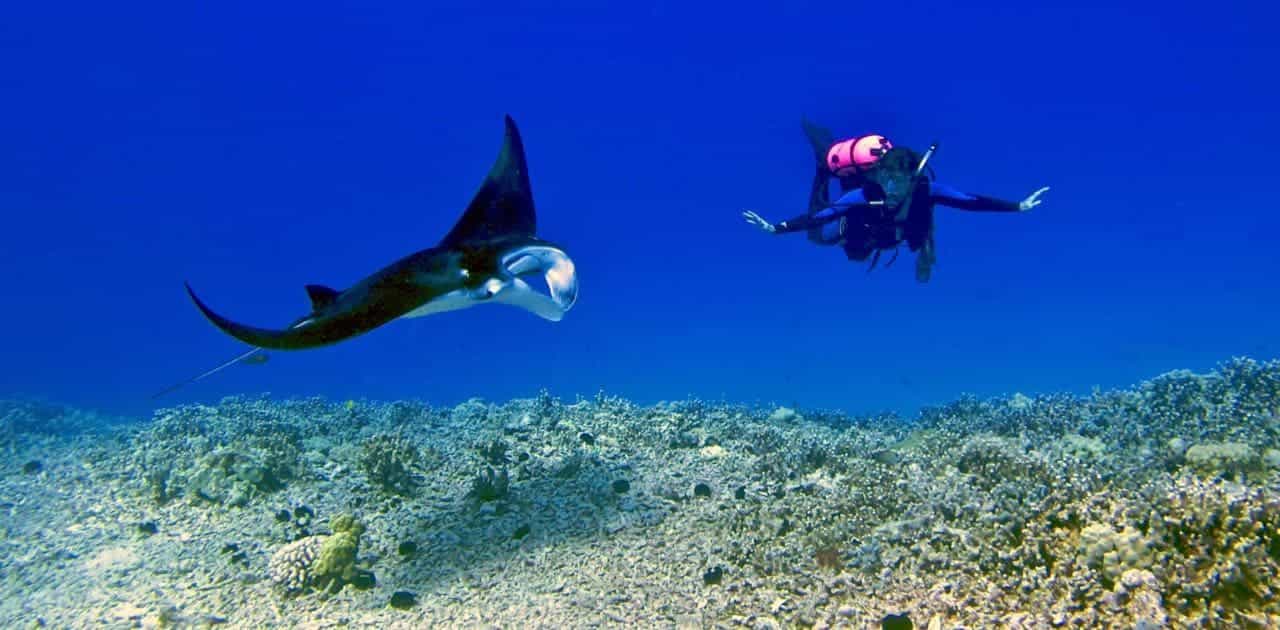
A female scuba diver swims with a young male manta ray in the Kona district / Big Island. By Steve Dunleavy from Lake Tahoe, NV, United States – Nick and Isabelle, Kona Hawaii, CC BY 2.0, Link
Kauaʻi
Kauaʻi is small, and its scenery is the most dramatic of any Hawaiian island. For decades it drew travelers looking for a laid-back alternative to Oʻahu and Maui; today it is a mainstream destination.
Nicknamed “The Garden Island,” Kauaʻi is made up of small communities and lots of farm and ranch land. Much of the island is preserved (see our overview of Kauaʻi’s sights and destinations). Its two main natural attractions are the Nāpali Coast on the north shore and Waimea Canyon on the west side; between them is a green interior with a network of hiking trails.
Recommended minimum stay: 4 days
Good to know for Kauaʻi: Kauaʻi gets a lot of rain, and in winter the water turns rough around much of the island; summer is the safer bet if beach time is the point of the trip. Plan on a rental car here too: one main road serves the island and ends on both sides of the Nāpali Coast, so there is no loop drive.
Three things to plan first: A hike to Hanakāpīʻai Falls on the Nāpali Coast (non-resident Hāʻena State Park reservation: $5 per person plus $20 per car); Beginner surfing in Hanalei Bay; A day hike in Waimea Canyon ($5 per person plus $10 parking for non-residents).
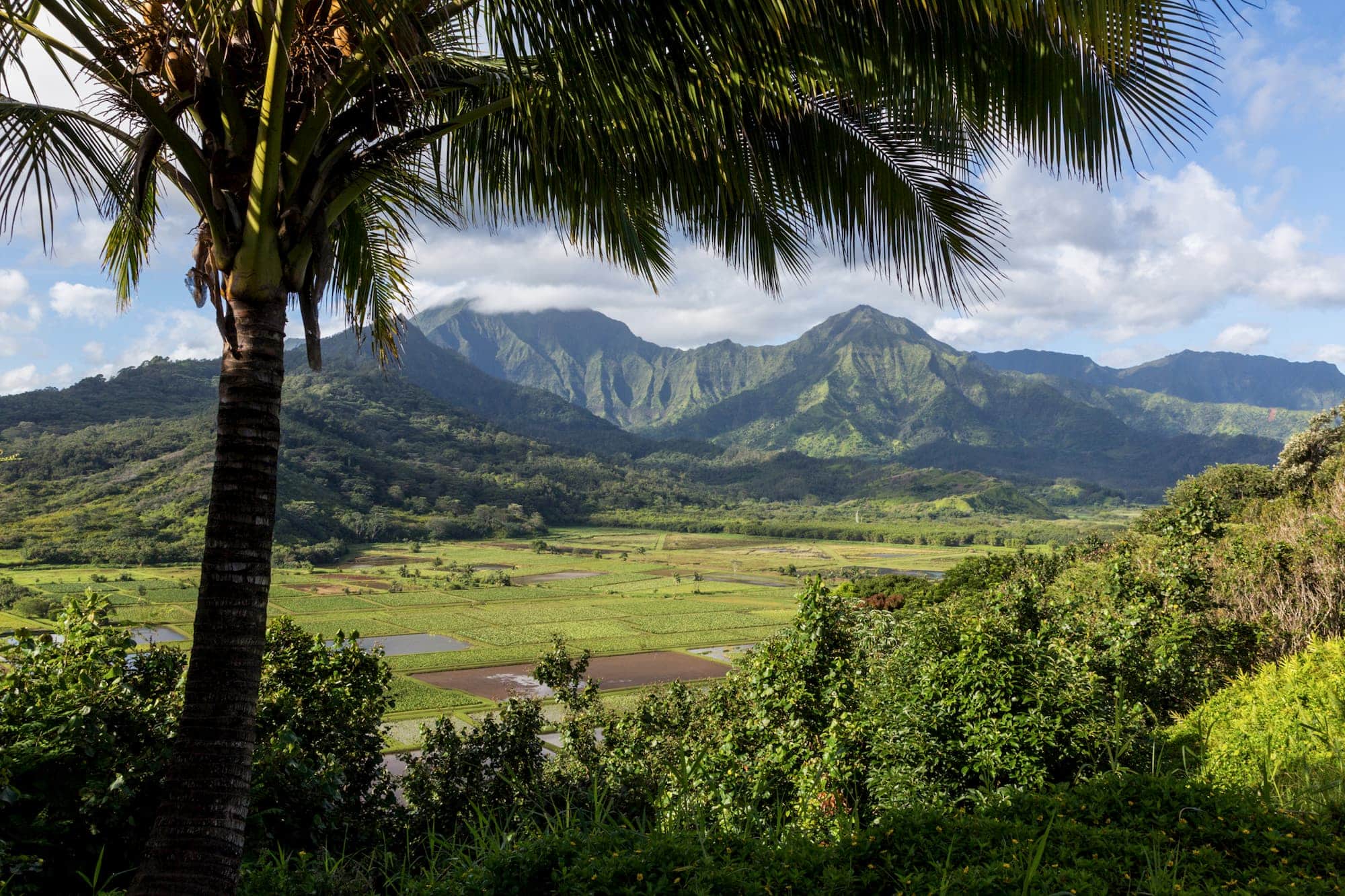
Traditional Hawaiian Taro fields stretch out in the green valleys inland of Hanalei. Image credit: Hawaii Tourism Authority (HTA) / Tor Johnson
Big Island or Kauaʻi, category by category
Here’s the breakdown, as we see it, between the Big Island and Kauaʻi:
Outdoor Adventure: Tie
Both islands, despite the difference in size, are hiking and ocean destinations before anything else.
The Big Island has the most options of any island because it’s huge. It’s approximately the size of the state of Connecticut, and all the other islands combined could fit inside of it. It contains eight of the world’s thirteen climate zones and five volcanoes. Two of those volcanoes are inside Hawaiʻi Volcanoes National Park.
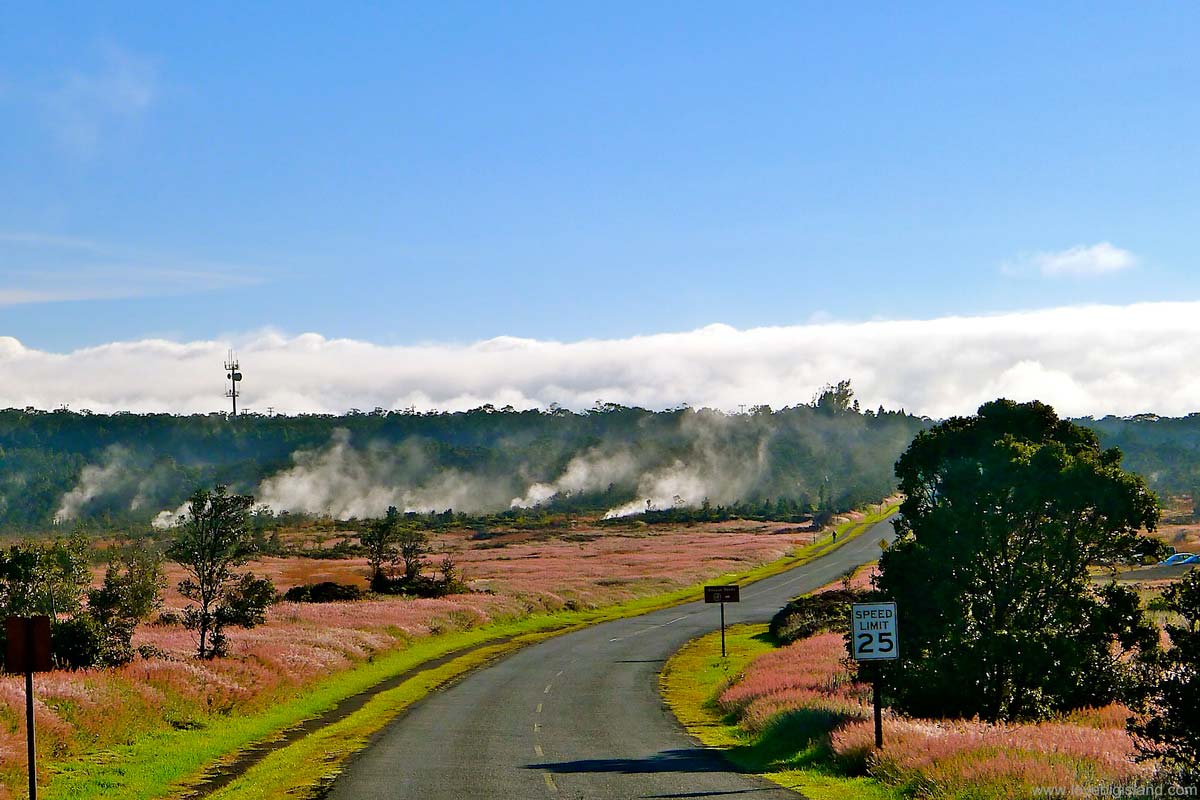
Steam vents in Hawaiʻi Volcanoes National Park, a few minutes from the visitor center.
Kauaʻi is the oldest of the main Hawaiian islands, about 4 to 5 million years old, and over that span erosion has carved deep grooves and sheer cliffs into the landscape. Erosion has cut the Nāpali Coast into jagged peaks threaded with waterfalls, while Waimea Canyon, “The Grand Canyon of the Pacific,” is 10 miles long and more than 3,000 feet deep.
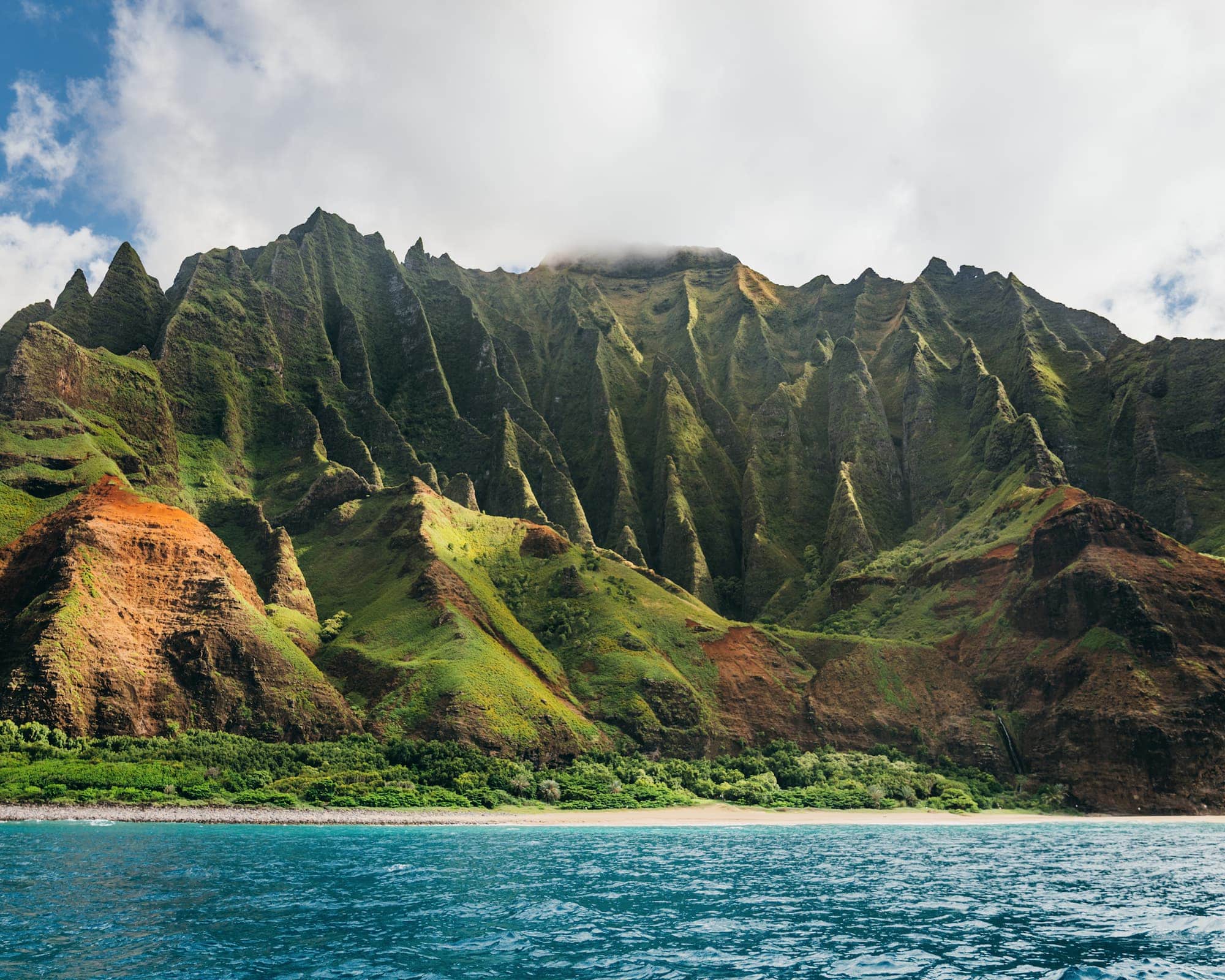
The Nāpali Coast seen from the water. Credit: Hawaii Tourism Authority (HTA) / Vincent Lim
Beaches: Kauaʻi
The Big Island does have many noteworthy beaches, including some of the black and green-sand variety. But, overall, the island’s young, rocky, volcanic shores don’t offer the quality or quantity of white sand that Kauaʻi does. Kauaʻi’s beaches include Hanalei, Polihale, and Poʻipū, among others. In winter many of them turn rough, so summer is the season for swimming and snorkeling on Kauaʻi.
The Big Island’s best beaches: Hāpuna and Mauna Kea Beach on the Kohala Coast have wide white sand, Kua Bay north of Kailua-Kona has clear, calm swimming most mornings, and Punaluʻu in Kaʻū has black sand where green sea turtles haul out. Kauaʻi has more beaches and they are closer: its best beaches sit minutes from town, while the Big Island’s cluster along the Kohala Coast, half an hour or more north of Kailua-Kona.
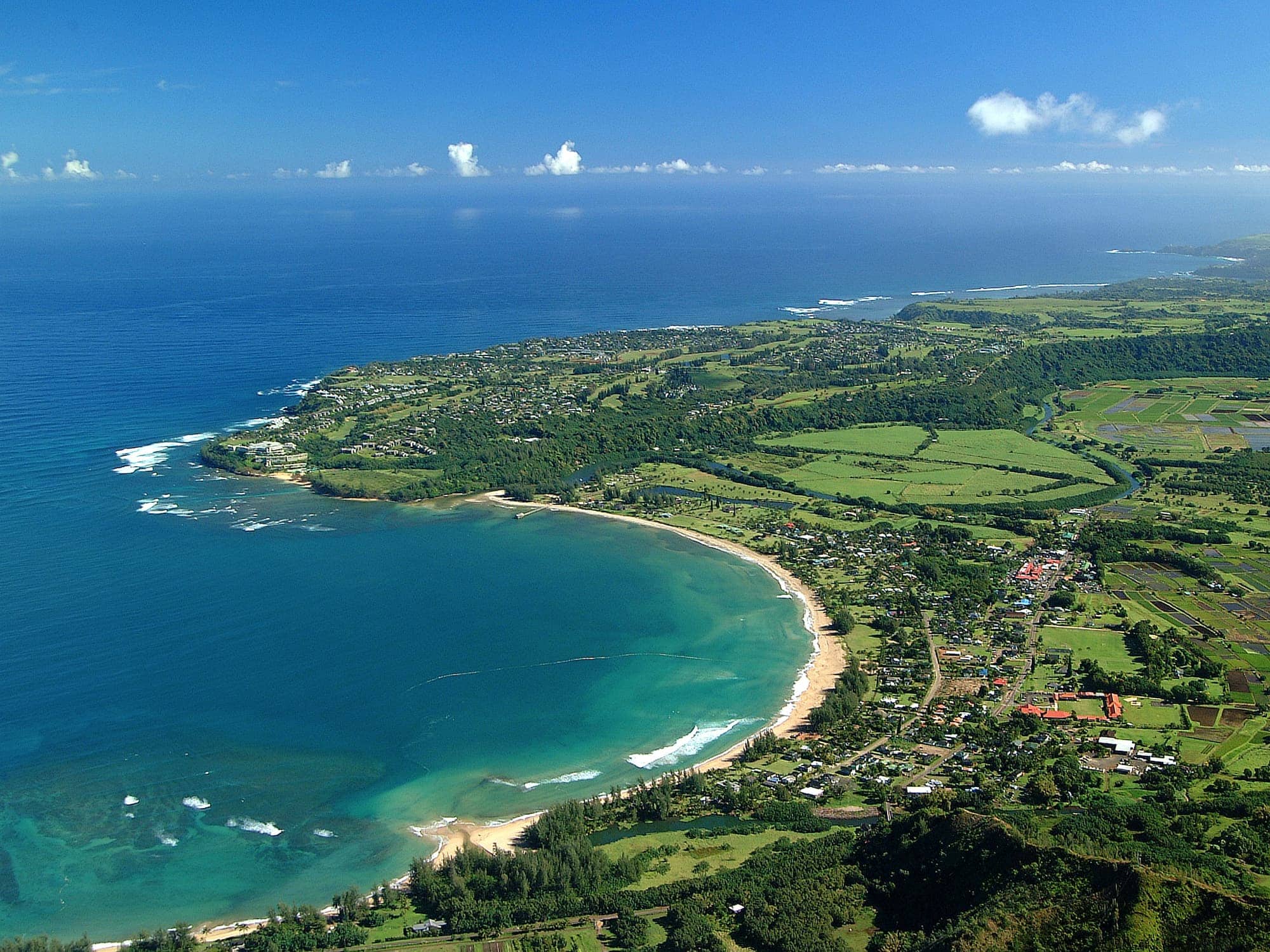
Hanalei Bay’s crescent beach is Kauaʻi’s best-known stretch of sand. Credit: Hawaii Tourism Authority (HTA) / Ron Garnett
Snorkeling: Big Island
The Big Island has the better snorkeling. The Kona side sits in the rain shadow of Mauna Kea and Mauna Loa, so little runoff clouds the water, and the young coastline has rocky entries straight onto healthy reef. Kealakekua Bay, Two Step at Hōnaunau, and Waialea (Beach 69) are the standouts, and the manta ray night snorkel runs year-round. Snorkeling on Kauaʻi is good at Tunnels and Poʻipū, but the window is seasonal: winter swell shuts down most north shore spots for months.
Volcanoes: Big Island
Made up of five volcanoes, including Kīlauea, which has been erupting in episodes since December 2024, the Big Island is the only Hawaiian island where you can watch an eruption. Mauna Kea, the world’s tallest volcano, has large observatories on its summit and is the best place in Hawaiʻi to stargaze.
The Big Island is the youngest island in the chain, meaning it has the most recent lava flows to explore, and the National Park alone has enough hiking trails to fill several days (entry is $30 per private vehicle). Gerrit lives next door to the park, and if you’re chasing an eruption, his rule is to check the USGS daily update the morning you go: an episode can be over in hours.
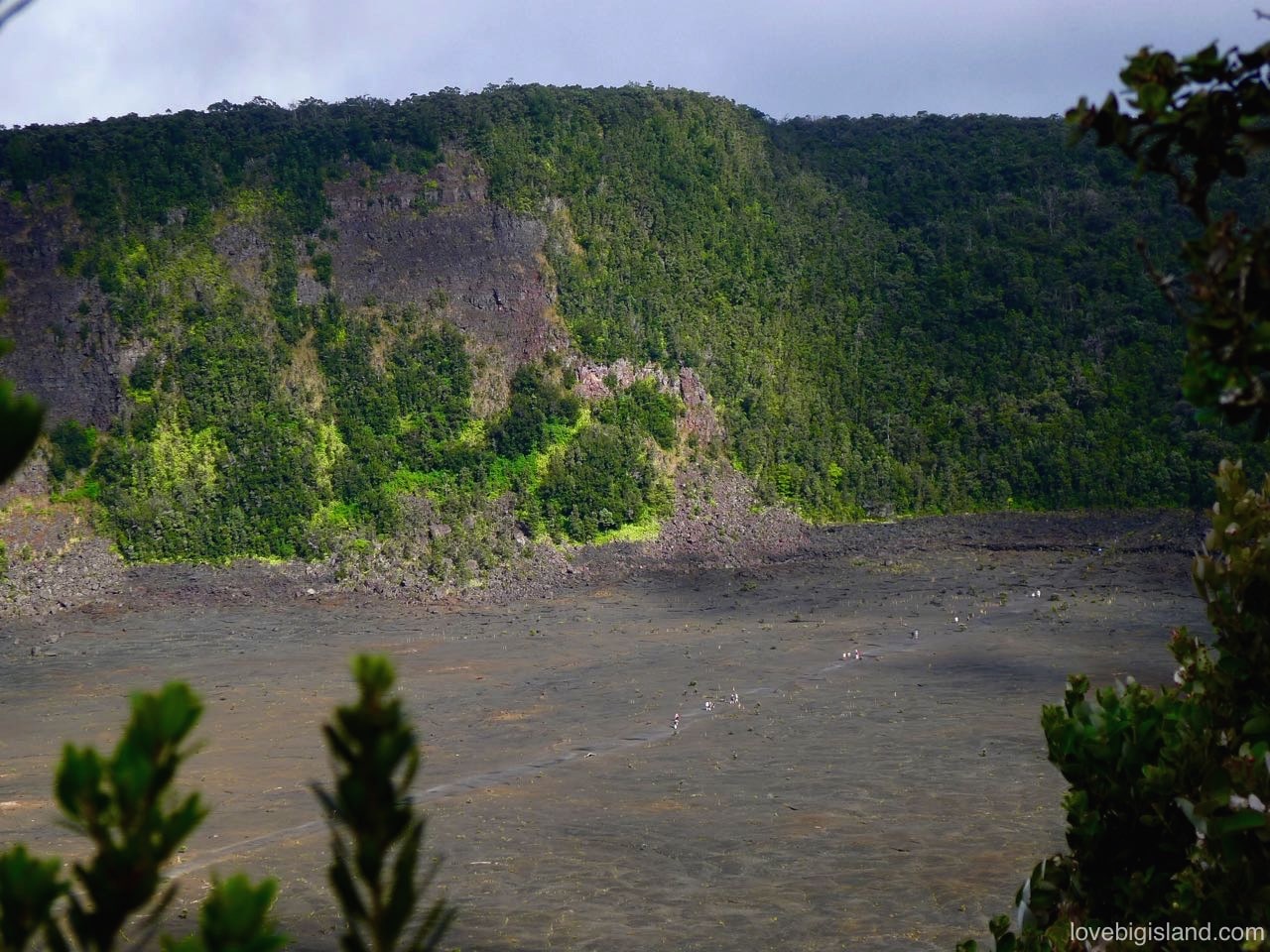
Hikers cross the floor of the Kīlauea Iki crater in Hawaiʻi Volcanoes National Park. The Kīlauea Iki trail is on our short-hikes list.
Kauaʻi‘s single volcano went quiet millions of years ago, so there is no eruption to see. There’s no accessible, recognizable crater, but a hike in Waimea Canyon or a boat ride along the Nāpali Coast is as grand as anything in Hawaiʻi.
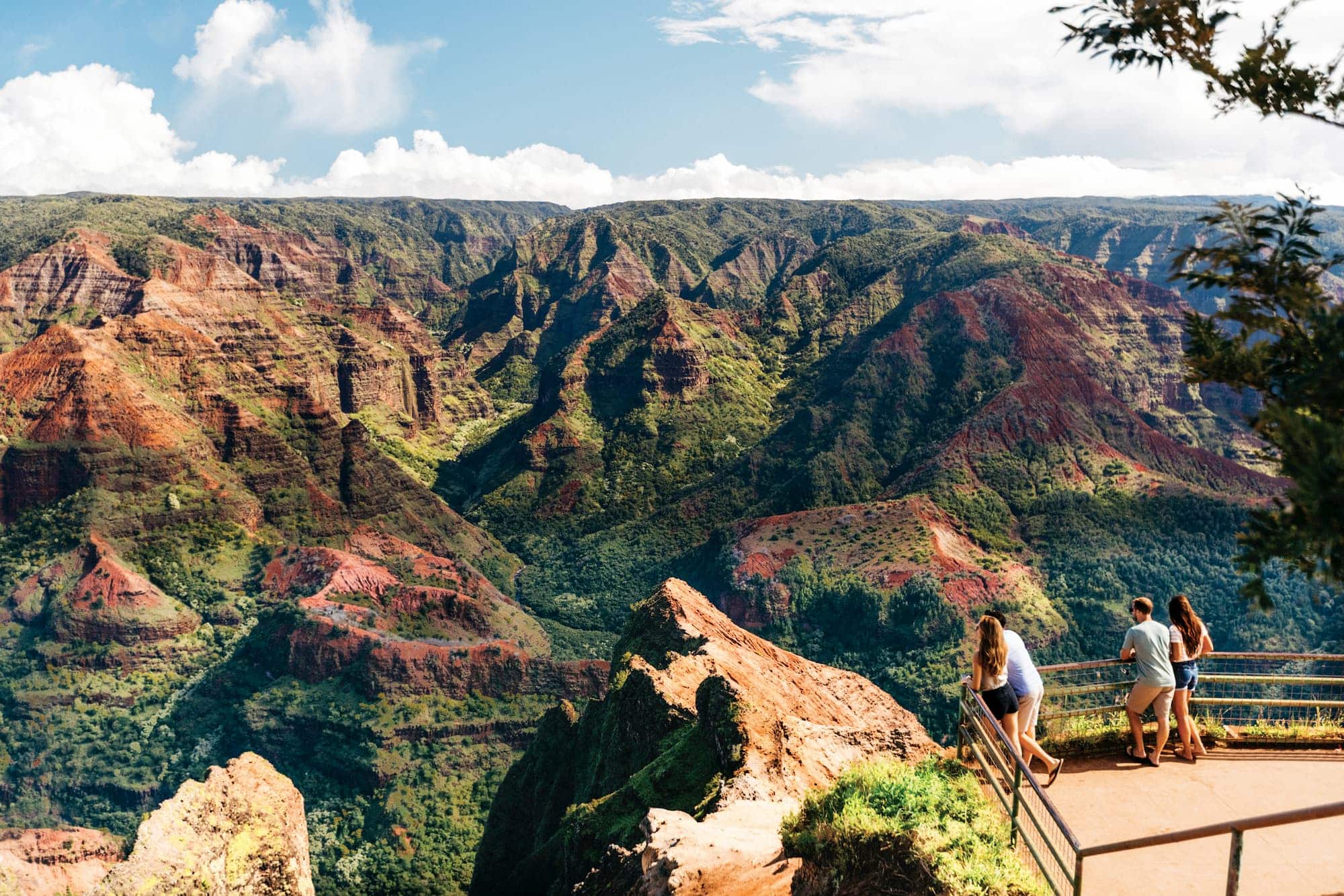
The easily accessible Waimea Canyon Lookout gives wide-open views of Waimea Canyon. Image credit: Hawaii Tourism Authority (HTA) / Ben Ono
Food, Drinks, and Nightlife: Tie
The islands tie again here, but for the opposite reason: neither has much of a food or nightlife scene.
You can still eat well. Every island has the Hawaiian staples of poke and plate lunches, and both Kauaʻi and the Big Island have multiple breweries. On the Big Island, Kona has plenty of bars and restaurants, and Hilo has a few good restaurants, like the Hilo Bay Cafe. Kauaʻi’s food scene has greatly improved in recent years with gastropubs as a complement to its local favorites like Hanalei Taro & Juice and Pono Market.
The range you’ll find on Oʻahu and Maui just isn’t present on these two islands.
Variety: Big Island
Hilo and Kona on the Big Island couldn’t be more different, and the same goes for Kauaʻi’s dry-side Waimea and rain-soaked Hanalei.
But the Big Island, being so much bigger, has far and away more to see and do. It has upcountry towns like its own Waimea, the paniolo ranch town below Mauna Kea, and Hōlualoa alongside jungle towns like Pāhoa.
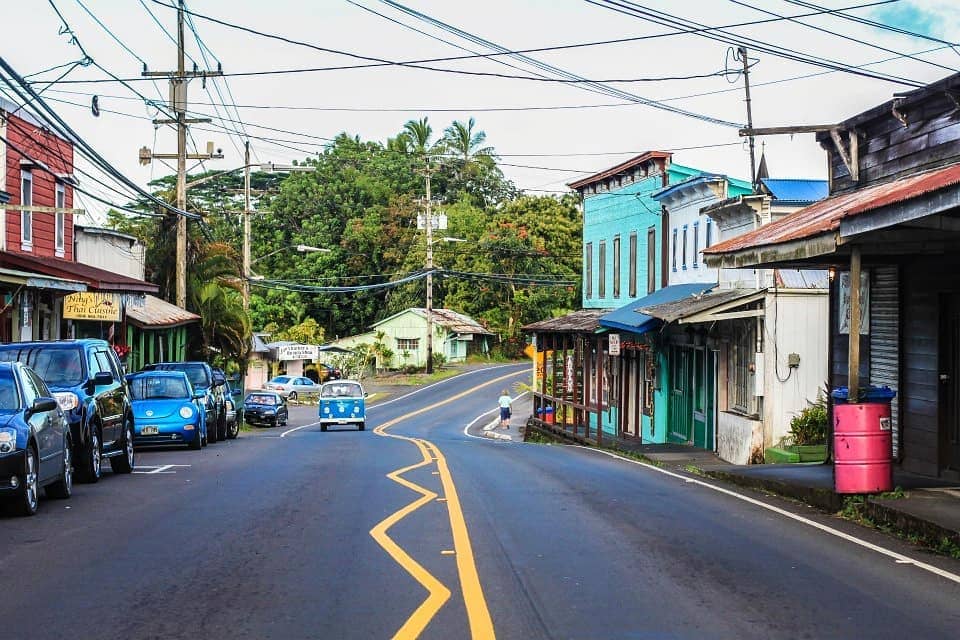
Downtown Pāhoa with its raised wooden sidewalk, the false-front stores and the numerous old buildings, has a certain “Wild West” atmosphere. Image Credit: Joey Gutierrez.
If you want to be on the go, constantly seeing a new side of the island, choose the Big Island.
Skip the Big Island, go to Kauaʻi (if you like these things)
If the category verdicts didn’t settle it, these are Kauaʻi’s strongest points.
Why Kauaʻi over the Big Island
- Dramatic scenery: Waimea Canyon runs 10 miles long and more than 3,000 feet deep, and the Nāpali Coast has sheer sea cliffs and waterfalls along the north shore.
- Kauaʻi is quieter and more relaxed: The island is less developed than the Big Island, with small communities and fewer crowds.
- Outdoor activities in every direction: Hiking, kayaking, surfing, and snorkeling are all within a short drive of each other, with helicopter tours and horseback rides through ranch land on top (see also our overview of Kauaʻi land activities and water activities).
- Hawaiian history and culture: The Kauaʻi Museum is an easy rainy-day stop, and several heiau and petroglyph sites are open to visitors.
- Places to stay in scenic settings: Kauaʻi’s accommodations run from luxury resorts to small vacation rentals, many right on the beach or set in gardens. Our guide to the best places to stay in Kauaʻi lists them by area.
Kauaʻi is the better pick if you are:
- Hikers and paddlers: If hiking, kayaking, or time outdoors anchors your trips, pick Kauaʻi for its trail network and scenery.
- Couples: Kauaʻi is quiet and laid-back, for travelers who want time together more than a packed schedule.
- Surfers: Hanalei Bay has beginner-friendly waves in summer, and the north shore turns serious in winter (helicopter tours fill the days the water is too rough).
Skip Kauaʻi, go to the Big Island (if you like these things)
If Kauaʻi is the island you already love, adjust what you picture before you land. You land in Kona among black lava fields: the airport sits on a lava flow from 1801, and that coast is among the driest in the state. The green Big Island is the east side, the Hāmākua Coast between Honokaʻa and Hilo and the rainforest around Volcano. If Kauaʻi’s greenery is what you are after, base at least half your stay there.
The Big Island’s strongest points:
Why the Big Island over Kauaʻi
- Diverse landscape: The Big Island is the largest of the Hawaiian islands and runs from black sand beaches at sea level to snow on Mauna Kea. Snorkel Kealakekua Bay in the morning and stand on a crater floor in Hawaiʻi Volcanoes National Park the same afternoon. Plan half a day for Waipiʻo Valley.
- More tourist amenities: The Big Island is more developed than Kauaʻi, with a wider choice of restaurants and hotels.
- Activities you won’t find on Kauaʻi: Swimming with manta rays on a night snorkel (tours run $118 to $135), touring a Kona coffee farm, visiting a macadamia nut factory, and seeing lava when Kīlauea is in an active episode are all Big Island exclusives.
- Luxury resorts: The best known of the Big Island’s resorts are the Four Seasons Resort Hualālai, the Mauna Kea Beach Hotel, and the Fairmont Orchid, with multiple pools and high-end dining.
- The night sky: The Mauna Kea visitor center at 9,200 ft runs free reservation-only telescope evenings, and guided stargazing tours run $240 to $315. Kauaʻi has no equivalent.
The Big Island is the better pick if you are:
- Travelers who want a different activity every day: The Big Island has the widest spread of any island: hiking, snorkeling, stargazing, ziplining over the Hāmākua gulches.
- Farm-tour fans: Kona coffee and macadamia nuts are grown here, and farm tours and tasting rooms are easy to build a morning around.
- Families: Kids can tour a chocolate factory one day and walk across a volcanic crater floor the next.
- Culture and history buffs: The Big Island’s many cultural and historical sites include Puʻuhonua o Hōnaunau National Historical Park, a former place of refuge on the Kona coast.
Getting Started: Sample Itineraries for the Big Island and Kauaʻi
- Kauaʻi: Our Kauaʻi overview article and 7 day itinerary.
- Big Island: See our 7-day itinerary or any of the shorter itineraries (from half a day to five days) in our itinerary overview.