All the other Hawaiian islands would fit inside the Big Island, and that difference in scale settles most of this comparison. Pick the Big Island for volcanoes and open, varied terrain. Pick Oʻahu for white sand beaches and for Honolulu, the only place in Hawaiʻi with a real late-night scene.
For a first trip, Oʻahu works in 4 days. The Big Island takes a week, and you’ll need a rental car the whole time. On Oʻahu you can skip the car. Gerrit lives next to Hawaiʻi Volcanoes National Park and Will spent years on Oʻahu, so each island gets a fair advocate in the category verdicts below.
Table of contents
| Category | Winner | Why |
|---|---|---|
| Outdoor adventures | Big Island | Connecticut-sized, about 210,000 residents, the most open space |
| Beaches | Oʻahu | Dozens of white sand beaches vs. Hāpuna plus black and green sand |
| Volcanoes | Big Island | Five volcanoes, Kīlauea active; Oʻahu has no active volcanoes |
| Food, drinks and nightlife | Oʻahu | Honolulu is the only place with a real late-night scene |
| Variety | Big Island | 8 of the world’s 13 climate zones |
Money-saving and trip-enhancing trip planning tips
With life getting so expensive it makes sense to save as much money on your trip as you can. These resources help you to save money (#1), to book the best tours and activities (#2), and greatly simplify trip planning (#3 + #4):
- The Discount Hawaii Car Rentals website is our first stop for a quote when we need a rental car. We like them (a) because they offer the BEST rates, (b) require no prepayment and charge no cancellation fees, and (c) because they offer additional benefits such as free extra drivers and reduced young driver rates.
- We put a LOT of effort in figuring out which tours actually are the best. Have a look at our curated tour section to see tours that get consitently good reviews *and* offer great value.
- Did you know we are giving away free itineraries for all Hawaiian islands? These are a great place to start planing your own trip.
- Our Trip Planning 101 Guide is a another GREAT place to start planning for 1st time visitors.
Oʻahu and the Big Island in a nutshell
Both islands can carry a full vacation. Here is the short version of each.
Oʻahu
Oʻahu is the one island with a real city on it: Honolulu on the south shore, surf towns like Haleʻiwa on the North Shore. If you’re looking for a mix of city and outdoor time, Oʻahu is your island. (Read more in our complete Oʻahu overview.)
Recommended minimum stay: 4 days
Good to know for Oʻahu: It’s tempting to stay in Waikīkī for its convenience: it is, after all, where most of the hotels are. Its windward side sits below steep green mountains and quieter local beaches; its west side is a hub for small communities and culture. Plan at least one day outside Waikīkī, and read how to get around Oʻahu first: the rest of the island feels nothing like the city.
Short-term rentals are legal only in a few zones on Oʻahu, stricter than the other islands. Almost all visitor lodging sits in Waikīkī and Ko Olina, and outside those the legal options thin out fast. A quiet condo on the windward side near a snorkeling beach mostly is not an option, so plan on a base in Waikīkī or Ko Olina and day-drives to the beaches you want.
You can do Oʻahu without a rental car. TheBus and the Skyline rail share one fare: $3 for two hours on a HOLO card, capped at $7.50 a day. Skyline runs from East Kapolei to Kalihi and now reaches the airport, though it does not yet reach Waikīkī or Ala Moana, so you finish that leg on TheBus. Buy the HOLO card at any Skyline station or an ABC Store in Waikīkī.
Three things worth planning around: Sunrise hike at the Lanikai Pillbox; Sunset sail in Waikīkī; Big waves on the North Shore (winter). If Hanauma Bay is on your list, book online ahead: about a quarter of the daily slots are held for walk-ins, and the rest go in advance.
Pearl Harbor and the USS Arizona Memorial sit just west of Honolulu and are a standard first-time stop. The memorial program itself is free, but timed tickets are limited and book out, so reserve ahead.
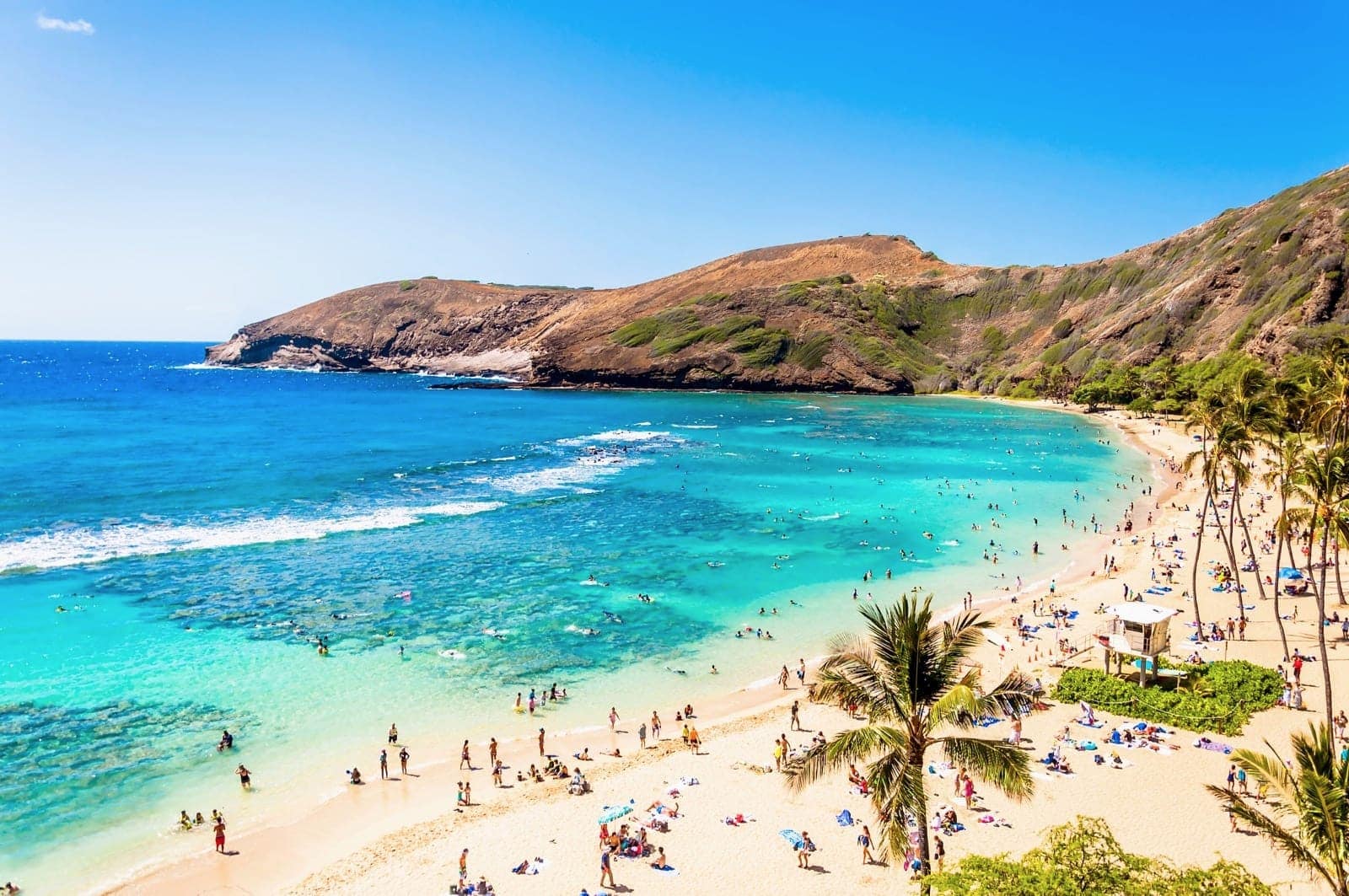
Hanauma Bay (Oʻahu) is the island’s best-known snorkeling spot. It’s closed Mondays and Tuesdays. Entry is $25 for non-residents 13 and over, plus $3 to park.
The Big Island
The Big Island packs 8 of the world’s 13 climate zones into a single island, from the snowy peak of Mauna Kea down to black and green sand beaches as well as white. Pick it for volcanoes and open space.
Recommended minimum stay: 7 days
Good to know for the Big Island: Also called the island of Hawaiʻi, the Big Island earns its name: you need a rental car to get around. Try spending your time in at least two different locations: on the western coast (in Kona or on the Kohala coast) and the south/eastern side (in Hilo or Volcano Village).
There are two commercial airports and they sit on opposite coasts: Kona (KOA) on the dry west side, Hilo (ITO) on the wet east side. Booking into one and out of the other saves you a long drive at each end. Hilo takes 120 to 151 inches of rain a year. The Kohala coast gets under 10.
Three things worth planning around: The Manta Ray night swim/snorkel/dive, Hawaiʻi Volcanoes National Park, and seeing the sunset on the Mauna Kea summit. The summit comes with rules. Above the visitor station at 9,200 ft the road is 4WD only, so check what your rental contract allows before you count on driving up. Visitors have to be off the summit 30 minutes after sunset, and under-13s are advised to stop at the visitor station. Guided tours run from $259.
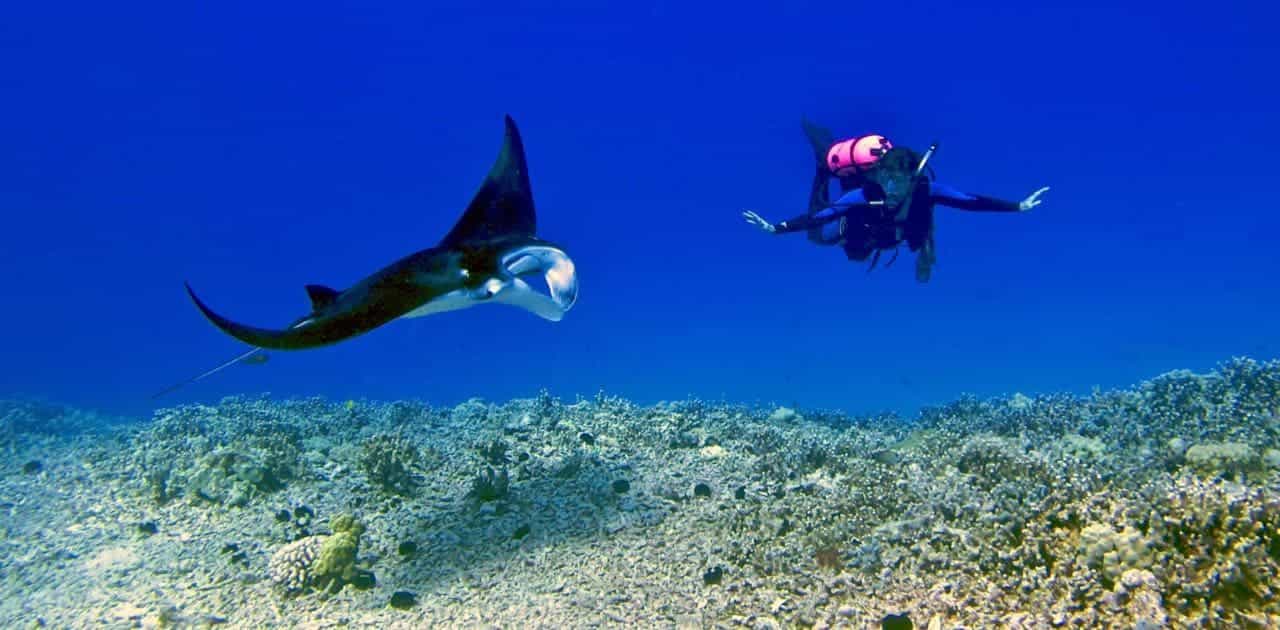
A scuba diver swims with a young male Manta ray in the Kona district / Big Island. By Steve Dunleavy from Lake Tahoe, NV, United States – Nick and Isabelle, Kona Hawaii, CC BY 2.0, Link
What island should you choose if you like…
Pick the one or two factors that matter most to you and let those decide.
Outdoor adventures: Big Island
About the size of Connecticut and home to about 210,000 people (Census estimate, July 2025), the Big Island has more open space than any other island, and more room to use it. That space costs drive time. Kona to Volcano is roughly two hours each way, and most days on the Big Island include a leg like it.
Those drives are long but low-stress: open highway, usually light traffic. Oʻahu is the opposite. Distances there are short, but Honolulu congestion can stretch a cross-town trip to an hour. Budget your Big Island days around distance and your Oʻahu days around traffic.
Compare our list of outdoor activities on the Big Island with the list for Oʻahu.
Beaches: Oʻahu
The Big Island is young, jagged and rocky, so its white sand beaches are few and short. Oʻahu is the best place in Hawaiʻi to find them: it has dozens of white sand beaches, while the Big Island’s short list has Hāpuna Beach as its standout.
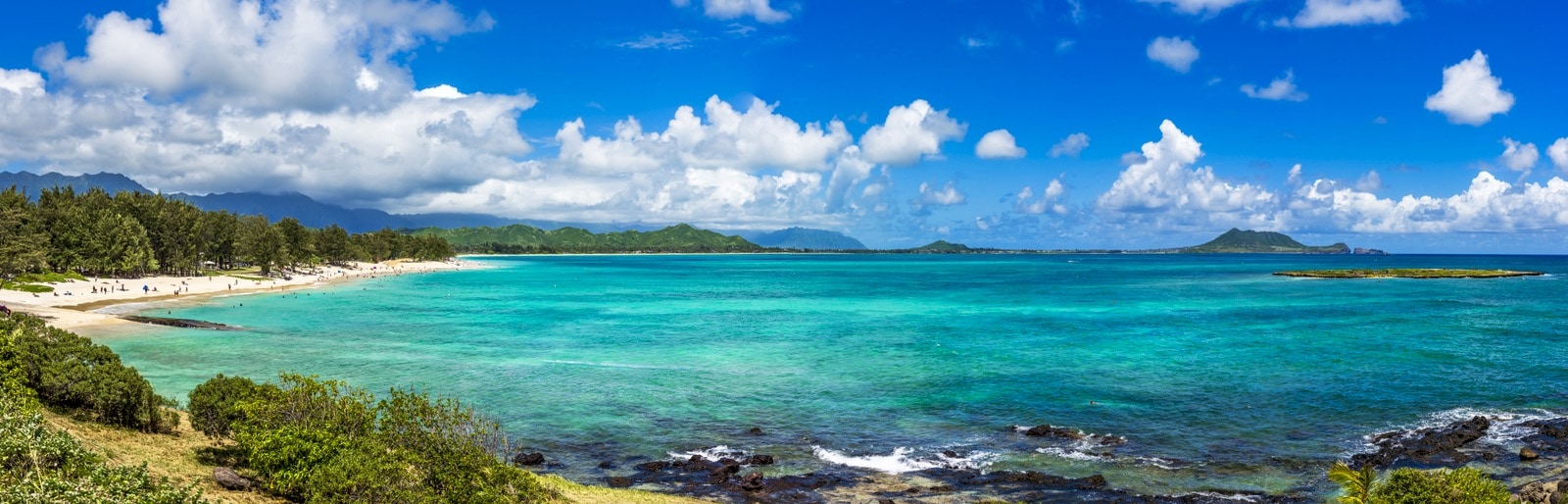
Kailua Beach is one of Oʻahu’s largest white sand beaches. Image credit: PBPhotos
The split worth knowing before you pick a hotel: the windward beaches, Kailua and Lanikai, are the calm swimming ones. North Shore surf in winter gets too big to swim in, so those beaches are for watching. Have a look at Hanauma Bay, Lanikai Beach, Waimea Bay, and the long soft white sand beach at Waikīkī.
The upside of the Big Island being so young is that it has black sand beaches and a rare green sand beach. These are not your typical “lounge all day and swim” beaches: plan them as sights, not beach days.
Volcanoes: Big Island
Oʻahu is an old, eroded volcanic island with plenty to observe about volcanic history, but the Big Island has two clear advantages:
- It is made up of five volcanoes instead of just two for Oʻahu, and
- The Big Island has active volcanoes, whereas Oʻahu does not.
Hawaiʻi Volcanoes National Park puts you on the rim of Kīlauea, one of the world’s most active volcanoes. You can look into the summit crater and walk through a lava tube.
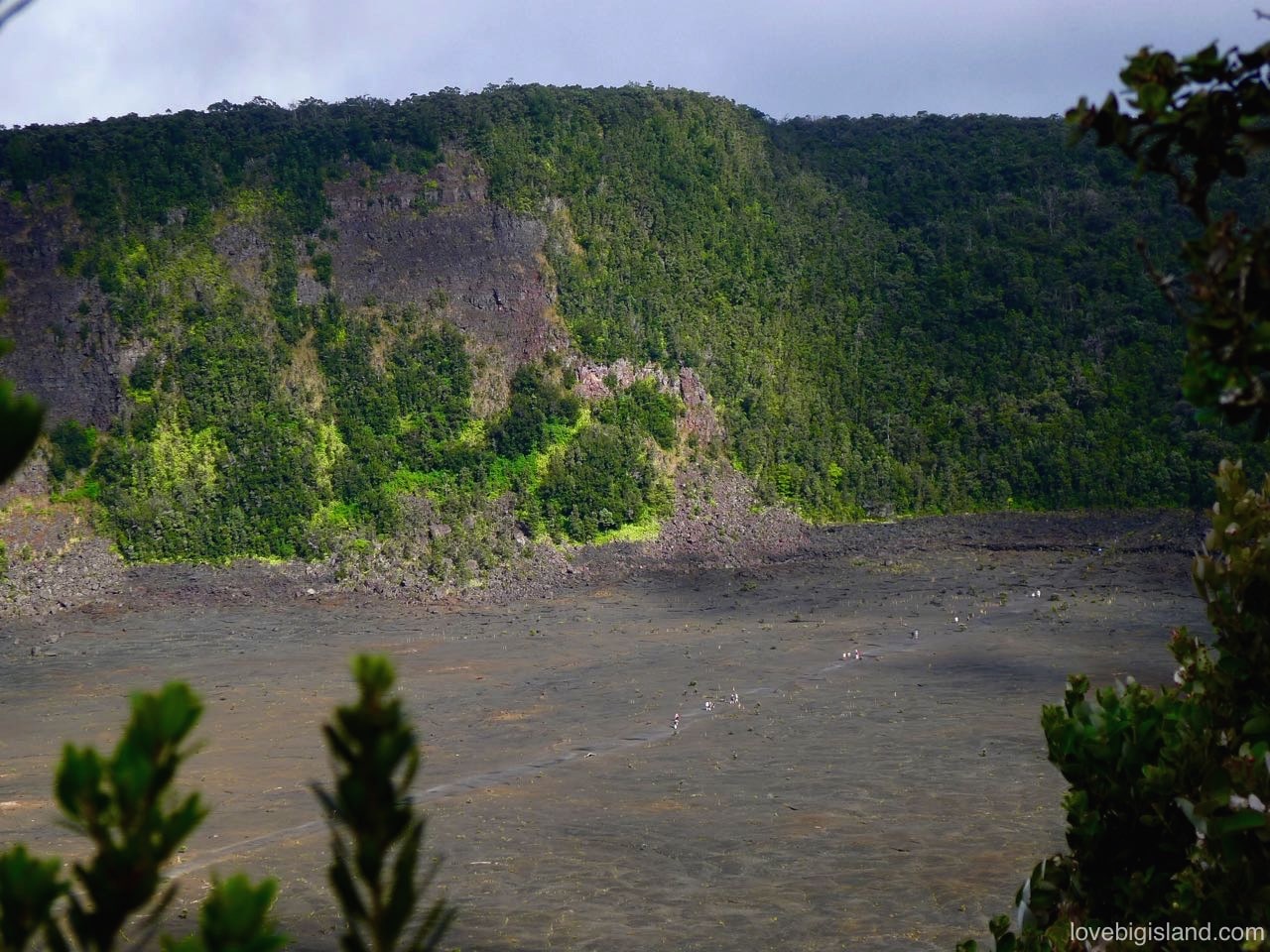
Hikers cross the floor of the Kīlauea Iki crater in Hawaiʻi Volcanoes National Park. Find out more about this hike on our website.
Food, drinks and nightlife: Oʻahu
Oʻahu has the best food scene in Hawaiʻi and its only real nightlife.
Honolulu is the only place in Hawaiʻi with a real late-night scene, with late events in Waikīkī, Kakaʻako, and Chinatown. Even in the sleepier towns on the island, like Kailua, you can find places open past ten.
There are things to do on the Big Island after dark; there are just fewer of them, and they close earlier. Kona is your best bet for nighttime entertainment, although you won’t find the range of options you see on Oʻahu. Those looking for a bite to eat in Hilo will do just fine, but any plans for a “night on the town” should be quickly erased.
Variety: Big Island
Oʻahu has the sharper single contrast, Waikīkī on one end and Waiʻanae on the other. The Big Island has more kinds of ground. Kona has blue water and hot, lifeless lava fields. An hour north you’re in Kohala ranch land; upslope, coffee farms. Keep going and you hit Hilo’s big banyan trees, the hippie town of Pāhoa, green and black sand beaches, the valleys of the north, the waterfalls, and the 13,803-foot summit of Mauna Kea. You get the idea.
One of those needs a caveat: Waipiʻo Valley is a lookout only for most visitors. County emergency rules, most recently renewed with effect from 4 July 2026, restrict the road down to Hawaiʻi County residents, permitted tour operators, and Native Hawaiians exercising traditional rights. They prohibit pedestrians too, so you cannot simply walk down instead.
The Big Island holds 8 of the world’s 13 climate zones; no other Hawaiian island comes close on sheer variety.
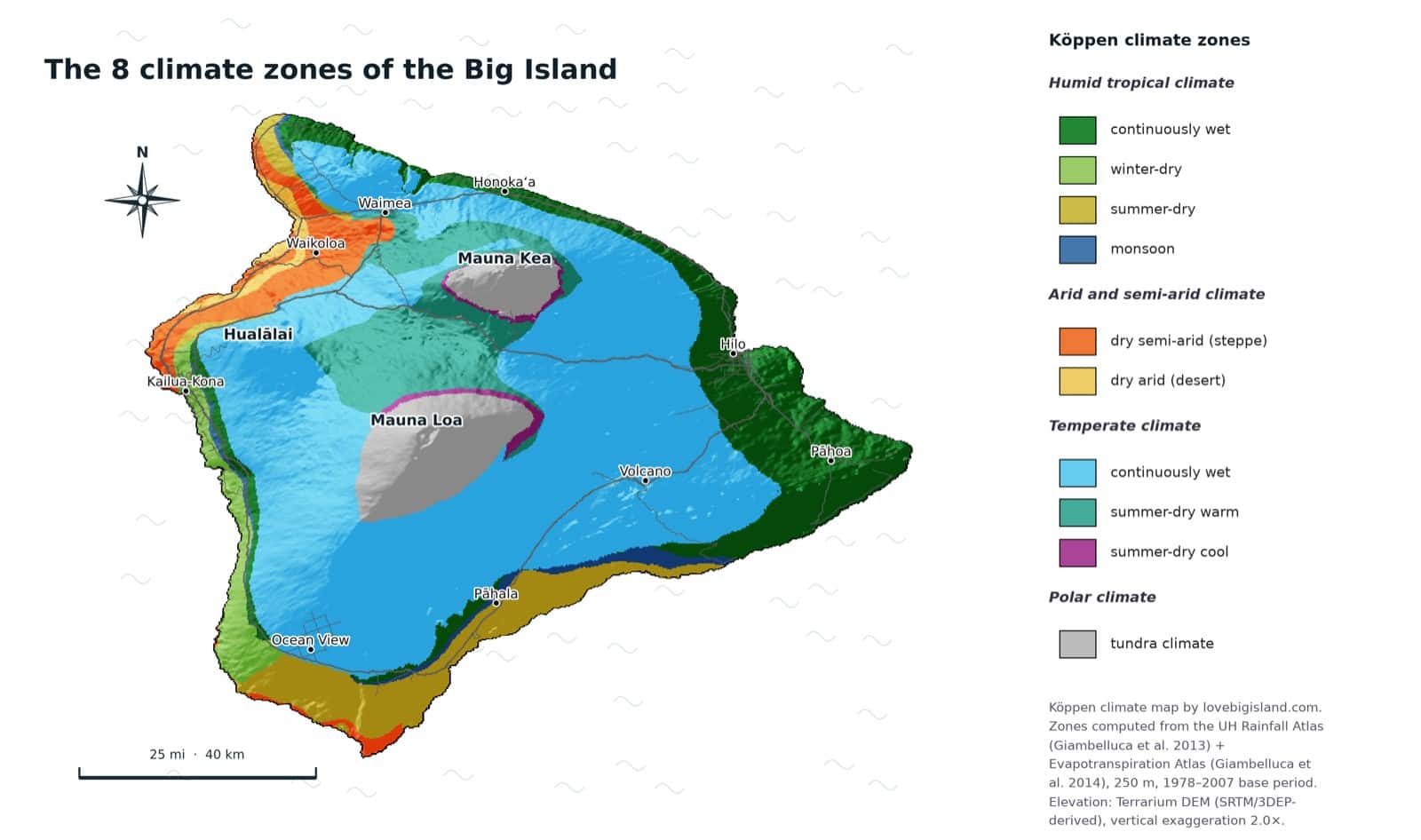
Climate map of the Big Island. The map shows 10 labels, but only 8 are distinct under Köppen: tropical winter-dry and summer-dry are one zone, and temperate summer-dry warm and cool are another.
Sample itineraries for Oʻahu and the Big Island
Once you have picked an island, or decided on both, a sample itinerary is the fastest way to turn the choice into a trip plan. We have prepared them for both islands.
Doing both is easy enough to arrange. The inter-island leg is short: Honolulu to Kona is about 50 minutes in the air and Honolulu to Hilo about 55, on Hawaiian or Southwest, with flights most of the day. Fly into the airport nearest your first stop. Give yourself 10 or 11 days for both; at 7 you are cutting one island to four days and rushing the other in three.
For the Big Island we recommend our 7-day itinerary. We also have shorter itineraries, from half a day to five days: see the itinerary overview if those fit your travel plans better.
For Oʻahu start with our Oʻahu overview article and 7-day itinerary, plus our series of things to do in Kailua, Honolulu, the rugged leeward coast, the windward coast, central Oʻahu, and the North Shore.
If you’re still comparing islands, see our other match-ups: Oʻahu vs. Maui, Kauaʻi vs. Oʻahu, and the Big Island vs. Maui.