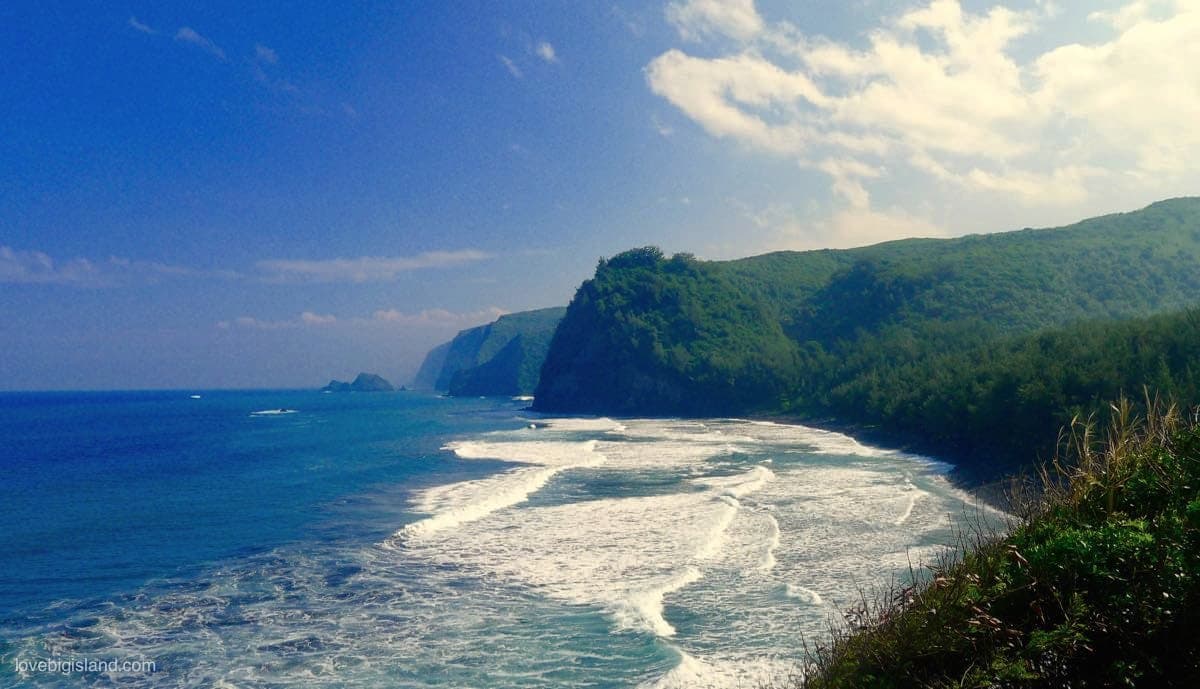
The hike from the Pololū Valley lookout down to the black sand beach is only 0.6 miles, but it drops 420 feet, a 13% average grade on the old ʻĀwini government road: packed dirt and rock in dry conditions, and slippery enough after rain to change the calculation on whether to go at all.
Parking is limited at the end of Highway 270. Steward Program volunteers are usually at the trailhead, but the lot fills on clear mornings. Arriving before 9 a.m. gives you the best chance of a spot.
The footing demands attention on the way back up, more than the moderate rating suggests. Budget 2 to 3 hours total for a lookout stop, the descent, and time at the beach; a fast hiker who skips the beach entirely can do it in 90 minutes, but most people should not plan on that.
Table of contents
Visiting Pololū Valley
Pololū Valley sits on the windward side of the Kohala coast, which means it can be cloudy or wet even when the rest of the island is clear. A lookout-only stop takes about 10 minutes; the full descent, time at the beach, and climb back runs 2 to 3 hours depending on how long you stay at the bottom.
The visit has three distinct parts: the lookout itself, the descent to the valley floor, and the beach. The lookout sits at the end of Highway 270, about 8 miles east of Hawi, and the views over the sea cliffs hold up on their own even if you go no further. The hike down takes 20 to 25 minutes at a moderate pace. The beach at the bottom is black sand and boulders, fully exposed with no shade, and the wind off the water makes it an uncomfortable place to linger on windy days. The surf, undertow, and rip tides make it unsafe for swimming.
Good to know: there are no public restrooms at the lookout or down in the valley. There is a portable toilet close to the parking but the closest restrooms are at the Keokea Beach Park (10 minutes from the overlook). You can find more restrooms on your way to Pololū just behind the King Kamehameha Statue which you will pass in Kapaʻau en route to the overlook from Hawi.
The following 2.5 minute video shows aerial footage of the cliffs, the beach and the upper valley:
Pololū Valley Lookout
The Pololū lookout looks out over the valley and the sea cliffs to the southeast that slowly crumble into the ocean. If you are visiting in the winter months (from ~December to ~March) this is a great place to try and see humpback whales.
You can take in the coastline before heading down to the beach but the real attraction at Pololū is the short but steep hike down into the valley and the black sand beach at the valley floor. The vertical distance from the overlook point down to the valley floor is 420ft (128m), per Hawaiʻi DLNR’s own trailhead management plan.
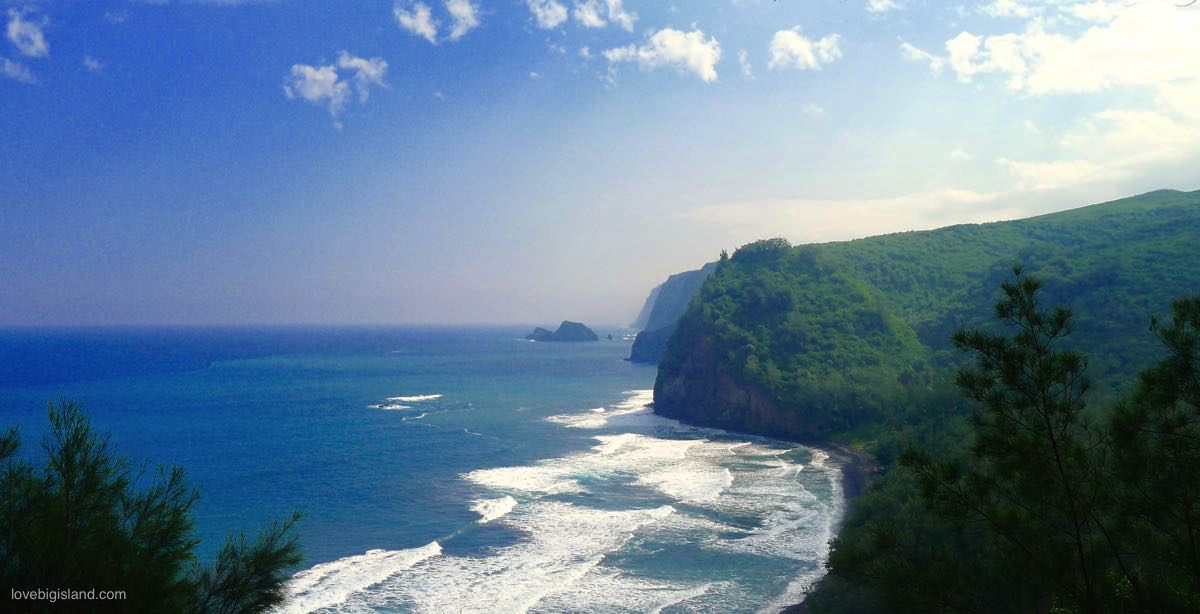
The Pololū Valley Lookout looks directly out over the Kohala sea cliffs.
The trail down to Pololū’s black sand beach
The trail down into the valley is a section of the old government road to ʻĀwini. For this reason it is both referred to at the Pololū Trail and the ʻĀwini trail. The trail itself offers clear views of the cliffs, the valley, and the black sand beach below.
The hike down the side of the cliff to the valley floor is short but steep: ~420 ft in 0.6 miles (126 meters in 1.0 kilometers) and takes about 20 to 25 minutes for the average hiker. From the valley floor it is a short and easy stretch to the beach. During or after rains the trail can be slippery and because of the relatively steep average grade of the trail (13%) we rate the difficulty as moderate. Take your time on the way up; there’s no reason to rush it.
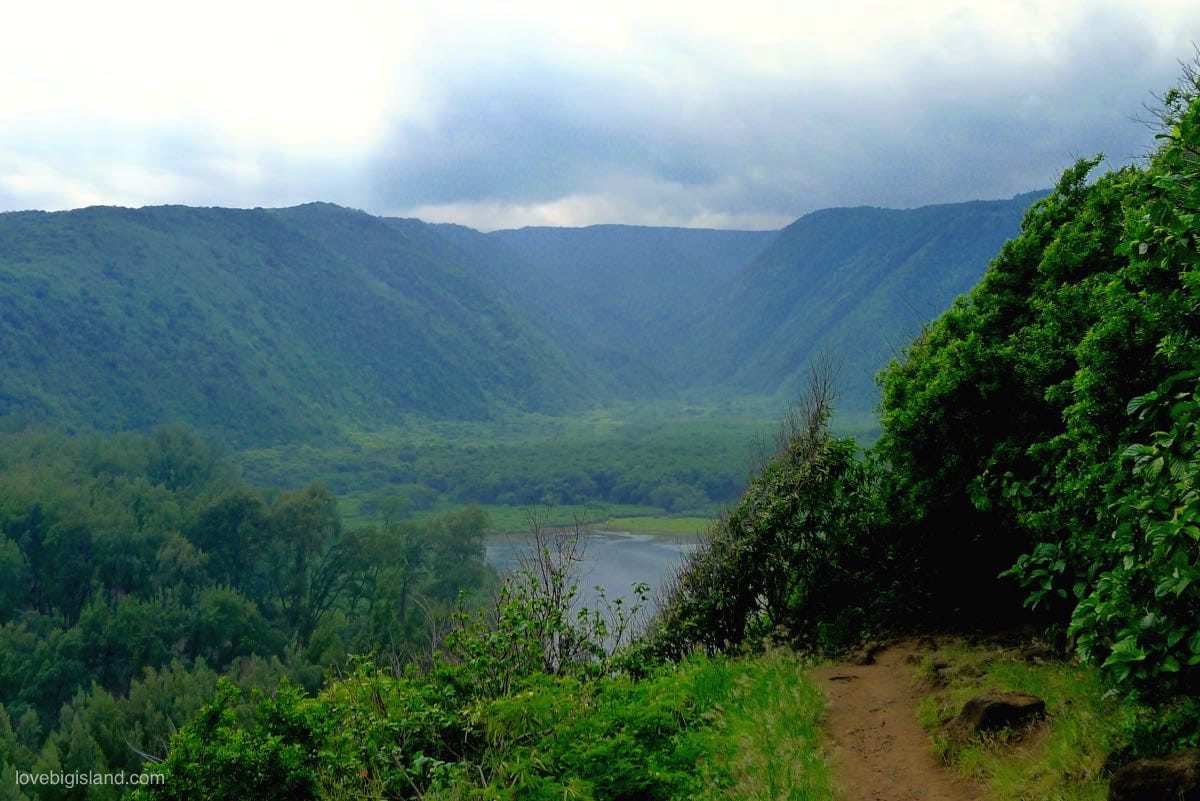
The trail down to the valley floor offers great views into Pololū Valley
As we do for most places on the Big Island we recommend visiting Pololū Valley early in the day. You’ll beat most of the crowds and catch cooler temperatures for the climb back up, which gets hot and sweaty once the sun is high.
Bring enough water with you and keep in mind that there are no restroom facilities in the valley or at the lookout.
The black sand beach at Pololū Valley
The black sand beach at the valley floor looks like a beach at the end of the world. A dense tropical forest surrounded by cliffs over 400 ft high, fronted by an ocean that more often than not has high surf and rough waves.
The beach itself is made out of a mix of black sand and large boulders. These stones can make it uncomfortable to walk into the water so if you do want to take a swim try to bring shoes that can get wet.
The ocean at Pololū valley is not a safe place to go swimming. High surf, undertow, and rip tides are frequently present, and there is no lifeguard. Wading at the water’s edge is one thing; swimming out is not worth the risk here.
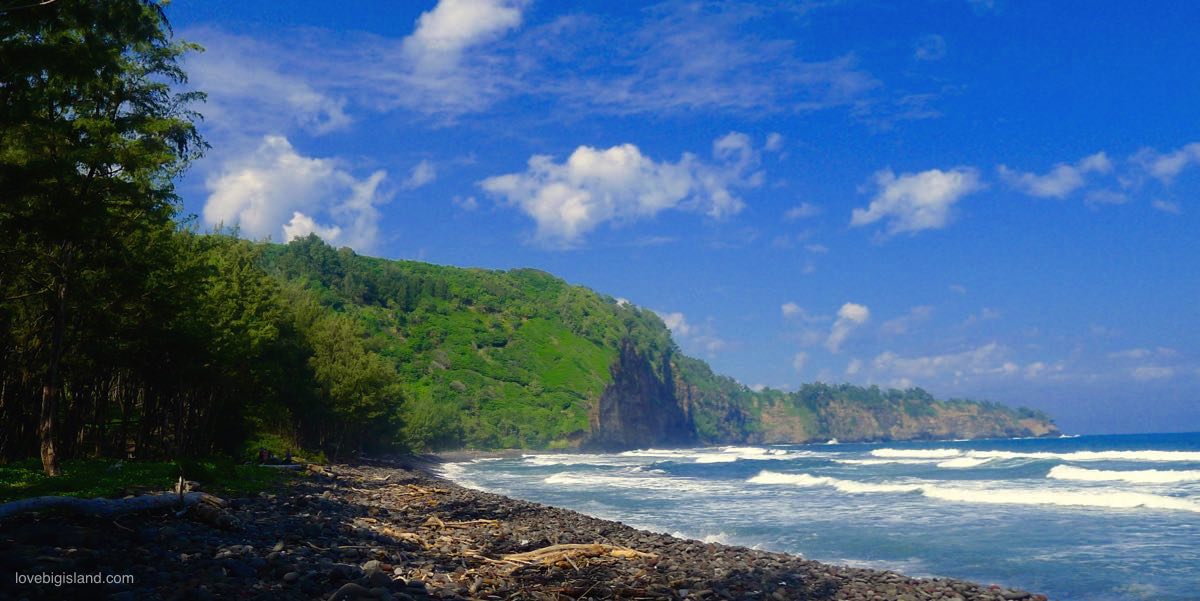
The black sand beach at Pololū Valley can be rocky if a storm has washed away the black sand.
Behind the beach you can find large dunes and ironwood trees that protect the valley from floodwaters. There are some trails parallel to the beach that make it easy to get to the other side of the valley that are worth exploring if you have 20 minutes and a bit of energy to spare.
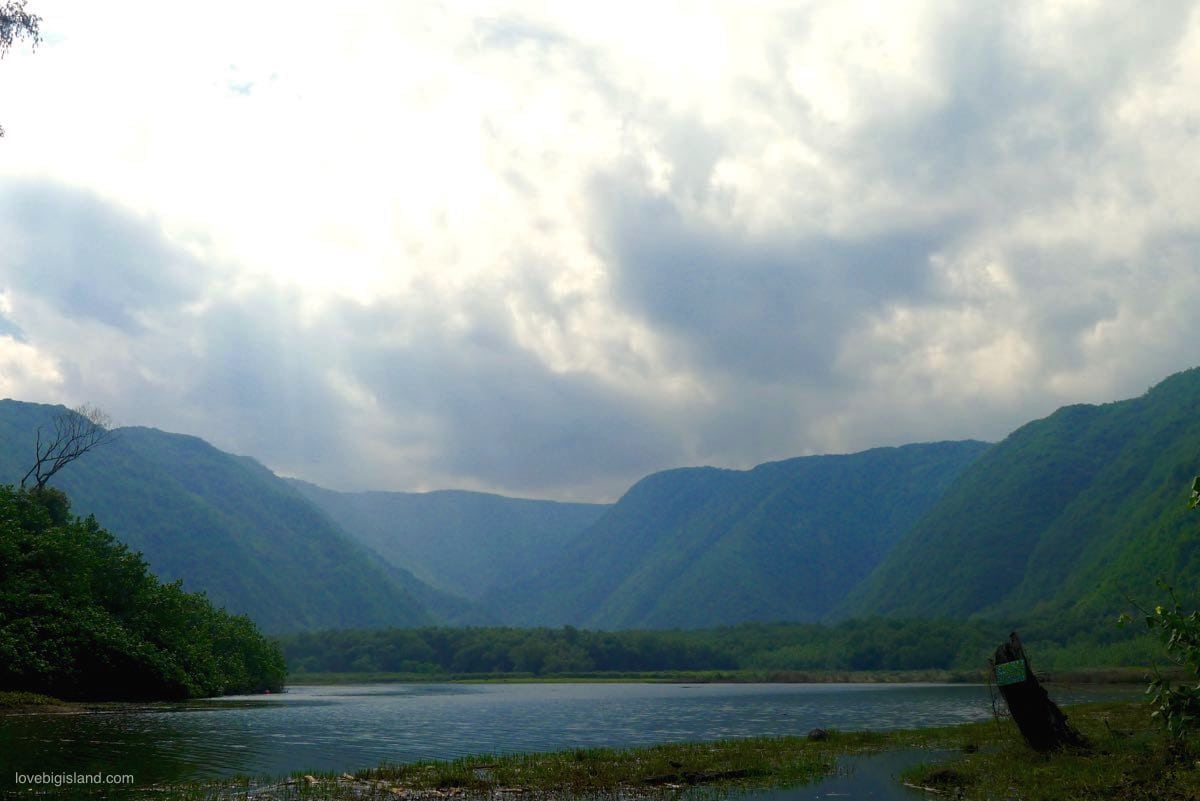
Looking back into the valley you can see the waters of Pololū stream
Keep in mind though that the land further back is privately owned and that there are sacred burial sites deeper in the valley. Don’t venture too far inland to avoid trespassing and disturbing sites that shouldn’t be disturbed.
Hiking beyond Pololū Valley
The trail east of Pololū Valley follows the old government road that once connected the valley chain stretching toward Waipiʻo. Honokāne Nui is the next valley along, roughly 1.5 miles east, and the route continues through several more valleys beyond it. Access past the Pololū Valley floor is blocked by private land, and there is no current legal public trail to Honokāne Nui or the valleys east of it. If you want to see more of the chain, Waipiʻo Valley at the far end is accessible by a separate route from the Waimea side.
Getting to Pololū Valley: directions and parking
Pololū Valley sits in north Kohala on the eastern slope of the extinct Kohala volcano, at the northernmost point of the Big Island. To get there you have to follow the Akoni Pule Highway (highway 270) until it ends 8 miles east of the town of Hawi. No reservation or entry permit is required.
Snack time: When driving through Kapaʻau make a quick stop at the Motek bakery to pick up fresh pastries to enjoy during your walk. It keeps limited hours (Thursday to Sunday, 9am to 2pm), so check before you plan around it.
Parking at Pololū Valley
There is limited parking space available at the lookout point with minimal space to turn around so it is possible you need to turn around and park your car on the shoulder of the road and then walk back a few minutes to the valley entrance. (driving directions using google maps).
It is possible you will encounter people from the Pololū Valley Steward Program at the lookout. These people volunteer their time to give visitors information about visiting the valley and make sure parking only happens in allowed spaces. Please treat them with aloha and follow their directions.
Pololū Valley: geology and history
The Kohala Volcano last erupted about 120,000 years ago and is the oldest of 5 volcanoes that make up the Big Island. Between 250,000 and 300,000 years ago the Kohala volcano experienced a truly massive landslide in which a part of the volcano fell into the ocean.
This landslide is responsible for the now famous sea cliffs on the windward Kohala shoreline but also triggered a giant tsunami that left marine deposits several 100s of ft high on the other islands (read more). Remnants from this landslide can still be found under water 81 miles (130 km) from the current coastline. (read more about the geological history of Kohala).
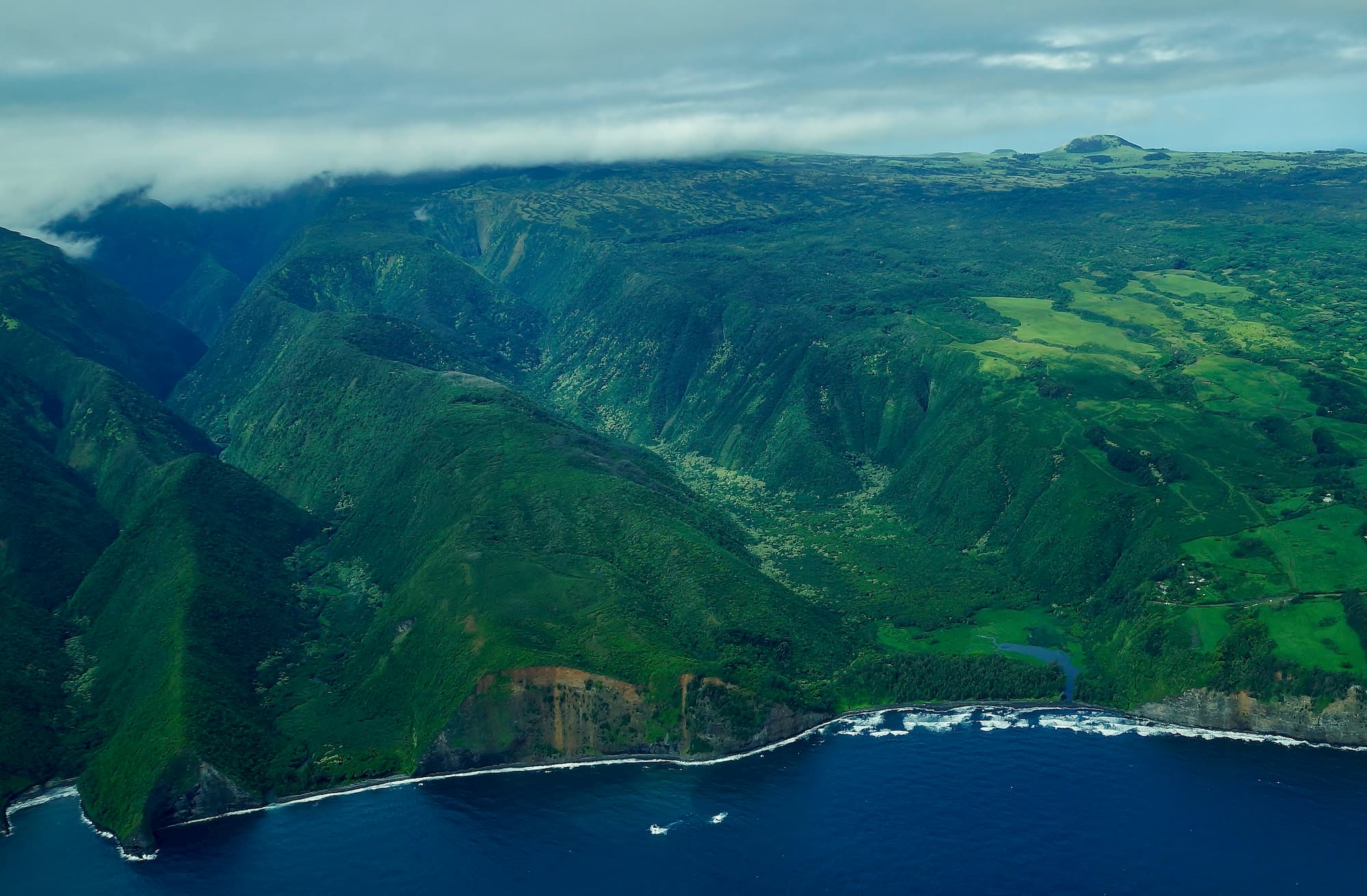
The cliffs of the Kohala coastline were formed during a catastrophic landslide between 250,000 and 300,000 years ago during which a large part of the volcano slipped into the ocean. Pololū Valley is the first valley from the right. Image adapted from source (by Eric Tessmer).
The 7 valleys of the Kohala volcano
During its long lifetime, erosion by rainwater has cut multiple deep gulches, gorges and valleys in the flanks of the windward side of the Kohala volcano. You can see this now as a series of 7 valleys (a valley has a flood plane at the valley floor) of which Pololū Valley is the most northern one.
From Pololū valley on these valleys stretch towards the south-east in an impressive display that you can partly see from the Pololū lookout point. This series consists of the following valleys:
- Pololū Valley
- Honokāne Nui
- Honokāne Iki
- Honokeʻa
- Honopue
- Waimanu Valley (campsite, more information)
- Waipiʻo Valley (the most visited of the valleys)
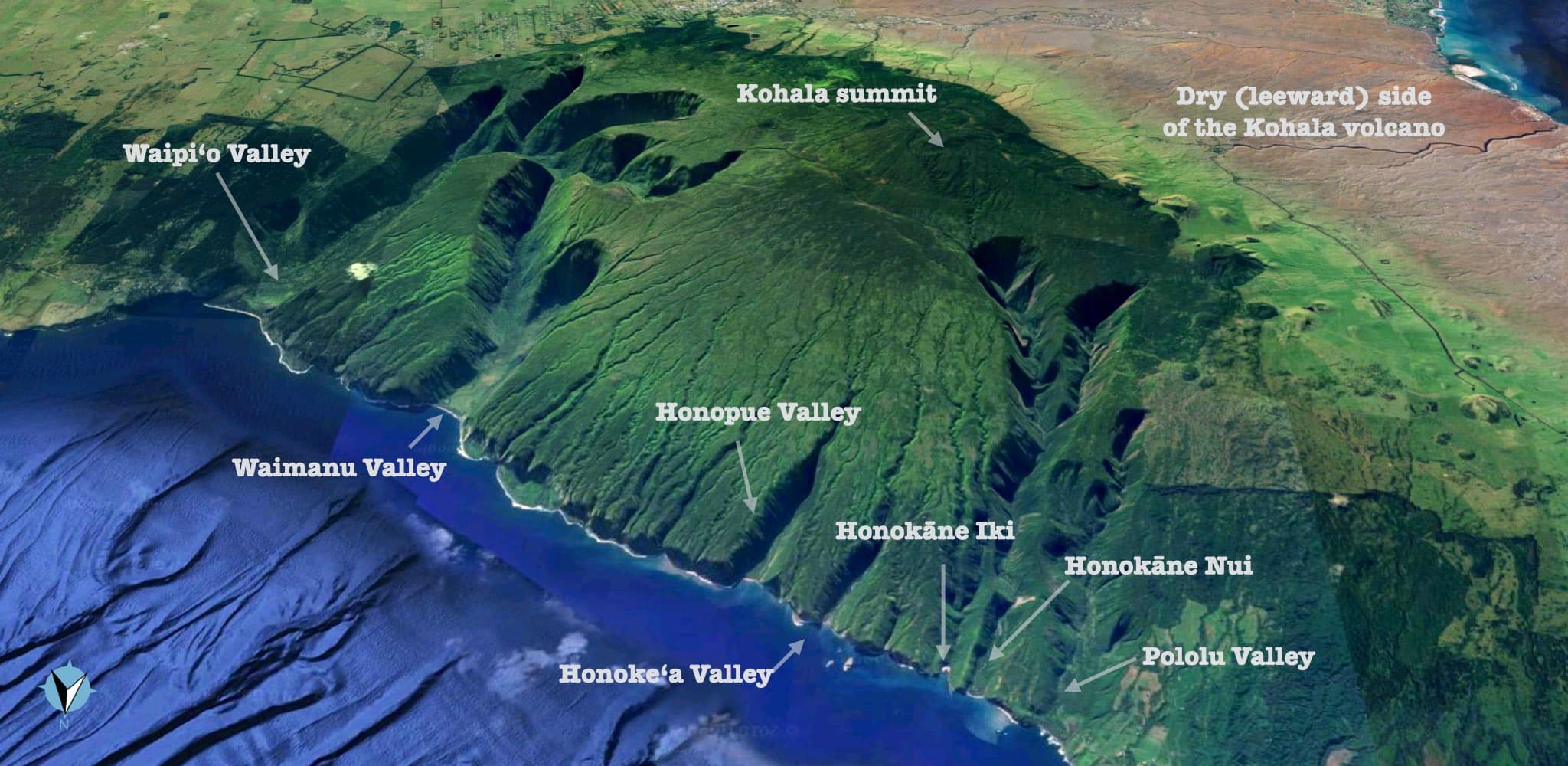
Water has eroded 7 deep valleys into the windward side of the Kohala Volcano of the Big Island.
The water that carved out these valleys is also the reason why these valleys were a popular place to live for the native Hawaiians: a constant supply of water is essential to grow culturally significant crops such as Taro. The steady supply disappeared in 1905 when the Kohala Ditch network was completed. This 22 mile network of flumes and ditches is essential for the water supply of a part of the island but also made sure that there are no permanent residents anymore in Pololū Valley.
The Pololū Trail Steward Program
The Pololū Trail Steward Program places one or more local stewards at the trailhead to inform visitors and monitor the trail and beach. They get to share Pololū’s historical and cultural value, along with the significance the area holds for those living in and visiting Kohala.

Please have a chat with them when you arrive to learn more about the area and treat them kindly. Mahalo!
Things to do near Pololū Valley
Pololū valley is at the northern tip and part of the oldest (of 5) volcanoes that make up the Big Island of Hawaiʻi. Because the valley is at the end of the road you will pass a few cool places and things to do that make it easy to make visiting Pololū valley part of a half or whole day road trip.
We list below a few things to do / places to see close to Pololū:
Keokea Beach Park
Keokea beach park is a quiet beach park with a shower, restrooms, and picnic tables close to Hawi and Pololū Valley (2.5 miles, about 10 minutes by car). This is a good spot for a picnic and a shower after hiking down into Pololū valley.
More information at the Keokea beach park website.
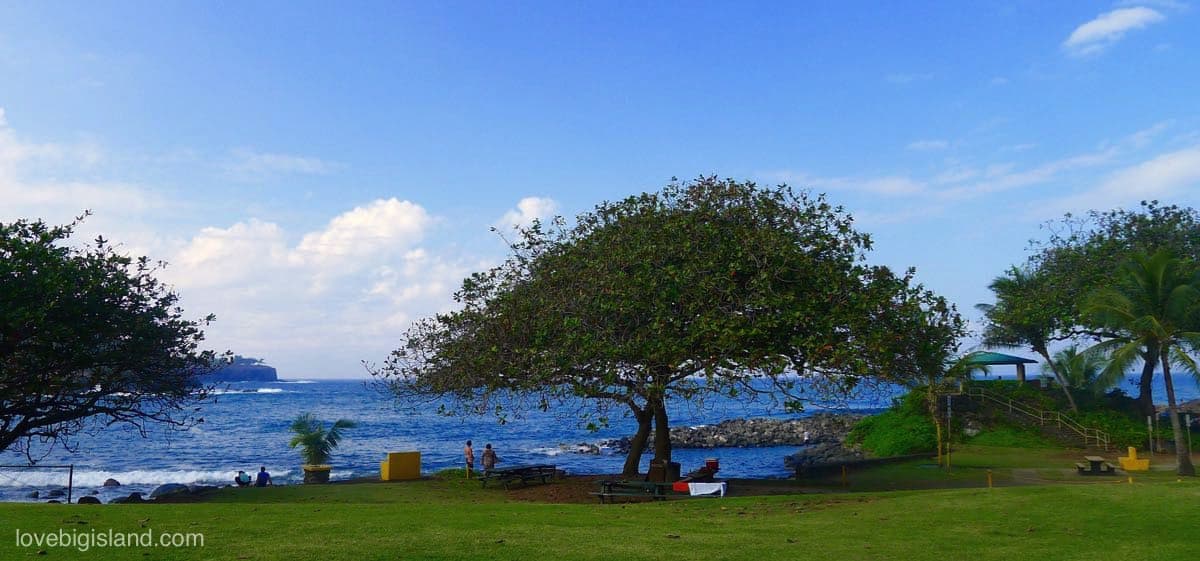
Keokea beach park is a quiet beach park with a shower and picnic tables close to Hawi and Pololū Valley. This is a good spot for a picnic and a shower after hiking down into Pololū valley
Whale watching (December to March)
The Pololū lookout, high above the water, is one of the better shore whale-watching spots on this side of the island, whale season or not. If you are going during whale season (between ~December and March) and want to include a whale-watching picnic to your visit, start by checking out our DIY whale watching tips.