
Many travelers come to the Big Island to see one of the most active volcanoes on the surface of the earth, and Volcano Village, a small town right next to the park, is the perfect place to set up camp and spend a night (or two).
Table of contents
- Volcano Village
- Accommodation in Volcano Village
- Things to do in Volcano
- The Hawaiʻi Volcanoes National Park
- Directions
- Practical tips for visiting Volcano
- Weather
- Interactive map
You can see below how close Volcano Village (center right) is to some of the Halemaʻumaʻu and Kilaueaʻiki craters (left and center) in the national park:
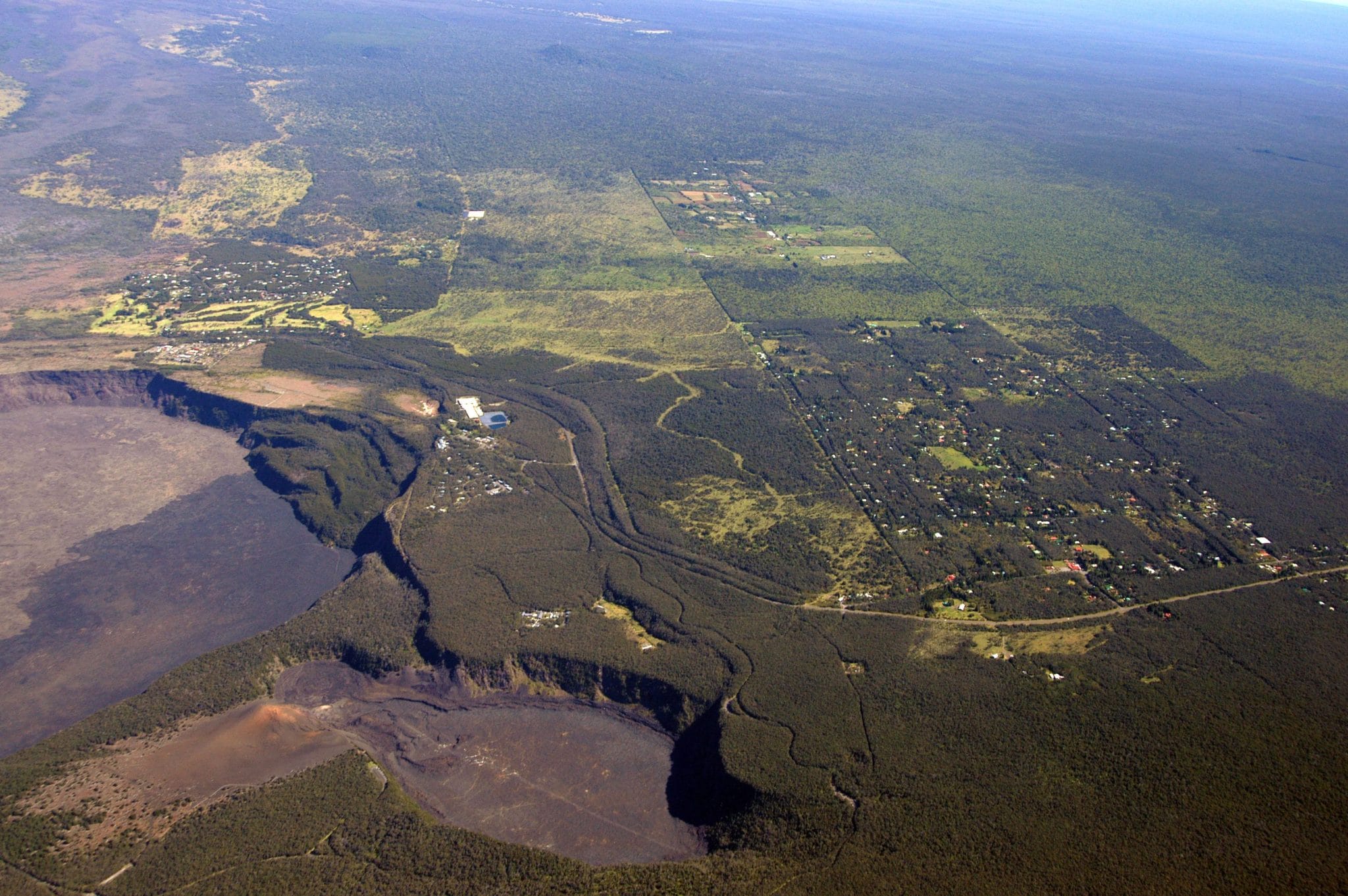
View of Volcano Village (center right) and the Volcano Golf Course subdivision (top left) with the Kilaueaʻiki crater (front center) and the Kīlauea Caldera (center left). Image credits: Hawaii County Department of Planning
Volcano Village
On the doorstep of the National Park lies Volcano Village sits on the doorstep of the National Park.. Volcano Village is a rustic village in the middle of a lush rainforest. Artists live here., is hidden in the middle of a lush tropical Ohia and Hapuʻu fern forest, and is a place to relax – far away from the traffic, the crowds and even the streetlights.
Surrounded by the Hawaiʻi Volcanoes National Park, and with access to many stunning hikes and vistas, it is a perfect place to set up camp for a couple of days
-
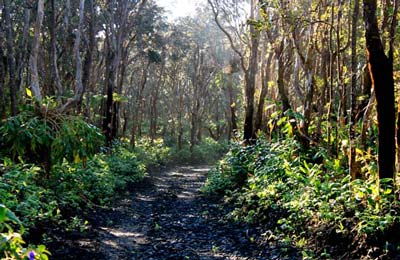

- Most roads in Volcano are dirt roads
-
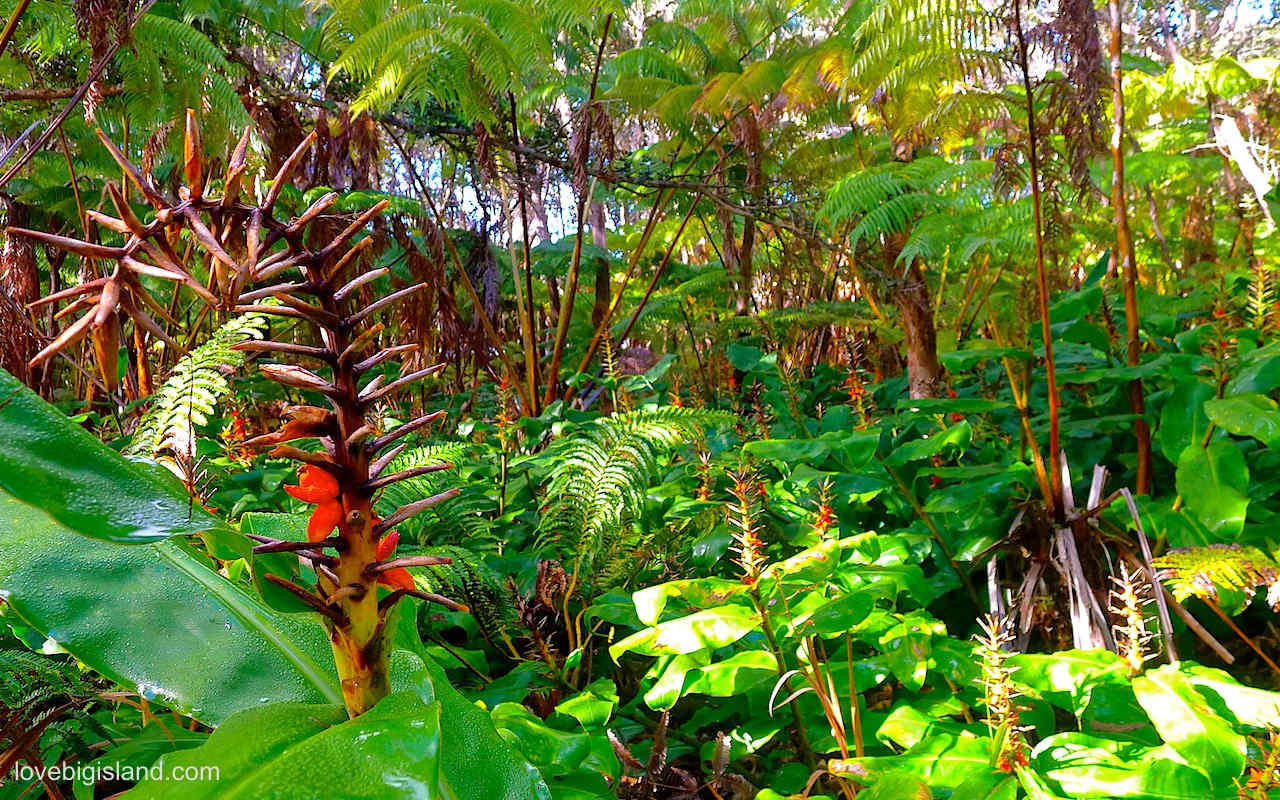

- Kahili ginger covers most of the rainforest floor in Volcano Village. It is very pretty to see but considered an invasive species.
-
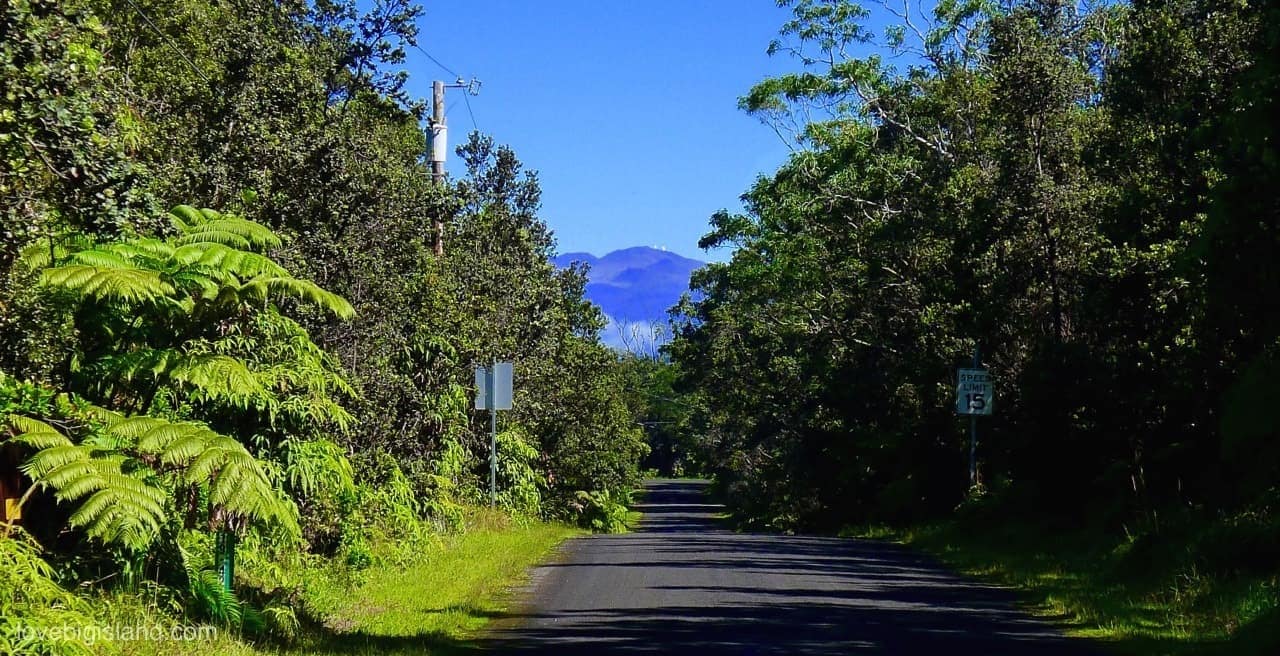

- On a clear day you can see the world-class telescopes on top of Mauna Kea from Volcano Village. Please read our DIY stargazing guide if you’d like to visit the summit of Mauna Kea
Accommodations
Because its secluded location and residential zoning, there are only a few hotels in town. Luckily this is made up by bed and breakfasts and vacation rentals – many with fireplace and hot-tub! Our Volcano Village lodging guide lists the bed and breakfasts and vacation rentals in town. accommodations in Volcano Village.
Things to do
Next to visiting the national park There is more to do than visit the park.. There is a Farmers market every Sunday between 06:30 and 10:00 a.m., a small winery that sells locally produced wine and offers tours, an Orchid Farm in the native Hawaiian Olaʻa Rainforest Reserve, and the Volcano Art Center organizes “after dark in the park” nature walks.
Read more about activities in Volcano Village or about our personal Volcano highlights.
The Hawaiʻi Volcanoes National Park
Designated as an International Biosphere Reserve in 1980 and as a World Heritage Site in 1987, the park is a must-see for any visitor of the Big Island with an interest in (active) volcanoes. The Hawaiʻi Volcanoes National Park was established in 1916 and now encompasses over 500 square miles of over 500 square miles of land with hiking and camping.
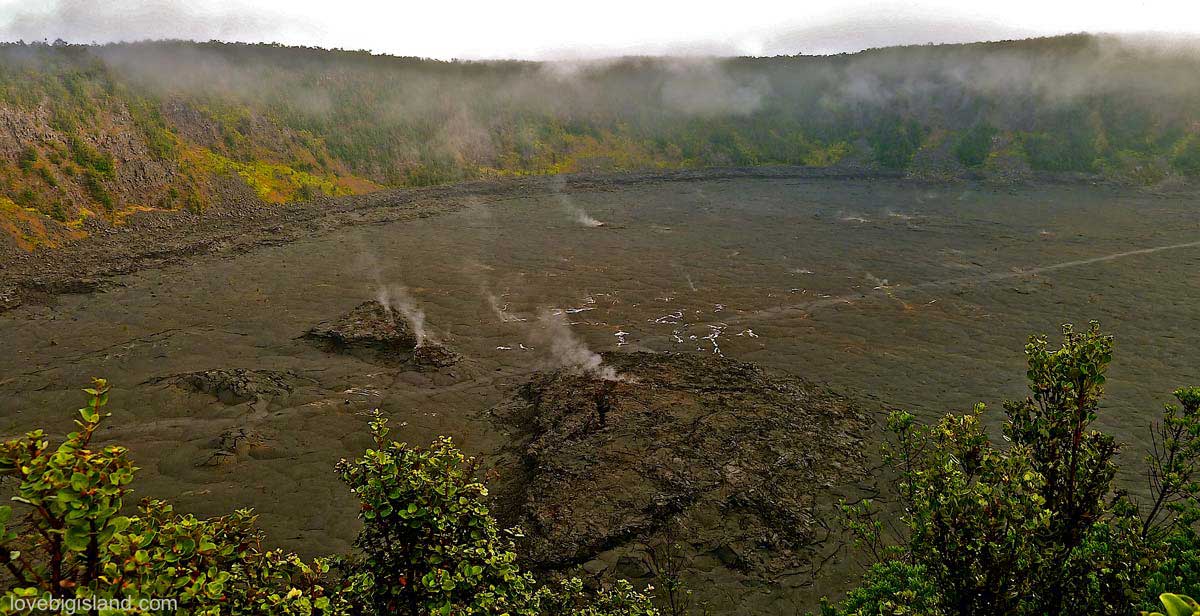
Overview of the Kīlauea Iki caldera, This caldera hosts one of the most spectacular (and moderately easy) hikes on the island
Even if the Kīlauea volcano is not your main reason to visit, we recommend to spend at least a full day in the Hawaiʻi Volcanoes National Park.
The Kīlauea volcano People call Kīlauea the world’s only “drive in” volcano. Next to flows of molten lava, sulfur banks, hot steam vents, (ancient) lava tubes and a huge summit caldera, the park also has 150 miles of hiking trails and attraction such as the Volcano Art Center.
Hawaiʻi Volcanoes National Park is the most-visited spot on the Big Island. Read more about the National park, including directions and must-see attractions.
-
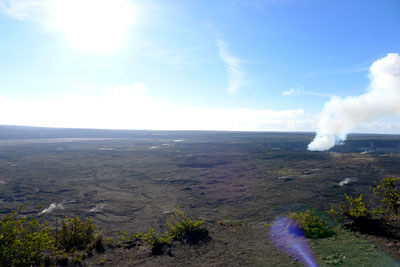

- View of the Halemaumau Crater from the (now closed) Jaggar Museum Outlook during daytime
-
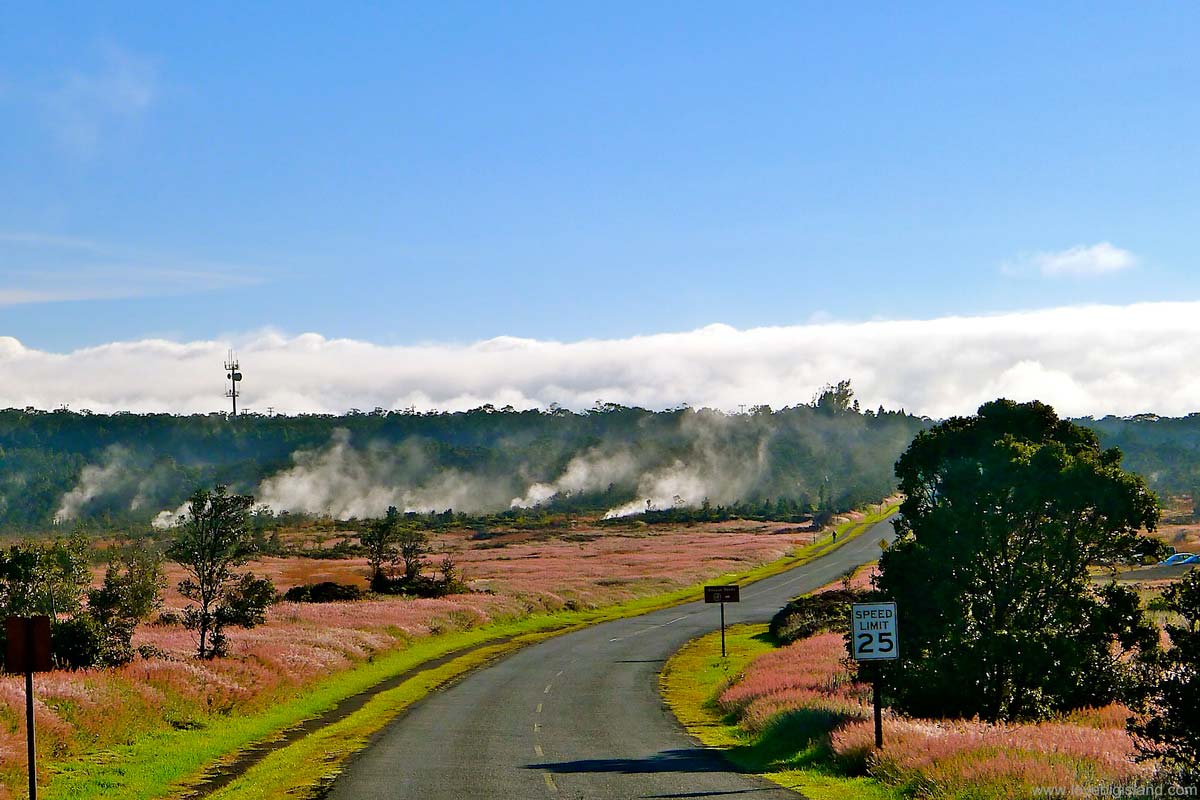

- Steam vents in the Hawaii Volcanoes National Park, a few minutes from the visitor center.
-
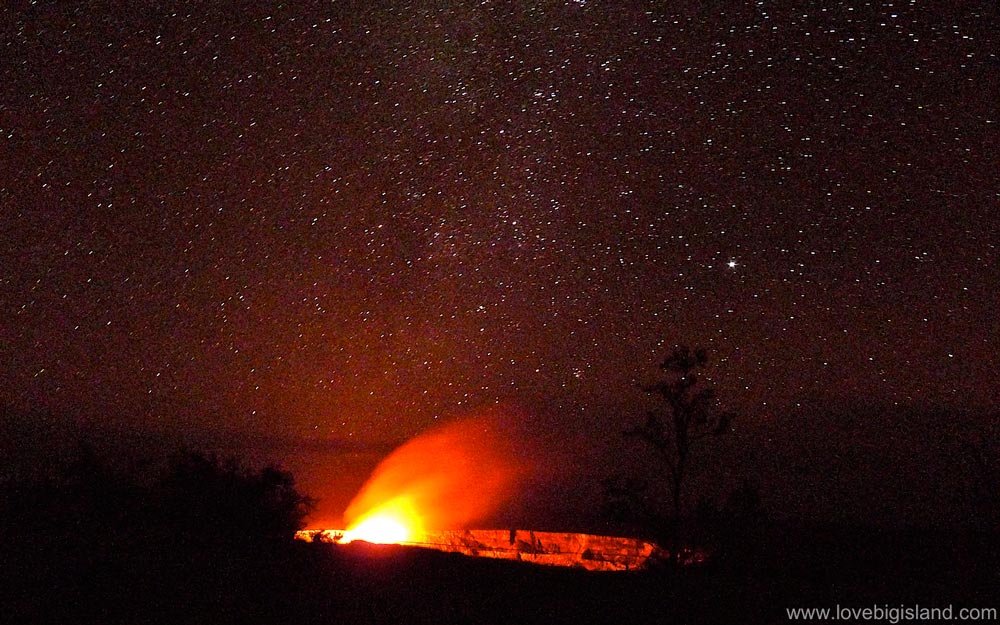

- The glow from the Halemaumau crater at night in the Volcanoes National Park, seen from the (now closed) Jaggar Museum overlook
Directions
The park and Volcano Village border on Highway 11 between Hilo (27 miles, 50 minutes) and Kailua Kona (96 miles, 2 hr. 15 minutes). Public transport stops in Volcano Village a couple of times per day as part of the bus route between Kona and Hilo, but the bus takes significantly longer than the car, and you will want to have a car to visit all the sights in Volcano village and the Volcanoes National Park. We highly recommend you to rent a car.
On a clear day you can see the world-class telescopes on top of Mauna Kea from Volcano Village. Please read our DIY stargazing guide if you’d like to visit the summit of Mauna Kea
Practicalities
Volcano National Park and Volcano Village are located in a rainforest at an elevation of 4000 feet. It is cooler and wetter than the arid coastal areas, but remember to bring a rain coat and a sweater since temperatures are on average 10 degrees F cooler compared to the rest of the island.
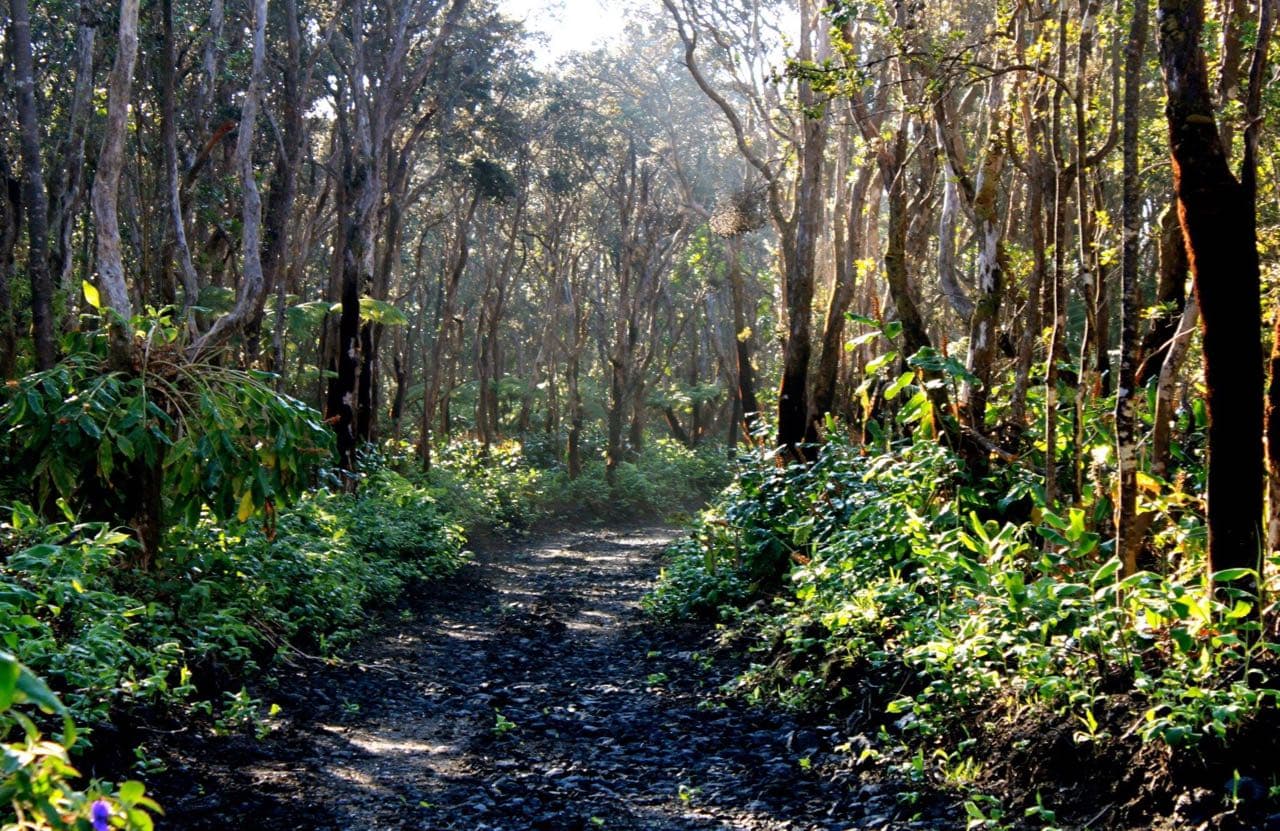
Our favorite time for a walk in Volcano Village is during the early hours of the morning. Image credit: hawaiivolcanovacations
Weather in Volcano Village
on average it is 10 degrees (Fahrenheit) cooler than in Kona, so the evenings can be crisp: take a sweater. It also may rain so take a light raincoat, but also expect sun. It can rain often at times, and if it does during your visit The rain is what keeps the forest green.
Learn more about the weather in Volcano (average temperature, hours of sunshine, cloudy days and precipitation),in our guide to monthly weather for Volcano Village.
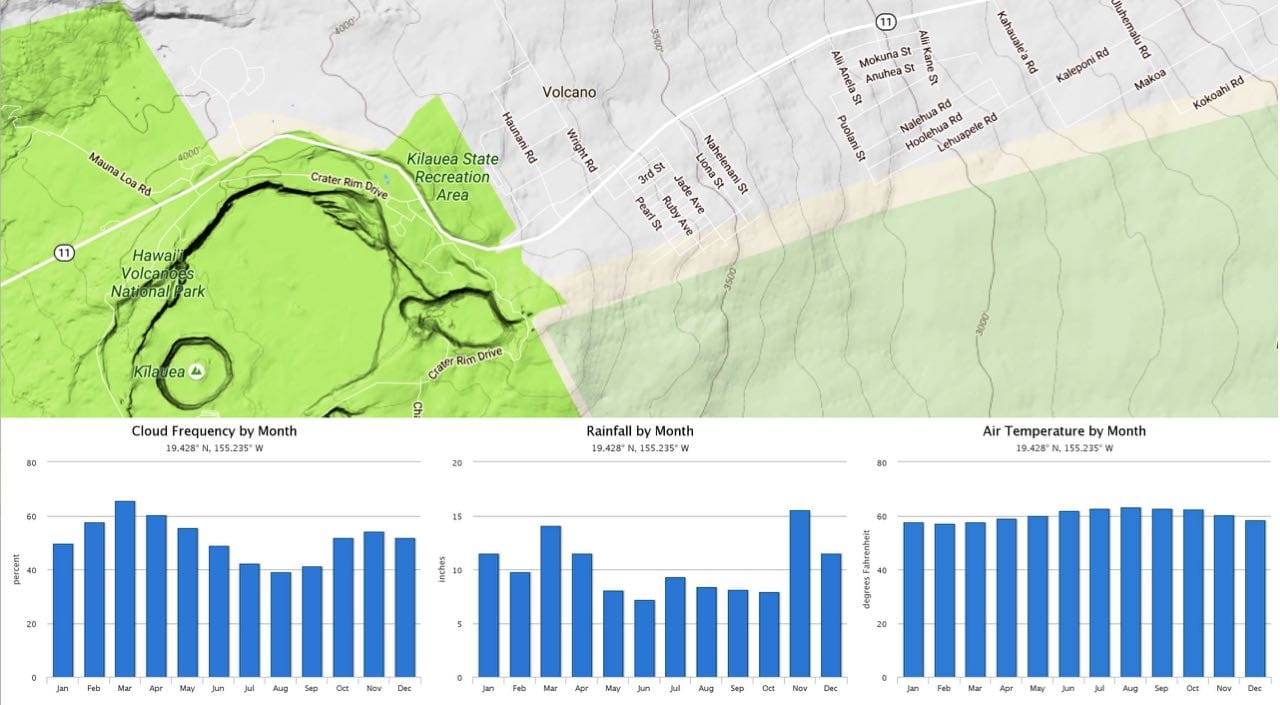
Average monthly cloud frequency, rainfall and temperature for Volcano Village on the Big Island of Hawaiʻi
Interactive Map
The icons on the map are clickable. Clicking on them will display information above the map with a link to an article with more information.
Are you looking for the map of another part of the Big Island? We also have interactive maps of Waimea, Kona, and Hilo!