
Molokaʻi has one hotel, no traffic lights, and about 7,000 residents. The community has spent decades resisting mass tourism. For a traveler, that means near-empty beaches and far fewer crowds than the other islands.
This page is for travelers who plan to spend a few days here. You reach Molokaʻi by air only, since the Maui ferry ended in 2016, so book a rental car before you arrive. There’s no way around the island without one.
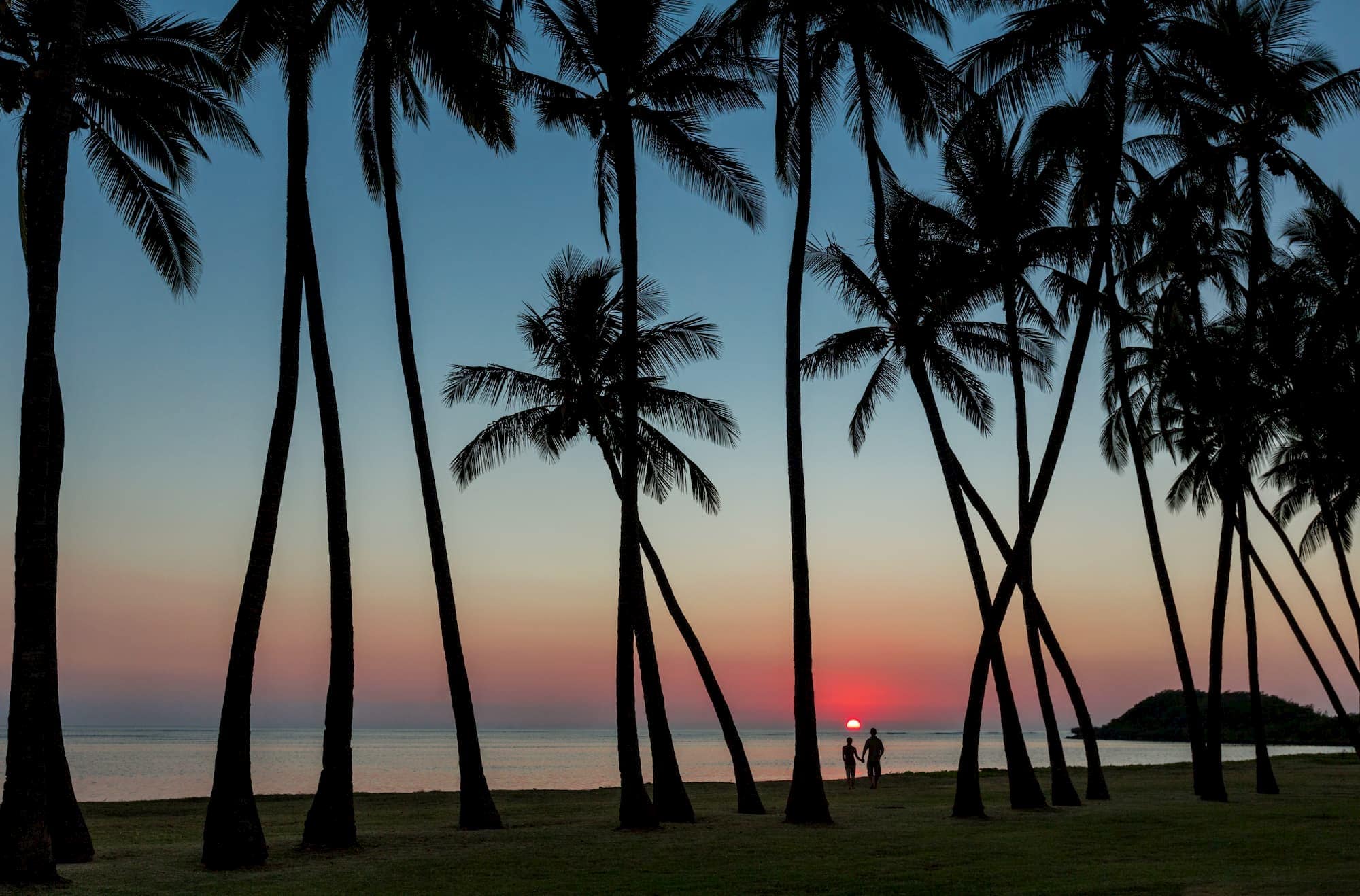
Residents ask visitors to take an interest in the island’s communities, what the tourism board calls a “mutually-beneficial” visit. Credit: Hawaii Tourism Authority (HTA) / Tor Johnson
How Residents Want You to Visit
For decades, residents have turned away the cruise ships and resort development that reshaped the other islands. None of it has taken hold.
The island’s own tourism board asks for a “mutually-beneficial” visit, one that connects travelers with local communities and their work rather than treating the place as a backdrop.
Don’t be surprised to see anti-tourism signs while you’re here. They are aimed at exploitation, not at respectful visitors.
In the video below, cultural practitioner Greg Solatorio explains why he shares his family’s way of life with visitors. He lives off the land in Hālawa Valley, much as his ancestors did a thousand years ago.
Where to Stay
There’s one hotel, and beyond that a scattering of vacation rentals and condos, plus a few volunteer-lodging setups.
Hotel Molokaʻi
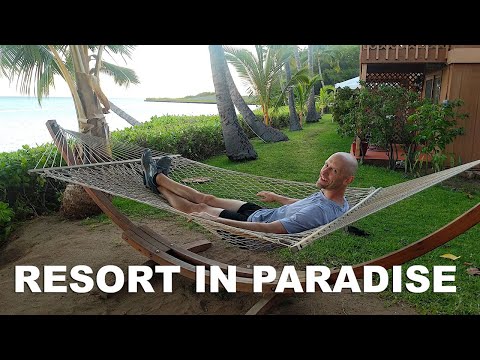
Hotel Molokaʻi is the island’s only hotel, an oceanfront property that has been open for more than 50 years as of 2026. Rooms range from standard doubles to units with kitchenettes, and most have a patio.
From the bar and restaurant you look out over calm water toward the island of Lānaʻi, toward the island of Lānaʻi, a sunset view on this side of the island. The hotel’s own beach comes and goes with the tides and is fine for sunbathing, but the water there is shallow and murky, not for swimming. For that, staff will point you to a better beach farther east or in Kaunakakai, a five to ten minute drive away.
Vacation Rentals
Beyond the hotel, most stays are vacation rentals and condos, booked through Airbnb and VRBO or a manager like Vacasa. The main condo complexes are Wavecrest on the east end and Kepuhi on the west side. None come with the in-house services of a hotel, so plan on cooking and looking after yourself.
Volunteer Lodging
Some farms and organizations offer free or discounted lodging in exchange for volunteer work. The Hālawa Flower Farm, for example, offers on-site lodging in exchange for a half day’s work. Kalaupapa runs a volunteer program with lodging through the National Park Service, though visitor access there is tightly limited. To find other options, contact the Molokaʻi Tourism Board, which can match your interests, environmental or cultural, with the right organization.
Camping
Molokaʻi has a few campgrounds, and all of them require permits. The county beach parks, One Aliʻi and Pāpōhaku, are run by Maui County, and non-residents pay around $50 a night per adult. Pālāʻau, up in the mountains, is a state park at $20 a night per site for Hawaiʻi residents and $30 for non-residents, tent only, with no vehicles allowed in the campground.
For a coastal night, Pāpōhaku has the most room to spread out, with swimming when conditions allow. Pālāʻau is the quieter alternative: tent sites in an ironwood grove, with trails and a lookout over the Kalaupapa Peninsula nearby. Reserve county sites through Maui County Parks, and state sites online through Hawaiʻi’s Explore Outdoor Hawaiʻi system.
Things to Do
Things to do, grouped by area, plus farm tours and volunteer work:
- Kaunakakai and the South Shore
- Pāpōhaku Beach and the West Side
- Hālawa Valley and the East Side
- Kalaupapa and the North Shore
- Farm Tours
- Volunteer opportunities
Kaunakakai and the South Shore
Kaunakakai is Molokaʻi’s main town. The island’s only gas stations and grocery stores are here, along with its restaurants.
Molokaʻi Bicycle, owned by Phillip Kikukawa, rents bikes and will drop off and pick up at the hotel or the harbor. The shop keeps limited hours, Wednesday afternoons and Saturday mornings or by appointment, so call ahead. Ask about the occasional evening group rides, and about the ride east from Kaunakakai toward Hālawa, which is the best on the island.
The Molokaʻi Museum and Cultural Center, a short drive up-country from Kaunakakai, is a good first stop for an overview of the island’s history.
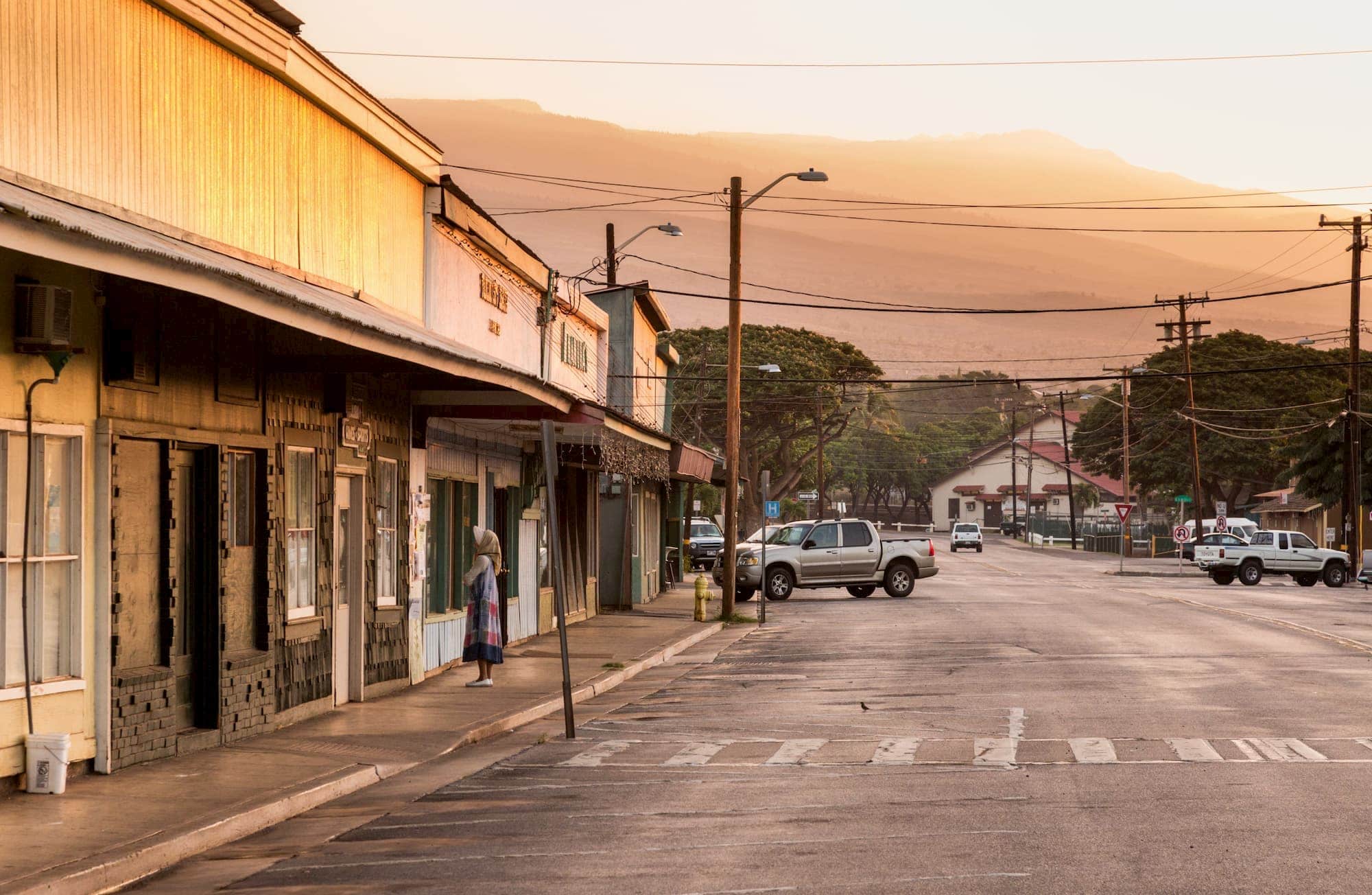
The town of Kaunakakai. Image credit: Hawaii Tourism Authority (HTA) / Tor Johnson
Pāpōhaku Beach and the West Side
Drive west from Kaunakakai onto the dry side of the island and you reach Pāpōhaku Beach, three miles of white sand and one of the longest beaches in Hawaiʻi. It’s usually near-empty, with room to spread out. Facing west, it’s a strong sunset spot, and on a clear night after dark you can see the lights of Oʻahu across the channel.
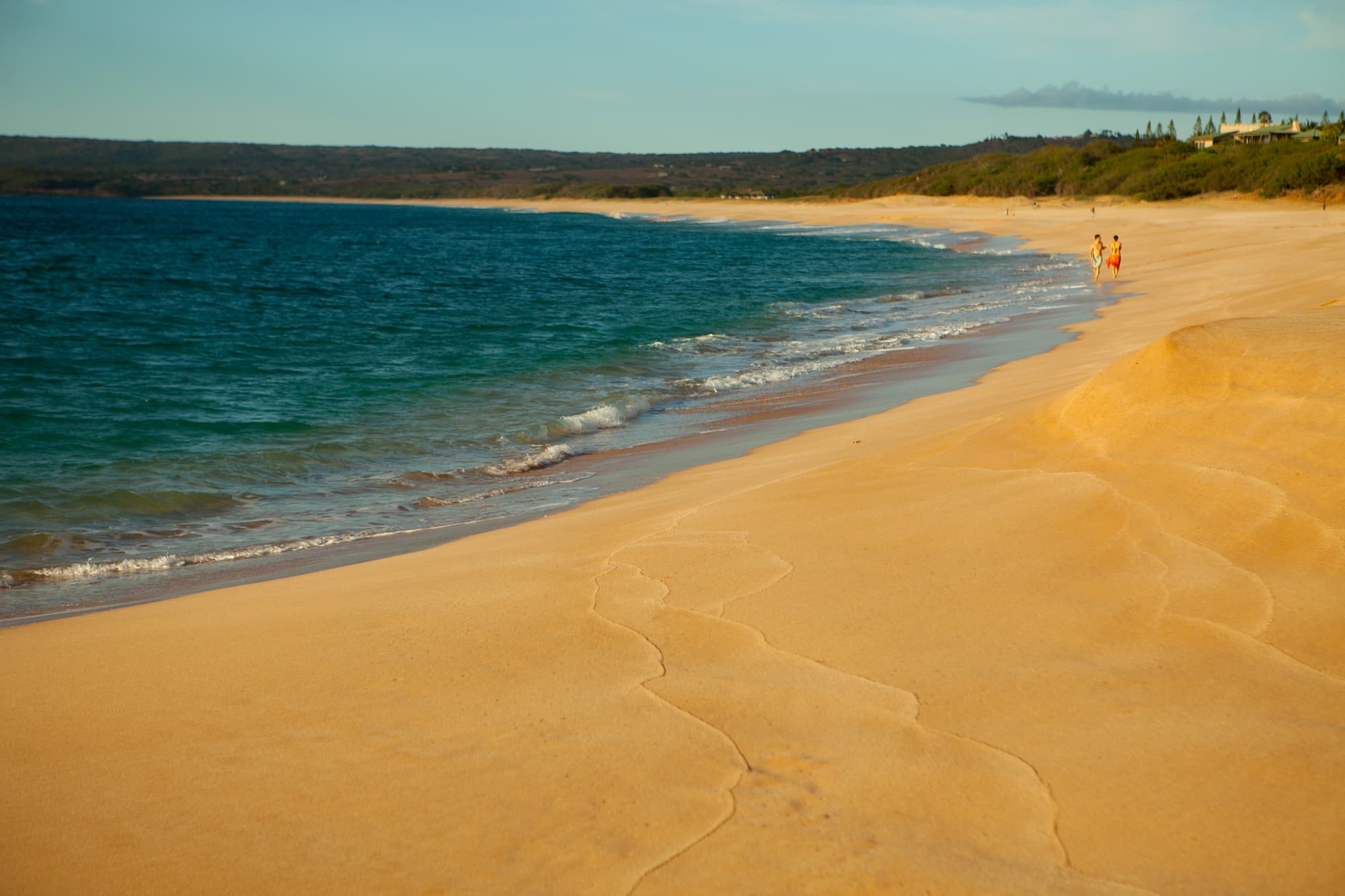
Pāpōhaku Beach is one of the longest white-sand beaches in all of Hawaiʻi. Credit: Hawaii Tourism Authority (HTA) / Dana Edmunds
Hālawa Valley and the East Side
From Kaunakakai, the road east runs from the dry south shore into the green, wet valleys of the east end. It is the best drive on the island: it passes through small residential areas and beach parks, then runs along the rocky coast, rising and falling with the shoreline.
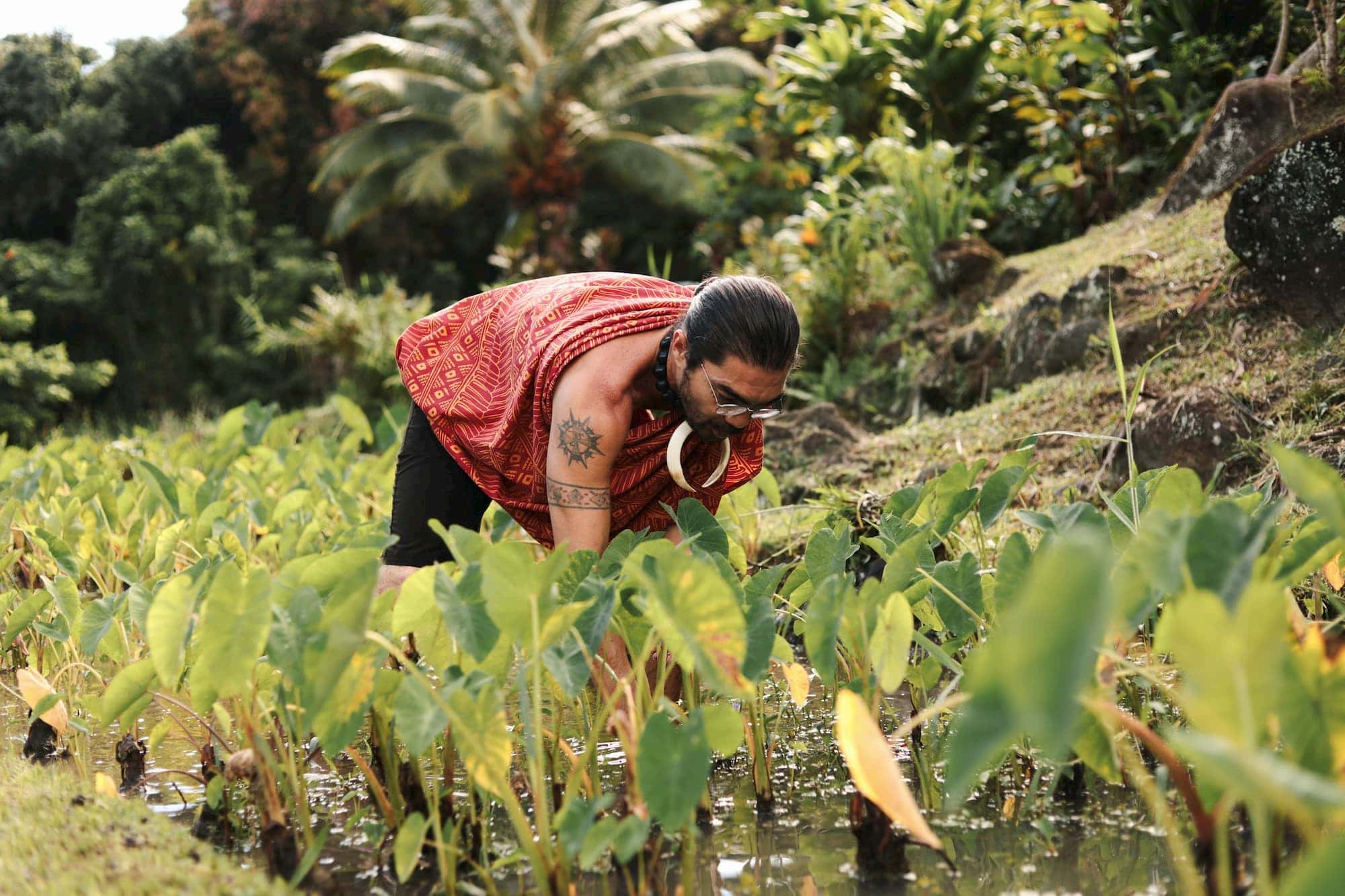
Greg Solatorio works on his taro field in Hālawa Valley. He often leads the Hālawa Valley Cultural Hike, He often leads the Hālawa Valley Cultural Hike and covers the valley’s history and cultural significance.. Credit: Hawaii Tourism Authority (HTA) / Brooke Dombroski / @brooklynhawaii
At the end of the road sits Hālawa Valley, a deep green valley of waterfalls and taro fields that ends at a twisting beach park. The Sons of Hālawa documentary follows the Solatorio family and their work to keep the valley’s history alive. Watch it before you go.. A 1946 tsunami tore through it, with waves up to 100 feet high.
Two guided tours take you deep into the valley, both ending at the same private waterfall: the Solatorio family’s cultural hike, and the Hālawa Valley Flower Farm’s garden tour.
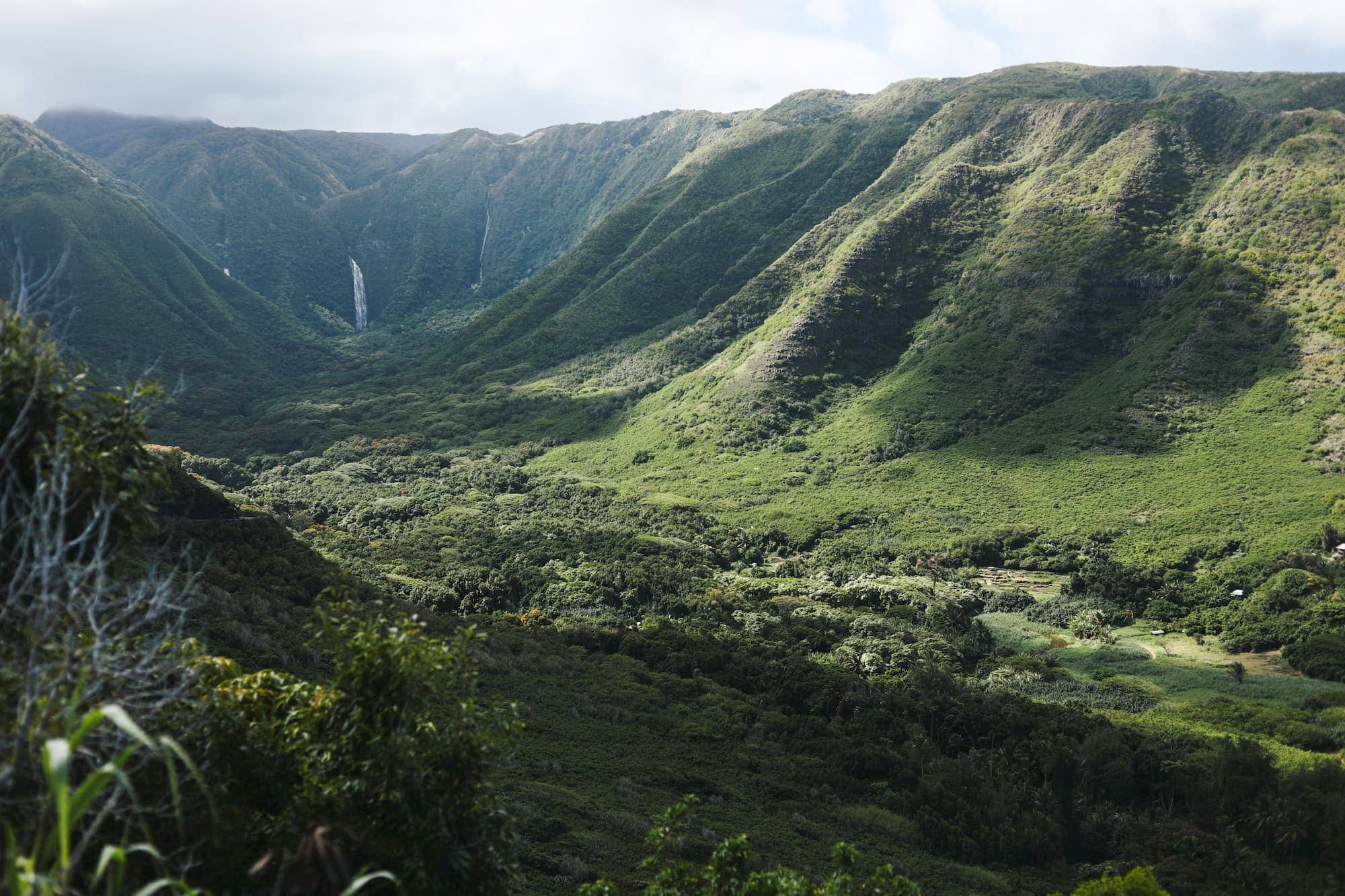
Hālawa Valley is a historic Hawaiian valley with towering waterfalls. Hawaii Tourism Authority (HTA) / Brooke Dombroski / @brooklynhawaii
Hālawa Valley Falls Cultural Hike
The Solatorio ʻohana (family) leads a guided cultural hike and presentation into the valley. It combines cultural protocol with a hike to the back of the valley and a swim at Moʻoʻula Falls, which sits on private land; you can reach it only on this tour or the flower-farm tour that also visits it. Watch the documentary first for the context.
Hālawa Valley Flower Farm & Waterfall Hike
A second tour to the same waterfall is run by the Hālawa Valley Flower Farm. It centers on the farm’s tropical gardens and the native fruits and plants grown there, and includes a fresh smoothie and a swim at the falls. Pick this one if the plants and the farm interest you more than the cultural history.
Hālawa Valley Beach Park
Much of Hālawa Valley is private property, so respect the no-trespassing signs, but the beach park itself is public and open to all. It is a green, tropical contrast to the wide-open sand at Pāpōhaku, and it makes a good morning or afternoon stop, before or after one of the valley tours.
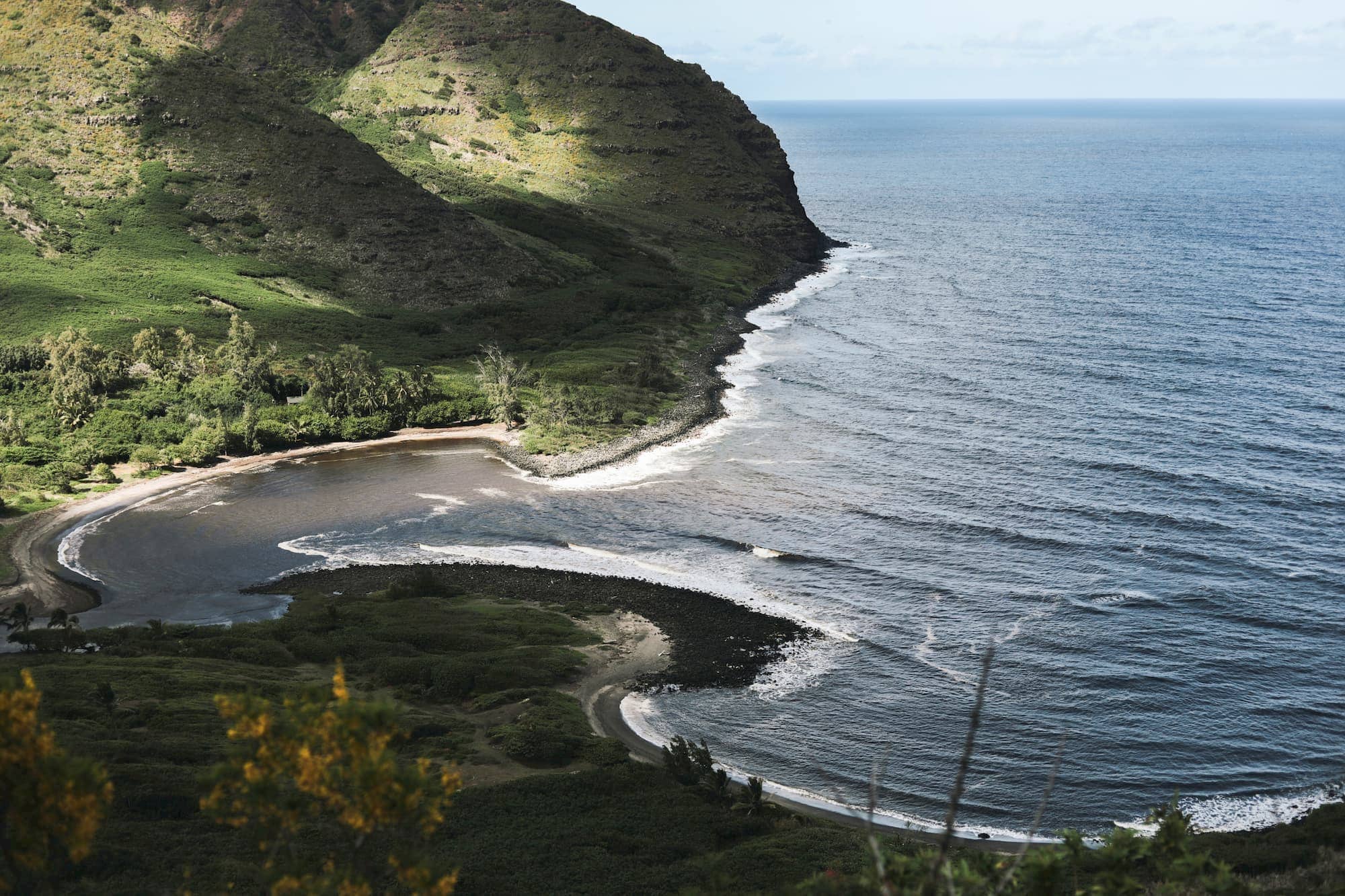
Hālawa Valley Beach Park from the overlook. Credit: Hawaii Tourism Authority (HTA) / Brooke Dombroski / @brooklynhawaii
Kalaupapa and the North Shore
Molokaʻi’s north shore has some of the tallest sea cliffs in the world, dropping well over 3,000 feet to the water and cut by small valleys and tall waterfalls. Most of it is roadless and undeveloped, seen only by boat or plane, much like Kauaʻi’s Nāpali Coast.
The one inhabited corner of that coast is the Kalaupapa Peninsula, protected as Kalaupapa National Historical Park.
In the mid-1800s, as Hansen’s disease (leprosy) spread through Hawaiʻi, King Kamehameha V ordered those infected exiled to the isolated Kalaupapa Peninsula. The sea cliffs and rough water made it a natural prison.
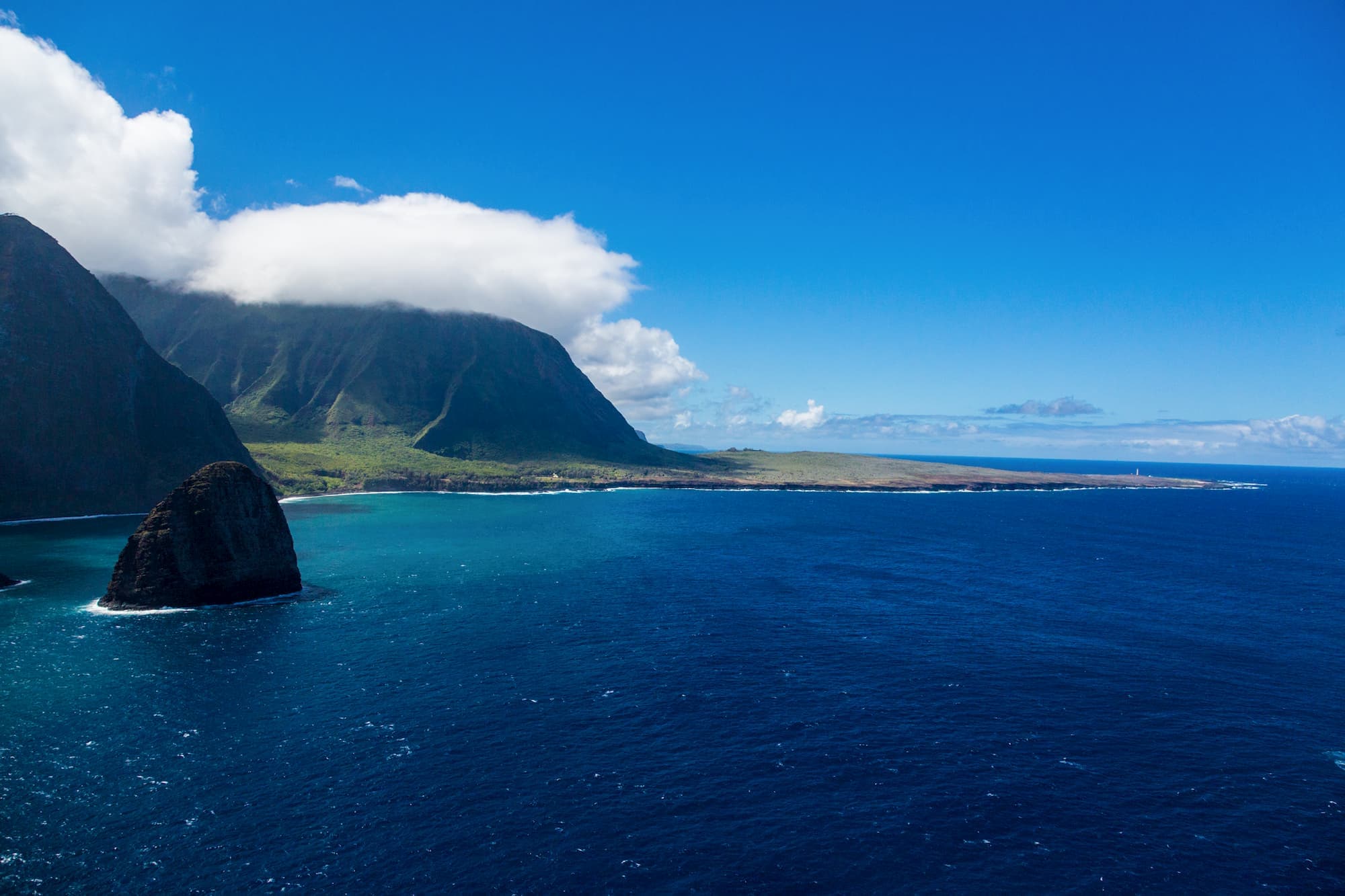
Sea cliffs at the Pali coast with Kalaupapa in the distance. Credit: Hawaii Tourism Authority (HTA) / Tor Johnson
Over the years, more than 8,000 people died at Kalaupapa, among them Father Damien, later made a saint for his work with the community. A small number of former patients still live there today, long since cured but with no life to return to elsewhere. The National Park Service manages the peninsula.
Visiting is tightly restricted. The Park Service requires a permit for anyone entering, and visitors must be at least 16 and must come on a guided tour. A 2019 landslide destroyed the pali (cliff) trail, so foot and mule access are gone, and the only way in now is by air to the small Kalaupapa airport.
Guided visits have been hard to come by in recent years, and the peninsula’s longtime tour operator is no longer running trips. Confirm the current situation with the National Park Service before you build a visit into your plans.
Farm Tours
Farmers on Molokaʻi grow plumeria, macadamia nuts, and coffee, and a couple of its farms are open to visitors. The island’s coffee operation, Coffees of Hawaiʻi in Kualapuʻu, has shut its farm tours, along with the gift shop and espresso bar, after the coffee berry borer beetle and coffee leaf rust hit the crop, though it still sells Molokaʻi-grown coffee online. The macadamia and plumeria farms are the ones still open.
Molokaʻi Plumeria Orchard
Plumeria is the classic Hawaiian lei flower, soft-colored and sweet-smelling. Molokaʻi Plumerias has grown them here for more than 30 years as of 2026. The farm sells the blossoms and has run lei-making visits by reservation, so call ahead to confirm what is available before you drive out.
Purdy’s Natural Macadamia Nuts
Purdy’s is a small, working macadamia nut farm near Hoʻolehua. Owner Tuddie Purdy walks you through cracking and tasting the nuts, and explains how roasting changes the flavor and how the tree took hold on Molokaʻi. The tour is free, and the farm is open weekdays 9:30 to 3:30 and Saturday 10 to 2, with Sundays and holidays by appointment.
Hālawa Flower Farm Tour
The Hālawa Valley Flower Farm also runs a standalone garden tour, with a waterfall hike and a fresh smoothie.
Volunteer Opportunities
To volunteer, contact the farms directly. Most will set up a volunteer arrangement, and the terms vary from one to the next. Two more worth asking about are the Mokio Preserve, through the Molokai Land Trust, and the Moʻomomi Preserve, run by the Nature Conservancy.
Food and Drink
The island’s restaurants are all in Kaunakakai, and there are not many. These are the ones worth knowing:
Kanemitsu Bakery (and the famous “hot bread”)
By day, Kanemitsu Bakery is the island’s main bakery and breakfast spot, in the center of Kaunakakai. Go in the morning for coffee and a pastry, and expect to end up talking with locals.
The storefront closes in the afternoon, but after dark after dark the bakery opens a window out back and sells its hot bread: a warm loaf of soft white bread split and filled with cream cheese and jam, usually blueberry, strawberry, or guava. One loaf is big enough to split with someone. The hours shift, so ask a local when you’re on-island.
Paddler’s Restaurant and Bar
Paddler’s serves happy-hour drinks and casual dinners. Keep it simple: beer, basic mixed drinks, burgers, and local fish plates. Locals turn up here, especially on a kanikapila night, when musicians gather for an impromptu live session. The kitchen runs Wednesday through Saturday only, so plan around that and call ahead to catch a music night.
Hotel Molokaʻi
The bar and restaurant at Hotel Molokaʻi is the only waterfront dining on the island. Guests and non-guests both come for dinner and drinks, and it’s best at sunset.
Getting Around
You’ll want a rental car on Molokaʻi; it’s the only practical way to cover the island. Alamo is the only rental company at the airport. The budget alternative is Molokaʻi Car Rental, which rents older cars by the week, roughly $420 for a compact, with daily rates by quote, plus a small highway and licensing surcharge and state tax. The cars show their age, sometimes without air conditioning, so ask what you’re getting when you book.
Getting to Molokaʻi
You can only reach Molokaʻi by air, on the small commuter flights into Molokaʻi Airport from Honolulu and Maui. The passenger ferry from Maui shut down in 2016 and hasn’t returned, so flying is the only option.