
Maui has a long history and living Hawaiian culture. It was once the “Whaling Capital of the Pacific” as well as an epicenter of sugar cane production. The island also has sacred Native Hawaiian sites you can visit.
Table of contents
- Map with all places mentioned in our guide
- Museums
- Historic Places and Palaces
- Cultural Experiences
- Archaeological Sites
- State Parks
Map
Use the map below to orient and find all historic and cultural sights and attractions mentioned on this page:
If you want to add this map to your Google Maps account for easy access, click the ‘star’ icon next to the map name. You can then view it on your cell phone or computer by heading to your Google Maps account, click the menu and add it to ‘Your Places’.
Cultural and historical experiences on the other Hawaiian islands
If you want to know more about discovering the rich historical heritage on the other Hawaiian islands Our history and culture guides for the other islands:
- History and Culture on Oʻahu
- History and Cultural Activities on Kauaʻi (+ Map)
- History and Culture on the Big Island
Museums
If you’re interested in Maui’s history as it relates to both Hawaiian history and its modern day composition, These museums cover Maui’s Hawaiian and modern history:
- Alexander & Baldwin Sugar Museum
- Bailey House Museum
- Baldwin Home Museum
- Hāna Cultural Museum
- Makawao History Museum
- Maui Arts and Cultural Center
- Lāhainā Heritage Museum
- Wo Hing Museum
Alexander & Baldwin Sugar Museum
The rise of the sugar cane industry in Hawaiʻi in the 19th century is what brought workers here from all over the world, forming the basis of the melting pot of cultures we see represented in Hawaiʻi today. To learn about the beginnings of sugar cane and realize its impacts, check out the Alexander & Baldwin Sugar Museum in Puʻunene. Maui had the last remaining sugar mill in the islands, which closed at the end of 2016.
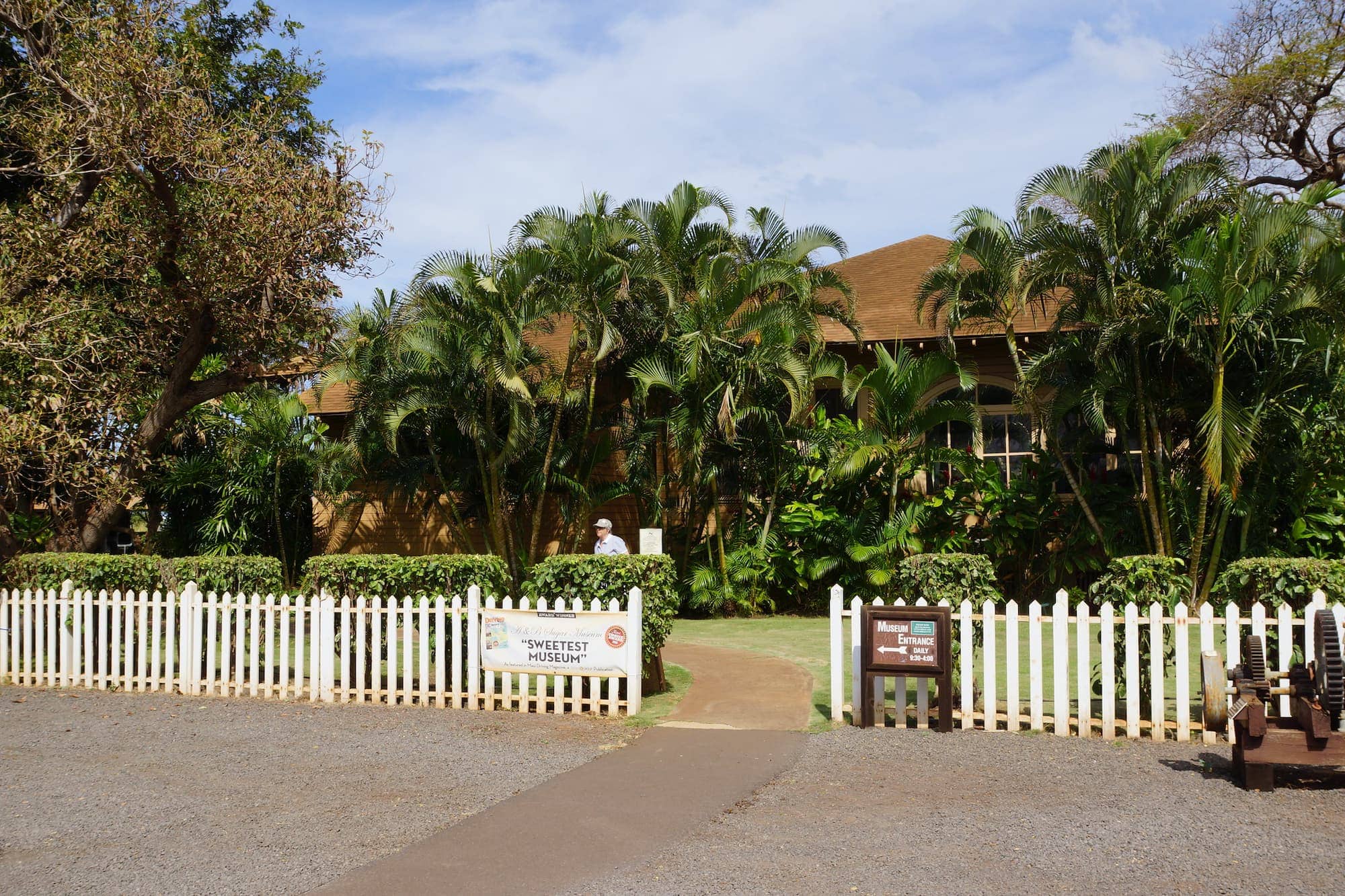
The Alexander & Baldwin Sugar Museum on Maui. Image credit: Allie Caulfield, source.
Recommended visit: The museum is open Monday through Thursday from 10 a.m. to 2 p.m. (last admission at 1 p.m.). Reservations are required, so make them online. One to two hours should be sufficient to explore the museum.
Hale Hōʻikeʻike (Bailey House Museum)
Interested specifically in Hawaiian history? Hale Hōʻikeʻike houses more than 2,000 artifacts, 8,000 historic photos, and a full archive of historical documents, including maps and manuscripts. The exhibits cover Hawaiian history and the influence of the missionaries, who, arguably, shaped Hawaiʻi more than any other outside voice.
Recommended visit: Spend an hour or two exploring this museum in Wailuku before or after a visit to nearby ʻIao Valley. The museum’s gift shop, which supports the museum, sells locally made crafts and books.
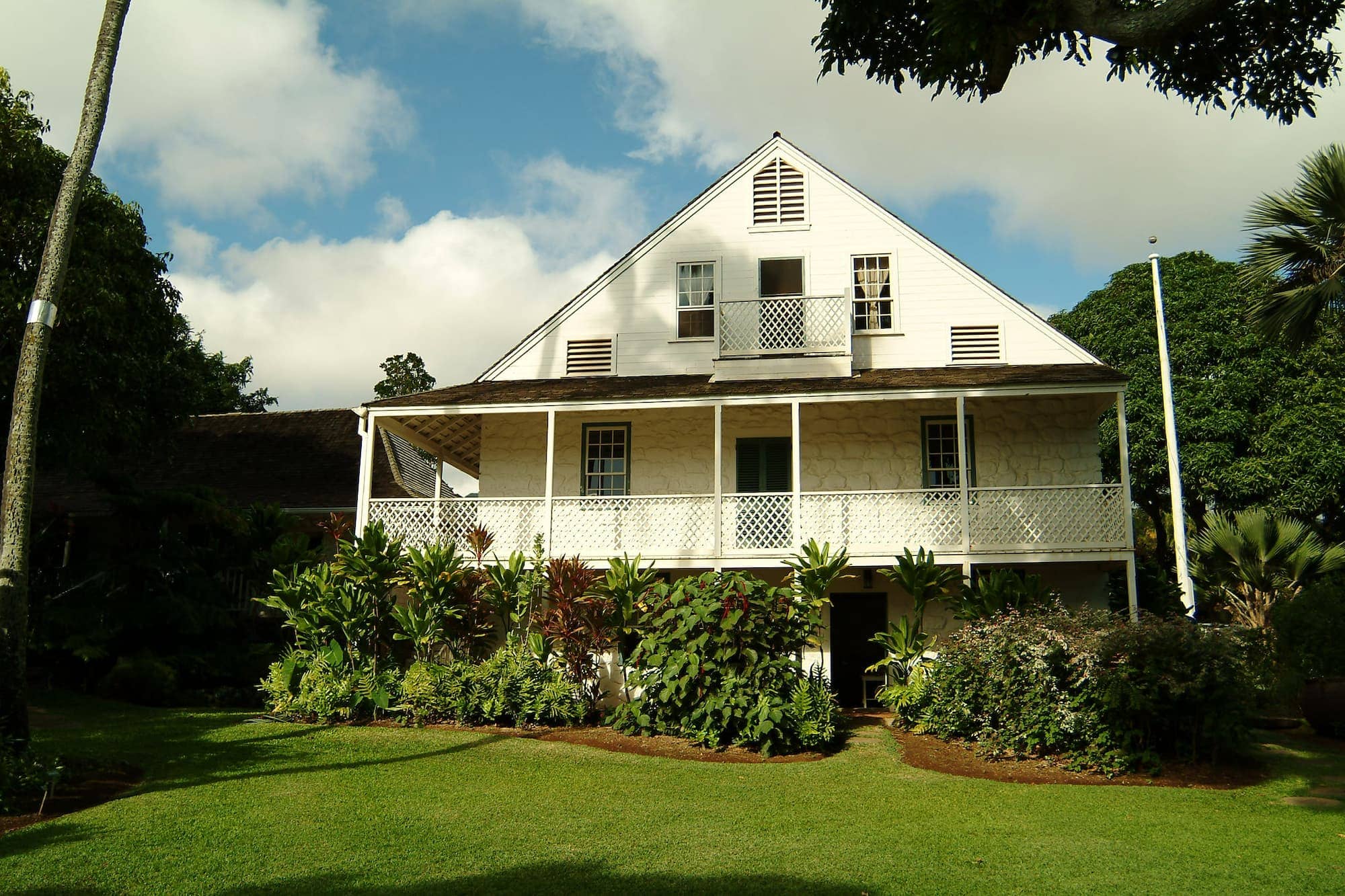
The Bailey House Museum on Maui. Image credit: Smart Destinations, source.
Baldwin Home Museum
And just who were those missionaries who changed Hawaiʻi, and how did they live? The answers are displayed at the Baldwin Home Museum, which was the center of a “missionary compound” in the 1830s.
Recommended visit: Located in Lāhainā, it’s easy to combine a visit to the Baldwin Home with other activities. Just an hour is needed to explore it fully.
Hāna Cultural Center & Museum
Many people drive the Road to Hāna but spend their time at the waterfalls and jungles rather than in Hāna town itself. We recommend setting aside some time to learn more about this unique community and its strong cultural ties at the Hāna Cultural Museum. Humble but authentic, it houses artifacts and other exhibits, but also a 1-hour movie about Hāna (see below for the first 20 minutes).

Recommended visit: It’s not a very big museum, so penciling a visit into your Road to Hāna itinerary will provide you some perspective without taking up a lot of time.
Makawao History Museum
Interested in the Hawaiian cowboy, aka, the paniolo? The upcountry town of Makawao has a museum on the customs and lifestyles of its residents, many of which were heavily involved in the paniolo lifestyle (one past exhibit was on the history of branding irons on Maui, for example). It also expounds upon the history of upcountry Maui as a whole.
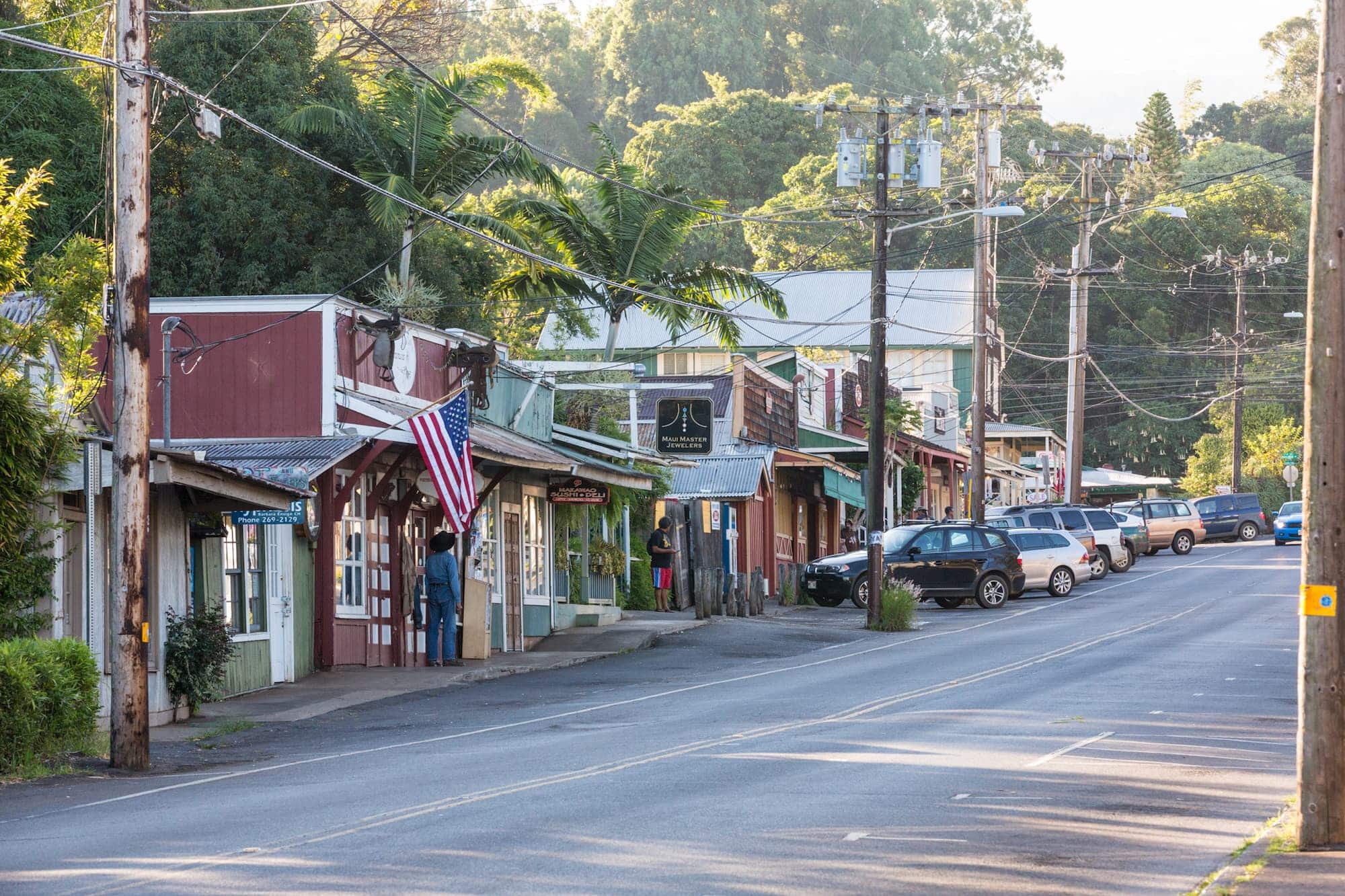
Along the streets of Makawoa (Upcountry Maui). Image credit: Hawaii Tourism Authority (HTA) / Tor Johnson
Recommended visit: Pop in for a short visit when/if you pass through the town of Makawao, perhaps on your way to or from Haleakalā’s summit.
Lāhainā Heritage Museum
Lāhainā is now a hub for visitors and local life. Lāhainā has had many roles over the centuries, which also played important roles as a hub for the Hawaiian monarchy (Lāhainā was once the capital of Hawaiʻi, from 1820 to 1845) and also as the epicenter of the whaling industry in the 19th century. Check out the different eras at the Lāhainā Heritage Museum.

Recommended visit: Show up on Wednesday at 10 a.m. for the guided tour (tours are self-guided otherwise).
Wo Hing Museum
This specialized museum focuses on the influx of Chinese people and culture to Hawaiʻi. Many came to work in construction or in one of the various industries that grew in Hawaiʻi, including whaling and sugar cane. They formed their own community in Lāhainā and built a “society hall” for gatherings. Today, that same building houses the museum which tells their story.
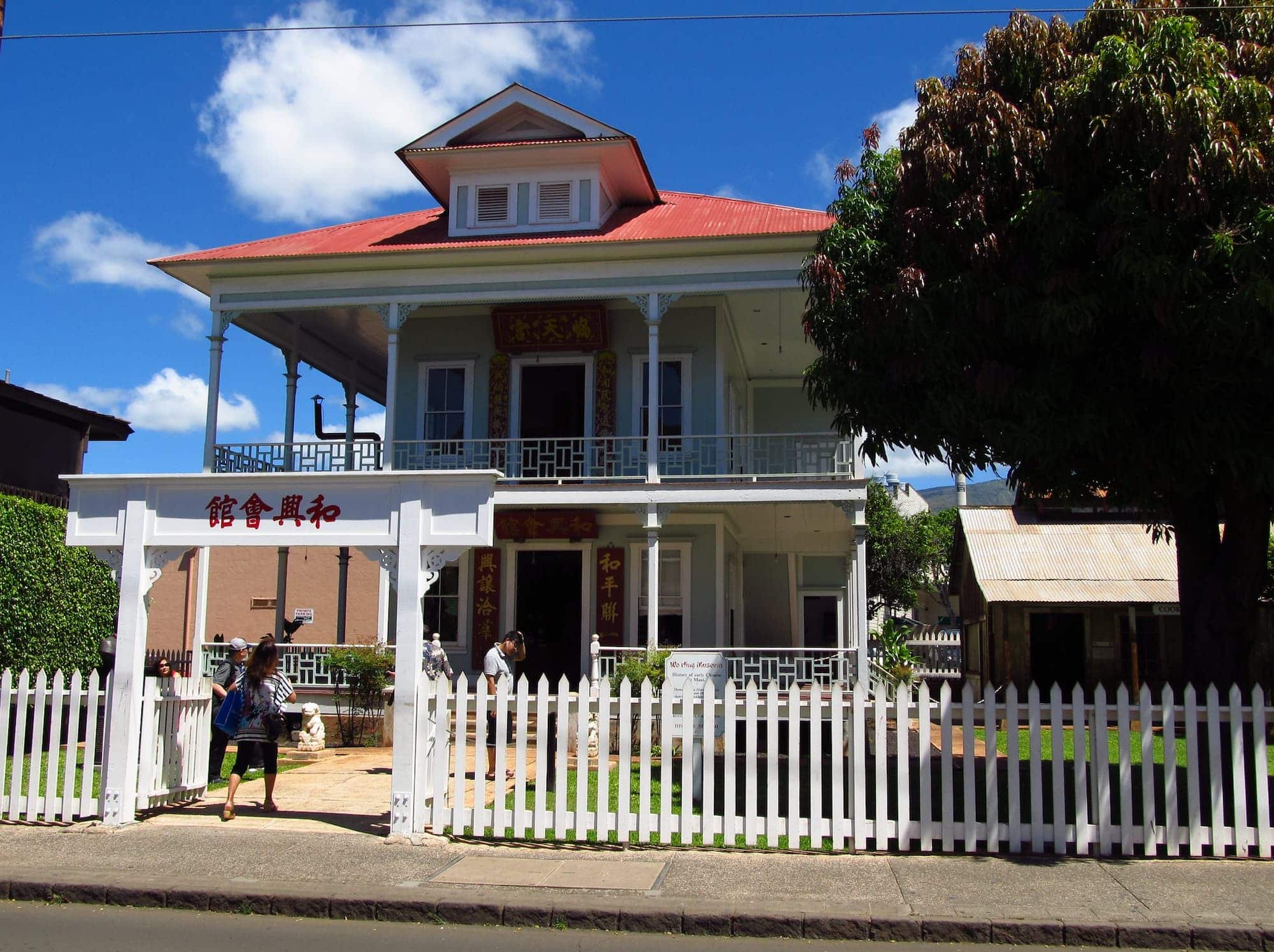
Recommended visit: The museum suits a specific academic or historical interest. In that case, plan for an hour or two.
Historic Palaces/Places
Looking for remnants of the Hawaiian monarchy? There are a couple places to visit on Maui.
Brick Palace
Adjacent to the infamous multi-block banyan tree in downtown Lāhainā is the former location of Brick Palace, built for King Kamehameha in 1798 as the first royal palace of the freshly-uniting Hawaiian Islands (Kamehameha had recently conquered both Maui and Oʻahu, and had his sights set on Kauaʻi).
Recommended visit: This is a quick stop, as all that remains is the outline of the foundation. A plaque provides some history, and the view is the same one the past rulers had.
ʻIao Valley
ʻIao Valley is a lush, green wilderness area, with a rock formation, the ʻIao Needle, that rises more than 1,000 feet. One of the bloodiest battles in Hawaiian history took place there, fought between the armies of Maui and the Big Island in 1790.
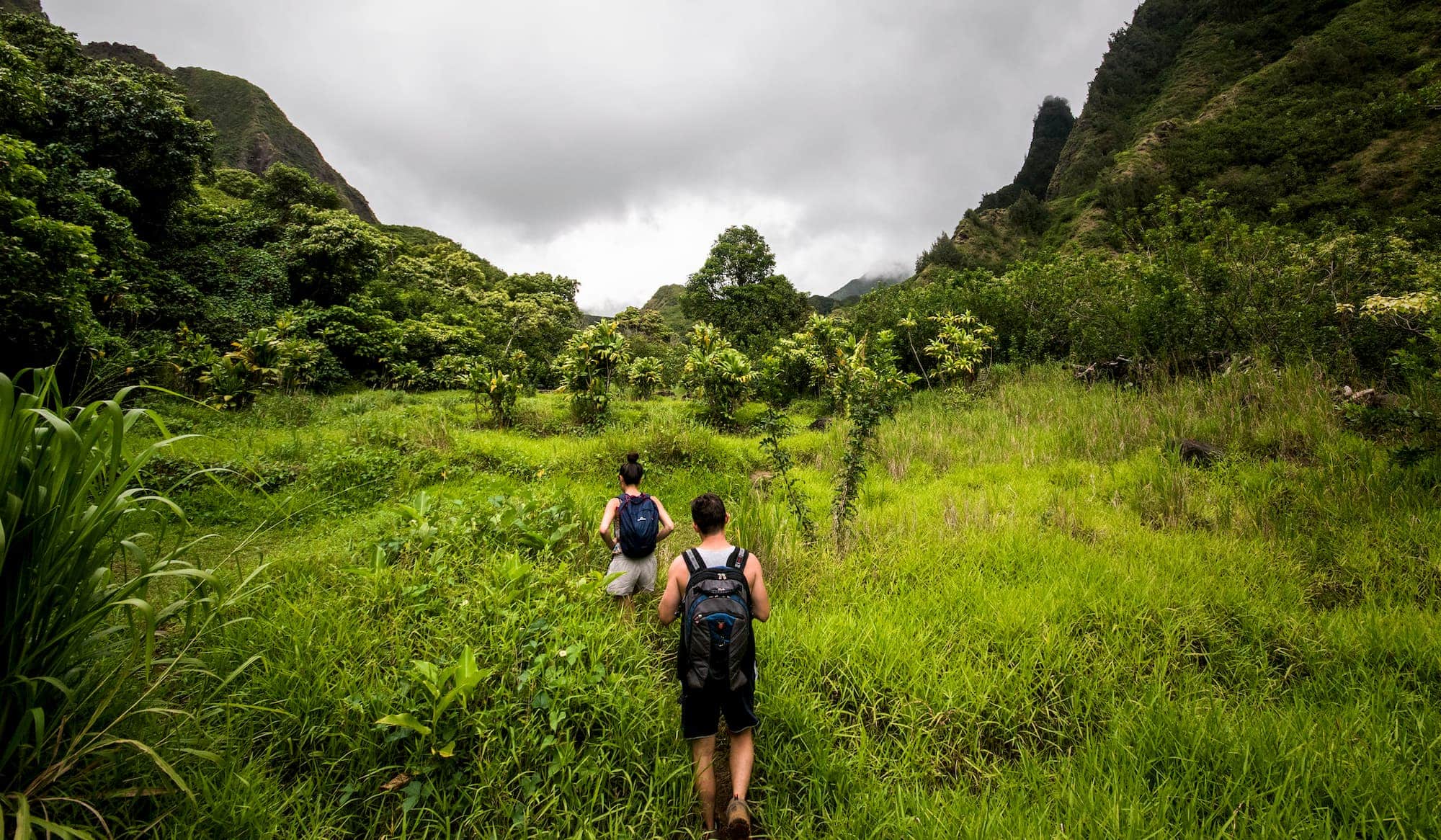
The Iao Valley Trail takes you through a beautiful narrow and lush valley. Image credit: Xavier Lafarge, source.
Recommended visit: Head that way for a walk and be on the lookout for information signs that retell some of the history.
Good to know: Reservations are required for out-of-state residents and can be made here. If you are traveling during high season it’s best to plan and reserve ahead. During low season same-day reservations are often possible.
Cultural Experiences
These are also good places to experience Hawaiian culture:
Hui Noʻeau Visual Arts Center
Want to get involved in Maui’s art and culture community? Perhaps even get hands-on with a class? Check out the Hui Noʻeau Visual Arts Center, which includes a fine art exhibition, classes, and events.
Recommended visit: Check out the impressive selection of locally-oriented art classes for families, first timers, and experienced artists.
Lāhainā Historical Walking Tour
In addition to the Brick Palace, Lāhainā has many historical locations that together show what this area once was for Native Hawaiians and its monarchy. This self-guided tour is completely walkable, with many of the sites in close proximity (you could visit a lot of them in an hour or two). The links above and below provide descriptions of each site, so you can read about them before, during, or after going (preferably before).
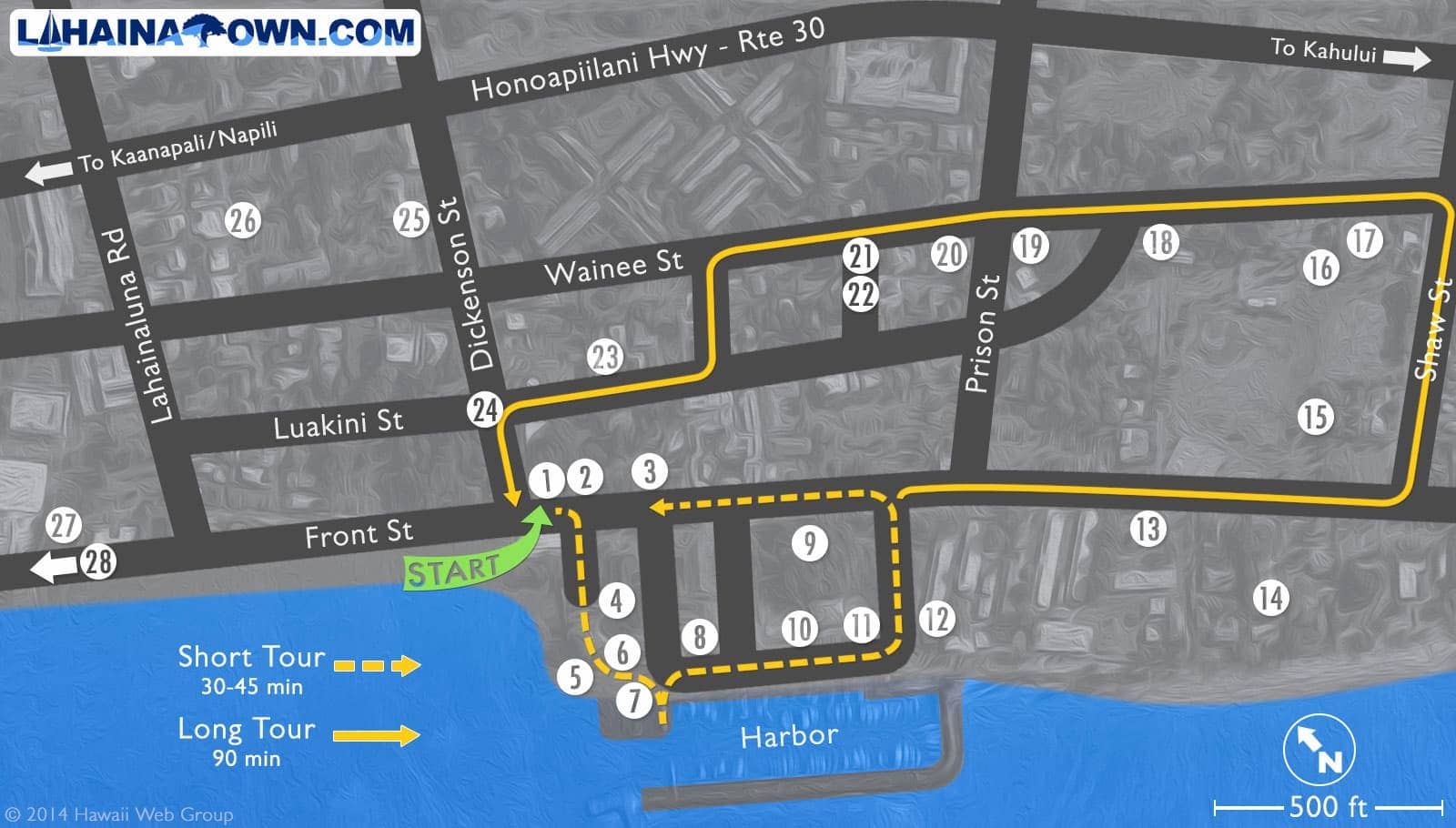
Detail from the walking tour brochure linked here. Credit: the LahainaTown.com website.
Recommended visit: Grab a map and check out a few of these historic locations as you pass by them naturally. Or, pick out two or three to visit one morning with intent.
Join a Luau
While the overall cultural significance of the modern-day lūʻau may be taken with a grain of salt these days, most include traditional singing, dancing, and Polynesian performances like fire-knife dancing.
For example, the Old Lāhainā Lūʻau reviewers most often name the Old Lāhainā Lūʻau the most authentic on Maui, for its attention to detail and its music and dancing, but there are many more!
See also our complete guide to Luau shows on Maui with video reviews and specific recommendations for the best shows for families, food, setting, sunsets.
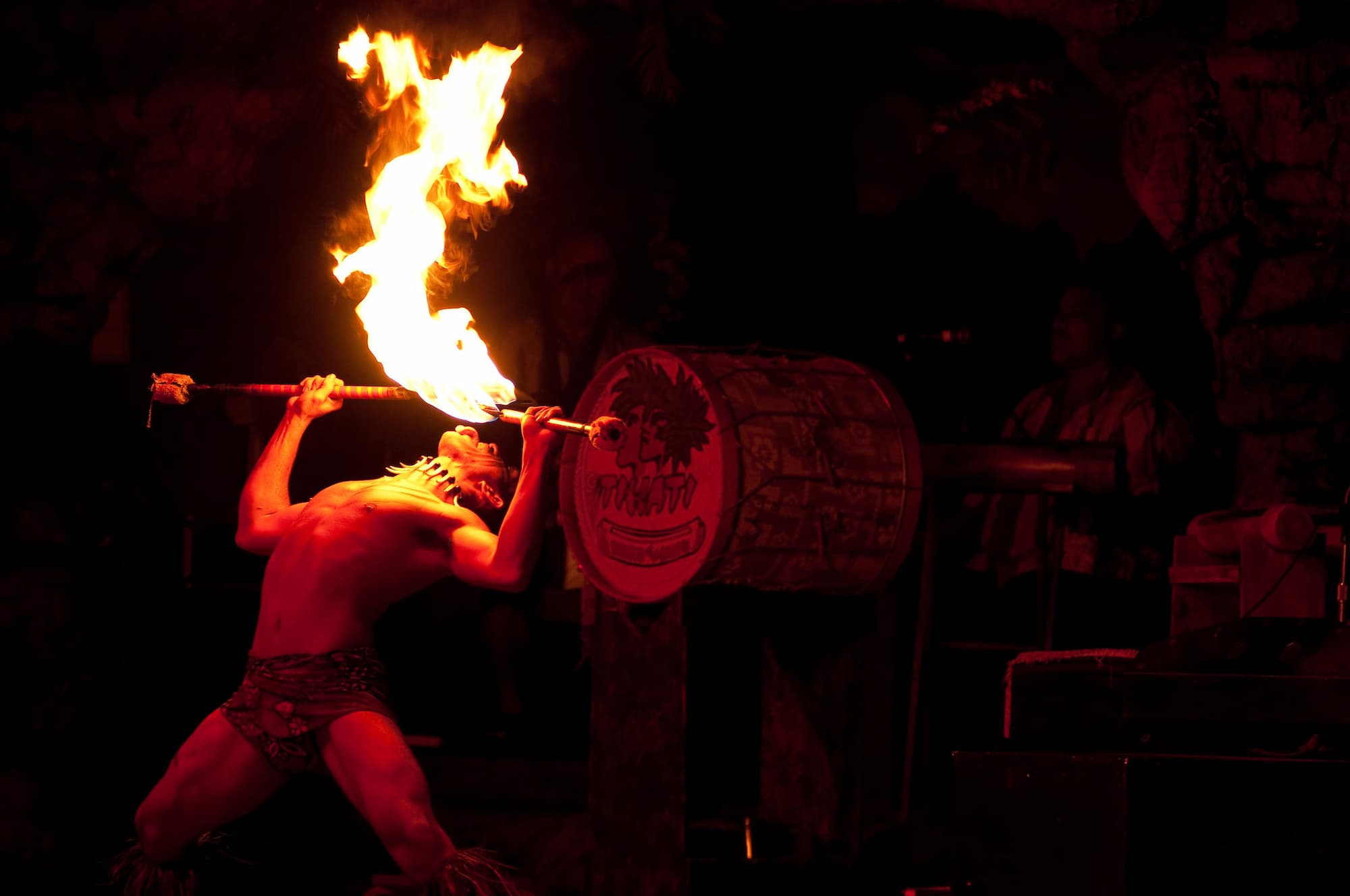
Fire eating performance at the Drums of the Pacific Luau. Image credit: Ernesto Andrade, source.<
Archaeological Sites
Looking for the remains of the past? You can find them here on Maui:
- Piʻilanihale Heiau
- Olowalu Petroglyphs
- Puʻu Kekaʻa (Black Rock)
Kahanu Garden + Piʻilanihale Heiau
Kahanu Garden along the “Road to Hāna” has the Piʻilanihale Heiau, a lava-rock temple, the largest in Polynesia. The site has both the heiau and a botanical garden.
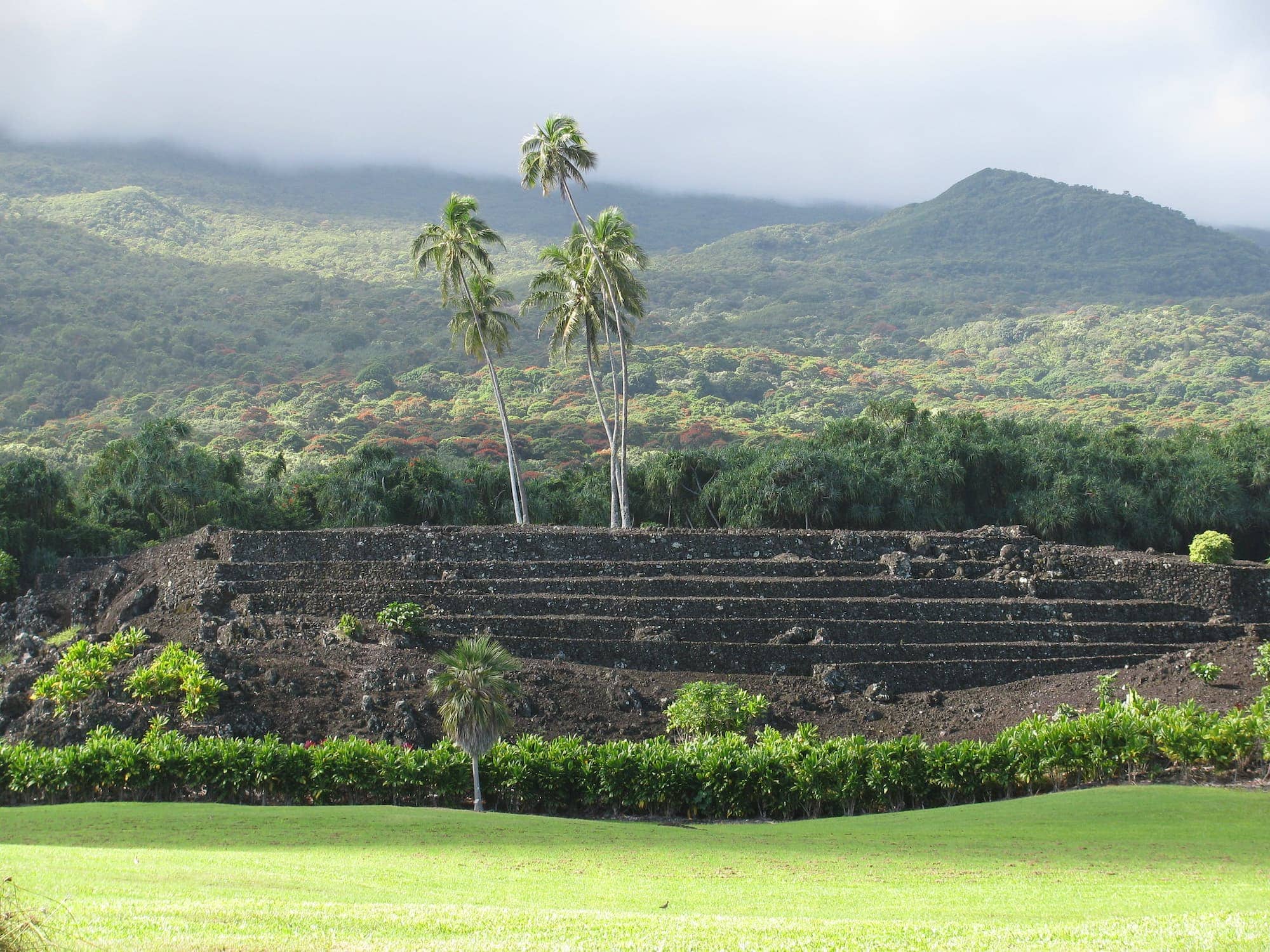
Piilanihale heiau at the Kahanu Gardens on Maui. Image credit: Forest and Kim Starr, source.
Recommended visit: Located just before you get to Hāna, it is an easy stop to make on the Road to Hāna. Spend an hour wandering the grounds and take in this huge, historic heiau.
Olowalu Petroglyphs
Markings left behind by ancient Hawaiians – about a hundred of them, sit at Olowalu in West Maui via a short, quarter mile hiking trail. The quarter-mile trail is short enough for small children.
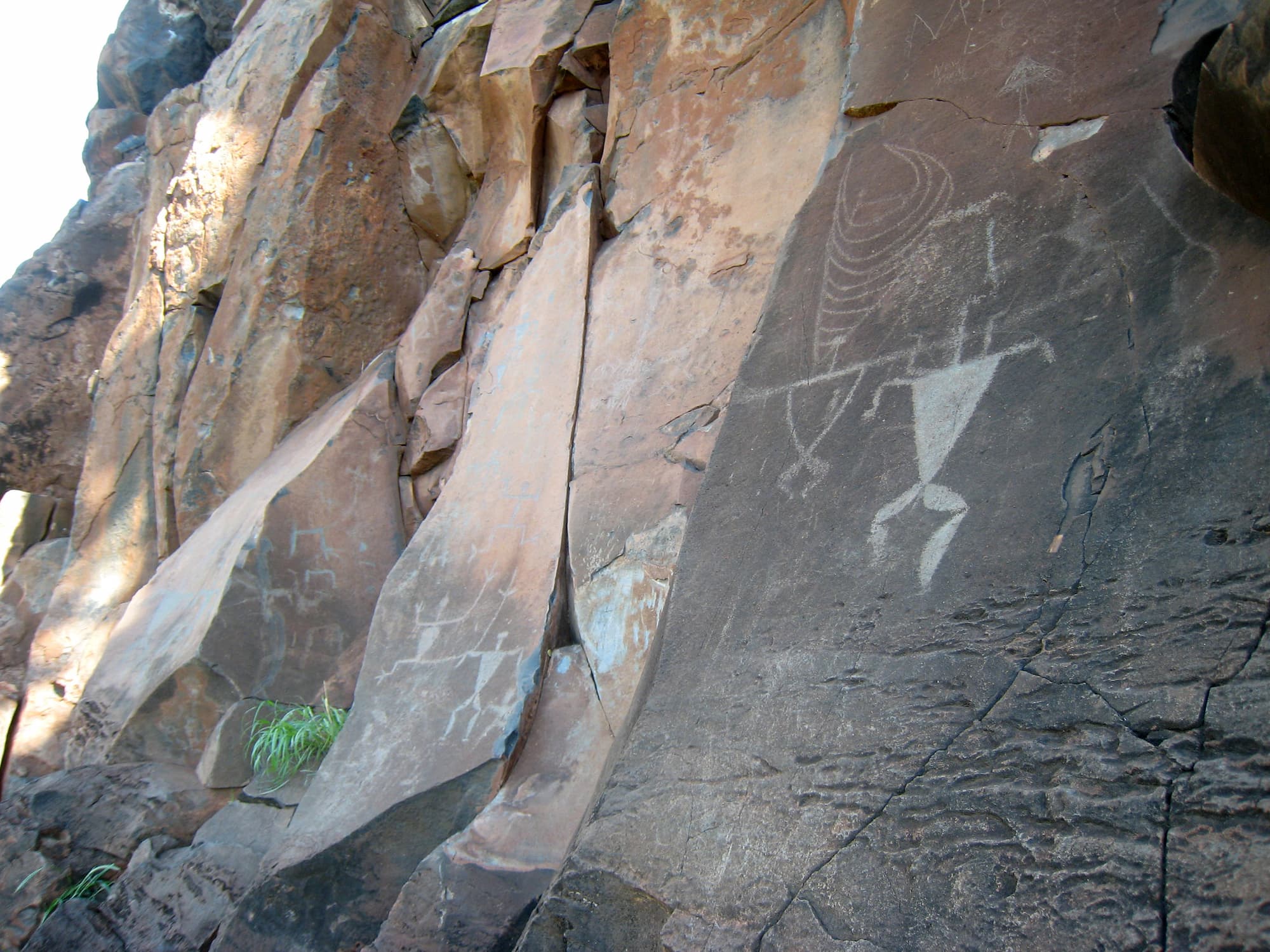
Olowalu Petroglyphs on Maui. Image credit: Josh Berglund, source.
Recommended visit: Make the short walk. After, return to Olowalu Beach across the street for a dip and picnic.
Puʻu Kekaʻa (Black Rock)
Black Rock on Kāʻanapali Beach is a major cultural site, easy to walk past without noticing its significance. A prominent rock outcropping in front of the Sheraton Maui Resort, ancient Hawaiians believed it was a portal to the spirit world,.
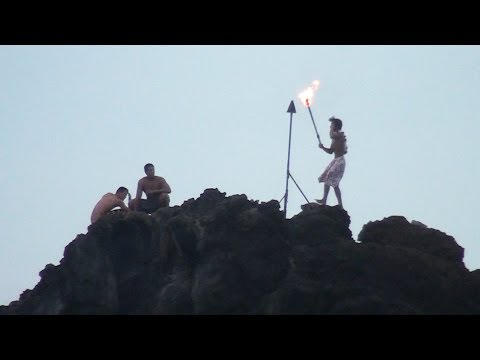
Recommended visit: You can still get a glimpse of its importance today. Each evening, the Sheraton pays homage to this legend with a nightly show and cliff dive at sunset. Arrive an hour or two early and for some family-friendly snorkeling at the base of the rocks before watching the sunset and performance.
State Parks
Maui has eight state parks, a mix of monuments, recreation areas, and waysides that preserve and protect areas of historical and cultural significance. Some areas, like ʻIao Valley, are already mentioned in this article. Spanning from Hāna (Waiʻānapanapa State Park) to the upcountry of Haleakalā (Polipoli Spring State Recreation Area),.
Learn more about Maui State Parks.