
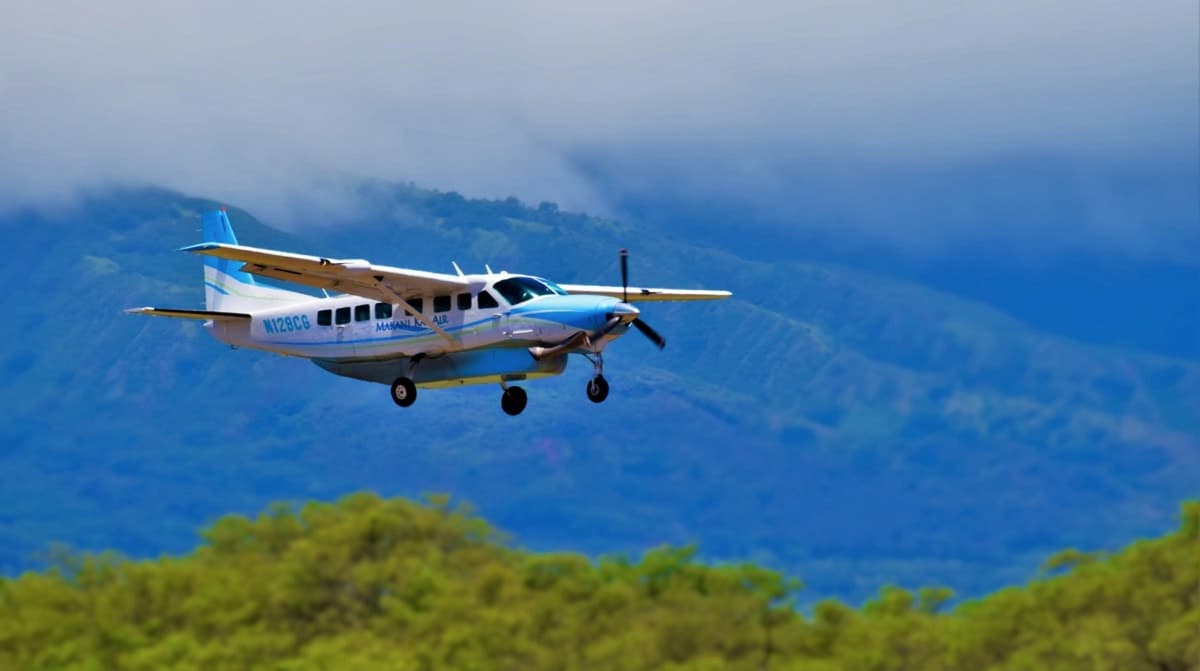
Three airlines fly between the Hawaiian Islands: Hawaiian Airlines, Southwest, and Mokulele. A short-notice seat ran about $150 each way in April 2026. Most flights spend 30 to 50 minutes in the air, and Mokulele’s 9-seat Cessnas reach nine airports across five islands, some with no jet service at all.
We fly interisland regularly, mostly on Hawaiian, and the fees keep changing: Southwest doubled its interisland checked bag fees on April 9, 2026. Which airlines you can book depends on your departure and arrival airports, so start there. On the Big Island that means Kona or Hilo, plus the small Waimea-Kohala field that only Mokulele uses.
Table of contents
Tl;dr Book the interisland leg with your mainland flights and take the nonstop, two habits that save you money and hours of travel time. Add the bag fees before you compare fares: a first checked bag is $30 on Hawaiian and Southwest, $20 on Mokulele.
Island Hop like a Pro
Visiting more islands means another set of fares and bag fees, plus about half a vacation day of travel each time. Staying on one island often makes for a better trip.
Airlines flying between the Hawaiian Islands in 2026
Hawaiian carries most of the traffic, on Boeing 717 jets. Southwest flies 737s between the five biggest airports, and Mokulele covers the small airfields the jets don’t serve, with 9-seat Cessna Grand Caravans. Alaska announced in July 2026 that Hawaiian-branded Boeing 737-800s will replace the retiring 717 fleet, with the transition starting in 2028.
Book directly on the airline websites: aggregators rarely beat the direct price on these short routes, and direct bookings are easier to change when a flight time shifts.
Details below last verified June 2026.
| Name | Airports | Nonstop routes to* | First checked bag |
|---|---|---|---|
| 1Hawaiian Airlines (Details ↓) | Kona (KOA) and Hilo (ITO) | Honolulu and Kahului from both airports, Kona to Līhuʻe | $30, or free up to 50 lb with a Huakaʻi by Hawaiian account |
| 2Southwest (Details ↓) | Kona (KOA) and Hilo (ITO) | Honolulu from both airports, Kahului from Kona | $30 for visitors, two bags free for Hawaiʻi residents |
| 3Mokulele (Details ↓) | Kona (KOA) and Waimea (MUE) | Maui and Molokaʻi connections | $20 first, $30 second (70 lb limit per bag) |
| * Table for interisland flight to and from the Big Island. | |||
1: Hawaiian Airlines (now part of Alaska Air Group)
Hawaiian Airlines (website) became part of Alaska Air Group on September 18, 2024. The FAA granted the two carriers a single operating certificate on October 29, 2025, and they moved onto one passenger service system in April 2026, when every flight began carrying the AS code.
In the cabin little has changed: the same Boeing 717s fly the neighbor island routes under the Hawaiian name, with more daily interisland departures than any other carrier. Hawaiian flies nonstop from both Kona and Hilo to Honolulu and Kahului, plus Kona to Līhuʻe on Kauaʻi.
HawaiianMiles retired on October 1, 2025 and converted one to one into Atmos Rewards, the loyalty program Hawaiian now shares with Alaska. Old balances converted automatically. Interisland flights earn a minimum of 500 points, and neighbor island award seats start at 4,500 points one way.
Bags are separate from the loyalty tier. Interisland checked bags cost $30 for the first and $40 for the second, and the free membership that changes that is Huakaʻi by Hawaiian, which covers the first checked bag up to 50 pounds.
2: Southwest
Southwest (website) arrived in 2019 with $39 interisland sales, and the other airlines’ fares fell to match. That era ended in stages: free checked bags went first, on May 28, 2025, and on April 9, 2026 the interisland bag fees doubled, the first bag from $15 to $30 and the second from $20 to $40.
Southwest still flies 737s between five airports (Honolulu, Kahului, Līhuʻe, Kona, and Hilo), and fares usually land within a few dollars of Hawaiian’s.
Hawaiʻi residents still check two bags free on Southwest, as long as the Rapid Rewards account carries a Hawaiʻi mailing address. Visitors pay $30 for the first bag and $40 for the second. For a family of four checking one bag each, that gap runs $120 a flight, which can outweigh any fare difference.
3: Mokulele
Mokulele (website) is the small-plane specialist. Its 9-seat Cessna Grand Caravans cruise low enough that you get a clear look at the islands on the way, and they reach airports no jet serves: Hāna and Kapalua on Maui, Lānaʻi City, and both Hoʻolehua and Kalaupapa on Molokaʻi. The network now runs to nine airports across five islands. On the Big Island it flies from Kona and from the small Waimea-Kohala airport (MUE) outside Kamuela.
Check-in happens at small commuter terminals, often without a security line. Bags are charged per bag, not by weight: $20 for the first checked bag and $30 for the second, with a 70-pound limit per bag. Anything from 51 to 70 pounds adds a $35 heavy-bag charge on top of the standard fee, so a 60-pound first bag costs $55. The Caravans are small, so total aircraft weight still matters: pack light.
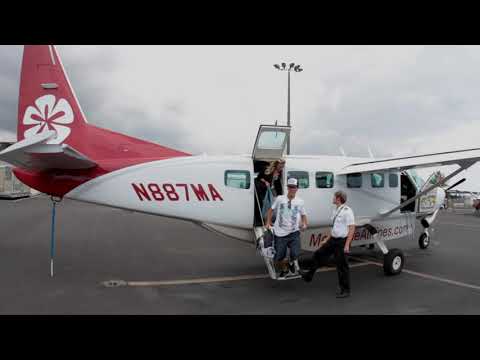
Parent company Surf Air Mobility has committed $22.4 million to Mokulele and its Hawaiʻi infrastructure, covering aircraft, airports, lounges and the loyalty program. By the first quarter of 2026 that had delivered two more Caravans and renovated lounges at Honolulu and Lānaʻi.
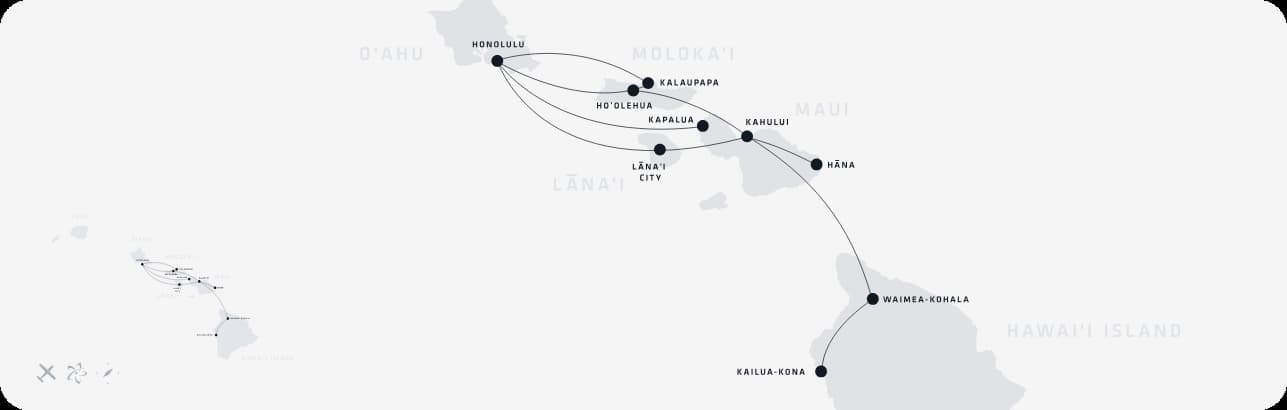
Interisland routes for Mokulele airlines. Map retrieved from the Mokulele Website June 2026.
Airlines that no longer fly interisland
Several names from older guides are gone. Aloha Airlines stopped flying in 2008, go! followed in 2014, and Island Air shut down in November 2017. ʻOhana by Hawaiian, the turboprop service Hawaiian ran with Empire Airlines, was suspended in 2020 and never came back. Makani Kai Air merged into Mokulele in 2020, so its old routes now sell through the Mokulele website. If a site still tells you to compare five interisland airlines, it hasn’t been updated in years.
How much do interisland flights cost in 2026?
Plan on roughly $150 one way on Hawaiian or Southwest if you book within a week or two of flying. Booking further out is cheaper, though neither airline publishes an advance-purchase band. Checking on August 4, 2026, Alaska advertised Kona to Honolulu from $170 round trip and Hilo to Honolulu from $145 round trip, while Southwest showed Kahului to Honolulu from $63 one way for a departure seven weeks out.
Mokulele prices its small-plane routes independently, so check it directly for Molokaʻi and Lānaʻi.
Fares rose in 2025 and 2026. Hawaii News Now reported walk-up fares around $150 each way in April 2026, and priced one next-day Honolulu to Kahului round trip at $638. That report attributed the spike to jet fuel prices, which rose with the war in the Middle East. The $39 fare war is over, so build the interisland leg into your budget early.
Book the interisland leg when you book your mainland flights, not after you land. Fares climb as the date approaches, and the cheap seats on routes with only a few daily nonstops sell first. Factor bags into the comparison too: on Hawaiian or Southwest, a $90 fare plus two checked bags is a $160 flight, since the first bag is $30 and the second $40.
5 booking tips for interisland flights
Interisland flights are short, but a badly timed one still costs half a vacation day.
1: Book the direct flight, even if it costs more
Honolulu (HNL) is the hub, and many fares between neighbor islands route through it. A connection over Honolulu turns a 40-minute flight into a three-hour travel block, usually to save $20 or $30. Book the nonstop whenever one exists. If two islands have only a few nonstops a week, change the order you visit them instead of accepting the layover.
2: Match the flight to your hotel times, not the lowest fare
The cheapest departures cluster at dawn and late evening, which is exactly when hotels can’t take you. Look up your check-out and check-in times, add the drive to and from the airport, then pick the flight that connects the two cleanly. Saving $20 on a 6 a.m. flight is a bad trade if you then wait five hours in a lobby for your room.
3: Fly into one Big Island airport and out of the other
The Big Island has two airports about 90 minutes apart: Kona (KOA) on the west side and Hilo (ITO) on the east. If your route covers both sides, and a visit that includes Hawaiʻi Volcanoes National Park should, fly into one and out of the other. You skip the long drive back across the island on departure day, when you can least afford it.
4: Pick your seat for the view
Interisland flights stay low compared with mainland routes, so a window seat shows you the islands and the channels between them. We pick our side of the plane by route:
- Oʻahu (HNL) to the Big Island (KOA/ITO): right side
- Oʻahu (HNL) to Maui (OGG): right side
- Big Island (KOA/ITO) to Oʻahu (HNL): left side
- Maui (OGG) to Oʻahu (HNL): left side
- To and from Kauaʻi: no preference
5: Add the bag fees before you compare fares
Checked bags now cost money on every interisland airline, and the cheapest fare isn’t always the cheapest trip. Hawaiian and Southwest both charge $30 for the first bag and $40 for the second; Mokulele charges $20 and $30. Hawaiʻi residents still check two bags free on Southwest, and a free Huakaʻi by Hawaiian membership covers the first bag on Hawaiian.
Is there a ferry between the Hawaiian Islands?
No ferry serves the Big Island, and there’s no statewide ferry system. The only scheduled passenger ferry in Hawaiʻi is Expeditions, which runs three round trips a day between Māʻalaea Harbor on Maui and Mānele on Lānaʻi, about an hour and ten minutes each way. The Superferry that briefly linked Oʻahu and Maui shut down in 2009.
Flying is the only way to reach the Big Island from any other island.
Flights to and from Hawaiʻi from the mainland
A Big Island trip starts with a flight of five hours or more, and that ticket is one of the largest line items in the budget. Our flights to Hawaiʻi guide covers when to book and which airports to compare, plus what counts as a good fare.