
Nearly every mainland flight to the Big Island lands in Kona, on the west side of the island. Plan on 7 days here, with 4 as the absolute minimum. A rental car is non-negotiable: the island is bigger than all the other Hawaiian islands combined, and Kona to Hilo alone is about a 1.5-hour drive.
Decide first which side to base on, Kona or Hilo, and how to split your days between them. The island holds 8 of the world’s 13 climate zones, so pack for the beach at Kealakekua Bay and for the 13,800-foot summit of Mauna Kea in the same suitcase. Start with the airport: a Kona landing and a Hilo hotel means 1.5 hours in the car before you unpack.
Table of contents
This page is part of our “beginner series”: what you need to know about an island before you go.
Our beginner’s guide to Oʻahu answers the same questions for that island: airports, where to stay, how many days, when to go.
Related: If you are not sure yet on which (and how many) island to visit and when to go, see our guide “Planning a trip to Hawaiʻi for first timers: a 101 guide“.
Getting to the Big Island
The Big Island has two major airports: Kona International Airport (KOA) and Hilo Airport (ITO).
If you’re arriving from another Hawaiian Island, such as Oʻahu or Maui, you will find flights into both airports.
Most people traveling from the mainland or from international destinations will arrive at Kona Airport: Hilo Airport currently handles interisland flights only.
The drive between Kona and Hilo is about 1.5 hours, so book your first nights on the side you land on unless you want 1.5 hours in the car before you unpack.
Related: our guide to flights to Hawaiʻi covers when to book and what to pay.
Getting around on the Big Island
The Big Island might be ‘BIG’ by Hawaiian standards but in absolute measure it is quite small. At the widest point, the island only measures 95 miles across. Renting a car is the only practical way to get around the Big Island on your own schedule.
If renting a car is not an option, you can make do with the following options:
- With public transport (the bus)
- With shared rides / Uber / Lyft / taxi services
- Or using tours for sightseeing
Island hopping
4 out of every 10 people (2025 data) visiting the Big Island also visit another island during their trip.
In our definitive guide to island hopping in Hawaiʻi, we weigh the case for and against a second island and name which islands pair well and why. It also has money-saving tips.
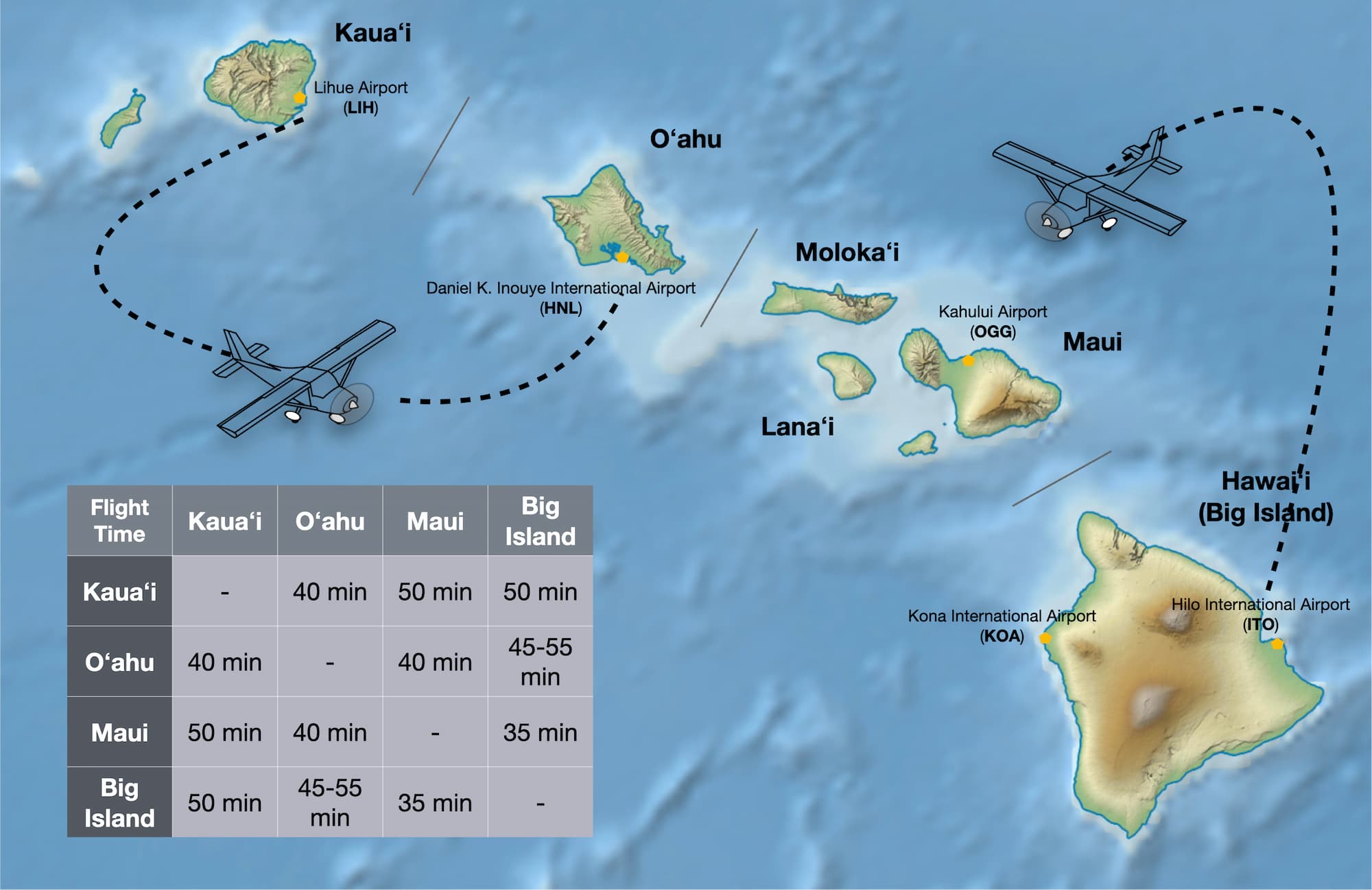
Approximate flight times between Hawaiian islands.
Big Island’s Natural Landscape
The Big Island is larger than all the other Hawaiian Islands combined, hence the name. It contains 8 of the world’s 13 climate zones and is made up of five volcanoes, two of which are currently active, with a top elevation of nearly 14,000 feet.
The island has lava fields, rainforest, high-elevation forest, and coastline, and you can drive between them in a single day.
Where to Stay on the Big Island
There are places to stay sprinkled all throughout the island, but the main areas are the town of Kailua-Kona, North Kona and the Kohala Coast, South Kona, Hilo, and the town of Volcano.
The condensed version of who fits where:
- Kailua-Kona: First-timers, Solo travelers, Families, Active Travelers.
- North Kona and the Kohala Coast: Beach bums, Families
- South Kona: Families
- Hilo: Active adventurers, Families, Budget travelers
- the town of Volcano: Active Adventurers
- Hōlualoa: Repeat visitors
- Puna: Active Adventurers, Budget travelers
See our guide to Big Island Accommodations for a full breakdown of each of these regions, including reasons why (and why not) to stay in each.
Related: Our guide on where to stay on the Kona coast gives high-end, mid-range, and budget-friendly suggestions on where to stay for families, first timers, solo travelers, active travelers, beach bums, and repeat visitors.
How Many Days Do You Need on the Big Island?
Plan on 7 days if you want to explore the Big Island completely (see our 7 day itinerary here).
You can of course visit on a shorter trip with the understanding that you won’t have time to explore the entire island. But, because of the drive times involved, we recommend an absolute minimum of four days.
Anyone visiting for a shorter amount of time should focus their interests on one area of the island, such as Hawaiʻi Volcanoes National Park or the Kona Coast.
Best Time to Visit the Big Island
There is no bad time to visit the Big Island. The weather is warm year-round, so timing comes down to what you want from the trip: whales or calm water.
Humpback whales arrive in November and stay through April, with peak activity from roughly January through March according to NOAA’s Hawaiian Islands Humpback Whale National Marine Sanctuary. If seeing whales matters to you, aim for those three peak months. In summer the whales are gone and the water is calmer and warmer, so swimming and snorkeling are easier.
Check your dates against the Merrie Monarch Festival and the Kona Coffee Cultural Festival. The Merrie Monarch Festival, the state’s premier hula event, takes place in Hilo during the week starting Easter Sunday; the 2027 edition runs March 28 to April 3. Hilo lodging is hardest to find that week, so if your trip overlaps it, book your east-side accommodation before anything else.
The Kona Coffee Cultural Festival runs in November, with the 2026 edition scheduled for November 6 to 15. For the month-by-month breakdown of weather, crowds, and prices, see our full guide to the best time to visit the Big Island.
What to Pack for 8 Climate Zones
Pack for both a beach morning and a near-freezing mountain night. Our climate zones guide lists all 8 zones and where each sits on the island.
Swimwear and sandals are enough for the coast. The high ground is where you need something warm.
The Visitor Information Station sits at 9,200 feet and the summit reaches about 13,800 feet. The Center for Maunakea Stewardship warns that winter conditions can occur up there at any time of year, with freezing temperatures and high winds. Pack a warm jacket and long pants if the mountain is on your itinerary. Closed shoes too.
The town of Volcano, near Hawaiʻi Volcanoes National Park, also sits at elevation and runs much cooler than the coast. Basing in Hilo? Add a light rain jacket: Hilo is one of the wettest cities in the country, and showers come and go year-round.
Hawaiʻi state law has banned the sale of sunscreen containing oxybenzone or octinoxate since January 2021. Bring reef-safe sunscreen from home or buy a compliant bottle after you land.
Big Island’s Most Popular Attractions and Activities
The Kona side has the snorkeling and the coffee farms; the east side has Hawaiʻi Volcanoes National Park, with the Mauna Kea summit in between.
Kona Coffee Region
One of the Big Island’s major agricultural products (alongside macadamia nuts), coffee grows all over the island, but most famously in the Kona Coffee Belt on the hillsides above Kona. You can visit one of the small farms in this region for a tour and tasting.
Our list of Kona coffee tours compares the farms that run tours and tastings.
Manta Ray Snorkel (and dive)
The Kona side of the Big Island is one of the few places in the world where you can snorkel next to giant manta rays after dark. Our manta ray snorkel guide covers how the night snorkel works and which operators run it.
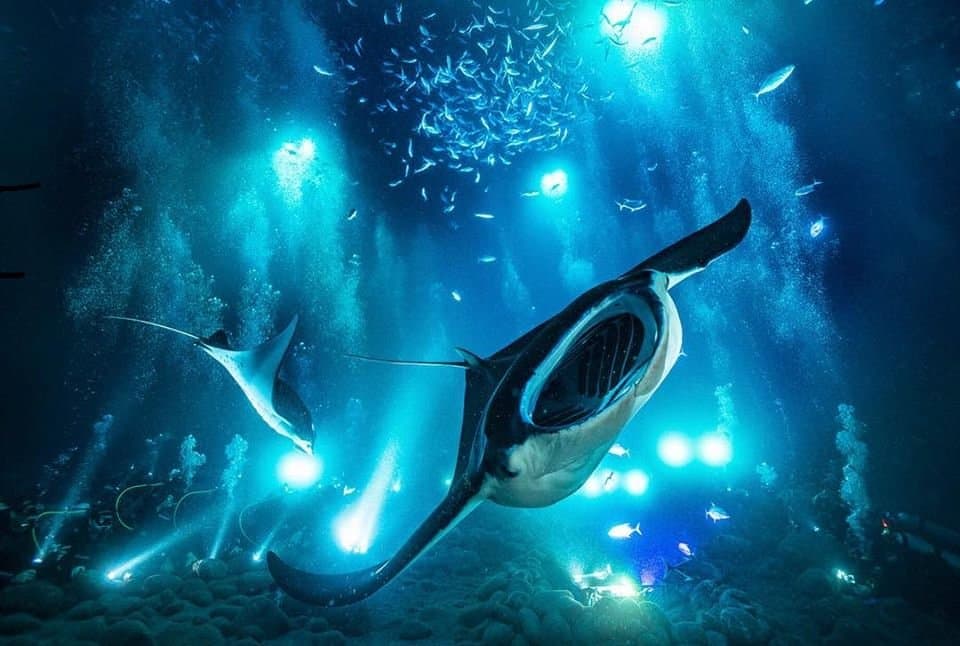
During the manta ray dive you are surrounded by manta rays, as in this photo from a previous night dive. Image credit: Torpedo Tours.
Hawaiʻi Volcanoes National Park
Hawaiʻi Volcanoes National Park, on the east side of the Big Island, is built around Kīlauea, the youngest and most active volcano on the island.
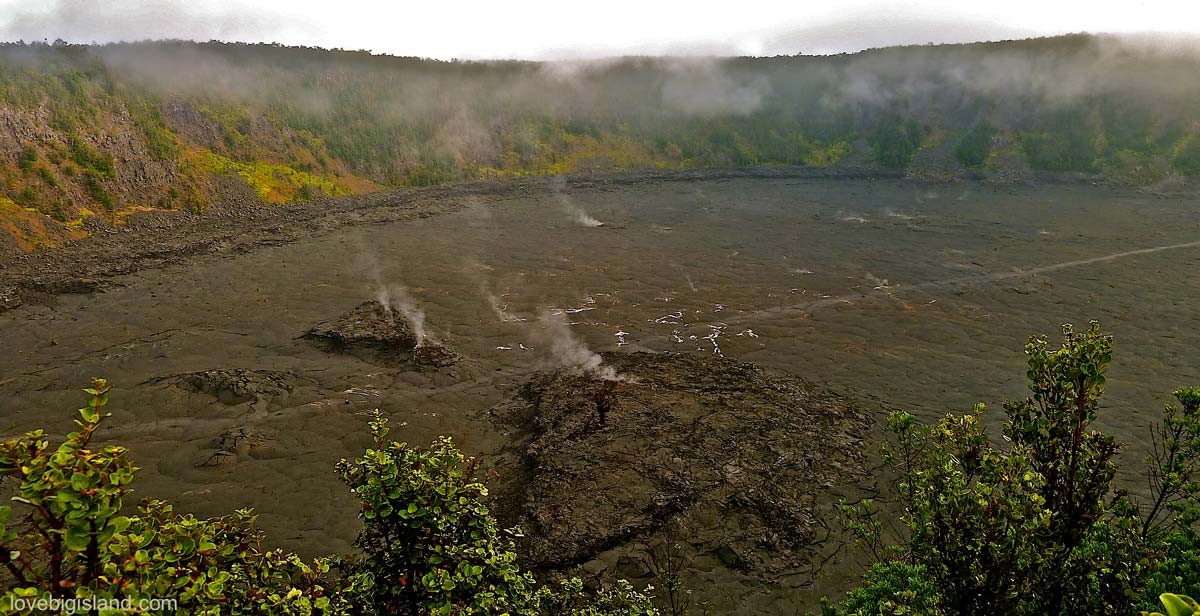
The Kīlauea ʻIki crater in Hawaiʻi Volcanoes National Park hosts one of the most rewarding (and moderately easy) hikes on the Big Island.
Kailua-Kona
This small town on the Kona coast has restaurants and bars along its waterfront, with the ocean a few steps away for the whole stretch.
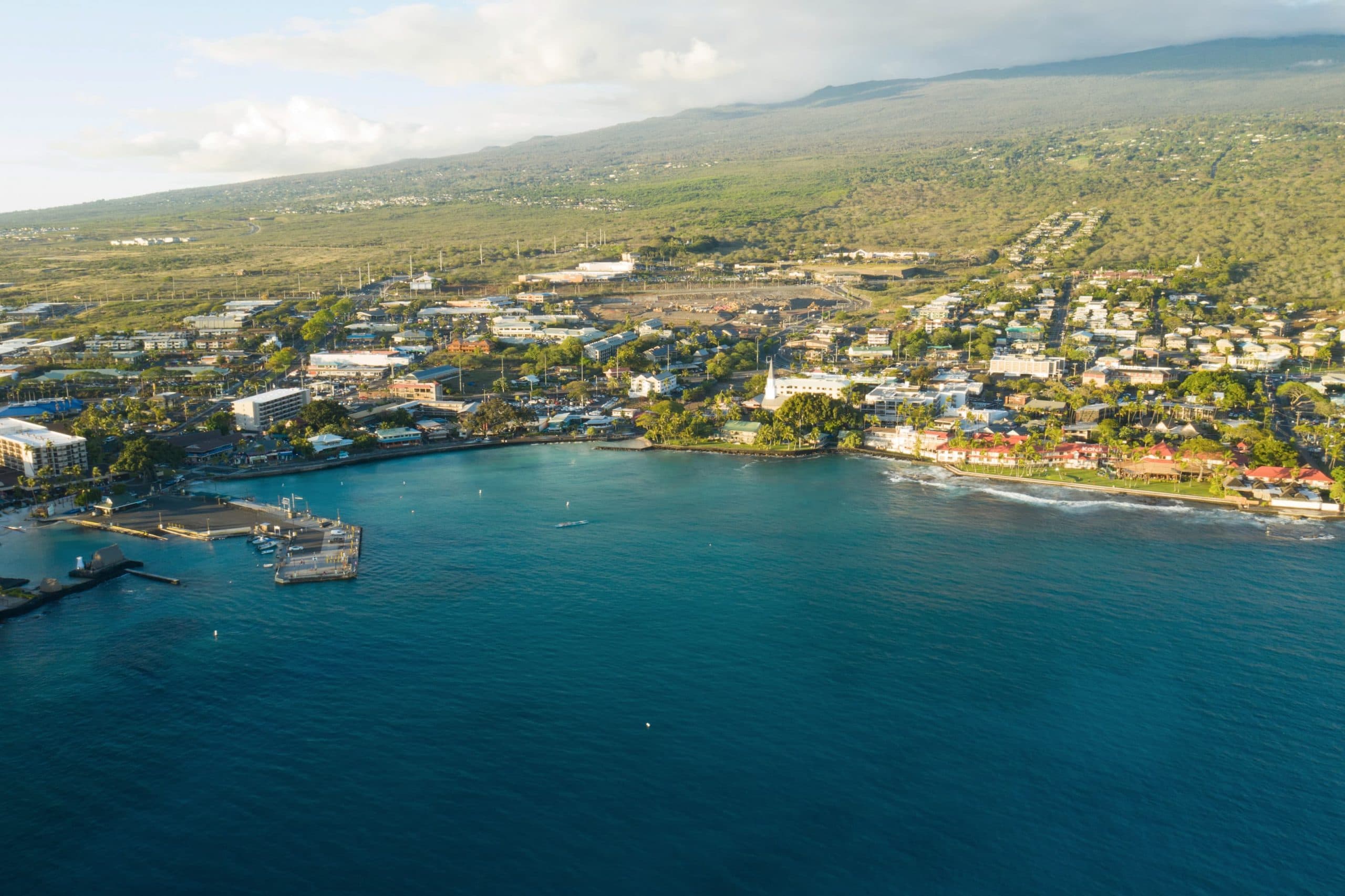
Downtown Kona and Kailua Bay. Credit: Hawaii Tourism Authority (HTA) / Heather Goodman
Mauna Kea Summit
The Mauna Kea summit sits at about 13,800 feet and gets snow in winter. At night, head to the Mauna Kea visitor center for some of the best stargazing in the world.
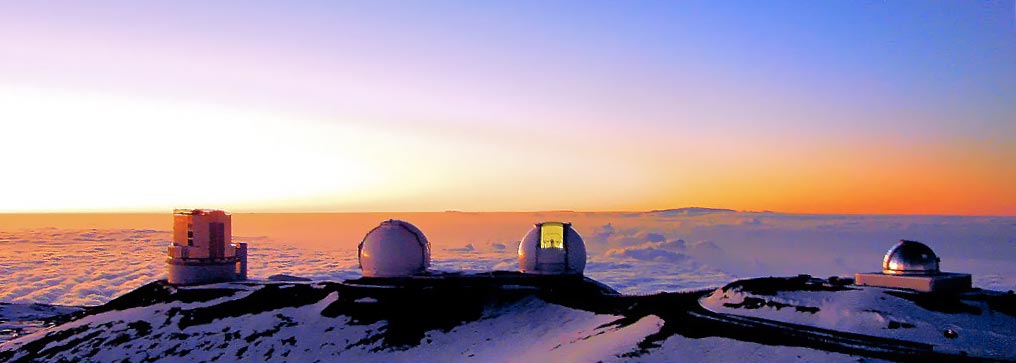
Telescopes on the Mauna Kea summit, Hawaiʻi. Visible are the Subaru Telescope, the W. M. Keck Observatory, and the NASA Infrared Telescope Facility. Image credits: Alan L on Flickr
Kealakekua Bay
This marine sanctuary has some of the best snorkeling on the Big Island and marks the spot where Captain James Cook was killed in 1779. Read more on when and how to visit Kealakekua Bay in our guide.
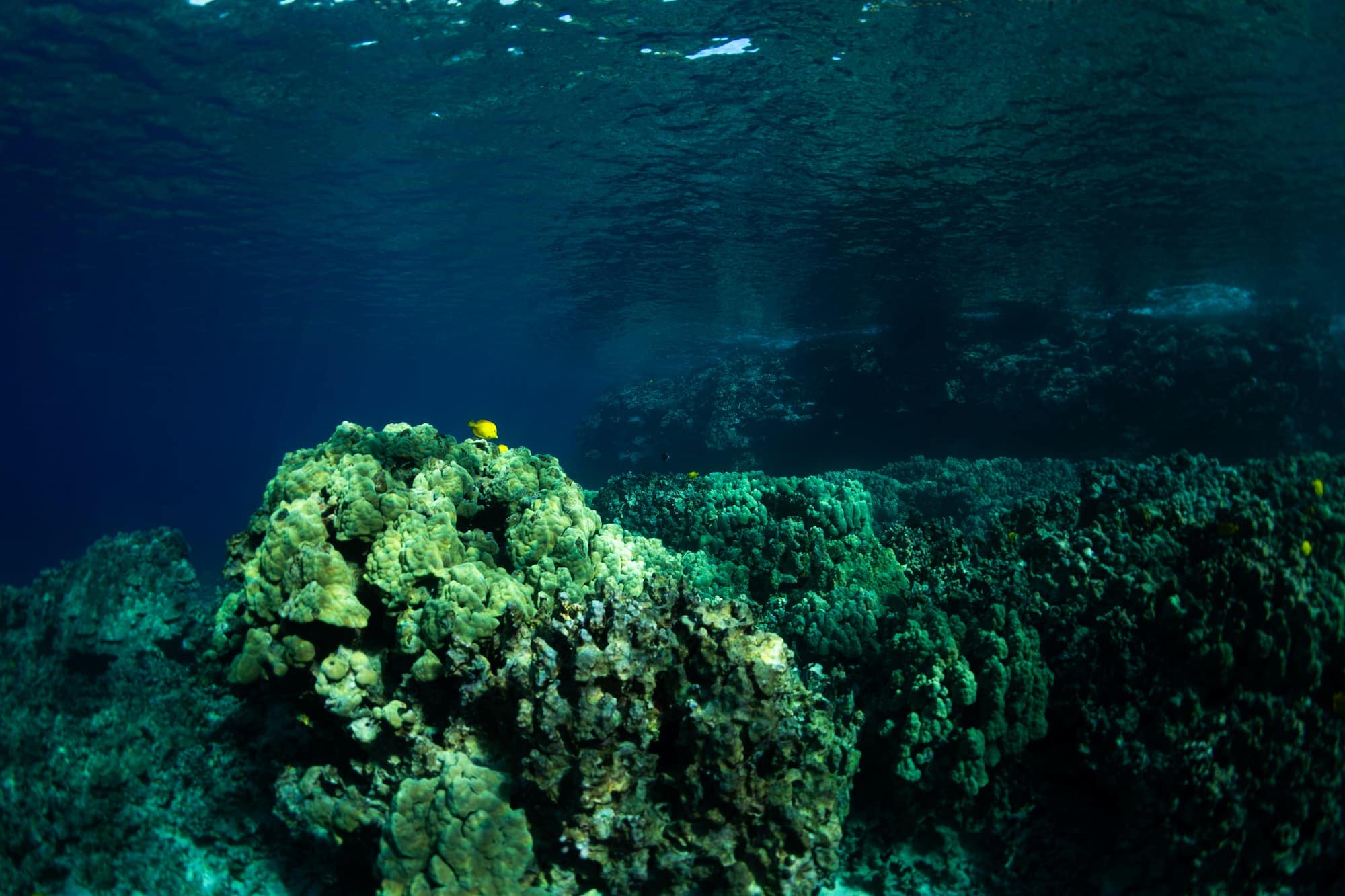
One of the many coral formations within Kealakekua Bay on the Big Island of Hawaiʻi. Photo by Sarah Lee on Unsplash
More Big Island Guides: Sights, Activities, and Culture
See our following guides for more things to do:
- Our favorite sights and destinations
- Activity overview with 29 Things to Do
- Explore history and culture on the Big Island
Local Food Worth Planning For
Kailua-Kona has the waterfront restaurants and Hilo has the daily farmers market, so think about eating before you book lodging.
On the east side, the Hilo Farmers Market is open daily from 7:00 AM to 3:00 PM, an easy first stop for fruit and local snacks before a day at Hawaiʻi Volcanoes National Park. On the west side, Kailua-Kona has a row of waterfront restaurants, and the coffee farms of the Kona Coffee Belt run tours and tastings.
Wherever you stay, seek out three local staples: poke, loco moco, and shave ice. Slot the farmers market or a coffee farm tour into a driving day rather than making a separate trip for it.
5 First-Trip Tips for the Big Island
- Rent a car. You’ll need one. The bus exists, but routes are sparse and it won’t get you to most trailheads and beaches.
- Plan your days on the water in Kona. The Kona side has the calm, clear water and the sea life: this is where the snorkel and boat trips run. The Hilo side is rougher, and you will not find many water options there.
- Try to stay on both sides of the island. If you can, staying a few days on the Kona side and a few days on the Hilo side cuts down on cross-island driving, and puts you on the calm west coast and the wet east coast in one trip.
- Visit the volcanoes. The Big Island is unique for its two active volcanoes and five overall. The park has hiking trails and, when Kīlauea is erupting, lava viewing.
- Beach Bumming? Head to the North Kona/Kohala Coast. The Big Island doesn’t have the same quantity of beaches as Oʻahu or Maui, but it does have white-sand beaches along its North Kona and Kohala Coast. If you plan to be a beach bum, base yourself here.
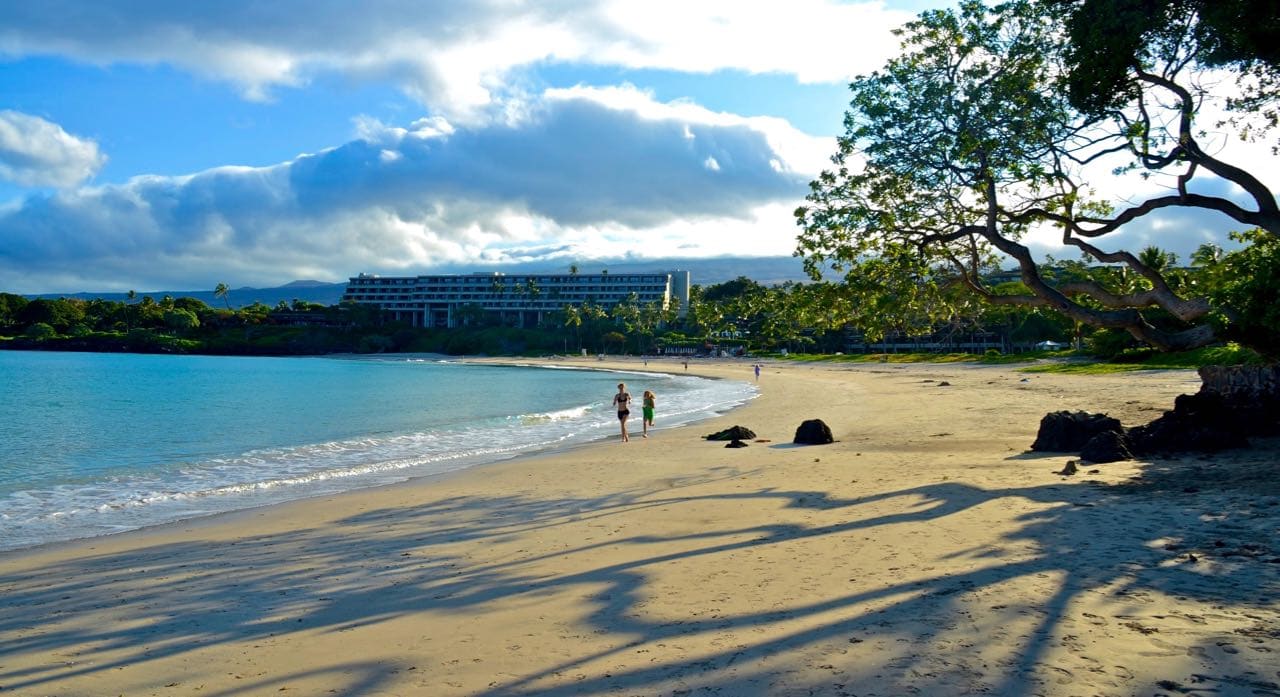
Sunrise at Mauna Kea beach on the North Kona coast. Photo credit: Mike Neenan.