
• Skip to main content
  • Skip to primary sidebar
  • Skip to footer
Love Big Island
Tours
When to visit the Big Island, and how to plan your trip
Home » Visitor Information

When to visit the Big Island, and how to plan your trip

By Gerrit van der Plas | updated September 8, 2026 (What changed?)

The weather barely changes on the Big Island: coastal temperatures stay between 75 and 85°F all year. The best time to visit comes down to crowds and prices, both at their lowest from mid-April through May and September through October, just after school holidays and before the winter rush. Traveling then can save hundreds of dollars per person over the summer and winter peaks.

For a first trip, decide which coast to base on before anything else. The west side (Kona) is the dry, sunny side, and the east side (Hilo) is the wet, green one, with most of its rain falling overnight. Hawaiʻi Volcanoes National Park sits on the Hilo side, so splitting your stay keeps you close to both. Work through these questions before you book:

Table of contents

  • When is the best time to visit the Big Island?
  • Should you come in the high season or the low season?
  • What is the difference between the rainy side and the sunny side?
  • What are the yearly weather trends across the island?
  • What are the top things to see?
  • Tips for first-time visitors

Once your dates are set, the next step is your day-by-day plan. Our Big Island itineraries lay out routes for trips of different lengths.

Best Time to Visit the Big Island: Weather and Prices

There’s no bad month to visit the Big Island, weather-wise. Coastal temperatures stay between 75 and 85°F year round, with only slightly more rain in winter. Choose your dates around crowds and cost instead. Hawaiians split the year into two seasons, Kau (summer, roughly April or May through October) and Hoʻoilo (winter, the rest of the year), but for planning a trip the more useful split is high season versus low season.

Booking in the low season makes a Hawaiʻi trip more affordable, since flights and rooms are not all sold out in advance. Our flights to Hawaiʻi guide has tips for finding the cheapest tickets.

Daylight swings by more than two hours across the year. Between the shortest day, December 21st, and the longest, June 21st, the Big Island gains 2 hours and 23 minutes of daylight, close to 20% more time outdoors if you come in summer.
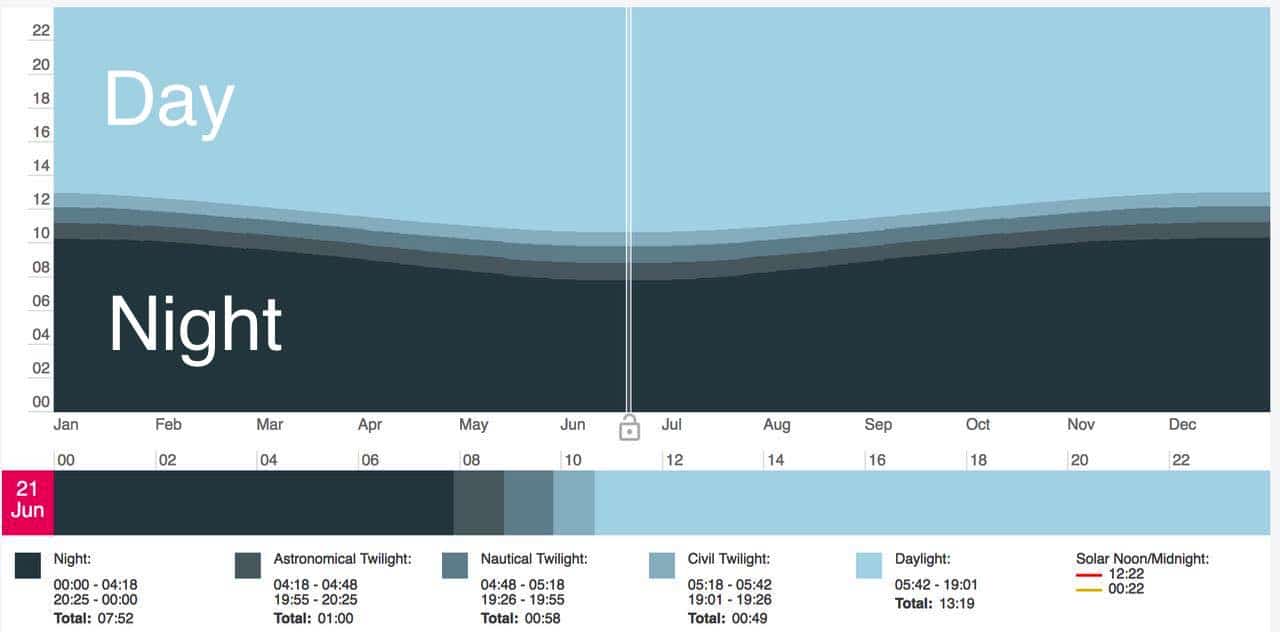
Year-round chart of Big Island daylight versus darkness, widest around the June 21st solstice, with June 21st broken into twilight bands and 13 hours 19 minutes of daylight

The longest day in Hawaiʻi has 20% more daylight than the shortest day. The top panel shows the hours of sunlight per day throughout the year. The bottom panel shows the breakdown for the longest day of the year: June 21st. Image source: timeanddate

  • For a month-by-month breakdown, see our guide on the best time to visit the Big Island.

High Season for the Big Island

Summer holidays fill mid-June through the end of August, when families travel. A winter peak runs mid-December through mid-March, when visitors come to escape winter at home. Hawaiʻi residents call these winter guests snowbirds. Spring break adds a smaller bump through March and April.

Japan’s Golden Week, a run of national holidays from late April into early May, brings a bump in visitors from Japan.

Low Season for the Big Island

That leaves low season in the shoulder months: mid-March through June, and September through mid-December. The weather is just as good. The lighter crowds come down to school calendars and travel habits, not conditions.

With fewer visitors, flights and rooms cost less and are easier to get. Our pick for the sweet spot is mid-April through May, or September and October, just after the school holidays and before the winter rush. Time a trip for those windows and you often save hundreds of dollars per person.

Rainy Side vs. Sunny Side

Weather on the Big Island can flip within a couple of hours, but the big pattern is steady: the west side (Kona) is the dry side, and the east side (Hilo) is the wet side. On the Kona side, the coast itself is dry, dropping below 20 inches of rain a year on the Kohala coast at Puakō, though the coffee-belt uplands above town get 60 to 100 inches a year. The Hilo side is far wetter: the windward slopes get around 200 inches a year, and the wettest spots top 300, most of it falling overnight.

If you want reliable sun, base yourself on the Kona side; for waterfalls and rainforest, choose the Hilo side. Our detailed weather summaries for Kona and Hilo have the month-by-month picture.

Weather on the Big Island

Because the volcanoes run down the middle, it can be raining in one spot while the sun is out five miles away, so a shower rarely lasts. Wait half an hour or drive a short way, and you’re usually back in the sun.

At the coast, temperatures average about 85°F in summer and 75°F in winter, and they fall as you climb. Volcano Village sits 5 to 15°F cooler than the coast (see our detailed Volcano weather summary), and the summits of Mauna Kea and Mauna Loa can drop below freezing. Pack a warm layer if the mountains or the national park are on your list.

Our Big Island weather guide covers why the island has a wet side and a dry side, and maps the yearly temperature and rainfall patterns.

Top Things to See and Do on the Big Island

Five volcanoes built the Big Island, and their mark is everywhere: the old and new lava flows underfoot, the many climate zones, and the ever-changing weather. If you do one thing here, make it Hawaiʻi Volcanoes National Park.

Two more experiences to plan for: the manta ray night dive off the Kona coast, and seeing the island from the air on a helicopter tour.

Measured from its base on the ocean floor, Mauna Kea stands about 4,000 feet taller than Mt. Everest. We made the full case for the island in The Big Island, an island of extremes.

Need-to-Know Tips for First-Time Visitors

A first trip to the Big Island can feel like a lot to organize. It’s a big island with long drives, and the range of things to do and places to stay is wide. Our companion guide Big Island for Beginners: Need-to-Know Tips for First-Time Visitors walks through planning a first trip:

  • Getting there (and getting around)
  • What is the Big Island like?
  • Where to stay
  • How many days is enough?
  • The most popular activities and attractions
  • 5 visitor tips to guide your visit.

Recent updates to this page

  • Sep 8, 2026 Rewrote the planning guide with clearer best-time and wet-side/dry-side guidance.

Primary Sidebar

Written by:

Gerrit van der Plas

Last updated:

September 8, 2026 (What changed?)

Tired of Generic Travel Estimates? So Were We.

See what your Hawaiʻi trip could really cost, based on how real travelers spend.

What Will Your Trip Cost?

How many people are you traveling with?


Find us on Instagram

Instagram grid of Big Island photos: a lava fissure, palms at sunset and coral sand

Big Island photos and quick tips, most days. Follow along on Instagram.


Monthly Newsletter

One email a month on what's new and worth knowing on the Big Island. Get our free monthly updates and plan with local insight:

subscribe

Trip-Planning Emails

Planning a Big Island trip? Our free 5-day email series walks you through it, one short email a day. No fluff, just what helps:

Sign me up!

We did all the research so you don't have to

Call us for advice! In a 30-minute call we help you set up the trip of your dreams. Great for first-time visitors.

Find out more

Practicalities

  • Planning your trip
  • Before you book
  • Accommodation
  • Destination guide
  • Getting around
  • Big Island Weather

Getting around

  • Island Hopping!
  • Do you need a rental car?
  • Rental cars
  • Public transport
  • Inter island flights
  • Flights to/from Hawaii

Itineraries

  • Itineraries overview
  • One day
  • Two days
  • Three days
  • Five days
  • Seven days
  • Cruise Ship Itinerary

Yearly events

  • Major Events
  • All Festivals + Events

On this page

  • When is the best time to visit the Big Island?
  • Rainy side and the sunny side
  • Yearly weather trends
  • What are the top things to see?
  • Tips for first-time visitors

Share with friends:

Footer

Love Maui

1: Maui Overview
2: Things to Do
3: Where to Stay
4: Popular Sights and Destinations
5: Road to Hana (Maui)
6: Maui Itinerary
7: Maui blog posts

The second-biggest island in the chain, much of Maui’s appeal comes from its natural landscape and biodiversity, including its two massive volcanoes, whale watching and marine ecosystems

Love Oʻahu

1: Oʻahu Overview
2: Things to Do
3: Where to Stay
4: Popular Sights and Destinations
5: Oʻahu Beaches
6: Oʻahu Itinerary
7: Oʻahu blog posts

Oʻahu is the busiest and most visited of the Hawaiian Islands, with the widest range of things to do: nature, culinary discoveries, historic landmarks, shopping, nightlife and festivals.

Love Kauaʻi

1: Kauaʻi Overview
2: Things to Do
3: Where to Stay
4: Popular Sights and Destinations
5: The Nāpali Coast
6: Kauaʻi Itinerary
7: Kauaʻi blog posts

With a population of less than 75,000, Kauaʻi is truly a small-town island, littered with open space, protected preserves, and old plantation history.

Let’s connect

Facebook
Pinterest
X
Instagram
Subscribe to our Newsletter

Made with by Love Big Island


© 2011–2026 lovebigisland.com | About Us | Contact | Sitemap (xml)/(html) | Privacy Policy

  • Book Tours
  • Planning a trip? Start here!
    • 1: Calculate your trip costs
    • 2: When should you go?
    • 3: Traveling with Kids?
      • Toddlers & babies
      • Teens
    • 4: Flying to Hawaii
      • 3a: Interisland Flights
    • 5: Get a Rental Car
    • 6: Find Accommodations
  • Regions
    • Kailua-Kona
      • Accommodations
      • 5 Highlights
      • Things to Do
      • Kona Beaches
    • Hilo
      • Accommodations
      • Highlights
      • Things to Do
    • Volcano Village
      • Accommodations
      • Highlights
      • Things to Do
    • Waimea
      • Accommodations
      • Highlights
      • Things to Do
    • Puna
    • Kaʻu
    • Kohala
  • Things to Do / Activities
    • ATV
    • Beaches
      • ʻAnaehoʻomalu Beach
      • Carlsmith beach park
      • Hapuna beach
      • Kaimu beach
      • Kahaluʻu Beach Park
      • Kamakahonu (King Kam) Beach
      • Kaunaʻoa (Mauna Kea) Beach
      • Maniniʻowali beach (Kua Bay)
      • Papakolea (Green sand beach)
      • Pohoiki Beach
      • Punaluʻu
      • Richardsons’ (Hilo)
      • Waialea Beach (Beach 69)
    • Biking / Cycling
    • Botanical Gardens
    • Camping
    • Chocolate and Cacao Farm Tours
    • Dolphins!
    • Farm Tours (BIG list)
    • Farmers Markets
    • Golfing
    • Hawaii Volcanoes National Park
    • Helicopter Tours
    • Hiking
    • Horseback Riding
    • Hot ponds
    • Kona Coffee Tours
    • Lava Viewing Guide 🌋
    • Lava Tubes
    • Luau and Hula
    • Manta Ray night dive / snorkel
    • MaunaKea Summit + Stargazing
    • Road Trips!
    • Scuba Diving
    • Snorkeling
    • Stand Up Paddle boarding (SUP)
    • Surfing
    • Be a Volunteer
    • Waterfalls
    • Waterfall Rappelling
    • Whale Watching
    • Ziplining
  • Six full Itineraries
    • One Day (day trips)
    • Two Days
    • Three Days
    • Five Days
    • Seven Days
    • For Cruise Ship Visitors (shore excursions)
  • Highlights
    • Annual Events
    • Museums
    • History and Culture
    • 4 National + 14 State Parks
      • Hawaii Volcanoes National Park
      • Puʻuhonua o Hōnaunau National Park
    • Local food & produce
      • Macadamia Nut Farms on the Big Island
      • Kona Coffee
      • Chocolate
    • Nature and Wildlife
    • Hawaii Trivia: 40+ fun facts
      • Pineapple History, Facts and Trivia 🍍🍍🍍
      • The opposite of Hawaii
      • The longest Hawaiian name
      • Hāpuʻu: the Hawaiian tree fern
      • Endemic and Native Species
      • Kahili Ginger
      • Pāhoehoe and ʻAʻā Lava
      • Lake Waiau on MaunaKea
      • Pele’s Hair (volcanic glass)
      • Green Sand Beach Trivia
    • What is Big Island weather like?
  • Favorite Sights and Destinations
    • Hawaii Volcanoes National Park
    • MaunaKea
    • Pololū Valley
    • Waipiʻo Valley
  • Oʻahu
  • Kauaʻi
    • Sights and Destinations
      • The Nāpali Coast
      • Waimea Canyon
    • Trip Planning Resources
      • 7 day itinerary
      • Getting Around
      • Where to Stay
    • Things to Do
      • Air Tours
      • Beaches
      • Culinary Tours and Activities
      • History and Cultural Activities
      • Land Activities
      • Water Activities
  • Maui
    • Things to Do
      • Air Tours
      • Beaches
      • Culinary Tours and Activities
      • History and Culture
      • Nature and Wildlife
      • Land Activities
      • Water Activities
    • Sights and Destinations
      • Haleakalā National Park
      • Road to Hana
    • Trip Planning Resources
      • 8 day Itinerary
      • Getting Around
      • Where to Stay
  • Free Newsletter