The Big Island is the only US state that commercially grows coffee, cacao, and vanilla, so you can tour all three in a single day and still fit in a macadamia orchard or a tea farm. Kona alone has more than 650 coffee farms, and many run tours free because they sell direct and want you tasting before you buy. The range goes past crops: bee tours, animal sanctuaries, farm-to-table dinners, and a handful of operations found nowhere else in the country, most of it under $30.
This page is for travelers fitting a farm or two into a real itinerary, not browsing a top-ten list. We sorted every tour by what it involves, what it costs, and how far it is from where you are likely staying. A free Kona tasting is a 20-minute stop; a half-day cacao operation in Hilo is an afternoon.
Table of contents
- Map of all tours listed on this page
- Farm tours including locally produced goods
- Tours including exotic animals / animal shelters
- Native trees / tree planting
- Farmers markets (the best place to buy local produce)
- Farm to Table restaurants and Cooking Classes
- Eating from an Imu (Hawaiian underground oven)
- Introduction to local agriculture
Map of Farm Tours
Farm tours are scattered across the whole island, from the Kona coffee slopes to Hamakua vanilla and Puna cacao, so the real planning challenge is fitting one into a set itinerary. Addresses can be approximate too, since several farmers only share an exact location once you have booked.
To make planning your farm tour easier we summarized all tours listed on this page into one BIG map.
How to use this map: Above you’ll find a map of all farm and related tours on the Big Island. Click on the top left of the map to find separate layers marking the route and points of interest. You can hide and show different layers, or click icons on the map to see more details for the places I mention in this guide. “Star” the map to save it to your own Google Maps, or open the map in a new window for a larger version. Enjoy!
Farm Tours: Coffee, Chocolate, Vanilla, and Other Crops
We split the tours into places that grow things (this section) and animal-related tours (next section):
- Tea plantation tours / tasting
- Coffee plantation tours /tastings
- Chocolate orchard tours / tastings
- Vanilla farm tours / tastings
- Macadamia nut orchard tours
- Taro farm tours in Waipiʻo Valley
- Misc. farm tours
- Volcano Winery (wine tasting)
- Hibiscus farm tour
You’ll notice that there are no ‘pineapple farm tours’ in the list. Pineapples are a disappearing crop and now are mostly grown on the islands of Maui and Oahu. The Big Island agricultural scene was up to a few decades ago dominated by the sugar cane industry, but that has also disappeared by now. Visit the Hawaii Plantation Museum in Papaikou to learn more about the history of the sugar plantation era.
Tea Farm tours + tastings
The Big Island is known for coffee, but tea grows here too. Tea plants want plenty of rain, higher elevations, and acidic, well-drained soil with steady sunlight and humidity, and all of that comes together on the north-eastern side of the island.
Tea is a labor-intensive crop and the local farmers aim for quality rather than quantity. They are mostly artisans using traditional and natural techniques that produce small batches and who cater to specialty markets. In short, if you really like tea you’ll REALLY like visiting one of our local tea plantations:
- Mauna Kea Tea (near Honokaʻa)
- Ancient Leaf Tea (Papaikou / Onomea Bay)
- Tea Hawaii (in Volcano Village)
You can find more in-depth information about tea growing and tea tours on the Big Island on our website.
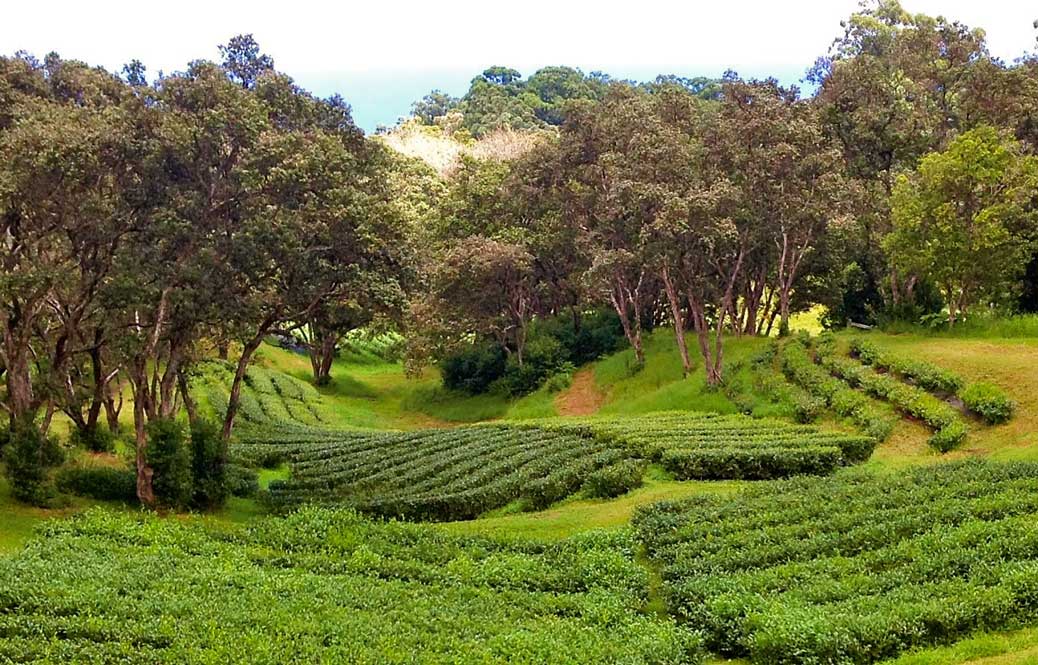
Tea plantations of the Mauna Kea tea farm
Kona Coffee Farm Tours and Tastings
Kona coffee is one of Hawaiʻi’s most valuable exports, grown on a narrow strip on the slopes of Hualālai and Mauna Loa in the north and south Kona districts. More than 650 farms of all sizes line about 20 miles of scenic road there, and many open their doors for tours.
Tours generally consist of a walk through the fields where you are given an explanation about growing coffee, a visit to the area where they process the beans, and a tasting. These tours give local farmers the opportunity to sell their coffee directly to their visitors, which is why the tours themselves often are free of charge. Two coffee farms that organize informative tours and serve good coffees are Rooster Farms and the Greenwell farms, both in South Kona.
You can find a WAY larger list (+ map) of farm tours at our list of farms that organize coffee tours and tastings.
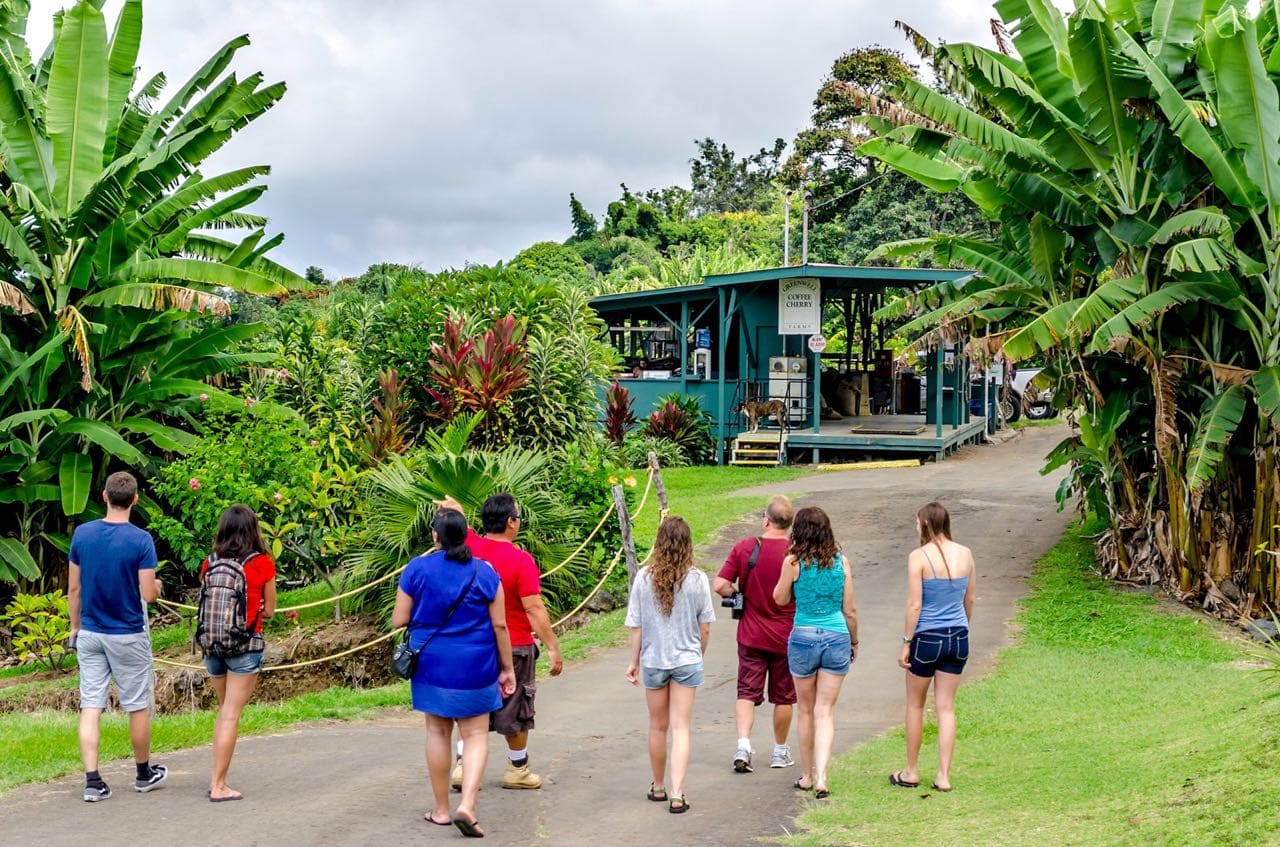
Visitors take a Kona Coffee Farm Tour at the Greenwell farm. Source: here by user horspowr1001 under a CC BY-NC 2.0 license
Chocolate Farm Tours + Tastings
Chocolate is one of Hawaiʻi’s least-known exports, and a good one to take home (chocolate-covered macadamia nuts, anyone?).
Hawaii is the only state where chocolate can be made with 100% locally produced ingredients thanks to its tropical climate. Some of the farms that grow cacao pods organize tours of the orchards and tastings of their home-made chocolate. Examples of such tours are:
- Kuaiwi Farm in South Kona (website)
- Honokaa Chocolate Co. in Honokaʻa (website)
- Hamakua Chocolate in Papaikou (6 miles north of Hilo, website)
- Puna Gold Estate in Lelani Estates near the town of Pāhoa (website)
You can find more tours in the guide to locally produced chocolate on our website.
Vanilla Farms
Vanilla beans are the fruit of an orchid that blooms for a single day, and each flower has to be hand-pollinated in that window. Two farms let you see how it works up close:
- Hawaiian Vanilla Co. (close to Honokaʻa on the Hamakua coast) organizes a two-hour experience that combines a farm tour with a luncheon built around vanilla in both savory and sweet courses. It’s more of a sit-down food experience than a walking tour. $90 per person, reservation required (see here).
- The Vanillerie is a small vanilla farm just north of Kona. They organize tours through their greenhouses and let you taste their products. Find more information about the tours on their website.
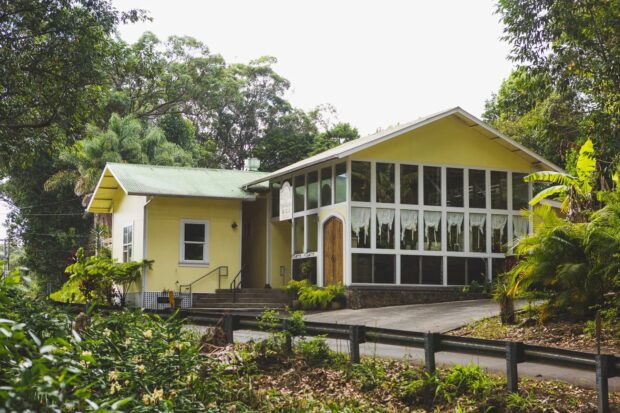
Vanilla Experience Luncheon & Farm Tour
Experience a delicious vanilla inspired luncheon and walking tour through a Hawaiian vineyard with vanilla vines. Learn about the vanilla cultivation process and rich history while enjoying homemade vanilla offerings.
from:
$90
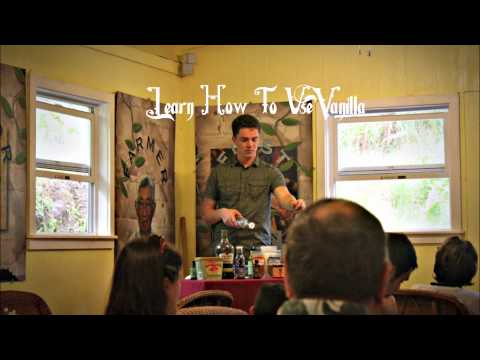
What is a suggested tour?Our suggested tours are hand-picked tours that receive consistent good reviews, give back to the community, and work hard to minimize their impact on the environment. Read more about these tours on our website.The following video about the tour + luncheon (see above) organized by the Hawaiian Vanilla Co. gives you an idea of what to expect during a visit:
Macadamia Nuts Orchard Tours
There are no dedicated macadamia orchard tours on the Big Island. A few general farm tours do include mac nut orchards on their property, so if seeing one matters to you, start with the general-purpose farm tours listed here.
The farming and processing of macadamia nuts mostly is a large-scale operation and there are two companies that sell macadamia nuts with a visitor center you can visit:
- The Hamakua Macadamia Nut Company (in Kawaihae, north of Kona website)
- The Mauna Loa Macadamia Nut Corporation (close to Hilo, website)
Both above have visitor center where you can see how the nuts are processed and the Hamakua Macademia Nut Company also offers free samples and coffee at their visitor center. The Hamakua Mac nut company has a more local feel and is a good place to buy nuts.
You can read more about macadamia nuts on our website.
Wetland Taro (Kalo) farm tour in Waipiʻo Valley
Wetland taro, or kalo in Hawaiian, carries one of the deepest cultural connections of any crop grown here. Its underground stem is pounded into poi, the staple starch of the Hawaiian diet, while the leaves wrap lau lau (explore more taro recipes or read more about taro farming on the Big Island).
Most taro on the Big Island is grown in Waipiʻo valley and the Hamakua districts, and you can visit a taro farm in Waipiʻo valley yourself as part of a guided tour. Organized by Hawea Waipiʻo Valley Adventure, this tour unfortunately was discontinued in 2020.
For those curious about eating poi: you can find it in local supermarkets such as the KTA and sometimes find it at the menu in restaurants and luaus. Poi has a paste-like texture with a pale purple color that naturally comes from the plant. Its taste greatly depends on freshness and preparation method but in general is not very outspoken.
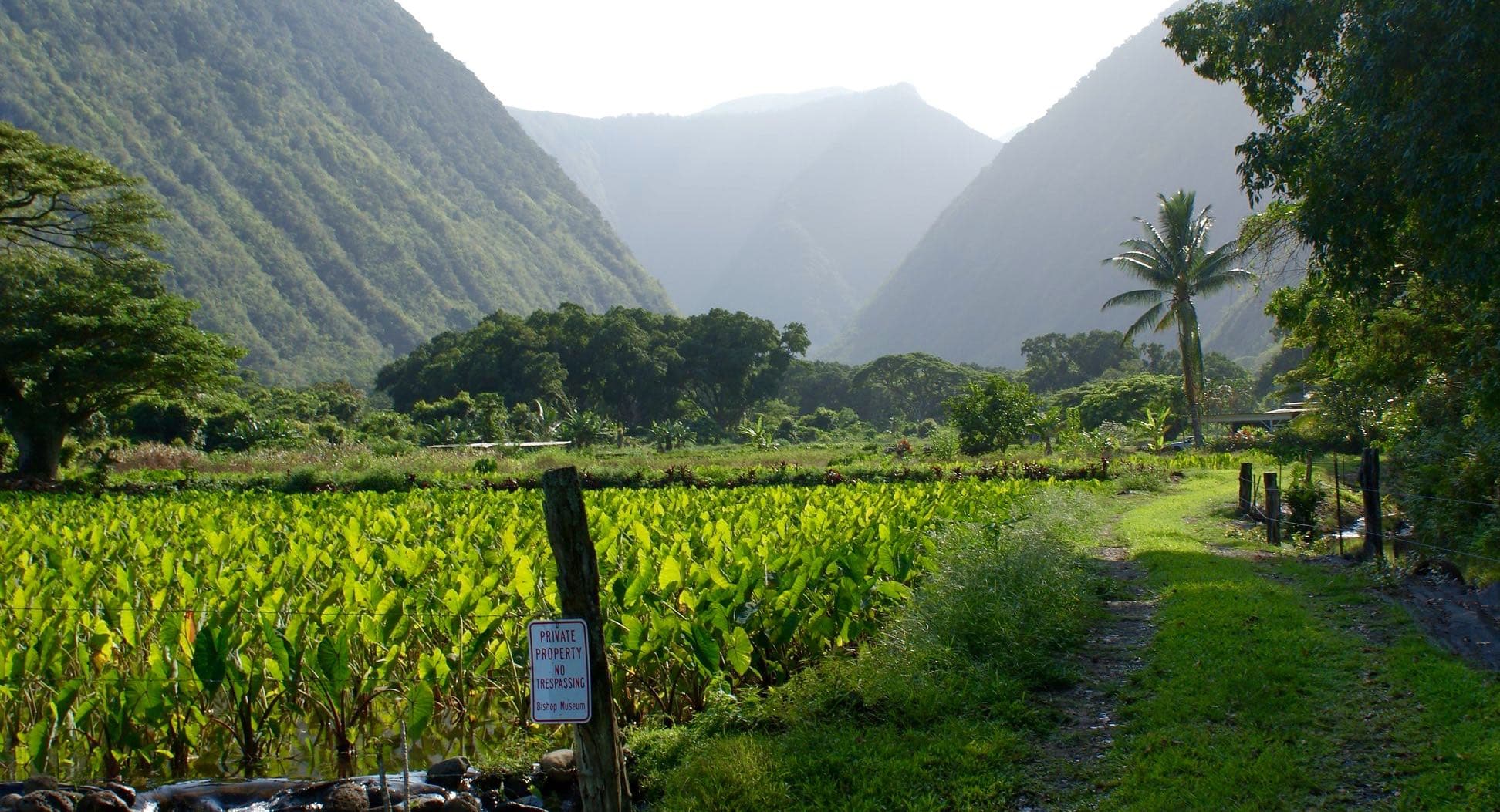
A wetland Taro field in Waipiʻo valley. Image credit: Shooting Chris on Flickr. Adapted from original.
‘General’ Farm Tours:
Plenty of small Big Island farms grow a mix of crops rather than specializing, most of them organic and using sustainable practices. Tours walk you around the property, explain how they work, and usually end with a tasting of what they grow. Some go further and put on full farm-to-table dinners.
Kuaiwi Farm
Kuaiwi farm is a five-acre certified organic farm in the south Kona district growing a diverse range of crops including Kona coffee, chocolate, macadamia nuts, avocados, bananas, pineapple, tea, citrus, vegetable gardens and more. Their ~2 hour farm tour includes a tasting of their products on the breezy lanai. Drink coffee, taste chocolate, apple bananas, mac nuts and chat with the geckos.
Starseed Ranch
The Starseed Ranch is a sustainable homestead and farm on the northern coast of the Big Island of Hawaiʻi, about 15 minutes from the historic town of Hawi. They organize a 1-hour tour through their 6-acre orchard with a variety of tropical fruit trees (mango, papaya, avocado, breadfruit, lemon, lime, coconut) and a tropical food forests planted with traditional Polynesian crops (kalo, turmeric, bananas, plantains). After the tour you can either have locally grown snacks or opt for a full-scale farm-to-table dinner.
Big Island Farms
The Big Island Farms property is spread over 60 acres along the Hamakua coast. Most (40 acres) of their property is covered with macadamia nut orchards, while the remaining lands are used for a permaculture food forests, orchards, and a variety of themed gardens containing over 200 unique species of plants. Their tour includes a “farm fresh tasting experience” and information about their plants and history.
OK Farms
Located above the Rainbow Falls, OK farms organizes a 1.5 hour tour of their farm where they grow tropical crops ranging from Lychee, Longan, Rambutan, Cinnamon, Nutmeg, Heart of Palm, Cacao (chocolate), Coffee, and more.
Baumkuchen Farm
This farm on the Hamakua coast organizes tours of their property where you can learn about the vanilla they grow and hear about their Hawaiian-German History. A “Baum Kuchen” is a German style tree cake, and they also offer a special baking event where you get to cook (and keep!) such a cake with a stick on a campfire. More information on their website.
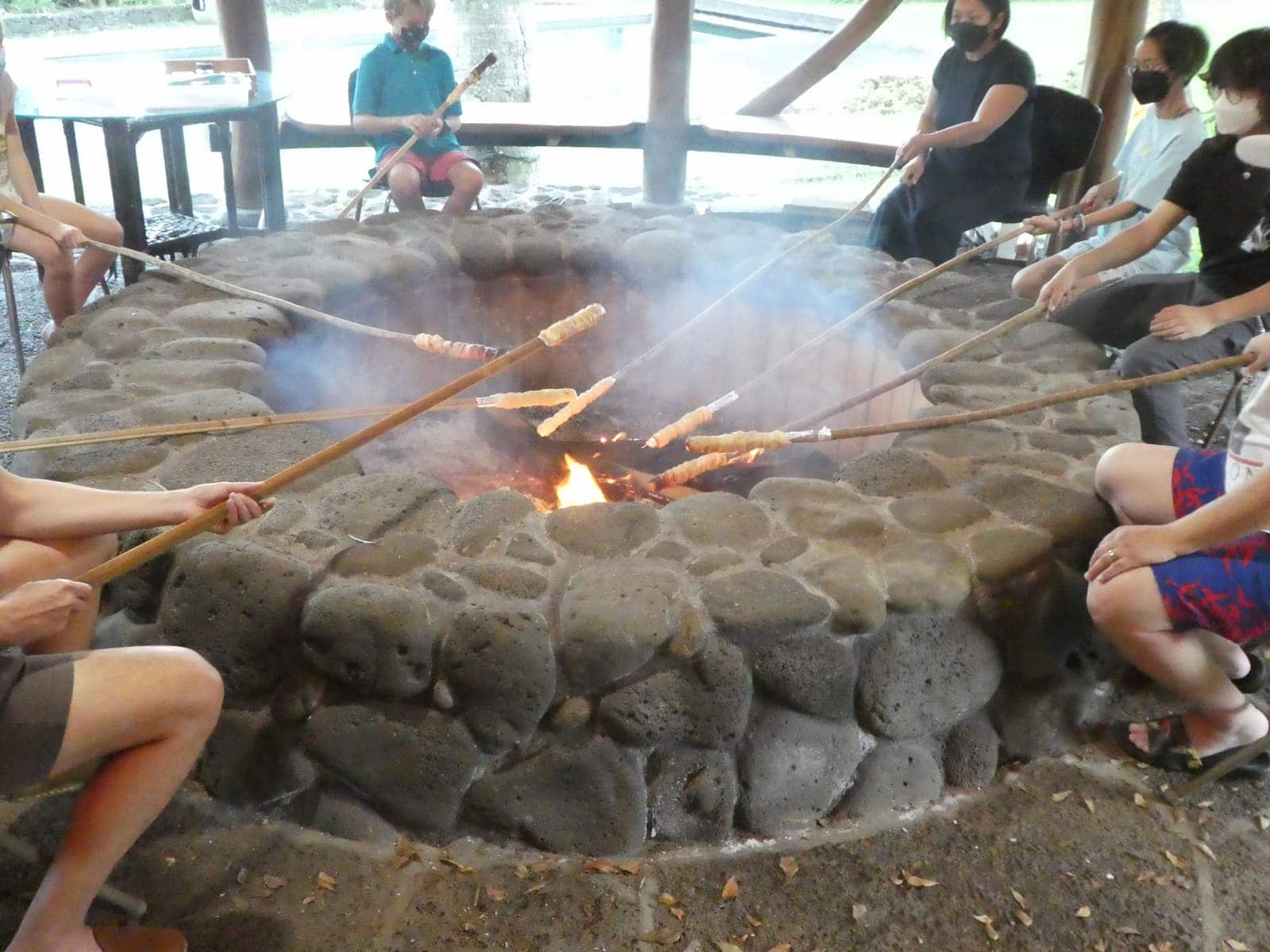
One of the tour options is roasting Baumstriezels (a popular eastern European version of bread on a stick) over an open campfire.
Ranch Tour on a UTV
The Waipiʻo on Horseback Ranch spans a traditional land division (Ahupuaʻa) that stretches from the mountain to the ocean and is home to native flora and fauna.
You can explore their grounds with a 2.5 hour tour with a UTV during which you get to make 4 to 8 stops depending on the weather and condition of the trail. At every stop the local guides engage and talk about the ranch history, present planting projects, and the importance of the cultural landscape. There is a lot of history in this property and the guides giving the tours are very knowledgeable!
It’s a good pick if you want an educational tour with long ocean-to-mountain views.
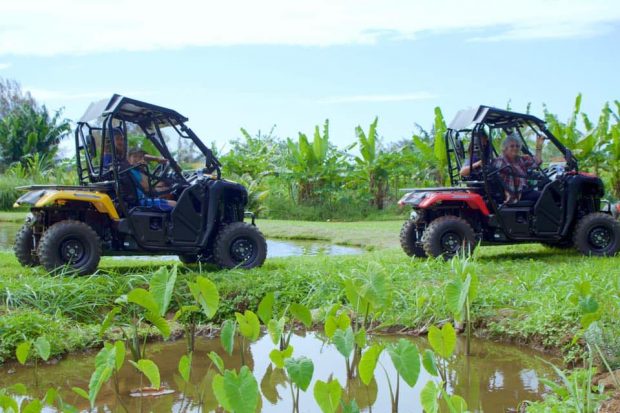
All About the View UTV Farm Tour near Waipiʻo Valley
The gentlest tour on the Big Island ATV list: a guide-led UTV ride across a working Hāmākua ranch with fruit sampling, tilapia ponds, and a cliff-top ocean stop. No mud pit, no speed.
from:
$175
What is a suggested tour?Our suggested tours are hand-picked tours that receive consistent good reviews, give back to the community, and work hard to minimize their impact on the environment. Read more about these tours on our website.Volcano Winery
Hawaiʻi has a winery, which surprises most people.
The vineyards of the Volcano Winery are spread over the fertile volcanic slopes of Mauna Loa, close to the entrance of the Hawaii Volcanoes National Park. While they do not offer a tour of their vineyards they do offer tastings of their locally produced wines 🍷and teas.
Read more about the Volcano Winery (and the wine tasting) on our website.
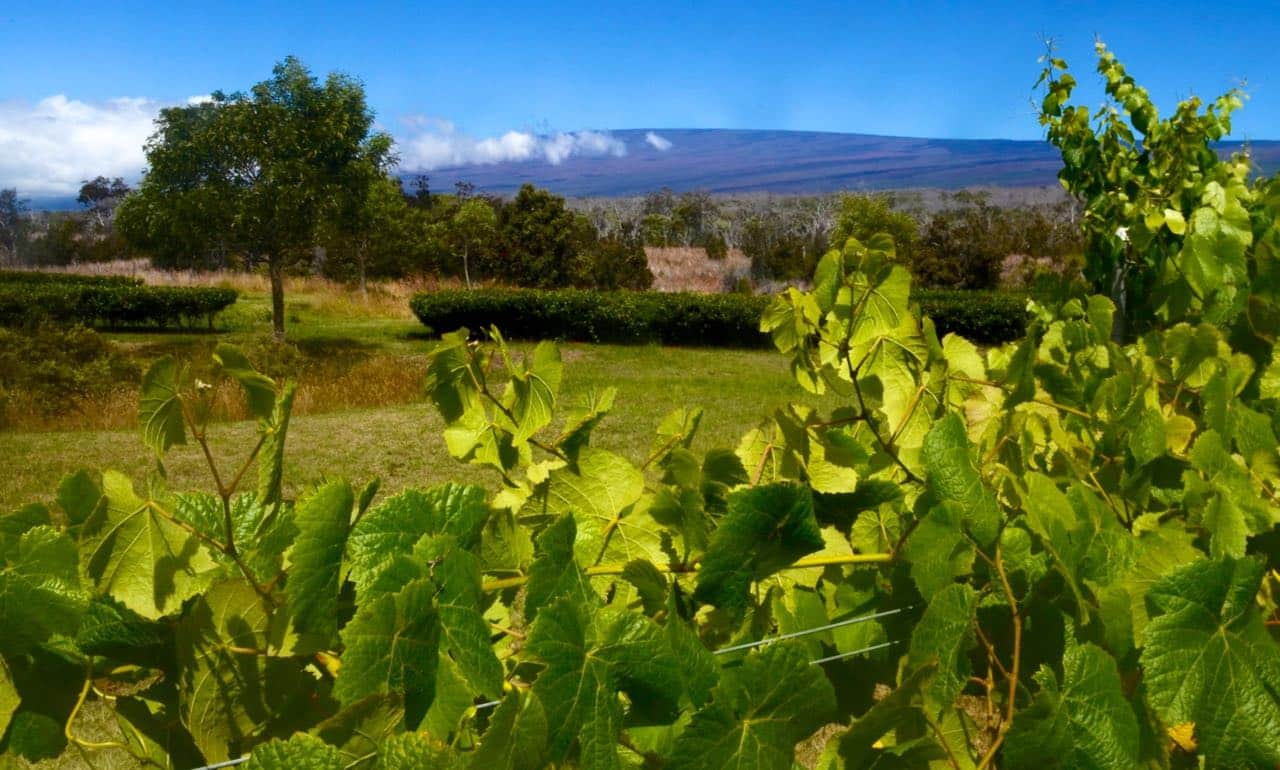
The Volcano Winery vineyard is located on the Mauna Loa volcano, which you can see in the background. Photo credits: Mike Neenan
Hibiscus Farm Tour
Most people know the showy hibiscus flower, but there is an edible kind too, called Hibiscus Roselle.
Hawaiian B Farms is a family farm outside of Honokaʻa that grows this edible hibiscus and offers 1.5 hour tours of both their greenhouse growing area and outside demonstration garden. During the tour you are guided through their estate greenhouse and outdoor exploration garden, and get to taste the intense flavors of fresh hibiscus along with their flowers in syrup, preserves and tea.
More details and booking information on the Hawaiian B Farm website.
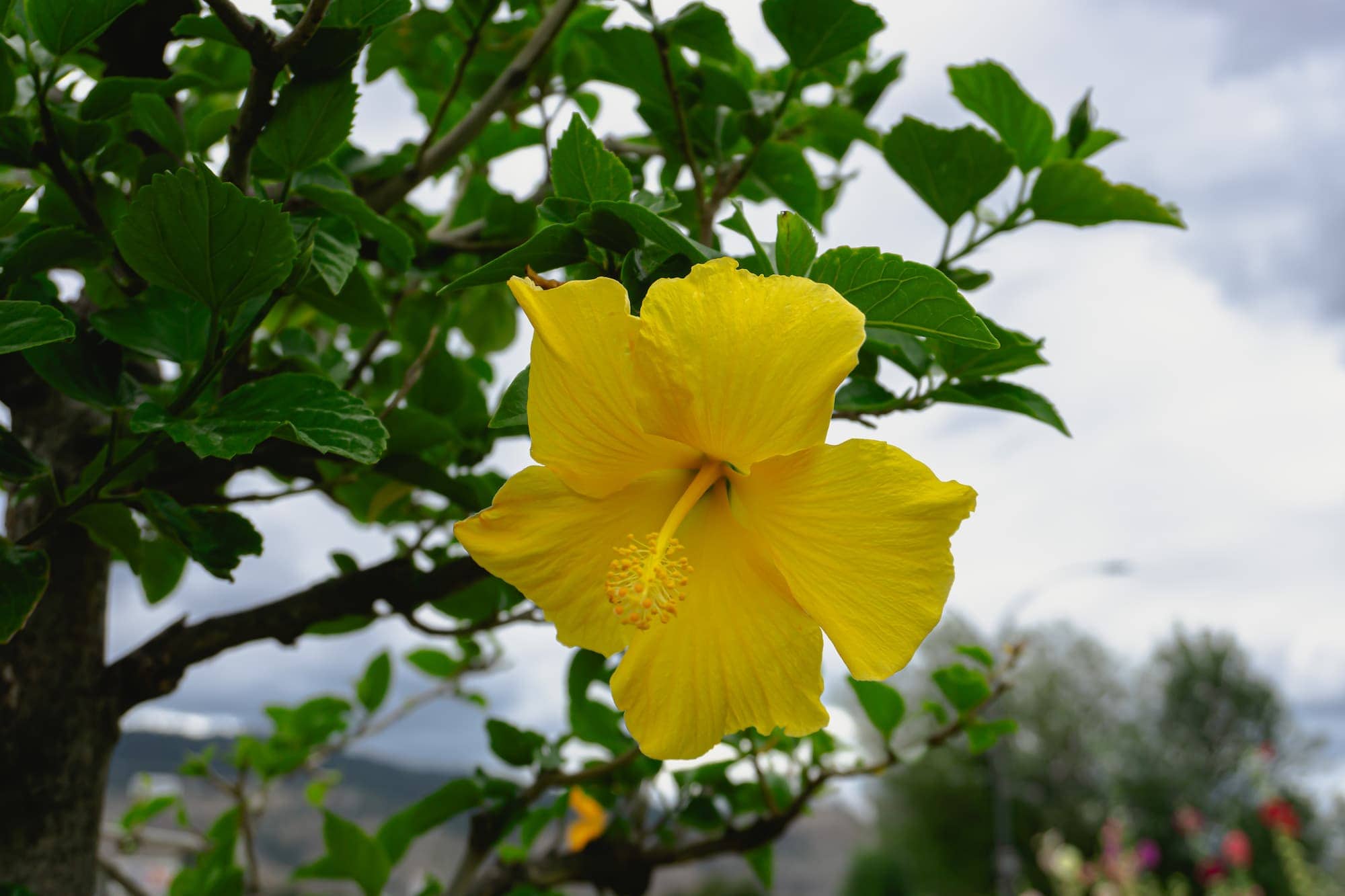
You can find Hibiscus flowers all over the Hawaiian islands – so much so that the yellow hibiscus is Hawaii’s state flower. Photo by Donna McL on Unsplash.
Animal Tours: Bees, Sanctuaries, Petting Zoos, and Sea Life
We have a LOT of animal-related tours for you to pick from, ranging from small insects (beehives and honey production) to large (rescued) farm animals. You can also pay a visit to a petting zoo in Volcano or get some goat therapy in Honomu, tour an octopus and seahorse farm in Kona, take out a shelter dog for a day trip, and even get to see zebras and flamingos in an exotic animal shelter!
You can find the following tours in this section:
- Bee keeping tours
- Animal sanctuaries
- Petting zoo/farm
- Take a shelter dog out for the day
- Seahorse farm tour
- Coral lab tour
Bee Keeping tours
Bees do heavy lifting in Hawaiian agriculture, pollinating coffee, macadamia nuts, and many tropical fruits. A third of the state’s colonies sit in the south Kona district, and Kealakekua Bay holds one of the largest concentrations of honey bees in the Pacific basin.
Bird and Bee Hawaiʻi (Honokaʻa)
Located on a small 5 acre farm in Honokaʻa, Bird and Bee Hawaiʻi organizes a 2-hour “Bee keeping introduction for visitors” tour of their farm and hives. You can read more about the tour on their website.
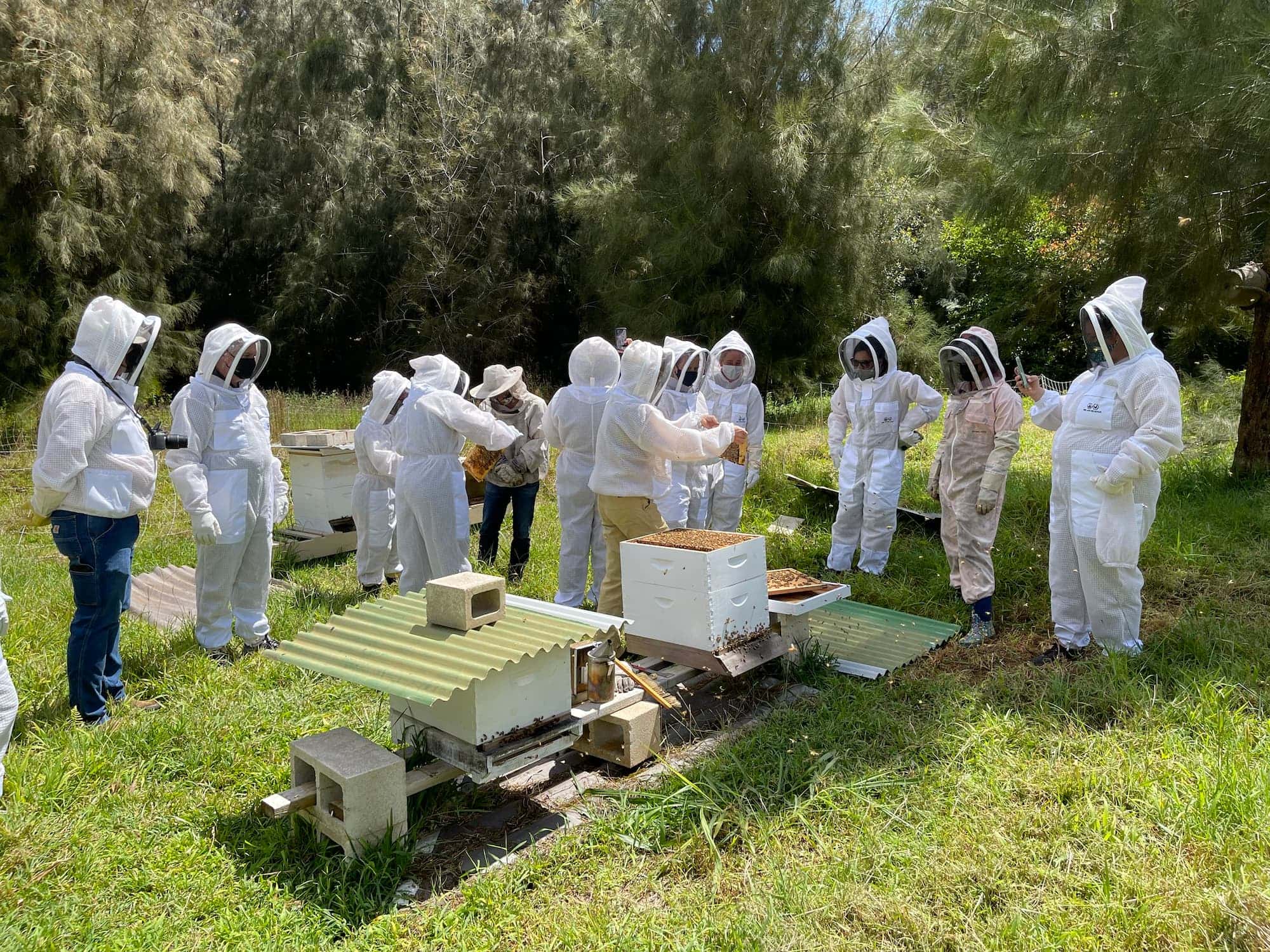
Introduction to beekeeping on Hawaiʻi for visitors tour in progress. Credit: Bird and Bee Hawaiʻi.
Big Island Bees
You can learn a lot of local bee-facts and of course about beekeeping by visiting the tour organized by Big Island Bees (book here directly), or see their website first), organized at their honey packing & processing plant. The tours include an inspection of a live hive with a beekeeper, which you can watch from behind a screened area, and a free sampling of all their different honey varietals. After the tour you can also have a look at their small museum and possibly buy some of their products.
See the following video to get an idea of what the bee tour is like:
We’ll leave you with some interesting bee-facts to get started:
- Did you know that Hawaii has 62 (!) native bee species¹? All of these species derive from one common ancestor that crossed over from east Asia, but they have since spread over all island and diverged to pollinate our wildly different ecosystems.
- Native bee species are by the way not used for honey production. This honor goes to the honey bees, the first of which were introduced to the Hawaiian islands in 1857.
- The Hawaiian word for the native bees is nalo meli maole, which is derived from the words ‘nalo‘ (flying bug), ‘meli‘ (honey), and ‘maoli‘ (native).
See also this study or this article for a more thorough discussion on local bees.
¹: Daly and Magnacca 2003, Magnacca 2011.
Animal Sanctuaries
A handful of Big Island sanctuaries take in exotic and farm animals whose owners can no longer care for them, and most run tours where you get to meet the residents up close.
The following sanctuaries may be fun to visit if you are an (exotic) animal fan:
Magical Creatures Sanctuary
The Magical Creatures Sanctuary is a nonprofit Farm Animal Rescue and Sanctuary located on the Hamakua Coast. Many of their resident animals love attention and enjoy cuddles, but please remember this is not a petting zoo, and all interactions are on the animal’s initiative.
You can visit the sanctuary for a tour but reservations in the form of a donation are required. This is an entirely volunteer run organization, so any donation you make goes directly to the animals.
During the tour, which last 2 hours, guests are taken from species to species and enter the pastures and yards with many of the sanctuary residents. You get to know the residents’ rescue stories, information about the various species of farmed animals, and the industries they came from. There are lots of opportunities throughout the tour for up-close interaction with the magical creatures.
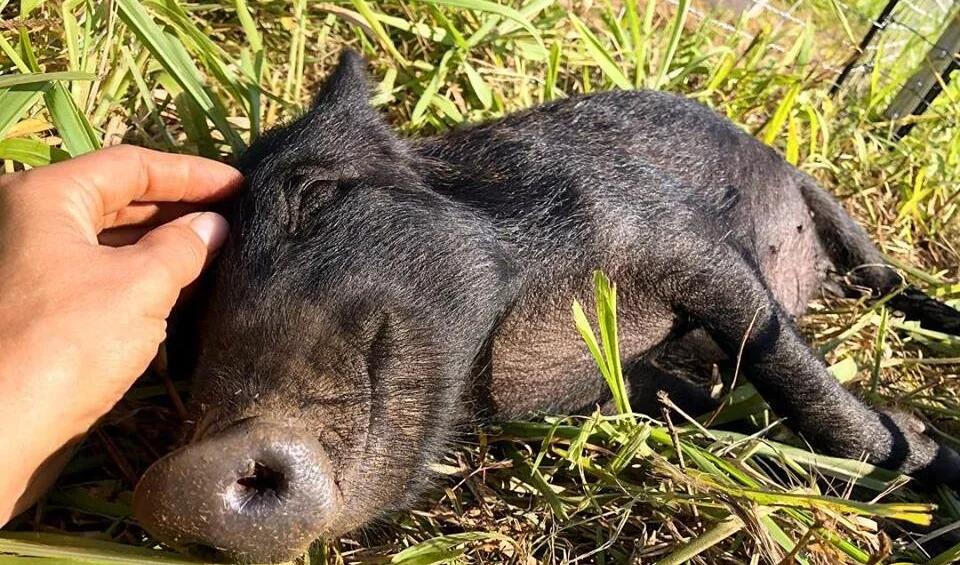
One of the animal sanctuary’s residents that LOVES cuddles. Image credit: Magical Creatures of Hamakua
Three Ring Farm (close to Kona)
A USDA-licensed exotic animal facility running two-hour guided tours. The farm houses an unusual mix of animals, the kind not usually found on working agricultural operations. Good for families and anyone interested in animal care and conservation up close. Pricing and specific animal lineup on the Three Ring Farm website; worth confirming current availability before visiting as schedules change.
Parrots in Paradise
Parrots in Paradise in Kealakekua is a parrot rescue, rehabilitation, education and adoption center. These birds are not native to Hawaii but still the sanctuary managed to rescue over 80 friendly parrots. They organize ~2 hour tours during which you enjoy a guided walk around the sanctuary and get to know the range of personalities of cockatoos, lovebirds, macaws, and more species. Throughout the tour, you will have many photo opportunities with some of their best-trained parrots.
Krishna Cow Sanctuary
The Krishna Cow Sanctuary is home to more than 200 rescued bovines spread across 14 pastures and 500 acres on the Big Island. The operation is rooted in Vedic philosophy: the cows are treated as sacred, milked by hand alongside their calves, and left to live out full lives.
The public part is the Cow Cuddle Zone, open 365 days a year from 11am to 2pm. The sanctuary selects its most sociable cows and calves for the zone, where they spend the hottest part of the day lying in a covered area. Visitors are welcome to stay as long as they like, scratching and sitting with the herd. The cows are relaxed enough that first-timers are sometimes convinced something is off. Nothing is. $20 minimum donation, all proceeds going directly to the herd’s care.
Petting Zoos
The Lili House Farm (Volcano)
The Lili house farm is a small family farm with LOTS of animals in Volcano Village. The guided tour lasts between 1 and 1.5 hours and includes a walk through their farm as well as access to the petting zoo where you can hold, cuddle and feed the animals.
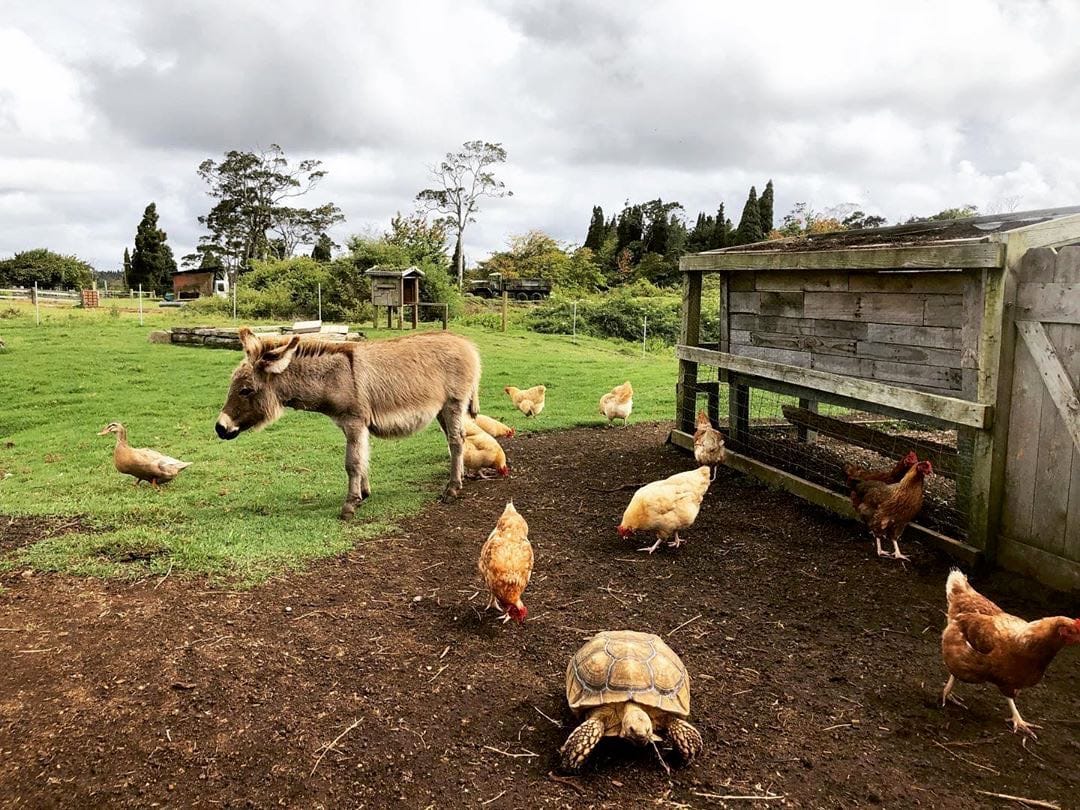
Some of the members of the Lili House Farm family. Photo credit: the Lili house farm.
Ranch Tour and Animal Encounters – Ola Nani Ranch (Puna)
Get up close with alpacas, goats, sheep, horses, a giant tortoise named Herberto, and even a mini horse named Koa during this fun, hands-on ranch tour. Guests are encouraged to feed the animals in their habitats, snap selfies, and learn about their care. Seasonal fruit tastings and a guided walk-through of the farm make this an engaging experience for all ages.
More information and booking info here.
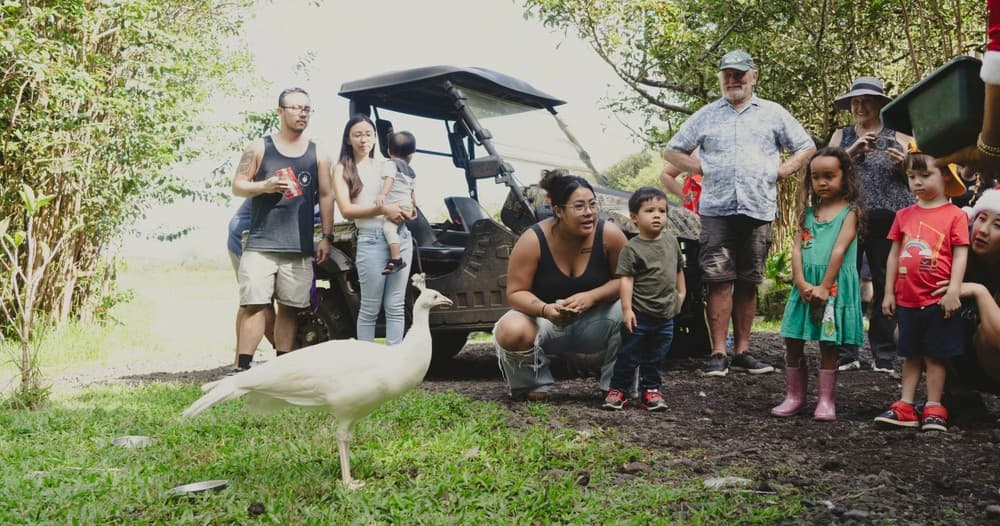
A family-friendly moment on the ranch tour at Ola Nani Farms, where guests of all ages can meet and feed animals like alpacas, goats, and peacocks.
Honomu Goat Dairy farm (Hamakua Coast)
Overlooking the ocean on the Hamakua coast, The Honomu Goat Dairy offers visitors Goat therapy and Goat yoga with their never-ending supply of baby goats. The charge a small fee for the 30-minute therapy session but you receive the amount you pay back in store credit to spend in their visitor shop where you can buy goat milk products, goods from local artists, or (more) goat treats.
Read more about goat therapy on the Honomu Goat Dairy website.
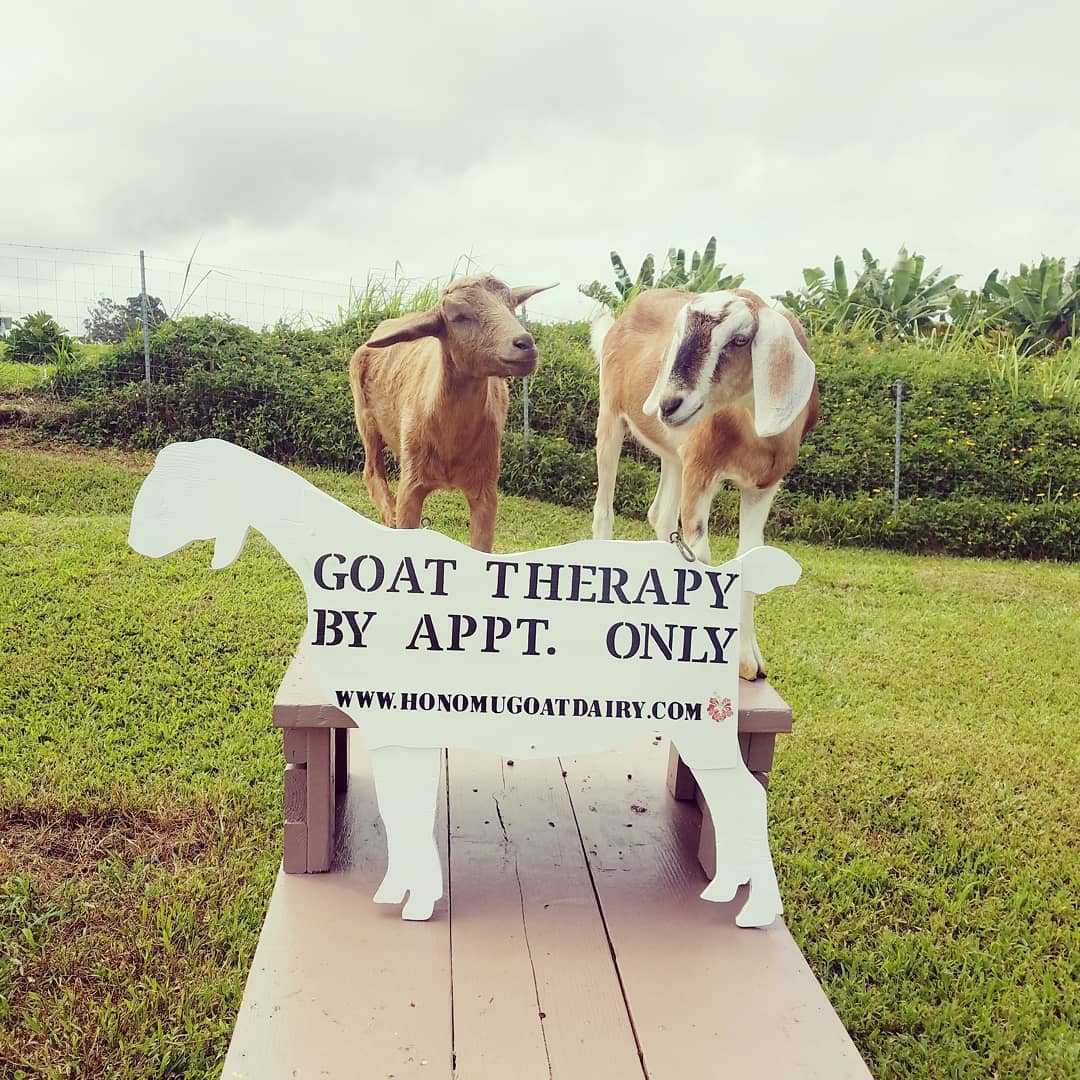
Goat therapy is currently by appointment only so make sure to check out the details on their website. Image credit: Honomu Goat Dairy.
Take a shelter dog out for the day
The Hawaiʻi Island Humane Society lets visitors “check out” a shelter dog for the day.
The main goal of this program is for you to enjoy the Big Island and to get your “dog fix” by taking along one of their shelter dogs on your adventure. The shelter will ask you to fill out an evaluation on your return so that potential adopters will know more about the dog. Pictures are encouraged!
You can find out more about how you get to take a dog for a Hawaiian adventure on the Hawaii Island Humane Society website.
Visit a Seahorse Farm
The Ocean Rider Seahorse Farm in Kona raises seahorses in captivity to sell them to collectors. This greatly helps the ‘wild’ population of seahorses since it reduces the pressure on their population from hunting/capturing.
During the tour of the seahorse farm you get to see the now over 25 species of seahorses up close and personal, and there also is an interactive tide pool and a fish feeding station for the children available. All tours are led by a professional and certified Biologist that has been trained in public speaking.
You can read more about the tour on our website, or go directly to the ocean rider website.
ʻĀkoʻakoʻa Coral Nursery Tours
ʻĀkoʻakoʻa runs weekly behind-the-scenes tours of their working coral restoration facility on the west side of the island. Visitors get an up-close look at live coral growing in raceways (large flow-through tanks), learn about the science behind reef restoration, and see the water filtration and pumping systems that keep the operation running. The program weaves together Hawaiian cultural values, marine science, community education, and government service, and the guides know the work firsthand.
Tours run Fridays at 11 AM and are open to everyone: families, general visitors, students, and anyone with an interest in coral restoration. Pricing varies depending on the type of visit, so contact ʻĀkoʻakoʻa directly to book and confirm costs. Booking is by email only for now.
More information at the ʻĀkoʻakoʻa coral nursery website.
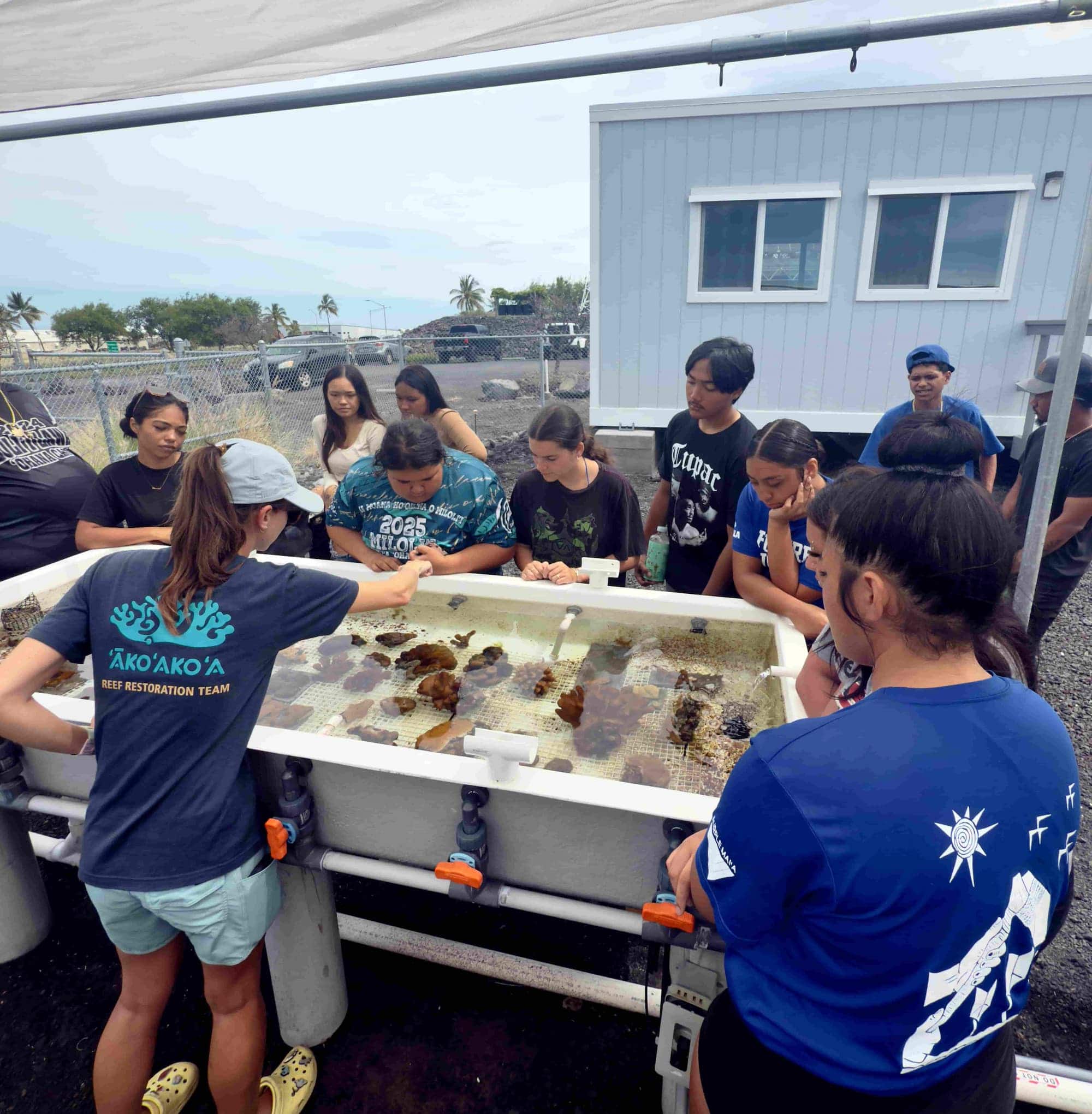
ʻĀkoʻakoʻa runs weekly behind-the-scenes tours of their working coral restoration facility on the west side of the island
Native trees / tree planting
Hawaiʻi Legacy Forest
Hawaiʻi’s Legacy Forests is restoring a historic forest on the slopes of Mauna Kea that once was the personal koa forest of King Kamehameha the Great to its original glory. Nearly a century ago this land was cleared to make room for farming and ranching and now over 400,000 new trees have been planted.
The tour consists of a ride into their growing forests to find a place to plant an endemic tree, during which your guide will tell you about the island flora and fauna, island history, and Hawaiian culture. The tree you plan is tagged with an Radio-frequency identification (RFID) chip which allows you to track its growth and look it up at later times.
Read more information on the Hawaiian Legacy Tours website.
Mamaki Forest Tour
Māmaki is a culturally significant plant native to the Hawaiian Islands whose leaves are made into tea or used as a medicine.
You can learn more about Māmaki with a tour to the enchanted Māmaki forest in Volcano Village. During the tour you are taken through a forest farm as well as 29 acres of native Hawaiian rainforest by a guide that offers a deep knowledge of the forest, history of the site, native and invasive species, and farming and processing methods used to produce mamaki tea.
Visitors can pick mature māmaki leaves and see māmaki seedlings and plants at various stages of development, and tours customarily end with a tasting & blending experience on the Hawaii Forest Farm lanai.
Read more about this tour on the Hawaii Forest Farms website.
Farmers Markets
Farmers markets are one of the best places to find locally produced goodies, freshly prepared food (breakfast and lunch), and buy handmade souvenirs to take home. Also important: by buying directly from our farmers you cut out the middle man and help to strengthen the local community!
Most farmers markets are only open on one or two days of the week, but there are enough markets on the Big Island to make visiting one easy without compromising your itinerary.
You can find more information on our BIG list of Farmers Markets on the Big Island.
Farm to Table Restaurants
Farm-to-table means the food on your plate came straight from a farm, skipping the store, market, and distributor in between.
In its purest form, farm-to-table means the table sits at the farm and that the food you are being served is grown on the lands you are dining on. It is very rare, however, to find farms diverse enough to grow all the produce needed for a full meal, and a more common way to enjoy a farm-to-table dinner is at one of our local restaurants, where the chefs make sure to source as many of their ingredients as possible (ballpark 70 to 80%) directly from local farms.
Farm to Table Lunch / Dinner
Here is a partial list of places where you can eat meals made with local ingredients:
- The Starseed Ranch offers farm-fresh dinners prepared in their open-air kitchen. You can find them in our list of general farm tours.
- Pineapples is a family run open-air restaurant in downtown Hilo with occasional live music, good food, and great drinks/cocktails. Their dishes are locally inspired, and they source most of their ingredients from the island.
- Merriman’s in Waimea is one of the pioneers of the modern farm-to-table experience and has offered authentic Hawaiian cuisine for over 30 years. You can expect consistently high-quality food and wine, but that quality comes at a price. Pro tip for those of you traveling on a budget: the lunch menu is more affordable than the dinner menu.
Note that there are far more local restaurants with a sustainable approach to sourcing their ingredients on the Big Island. Just because they didn’t make it on our list doesn’t mean they are not worth a visit, and we’d LOVE to hear from you if you think we should add another restaurant or cafe to the list.
Farm to Table Cooking Class + Lunch
If you want to take the farm to table concept a bit further you can also harvest and prepare your own food. See for example the following 4-hour tour near Hilo that includes the harvesting, preparing *and* eating of a truly local lunch:
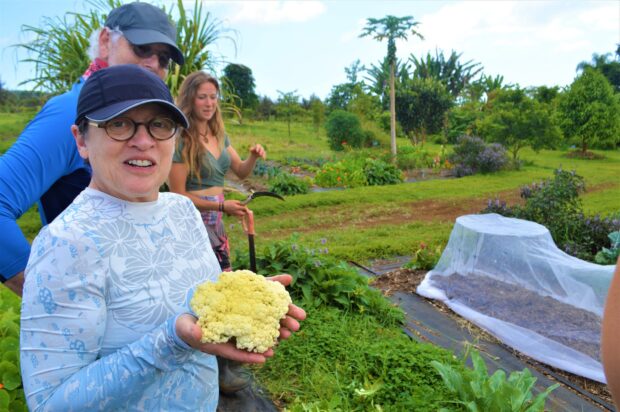
Farm-to-Table Cooking Class + Lunch at Kulaniapia Farms
Harvest fresh produce from the farm and prepare a plant-based meal together with this personal and authentic Farm-to-Table Cooking Class
from:
$149
What is a suggested tour?Our suggested tours are hand-picked tours that receive consistent good reviews, give back to the community, and work hard to minimize their impact on the environment. Read more about these tours on our website.The Imu Mea Ai Food Tour (Pahoa)
Imu mea ʻai means food cooked in an underground oven, and this four-hour tour walks you through the whole process, from digging the pit to the feast. It is hands-on the entire time: you help build the imu rather than watch someone else do it. Here is how the day runs:
- 10:00am Arrive at the farm for oli, chant, and protocol
- 10:30am Gather the plant materials to build the imu (underground oven)
- 11:00am Build the imu
- 12:00pm Uncover the food from the second imu, built and filled by the previous group
- 12:30pm Backyard, homestyle lūʻau (communal feast)
- 1:00pm Takeaways, debriefing, and surveys
- 2:00pm Pau hana. End of the experience.
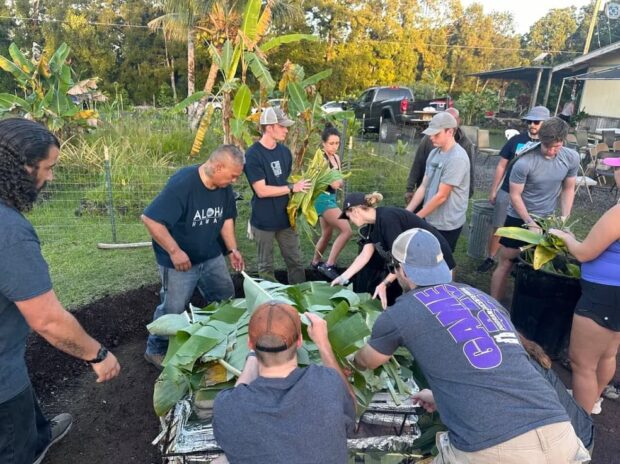
Imu Mea ʻAi Food Tour: Build a Hawaiian Underground Oven Near Pahoa
You dig the underground oven by hand and feast on kalua pork cooked in the imu the previous group built. A working Hawaiian alternative to the resort luau, run by a Native Hawaiian nonprofit near Pāhoa.
from:
$150
What is a suggested tour?Our suggested tours are hand-picked tours that receive consistent good reviews, give back to the community, and work hard to minimize their impact on the environment. Read more about these tours on our website.Agri-Tourism on the Big Island: all kinds of farm tours
Eco-tourism keeps growing as the state of Hawaiʻi leans into sustainable development. More of our farms now run tours and tastings, and seeing how things are grown (and tasting them) is one of the better ways to connect with the island.
You can read all about the different kinds of farm tours in the sections above, but if you made it all the way here we’d like to reward you with a quick summary of why farming is such a big thing on the island of Hawaiʻi:
Summary of agriculture on the Big Island
The Big Island is home to 8 out of the world’s 13 main climatic regions, which makes it ideal for agriculture. We are a worldwide leader in harvesting macadamia nuts and orchids for example, and are the only US state where vanilla, cacao, and coffee, are grown commercially. An incomplete list of more of the locally grown things you can find on the Big Island: ginger, honey, coconuts, and exotic fruits like pineapple, papaya, mango, jackfruit, durian, rambutan, star fruit, cherimoya, figs, lychee, and dragon fruit.
To make more clear how important agriculture is here on the Big Island: Agriculture sales in the state of Hawaiʻi contribute $1.9 billion yearly to the economy, making it one of the state’s top industries (source: the University of Hawaiʻi’s College of Tropical Agriculture and Human Resources (CTAHR). The Big Island plays a large part in this as we provide most of the agricultural lands (we are the biggest island, after all), see the map below for a quick summary of which crops are grown here:
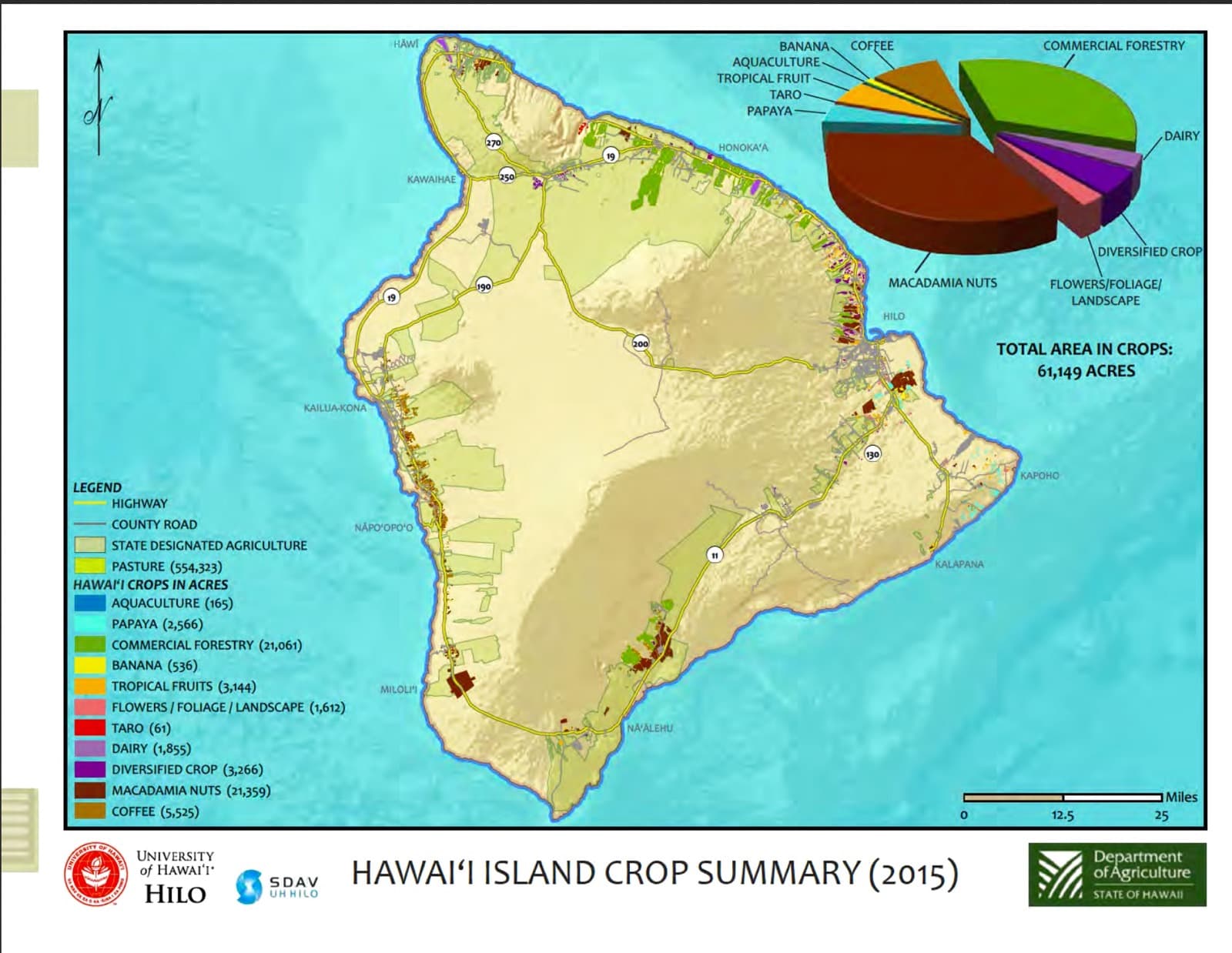
Summary of agricultural land use on Hawaii Island [source].
Do you want to bring produce home?
While local products are fantastic souvenirs you should make sure you are allowed to bring them with you. Untreated fresh fruits and vegetables are in general not allowed, coffee and flower leis should be no problem. You can find a complete list of common items from Hawaii that are allowed into the U.S. mainland here.
Related: Culinary activities on Kauaʻi, Oʻahu and Maui
Are you planning to also visit other islands in the state and do you like our style? Then the following guides might be a good place to start your culinary trip planning: