
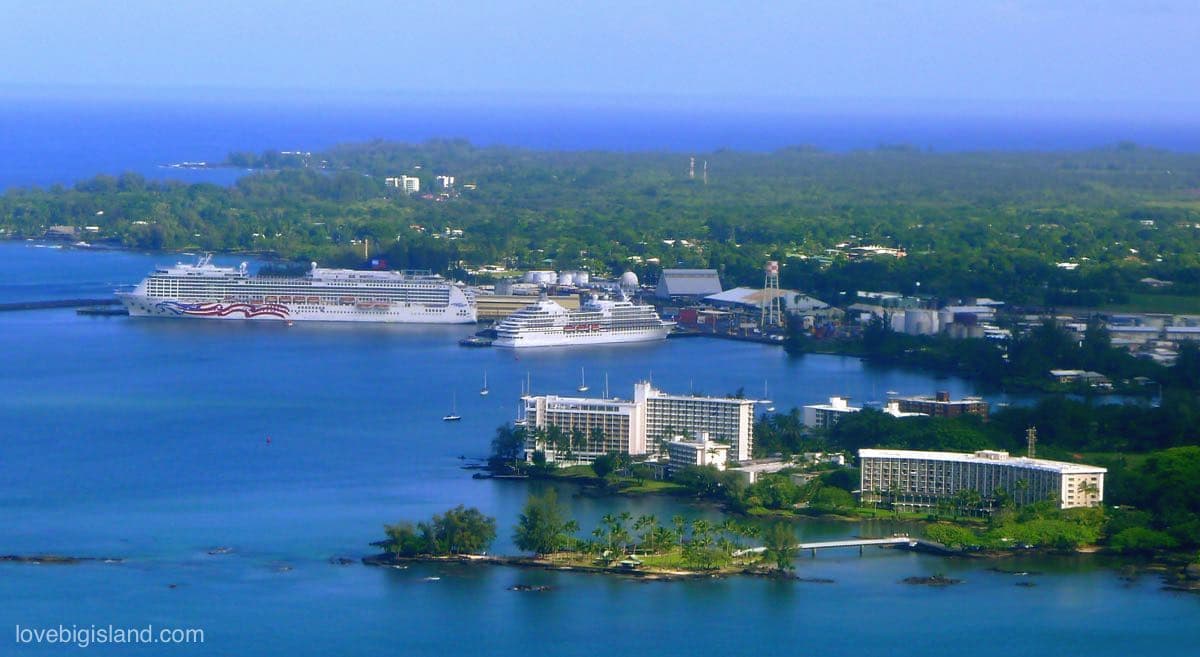
Many cruise ships stop at both Hilo and Kona, on opposite sides of the Big Island. From Hilo, it’s about 45 minutes by car to Hawaiʻi Volcanoes National Park. Kona has the island’s white sand beaches, a short drive north, and our favorite snorkeling spots, less than an hour south of the pier.
This plan is for passengers who want to explore on their own instead of booking the ship’s excursions. In Kona you come ashore by tender at the Kailua Pier, and in both ports the day starts with picking up a rental car. With back-to-back port days, you can also spend a night ashore and rejoin the ship at the second port. In short:
Table of contents
- Renting a car for the day
- Cruise ship activities near Hilo
- Cruise ship activities near Kona
- How to spend the night on the Big Island as a cruise ship passenger
Renting a car for one day on the Big Island
A rental car is by far the most efficient way to explore the Big Island on a port day. Our Big Island car rental guide explains how to book through a local agency with no cancellation penalty and rebook if the rate drops.
Hilo: The rental car agencies are at the Hilo Airport, a 10-minute drive from the harbor, with their counters on the ground level across the street from the terminal. Shuttle buses will be waiting at the harbor to bring you to the airport.
Kona: Rental car agencies in Kona are split between two locations:
- A few rental companies have an office in the King Kamehameha hotel, a few hundred yards’ walk from your landing spot at the Kailua Pier.
- The rest work out of lots near the Kona Airport, 7 miles north of town on Highway 19. The drive takes about 20 minutes without traffic and far longer in the early morning and afternoon rush hours. Few, if any, shuttles run between the pier and the airport, and taxis are expensive, so rent at the King Kamehameha hotel if you can.
Activities near Hilo: a one-day itinerary
On a Hilo day, make Hawaiʻi Volcanoes National Park your priority. We split the sightseeing in and around Hilo into three areas:
- Hawaiʻi Volcanoes National Park
- Waterfalls and gardens north of Hilo
- Lower Puna: black sand, a warm pond, and the Red Road
Each is in a different direction from town. Pick one; driving between them uses up time you don’t have.
Hawaiʻi Volcanoes National Park
Hawaiʻi Volcanoes National Park is 30 miles from Hilo, about 45 minutes each way, and you can easily spend a full day there. Pick up your rental car early and drive straight up. The entrance fee is $30 per car, card only.
As of October 2026, Kīlauea’s eruption is confined to Halemaʻumaʻu crater at the summit, and no lava reaches the ocean. It has erupted in short fountaining episodes since December 2024, with pauses of weeks between them. Check the USGS daily update or our lava viewing status page on the morning of your port day.
Nāhuku (the Thurston Lava Tube) and the Kīlauea Iki Overlook are the stops that fit into a port day. Our one-day Big Island itinerary pairs the park with one more stop for a single day on the island.
With a night ashore, you can stay for the glow above Halemaʻumaʻu after dark when an episode is running. If you can manage one, spend it in Volcano Village, next to the park.
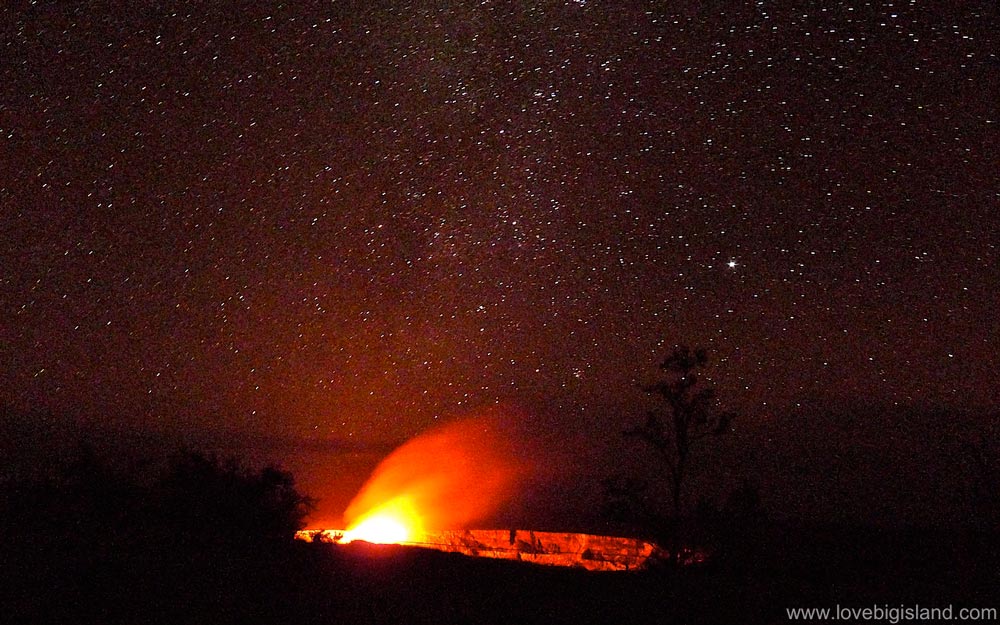
The glow from Halemaʻumaʻu at night during the 2008 to 2018 summit eruption. Between fountaining episodes today, there may be no glow at all
If you’re short on time, a helicopter flight from Hilo passes over Kīlauea’s summit and the Hāmākua waterfalls, and it costs less than the same flight from Kona.
Waterfalls and gardens north of Hilo
Rainbow Falls is a few minutes up Waiānuenue Avenue from downtown Hilo, inside Wailuku River State Park, and one fee covers Boiling Pots upstream as well. Non-residents pay $5 a person plus $10 for the car, card only, and the gates lock at 6pm.
North of town on Highway 19, Hawaii Tropical Botanical Garden sits on the Onomea scenic drive. Reach it from Kulaimano Road, just north of the garden. It’s open daily from 10am to 6pm, with last entry at 5pm. Farther up the highway, ʻAkaka Falls State Park above Honomū has a 0.4-mile loop trail to a 442-foot waterfall, open daily 8:30am to 5pm, with the same $5 and $10 non-resident fees.
Keep driving north and you reach the Hāmākua coast and, past Honokaʻa, the lookout over Waipiʻo Valley. The road down into the valley is closed to hikers, and visitors can only go down with a permitted tour.
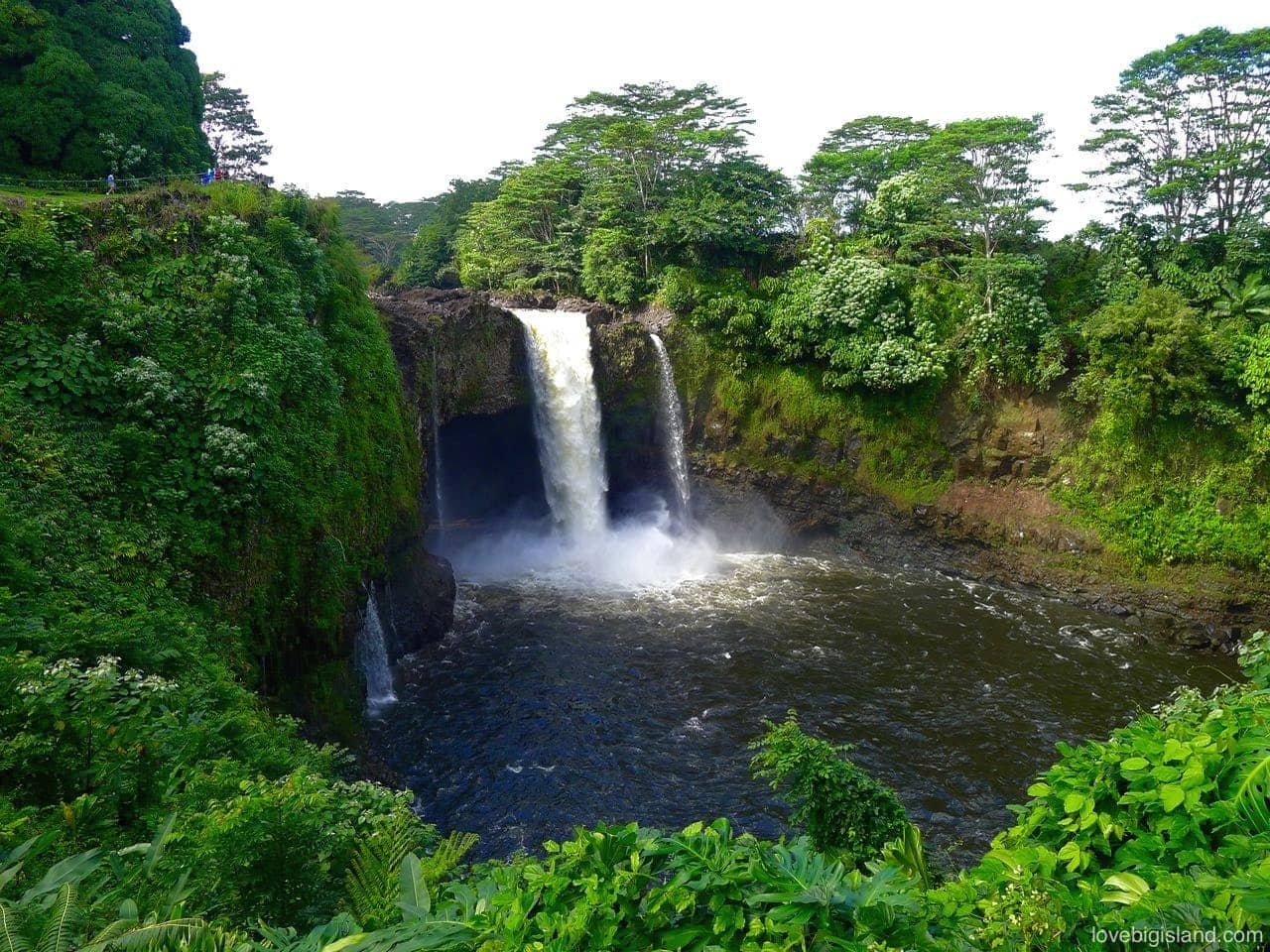
Rainbow Falls (Waiānuenue) in Hilo. The flow changes from day to day; this is the falls after a good rain upstream
Lower Puna: black sand, a warm pond, and the Red Road
Lower Puna is where lava last reached the sea. Kalapana went under lava in 1990, and a new black sand beach has been forming at Kaimū ever since. In 2018, lava from the lower East Rift Zone buried over 700 structures and 30 miles of road.
From Hilo, take Highway 11 south to Keaʻau and Highway 130 through Pāhoa to Kalapana. Drive the Red Road, Highway 137, east from Kaimū to Isaac Hale Beach Park at Pohoiki, then back the way you came. It’s one of our all-time favorite scenic drives, with green jungle, black lava, and the blue ocean side by side.
Pohoiki has a black sand beach that didn’t exist before 2018 and the last of Puna’s volcanically heated hot ponds.
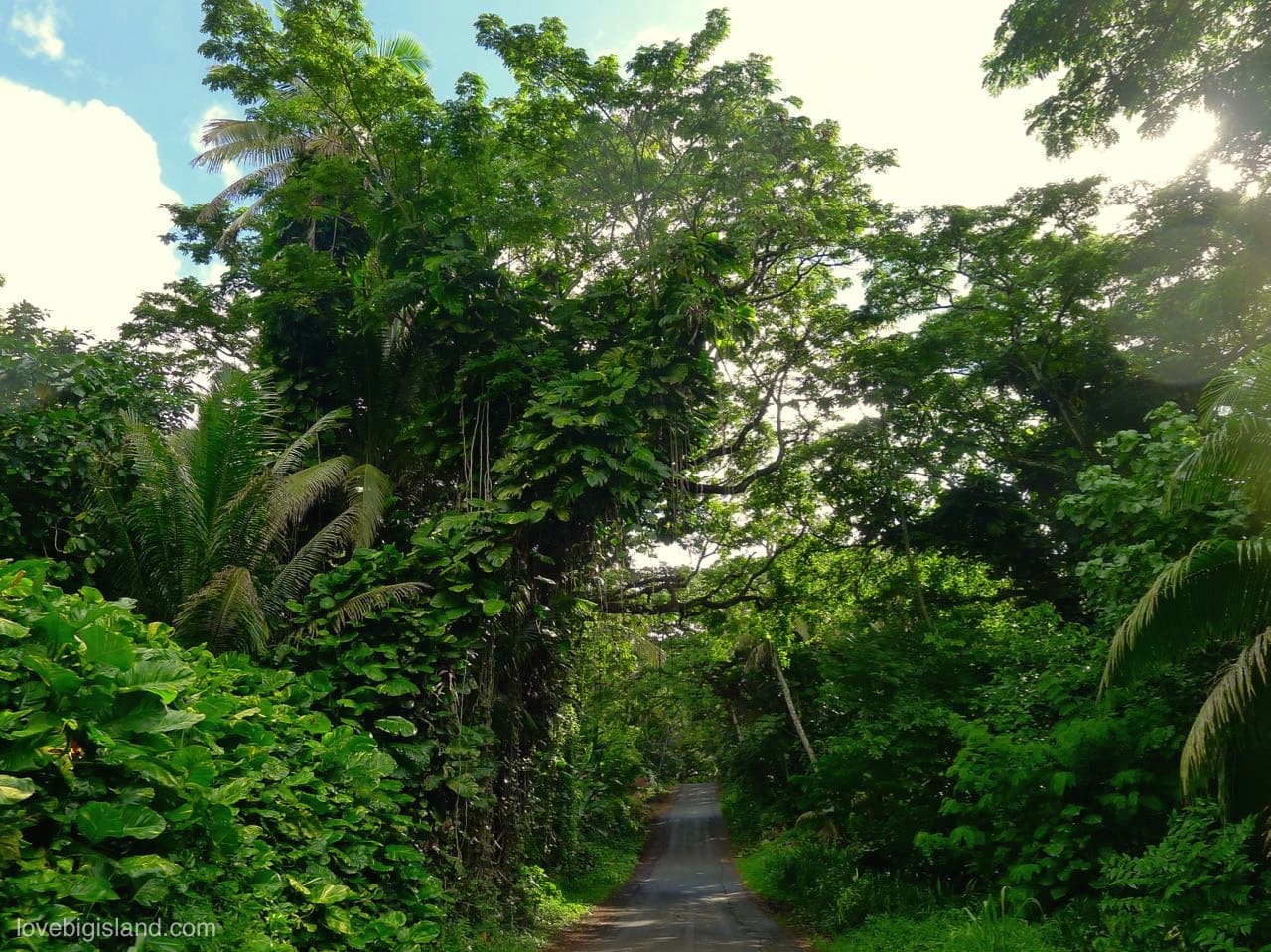
The Red Road, Highway 137, under a jungle canopy in lower Puna
Activities near Kona: a one-day itinerary
The harbor at Kona isn’t built for cruise ships, so ships anchor offshore and tender passengers to the Kailua Pier in downtown Kona. When you plan the day, allow 30 to 90 minutes for the tender.
You can probably fit more than one of the activities below into a Kona day. For example, you can do a beach and a snorkel stop on one drive, and a helicopter tour only takes half a day.

A cruise ship at anchor off Kailua-Kona, beyond ʻAhuʻena Heiau at the Kailua Pier
Winter is one of Hawaiʻi’s two busy seasons. Humpback whales arrive in November and are here in numbers from mid-December through early April, the months to watch for spouts from the deck between ports or to book whale watching from Kona.
We split the sightseeing in and around Kona into these activities:
- Go beach hopping
- Go snorkeling
- A road trip with coffee and culture
- Seeing the sights with a helicopter
- The manta ray night dive
White sand beaches north of Kona
The Kona side has the island’s white sand beaches. Two of our favorites, Kua Bay and Hāpuna Beach, are state parks off Highway 19, about 13 and 30 miles north of Kona. Both charge non-residents $5 a person plus $10 for the car, card only.
Pick up some food in town and make a mini road trip of it. Our Big Island beaches map shows every beach on the island by sand color and which ones are safe to swim.

Kua Bay is a small beach with good surf in the winter and snorkeling in the summer
Snorkeling on the Kona coast
The Kona coast has the best places on the Big Island to go snorkeling. Our favorite snorkeling spots are all south of Kona, less than an hour’s drive from the center of town. There is also OK snorkeling at the Kailua Pier, where the tender lands.
You can add a visit to Puʻuhonua o Hōnaunau National Historical Park, a Hawaiian history site. The park, often called the City of Refuge, is 300 feet from one of our favorite snorkeling spots.
If you didn’t bring your own snorkeling gear on the cruise, it’s easy to rent some in Kona. For more snorkeling beaches, see our list of all snorkeling spots close to Kona.
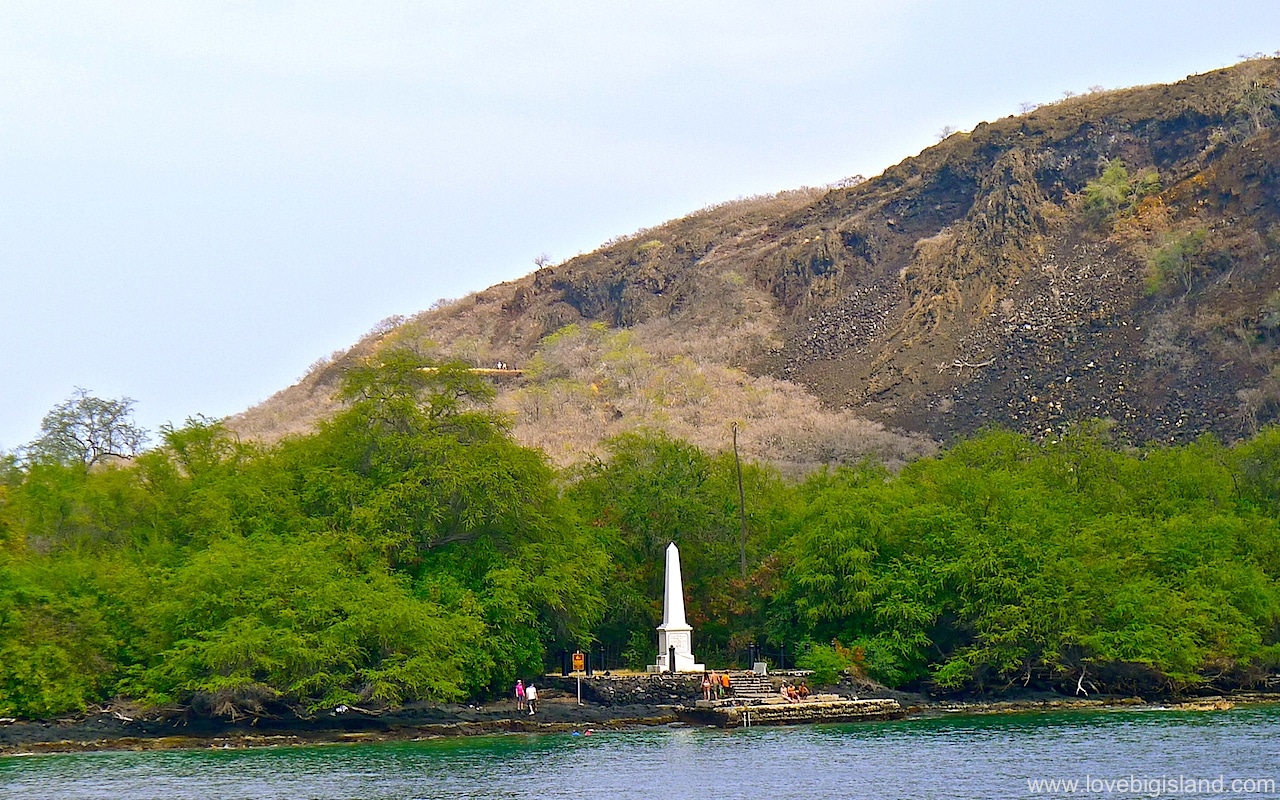
The best snorkeling in Kealakekua Bay is around the Captain Cook monument, but getting there is difficult. The easiest option is to book a snorkeling cruise.
South Kona: coffee farms and Puʻuhonua o Hōnaunau
The Kona coffee farms sit on the volcano slopes of South Kona, above the coast.
A visit to a Kona coffee farm is easy to combine with Puʻuhonua o Hōnaunau and with snorkeling at the Hōnaunau snorkeling spot next door. You can string all of this together along one of our favorite scenic drives.
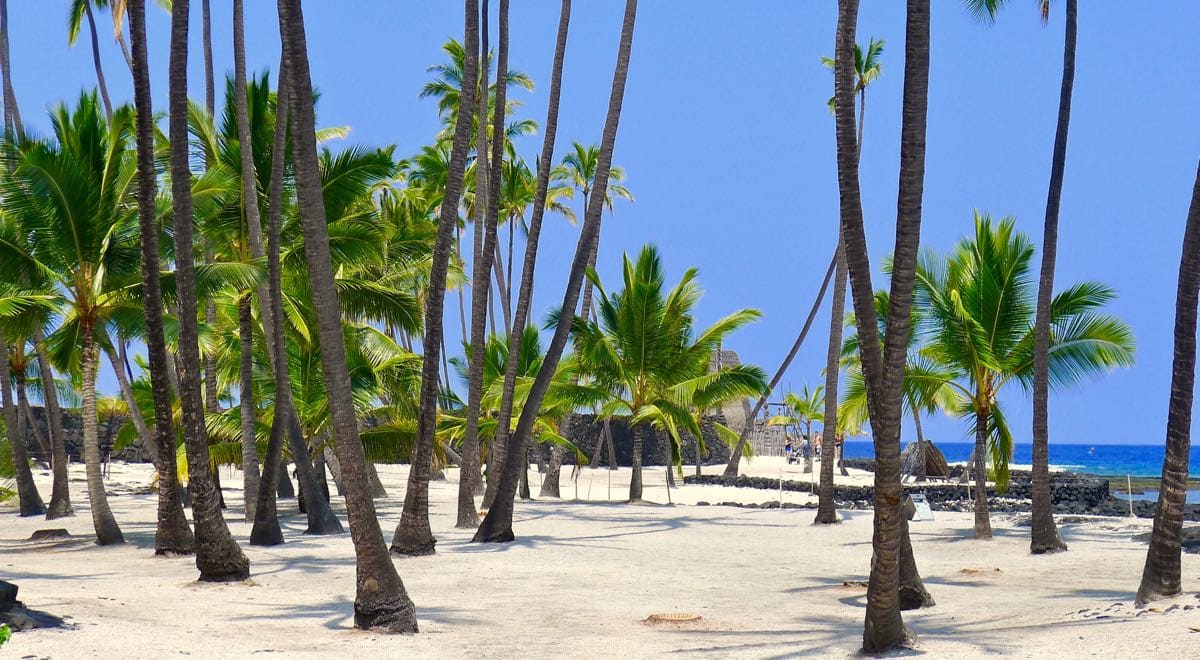
Puʻuhonua o Hōnaunau National Historical Park is a good place to take in Hawaiian history. Next door (300 feet from the park entrance) is one of the best places on the island to go snorkeling
Helicopter tours from Kona and Hilo
Most helicopter tours from Kona cost more than those from Hilo, because the volcano and the Hāmākua waterfalls are farther away. Even so, a helicopter tour is one of the most efficient ways to see the Big Island in a day.
From Kona, a flight can follow the Kohala coast to the sea cliffs and waterfalls around Waipiʻo. Our helicopter tour guide compares the four kinds of tour and the companies that fly them.
Manta ray night dive (only with an overnight stay)
Diving or snorkeling with the manta rays is one of the best things you can do on the Big Island. As a cruise passenger, you can only do it with a night on shore, because the boats go out after dark. It’s also exhausting to combine with an evening at the volcano on the same trip, and stormy weather or rough water can cancel the dive.
Our manta ray night dive page compares the dive and the snorkel versions.

Two Manta Rays Feeding At Night off Kona, Hawaii. Image credit: Wikipedia.
Spend the night on the Big Island
Cruise ships often make consecutive stops on the Big Island: one in Hilo and one in Kona. Consider spending the night on the island and rejoining the cruise at the next port.
On a cruise you get a single day ashore, and the two best after-dark experiences, the manta ray night dive off Kona and the glow above Halemaʻumaʻu when Kīlauea is erupting, both need a night onshore. Our pick is a night in Volcano Village for the glow, as long as an episode is running.
If you go ashore in Kona and rejoin in Hilo, our two-day Big Island itinerary follows the same route: the Kona coast and a night in Volcano Village, then the park and Pāhoa on day two.
With a night ashore, you can also drive up Maunakea for sunset and stargazing. A regular rental car can go as far as the Visitor Information Station at 9,200 feet. Above it you need a four-wheel drive vehicle, driven in low range on the summit road.
To spend the night on the Big Island:
- Make sure the crew knows you won’t be spending the night on the ship.
- Rent a car that you can pick up in your first port and then drop off in the second port.
Getting the cruise line’s OK to rejoin at the next port
Whether you may leave the ship and rejoin it depends on the cruise line’s rules and on the crew. If the answer is no, you can’t spend the night ashore.
Tell the crew you’ll miss the ship’s departure from the first port and rejoin it at the other port on the Big Island. Ask the cruise line whether it charges a fee for rejoining at the next port.
Read the “Somewhat definitive guide to skipping a port on the POA” thread on CruiseCritic before you plan an overnight. For other questions about the islands, ask on the Hawaiʻi forum on CruiseCritic.
If your second day (boarding) is in Kona, keep in mind that some car rental companies are at the Kona Airport. If Kona is your second port, the water may also be too rough to tender. In that case you will have to book an interisland flight to your next port in Hawaii.
Get the cruise line’s OK to rejoin at the next port before you book a rental car or a night ashore.