
Green sea turtles (honu) haul out onto the black sand at Punaluʻu to bask in the sun, and Hawaiʻi is one of only a few places on earth where they do this on an open beach. The sand is pitch-black lava broken into small grains, with coconut palms along the shore. It’s our top pick of Hawaiʻi’s black sand beaches and is the easiest one to reach.
It sits just off Highway 11 in Kaʻū, 31 miles from Volcano Village and 10 miles from Nāʻālehu, an easy stop en route to Hawaiʻi Volcanoes National Park. The beach is lifeguarded, and beyond the turtles it is a good spot for a picnic under the palms. Swimming and snorkeling are possible when the water is calm, but currents can run strong, so check conditions before you get in.
Table of contents
- About Punaluu (overview + video)
- Swimming at Punaluu
- Seeing turtles!
- Nearby snorkeling spots
- Facilities at the beach
- Best time to visit
- Leaving the black sand
- Directions to Punaluʻu
Beyond swimming and turtle-watching, you can take a short coastal hike or camp overnight (permit required), and there is a shaded picnic area under the palms.
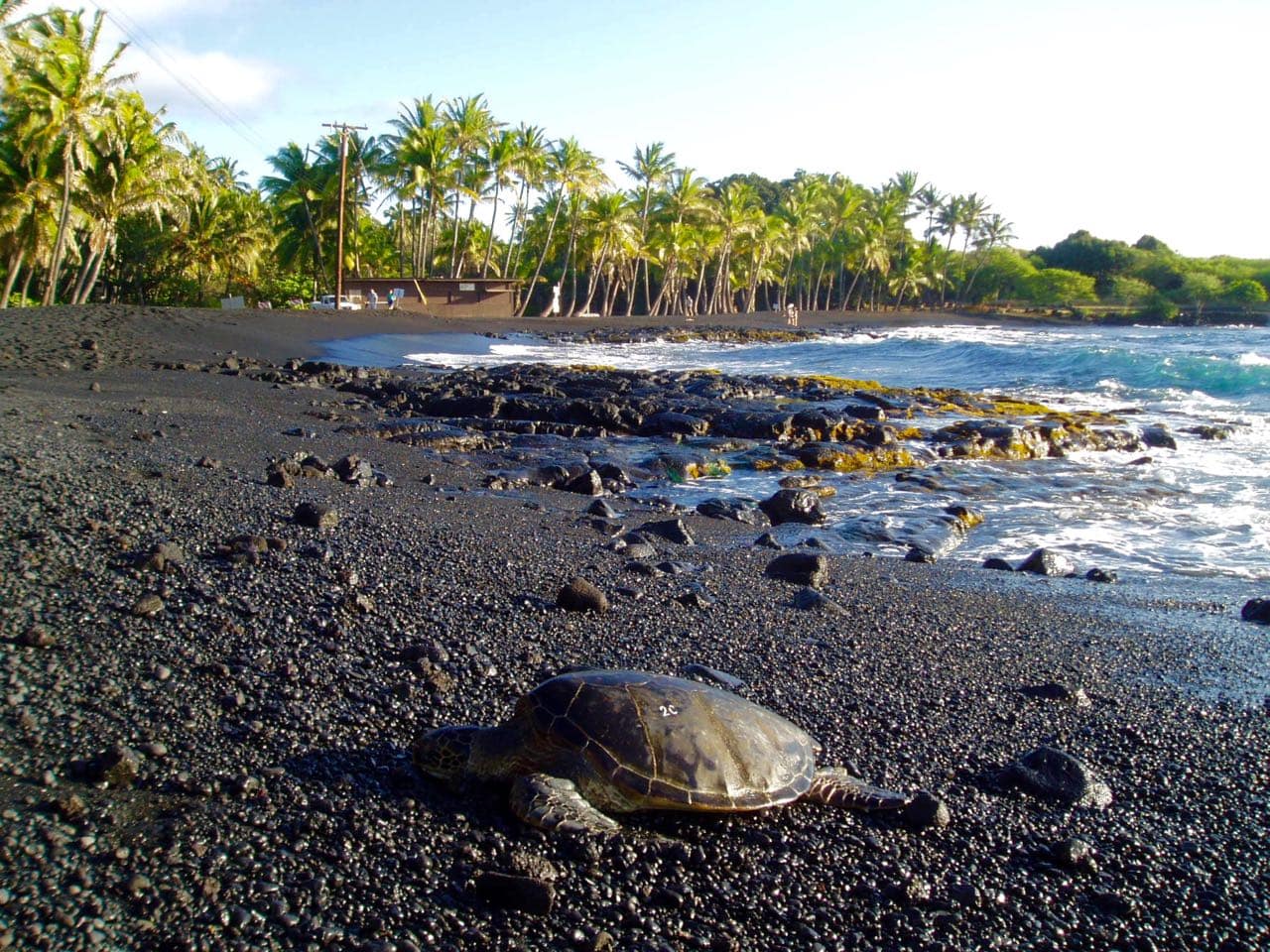
Turtle on Punaluʻu Beach | Photo credits: Steve Cadman on Flickr under a CC BY-SA 2.0 license.
About Punaluʻu black sand beach
Scoop up a handful of the sand and look closely. It’s made of small fragments of pitch-black lava, and you can sometimes still pick out the larger bits as pieces of an old flow.
The beach itself is lined by rows of coconut palms. The shade under the palms is a good place to hang out because the black sand can get very hot in the sunlight.
You can get a good impression of Punaluʻu from the following video made by the good people of droneandslr.com:

Swimming at Punaluʻu
Swimming is possible on a calm day, but currents here can run strong, so wait for the right conditions. Bring water shoes: the black sand heats up fast underfoot, and the shallows hold a lot of lava rock that hurts to step on. The easiest entry is the small boat ramp on the left as you face the water.
There are underwater freshwater springs in Punaluʻu bay. The water from these springs is colder than the seawater and drifts on top of the salt water because salt water is denser than fresh water. This can sometimes give you the strange sensation of swimming in water of two temperatures (cold and warmer) at the same time.
These freshwater springs are very likely the name givers of this bay. Punaluʻu means “coral dived for” or “spring dived for” in the Hawaiian language.
Stay out of the water if the surf is high.
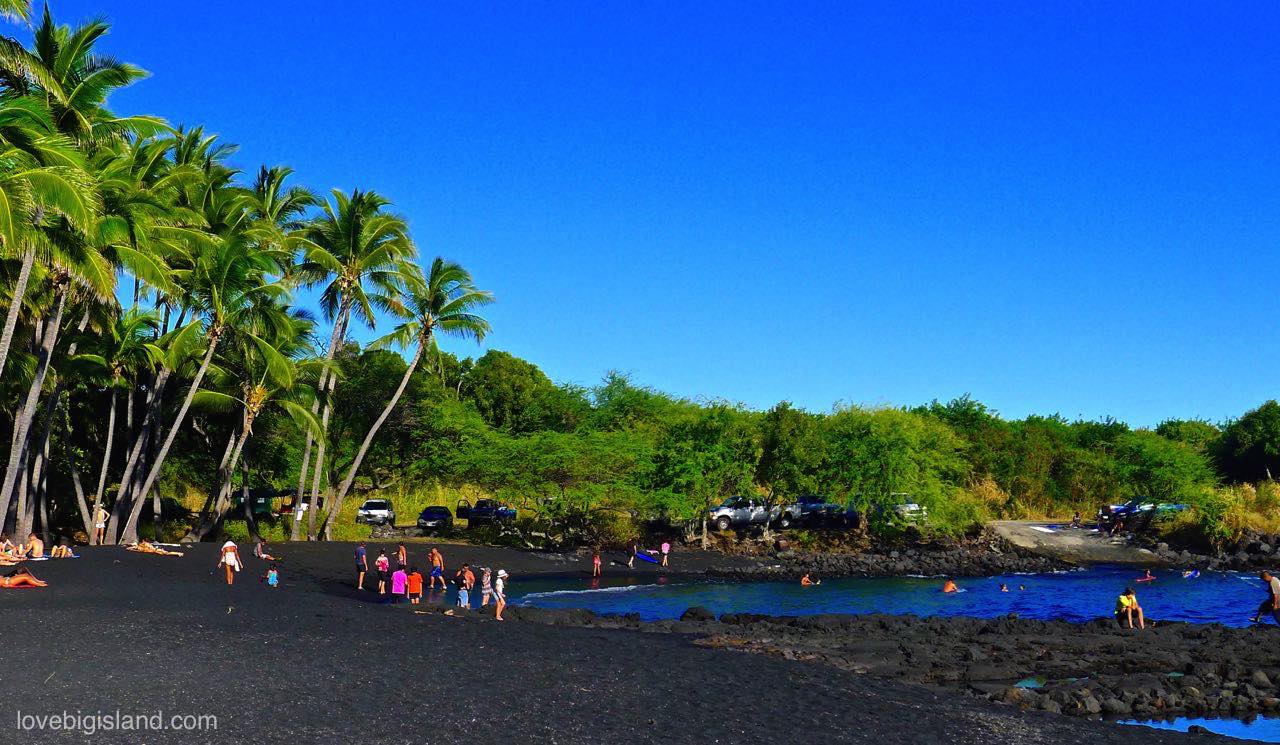
The protected cove at the north-eastern side of the beach is the best spot for a swim.
Seeing turtles at Punaluʻu black sand beach
You will often find turtles foraging in the shallows or hauled out on the warm sand.
The turtles basking in the sun are Hawaiian green sea turtles (honu). You can sometimes also spot the rarer hawksbill turtle (honuʻea) in the water, though it doesn’t bask on the beach. Most sea turtles never bask on land at all. Green sea turtles are one of the few that do, and only at a handful of places worldwide (source).
How to behave around turtles: sea turtles in Hawaiʻi are protected under federal and state law and the Endangered Species Act (source). A few rules when one is near:
- Never touch a turtle.
- Never feed a turtle.
- Stay at least 10 feet (3 meters) away, the distance NOAA and DLNR recommend.
- If a turtle moves closer than that, back away slowly and give it room.
More turtles: our list of 8 best places to see turtles in Hawaiʻi covers more spots, if you want to take a shell-fie with them (from a respectful distance of course).
Snorkeling at Punaluʻu
Visibility at Punaluʻu is only moderate, but on a calm day it’s worth bringing snorkel gear anyway. Entry at the main beach is awkward over the lava rock, but once you’re past it, look for turtles.
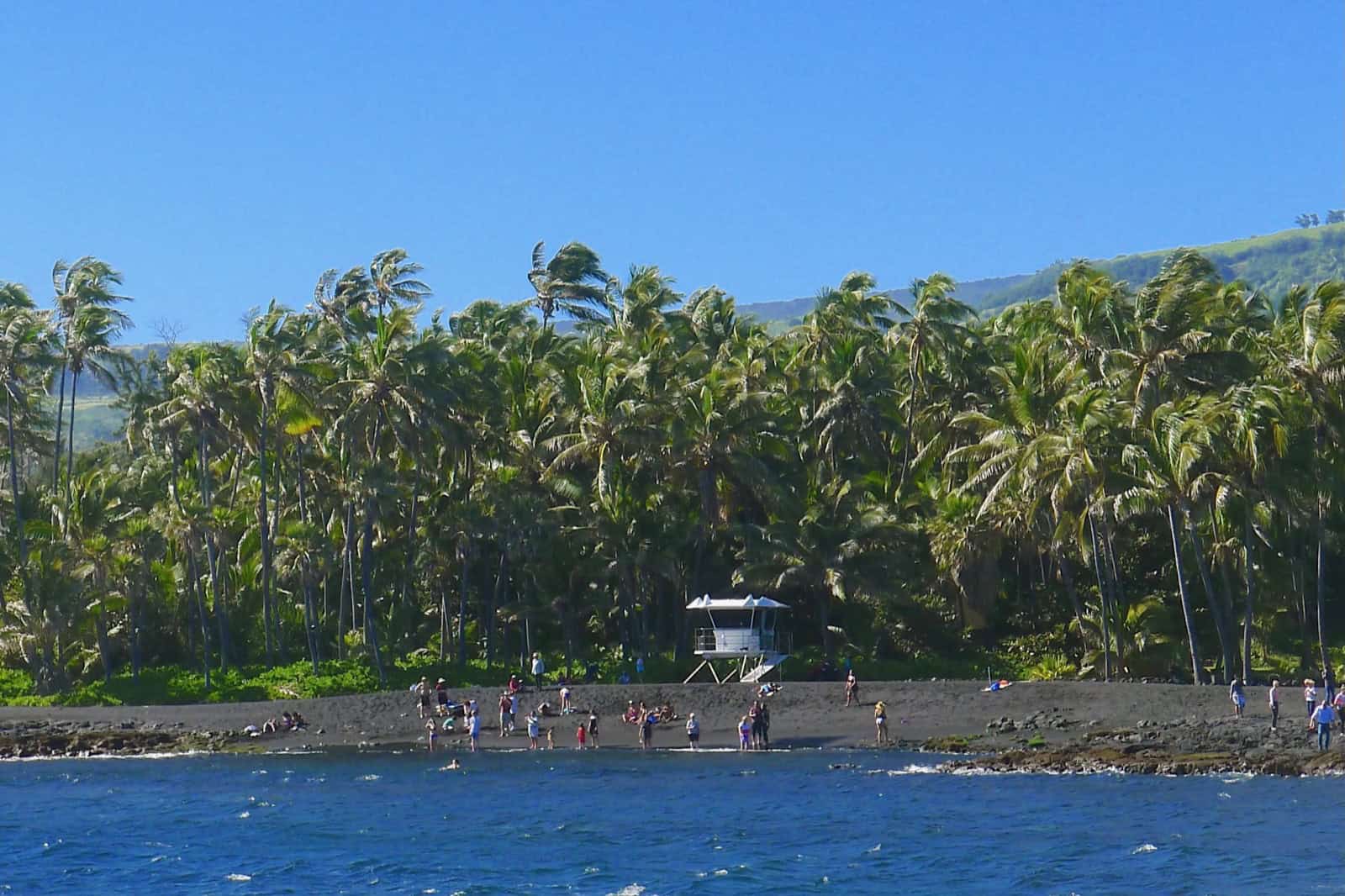
The coconut grove is the marker you pick out first from the water, with the Kaʻū hills rising behind it.
If you are an experienced snorkeler and the ocean is calm (no big waves or strong currents) you can also check out the snorkeling at Ninole Cove. This cove is a short walk to the south and west of the main beach, a sheltered bay with sand channels that give a decent entry into the water. There are also sheltered tide pools here, shallow and easy for kids.
The easiest way in is the short hike from the black sand beach parking lot: follow the unmarked grassy trail south (go right as you face Ma Kai, the ocean) for about five minutes. You can also drive in from the south, but the Sea Mountain golf course that used to mark the turn is no longer operating, so the walk is the surer route.
Facilities at Punaluʻu beach
Lifeguards are present at the beach every day of the week between 08:30 am and 5:00 pm. There is parking, a picnic area, restrooms, and an outdoor shower in the beach area.
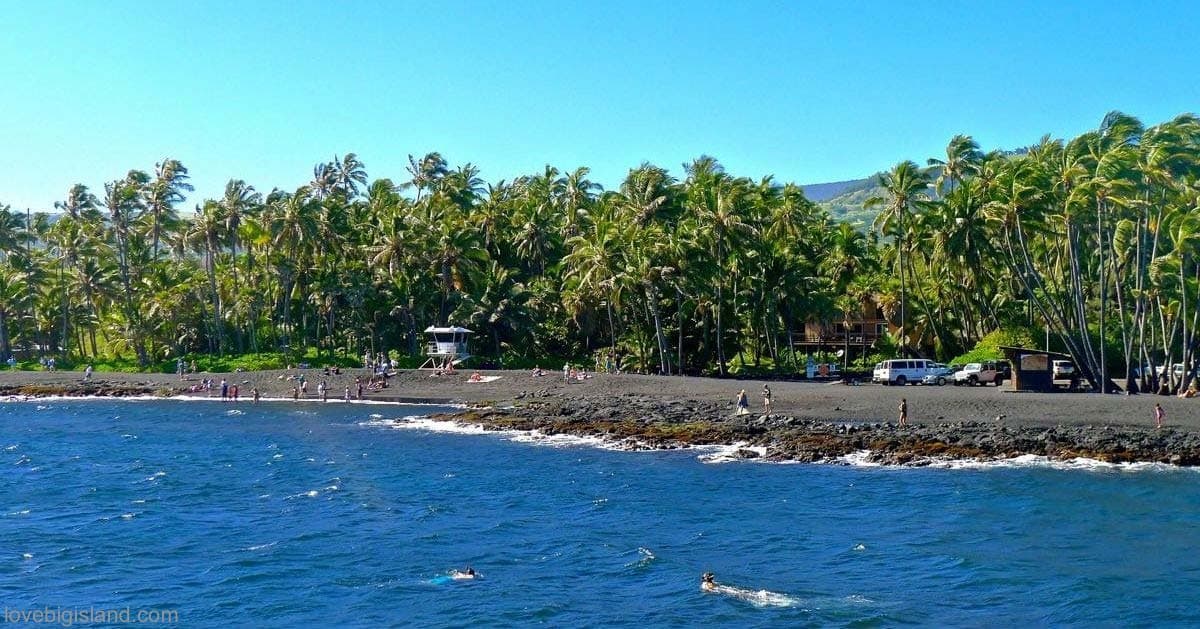
Punaluʻu is a good place for swimming, taking in the sun and snorkeling (turtles)
Best time to visit Punaluʻu
Come early. Mornings are cooler and the water is usually calmer. Punaluʻu is a regular stop for bus tours and cruise-ship excursions, and those groups tend to come through around the middle of the day.
Green sea turtles (honu) haul out onto the sand to warm up, so basking is likeliest through the warmer daytime hours. No day guarantees it. Early and late you are more apt to find them in the water than up on the sand, and even when none are hauled out, you can often spot one foraging in the shallows.
Midday is the hottest stretch as well as the busiest. In full sun the black sand holds a lot of heat, and the only shade is under the coconut palms.
Arrive in the morning for cooler sand and an emptier beach, or come back closer to midday for the best odds of a honu up on the sand rather than out in the water.
Leave the black sand where you found it
Punaluʻu’s black sand is a finite deposit. It formed when molten lava hit the ocean and shattered into small grains, and those flows ended long ago. What sits on the beach now is all there is.
A white-sand beach is different. It keeps rebuilding as coral and shell break down offshore and wash in. Black sand here has no such supply. Nothing is grinding fresh grains to replace what leaves, so whatever goes home in a pocket or a jar is gone from the beach for good.
Leave the sand, the rocks, and the plants where they are. Take photos home instead of souvenirs.
There is also a long-standing Hawaiian belief, tied to the goddess Pele, that carrying off lava rock or sand brings bad luck until it is returned. Every year, people mail sand and rocks back to Hawaiʻi to try to undo it.
Directions to Punaluʻu Beach
Punaluʻu beach is just off Highway 11 between Volcano Village (31 miles) and the town of Nāʻālehu (10 miles).
The beach is a short drive from Hawaiʻi Volcanoes National Park, an easy add-on to a day in Volcano. To get to Punaluʻu from Volcano Village, take Hwy 11 towards Kona and turn Ma Kai (towards the ocean) between mile marker 56 and 57 on Alanui Road. If you pass Whittington Beach Park, you’ve driven too far.