
Hawaiʻi Volcanoes National Park is the Big Island’s most visited attraction. It is one of four National Park Service parks and sites on the island; the other three are Puʻuhonua o Hōnaunau National Historical Park, Kaloko-Honokōhau National Historical Park and Puʻukoholā Heiau National Historic Site. The state runs 14 more parks, and the 175-mile Ala Kahakai National Historic Trail follows the west and south coasts.
Kaloko-Honokōhau and Puʻukoholā Heiau are free to enter; Hawaiʻi Volcanoes and Puʻuhonua o Hōnaunau charge per vehicle. Ten of the 14 state parks are free, and since January 2026 the other four (ʻAkaka Falls, Hāpuna, Kua Bay and Wailuku River) charge non-residents $5 a person plus $10 a car. Start with Hawaiʻi Volcanoes, the park we live next to in Volcano.
Every park on this page, with hours, fees and what is there:
Table of contents
- Map of all parks on the Big Island
- List of 4 National Parks
- List of 14 State Parks
- The Ala Kahakai National Historic Trail
Map of national and state parks
Most of the parks sit on or near the coast. The two high inland ones are Hawaiʻi Volcanoes National Park, whose summit area sits at 4,000 feet on Kīlauea, and Kalōpā, a forest park at 2,000 feet on the Hāmākua Coast. The map and table below show all 18 parks, with each park’s type and entrance fee:
Prices, details, and map locations below last verified September 2026.
National Parks
The National Park Service runs nine units in Hawaiʻi, and five of them are on the Big Island: four parks and sites, plus the Ala Kahakai National Historic Trail, which passes through all four. Only two of the nine carry the plain “National Park” title, Hawaiʻi Volcanoes here and Haleakalā on Maui; the rest are National Historical Parks, Historic Sites and one memorial. All four Big Island units protect Hawaiian history as well as landscape; three of them are ancient temple and settlement sites.
The four national park units on the Big Island are:
- Hawaiʻi Volcanoes National Park
- Puʻuhonua o Hōnaunau National Historical Park
- Kaloko-Honokōhau National Historical Park
- Puʻukoholā Heiau National Historic Site
The other National Park Service units in the state are Haleakalā National Park on Maui, Kalaupapa National Historical Park on Molokaʻi (reachable only by permit, on foot or by air), and Pearl Harbor National Memorial and Honouliuli National Historic Site on Oʻahu.
1: Hawaiʻi Volcanoes National Park
This is the island’s most visited park, and the one place on the island where you can stand a safe distance from an active volcano. Kīlauea has erupted in episodes from its summit crater since December 2024, and when it is active the glow is visible after dark from six overlooks around the summit. The park sits between Hilo and Kona on the southern flanks of Kīlauea and Mauna Loa, about two hours’ drive from Kailua-Kona.
We live in Volcano, just outside the park entrance, and treat it as the one stop we would not cut from any itinerary. Our guide to Hawaiʻi Volcanoes National Park covers the drives, the day hikes, current eruption viewing and where to stay.
- Hours: the park is open 24 hours a day, every day. The Kīlauea Visitor Center is closed for a two-year renovation; a temporary Welcome Center near the entrance is open daily 9 am to 4:45 pm.
- Entrance fee: $30 per private vehicle, $15 per person on foot or bike (under 16 free), valid 7 days. Cards only, no cash. The $55 Hawaiʻi Tri-Park pass covers this park, Puʻuhonua o Hōnaunau and Haleakalā for 12 months.
- Official website: nps.gov/havo.
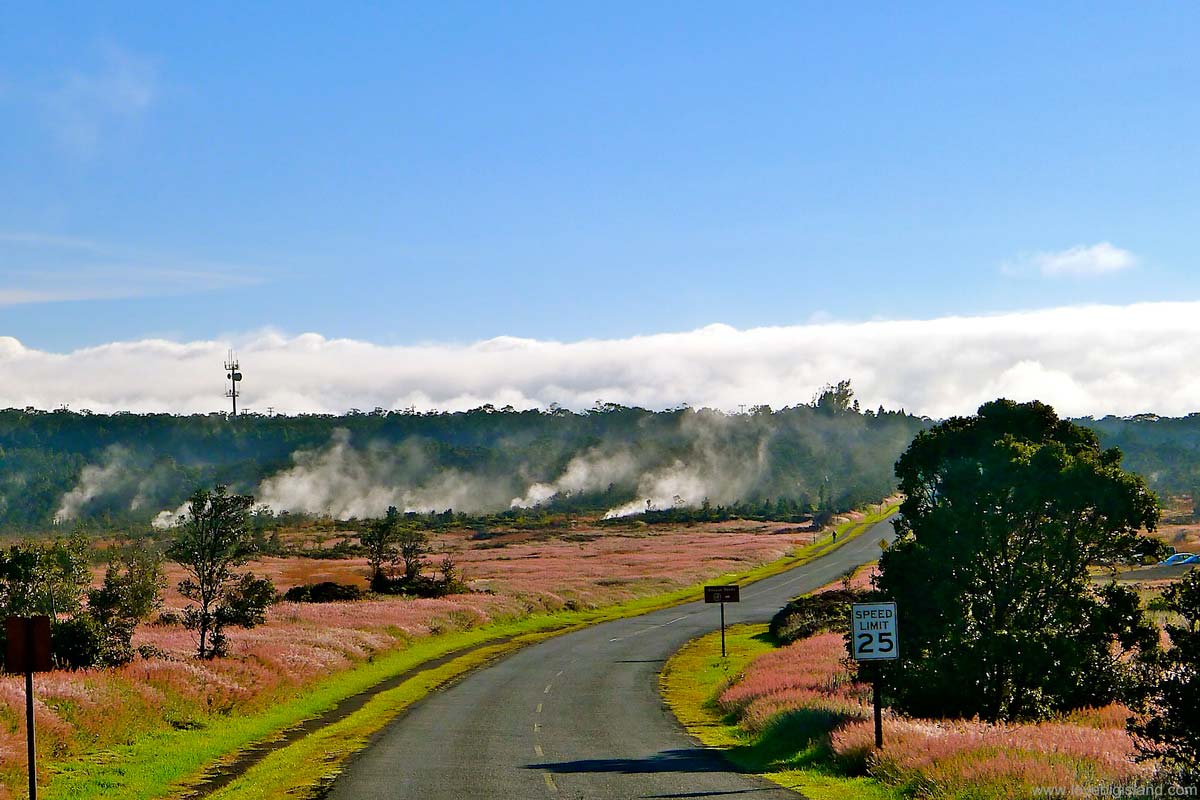
Steam vents in Hawaiʻi Volcanoes National Park, a few minutes from the visitor center.
The Kahuku unit
Kahuku Ranch became part of the park on July 3, 2003, adding 116,000 acres of pasture, lava flows and native forest on the flank of Mauna Loa. The unit is open Thursday through Sunday, 8 am to 4 pm, near mile marker 70.5 on Highway 11 in Kaʻū, an hour’s drive from the Kīlauea summit. There is no drinking water at Kahuku, so bring your own. Read more about the Kahuku unit in our Kaʻū guide.
2: Puʻuhonua o Hōnaunau National Historical Park
Puʻuhonua means “place of refuge”: anyone who broke a kapu (sacred law) and reached this walled compound alive was absolved, and defeated warriors sheltered here too. The park holds the reconstructed Hale o Keawe temple with its carved kiʻi (wooden images), royal fishponds, temple platforms and the Great Wall, all on a coconut-shaded lava shelf about 40 minutes south of Kailua-Kona.
The park sits in the middle of the Kona coffee belt and next door to Two Step, one of the best snorkeling spots on the Big Island, so combine it with a morning in the water or a visit to a Kona coffee farm. Don’t snorkel inside the park itself, at the rangers’ request; the snorkel entry is outside the boundary, by the boat ramp.
Our guide to Puʻuhonua o Hōnaunau has more on the site and the walk, or see the official park website.
- Hours: visitor center lot open 8:15 am to sunset (gates close 15 minutes after sunset); visitor services 8:30 am to 4:30 pm.
- Entrance fee: $20 per private vehicle, $10 per person on foot or bike (under 16 free), valid 7 days. Cards only, no cash.

Coconut palms and pale sand inside Puʻuhonua o Hōnaunau.
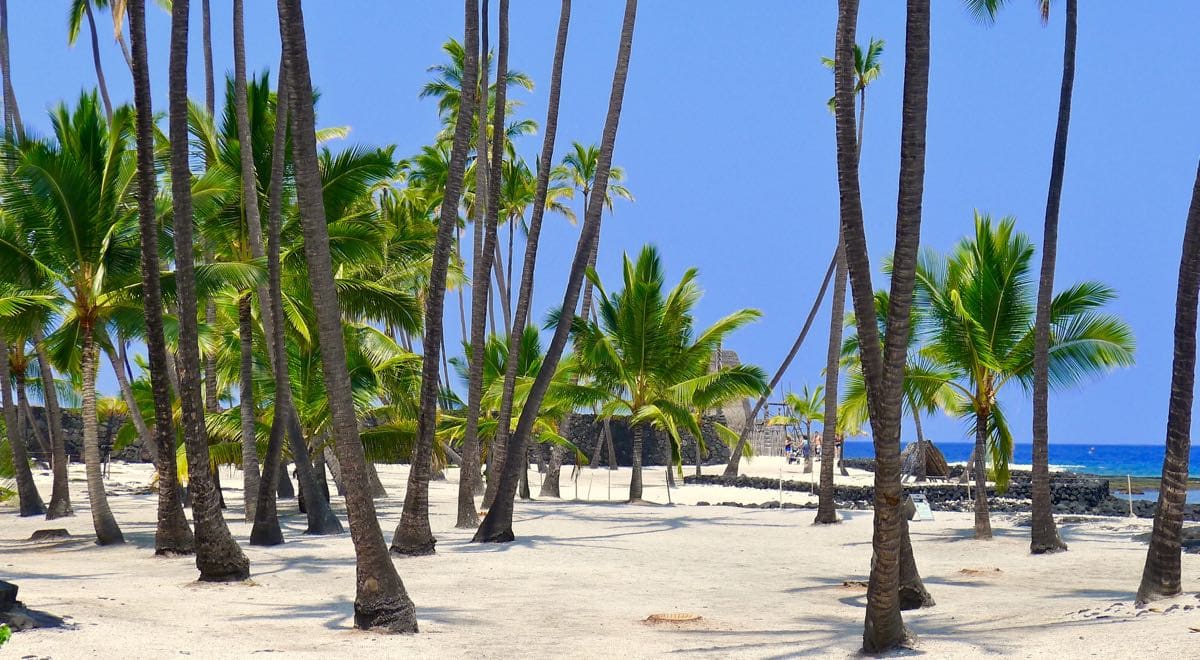
The palm grove at Puʻuhonua o Hōnaunau. The Two Step snorkel entry is 300 feet from the park entrance.
3: Kaloko-Honokōhau National Historical Park
Kaloko-Honokōhau protects an ancient Hawaiian fishing settlement on the lava coast just north of Kailua-Kona, and it is one of the two national park units on the island that are free to enter. The walk from Hale Hoʻokipa, the visitor center, crosses the old ahupuaʻa (a land division running from mountain to sea) past kiʻi pōhaku (petroglyphs), kahua (house platforms), a hōlua (stone slide) and a heiau (temple), to the Kaloko fishpond with its rebuilt stone seawall.
- Hours: Hale Hoʻokipa visitor center and its parking lot 8:30 am to 4 pm daily; the Kaloko Road gate is open 8 am to 5 pm. After 4 pm, walk in from Honokōhau Harbor.
- Entrance fee: none.
- Official website: nps.gov/kaho.
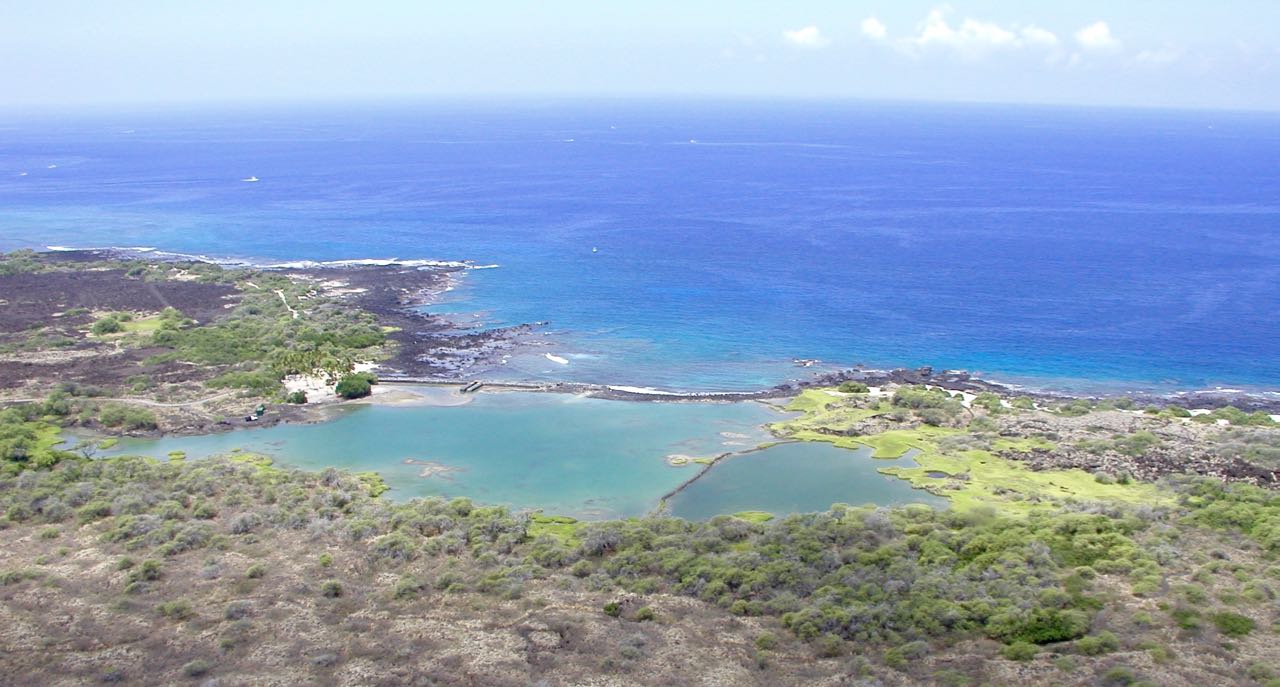
Aerial view of the Kaloko fishpond in Kaloko-Honokōhau National Historical Park from the east. Image credit: NPS
The two beaches inside the park, Honokōhau and ʻAiʻopio, are on our shortlist of favorite Kona beaches. Together they make about a mile of sand that rarely gets busy, with calm water and shade, so this is where we send families with small children. There are no lifeguards anywhere in the park.
Honokōhau Harbor, directly south of the park, is also a good spot to go snorkeling.
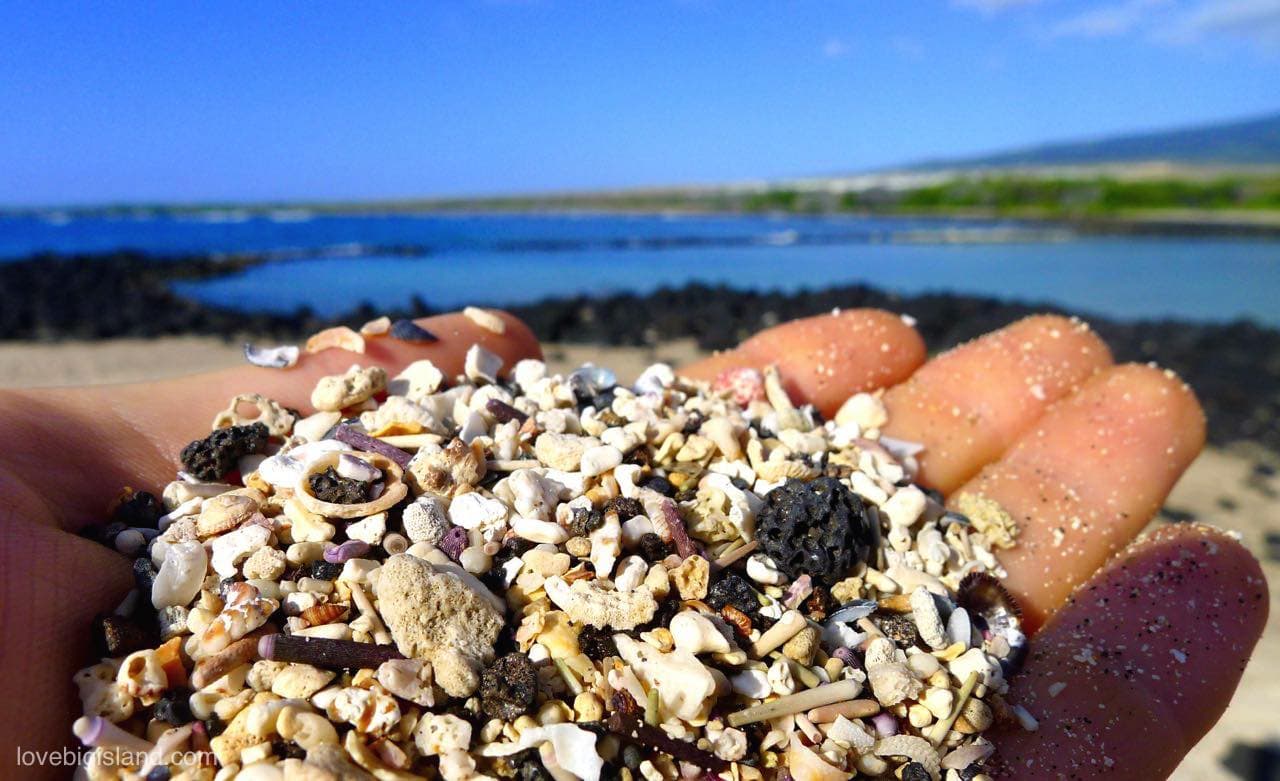
A close up of the sand at ʻAiʻopio beach
4: Puʻukoholā Heiau National Historic Site
Kamehameha I built this temple above Kawaihae around 1790 and dedicated it to the war god Kūkaʻilimoku, then set out to conquer the other islands and became the first king to rule the whole chain. The heiau is a large stone platform on a hill above the harbor; visitors walk around it rather than onto it.
- Hours: open daily 8:30 am to 4:30 pm, including holidays.
- Entrance fee: none.
- Official website: nps.gov/puhe.
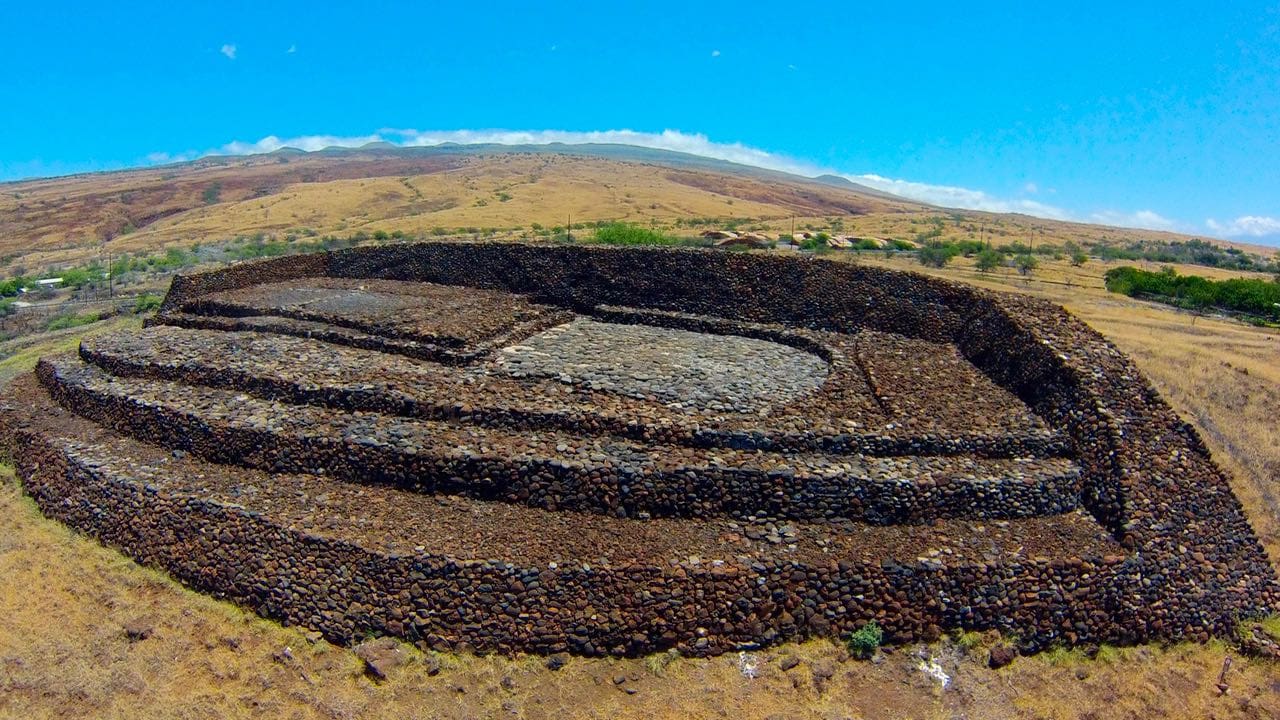
The stone platform of Puʻukoholā Heiau above Kawaihae. Image credit: NPS
State Parks
The Hawaiʻi State Park System has 50 parks statewide, and 14 of them are on the Big Island. Ten are free. Since January 2026 four charge non-residents $5 per person plus $10 per vehicle, credit card only, with Hawaiʻi residents free on ID: ʻAkaka Falls, Hāpuna Beach, the Kua Bay section of Kekaha Kai, and Wailuku River (Rainbow Falls and Boiling Pots). ʻAkaka Falls has little cell reception, so pay online before you drive up.
Hāpuna, Kekaha Kai and Kīholo are beach parks on the Kona and Kohala coasts. Lapakahi, Kohala Historical Sites, Kealakekua Bay and Huliheʻe Palace are historic sites, three of them ancient and one Victorian. ʻAkaka Falls and Wailuku River are waterfall stops on the Hilo side; Kalōpā, Lava Tree, MacKenzie and Manukā are forest and lava-coast parks with short trails. Camping at Kalōpā and Kīholo is by reservation, though it is suspended at both as of September 2026.
The 14 state parks on the Big Island are:
The Hawaiʻi State Parks website posts closures, fee changes and storm notices for every park listed here, so check it the week you travel.
1: ʻAkaka Falls State Park (Hāmākua Coast)
The 442-foot ʻAkaka Falls is just north of Hilo and the standard first stop on a Hāmākua Coast drive. The 0.4-mile loop takes about half an hour, with enough steps that it is not wheelchair or stroller friendly. Take the left fork at the first junction to reach ʻAkaka only; the full loop also passes Kahūnā Falls, which is harder to spot through the trees.
- Hours: daily 8:30 am to 5 pm.
- Entrance fee: non-residents $5 per person plus $10 per vehicle, credit card only; children 3 and under and Hawaiʻi residents free.
- Hiking: the 0.4-mile ʻAkaka Falls loop trail.
- Website: our ʻAkaka Falls guide covers parking, timing and the drive; fees and closures are on the DLNR park page.
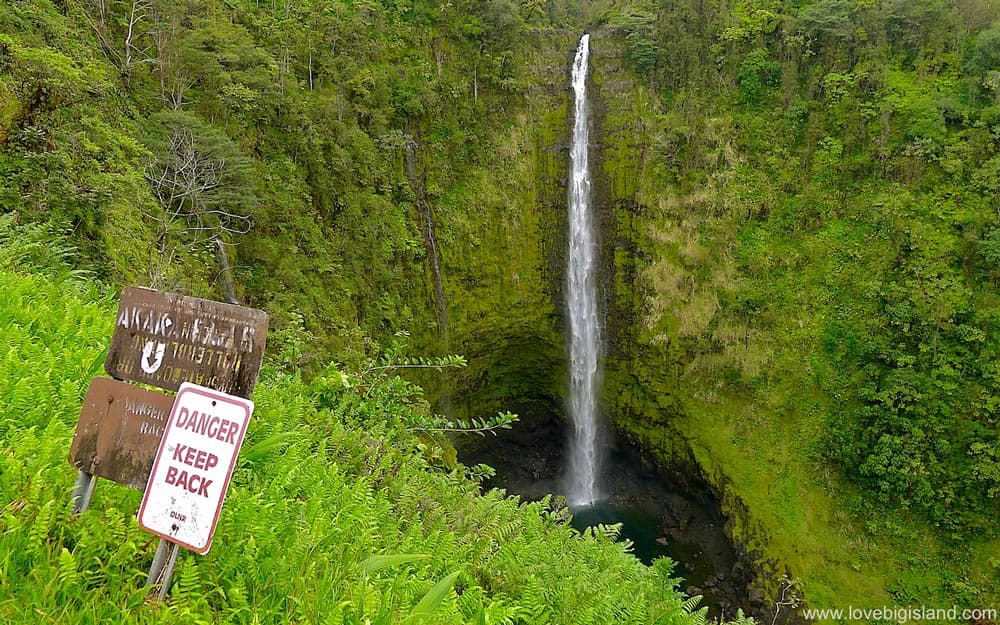
The 442-foot ʻAkaka Falls from the lookout on the loop trail.
2: Hāpuna Beach State Recreation Area (Kohala)
Hāpuna is the most popular white sand beach on the island, a landscaped park on the Kohala Coast next to the resorts, with lifeguards, showers and a paved lot. Swimming is good on calm days, and bodysurfers come for the shore break when the surf is up. Watch for rip currents (a state warning), and when waves top 3 feet the water is for experts only.
- Hours: daily 7 am to 7:30 pm, gates close 8 pm.
- Entrance fee: non-residents $5 per person plus $10 per vehicle, credit card only; Hawaiʻi residents free with ID.
- Hiking: the Kawaihae to ʻAnaehoʻomalu section of the Ala Kahakai trail runs through the park.
- Camping/lodging: the park has 4-person A-frame shelters (wooden sleeping platforms, screened, shared cold showers) at $70 a night for non-residents, reservation only through explore.ehawaii.gov. They are closed as of September 2026.
- Beach: our Hāpuna Beach guide covers the swimming, the snorkeling at the north end and where to park.
- Website: DLNR park page.
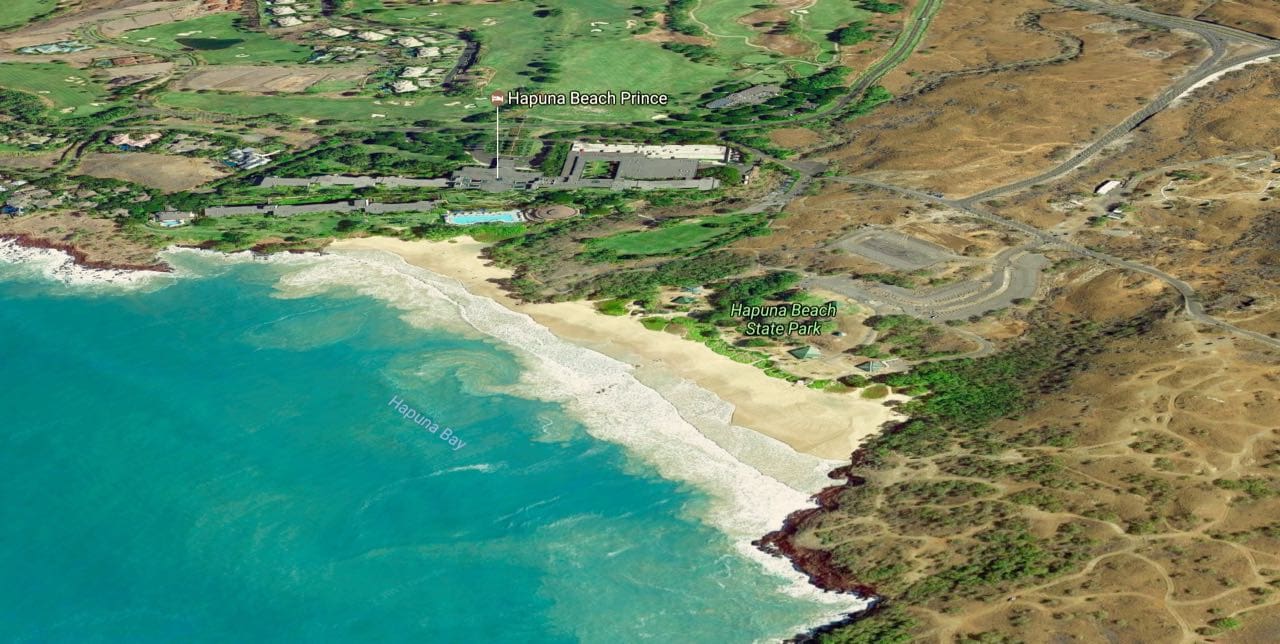
Overview of Hāpuna Beach and Hāpuna Bay. The Mauna Kea golf course is on the left, with the resort hotel above the north end of the beach. Image from Google Maps.
3: Huliheʻe Palace (Kona)
Huliheʻe Palace in downtown Kailua-Kona was a summer home for Hawaiian royalty, and today it is a museum of Victorian-era furniture and artifacts from the reigns of King Kalākaua and Queen Kapiʻolani. The state owns it and the Daughters of Hawaiʻi run it. There is no parking at the palace; use the free public lot at 75-5668 Kuakini Highway and walk down.
- Hours: Wednesday through Saturday 10 am to 3 pm, last entry 2:30 pm. Closed Sunday to Tuesday and on major holidays. Reservations encouraged.
- Entrance fee: self-guided visits $16 for adults, $14 for ages 6 to 17, free under 6, $12 for kamaʻāina (Hawaiʻi residents), seniors and military. The guided Moʻolelo tour at 11:30 am, Wednesday to Saturday, is $20 for all ages and needs a reservation.
- Historic site: on the National Register of Historic Places since 1973; there is a gift shop.
- Website: hours and tickets on the Daughters of Hawaiʻi site; the DLNR page is the state’s official listing.
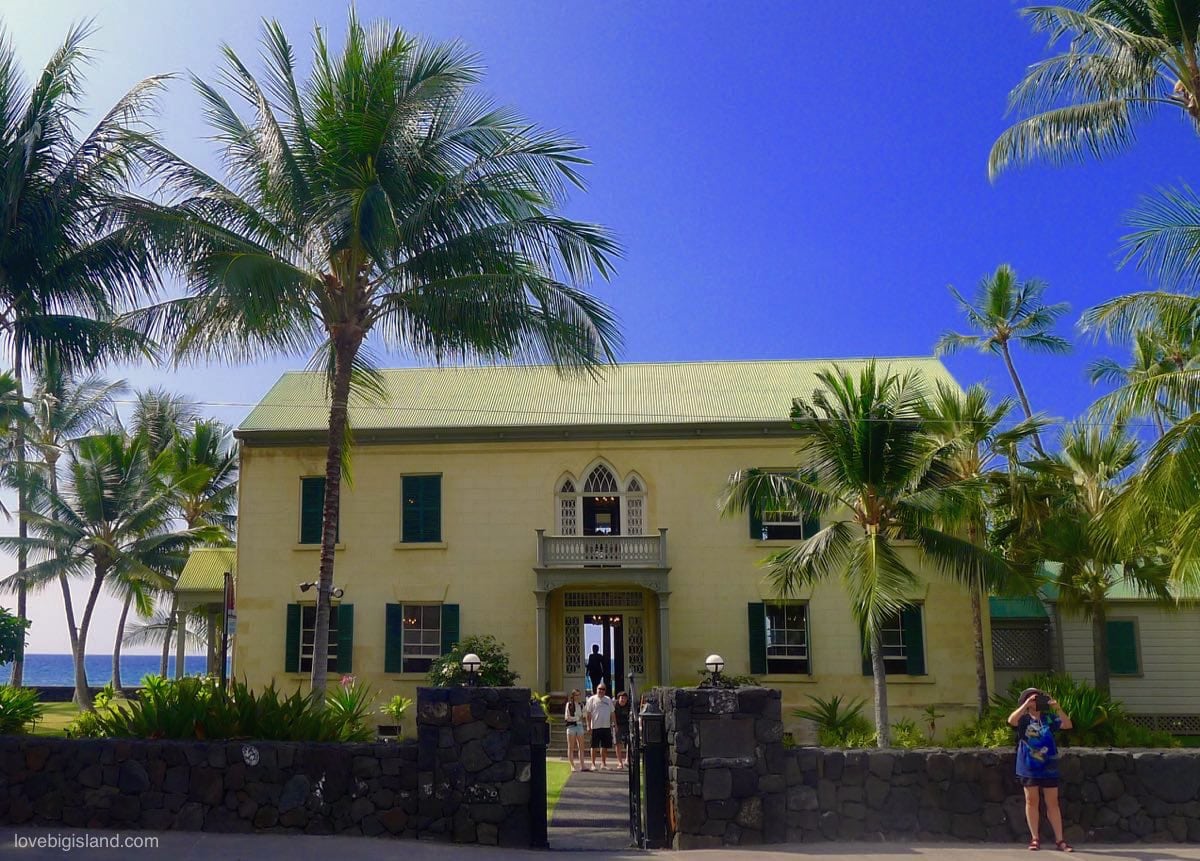
Huliheʻe Palace in Kailua-Kona, a former vacation home of Hawaiian royalty, now a museum of its furniture and artifacts.
4: Kalōpā State Recreation Area (Hāmākua Coast)
Kalōpā is a rainforest of native ʻōhiʻa trees at 2,000 feet at the end of Kalōpā Road on the Hāmākua Coast, cooler and wetter than any other state park on this list. The 0.7-mile nature loop is easy and takes about an hour if you read the plant markers; longer trails, including a 2-mile horse loop, run into the adjoining forest reserve.
- Hours: daily 7 am to 8 pm.
- Entrance fee: none.
- Hiking: the 0.7-mile Kalōpā nature loop trail, 50 feet of gain.
- Camping/lodging: campsites ($30 a night for non-residents) and 8-person duplex cabins ($100) by reservation only at explore.ehawaii.gov. Camping and lodging here are suspended as of September 2026, and the cabins stay closed through the end of 2026.
- Website: DLNR park page.
5: Kealakekua Bay State Historical Park (Kona)
Kealakekua Bay is a marine life conservation district with some of the best snorkeling in the state, and the place where Captain Cook landed in 1779, the first extended contact between Hawaiians and Westerners, and where he was killed a few weeks later. The small state park is the Nāpōʻopoʻo side of the bay: Hikiau Heiau, which you view from outside, and the Captain Cook monument across the water.
Reaching the monument means either a kayak tour with a permitted vendor or the steep Kaʻawaloa Trail down from the highway, with no shade and no restrooms. Every kayak, paddleboard or canoe on the bay needs a state permit.
- Hours: daily 7 am to 8 pm.
- Entrance fee: none.
- Hiking: the Kaʻawaloa Trail down to the monument.
- Historic site: the park brochure (PDF, 9 MB) explains the heiau and the Cook landing.
- Official website: DLNR park page, including the vessel permit rules.
- In-depth guide on our website: our Kealakekua Bay guide compares the snorkel tours, the kayak permit and the hike.
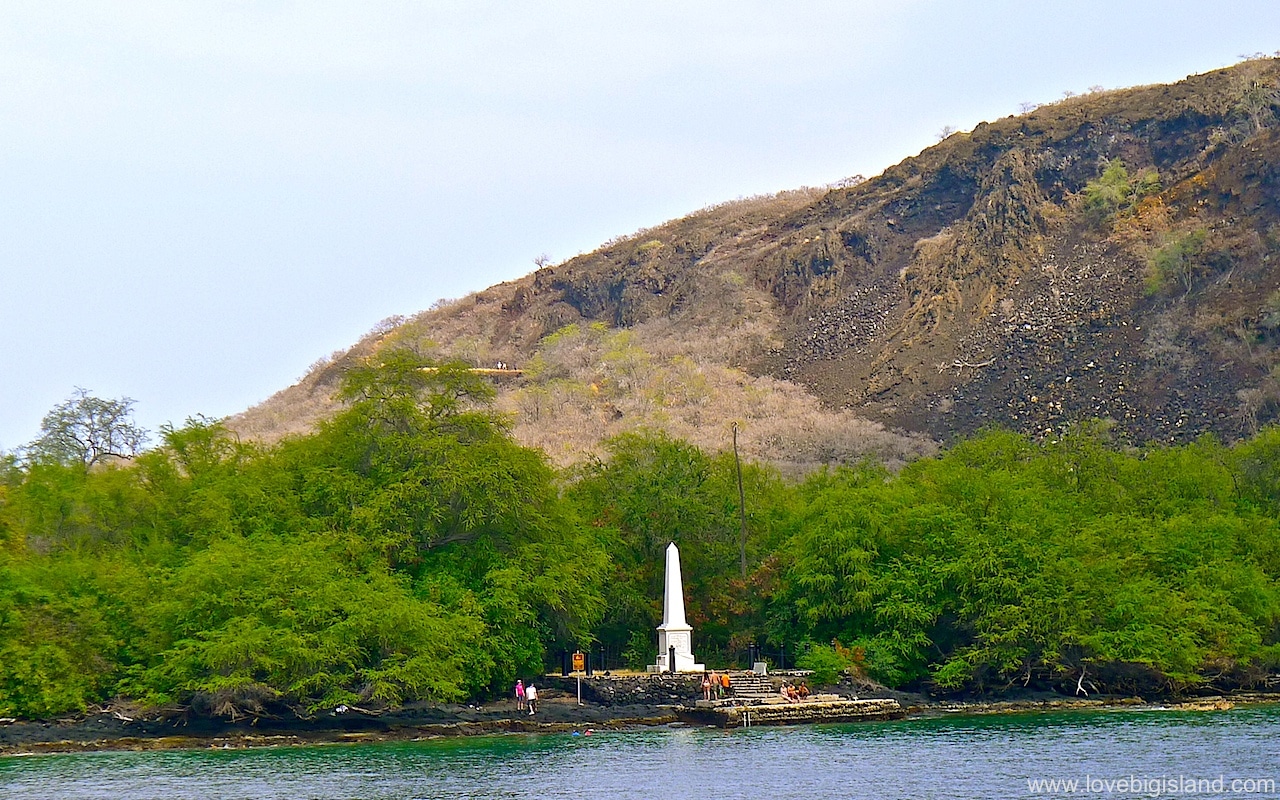
The best snorkeling in Kealakekua Bay is around the Captain Cook monument, and the easiest way to reach that water is a snorkel tour by boat.
6: Kekaha Kai State Park (Kona)
Kekaha Kai is a wilderness beach park on the lava coast north of Kailua-Kona, and it holds two of our favorite beaches on the island. Mahaiʻula, at the south end, has a sandy beach and dune, shade trees and picnic tables at the end of the access road. Kua Bay (Maniniʻōwali), at the north end, is the busier of the two.
A 4.5-mile stretch of the Ala Kahakai trail links the two beaches, passing Puʻu Kuʻili, a 342-foot cinder cone you can climb for a view of the whole coast. The trail is hot and dry, with no shade and no drinking water, so carry your own. There are no lifeguards.
- Hours: daily 8 am to 6:30 pm, gates close at 7 pm.
- Entrance fee: since January 2026 the Kua Bay section charges non-residents $5 per person plus $10 per vehicle, credit card only; Hawaiʻi residents free with ID.
- Hiking: the coastal trail between Mahaiʻula and Kua Bay, with the Puʻu Kuʻili climb midway.
- Beach: both beaches are on our list of favorite Big Island beaches, and our Kua Bay guide covers the busier north end.
- Website: DLNR park page.
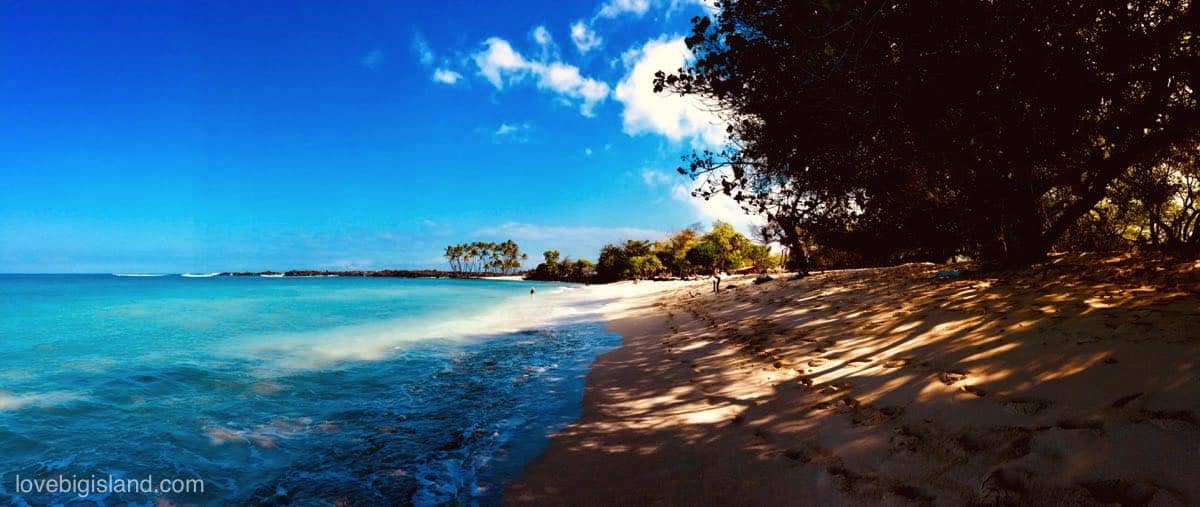
Mahaiʻula is the southern beach in Kekaha Kai State Park on the Kona coast.
7: Kīholo State Park Reserve (Kona)
Kīholo is a stark lava coast between Kona and the Kohala resorts: a spring-fed bay, a black ʻiliʻili (pebble) beach in a kiawe (mesquite) grove, and historic lava flows. The gravel access road is unimproved and the park has no facilities beyond portable toilets and no water, so bring everything you need. Gates lock at night with cars inside, so leave before 7 pm.
- Hours: daily 7 am to 7 pm; the gate is locked overnight.
- Entrance fee: none.
- Camping/lodging: weekend camping only (Friday to Sunday nights), $30 a night for non-residents, by reservation up to 30 days ahead at explore.ehawaii.gov. Camping is suspended as of September 2026.
- Beach: the bay is a mix of salt and spring water, with good swimming and, at low tide, tide pools worth snorkeling.
- Website: DLNR park page.
8: Kohala Historical Sites State Monument / Moʻokini Heiau (Kohala)
This is the birthplace of Kamehameha I, the king who united the islands, and the site of Moʻokini, a luakini heiau (a temple where human sacrifice took place). The site is a National Historic Landmark on the windswept northern tip of the island.
- Hours: daily during daylight hours.
- Entrance fee: none.
- Historic site: Moʻokini Heiau and the Kamehameha I birthsite, both viewed from outside the walls.
- Website: DLNR park page.
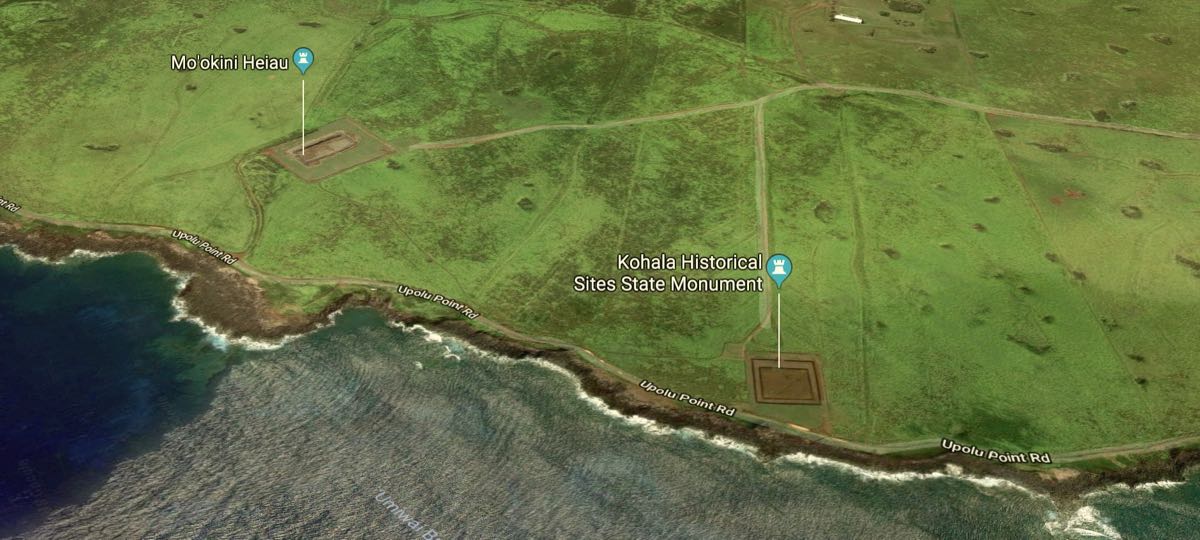
Moʻokini Heiau and the Kohala Historical Sites State Monument. Image credit: Google Maps
9: Lapakahi State Historical Park (Kohala)
A 1.1-mile self-guided interpretive loop runs through Lapakahi, the partly restored remains of an ancient Hawaiian fishing village on the dry Kohala coast. The cove below the village is one of five Marine Life Conservation Districts on the island, with good coral and fish at the south end, and from November to May the shoreline here is one of our favorite spots to watch humpback whales from land.
The water is protected but the currents outside Koaiʻe Cove are strong, and the two beaches are coral rubble, not sand. Read about snorkeling at Lapakahi in our Kona snorkeling guide; the Lapakahi MLCD rules are on the DLNR site.
- Hours: daily 8 am to 3:30 pm (gates lock at 4 pm), closed on state holidays.
- Entrance fee: none.
- Hiking: the 1.1-mile Lapakahi Village interpretive loop trail.
- Historic site: the Lapakahi park brochure (PDF) describes the village site by site.
- Website: DLNR park page.
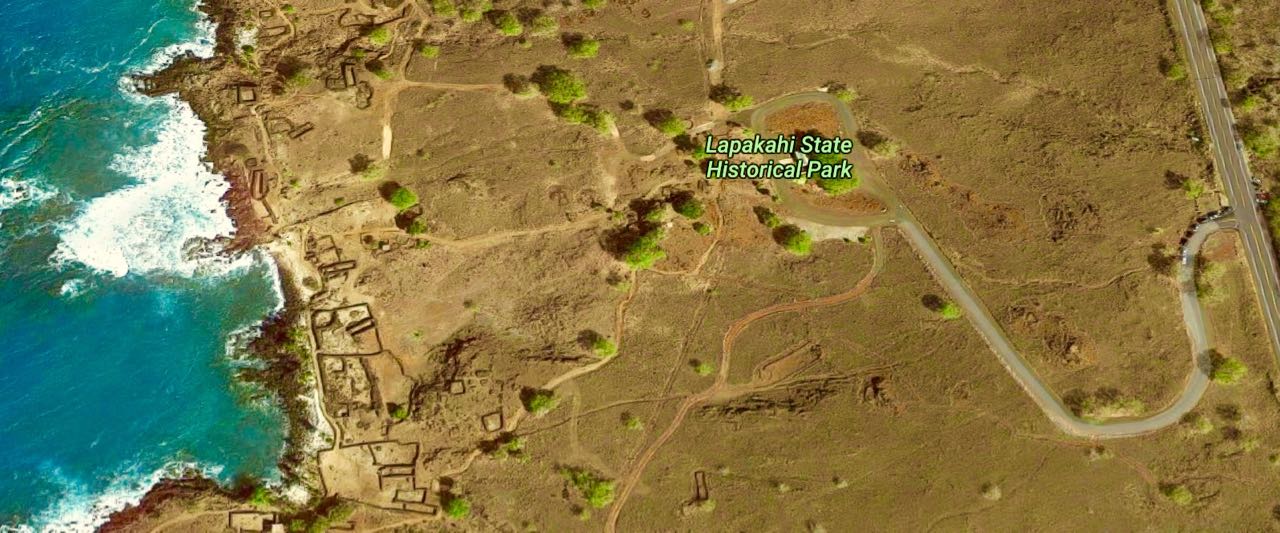
Satellite view of Lapakahi State Historical Park. Image credit: Google Maps.
10: Lava Tree State Monument (Puna)
Lava Tree is a 17-acre park of stone tree molds in the rainforest 2.7 miles southeast of Pāhoa in Puna. A lava flow once ran through this forest, cooled against the wet trunks, then drained away, leaving hollow lava casts standing where the trees had been. The 0.7-mile loop is flat and roughly paved, with an uneven surface in places.
- Hours: daily during daylight hours.
- Entrance fee: none.
- Hiking: the 0.7-mile Lava Trees loop trail.
- Website: DLNR park page.
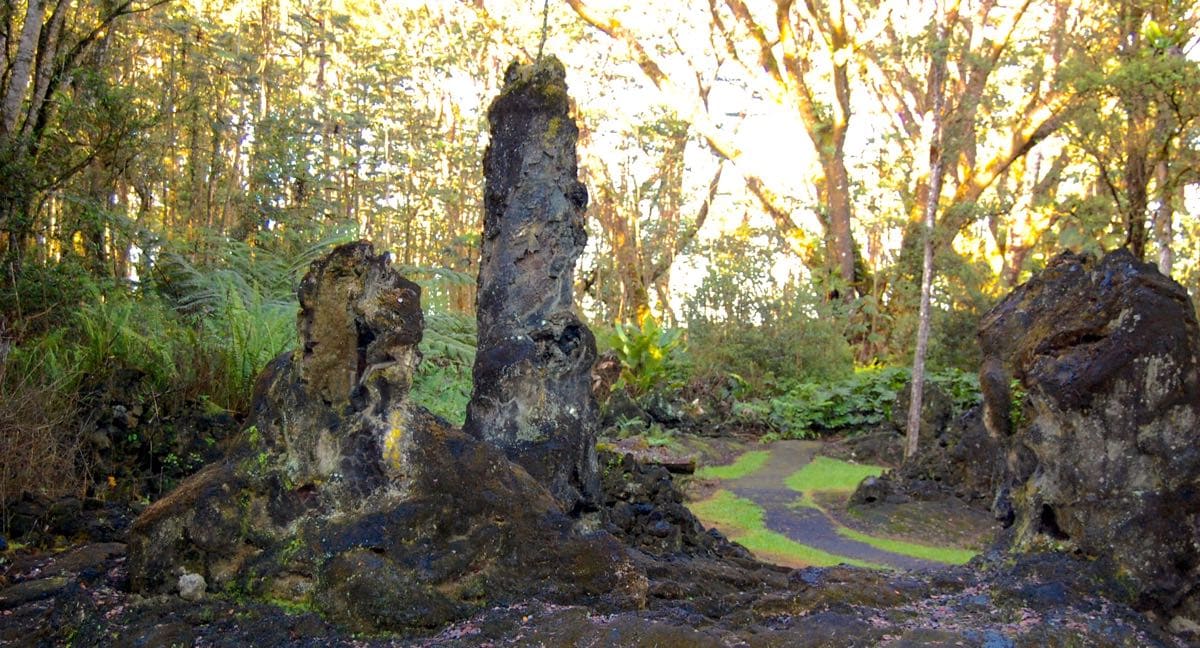
Lava trees are the casts a lava flow left behind after it cooled around the trunks and drained away. By Sean A. Clevenger [CC BY-SA 3.0 (https://creativecommons.org/licenses/by-sa/3.0)], from Wikimedia Commons
11: MacKenzie State Recreation Area (Puna)
Ironwood trees cover MacKenzie’s 13 acres of low sea cliffs along the Puna coast. The park has picnic tables and good shore fishing, and an old Hawaiian coastal trail runs through it. The 2018 Kīlauea eruption reached the coast just east of here and built new black sand beaches nearby. The park has a violent past and a reputation to match: Big Island Now readers voted it the spookiest place on the island in 2023.
- Hours: daily during daylight hours.
- Entrance fee: none.
- Hiking: the old Hawaiian coastal trail that runs through the park.
- Website: DLNR park page.
MacKenzie is also the closest park to Isaac Hale Beach Park and its Pohoiki black sand beach.
12: Manukā State Wayside (Kaʻū)
Picnic tables sit among a planted collection of native and introduced trees at Manukā, a roadside rest stop on Highway 11 in Kaʻū that is also an arboretum. The 2-mile nature loop behind it climbs 400 feet through the Manukā Natural Area Reserve, a 25,000-acre stretch of dry forest and lava; allow 2 to 3 hours, bring water and expect mosquitoes.
- Hours: daily during daylight hours.
- Entrance fee: none.
- Hiking: the 2-mile Manukā nature trail, rated moderate.
- Camping/lodging: none.
- Website: Manukā is one of our highlighted stops in the Kaʻū district; the DLNR park page is the state’s official listing.
13: Wailoa River State Recreation Area (Hilo)
Wailoa is the 132-acre landscaped park around the Wailoa River in downtown Hilo, mostly lawns, with a boat ramp and pavilions you can rent. The Wailoa Center inside the park has two galleries with art and cultural exhibits that change monthly, free and open to the public, Monday to Friday 9 am to 4 pm.
- Hours: daily during daylight hours.
- Entrance fee: none.
- Website: DLNR park page.
14: Wailuku River State Park (Hilo)
Wailuku River State Park is two separate stops on Waiānuenue Avenue in Hilo: Rainbow Falls and, further up the same road, Boiling Pots. Rainbow Falls drops 80 feet into a wide pool, and on sunny mornings rainbows form in its mist; Boiling Pots is a chain of large pools linked by cascades and underground flow, lined with hexagonal basalt columns. Both are drive-up viewpoints, and both change with the rain: after a wet night the falls roar; in a dry week they trickle.
- Hours: both areas daily 7 am to 5:30 pm, gates lock at 6 pm.
- Entrance fee: since January 2026 non-residents pay $5 per person plus $10 per vehicle, credit card only, one ticket for both areas; Hawaiʻi residents free with ID.
- Website: Rainbow Falls is our favorite drive-in waterfall; the DLNR park page covers both areas.
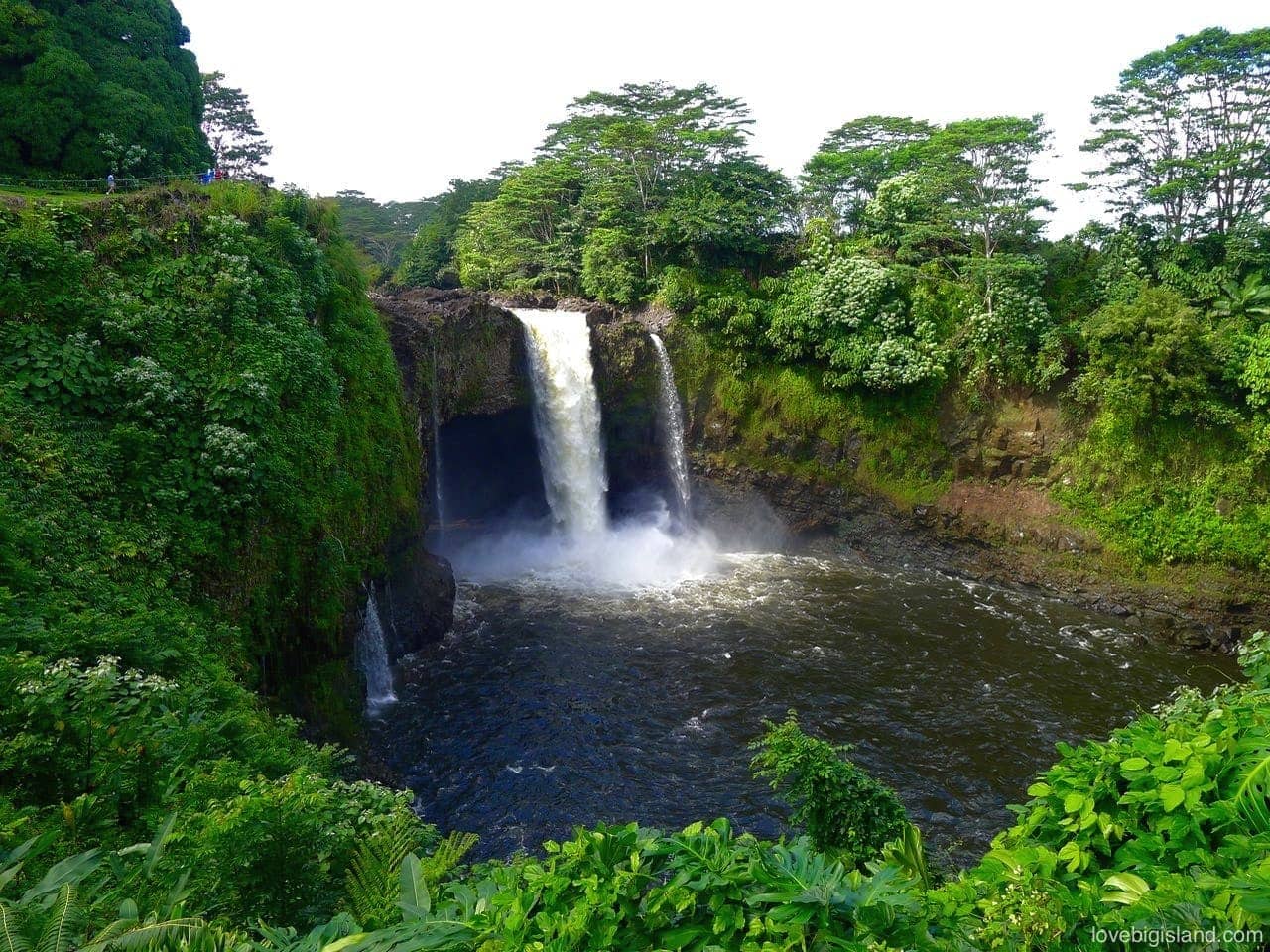
The volume of Rainbow Falls (Waiānuenue) changes daily. This is what the falls look like after a good rain upstream.
The Ala Kahakai National Historic Trail
Congress designated the Ala Kahakai National Historic Trail in 2000 to protect the network of ancient footpaths along the Big Island shore. The corridor runs 175 miles (282 km) from ʻUpolu Point at the northern tip, down the west coast through Kohala, Kona and Kaʻū, then east along the south coast through Puna to the eastern boundary of Hawaiʻi Volcanoes National Park. It crosses hundreds of ancient settlement sites and more than 200 ahupuaʻa (traditional land divisions).
- Official website: Ala Kahakai National Historic Trail (NPS).
- Trail association: the Ala Kahakai Trail Association.
The exact line of the old trail has been lost in places, and many stretches now survive as short segments of other trails crossing public and private land. The trail association opens sections as community management plans are agreed on, so only part of the corridor is maintained and open: a state-managed stretch on the Kohala coast and the coastal trails inside the four national park units.
Accessible parts of the Ala Kahakai Trail
The 15-mile state-managed section in South Kohala is open to the public between Spencer Beach Park at ʻOhaiʻula in Kawaihae and ʻAnaehoʻomalu Bay. It is level, mostly along the shore, with parking, toilets and water at most access points: Spencer, Hāpuna, Holoholokai, Mauna Lani, Waikoloa and the Puakō boat ramp. The HawaiiTrails page has the map and trailheads.
The coastal trails inside Puʻukoholā Heiau, Kaloko-Honokōhau, Puʻuhonua o Hōnaunau and Hawaiʻi Volcanoes are open during park hours. For trail questions, contact the Nā Ala Hele Trails & Access Specialist for Hawaiʻi Island, Department of Land & Natural Resources, 19 East Kawili Street, Hilo, Hawaiʻi 96720, telephone 808 974-4217.
The trail and its corridor are on the NPS map (the full-size original is a 5.4 MB file):
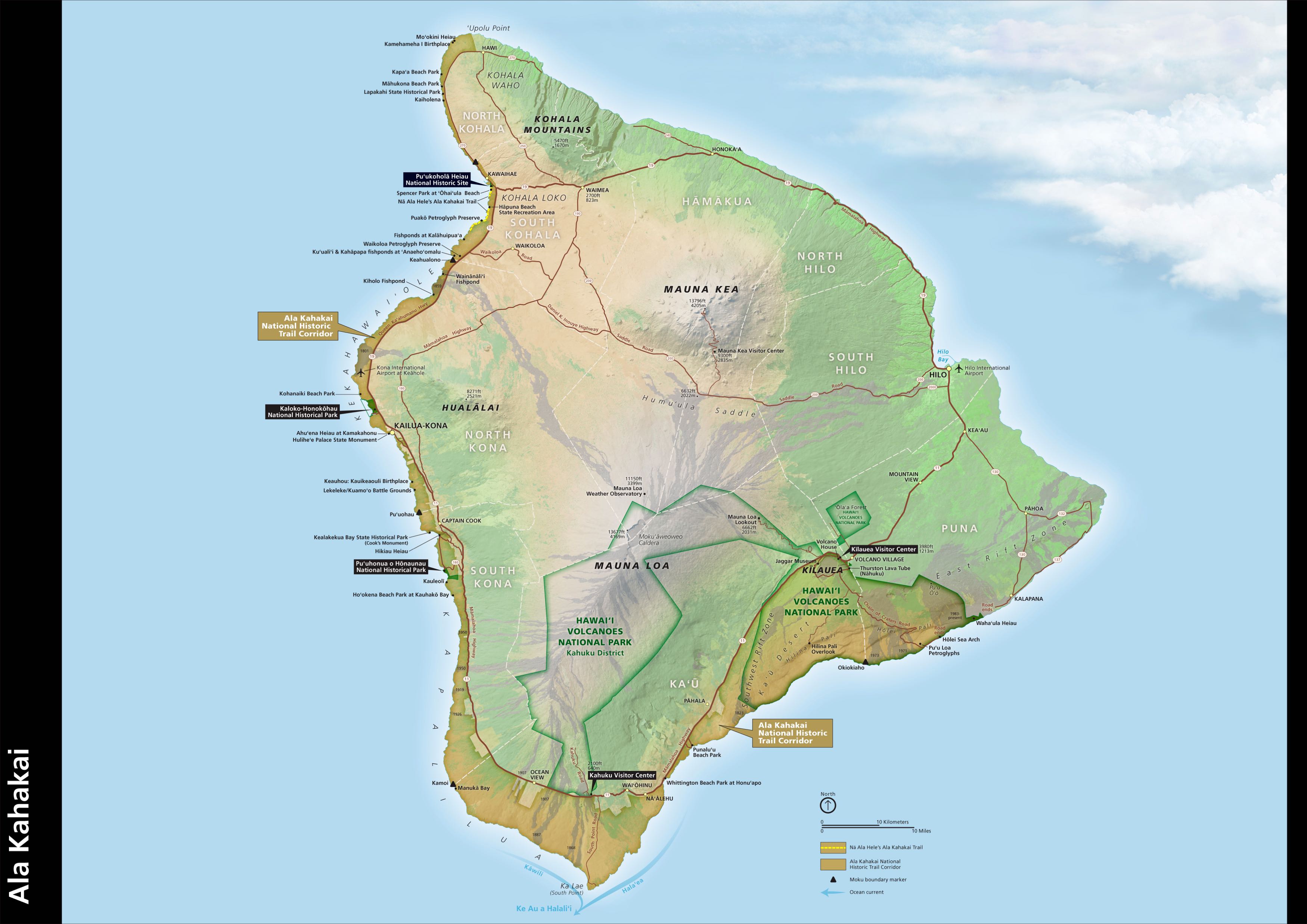
The Ala Kahakai National Historic Trail is a 175-mile corridor and trail network. It passes hundreds of ancient Hawaiian settlement sites and more than 200 ahupuaʻa (traditional land divisions). Image source: NPS