On an average day, about 230,000 visitors are somewhere on the Hawaiian Islands. September and October put the fewest of them in your way, roughly 12 to 16 percent below the yearly average. Fewer travelers fly in during January and February, but they stay longer, so the islands stay full through winter. Go in fall, and skip June, July, and the December holidays.
This page is for travelers who would rather have a trail to themselves than reach the same overlook as everyone else. Dates only get you part of the way. Pearl Harbor is emptiest right at its 7 a.m. opening, and the Road to Hāna empties the moment it starts to rain. The rest happens on the ground, attraction by attraction.
Table of contents
- When is Hawaiʻi most crowded?
- 5 common-sense tips on how to avoid the crowds
- How to skip the crowds at the most popular destinations
- Alternatives for tourist hot-spots
When is Hawaiʻi the Most Crowded?
The busy season tracks the school calendar and the holidays more than the weather. The chart below counts how full the islands get: the average number of visitors in Hawaiʻi on a given day each month, blended across 2024 and 2025.
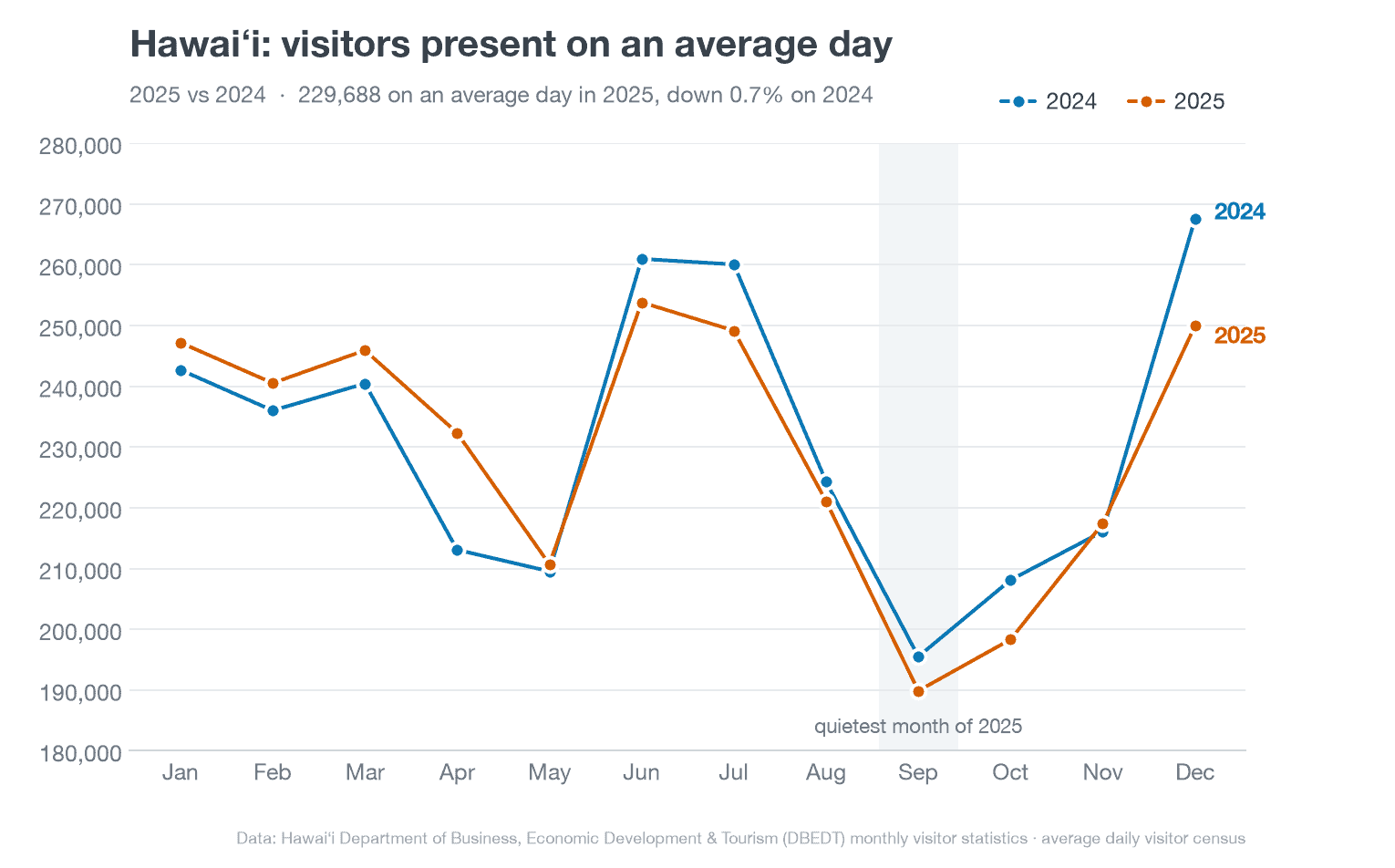
Visitors in Hawaiʻi on an average day, by month, 2024 and 2025. September and October are the quietest months, with May close behind. Data: Hawaiʻi DBEDT.
Two peaks drive the crowds. June and July fill with summer travelers and school breaks, and December fills again for the holidays. Numbers stay high into January: fewer people fly in after New Year, but winter visitors book longer stays, so beaches and trails stay busy.
The clear low is fall. September runs about 16 percent below the yearly average and October about 12 percent below, the emptiest stretch on the calendar, with May and November close behind. April and August dip a little under average too, so they feel calmer than midsummer without ever going truly quiet.
Which month is quietest depends on the island, and the statewide line above hides most of it. All four main islands bottom out in September. What differs is the busy end: the Big Island and Maui fill up in winter, Oʻahu and Kauaʻi in midsummer. If your dates are fixed to one island, plan around its own calendar.
Big Island: the widest swing of the four
The Big Island holds about 36,500 visitors on an average day, and it moves further between its fullest and emptiest months than any other island: roughly 1.6 visitors in December for every one in September. December and January are effectively tied at the top, both about 21 percent above its yearly average, and September sits 22 percent below. Whale season and the winter holidays do the lifting. May is the second-quietest month, about 15 percent under.
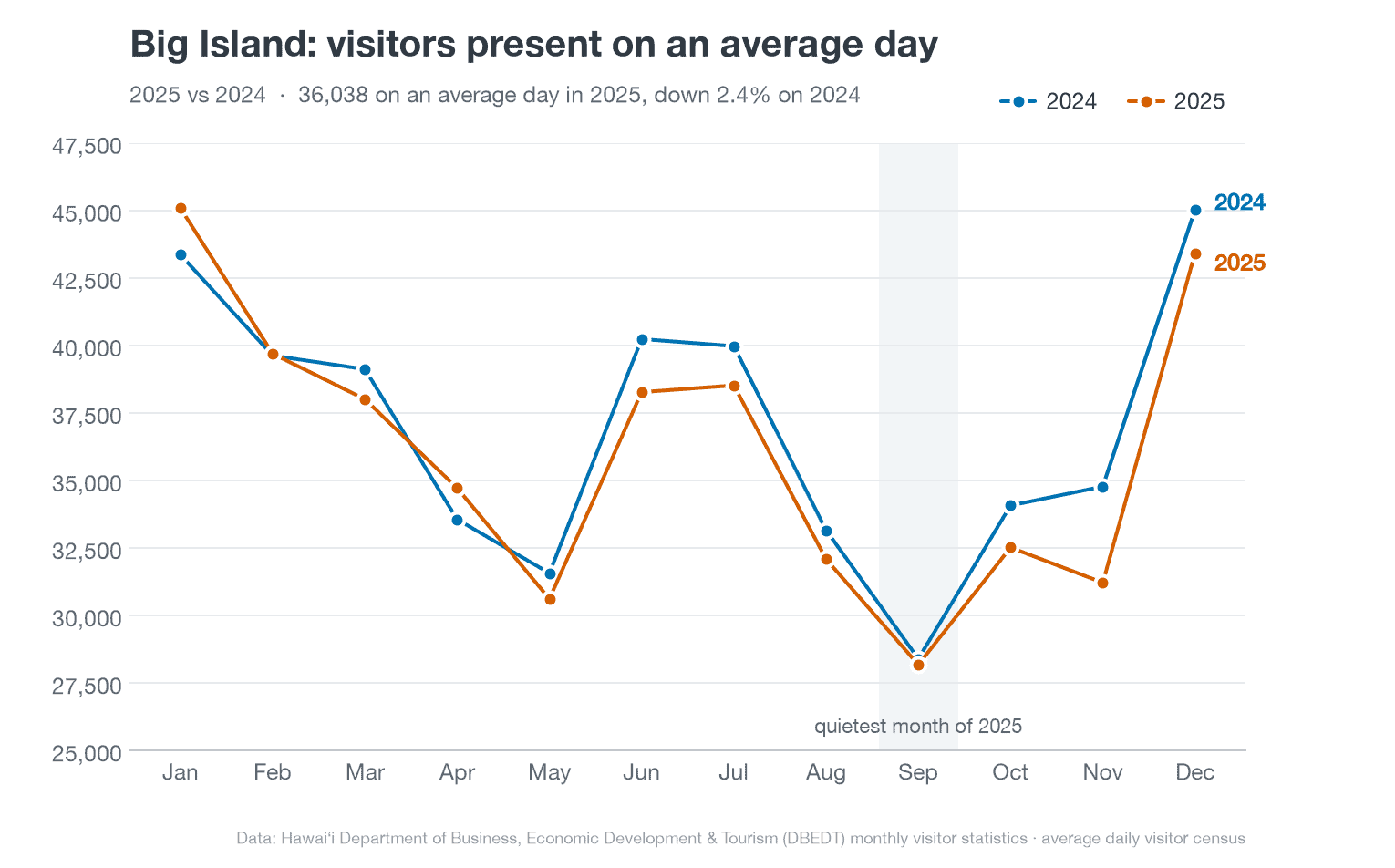
Visitors on the Big Island on an average day, by month, 2024 and 2025. September is the emptiest month by a wide margin, with May, August, and November also below the yearly average. December and January are the fullest.
Maui: one sharp December peak
Maui averages about 52,300 visitors a day and shares the Big Island’s winter pattern, but with a single sharper peak. December runs about 22 percent above average, well clear of July at 10 percent. The fall dip is deeper than the Big Island’s on both sides of September: about 19 percent below average in September and 16 percent below in October, with May close behind at 14 percent.
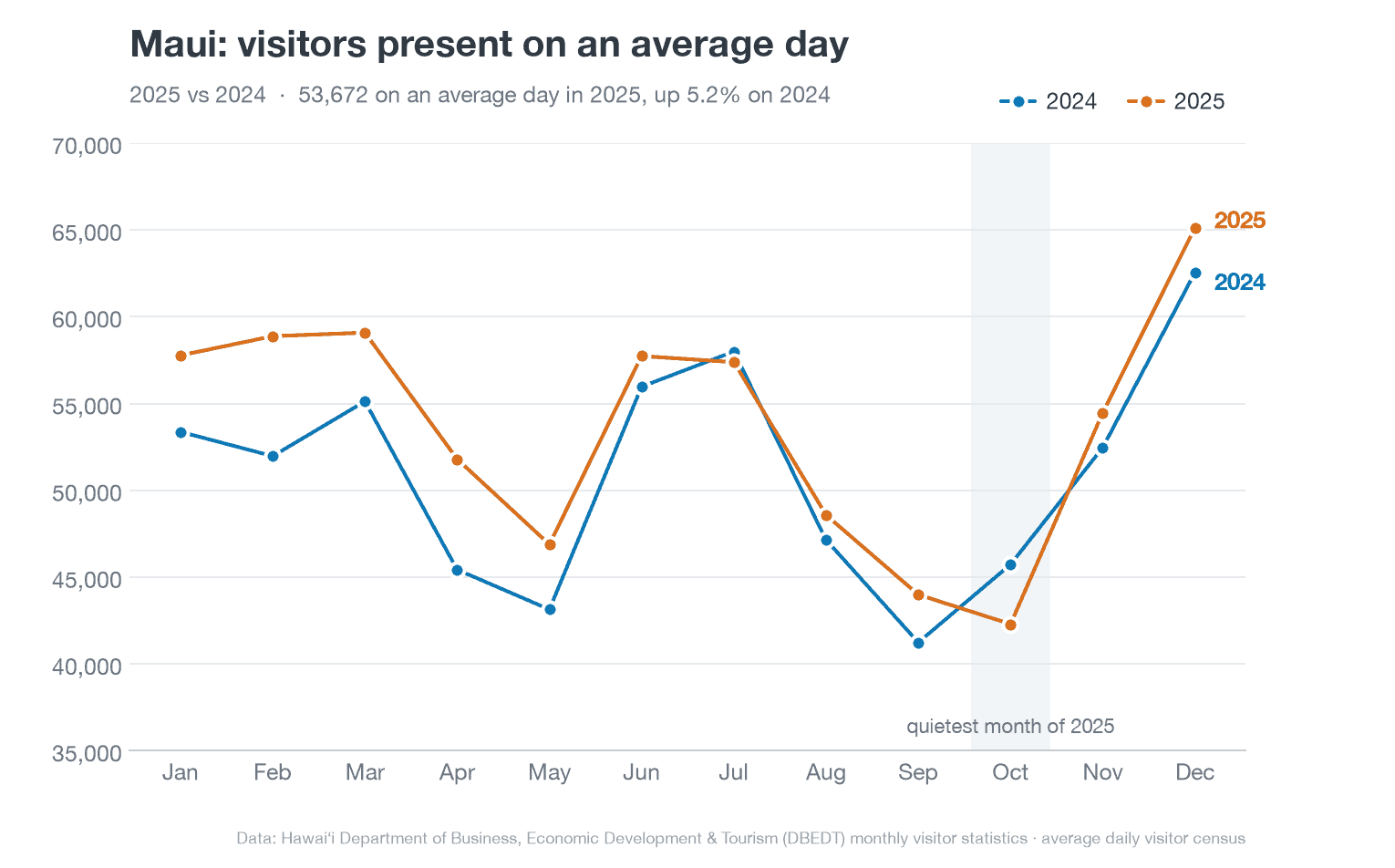
Visitors on Maui on an average day, by month, 2024 and 2025. September and October are the quietest months, with May and April also below the yearly average. December is the fullest.
Oʻahu: the busiest island, and the steadiest
Oʻahu carries about 110,300 visitors on an average day, roughly twice Maui’s number and three times the Big Island’s, so it is never quiet in absolute terms. It is also the flattest across the year: about 1.35 visitors at the June peak for every one in September, against 1.56 on the Big Island. June and July run 15 and 12 percent above average, September and October 15 and 13 percent below. Picking your month moves the needle less on Oʻahu than anywhere else, so the destination swaps further down this page do more work here than the calendar does.
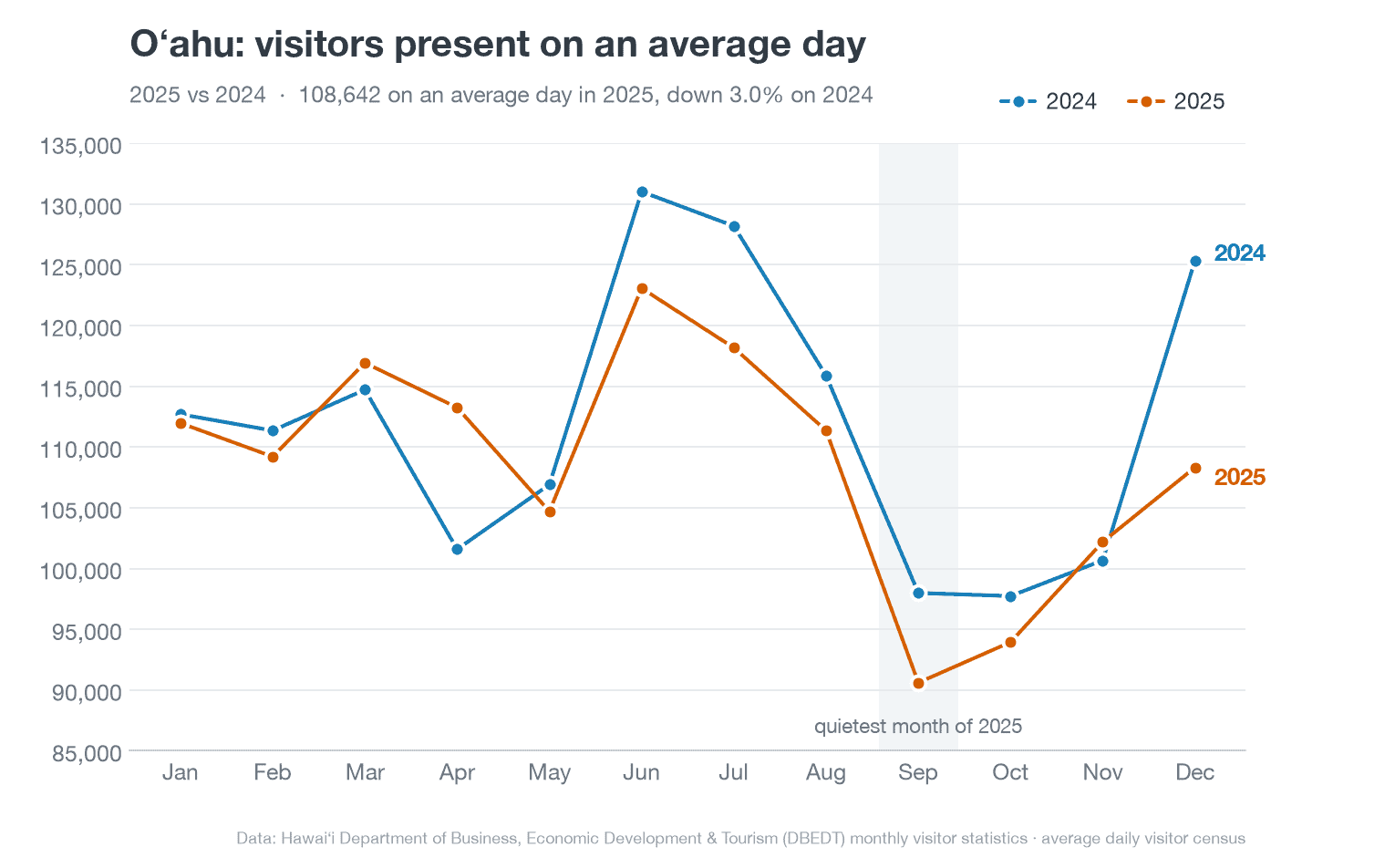
Visitors on Oʻahu on an average day, by month, 2024 and 2025. September, October, and November are the quietest months. June and July are the fullest, and January and February sit right on the yearly average.
Kauaʻi: a midsummer peak on the smallest crowd
Kauaʻi holds the fewest visitors of the four, about 28,300 on an average day. Its calendar follows Oʻahu’s rather than the Big Island’s: June and July both run about 17 percent above average, while December manages only 6 percent. September is the floor at about 16 percent below.
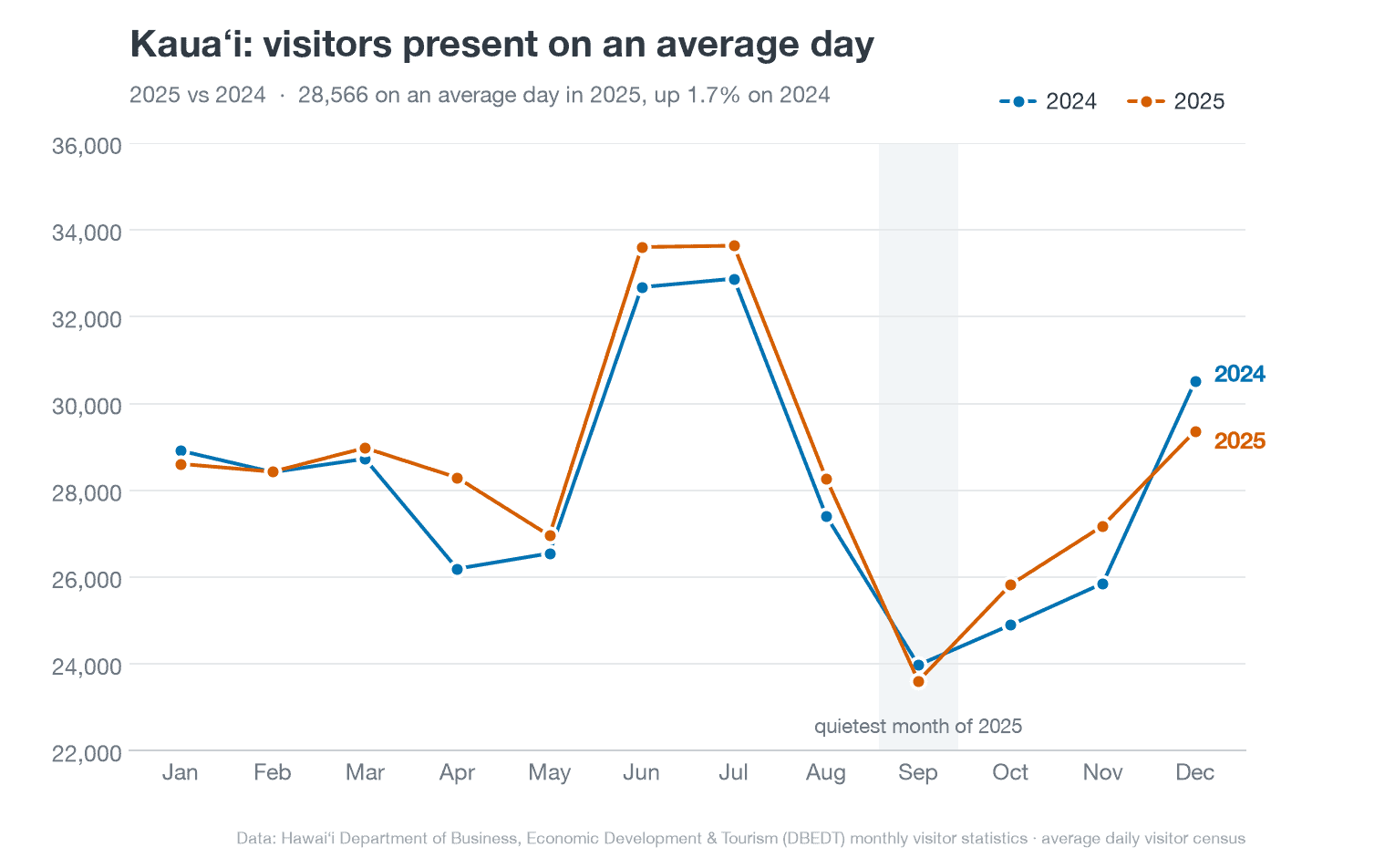
Visitors on Kauaʻi on an average day, by month, 2024 and 2025. September, October, and November are the quietest months, while July, June, and December are the busiest.
Five Rules for Beating the Crowds Anywhere in Hawaiʻi
These five habits separate a crowded trip from a quiet one, and none of them cost anything.
- Visit places early or late. A good rule of thumb is to avoid visiting in the middle of the day, when activity peaks. Get up early and beat the rush, or stay patient and visit once the crowds have left. It applies almost everywhere: beaches, hikes, snorkel spots, museums. Visiting early is imperative at certain popular places, like Hanauma Bay.
- Keep an eye on school holidays. Visitors flock to Hawaiʻi during the summer months when the kids are out of school. Local families have more flexibility during this time, too, resulting in larger crowds just about everywhere. Winter and spring breaks are also busy times of year.
- Avoid weekends. You may not be keeping track of the days while on vacation, but remember that locals will be out in much greater numbers on Saturdays and Sundays, especially during the school year. Plan accordingly by visiting the most popular areas on a weekday.
- Don’t stay in the flagship town. Destinations like Waikīkī, Lāhainā, and Kailua-Kona are notoriously busy during the summer and holiday seasons. Avoid the hustle by basing yourself in another part of the island, such as the North Shore (Oʻahu), Upcountry (Maui), or Hilo (Big Island), where there are fewer lodging options and, thus, fewer people.
- Visit a neighbor island. Oʻahu is by far the most-populated and most-visited island, with a local population of about 1 million people. Maui reads mid-pack on the monthly numbers, but it still feels crowded on the water: about a third of Maui’s US visitors take a boat or whale-watching tour, and most funnel through the same west-side harbors. The Big Island and Kauaʻi are the least dense, so a neighbor-island swap usually buys you more room.
Beating the Crowds at Hawaiʻi’s Five Busiest Attractions
Five of Hawaiʻi’s most crowded attractions, and the timing or weather window that gets you ahead of the tour buses at each.
Pearl Harbor
Advice: Go at 7 a.m.
People may wake up early in Hawaiʻi, but they like to wake up slow. Reserve an 8 a.m. ticket time for the Arizona Memorial movie and boat ride (the earliest time available) but arrive at 7 a.m. to go through the Road to War and Attack Museums prior to the Arizona experience. This will ensure you beat the heavier mid-morning/mid-day crowds. Things are usually nice and calm in those early hours, and that’s the way you want to experience Pearl Harbor.
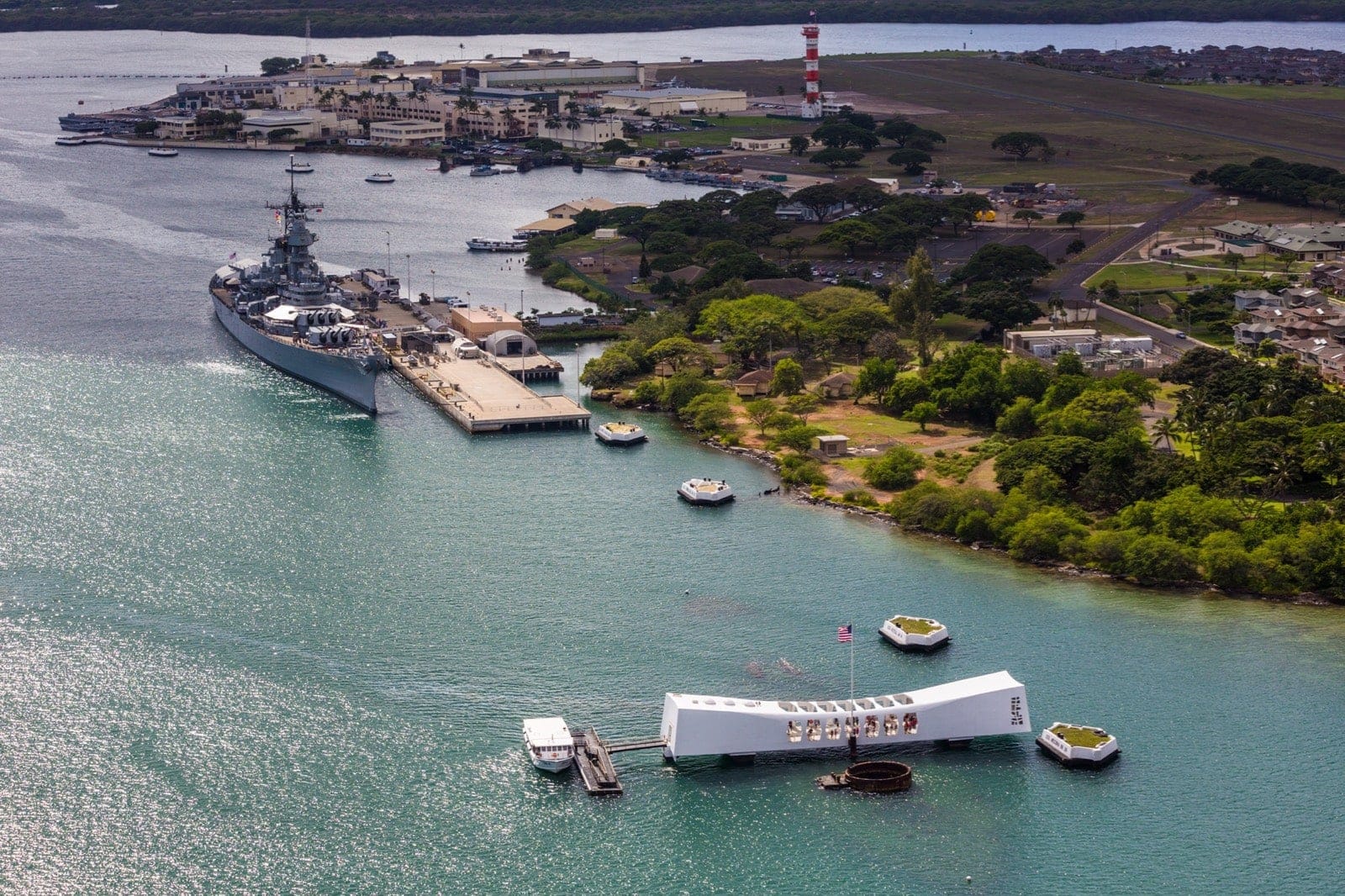
Battleship Missouri and USS Arizona memorials in Pearl Harbor. Credit: Hawaii Tourism Authority (HTA) / Tor Johnson
Road to Hāna
Advice: Go on a rainy day.
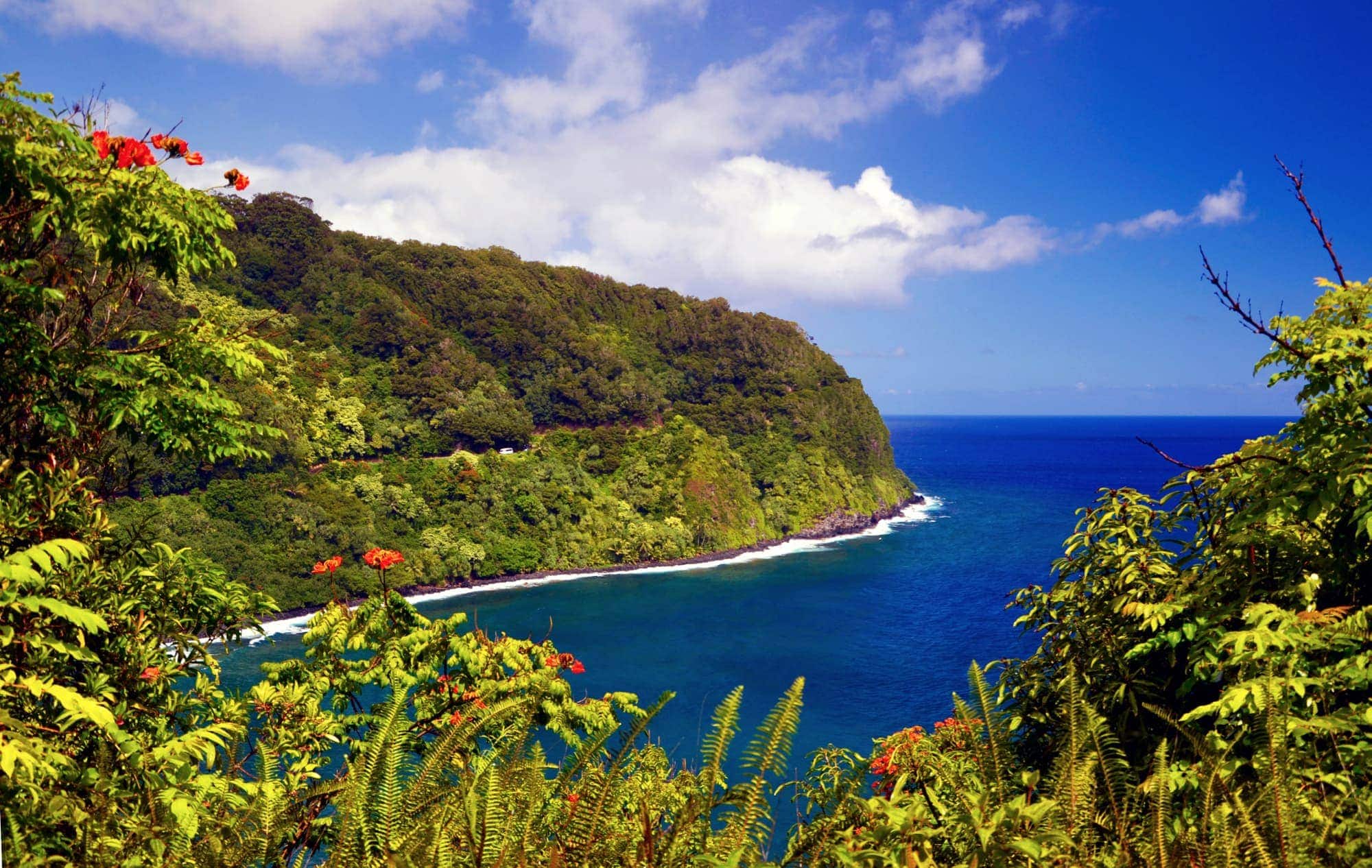
The scenic Road to Hana is the undisputed number one attraction on Maui. Image credit: Benoit de Chastenet, source.
Say what? A rainy day?
If you want to beat the crowds, it’s one of the best options. The Road to Hāna is a daily attraction and will be busy most times of the year, but visitors will definitely plan their adventures around the weather.
Families, for example, are less likely to make the journey when it’s raining. Even if they do get in the car and drive the road, they most likely won’t get out of the car as much. This leaves many of the trails and waterfalls less crowded. And since that side of the island is almost entirely made up of rainforests, what’s a little rain?
Bring rain gear (ponchos, towels, etc) and a pair of boots you don’t mind getting muddy.
Waikīkī
Advice: Stay on the east side of Waikīkī.
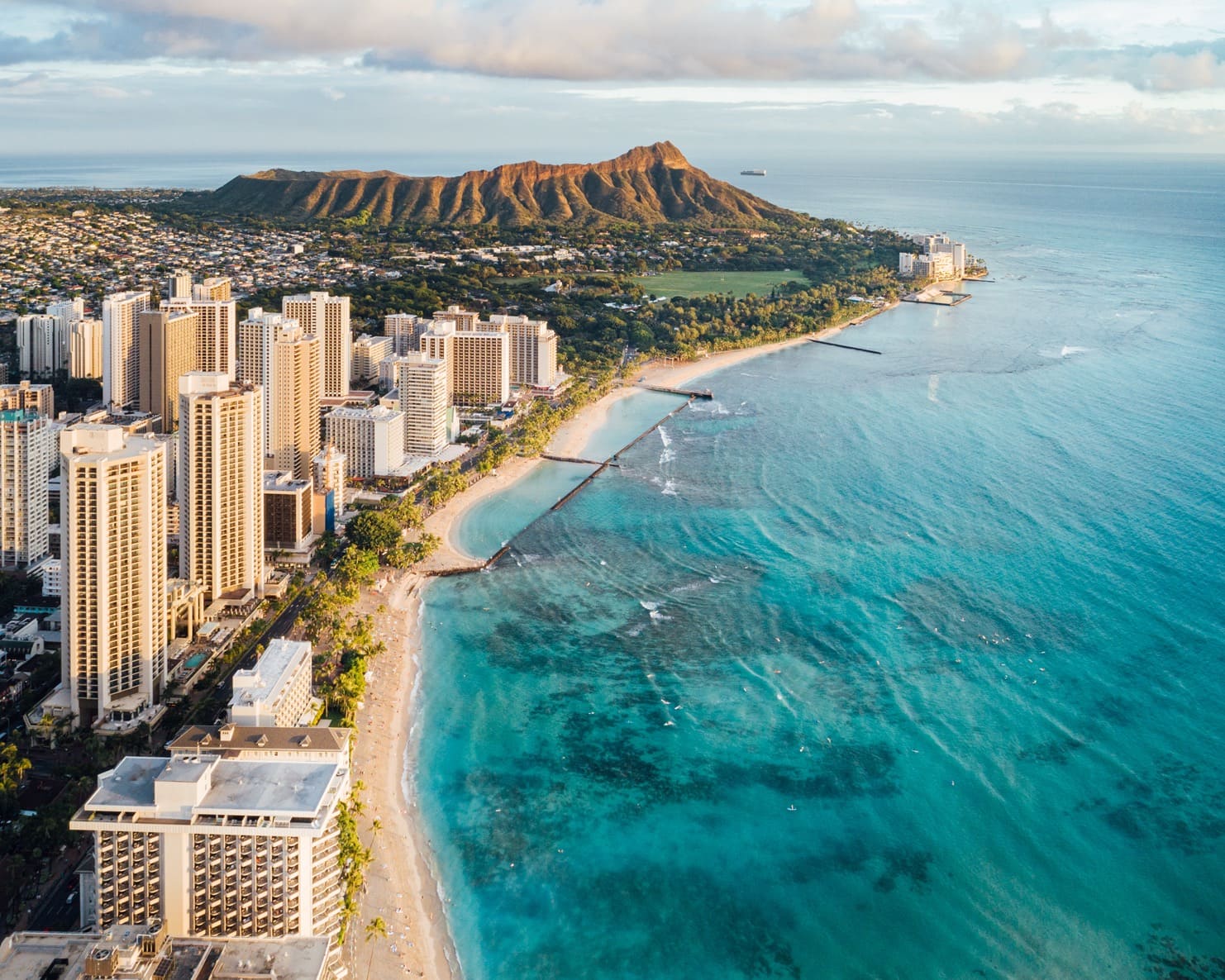
Waikiki Beach with Leahi (Diamond Head) in the background. Credit: Hawaii Tourism Authority (HTA) / Vincent Lim
Waikīkī is known for its seaside bustle, and it’s the most crowded place in all the Hawaiian Islands. But, some areas provide a little more relief than others. The western portion of Waikīkī is extremely dense, like a major city, while the east side of Waikīkī sports a shoreline that is less developed (i.e. no skyscrapers built directly on the shoreline), and easy access to a massive green space (Queen Kapiʻolani Park) that makes the area feel more local and spacious.
No place in Waikīkī will be without humans, but by staying on the east side, you give yourself a little more breathing room and easier access to open space.
Hawaiʻi Volcanoes National Park
Advice: Embrace the absence of lava
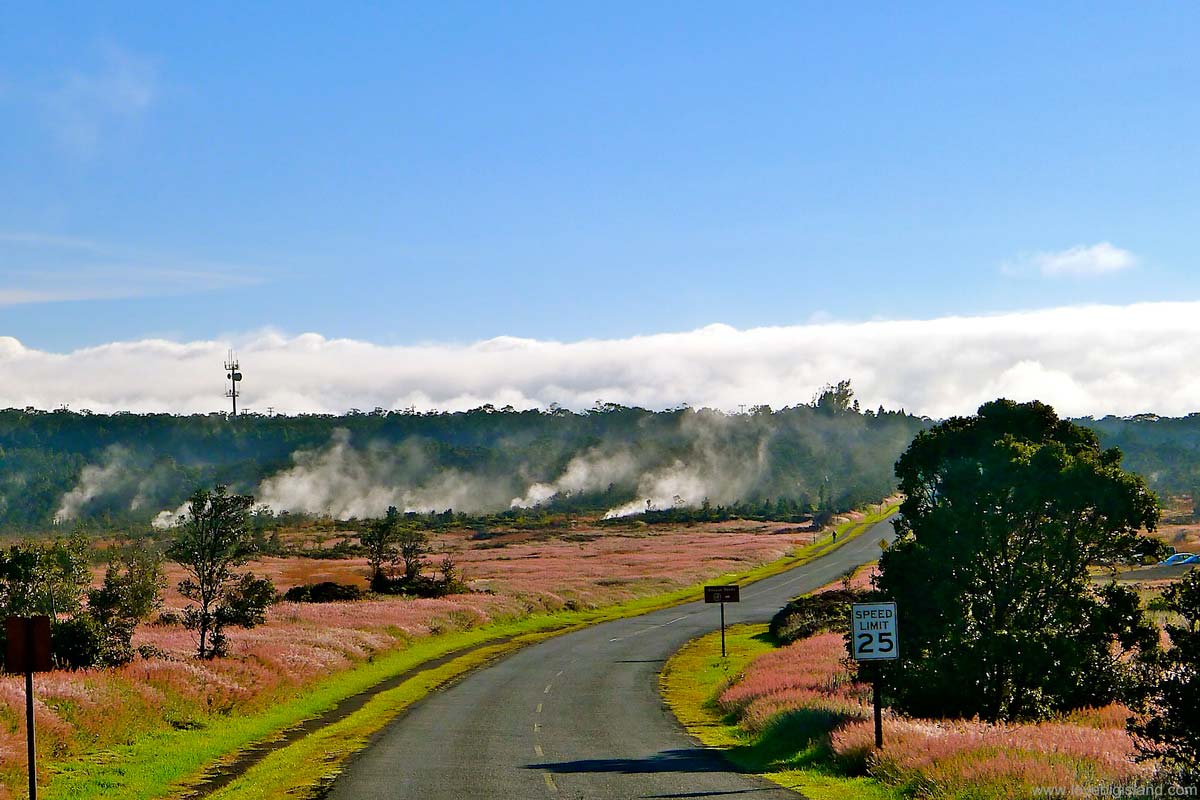
Steam vents in the Hawaii Volcanoes National Park, a few minutes from the visitor center.
Of course, we all want to visit the Kīlauea Volcano when it’s erupting to see lava in person. However, the presence of lava also means the presence of large crowds. Even if there is no lava flowing, the National Park is still a site to see, and visitation often takes a dip immediately following an eruption, a great time to find yourself on the hiking trails.
Nāpali Coast (Kauaʻi)
Advice: Book early
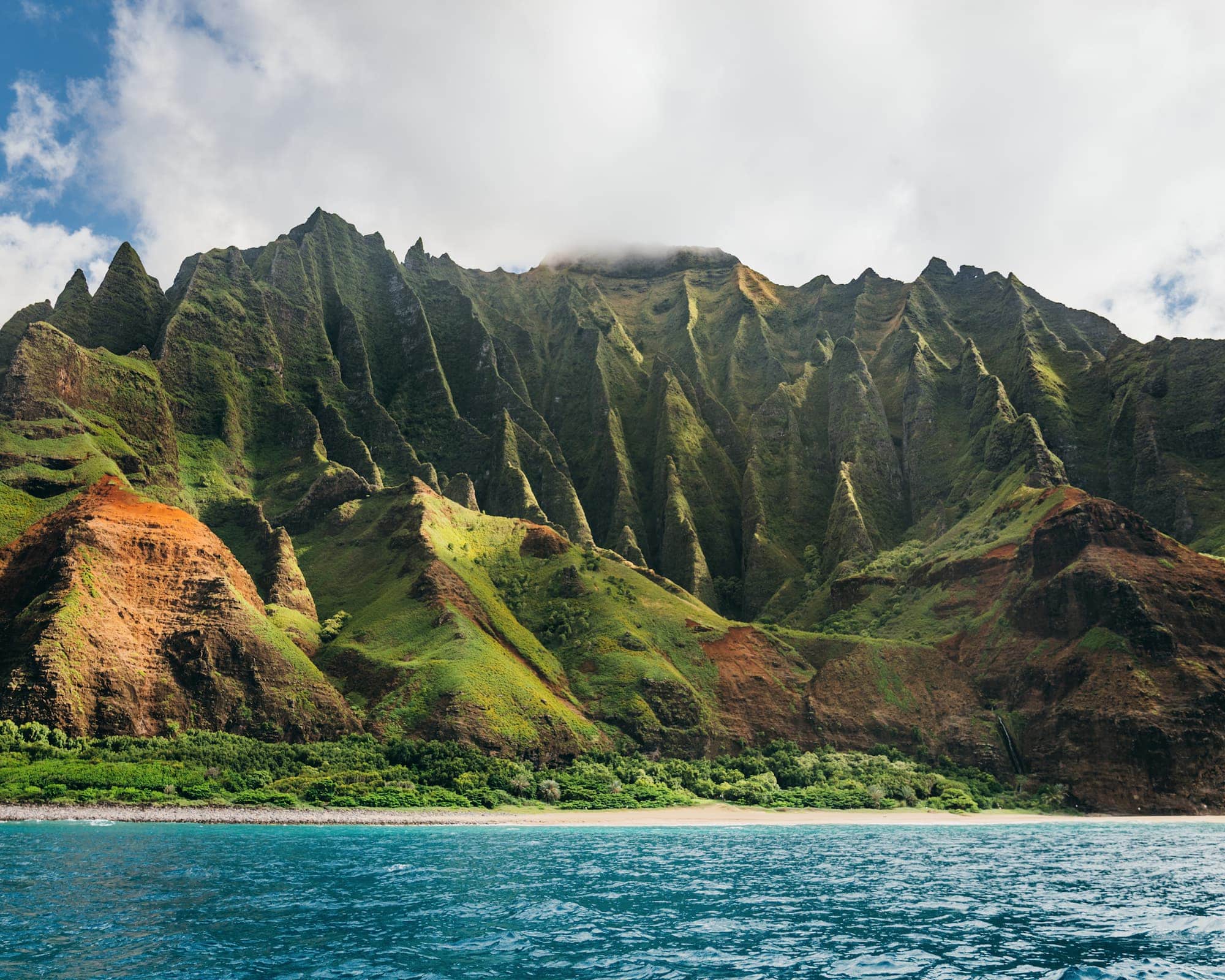
The Nāpali coast seen from the water is one of the iconic images Kauaʻi is famous for. Credit: Hawaii Tourism Authority (HTA) / Vincent Lim
Once a free-for-all, the Nāpali Coast is now one of the most regulated areas in the islands. Out-of-state visitors need an advance reservation for Hāʻena State Park, the trailhead for the coast: $5 per person to enter and $10 to park a car. That covers the day hike out to Hanakāpīʻai Beach; going farther, all the way to Kalalau, takes a separate Nāpali Coast camping permit.
The Hāʻena shuttle lets you skip the drive and the parking scramble altogether. Book early either way, because the day-and-time slots you want fill up fast.
Alternatives to Hawaiʻi’s Most-Crowded Destinations
Some places have no substitute. Pearl Harbor is one. But for crowded beaches and scenic drives, a quieter version usually sits within a short drive of the famous one. The pairs below match each hot spot with a less-crowded alternative on the same island:
Details below last verified June 2026.
| Name | Quieter alternative | Island | Why it works |
|---|---|---|---|
| 1Waikīkī | East side (Kailua, Waimānalo) | Oʻahu | 30 minutes over the Koʻolau, limited lodging, open local beaches |
| 2Diamond Head | Kaʻena Point | Oʻahu | No reservation needed, seabird sanctuary, tide pools |
| 3Road to Hāna | Northwest Maui (Kahekili Highway) | Maui | Same coastal lookouts and trailheads, far fewer cars |
| 4Poʻipu Beach | Polihale State Park | Kauaʻi | Remote southwest beach, 4x4 access keeps numbers down |
| 5Kona | Hilo | Big Island | Less lodging and tourism infrastructure, calm and local |
Instead of Waikīkī, Visit the East Side (Oʻahu)
Drive just 30 minutes across the Koʻolau Mountains to escape the big city and experience the small towns of Oʻahu’s eastern side, including Kailua, Waimānalo, and Kaneohe. With limited lodging, these towns are very local, and while they aren’t undiscovered, you can still find open slices of sand at various local beaches (Waimānalo, Kalama), plus standout beaches like Lanikai, Kailua, and Makapuʻu (see all popular Oʻahu beaches here).
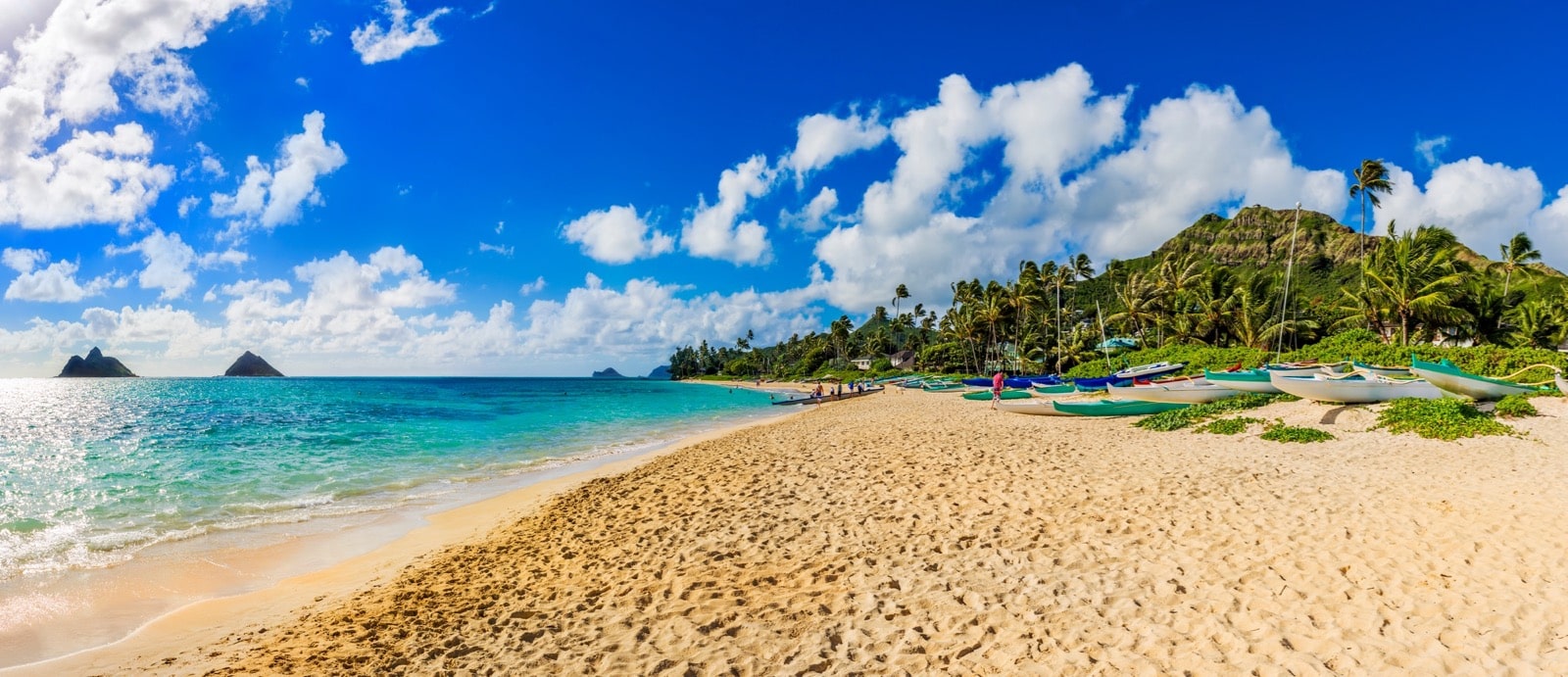
Lanikai Beach in Kailua with Nā Mokulua (the “Mokes”) on the left. Image credit: PBPhotos
Instead of Diamond Head, Hike Kaʻena Point (Oʻahu)
The Diamond Head hike has become so popular that out-of-state visitors now need a reservation to climb it. For a quieter alternative, head up to the North Shore and hike Kaʻena Point. The trail runs along the coast to a seabird sanctuary at the far northwest tip of the island. The area is a state-protected natural area reserve and has been put forward for National Heritage status. Along the way you’ll pass tide pools, small beaches, and views of the Waiʻanae Range.
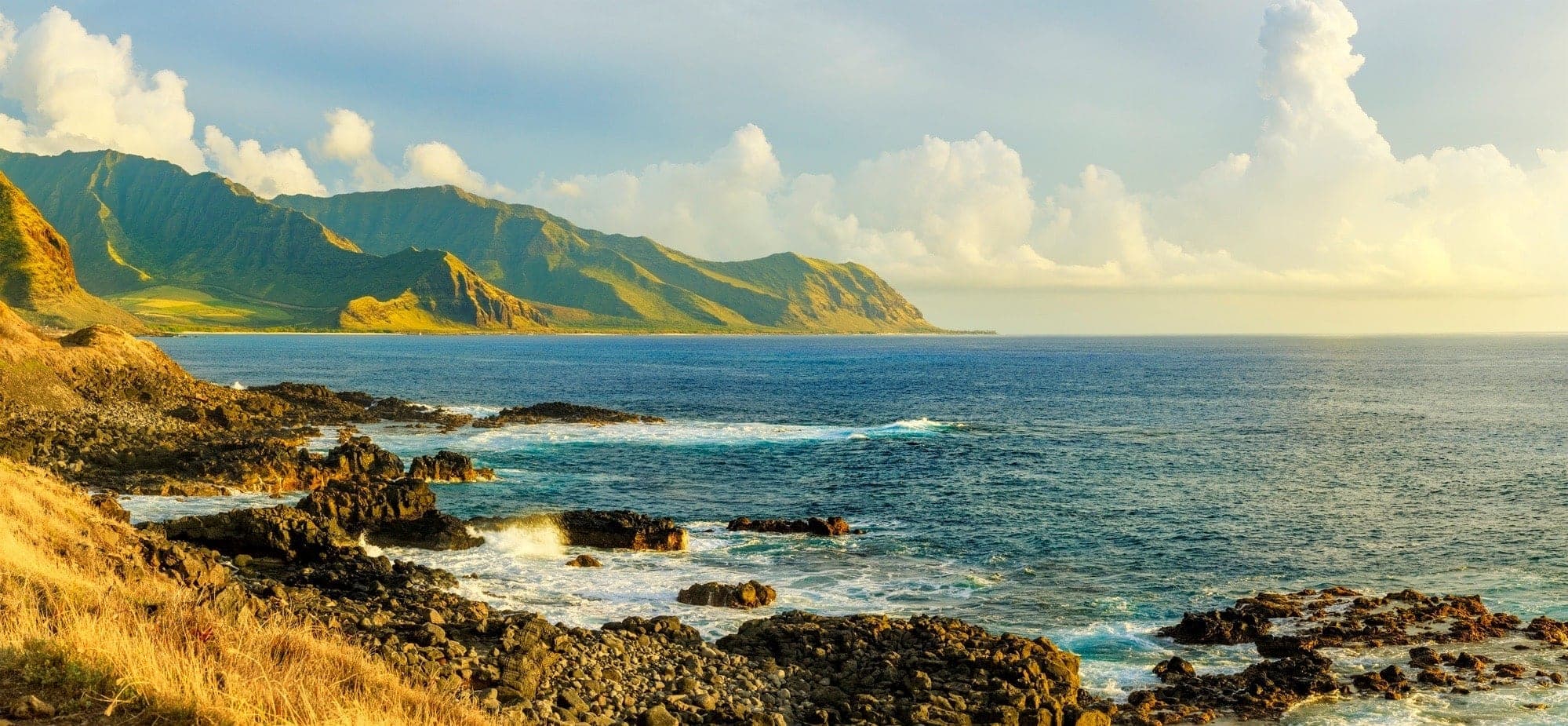
Sunset over the Waianae Mountains at the Kaʻena point State Park. Image credit: elenasuvorova
Instead of the Road to Hāna, Drive Northwest Maui (Maui)
The Road to Hāna is well traveled, drawing many crowds and difficult parking scenarios at many points of interest. Don’t sleep on another Maui scenic drive that winds its way along the northeast and northwest coasts. Take the Kahekili Highway from Kahului to the northwest and follow it along the coast to various lookouts and trailheads, including Waiheʻe, Olivine Pools, the ʻOhai Trail, the Nakalele Blowhole, Acid War Zone Trail, and more.
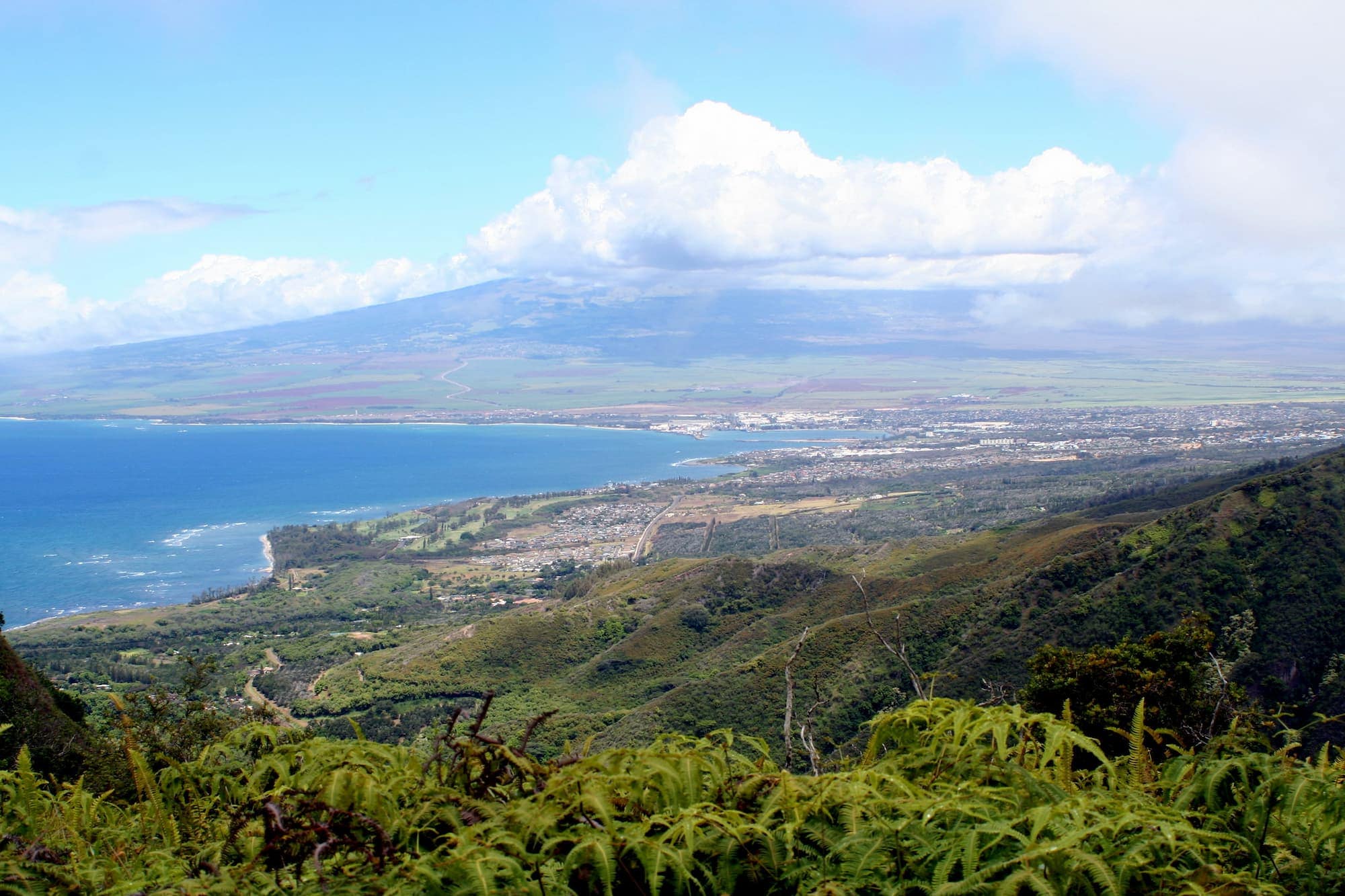
Haleakala from Waihee Ridge Trail. Image credit: Cassi Gurell, source.
Instead of Poʻipu Beach, Visit Polihale (Kauaʻi)
Poʻipu is the main hub for visitors on Kauaʻi. Because there are so many accommodations nearby, the beaches on Kauaʻi tend to fill up fast. Consider making the drive farther south to one of the island’s most isolated beaches, Polihale State Park.
Far from everything on the southwest coast, Polihale is a long, white-sand beach that takes real effort to reach, which keeps the crowds thin. Helping keep it that way is that you often need a 4×4 vehicle to reach the beach due to deep sand (recommended but not required). If you make the journey, you’ll be rewarded.
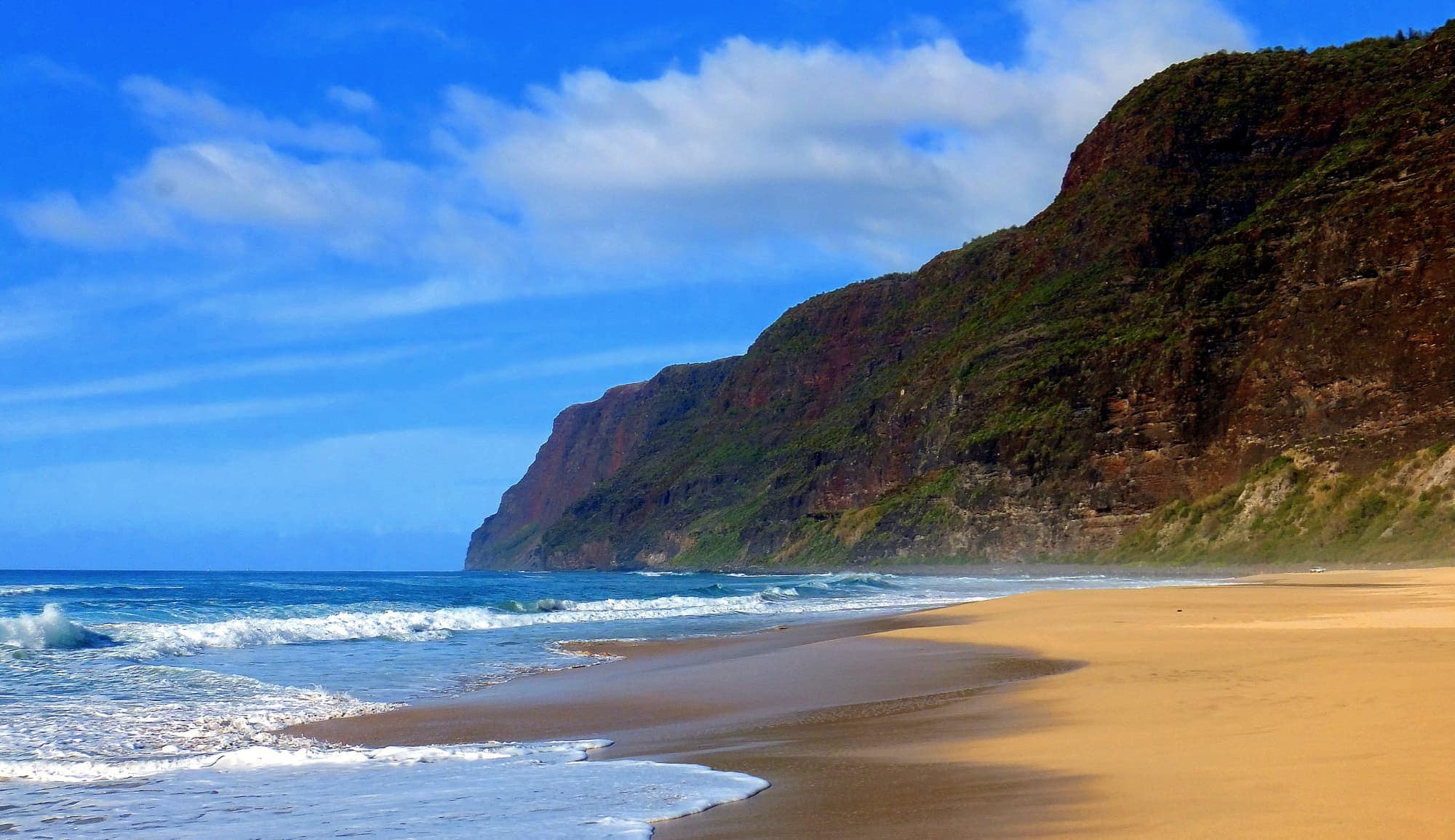
Polihale State Park is a remote wild beach and a great choice for those people seeking isolation. Image credit: K E V I N, source.
Instead of Kona, Stay in Hilo (Big Island)
Kailua-Kona is the hub of hotels and most tourism on the Big Island, thanks to its sunny west coast and its restaurants and shops.
Too much for you? Consider staying in Hilo, on the other side of the island.
There’s far less fanfare here, and fewer crowds. Limited lodging and thin tourism infrastructure keep Hilo feeling calm and local. The tradeoff is rain: Hilo sits on the wet windward side, so pack for showers most days.
There are great restaurants (Hilo Bay Cafe/Pesto Cafe), pleasant beaches (Richardson’s), and plenty of points of interest nearby (Kaumana Caves, Rainbow Falls). It’s also a great jumping-off point for Hawaiʻi Volcanoes National Park and a road trip up the Hāmākua Coast, where you’ll find Waipiʻo Valley, ʻAkaka Falls, and other adventures.
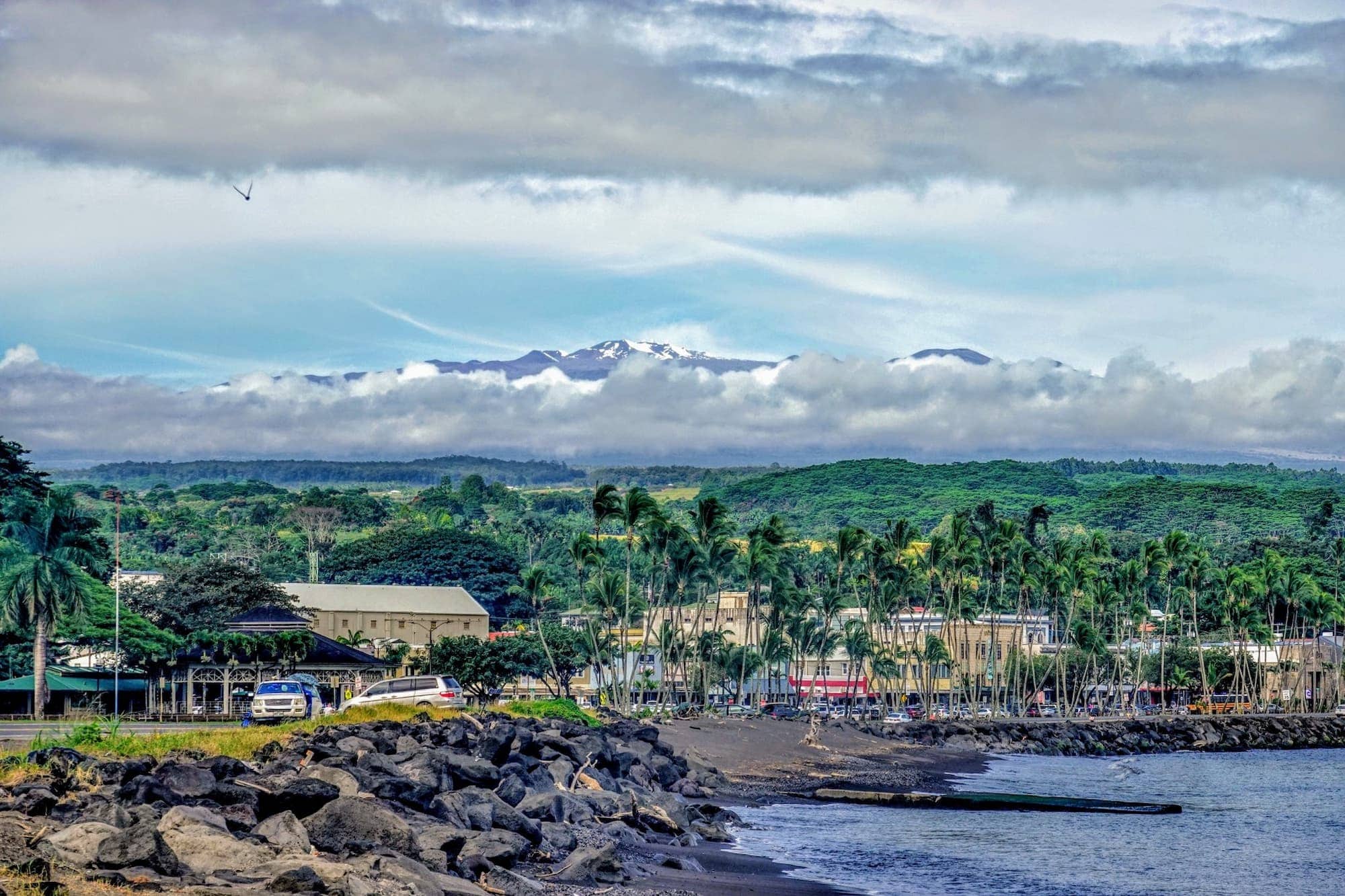
Hilo lies where the slopes of the impressive Maunakea and Mauna Loa volcanoes meet the ocean. In winter these volcanoes are sometimes covered in snow. Image courtesy of Volcano Hideaways