
Front Street reopened to vehicle traffic on August 1, 2026, from Pāpalaua to Shaw, and you can drive it today. The town behind it has not been rebuilt: as of August 2, no recovery building permit had been issued for a destroyed Front Street business. What you pass is fresh pavement and a rebuilt seawall, with the lots behind them empty and Banyan Tree Park and the Old Lāhainā Courthouse fenced off.
Lāhainā Harbor has commercial boats out again, daylight only, because the harbor still has no power, and the ʻUlu o Lele marketplace opens on the old Outlets of Maui site in September. Park free for three hours at 500 Front Street or 116 Prison Street: street parking on Front is prohibited.
Table of contents
Getting in, parking, and what is fenced off
The open stretch of Front Street runs from Pāpalaua to Shaw, and Dickenson and Prison reopened with it on August 1, 2026. Market Street, Papelekane Street and Mokuhinia Place stay closed while the state dredges the harbor.
Park in one of the two county lots. There is free three-hour parking at 500 Front Street, on the corner of Shaw, and at 116 Prison Street. If you are catching a boat, use the Prison Street lot: the tour operators meet passengers there and walk them down to the harbor. Street parking along Front Street is prohibited, and the historic district is patrolled by a county outreach team.
Closed and fenced: Banyan Tree Park and the Old Lāhainā Courthouse, until the safety hazards are dealt with. Also closed until further notice: the Lāhainā Library, the Kamehameha Brick Palace, the former Kamehameha III school lot, Kamehameha Iki Park, and Malu Ulu o Lele Park. Beach access to Breakwall stays open.
A lot of what is not fenced is somebody’s house lot. Stay on the marked pedestrian route.
Boat trips and whale watching from Lāhainā Harbor
Lāhainā Small Boat Harbor reopened to limited commercial operations in December 2025. Four permitted companies in December had become eight by June 2026. The Pacific Whale Foundation resumed sailing from Lāhainā on June 1, forty years after it started there.
The harbor has no power yet, so sailings are daylight only. The walk-up trade is gone too, so every trip is pre-booked. Atlantis Submarines, which has run from this harbor since 1991, is out five days a week instead of seven: the charging equipment for its electric submarine has not been restored at the harbor, so two days go to charging it.
Humpback season on Maui runs roughly November to April, and the Maui Nui basin between Maui, Lānaʻi, Molokaʻi and Kahoʻolawe is the densest wintering water in the state. A 2024 study (Cheeseman et al.) estimated about 12,300 humpbacks wintering across all of Hawaiʻi in 2021, and the counts peak in January and February. No agency publishes a Maui-only count, so treat any page that gives you one with suspicion.
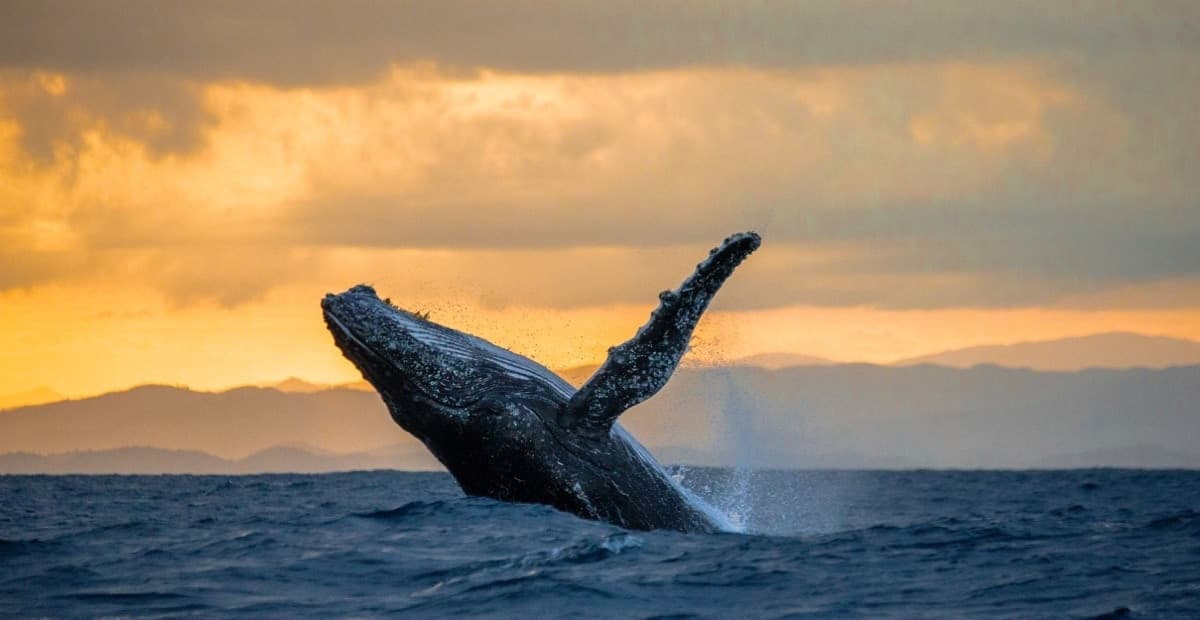
A humpback whale breaches the surface in front of the Maui coast.
Boats also leave from Māʻalaea and from Kāʻanapali, so check which one you booked. Māʻalaea, on the south shore, still has the larger operation. Some Kāʻanapali trips launch straight off the beach in front of the Sheraton, which means wading in to about knee depth and is not suitable if you have mobility problems.
Our Maui whale watching guide has the operator detail.
The beaches, surfing and paddleboarding
The easiest thing to do here is spend a day at the beaches outside the burn zone. Launiupoko has a rock breakwater that forms a protected pool, with restrooms, outdoor showers, barbecue grills and a large lot: the easiest of these beaches with children. Wahikuli and Ukumehame are both open too, and Ukumehame is where the surf schools teach.
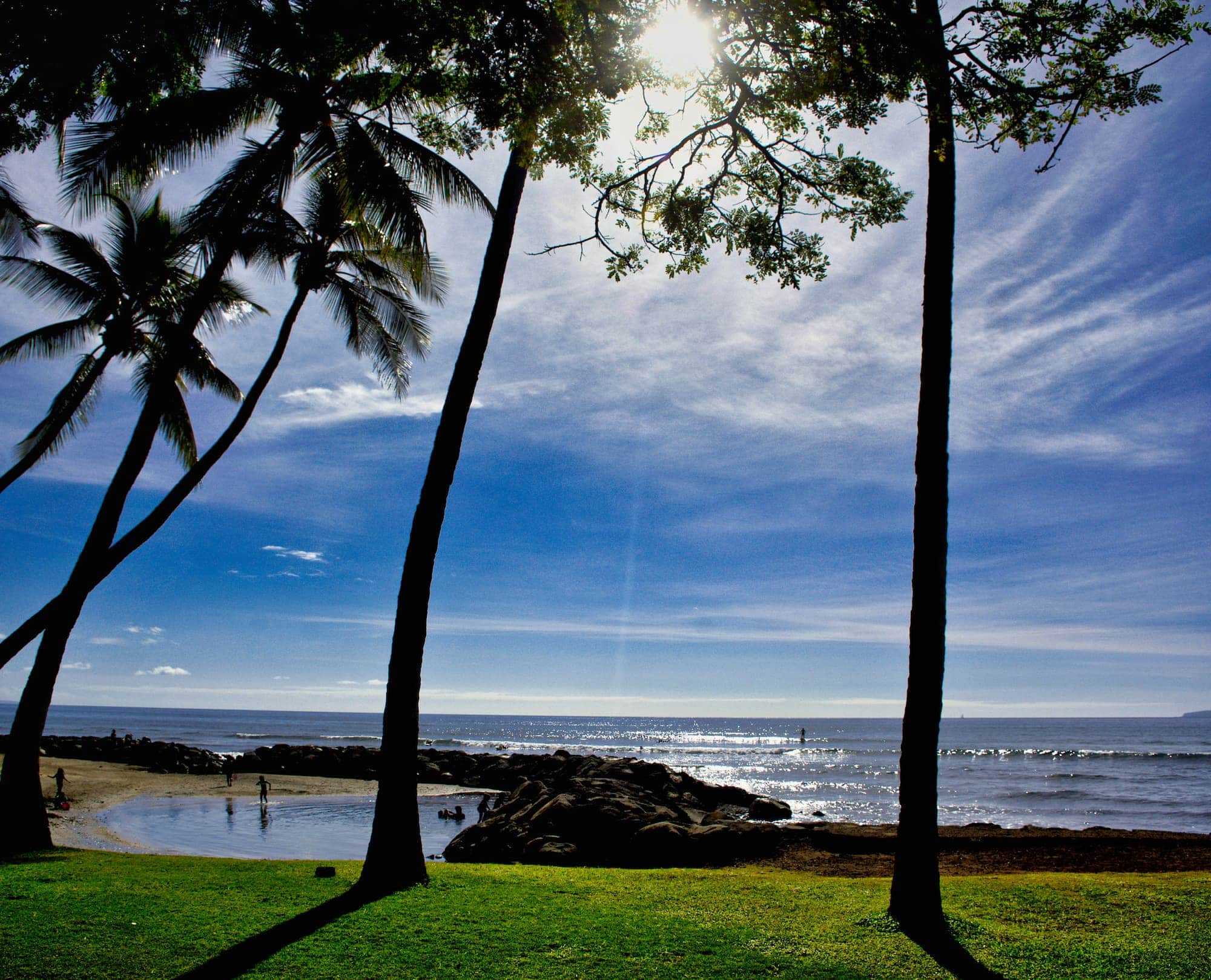
Launiupoko sits between Olowalu and Lāhainā on the West Maui shoreline, and is a long-standing local surf spot as well as a visitor one. Image credit: Kirt Edblom, source.
Baby Beach at Puʻunoa sits at the far north end of Front Street, well beyond the closure perimeter. It appears on no county closure list. Nobody has published a statement calling it open either.
Breakwall is open, and the county says so explicitly. Surfers reach it from the 500 Front Street lot along a marked path past Kamehameha Iki Park, which itself stays closed. Reach the Harbors break from the Baldwin Home lot via Dickenson Street.
Surf lessons
They run south of town rather than in it. Maui Surfer Girls teaches at Ukumehame, from $115 for a two-hour group lesson with four students to an instructor, $225 private, and they ask for two to three months’ notice in season. Maui Surf Schools runs private-only lessons on the breaks between Lāhainā and Kihei, $289 for one guest or $149 a head for groups of two or more, ages eight and up.
Paddleboarding
This has moved south as well. Hawaiian Paddle Sports launches at Olowalu, about ten minutes down the coast, and you can launch a board at Launiupoko and Ukumehame too. No operator launches from Lāhainā town itself any more.
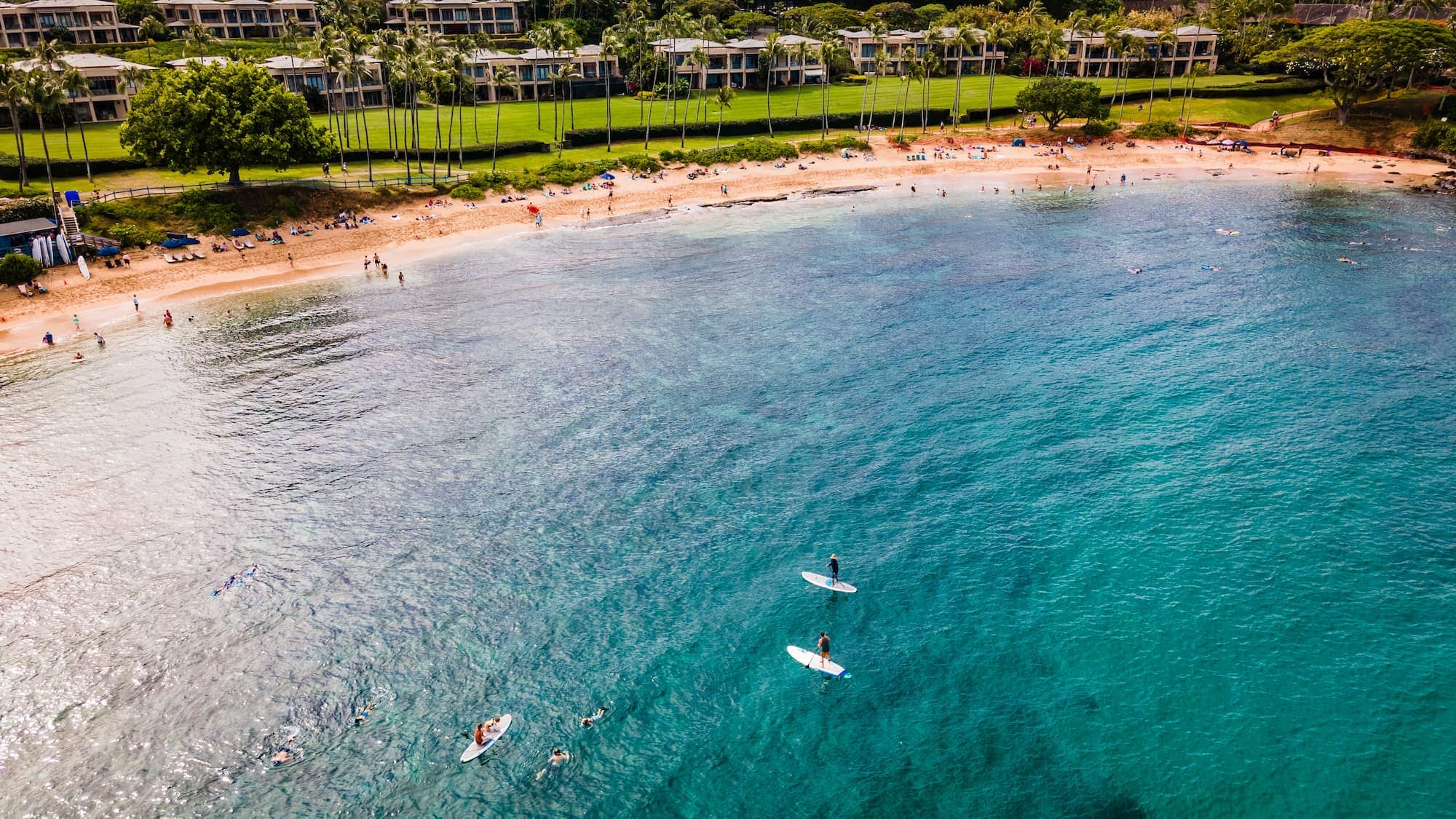
Stand-up paddleboarders on the flat water inside the reef. Image: John Bell on Unsplash.
Lūʻau
Old Lāhainā Lūʻau is operating nightly. It moved in 1998 from 505 Front Street to its present site at 1251 Front Street, at the Māla end of town, north of the burn zone. It seats 340 a night and employs about 200 people.
Start times shift with the season, between about 5:15 and 6:15 p.m., and the evening runs roughly three hours. Adults are 13 and up, children 3 to 12, and under-3s are free without a seat. Check the price in their booking flow.
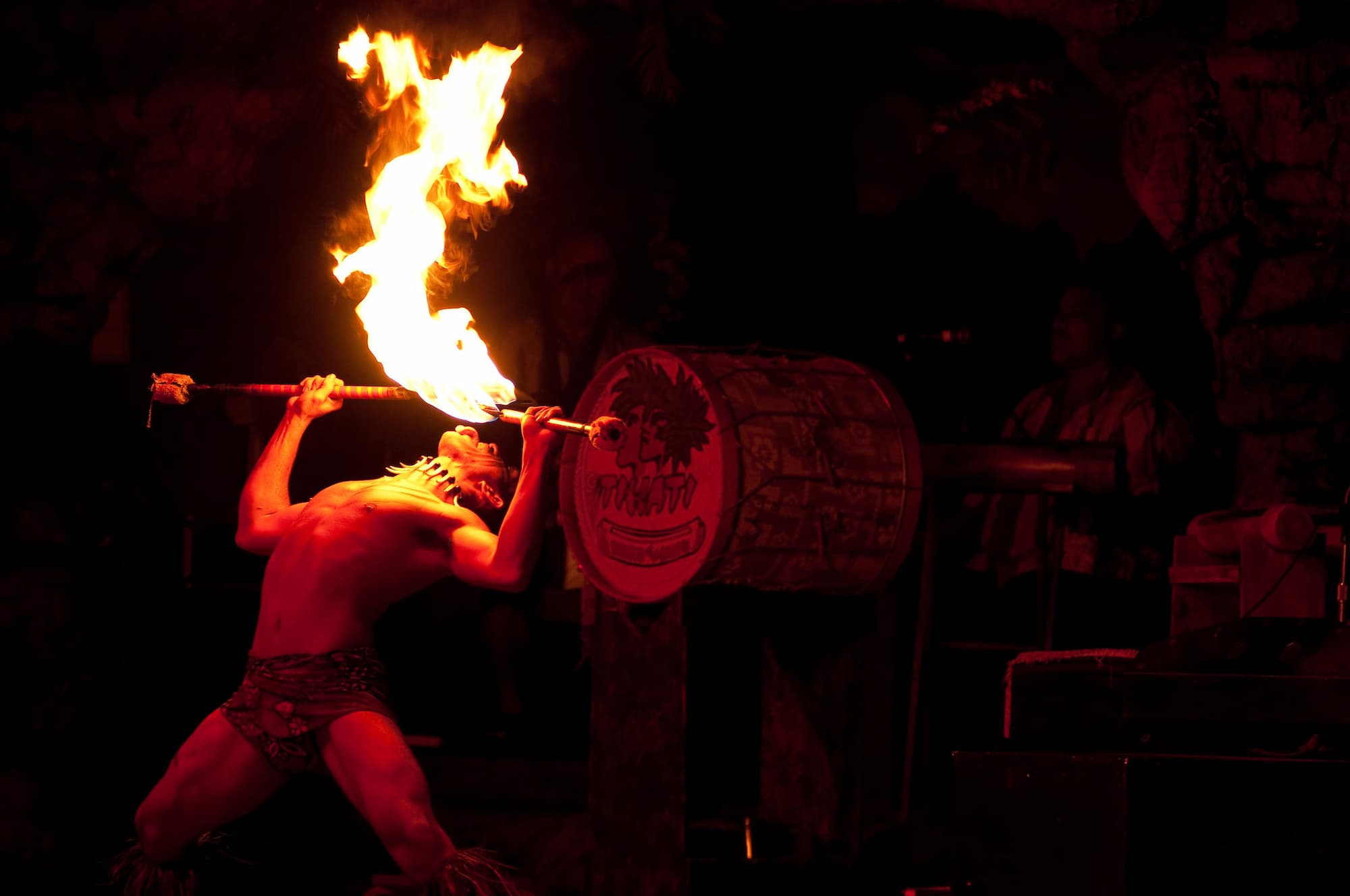
A fire performance at the Drums of the Pacific lūʻau, which is held at the Hyatt Regency in Kāʻanapali rather than in Lāhainā itself. Image credit: Ernesto Andrade, source.
Our guide to lūʻau on Maui lists the other lūʻau on the island.
Shopping, food and live music
The town’s retail has moved to two shopping centers north of the burn zone. Lāhainā Cannery is at 1221 Honoapiʻilani Highway and runs 9:30 a.m. to 9 p.m. daily, with a Safeway open from 6 a.m. Lāhainā Gateway is on Keawe Street, has more than 25 retailers, and hosts a craft fair every Sunday from 9 a.m. to 2 p.m. with free parking.
There’s no food tour in Lāhainā. The operators that ran them have gone: Hawaiʻi Tasting Tours’ server no longer answers, and three other Maui food-tour domains now sit on parking pages.
Live music has moved to Kāʻanapali for now. Maui Brewing Co.’s Kāʻanapali restaurant runs a different act nightly from 6 to 8 p.m. In Lāhainā itself, music happens at community events for now, with no nightly scene. Nightly music returns at the ʻUlu o Lele stage in September.
Maui Brewing Co. is open daily 7 a.m. to 10 p.m. at 2525 Kāʻanapali Parkway. Its address reads “Lahaina, HI 96761” because Kāʻanapali uses the Lāhainā ZIP code, but it is three miles north of town and was never in the burn zone. Koholā Brewery is now Lāhainā Brewing Company, and it pours in Wailea and Upcountry rather than here, though its Koholā beers are in Foodland and Safeway statewide. Waikīkī Brewing’s Lāhainā outpost is gone.
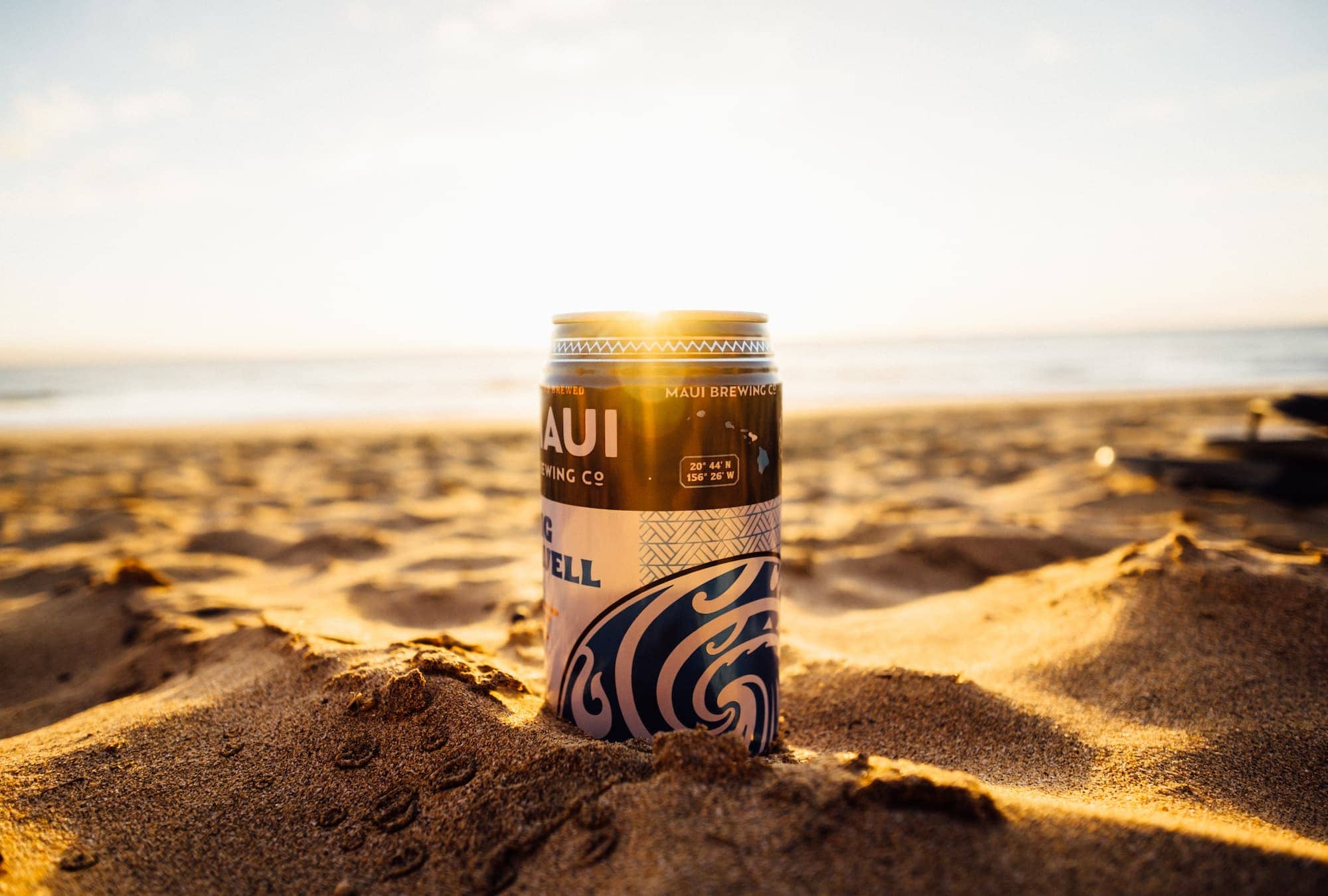
Maui Brewing Co. cans its beer on Maui. Image credit: Tim Foster on Unsplash.
Farm tours
Maui Dragon Fruit Farm is open and touring, at 833 Punakea Loop on the Launiupoko side, above the highway and outside the burn zone. The walking tour with a fruit tasting is $45 for adults and $35 for ages 3 to 12, and takes an hour. A 4 p.m. tour with refreshments runs $65 and $55. They also run a zipline. There are alpacas and a butterfly garden on site. Closed Sundays.
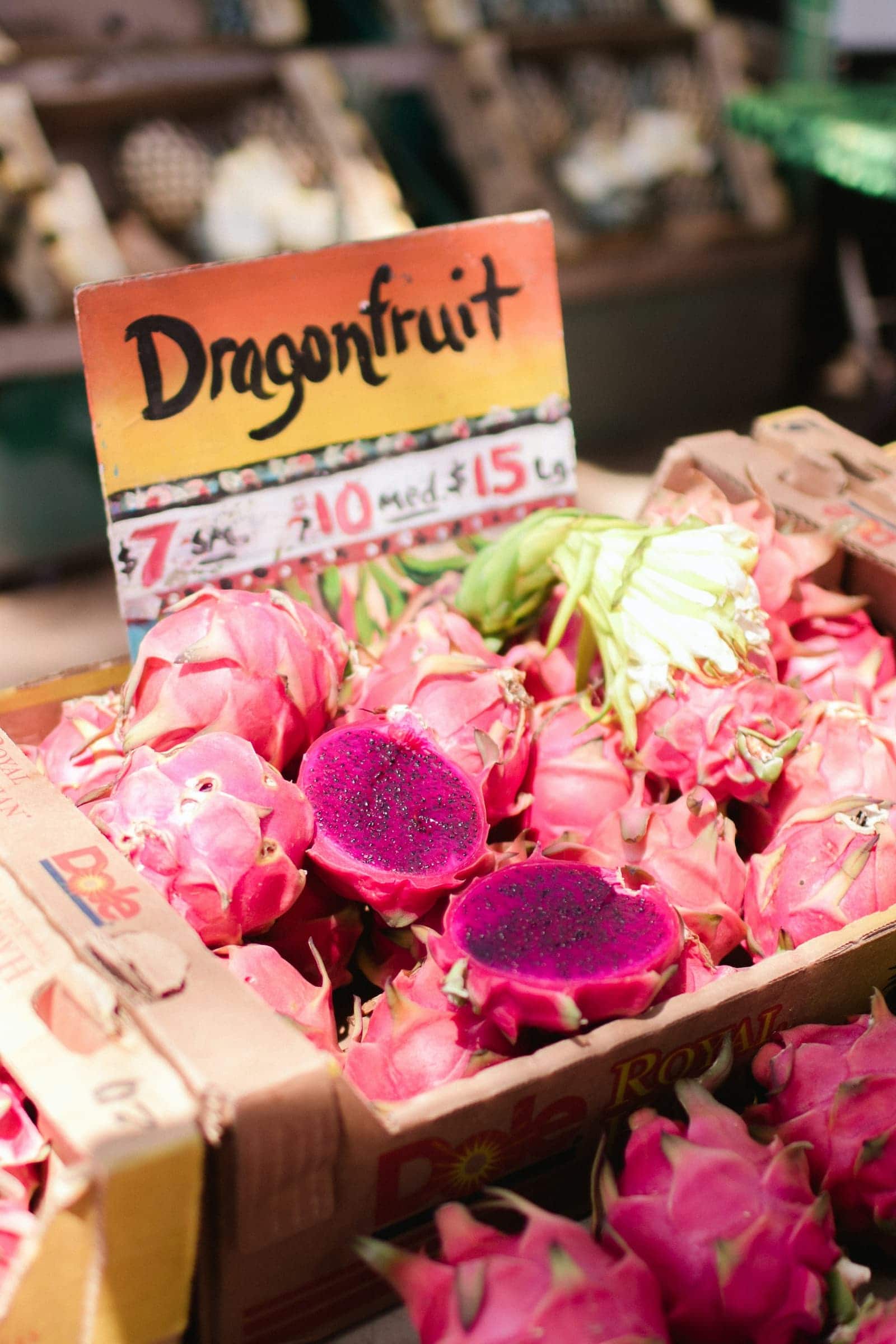
Dragonfruit (pitahaya) is the fruit of a cactus that is cultivated on Maui. Credit: Marissa Rodriguez on Unsplash.
Lāhainā Family Farms, once a regular on Maui farm-tour lists, has gone. Its website now redirects to a parking page, and it no longer appears to be operating.
Kāʻanapali, three miles north
Kāʻanapali is operating normally. Several displaced Front Street businesses have reopened at Whalers Village, among them Banyan Tree Tattoo, CocoNene and Cool Cat Express, the successor to the Cool Cat Café that burned.
The beach walk is open and runs the length of the resorts. Tour crews check passengers in daily on the lawn in front of the Sheraton, at the end of it. No agency has published a statement on the condition of the whole path.
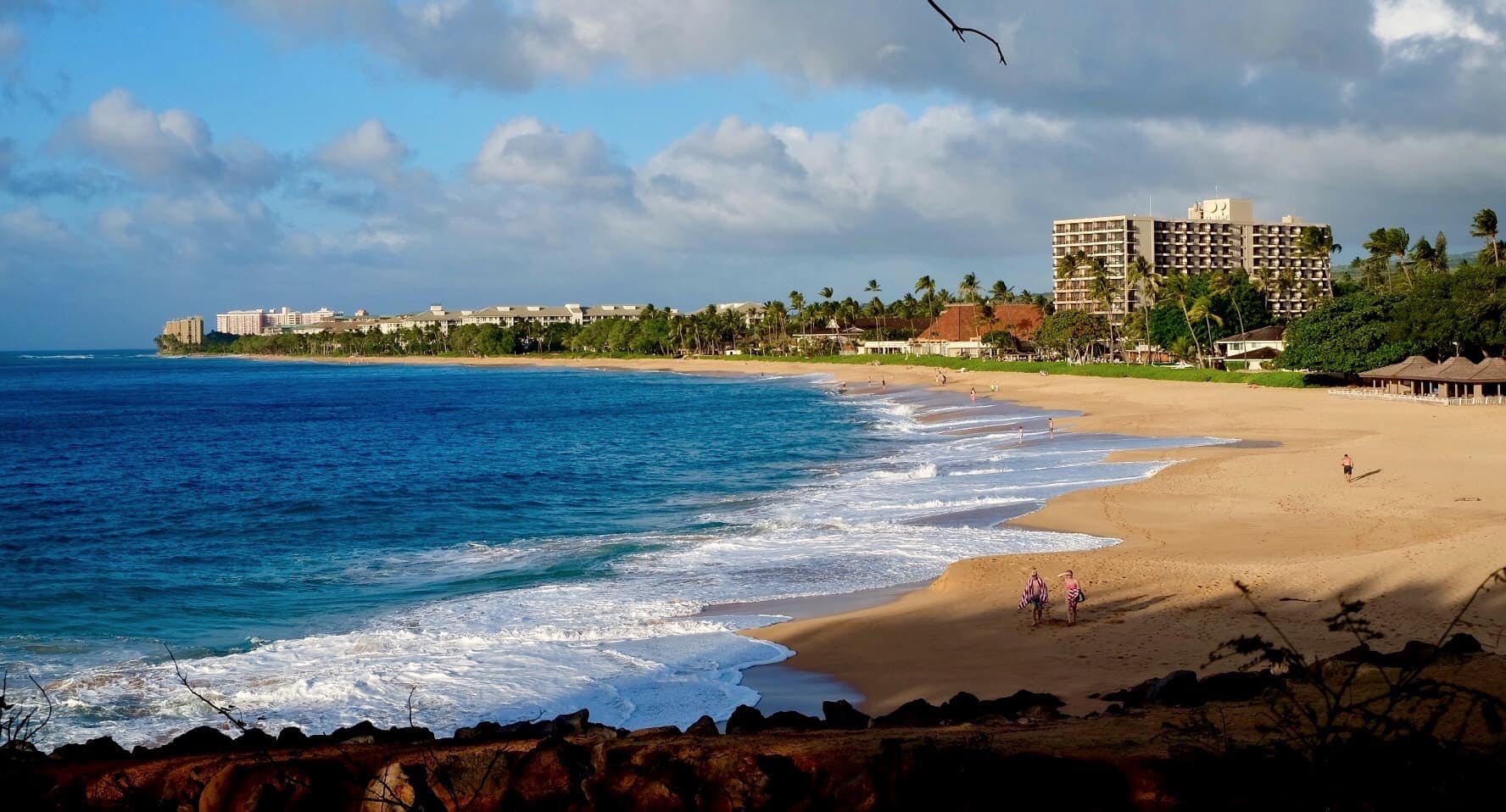
The beach fronting Kāʻanapali runs about three miles, with a paved path along the back of it. Image credit: Jeffery Simpson, source.
The beach is narrower than it was. Two organizations have applied for a state permit to restore Kāʻanapali Beach to its 1988 width, moving roughly 50,000 cubic yards of sand between Hanakaʻōʻō Beach Park and Hanakaʻōʻō Point and widening the dry beach by 41 to 78 feet in places. Construction would not start before fall 2027.
What is gone
You will still find pages describing all of this in the present tense.
The fire destroyed these buildings, but its real cost was to the people who lived and worked in them.
Banyan Tree Park is closed and the tree is alive. The fire flashed over the canopy rather than burning through at ground level, and the two large monkeypod trees between the banyan and the buildings burned hardest, so the trunk was never charred. About 40 percent of the tree was removed afterwards, mostly the north corner.
The county arborist put recovery at a minimum of twenty years, with cuttings grown off-site to be replanted into the gaps. That assessment dates from 2024.
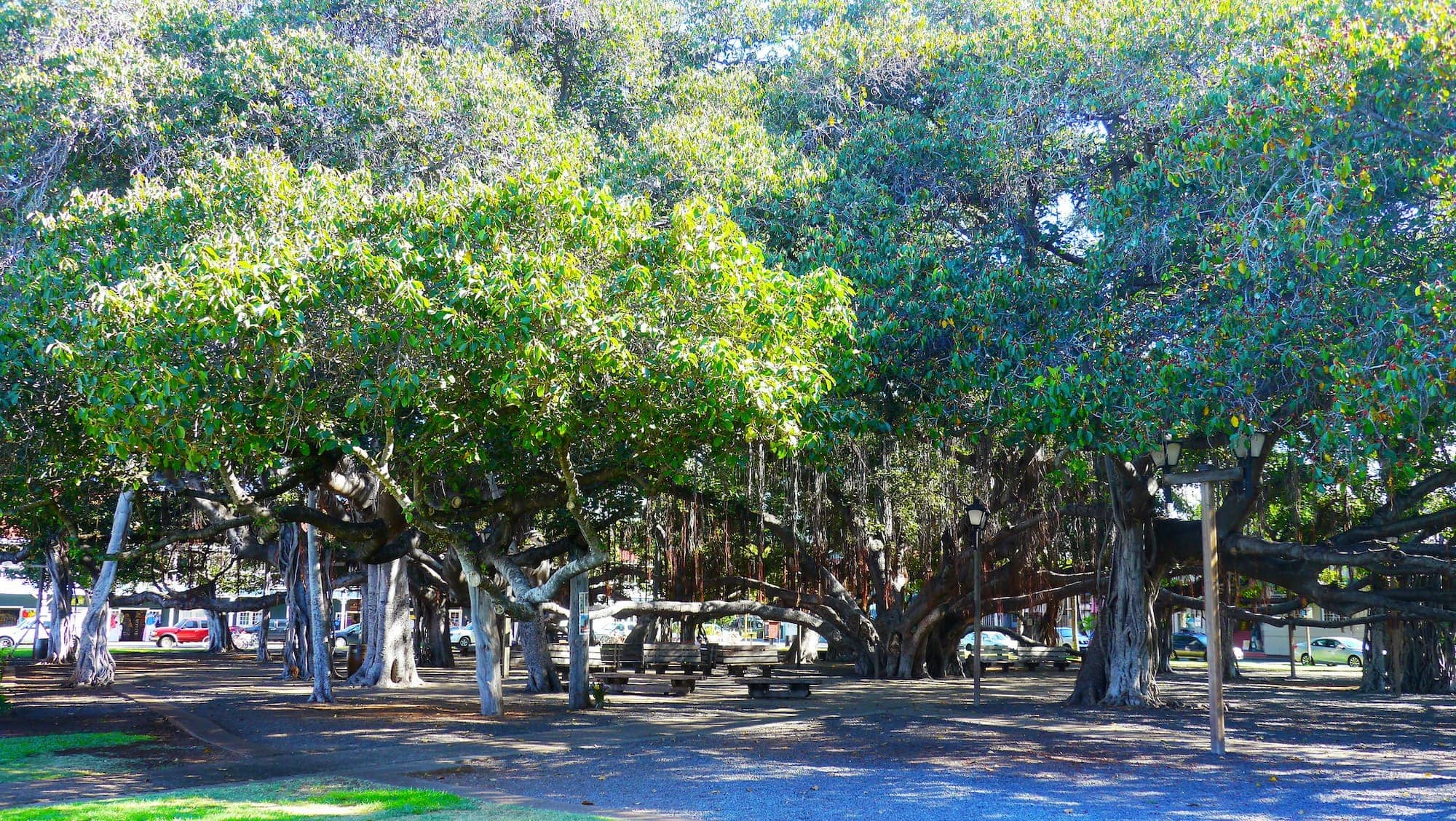
Sheriff William Owen Smith planted the tree in the courtyard square in 1873. This photograph was taken before the August 2023 fire, which burned the buildings around the square and stripped the tree of its leaves. It is the largest banyan tree in Hawaiʻi, with a trunk and aerial root system covering 0.66 acres (0.27 ha). Credit: Rick Obst, source.
The Old Lāhainā Courthouse and the Lāhainā Heritage Museum inside it were destroyed. The courthouse is in the third and last phase of the Lahaina Restoration Foundation’s $40 million plan to restore eight historic sites.
The Baldwin Home was gutted and its stone walls are still standing, shored up with timber. Restoration is estimated at $5.4 million and expected to finish in 2028. The Masters’ Reading Room next door is $3 million and 2031. The wood-framed Kindergarten Building was destroyed outright.
The Wo Hing Museum was destroyed, and it is not among the eight sites in that master plan. Whether it will be rebuilt has not been announced.
The Maui historic sites you can still visit are in central Maui. The Alexander and Baldwin Sugar Museum in Puʻunēnē, about 45 minutes away, was not affected by the fire.
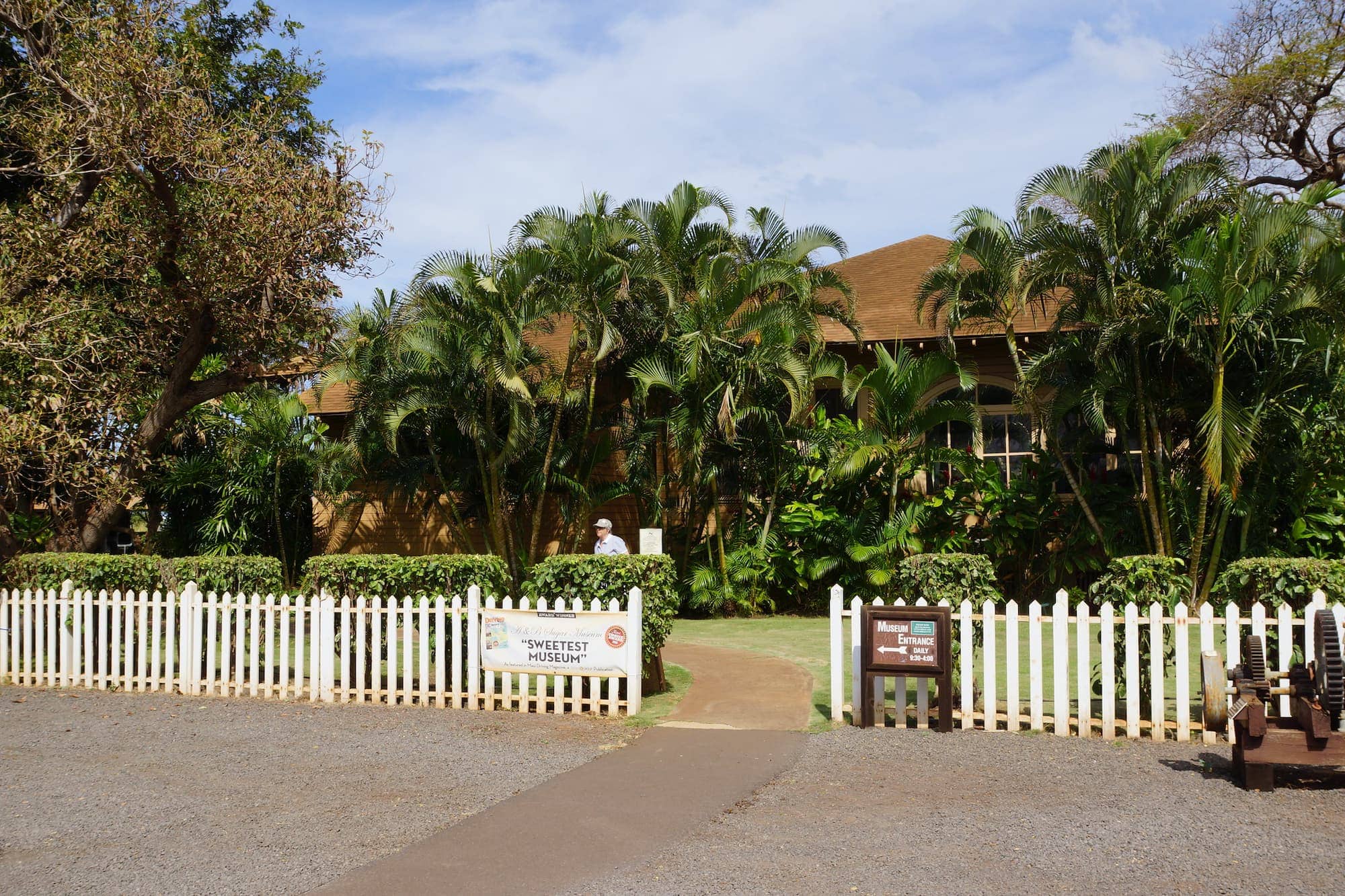
The Alexander and Baldwin Sugar Museum in Puʻunēnē, in central Maui. Image credit: Allie Caulfield, source.
What is coming back
ʻUlu o Lele opens in September 2026, on the old Outlets of Maui site at Front and Pāpalaua. The name means “growth of Lele”, after Lāhainā’s traditional name. It is an interim marketplace on a two-year lease: 17 retail units and 8 food trucks, a stage for nightly entertainment, and about 90 jobs, built with $8 million including a $4 million grant from the Maui Strong Fund. Units go to fire-displaced businesses first, chosen by a community committee, not let to newcomers.
On Front Street itself the first commercial building permit had still not been issued as of August 2, 2026. The 700 block is furthest along: 612 Front Street should get its permits within weeks, with about nine months of construction after that, putting it at summer 2027. The Chun Wa building at 730 and 736 is being recombined, with Kimoʻs taking 10,000 square feet upstairs, though that is a signed letter of intent rather than a restaurant.
557 homes have been rebuilt.
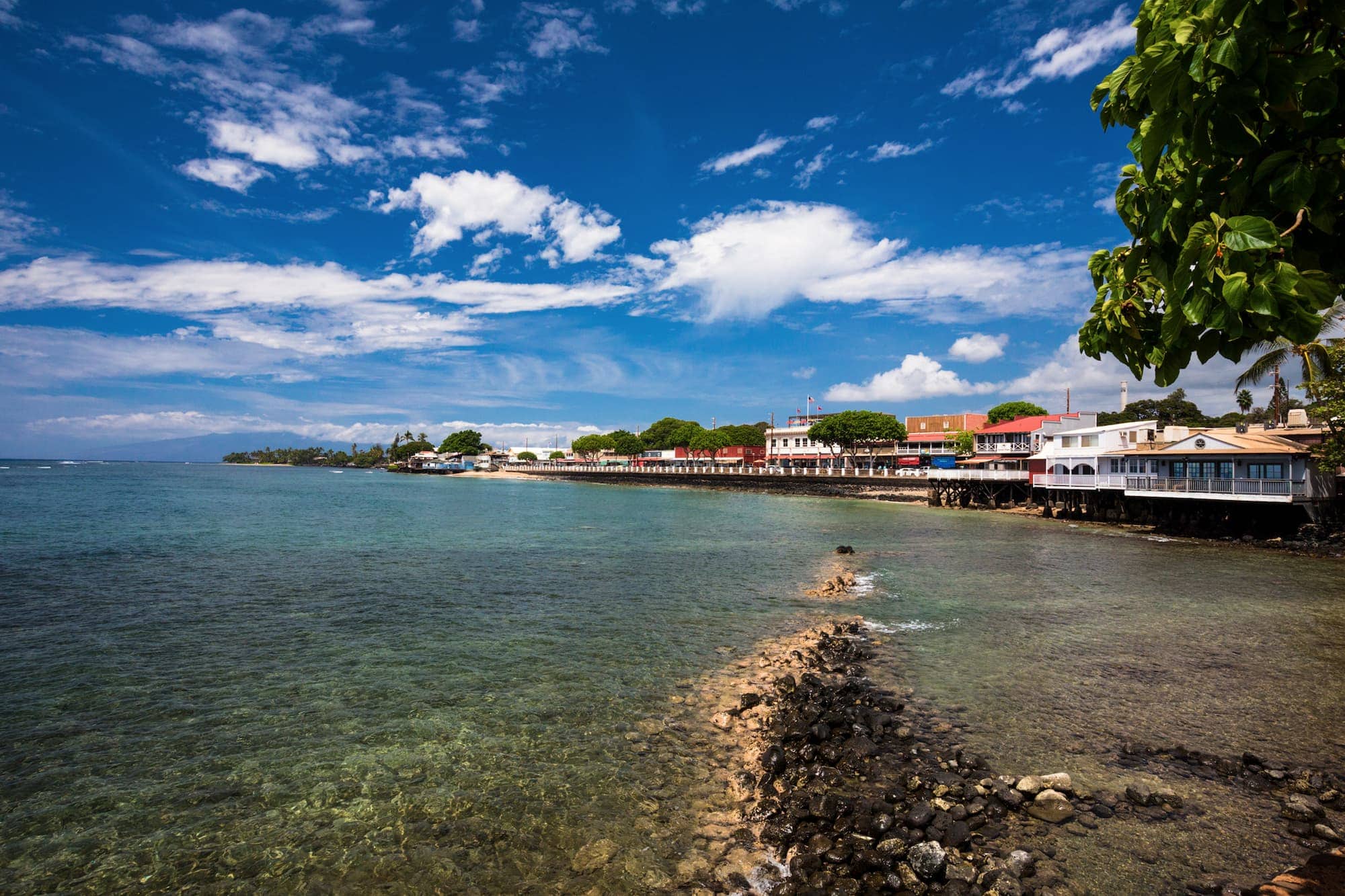
Front Street in Lāhainā, photographed before the August 2023 fire destroyed almost all of it. Credit: Hawaii Tourism Authority (HTA) / Tor Johnson
If you are going
Book the boat before you drive over and park in the Prison Street lot. Give yourself the morning, because sailings are daylight only and there’s nowhere in the historic district to eat until ʻUlu o Lele opens in September. Lāhainā Cannery has a Safeway open from 6 a.m. Then go north. Kāʻanapali has the beach walk, the shops that used to be on Front Street, and music every night, and it is a ten-minute drive.
If you want to put money into Lāhainā rather than near it, September is the month. That is when ʻUlu o Lele opens, with the units going to fire-displaced businesses first.