
You see more stars from the Mauna Kea Visitor Information Station at 9,200 ft than from the summit: oxygen deprivation at 13,796 ft dims your night vision. Join a free telescope night at the visitor center (reservation-only, and spots go fast), book a guided tour ($240 to $315), or drive the summit road yourself in a 4WD.
Any rental car reaches the visitor center, open daily 9am to 9pm with free parking. State law bans 2WD above that point, so the summit means a 4WD or a tour seat. If you drive up, stop at least 30 minutes at the visitor center to acclimatize, and know the summit closes to visitors 30 minutes after sunset: DIY stargazing happens back at the station, not at the top.
Table of contents
- Mauna Kea FAQ
- Stargazing Tours
- How to visit Maunakea yourself
- Getting to the Maunakea Visitor Center (MKVIS)
- How to drive to the Maunakea summit
- Seeing the sunset: from the visitor center and from the summit.
- Learn about Maunakea
- What’s in a name: Mauna Kea or Maunakea?
- Health hazards associated with being at high elevations
Poliʻahu, the snow goddess of Mauna Kea
Mauna Kea is a sacred mountain, and in Hawaiian tradition it is the home of Poliʻahu, the goddess of snow. In the old story she raced Pele down the slopes and drove the fire south to Kīlauea, so the summit keeps its snow while the lava stays in Puna. Read the full legend: Poliʻahu and Pele on Mauna Kea.
Frequently asked questions about visiting Mauna Kea
Short answers to the questions we get most about visiting Maunakea, each linking to the full section:
Q: Can you drive up to the Maunakea summit?
Yes, but not with any car and only during daylight hours. Only 4WD vehicles are allowed past the visitor center (state law), and the summit is off-limits from half an hour after sunset. Read more about driving to the summit here.
Q: Is the free stargazing program at the visitor center still running?
Yes. The visitor center runs free reservation-only telescope evenings: most months there is one event open to everyone and one reserved for Kamaʻāina (Hawaiʻi residents). Events fill fast. Read more about the free stargazing events and how to reserve here.
Q: Is going to the Maunakea visitor center worth it?
Yes. At 9,200 ft (2,800 m) the visitor center is the highest spot on the mountain you can reach with any rental car, and it is where the free telescope evenings happen. Saddle Road climbs from rainforest into open lava country between the island’s two biggest volcanoes. Read more about going to the visitor center.
Q: What car rental companies let you drive their car to the Maunakea summit?
Only a few local 4WD specialists allow it. Big Island Jeep Rental takes its Wranglers and Gladiators up (4-day minimum, with occasional exceptions), and Hawaii Lifted Jeep Rentals marks specific vehicles as summit-approved with no minimum rental period. The national agencies don’t advertise summit permission, so never assume a standard rental qualifies. Read more about 4WD rentals for the summit. The easiest and safest way to go to the summit is to join a tour.
Q: Is the Maunakea summit the best place to go stargazing?
For astronomers yes, but for the general public the summit is not that good. Human vision doesn’t work well at the elevation of the summit, and you can see the stars better with the naked eye from the visitor center. See our list of favorite stargazing locations on all Hawaiian islands.
Q: Is it better to see the sunset from the summit or from the visitor information station?
The summit, by far: you watch the sun drop below the cloud layer from above it. Read more about seeing the sunset from the summit and from the visitor center.
Mauna Kea Stargazing Tours
On a tour the operator provides the 4WD, handles the acclimatization stop, and a guide explains the sky. Tours often pick you up at your hotel, and guides add context on both the science and the cultural significance of the summit.
- Maunakea Summit + Stargazing Tours
- Maunakea Stargazing Tours (that don’t go to the summit to see the sunset)
- Summit tours for Hawaiʻi residents (monthly, free)
- Stargazing events at the Visitor Information Center (free, reservation-only)
- Maunakea Summit + Stargazing Tours
Maunakea Summit + Stargazing Tours
Seven operators hold state permits to bring visitors to the Maunakea summit; the full permit list is below. Summit tours run about 7 to 9 hours, pair the summit sunset with stargazing at mid-mountain, and do not take children under 13.
Tours supply arctic parkas and thick gloves, plus snacks and water. Some tours include dinner.
Our favorite tours are organized by Hawaiʻi Forest & Trail. Their Maunakea Summit & Stars Experience runs 8 to 9 hours from $315 with free cancellation up to 24 hours ahead. If weather closes the road they usually cannot reschedule you, so book it early in your stay:
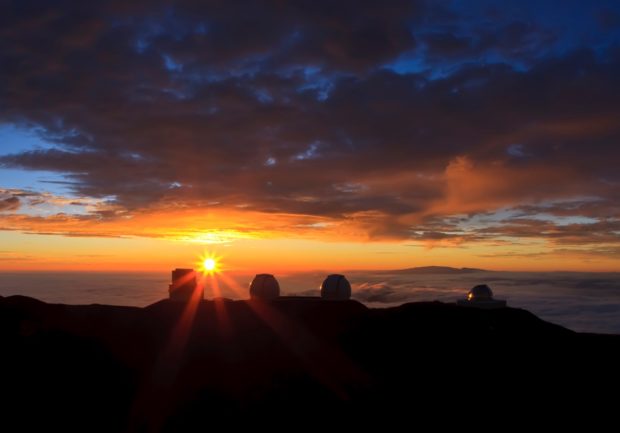
Maunakea Summit, Sunset, and Stargazing Tour
A small-group tour from Kona to the 13,796-foot summit of Maunakea: dinner at 9,200 feet, sunset above the cloud layer, and a private star show with an 11-inch telescope. Saturn, Jupiter, and the Milky Way on a clear night when they are above the horizon. 8 to 9 hours.
from:
$315
What is a suggested tour?Our suggested tours are hand-picked tours that receive consistent good reviews, give back to the community, and work hard to minimize their impact on the environment. Read more about these tours on our website.The complete list of permitted commercial tour companies is (last checked: August 2026 from the state permit list):
- Hawaiʻi Forest & Trail (more information on our website)
- Mauna Kea Summit Adventures (book here)
- Arnott’s Lodge & Hiking Adventures (website; $240 to $255, departs Hilo)
- Hawaiian Haoles, inc. dba Hawaiian Eyes Tours (website)
- Robert’s Hawaiʻi Tours
- Taikobo Hawaiʻi (English and Japanese language tours)
- Super Vacation Hawaiʻi (an LA-based travel agency and wholesaler), currently selling their tour as Hawaii Island Holidays ($289, 7 to 8 hours from Hilo; booking link), also reachable by email at [email protected].
Good to know: children under the age of 13 cannot take a summit tour
Summit tours don’t take children under 13: kids have a much higher incidence of altitude problems. Consider a stargazing tour that skips the summit if there are young stargazers in your group.
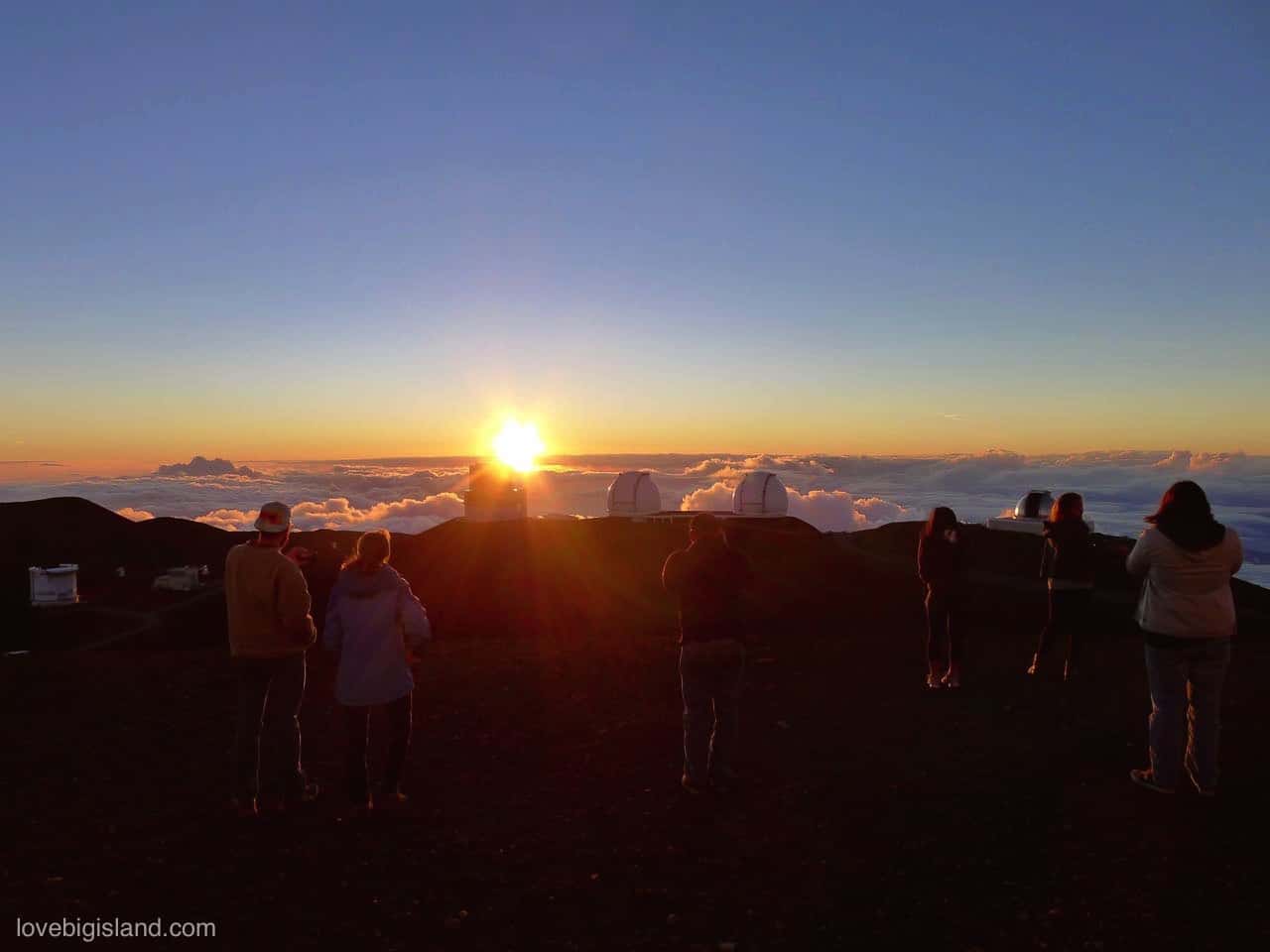
Sunset watchers on the Maunakea summit as the sun drops into the cloud layer below
Stargazing tours that don’t go to the summit
A stargazing tour does not need to include a visit to the summit. Adding the summit gets you the sunset, but it also fixes the timing: summit tours must leave the top within 30 minutes of sunset, so their stargazing always happens early in the night.
For both types of tours the stargazing itself happens at comparable elevation, so the quality of the night sky is the same. Tours that skip the summit can run later, which means:
- Darker skies and more interesting night sky objects than the early-evening summit slots,
- Far fewer other tour groups around you, and
- No age limit: summit tours require 13+, while these welcome all ages.
The 2-hour small group tour below runs $259 per adult ($239 per child), is led by a professional astronomer and astro-photographer, and includes group photos under the Milky Way. There is no hotel pickup: you meet at a viewing site on the Saddle Road corridor, chosen on the day for clear skies and texted to you, and any rental car can reach it. If the sky stays clouded over, they refund the tour in full under their stargazing guarantee.
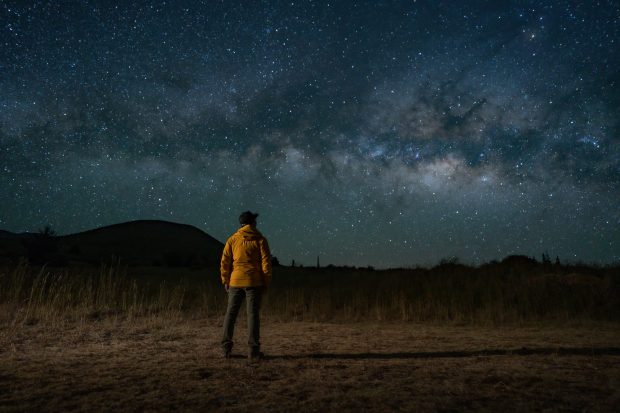
Mauna Kea Stargazing Experience with Free Milky Way Photos
Skip the summit crowds for dark skies below 9,000 feet, a smart telescope on deep-sky objects, and free photos within 24 hours.
from:
$259
What is a suggested tour?Our suggested tours are hand-picked tours that receive consistent good reviews, give back to the community, and work hard to minimize their impact on the environment. Read more about these tours on our website.Daytime tours to the Maunakea summit for Hawaiʻi residents
The Kamaʻāina Observatory Experience is a free monthly tour that takes Hawaiʻi residents to the summit, including breakfast and lunch at Hale Pōhaku and a visit inside one of the working observatories. It is organized by the Maunakea Observatories and NOIRLab.
Tours run on a Saturday each month, usually the first, with no tours in December and January because of winter weather. Guests must be at least 13 years of age and anyone under 18 must be accompanied by an adult. Adults need to show a valid Hawaiʻi state ID or driver’s license on the day of the tour.
Each date is limited to 28 guests, split into two groups of 14 that each visit one of the summit telescopes. Reservations are required and open at 5pm HST exactly one month before the tour date, with a waitlist once a date fills. See the schedule and register on the Kamaʻāina Observatory Experience page.
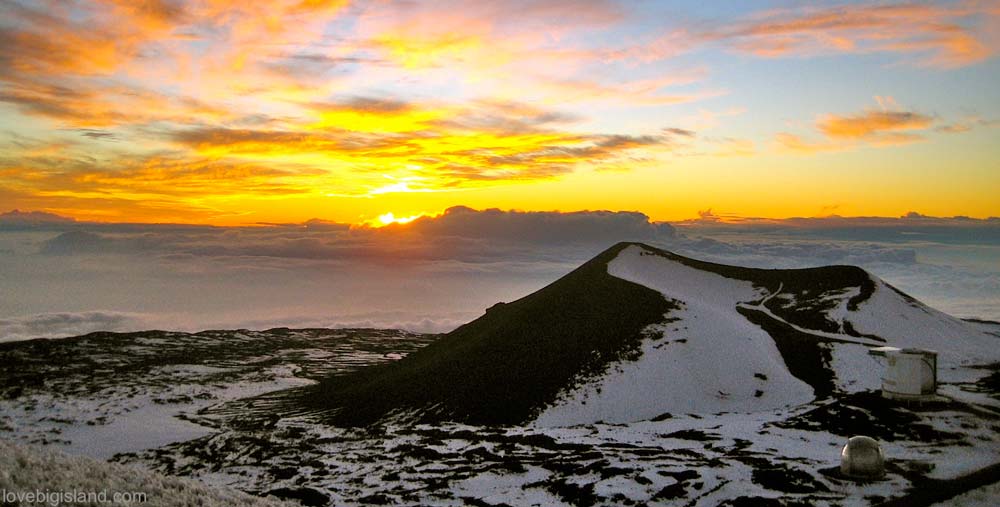
Sunsets from the Maunakea summit are among the best on the island. Here you can see the JCMT and (now decommissioned) CSO telescopes, a snowy cinder cone and the sun setting below the clouds (not the ocean)
Free Stargazing Program at the Visitor Center
The visitor center runs free telescope evenings most months: one event open to everyone, and one reserved for Kamaʻāina (Hawaiʻi residents with a valid state ID). Reservations are required, availability is limited, and there are no walk-up telescopes at the station on regular nights anymore.
What happens during the free stargazing program?
Check-in is at the visitor center and the posted times are strict: events start at 6:30pm and run until about 8:30 to 9pm. Come early and you can catch the sunset from Puʻukalepeamoa, the cinder cone next to the station, before check-in.
After check-in, staff walk the group to a private viewing site nearby, open with a short presentation, and then telescope viewing starts: galaxies, nebulae, planets, and constellations, with staff and volunteers guiding the viewing.
How to register
Reserve through the UH web form here. Events are posted two to three months ahead and fill well before the date, so book as soon as your travel dates are set. Exact event dates vary month to month; the form shows what is coming up.
One reservation covers up to two adults and three kids aged 17 or under; anyone else in your party registers separately. Parties are limited to one reservation per quarter. Bring the ID of the registered adult to check in at the visitor center; for a Kamaʻāina event the first registered adult must hold a valid Hawaiʻi ID.
With 40 percent less oxygen at the summit, your night vision fades up there; the stars look better from the station. Gerrit, who worked as a professional astronomer before settling on the Big Island, can confirm: observatories sit at the summit for stable, dry air, not for the naked-eye view.
How to visit the Mauna Kea summit yourself
There are two destinations on Maunakea if you want to visit for stargazing: the visitor station halfway up the volcano and the telescopes at the summit. You can reach the visitor station with any car. To get all the way up you need a 4WD vehicle with good brakes for the steep, winding gravel road. If you drive, the seven-point checklist below covers the rules rangers enforce at the station.
How to drive to the Mauna Kea Visitor Information Station (MKVIS)
To reach the visitor station (website) follow Saddle Road (Hwy 200) until you get to the Mauna Kea access road (around mile marker 28, across the street from the Puʻu Huluhulu Cinder cone parking lot) and follow that road up. The visitor center sits about halfway up the volcano at 9,200 ft elevation. Have a full tank before you start the ascent: the nearest gas station is ~35 miles (50 km) from the visitor station.
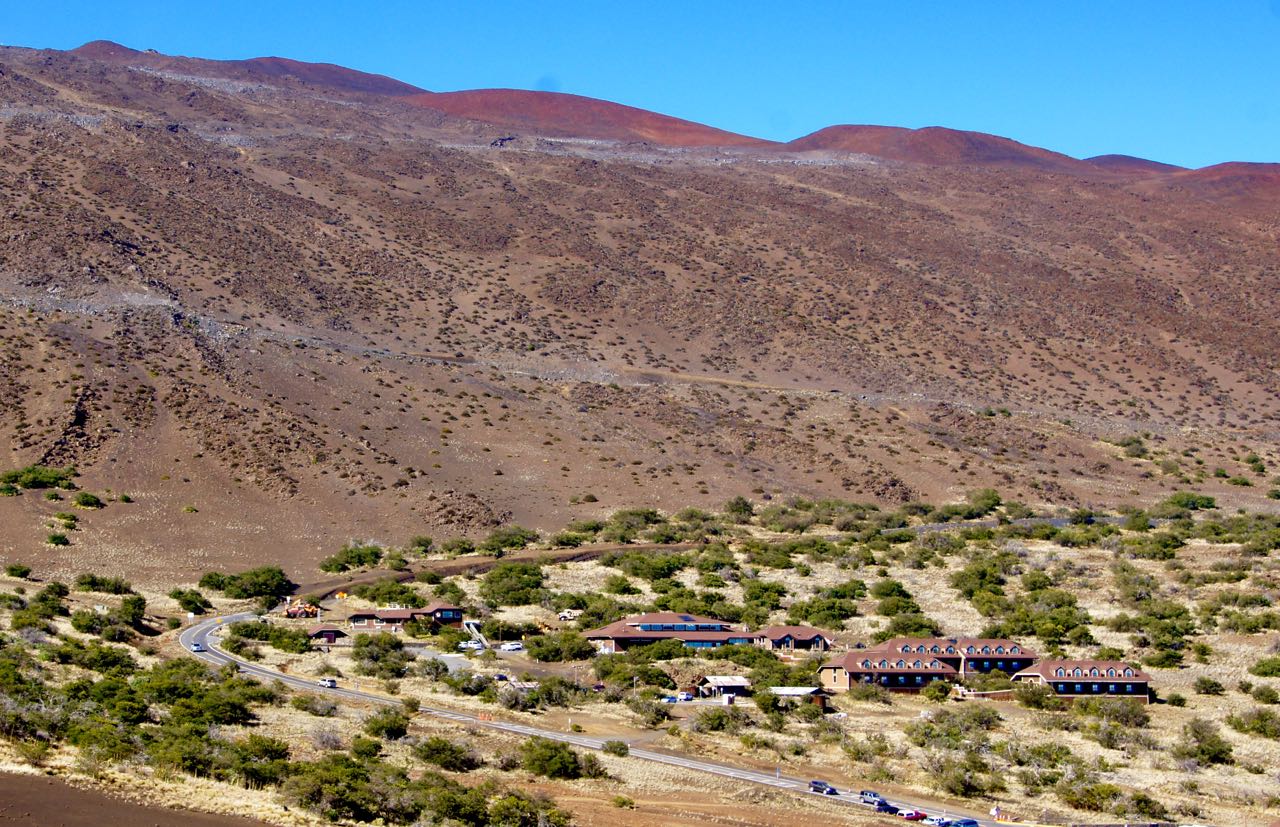
A view of the Onizuka Center for International Astronomy Visitor Information Station on the ascent of Maunakea, taken from a Puʻu at the 9300 ft. level. Credit: Madereugeneandrew – Own work, CC BY-SA 4.0
Did you know? The visitor information station is officially called the “Onizuka Center for International Astronomy Visitor Information Station”. It was named after the Hawaiʻi-born astronaut Ellison Onizuka who died in the Space Shuttle Challenger disaster in 1986.
The center’s displays cover the cultural importance of the mountain, and there is a video about astronomy. A small shop sells snacks and drinks, plus souvenirs.
Parking at the station is limited and the lot fills around sunset on event evenings. Plan to arrive 1.5 to 2 hours before sunset: that window covers finding a spot and the recommended 30-minute acclimatization stop.
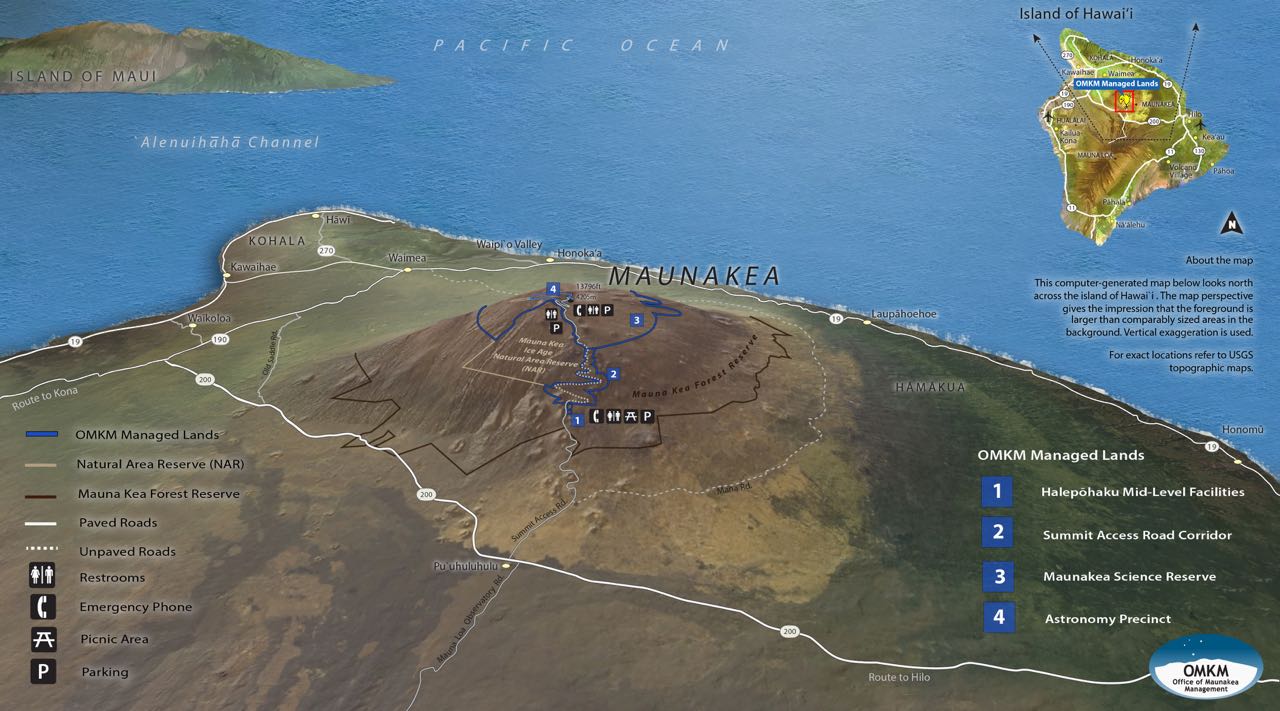
Directions from Kona (64 mi) and Hilo (43 mi) to the summit of Maunakea. Be aware that you need to stop at the visitor center for at least 30 minutes to help your body acclimatize to the large altitude difference between Kona/Hilo and the summit (13,796 ft). Image credit: OMKM, now the Center for Maunakea Stewardship
How to drive to the Mauna Kea summit yourself: seven things to know
You can visit the summit and see the telescopes during daytime and stay for up to 30 minutes after the sun has set.
- Please be respectful. To Hawaiians the summit of Maunakea is sacred: it is the place where Poliʻahu (the goddess of snow) lives.
- Fill up your car beforehand. Rangers won’t let you drive to the summit if you don’t have at least half a tank left at the ranger station at the Visitor Center.
- Stop for at least 30 minutes at the visitor station to acclimatize to the altitude. The summit is at 4,205 m (13,796 ft) elevation and high altitude carries serious health risks, most of which can be mitigated by a short stop.
- Sometimes the summit road closes for weather: high winds, ice, and snow are all possible. Check the observatories’ road conditions page before you drive up.
- You can’t use the summit telescopes or enter the buildings. ~30 minutes after sunset the summit closes to visitors and you must drive down.
- Scuba diving and high altitude visits are extremely incompatible. Wait at least 24 hours before going to the summit after you have been scuba-diving. Snorkeling is no problem.
- Dress warm. After the sunset temperatures can drop as low as 30-40 degrees F (between -1 and +4 Celsius). Also bring enough water and snacks.
You need a 4WD vehicle to drive up to the Maunakea summit
The 2WD ban above the station is state law (Hawaiʻi Administrative Rules ch. 20-26), not a suggestion, and the rangers at the Visitor Center enforce it.
Rent local if you want to drive up yourself. Big Island Jeep Rental allows its Wranglers and Gladiators on the summit road (4-day minimum, though they sometimes fit shorter rentals), and Hawaii Lifted Jeep Rentals has no minimum rental period and marks specific vehicles as summit-approved. The national agencies don’t advertise summit permission, so never assume a standard 4WD rental qualifies. Some Turo owners also allow their cars on the summit road.
Clint from the Not Lost Nomad youtube channel shares how to drive your own 4WD to the Maunakea summit in the following 11-minute video:
Seeing the sunset from Maunakea (from the summit vs. from the visitor center)
From the summit you also watch the sun drop below the cloud deck instead of the horizon. The best viewing is from the summit, but getting there takes a 4WD vehicle or a tour. A good alternative is seeing the sunset from the visitor center.
Seeing the sunset from the Maunakea summit
The Maunakea summit is one of the best places to see the sunset on Hawaiʻi: the sun sinks into the cloud layer below you, framed by cinder cones and observatory domes.
To get to the summit you either need to join a summit tour or drive a 4WD vehicle. The 4WD requirement is a safety rule: brakes overheat on the way down, and park rangers often check the cars on the summit road.
Dress warm, in many layers: it gets cold fast once the sun is gone. Bring a camera.
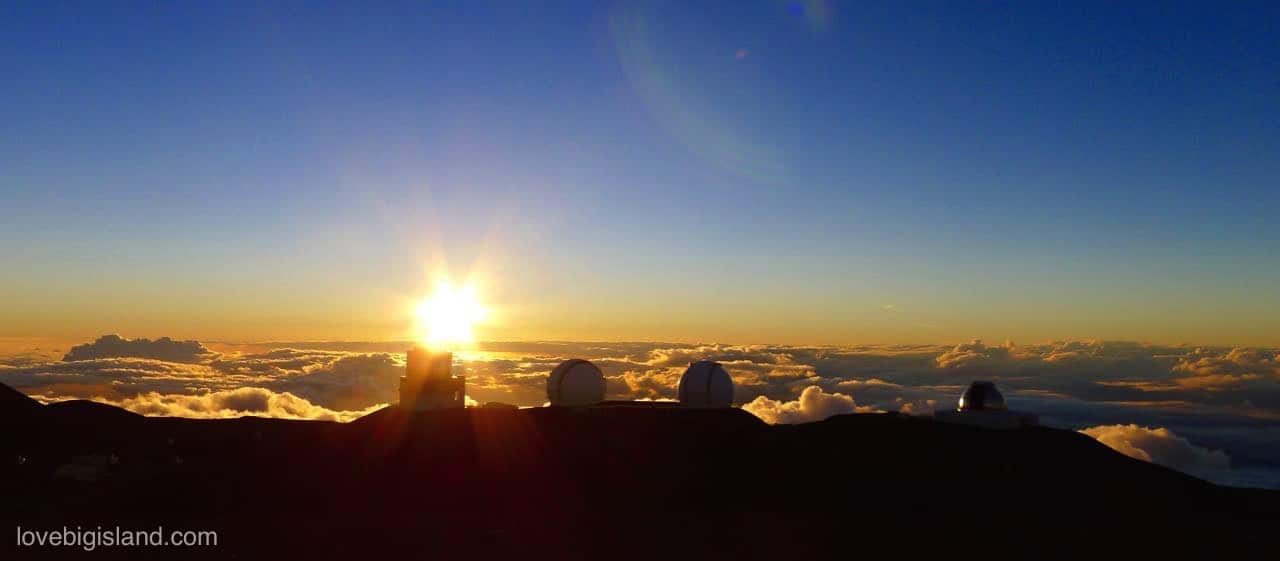
Telescopes of the Maunakea Observatory, Hawaiʻi. From left to right: the Subaru Telescope, the W. M. Keck Observatory (2 domes), and the NASA Infrared Telescope Facility
Seeing the sunset from the Mauna Kea Visitor Information Station (VIS)
Cinder cones block the sunset from the visitor center itself, but the easy hike up Puʻukalepeamoa, the cinder cone next to the station, gets you a clear view.
Arrive well before sunset for parking, and bring warm clothes and a windbreaker: it gets cold and windy the moment the sun is gone.
Mauna Kea facts and trivia
Maunakea last erupted more than 4,000 years ago. The USGS still classifies it as an active volcano, but on any human timescale the mountain is quiet. The Maunakea summit is the highest point of the state of Hawaiʻi at 13,796 ft above sea level. There have even been glaciers on the volcano during past colder periods (source).
Check our astronomy calendar for Hawaiʻi to see whether a meteor shower falls during your stay.
Measured from its base on the ocean floor, Maunakea rises more than 10,000 m (33,000 ft), taller than Mount Everest measured base to summit. Most of that height sits under the Pacific.
If you’re up for a hike at high altitude, you can also make a short excursion to the highest lake in the state at 13,020 ft: Lake Waiau.
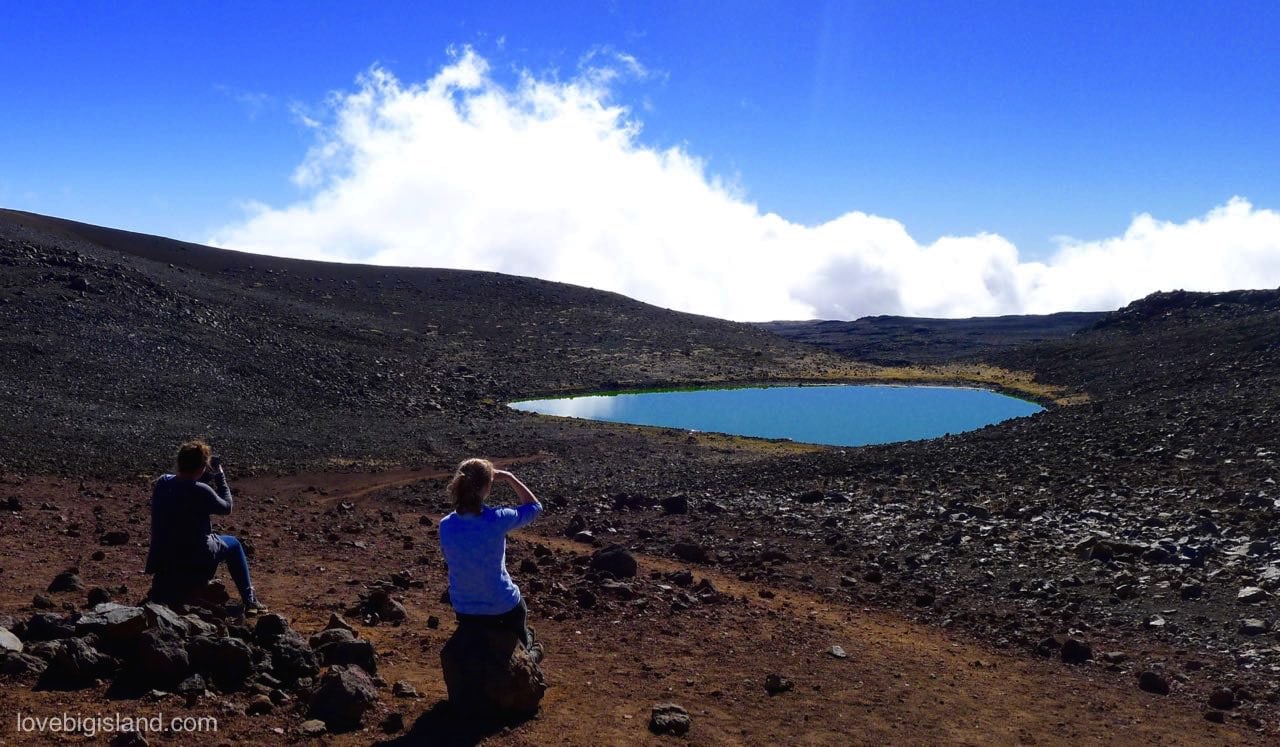
Lake Waiau sits on Maunakea at more than 13,000 ft above sea level. It is one of very few lakes in the state of Hawaiʻi
Which spelling is correct: Mauna Kea or Maunakea?
Both Mauna Kea and Maunakea refer to the same place on the Big Island.
According to the University of Hawaiʻi at Hilo College of Hawaiian Language, following traditional Hawaiian values and the Hawaiian language, Maunakea (one word) is the correct name. Maunakea is a proper noun, the name of the mountain on the Island of Hawaiʻi. “Mauna Kea” spelled as two words refers to any white mountain. It is a common noun (vs. the proper noun), and you can see the one-word form used throughout the University of Hawaiʻi’s own Center for Maunakea Stewardship site [source].
Safety tips for visiting Mauna Kea
The Maunakea summit at an elevation of 13,796 feet (4205 meters) is an extreme environment with an atmospheric pressure 40 percent lower compared to sea level. People visiting the summit may experience altitude sickness, which is triggered by rapid exposure to lower oxygen levels.
Good to know: a stop of at least 30 minutes at the visitor center halfway up the mountain will let your body acclimatize and greatly decreases the chance that you’ll experience altitude sickness while going to the summit.
Altitude sickness
Symptoms of altitude sickness include: headaches, drowsiness, nausea, shortness of breath, and poor judgment. Your age, gender, or physical fitness do not affect your likelihood of getting altitude sickness, and altitude sickness can become a medical emergency if ignored. If you are experiencing any symptoms of altitude sickness you should stop and rest where you are to acclimatize to the altitude. See this resource for symptoms and treatment of altitude sickness.
High altitudes can also cause the life-threatening conditions pulmonary edema (fluid in the lungs) and cerebral edema (fluid on the brain). Descend immediately if you experience any of the following symptoms:
- severe headaches,
- vomiting,
- breathing difficulties,
- coughing,
- blue lips or fingernails,
- disorientation,
- extreme drowsiness that may lead to coma.
Other hazards
At the summit the sun’s radiation is stronger and the air is drier. This means that dehydration, sunburn, and eye damage are all possible especially when you spend more time at the summit (for example when hiking to Lake Waiau). Bring plenty of water and protect your skin and eyes against the intense UV radiation at the summit with sunscreen and sunglasses.
We are part of the HawaiiActivities affiliate program, and we earn a commission when you book one of the tours listed on this page. Neither costs you anything extra, and it helps keep this site running. Read more about our participation.