
Kahaluʻu Bay is the most reliable easy-access spot on the Kona coast to snorkel with green sea turtles. A shallow reef rings the cove and keeps out most of the open-ocean swell, so the inside stays calm enough for a first-timer. Turtles rest on the rocks and graze in the shallows, and lifeguards are on duty daily.
Kahaluʻu is one of the better beaches for first-time snorkelers, beginner surfers, and families with older kids and teens. It is also a working conservation site: the Kahaluʻu Bay Education Center keeps ReefTeach volunteers on the sand every day and stocks free reef-safe sunscreen by the beach. Apply it before you get in, and give the resting turtles plenty of space.
Table of contents
- Introduction
- Snorkeling: gear rental, safety tips, and best snorkeling spots
- Surfing: gear rental, surf classes and surf tips
- Beach facilities and directions
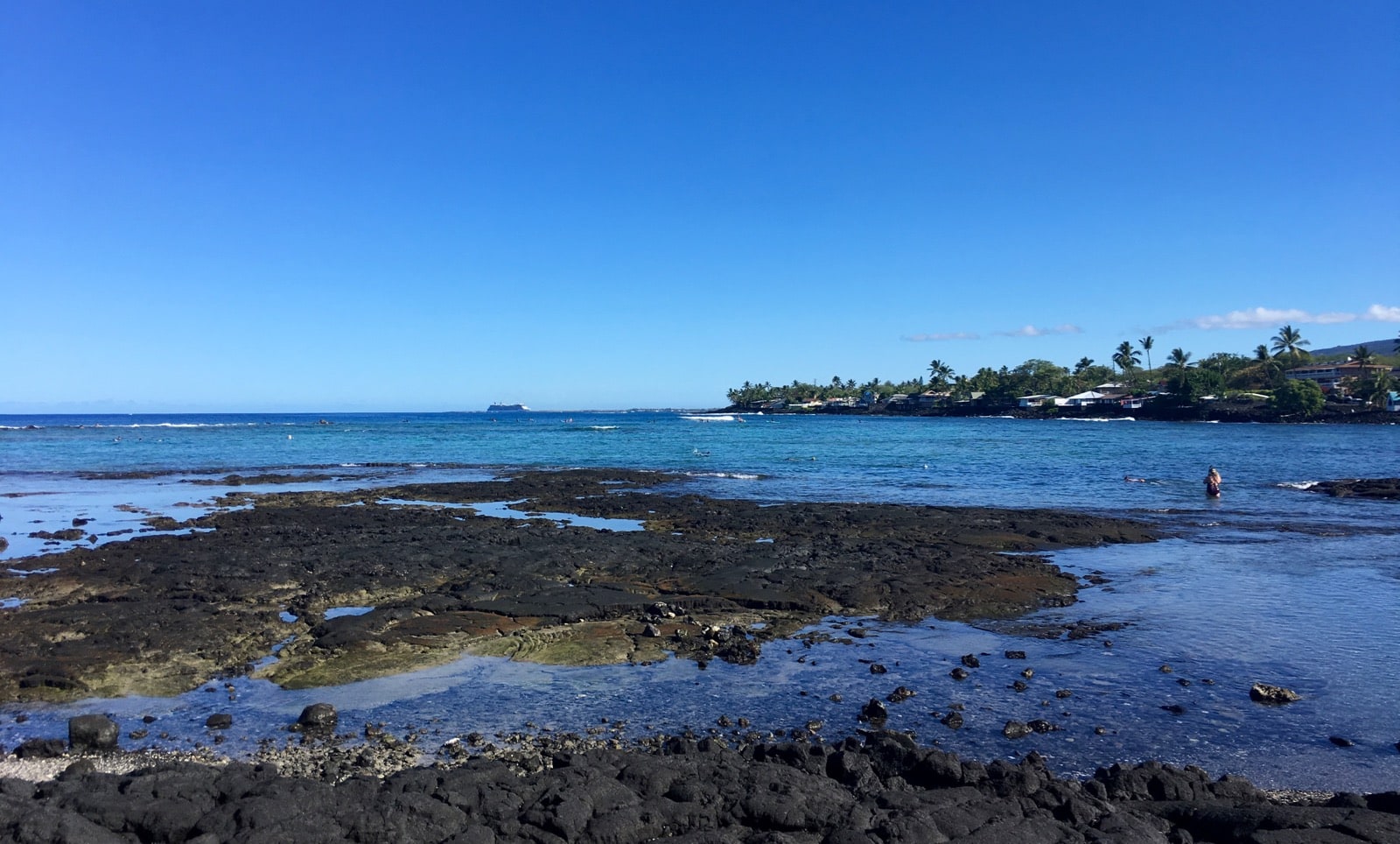
A small reef shelters Kahaluʻu Bay from high surf, and the snorkeling area sits inside it.
Kahaluʻu Beach Park: History and Setting
Kahaluʻu Bay is listed on the National Register of Historic Places. Hawaiians have lived on the bay for at least the last 500 years, with records of royal residences in the 18th and 19th centuries and several heiau (Hawaiian temples) in the area. The heiau on the northern side of Kahaluʻu Bay, Kuʻemanu Heiau, overlooks a surf break, popular in ancient times and still surfed today.
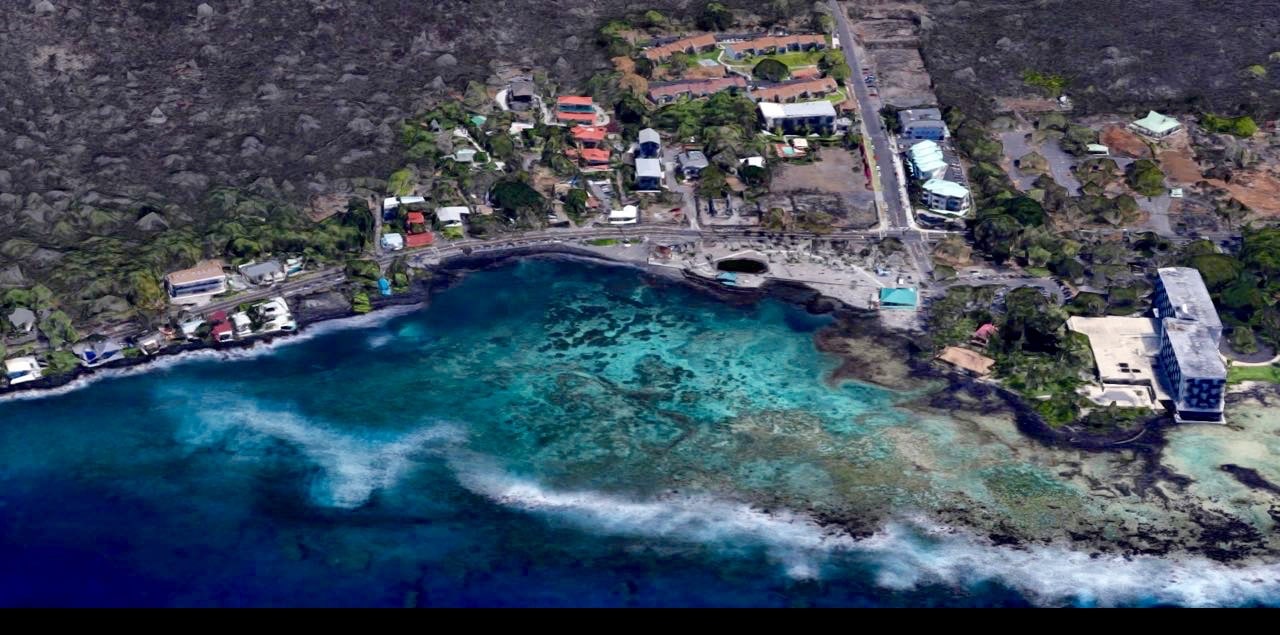
Bird’s-eye view of Kahaluʻu Beach Park, close to Kona just off Aliʻi Drive. Image credit: Google Maps
Most people come here to snorkel or surf rather than to sunbathe.
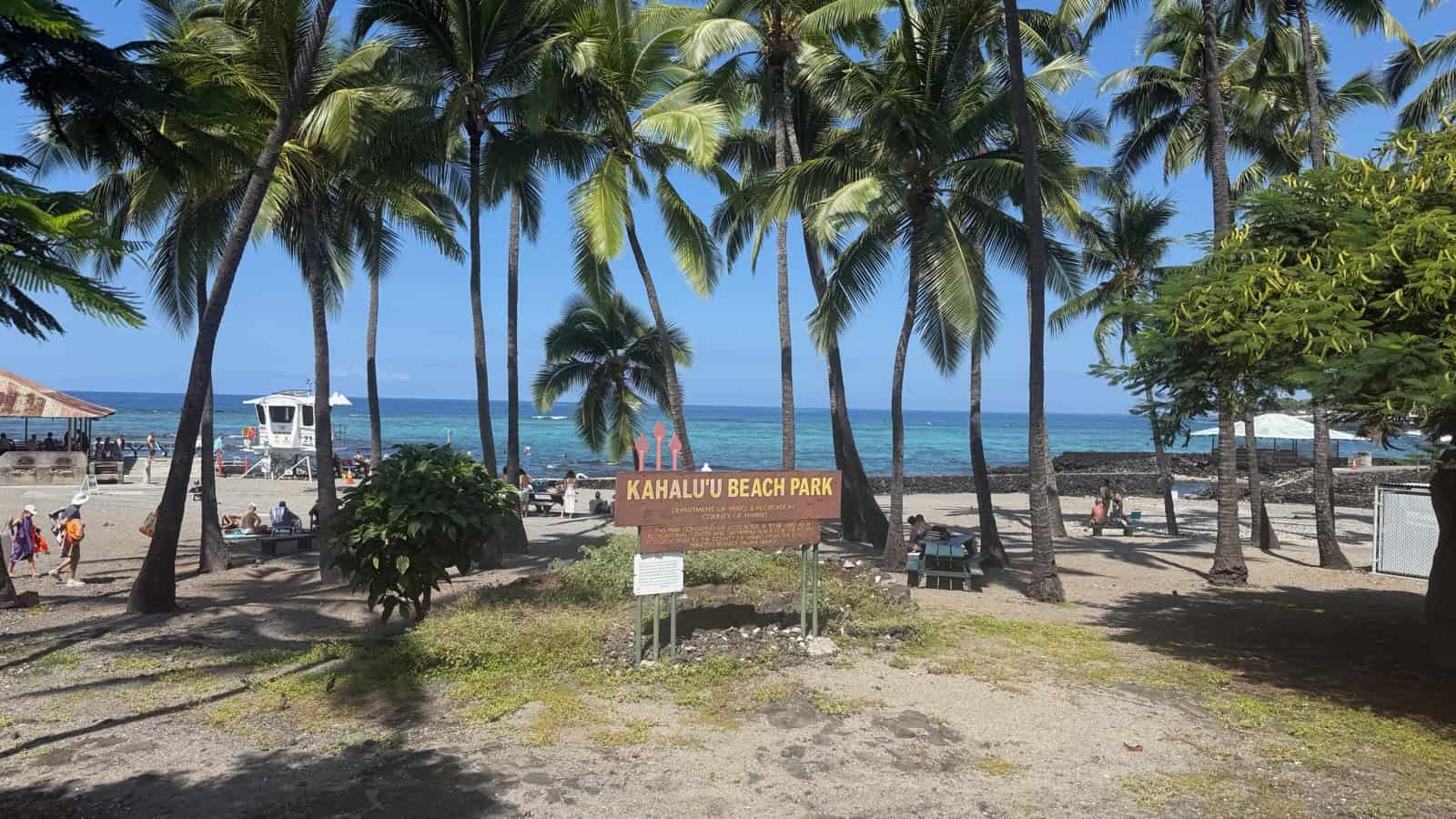
Kahaluʻu Beach Park is on Aliʻi Drive, about 5 miles south of Kailua-Kona.
Snorkeling at Kahaluʻu Bay
The water here is calm and shallow most of the year, so it’s one of the easier snorkeling spots on the Kona coast. The entry is rocky but manageable. On a weekday morning in October we found the bay busy but not crowded, and the small parking lot fills up on weekends and at midday.
Underwater, watch for sea turtles, octopus, sea urchins, eels, and dozens of fish species including Yellow Tang, Bullethead Parrotfish, Raccoon Butterflyfish, Moorish Idol, Orangespine Unicornfish, Hawaiian Spotted Boxfish, and more.
Where to Enter the Water
How easy it is to get in the water depends on the tide and swell. The channel in front of the lifeguard tower is the best place to get in the water to snorkel. You’ll need to navigate over some lava rock, which can be slippery and tough on your feet so some snorkelers choose to wear water shoes, neoprene surf socks, or tabis (a local style water slipper) to protect their feet.
To make entering the water easier, wait to put on your mask, snorkel, and fins and carry them in one hand, leaving the other hand free to prevent a fall as you walk slowly over the rocky entrance area. On the other side of the rocks is a sandy bottom area that is shallow enough to stand in and put on your snorkeling gear. When exiting the water, use this same pathway.
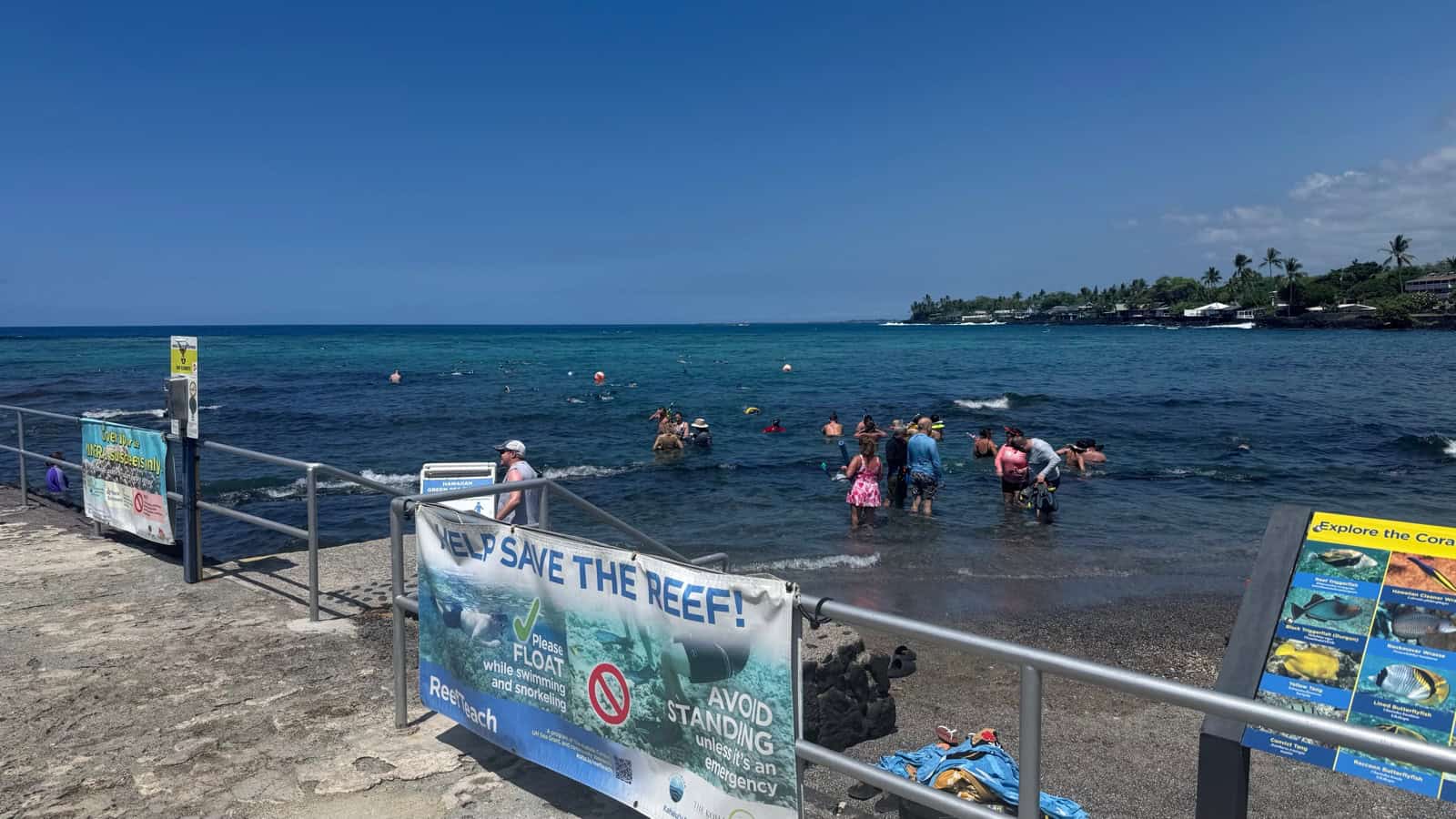
The banner at the entry asks snorkelers to float over the reef and never stand on the coral.
This 90-second video shows where and how to enter the water safely.
If you’re a decent swimmer, head toward the middle of Kahaluʻu Bay where the larger coral heads are. Go slowly as you swim over the coral heads, or simply stop and float. This will give you a chance to spot some of the shy critters living inside. You will see a second lifeguard tower as you approach the center of the bay. Don’t go beyond this tower, as you will be entering into the surf zone.
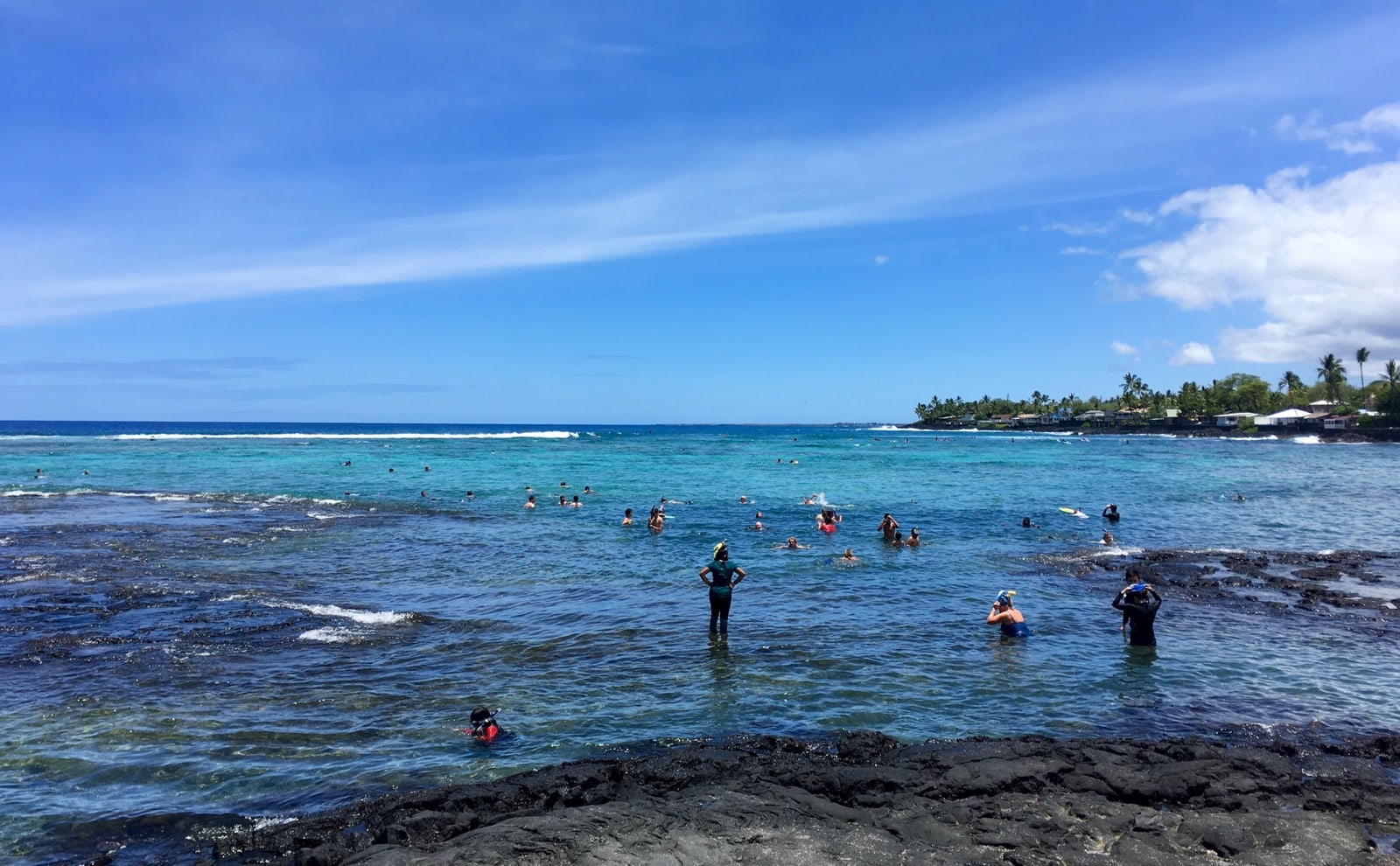
The best place to get into the water for snorkeling is from the south end of the bay.
Snorkel Gear Rental at Kahaluʻu Bay
If you did not bring your own gear, you can rent a full snorkel set just across the road at Kahaluʻu Bay Surf and Sea for $18 a day or $40 for the week. Pick the set up at their shop between 9 a.m. and 4 p.m.; returns can be dropped off overnight.
Snorkeling Safety
There is a current in Kahaluʻu Bay that flows north and out to sea. Usually it’s mild in the snorkeling area, but it can pick up with big swell. As you snorkel, periodically lift your head above water to check your surroundings and adjust your position.
Lifeguards are on duty daily, from 9:30 a.m. to 4:45 p.m. Pay attention to the lifeguards’ announcements about surf conditions. If you are in distress, raising one hand above your head is a signal for help which the lifeguards will understand. Outside those hours, call 911 in an emergency and give your location as Kahaluʻu Beach Park snorkel beach.
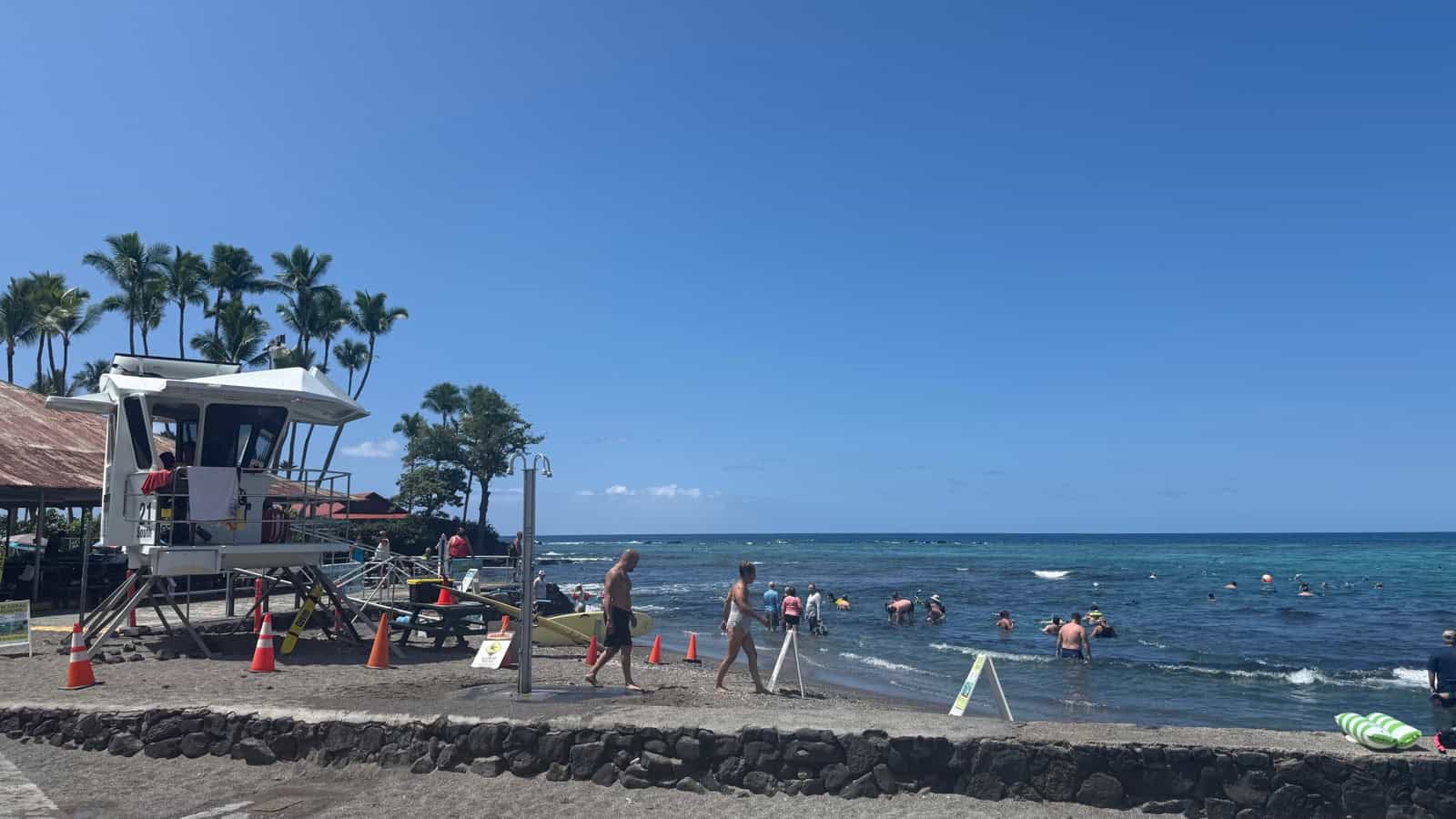
The lifeguard tower sits right at the water entry, behind the low lava-rock seawall.
Reef Etiquette
The Kahaluʻu Bay Education Center runs a daily volunteer crew, ReefTeach, on the sand: when we visited they were steering snorkelers to the safe entry and over to the turtles, and they mark the fragile reef edge with orange buoys. Check in with a ReefTeacher when you arrive. The reef is already stressed by the beach’s popularity, so please help protect the coral:
- Coral is alive and touching or stepping on coral can damage or kill it. When snorkeling, do not chase or touch any living creatures, including the coral with your body or fins. While the water is relatively shallow, do not put your feet down or walk on the reef.
- Another way you can help protect the reef is to use reef-safe sunscreen. Most major sunscreen brands contain chemicals that cause coral bleaching and harm the reef. Reef-safe sunscreens are made with the active ingredients Zinc oxide or Titanium dioxide. Two free mineral sunscreen dispensers sit at the pavilion, available 9 a.m. to 3 p.m. daily. For a list of reef-safe sunscreen brands and where to buy them locally, visit the Kahaluʻu Bay Education Center website.
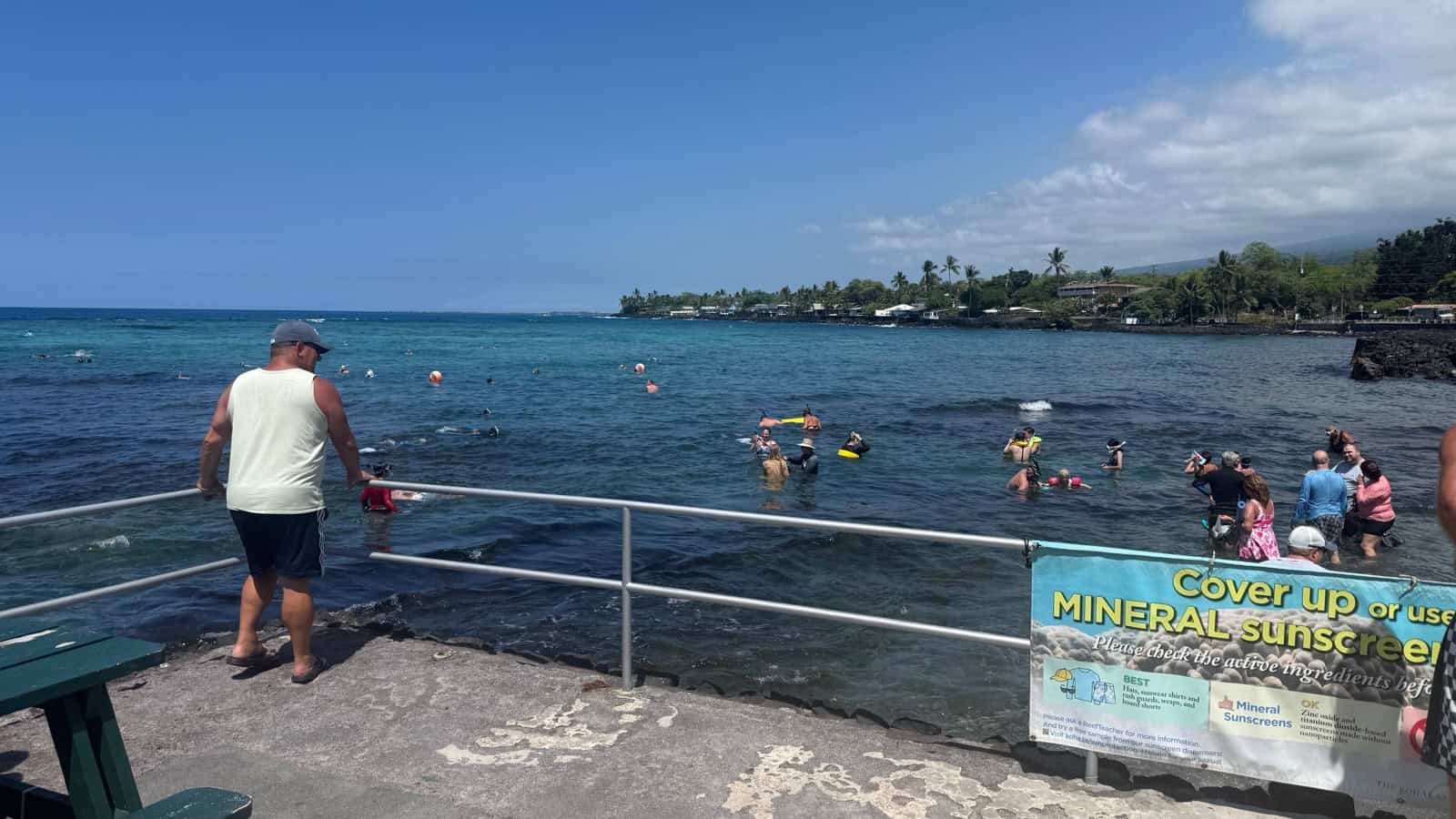
Signs along the seawall ask swimmers to cover up or use mineral sunscreen to protect the reef.
Our “Big Island snorkeling” and “Big Island surfing” guides list every snorkel and surf spot on the island.
Surfing at Kahaluʻu Bay
The north end of the bay is a surf break, a mostly small right-hand wave that picks up to 4 to 6 feet on the outside sets when there is swell. Seen from the beach, the surfers are at that north end, off to the right, while snorkelers stay to the left inside the reef. Group surf lessons and board rentals both run out of Kahaluʻu Bay Surf and Sea.
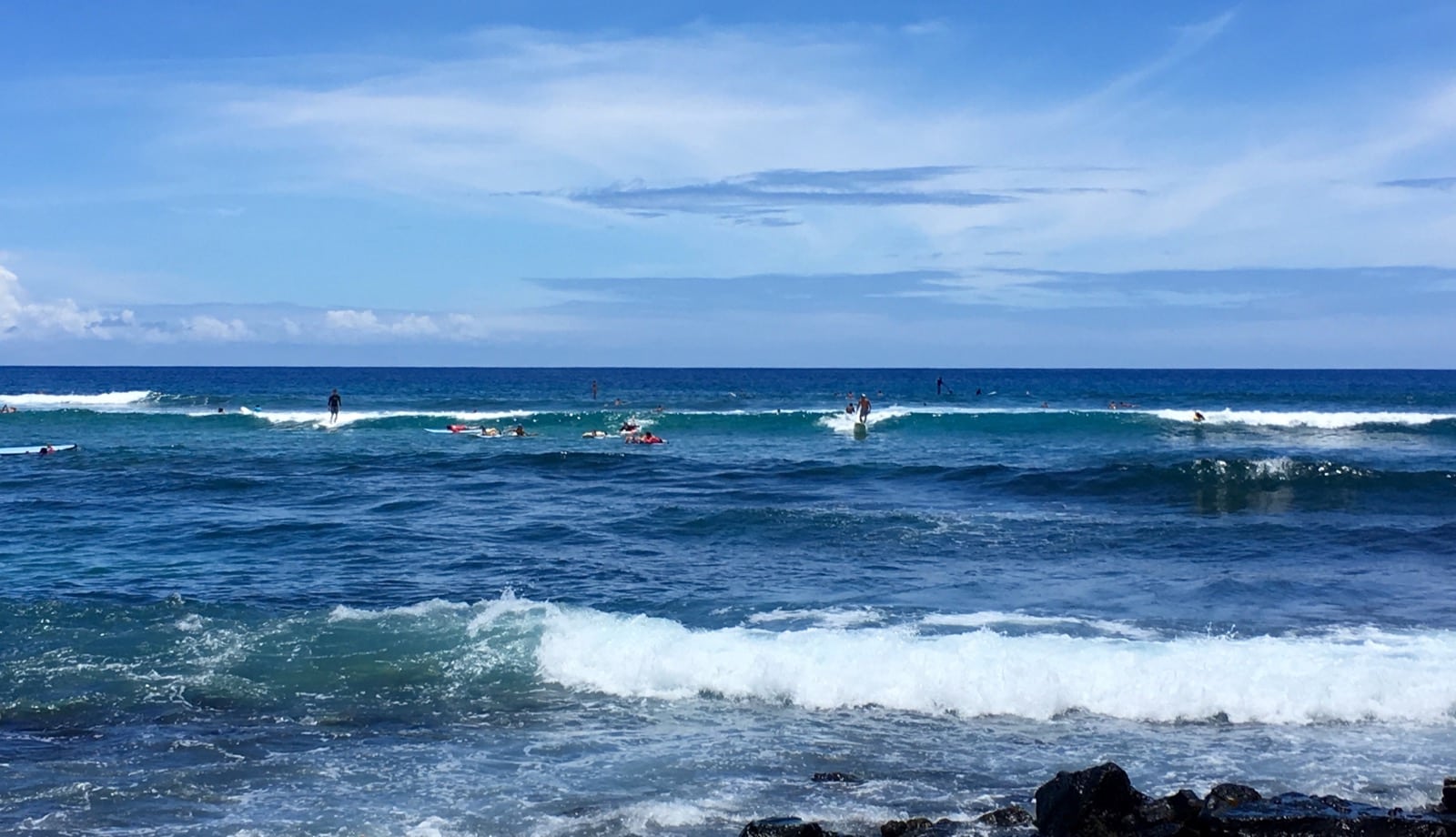
The surf break at the north end of the bay stays small most of the year.
Surf Lessons and Board Rentals
Kahaluʻu Bay is one of the better places on the island for a first surf lesson. Several surf schools run lessons here; the one that has been here longest is Kahaluʻu Bay Surf and Sea. Their group lessons run two hours with certified instructors and take ages 11 and up. Book at least 12 hours ahead, and arrive 15 minutes early in your swimsuit with a towel. They run classes and rent boards:
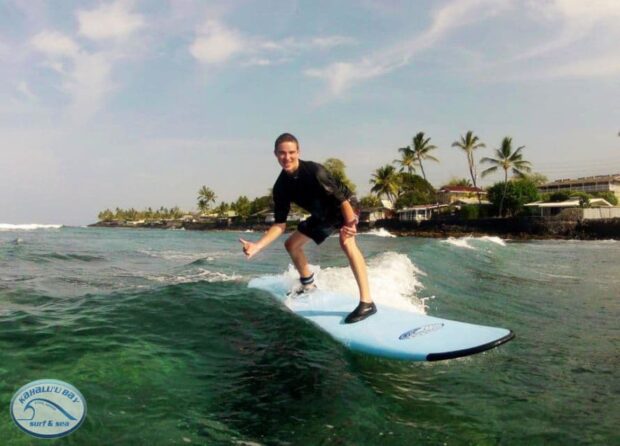
Surf Lessons in Kona at Kahaluʻu Bay
Two-hour surf lessons at Kahaluʻu Bay, one of the more forgiving breaks on the Kona coast. CPR-certified instructors work in the water alongside you, timing waves and helping you catch them
from:
$139
What is a suggested tour?Our suggested tours are hand-picked tours that receive consistent good reviews, give back to the community, and work hard to minimize their impact on the environment. Read more about these tours on our website.Surfing Safety
The current at Kahaluʻu Bay can be strong in the surfing area, especially when there is big surf. The current pulls you north and out to sea. When surfing at Kahaluʻu Bay, be sure to pick out landmarks on shore and periodically check your alignment with them. If you’re not an experienced surfer, stay on the inside and don’t paddle out to the outside break, especially in high surf.
Take care entering and exiting the water. The common entrance point for surfing the bay is next to the little blue church, St. Peter’s by the Sea, which dates to 1880. This entrance point was an ancient canoe landing site, with a flat rock surface to gradually ease into the water. Take your time and walk slowly as the rocks can be slippery. Once out in the bay, avoid touching your feet to the reef, as it can damage the corals and/or cut you.
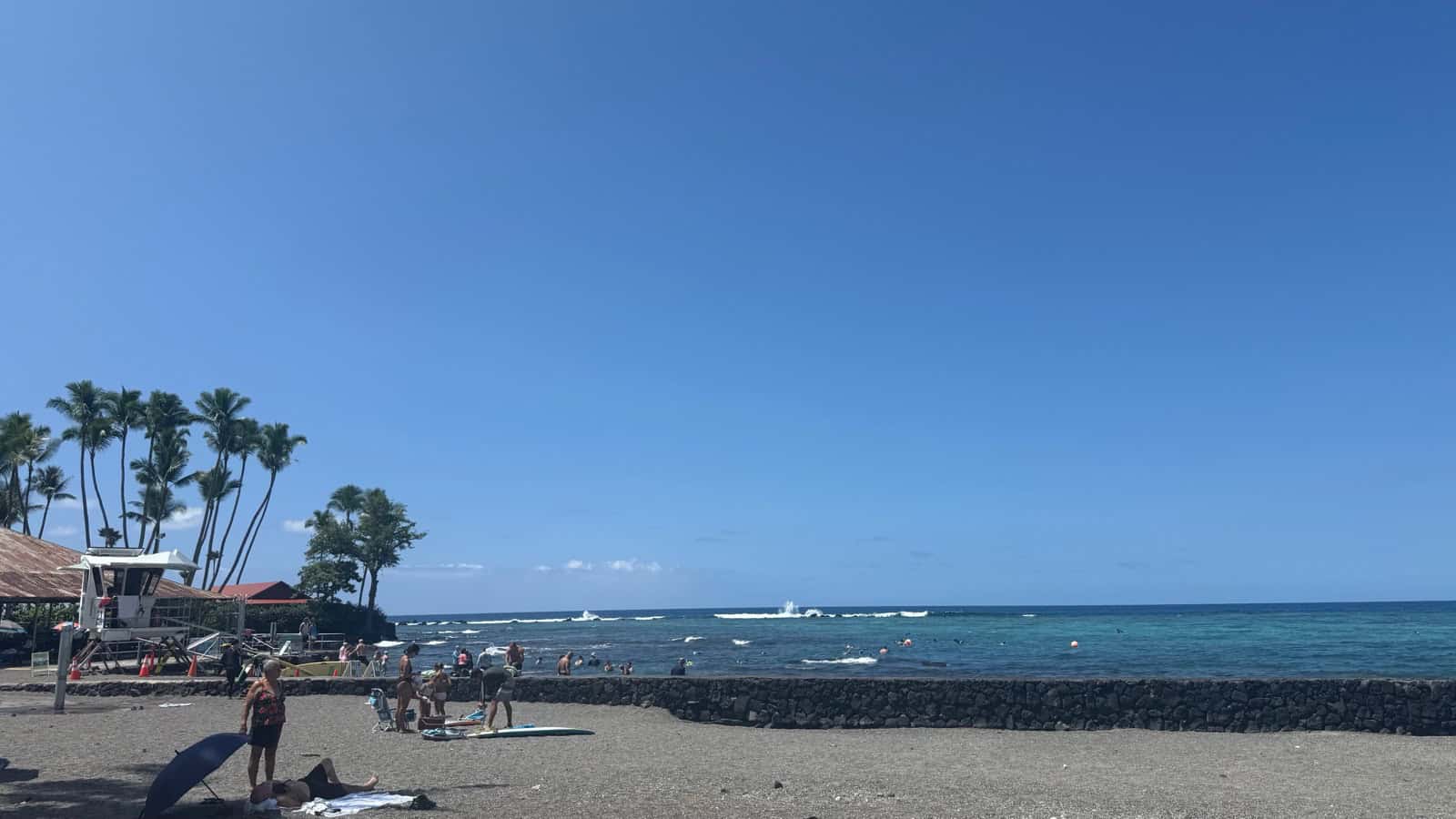
Seen from the beach, surfers use the right side of the bay, and snorkelers stay on the left in the calmer water inside the reef.
Surfing Etiquette
Please be respectful of locals who surf at Kahaluʻu every day. A friendly good morning helps. Be courteous and take turns on waves. Never ‘drop in’ on a wave another surfer is already riding, or cut them off. Always keep a firm hold on your board, so you don’t hit another surfer with it.
Kahaluʻu Beach Park Facilities
The beach park has restrooms, outdoor showers, a covered pavilion, and picnic tables under the palms. On a visit in October 2026, Gerrit found the restrooms clean and the showers working, with no soap on purpose: the runoff drains straight into the bay.
For surfers, bathrooms and an outdoor shower sit next door to the surfing area on the other side of the small black sand beach and lifeguard stand. There are some picnic tables on this side of the bay with a good view of the surf break.
For snorkelers, bathrooms and outdoor showers sit right next to the snorkeling beach and first lifeguard tower. There is a large covered picnic pavilion with a BBQ adjacent to the bathrooms which you can rent for special events. Additional picnic tables and BBQs are available on the far side of the beach in a palm grove.
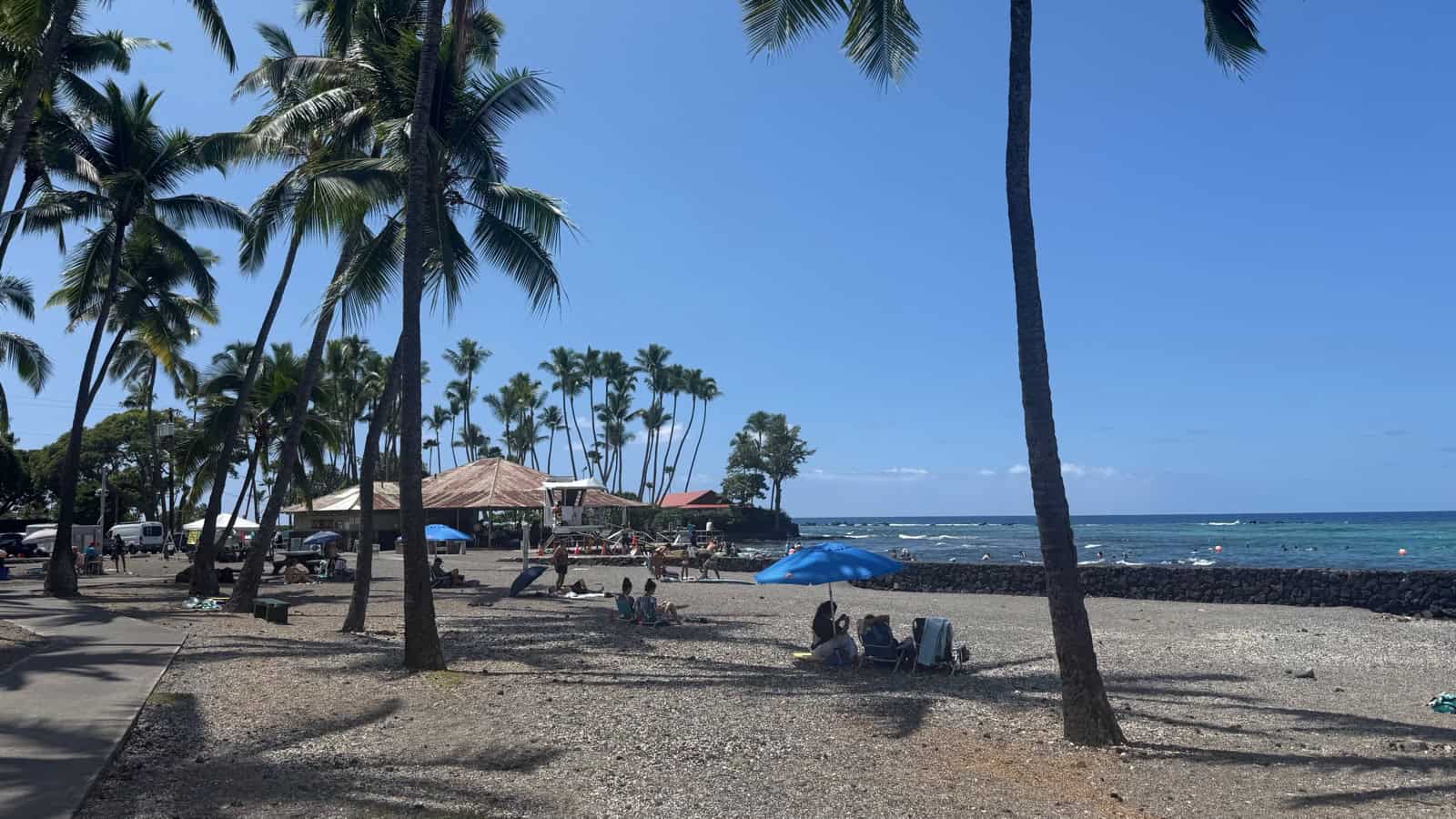
Palms shade most of the beach park, and the pavilions sit between the parking area and the water.
Getting there
Kahaluʻu Bay is about 5 miles south of Kailua-Kona town center. Most people access it by car, but you can also get there by the Kona Trolley, by bike, or on foot along Aliʻi Drive, depending on how far away you are staying.
You can find the current ocean conditions at the Kahaluʻu beach park on the Hawaii Beach Safety website.
Parking
Nonresidents pay $12 for four hours, from 7 a.m. to 7 p.m. daily (as of October 2026), through ParkMobile, zone 13300: pay in the app or scan the QR code on the sign. International visitors can pay by cash or card at the parking and bay information tent instead. Hawaiʻi residents and visitors with disabilities register with the parking attendant for a free pass, and the fees go toward protecting Kahaluʻu Bay.
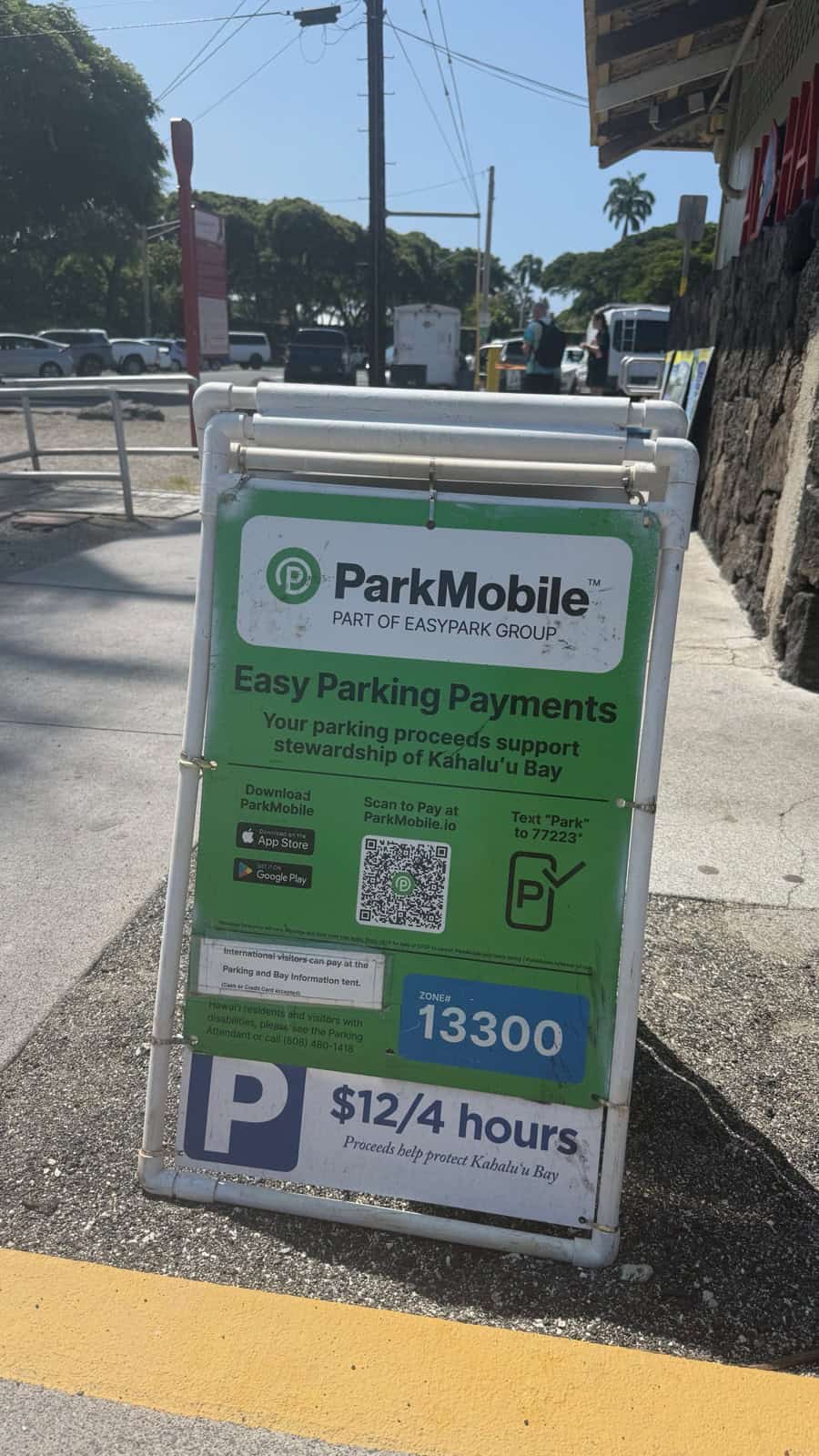
Nonresident parking at the beach park is paid through ParkMobile, zone 13300: $12 for 4 hours as of October 2026. Hawaiʻi residents are exempt.
- For snorkeling, the best place to park is in the parking lot on the south side of the bay, next to the bathrooms.
- For surfing, parking is generally along the makai (ocean) side of the road on the northern end of the bay. Overflow parking on busy days is up Makolea St., directly across from the lot entrance, or along the mauka (mountain) side of the road.